What is the Global Protein Bars Market Size and Growth Rate?
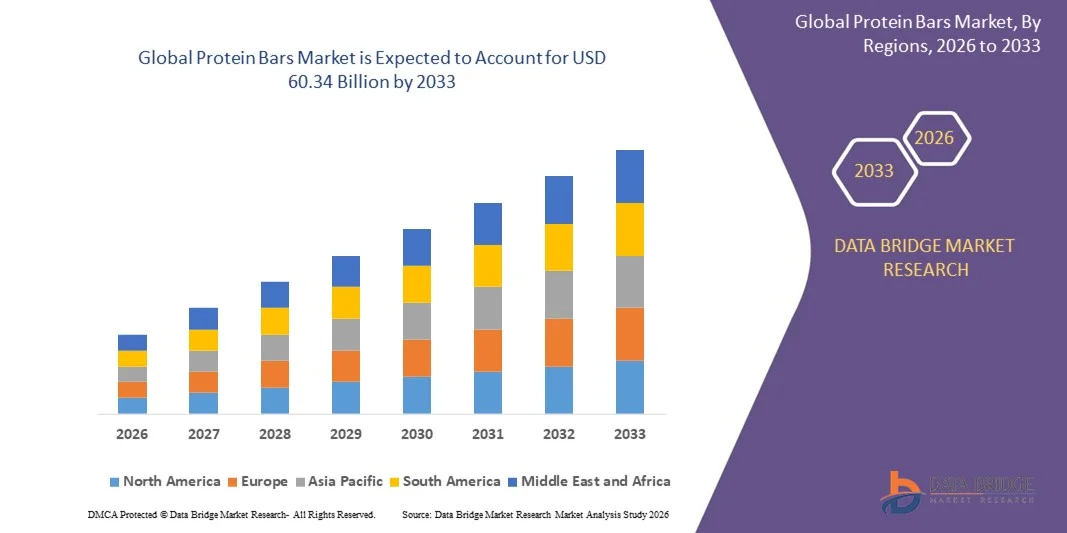
- The global protein bars market size was valued at USD 5.10 billion in 2025 and is expected to reach USD 8.56 billion by 2033, at a CAGR of 6.70% during the forecast period
- Increasing consumer focus on health and wellness, rising demand for convenient on-the-go nutrition, growing popularity of high-protein and low-sugar snacks, expanding fitness culture, and rapid adoption of plant-based protein formulations are some of the major as well as vital factors which will such asly augment the growth of the protein bars market
What are the Major Takeaways of Protein Bars Market?
- Rising gym memberships, expanding sports nutrition awareness, increasing e-commerce penetration, and product innovation in flavors, clean-label ingredients, and functional benefits will further contribute by generating massive opportunities that will lead to the growth of the protein bars market
- Fluctuating raw material prices, intense market competition, regulatory labeling requirements, and consumer concerns regarding sugar content and artificial additives will such asly act as market restraint factors for the growth of the protein bars market
- North America dominated the protein bars market with a 36.8% revenue share in 2025, driven by high consumer awareness regarding fitness, strong demand for convenient nutrition, and widespread adoption of high-protein diets across the U.S. and Canada
- Asia-Pacific is projected to register the fastest CAGR of 9.36% from 2026 to 2033, driven by rising urbanization, growing middle-class population, and increasing awareness of fitness and balanced nutrition across China, Japan, India, South Korea, and Southeast Asia
- The Sports Nutritional Bars segment dominated the market with a 46.8% share in 2025, driven by increasing participation in fitness activities, gym culture, bodybuilding, and endurance sports
Report Scope and Protein Bars Market Segmentation
|
Attributes |
Protein Bars Key Market Insights |
|
Segments Covered |
|
|
Countries Covered |
North America
Europe
Asia-Pacific
Middle East and Africa
South America
|
|
Key Market Players |
|
|
Market Opportunities |
|
|
Value Added Data Infosets |
In addition to the insights on market scenarios such as market value, growth rate, segmentation, geographical coverage, and major players, the market reports curated by the Data Bridge Market Research also include in-depth expert analysis, pricing analysis, brand share analysis, consumer survey, demography analysis, supply chain analysis, value chain analysis, raw material/consumables overview, vendor selection criteria, PESTLE Analysis, Porter Analysis, and regulatory framework. |
What is the Key Trend in the Protein Bars Market?
Increasing Shift Toward Clean-Label, Plant-Based, and Functional Protein Bars
- The protein bars market is witnessing strong adoption of clean-label, low-sugar, and high-protein formulations designed to meet evolving consumer preferences for healthy and convenient snacking options
- Manufacturers are introducing plant-based protein bars, keto-friendly variants, and fortified bars with added vitamins, probiotics, and adaptogens to cater to fitness enthusiasts and health-conscious consumers
- Growing demand for on-the-go nutrition, weight management products, and sports recovery snacks is driving product innovation across supermarkets, specialty stores, and online channels
- For instance, companies such as Glanbia, Kellogg’s, General Mills, and Abbott Laboratories have expanded their protein bar portfolios with organic ingredients, reduced sugar content, and functional health benefits
- Increasing awareness of fitness lifestyles, gym culture, and personalized nutrition is accelerating the shift toward nutrient-dense and performance-oriented snack bars
- As consumers seek healthier alternatives to traditional snacks, Protein Bars will remain essential for convenient protein intake, meal supplementation, and active lifestyle support
What are the Key Drivers of Protein Bars Market?
- Rising consumer focus on health, wellness, and preventive nutrition, along with growing participation in sports and fitness activities, is boosting demand for protein-enriched snacks
- For instance, in 2025, leading companies such as Glanbia, Amway, and Clif Bar & Company launched innovative protein-rich snack products targeting athletes and busy professionals
- Growing adoption of plant-based diets, vegan lifestyles, and clean-eating trends across the U.S., Europe, and Asia-Pacific is expanding the consumer base for protein bars
- Advancements in flavor innovation, texture enhancement, and natural sweetener formulations have improved product appeal and repeat purchases
- Rising e-commerce penetration and expansion of modern retail formats are creating wider product accessibility and global brand visibility
- Supported by steady investments in product innovation, marketing strategies, and expanding health awareness, the Protein Bars market is expected to witness strong long-term growth
Which Factor is Challenging the Growth of the Protein Bars Market?
- Fluctuating prices of raw materials such as whey protein, nuts, and plant-based protein isolates increase production costs and impact pricing strategies
- For instance, during 2024–2025, volatility in dairy and agricultural commodity markets affected ingredient sourcing costs for several global nutrition brands
- High sugar content and presence of artificial additives in certain products raise consumer health concerns and regulatory scrutiny
- Intense market competition and product saturation in developed regions create pricing pressure and reduce brand differentiation
- Limited consumer awareness in emerging markets regarding protein supplementation benefits may slow adoption rates
How is the Protein Bars Market Segmented?
The market is segmented on the basis of type, protein source, and distribution channel.
- By Type
On the basis of type, the protein bars market is segmented into Sports Nutritional Bars, Meal Replacement Bars, and Others. The Sports Nutritional Bars segment dominated the market with a 46.8% share in 2025, driven by increasing participation in fitness activities, gym culture, bodybuilding, and endurance sports. These bars are widely consumed for muscle recovery, energy replenishment, and performance enhancement due to their high protein and functional ingredient content. Growing demand from athletes, fitness enthusiasts, and health-conscious millennials continues to strengthen this segment.
The Meal Replacement Bars segment is expected to grow at the fastest CAGR from 2026 to 2033, supported by rising consumer preference for convenient, portion-controlled, and nutritionally balanced meal alternatives amid busy lifestyles and weight management trends.
- By Protein Source
On the basis of protein source, the market is segmented into Animal-Based Protein Bars and Plant-Based Protein Bars. The Animal-Based Protein Bars segment dominated the market with a 59.3% share in 2025, as whey and milk-based proteins remain widely preferred due to their complete amino acid profile and high bioavailability. Strong consumer trust, established dairy supply chains, and widespread availability support sustained dominance.
The Plant-Based Protein Bars segment is projected to grow at the fastest CAGR from 2026 to 2033, driven by increasing veganism, lactose intolerance concerns, and growing demand for sustainable and clean-label food products. Rising innovation in pea, soy, and rice protein formulations further accelerates adoption.
- By Distribution Channel
On the basis of distribution channel, the protein bars market is segmented into Hypermarkets & Supermarkets, Convenience Stores, Online, and Others. The Hypermarkets & Supermarkets segment dominated the market with a 48.5% share in 2025, owing to strong product visibility, bulk purchasing options, and availability of diverse brands under one roof. Promotional strategies and in-store marketing campaigns further support consumer purchasing decisions.
The Online segment is expected to grow at the fastest CAGR from 2026 to 2033, fueled by expanding e-commerce platforms, subscription-based nutrition services, direct-to-consumer sales models, and increasing digital shopping preferences among younger consumers.
Which Region Holds the Largest Share of the Protein Bars Market?
- North America dominated the protein bars market with a 36.8% revenue share in 2025, driven by high consumer awareness regarding fitness, strong demand for convenient nutrition, and widespread adoption of high-protein diets across the U.S. and Canada. Growing participation in sports, gym culture, and weight management programs significantly supports product consumption. The strong presence of established brands, extensive retail distribution networks, and rapid product innovation in flavors, formulations, and functional ingredients further fuel regional growth
- Leading companies in North America are introducing clean-label, plant-based, low-sugar, and functional protein bars enriched with vitamins, collagen, probiotics, and adaptogens, strengthening competitive positioning. Rising demand for on-the-go nutrition and expanding e-commerce penetration continue to accelerate market expansion
- High disposable income levels, strong health and wellness trends, and increasing demand for premium and organic snack options further reinforce regional market leadership
U.S. Protein Bars Market Insight
The U.S. is the largest contributor in North America, supported by strong consumer inclination toward sports nutrition, ketogenic and high-protein diets, and meal replacement products. Busy lifestyles and increasing obesity awareness encourage consumption of convenient yet nutritious snack options. The presence of major fitness chains, specialty nutrition stores, and well-established online platforms strengthens product accessibility. Innovation in plant-based protein bars and functional formulations further drives growth.
Canada Protein Bars Market Insight
Canada contributes steadily to regional growth, driven by rising vegan populations, growing interest in clean-label products, and expanding health-conscious consumer base. Increasing demand for sustainable and plant-based protein sources supports product diversification. Expansion of supermarket chains and online grocery platforms enhances accessibility, while government initiatives promoting healthy eating habits positively influence market adoption.
Asia-Pacific Protein Bars Market
Asia-Pacific is projected to register the fastest CAGR of 9.36% from 2026 to 2033, driven by rising urbanization, growing middle-class population, and increasing awareness of fitness and balanced nutrition across China, Japan, India, South Korea, and Southeast Asia. Rapid expansion of modern retail formats, growing gym memberships, and increasing exposure to Western dietary trends significantly boost demand. Rising disposable income and expanding e-commerce ecosystems further accelerate product penetration across developing economies.
China Protein Bars Market Insight
China is the largest contributor to Asia-Pacific growth due to rising health awareness, expanding sports participation, and increasing demand for convenient nutrition products. Rapid urbanization and strong online retail networks support market expansion. Growing demand for plant-based and low-sugar variants further strengthens sales.
Japan Protein Bars Market Insight
Japan shows steady growth supported by demand for functional foods, portion-controlled snacks, and high-quality nutrition products. Consumers prefer protein-enriched snacks for active lifestyles and aging population needs. Innovation in compact packaging and premium ingredients supports market development.
India Protein Bars Market Insight
India is emerging as a major growth hub, driven by expanding fitness culture, rising disposable income, and increasing awareness of protein deficiency. Growth in online grocery platforms and domestic nutrition startups further accelerates adoption.
South Korea Protein Bars Market Insight
South Korea contributes significantly due to strong health trends, high gym participation rates, and demand for premium functional snacks. Increasing preference for plant-based and clean-label products supports sustained market growth.
Which are the Top Companies in Protein Bars Market?
The protein bars industry is primarily led by well-established companies, including:
- Glanbia Plc. (Ireland)
- Nutrition & Santé SAS (France)
- Atlantic Grupa d.d. (Croatia)
- B.V. Vurense Snack Industries (Netherlands)
- Artenay Bars SAS (France)
- The WhiteWave Foods Co. (U.S.)
- Premier Nutrition Corporation (U.S.)
- Kellogg Co. (U.S.)
- General Mills (U.S.)
- Amway Corporation (U.S.)
- Abbott Laboratories (U.S.)
- GlaxoSmithKline Plc. (U.K.)
- GNC Holdings (U.S.)
- Vitaco Health Group Limited (New Zealand)
- Clif Bar & Company (U.S.)
What are the Recent Developments in Global Protein Bars Market?
- In August 2025, Indian protein bar brand Phab introduced its savory protein bar range called Bhel Bars, formulated using clean plant protein ingredients. The products are offered in three variants, namely The OG Bhel, Curry Leaf Podi, and Peri Peri, targeting consumers seeking healthier yet flavorful snack alternatives. This launch reflects the growing diversification of protein bars beyond sweet formats into savory, region-inspired options, strengthening innovation in the market
- In April 2025, U.K.-based protein bar brand Trek launched high-protein, low-sugar protein bars targeted at health-conscious consumers. The product positioning focuses on balanced nutrition with reduced sugar content while maintaining taste appeal. This development highlights increasing consumer demand for clean-label and reduced-sugar protein snack options globally
- In April 2025, U.S.-based protein nutrition company Pure Protein introduced Pure Protein AMMMAZE bars across the country. The products are widely available through major convenience retail chains including 7-Eleven and Speedway stores, enhancing accessibility for on-the-go consumers. This expansion strengthens mass-market penetration and supports broader retail distribution strategies in the protein bars segment
- In January 2025, U.S.-based brand Once Upon a Farm launched refrigerated protein bars in the U.S. market. The bars are available in two flavors, Oatmeal Chocolate and Cinnamon Roll, and are made with ingredients such as apple puree, cocoa butter, and dates. This innovation underscores the rising trend of fresh, minimally processed, and refrigerated functional snack formats
- In May 2024, Gelita introduced Optibar, a specialized ingredient designed to create soft, sugar-free protein bars with enhanced protein content and long-lasting texture. The blend acts as a sugar-free binder, enabling “low sugar” and “no sugar” claims while maintaining indulgent quality. This advancement supports formulation flexibility and aligns with the increasing demand for healthier protein snack alternatives
- In April 2024, active nutrition company Ready launched Kids Whole Grain Protein Bars to expand its family-focused product portfolio. The bars provide 6 grams of protein, 8 grams of whole grains, and contain 20% less sugar compared to leading kids’ whole grain snack bars. This launch demonstrates the growing focus on child-friendly, nutritionally balanced protein snacks within the expanding health-conscious consumer base

- Interactive Data Analysis Dashboard
- Company Analysis Dashboard for high growth potential opportunities
- Research Analyst Access for customization & queries
- Competitor Analysis with Interactive dashboard
- Latest News, Updates & Trend analysis
- Harness the Power of Benchmark Analysis for Comprehensive Competitor Tracking
Data collection and base year analysis are done using data collection modules with large sample sizes. The stage includes obtaining market information or related data through various sources and strategies. It includes examining and planning all the data acquired from the past in advance. It likewise envelops the examination of information inconsistencies seen across different information sources. The market data is analysed and estimated using market statistical and coherent models. Also, market share analysis and key trend analysis are the major success factors in the market report. To know more, please request an analyst call or drop down your inquiry.
The key research methodology used by DBMR research team is data triangulation which involves data mining, analysis of the impact of data variables on the market and primary (industry expert) validation. Data models include Vendor Positioning Grid, Market Time Line Analysis, Market Overview and Guide, Company Positioning Grid, Patent Analysis, Pricing Analysis, Company Market Share Analysis, Standards of Measurement, Global versus Regional and Vendor Share Analysis. To know more about the research methodology, drop in an inquiry to speak to our industry experts.
Data Bridge Market Research is a leader in advanced formative research. We take pride in servicing our existing and new customers with data and analysis that match and suits their goal. The report can be customized to include price trend analysis of target brands understanding the market for additional countries (ask for the list of countries), clinical trial results data, literature review, refurbished market and product base analysis. Market analysis of target competitors can be analyzed from technology-based analysis to market portfolio strategies. We can add as many competitors that you require data about in the format and data style you are looking for. Our team of analysts can also provide you data in crude raw excel files pivot tables (Fact book) or can assist you in creating presentations from the data sets available in the report.