


Protein Beverages Market Size
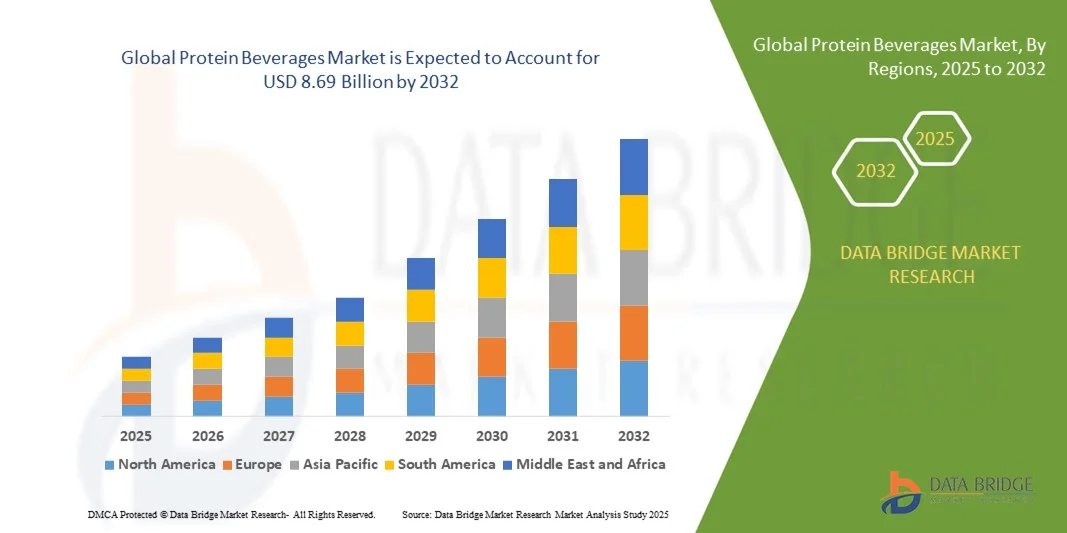
- The global protein beverages market size was valued at USD 4.46 billion in 2024 and is expected to reach USD 8.69 billion by 2032, at a CAGR of 8.70% during the forecast period
- The market growth is largely fueled by rising health consciousness, increasing fitness and gym participation, and growing awareness of the benefits of high-protein diets for muscle building, weight management, and overall wellness
- Furthermore, the rising demand for convenient, ready-to-drink, and functional nutrition options is driving the adoption of protein beverages across adults and kids. These converging factors are accelerating product innovation and market penetration, thereby significantly boosting the industry's growth
Protein Beverages Market Analysis
- Protein beverages, offering a concentrated source of dietary protein in ready-to-drink or powdered formats, are increasingly becoming essential components of daily nutrition for both fitness enthusiasts and health-conscious consumers due to their convenience, functional benefits, and diverse flavors
- The escalating demand for protein beverages is primarily fueled by growing consumer focus on preventive health, rising adoption of plant-based and allergen-free alternatives, and increasing availability through supermarkets, e-commerce, and specialty retail channels
- North America dominated the protein beverages market in 2024, due to rising health consciousness, fitness trends, and a growing preference for convenient nutrition options
- Asia-Pacific is expected to be the fastest growing region in the protein beverages market during the forecast period due to rapid urbanization, rising disposable incomes, and growing health awareness in countries such as China, Japan, and India
- Whey segment dominated the market with a market share of 38.5% in 2024, due to its high biological value, rapid absorption, and strong association with muscle recovery and fitness routines. Whey protein beverages are highly preferred by athletes and fitness enthusiasts due to their rich amino acid profile and ease of incorporation into daily diets. In addition, the segment benefits from widespread product availability, strong consumer awareness, and integration into various ready-to-drink formats. Manufacturers also innovate with flavored whey beverages, further enhancing consumer appeal and driving market adoption
Report Scope and Protein Beverages Market Segmentation
|
Attributes |
Protein Beverages Key Market Insights |
|
Segments Covered |
|
|
Countries Covered |
North America
Europe
Asia-Pacific
Middle East and Africa
South America
|
|
Key Market Players |
|
|
Market Opportunities |
|
|
Value Added Data Infosets |
In addition to the insights on market scenarios such as market value, growth rate, segmentation, geographical coverage, and major players, the market reports curated by the Data Bridge Market Research also include in-depth expert analysis, pricing analysis, brand share analysis, consumer survey, demography analysis, supply chain analysis, value chain analysis, raw material/consumables overview, vendor selection criteria, PESTLE Analysis, Porter Analysis, and regulatory framework. |
Protein Beverages Market Trends
Growing Preference for Plant-Based Protein Beverages
- The protein beverages market is witnessing substantial transformation led by increasing consumer preference for plant-based protein sources over traditional dairy proteins. This shift is being fueled by heightened awareness of sustainability, ethical choices, and lactose intolerance, along with broader adoption of vegan and flexitarian diets among health-conscious consumers
- For instance, PepsiCo, Inc. through its brand Evolve, has expanded its plant-based protein beverage portfolio featuring pea protein as a sustainable and allergen-free alternative to dairy. The company’s strategy highlights the accelerating market shift towards eco-friendly, dairy-free protein drinks that cater to changing consumer preferences globally
- Plant-based protein beverages made from ingredients such as soy, pea, almond, and oat are gaining traction due to their perceived natural origin, easy digestibility, and low environmental impact. These attributes are appealing to consumers seeking both nutritional benefits and sustainability assurance in their beverage choices
- In addition, advancements in flavor masking, emulsification, and protein extraction technologies are helping manufacturers improve the taste, texture, and nutritional density of plant-based beverages. These improvements are widening their acceptance among general consumers who previously preferred animal-derived products
- The rising number of health-driven product launches emphasizing clean-label and functional benefits is enhancing the market visibility of plant-based protein beverages. Brands are combining multiple protein sources and fortifying drinks with vitamins, minerals, and amino acids to deliver complete, balanced nutrition solutions
- As consumer priorities evolve toward ethical consumption and carbon-conscious dietary practices, plant-based protein beverages are becoming an integral part of the broader functional beverage category. The continued innovation in formulations and sustainable sourcing is expected to drive long-term market growth, positioning these drinks as mainstream nutrition alternatives globally
Protein Beverages Market Dynamics
Driver
Rising Health and Fitness Awareness
- The growing focus on health, wellness, and physical fitness across various age groups is a key factor propelling the global protein beverages market. Consumers are increasingly viewing protein supplementation as essential for maintaining muscle mass, supporting weight management, and promoting overall wellness in daily routines
- For instance, The Coca-Cola Company through its brand Fairlife and Core Power delivers high-protein ready-to-drink beverages catering to athletes, gym-goers, and wellness enthusiasts. The brand’s expansion strategy reflects how rising fitness awareness and lifestyle improvements are boosting consumption of performance-oriented beverage solutions
- Protein beverages provide convenience for consumers seeking quick nutrition in portable formats without meal preparation. Their applications extend across sports nutrition, meal replacement, and general health segments, meeting the growing demand for on-the-go dietary support in modern, fast-paced lifestyles
- In addition, increasing participation in fitness programs and home workout trends has sustained demand for protein beverages that combine high nutritional value with appealing taste. Manufacturers are tailoring their formulations with varied protein types and levels to address specific health goals such as recovery, endurance, and satiety
- The broader consumer movement toward preventive health and balanced nutrition continues to reinforce the importance of protein-based drinks in daily consumption patterns. With rising disposable incomes and accessibility through retail and online channels, the demand for protein beverages is expected to expand further across global markets
Restraint/Challenge
High Product Pricing and Limited Awareness
- High product pricing remains a prominent challenge limiting the wide-scale adoption of protein beverages, particularly in developing markets where affordability influences purchasing decisions. The cost of high-quality raw materials such as whey isolates, plant proteins, and functional additives contributes to elevated retail prices compared to regular beverages
- For instance, Glanbia plc, a leading protein ingredient supplier, has highlighted fluctuating protein input prices and supply chain complexities as major factors impacting the final cost of protein-enriched beverages. The company’s cost management and innovation efforts demonstrate the industry’s ongoing struggle to balance affordability with quality and functionality
- Limited consumer awareness about the importance of adequate protein intake also restrains market penetration in several regions. In markets where traditional diets dominate, protein beverages are still perceived as niche or fitness-specialized products rather than everyday nutrition sources
- In addition, challenges related to distribution, short shelf life of some formulations, and varying regulatory labeling requirements increase logistical costs for manufacturers, further influencing final pricing structures. Smaller brands, in particular, face difficulties scaling production efficiently while maintaining competitive pricing
- Overcoming these challenges requires focused awareness initiatives, ingredient innovation, and pricing strategies that bridge accessibility gaps. As economies scale and consumer education progresses, cost optimization and market outreach are expected to enhance the affordability and acceptance of protein beverages across wider demographics globally
Protein Beverages Market Scope
The market is segmented on the basis of type, source, packaging, sales channel, application, and end user.
- By Type
On the basis of type, the protein beverages market is segmented into whey, casein, rice, egg, milk, pea, soy, hemp, and others. The whey segment dominated the market with the largest revenue share of 38.5% in 2024, driven by its high biological value, rapid absorption, and strong association with muscle recovery and fitness routines. Whey protein beverages are highly preferred by athletes and fitness enthusiasts due to their rich amino acid profile and ease of incorporation into daily diets. In addition, the segment benefits from widespread product availability, strong consumer awareness, and integration into various ready-to-drink formats. Manufacturers also innovate with flavored whey beverages, further enhancing consumer appeal and driving market adoption.
The plant-based protein segment, particularly pea and soy-based beverages, is anticipated to witness the fastest growth rate from 2025 to 2032, fueled by rising vegan and flexitarian populations. Plant-based proteins offer lactose-free, allergen-friendly alternatives, appealing to health-conscious and environmentally aware consumers. Growing awareness of sustainable and ethical protein sources and improvements in taste and texture are further accelerating adoption. The convenience of ready-to-drink plant-based beverages also supports their uptake across retail and e-commerce channels.
- By Source
On the basis of source, the protein beverages market is segmented into animal-based and plant-based proteins. The animal-based segment held the largest market revenue share in 2024, supported by the high bioavailability and complete amino acid profile of animal-derived proteins. Products in this segment are widely promoted for muscle recovery, strength enhancement, and post-workout nutrition, driving adoption among athletes and fitness enthusiasts. The segment also benefits from established consumer trust, extensive distribution networks, and strong brand recognition across global markets.
The plant-based segment is expected to witness the fastest CAGR from 2025 to 2032, driven by the growing preference for vegan, lactose-free, and allergen-friendly options. Rising awareness about sustainability, ethical sourcing, and environmental concerns further boosts demand. Continuous innovation in plant-based formulations and flavors enhances palatability, encouraging adoption among non-dairy consumers.
- By Packaging
On the basis of packaging, the protein beverages market is segmented into cans, bottles, and cartons. The bottle segment dominated the market in 2024, attributed to its convenience, portability, and resealable design, making it ideal for on-the-go consumption. Bottled protein beverages are widely used in gyms, offices, and outdoor activities, driving high penetration among active adults. The packaging also supports branding and nutritional information visibility, enhancing consumer trust and purchase decisions. Manufacturers frequently introduce premium bottled protein beverages with innovative flavors, further strengthening market share.
The carton segment is expected to witness the fastest growth from 2025 to 2032, owing to its eco-friendly nature, lightweight design, and improved shelf life. Cartons appeal to environmentally conscious consumers and support bulk consumption formats. They are increasingly adopted for plant-based and ready-to-drink protein beverages in both retail and e-commerce channels, fueling rapid market expansion.
- By Sales Channel
On the basis of sales channel, the protein beverages market is segmented into supermarkets and hypermarkets, convenience stores, specialty stores, e-commerce, and others. Supermarkets and hypermarkets dominated the market in 2024, benefiting from wide product availability, promotional activities, and the ability to cater to diverse consumer preferences in a single location. Large-format retail stores facilitate product trials, bundle offers, and visibility for premium and standard protein beverages, supporting high revenue generation.
The e-commerce segment is anticipated to witness the fastest growth from 2025 to 2032, driven by rising online shopping trends, doorstep delivery convenience, and personalized subscription models. Digital platforms also allow consumers to access niche protein beverages and international brands that may not be available locally. Increasing smartphone penetration, improved payment systems, and targeted online marketing are further accelerating adoption.
- By Application
On the basis of application, the protein beverages market is segmented into sports nutrition and functional nutrition. The sports nutrition segment dominated the market in 2024, driven by growing fitness awareness, gym memberships, and the increasing number of athletes and fitness enthusiasts seeking enhanced performance and muscle recovery solutions. Protein beverages in this category are often fortified with essential amino acids, vitamins, and minerals, making them a preferred choice for post-workout and pre-workout consumption. Marketing campaigns, endorsements by sports personalities, and integration into fitness programs further bolster adoption.
The functional nutrition segment is expected to witness the fastest growth from 2025 to 2032, fueled by the rising consumer focus on health, wellness, and preventive nutrition. Functional protein beverages targeting weight management, digestive health, and immunity enhancement are gaining popularity. Continuous product innovation, inclusion of adaptogens, probiotics, and fortified ingredients, and a shift toward holistic wellness lifestyles contribute to rapid growth.
- By End User
On the basis of end user, the protein beverages market is segmented into adults and kids. The adult segment dominated the market in 2024, owing to the higher fitness awareness, gym participation, and disposable income among adults. Adults frequently consume protein beverages for muscle building, weight management, and overall health maintenance. The segment benefits from strong promotional efforts, celebrity endorsements, and a wide variety of flavors and protein sources catering to different dietary needs.
The kids segment is anticipated to witness the fastest growth from 2025 to 2032, driven by increasing parental focus on child nutrition and wellness. Protein beverages for kids are formulated with balanced nutrients, growth-supporting vitamins, and appealing flavors to encourage daily consumption. Rising awareness of immunity support and healthy snacking habits, combined with convenient packaging for on-the-go consumption, fuels rapid market adoption.
Protein Beverages Market Regional Analysis
- North America dominated the protein beverages market with the largest revenue share in 2024, driven by rising health consciousness, fitness trends, and a growing preference for convenient nutrition options
- Consumers in the region increasingly prioritize high-protein, ready-to-drink beverages for muscle building, weight management, and general wellness
- This widespread adoption is further supported by high disposable incomes, a fitness-focused population, and strong distribution networks across supermarkets, convenience stores, and e-commerce platforms, establishing protein beverages as a staple in daily nutrition
U.S. Protein Beverages Market Insight
The U.S. protein beverages market captured the largest revenue share in North America in 2024, fueled by the swift adoption of health and fitness lifestyles and growing demand for functional nutrition. Consumers are increasingly choosing protein beverages to support workout routines, weight management, and immunity. The growing preference for ready-to-drink formats, fortified products, and plant-based alternatives, combined with robust e-commerce and retail infrastructure, further propels the market. In addition, product innovation, flavor diversification, and endorsements by fitness influencers are significant factors contributing to market expansion.
Europe Protein Beverages Market Insight
The Europe protein beverages market is projected to expand at a substantial CAGR throughout the forecast period, primarily driven by increased awareness of health and wellness and a shift toward functional nutrition. Urbanization, rising disposable incomes, and the growing popularity of gyms and fitness centers are fostering the adoption of protein beverages. European consumers value convenience, high-quality ingredients, and sustainable, plant-based options. The market is witnessing growth across adults and kids, with strong uptake in both retail and online channels.
U.K. Protein Beverages Market Insight
The U.K. protein beverages market is anticipated to grow at a noteworthy CAGR during the forecast period, driven by the increasing focus on health, wellness, and preventive nutrition. Consumers are adopting ready-to-drink protein options for muscle maintenance, weight management, and overall well-being. Rising demand for plant-based and allergen-free beverages, coupled with robust retail and e-commerce penetration, is further stimulating market growth. In addition, government initiatives promoting healthier lifestyles and the influence of fitness culture are expected to support market expansion.
Germany Protein Beverages Market Insight
The Germany protein beverages market is expected to expand at a considerable CAGR during the forecast period, fueled by growing health awareness, fitness trends, and technological innovations in functional foods. Consumers are increasingly seeking convenient, high-protein, and clean-label beverages. Germany’s well-developed retail infrastructure, emphasis on quality, and preference for eco-friendly packaging are promoting adoption. Integration of protein beverages into daily routines, along with increasing demand for both animal- and plant-based proteins, is driving market growth.
Asia-Pacific Protein Beverages Market Insight
The Asia-Pacific protein beverages market is poised to grow at the fastest CAGR during the forecast period of 2025 to 2032, driven by rapid urbanization, rising disposable incomes, and growing health awareness in countries such as China, Japan, and India. Increasing adoption of fitness lifestyles, government initiatives promoting nutrition, and expanding retail and e-commerce channels are fueling demand. In addition, the region’s emergence as a manufacturing hub for ready-to-drink and plant-based protein beverages is improving affordability and accessibility, encouraging consumption across a wider population.
Japan Protein Beverages Market Insight
The Japan protein beverages market is gaining momentum due to the country’s high health consciousness, aging population, and growing fitness culture. Ready-to-drink protein beverages are increasingly adopted for muscle maintenance, weight management, and functional nutrition. Integration with other wellness trends, such as dietary supplements and fortified foods, is driving demand. Convenience, innovation in flavors, and high-quality ingredients are key factors supporting market growth in both residential and commercial segments.
China Protein Beverages Market Insight
The China protein beverages market accounted for the largest market revenue share in Asia-Pacific in 2024, attributed to rapid urbanization, a growing middle class, and rising awareness of health and fitness. Protein beverages are increasingly popular among adults and kids for daily nutrition, sports recovery, and immunity support. Government initiatives promoting functional nutrition, coupled with availability of affordable and diverse products through supermarkets and e-commerce platforms, are key factors driving market expansion. Strong domestic manufacturing and distribution networks further accelerate adoption.
Protein Beverages Market Share
The protein beverages industry is primarily led by well-established companies, including:
- Abbott (U.S.)
- CSC Brands, L.P. (U.S.)
- Kellogg NA Co (U.S.)
- PepsiCo Inc. (U.S.)
- The Coca-Cola Company (U.S.)
- Hebei Yangyuan ZhiHui Beverage Co., Ltd. (China)
- Hebei Chengde Lulu Co., Ltd. (China)
- Premier Nutrition Corporation (U.S.)
- CytoSport, Inc. (U.S.)
- Arla Foods amba (Denmark)
- Nestlé (Switzerland)
- SlimFast (U.S.)
- Orgain, Inc. (U.S.)
- FOUNDATION FITNESS (U.S.)
- Koia Inc. (U.S.)
- OPTIMUM NUTRITION, INC. (U.S.)
- Powerful Foods, LLC (U.S.)
Latest Developments in Global Protein Beverages Market
- In October 2025, PepsiCo announced a strategic shift towards fiber-enhanced beverages and introduced a reformulated Propel drink incorporating electrolytes, protein, and fiber. This product targets health-conscious consumers, including those following weight management programs, and reflects the broader industry trend toward multifunctional beverages that support digestive health, satiety, and overall wellness. By combining protein with fiber, PepsiCo is positioning itself to meet rising consumer demand for products that offer both nutrition and functional benefits, strengthening its presence in the growing health and wellness beverage segment
- In September 2025, Starbucks launched protein-infused cold foam add-ons to its beverage lineup, providing 15 grams of protein per serving in flavors such as chocolate, vanilla, banana, and pumpkin. This innovation caters to the increasing number of consumers seeking convenient ways to supplement protein intake throughout the day. By offering these functional add-ons, Starbucks is capitalizing on the trend of personalized nutrition and the growing consumer preference for functional beverages that support fitness, energy, and recovery, particularly among millennials and Gen Z
- In June 2025, BioSteel, a Canadian sports nutrition brand, entered the Ready-to-Drink (RTD) protein beverage market with its first product offering. Each 330mL bottle delivers 30 grams of protein and is free from added sugar, preservatives, and lactose, making it suitable for athletes and active individuals seeking clean, high-quality protein options. This launch strengthens BioSteel’s position in the fast-growing RTD segment, addressing consumer demand for convenient, on-the-go nutrition solutions while differentiating itself with a focus on purity and performance-oriented ingredients
- In April 2025, Nestlé introduced a line of protein-based drinks targeting consumers on weight loss programs, specifically those using GLP-1 medications such as Ozempic. These beverages incorporate whey protein microgel technology to enhance satiety, support muscle maintenance, and provide targeted nutritional benefits. By addressing the specific needs of individuals managing weight through medication, Nestlé is expanding its functional nutrition portfolio and capturing a niche but rapidly growing consumer segment that prioritizes scientifically backed, health-oriented protein products
- In March 2025, Rasna Pvt Ltd developed a new wellness drink under its re-launched Jumpin brand, blending fruits with milk, coconut, sugar, and other natural ingredients. The product is designed for health-conscious consumers seeking both taste and nutritional value in a convenient beverage format. By tapping into the rising demand for functional and clean-label drinks in India, Rasna is positioning itself to compete in the growing protein and wellness beverage market, particularly among younger consumers and families looking for easy-to-consume, nutritious options

- Interactive Data Analysis Dashboard
- Company Analysis Dashboard for high growth potential opportunities
- Research Analyst Access for customization & queries
- Competitor Analysis with Interactive dashboard
- Latest News, Updates & Trend analysis
- Harness the Power of Benchmark Analysis for Comprehensive Competitor Tracking
Global Protein Beverages Market, Supply Chain Analysis and Ecosystem Framework
To support market growth and help clients navigate the impact of geopolitical shifts, DBMR has integrated in-depth supply chain analysis into its Global Protein Beverages Market research reports. This addition empowers clients to respond effectively to global changes affecting their industries. The supply chain analysis section includes detailed insights such as Global Protein Beverages Market consumption and production by country, price trend analysis, the impact of tariffs and geopolitical developments, and import and export trends by country and HSN code. It also highlights major suppliers with data on production capacity and company profiles, as well as key importers and exporters. In addition to research, DBMR offers specialized supply chain consulting services backed by over a decade of experience, providing solutions like supplier discovery, supplier risk assessment, price trend analysis, impact evaluation of inflation and trade route changes, and comprehensive market trend analysis.
Data collection and base year analysis are done using data collection modules with large sample sizes. The stage includes obtaining market information or related data through various sources and strategies. It includes examining and planning all the data acquired from the past in advance. It likewise envelops the examination of information inconsistencies seen across different information sources. The market data is analysed and estimated using market statistical and coherent models. Also, market share analysis and key trend analysis are the major success factors in the market report. To know more, please request an analyst call or drop down your inquiry.
The key research methodology used by DBMR research team is data triangulation which involves data mining, analysis of the impact of data variables on the market and primary (industry expert) validation. Data models include Vendor Positioning Grid, Market Time Line Analysis, Market Overview and Guide, Company Positioning Grid, Patent Analysis, Pricing Analysis, Company Market Share Analysis, Standards of Measurement, Global versus Regional and Vendor Share Analysis. To know more about the research methodology, drop in an inquiry to speak to our industry experts.
Data Bridge Market Research is a leader in advanced formative research. We take pride in servicing our existing and new customers with data and analysis that match and suits their goal. The report can be customized to include price trend analysis of target brands understanding the market for additional countries (ask for the list of countries), clinical trial results data, literature review, refurbished market and product base analysis. Market analysis of target competitors can be analyzed from technology-based analysis to market portfolio strategies. We can add as many competitors that you require data about in the format and data style you are looking for. Our team of analysts can also provide you data in crude raw excel files pivot tables (Fact book) or can assist you in creating presentations from the data sets available in the report.













