


Protein Coffee Market Overview
As per Data Bridge Market Research Analysis, the Protein Coffee Market was valued at USD
Market Size & Forecast
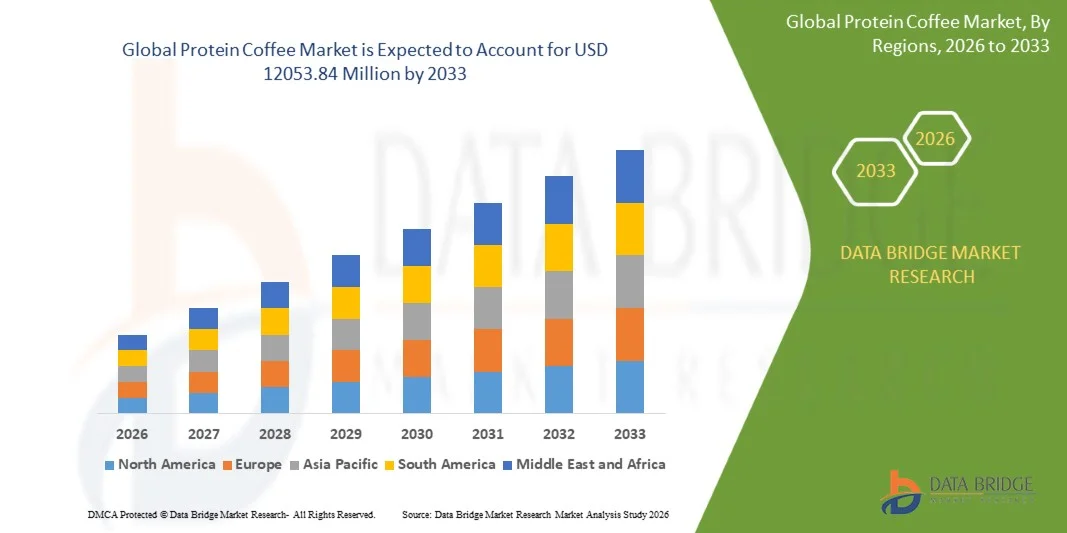
- Global Market Value (2025): USD 3,101.12 Million
- Expected Market Value (2033): USD 12,053.84 Million
- Forecast CAGR (2026–2033): 18.50%
- Leading Region in 2025: North America
- Fastest Growing Region: Asia-Pacific
Key Market Trends & Insights
- North America dominated the protein coffee market with a market share of 41–45% in 2025, driven by a mature health and wellness industry, widespread consumer awareness of functional foods, and high disposable incomes.
- Asia-Pacific is expected to be the fastest-growing region, fueled by rapid urbanization, rising middle-class populations in countries such as China, India, and South Korea, and growing adoption of Western fitness trends.
- The ready-to-drink (RTD) protein coffee segment held the largest share by product type in 2025, driven by growing consumer preference for convenient, on-the-go beverages.
- The animal-based protein segment dominated the market by protein source in 2025, owing to its high bioavailability and well-established presence in sports nutrition.
- The plant-based protein segment is witnessing rapid growth as health-conscious consumers increasingly seek clean-label and vegan-friendly alternatives.
- The supermarkets & hypermarkets segment dominated the distribution channel in 2025, followed by the rapidly expanding online retail segment, which offers greater convenience and wider product accessibility.
- Major players, including Starbucks Corporation, Nestlé S.A., Bulletproof, and Premier Nutrition, are driving market growth through new product launches, functional reformulations, and expanded retail presence.
- The increasing adoption of protein-fortified coffee products highlights the convergence of the beverage and sports nutrition industries, positioning coffee as a functional beverage that supports muscle recovery and promotes satiety.
Report Scope and Protein Coffee Market Segmentation
|
Attributes |
Protein Coffee Key Market Insights |
|
Segments Covered |
|
|
Countries Covered |
North America · U.S. · Canada · Mexico Europe · Germany · France · U.K. · Netherlands · Switzerland · Belgium · Russia · Italy · Spain · Turkey · Rest of Europe Asia-Pacific · China · Japan · India · South Korea · Singapore · Malaysia · Australia · Thailand · Indonesia · Philippines · Rest of Asia-Pacific Middle East and Africa · Saudi Arabia · U.A.E. · South Africa · Egypt · Israel · Rest of Middle East and Africa South America · Brazil · Argentina · Rest of South America |
|
Key Market Players |
· Starbucks Corporation (U.S.) · Nestlé S.A. (Switzerland) · Bulletproof (U.S.) · Chike Nutrition (U.S.) · Premier Nutrition Company (U.S.) · Vital Proteins (U.S.) · Laird Superfood (U.S.) · Grenade (UK) · Atkins (U.S.) · Dymatize (U.S.) · Quest Nutrition (U.S.) · Orgain (U.S.) · Kitu Life (U.S.) · Slate Milk (U.S.) · Javvy Coffee (U.S.) · Califia Farms (U.S.) · Brüst Beverages (Canada) · Ajinomoto (Japan) |
|
Market Opportunities |
· Rising demand for plant-based and clean-label protein coffee products targeting health-conscious consumers · Expansion of e-commerce and direct-to-consumer subscription models for broader consumer reach · Growing demand for ready-to-drink functional beverages for on-the-go consumption · Increasing urbanization and rising disposable incomes in emerging Asia-Pacific and Latin American markets |
|
Value Added Data Infosets |
In addition to the insights on market scenarios such as market value, growth rate, segmentation, geographical coverage, and major players, the market reports curated by the Data Bridge Market Research also include in-depth expert analysis, pricing analysis, brand share analysis, consumer survey, demography analysis, supply chain analysis, value chain analysis, raw material/consumables overview, vendor selection criteria, PESTLE Analysis, Porter Analysis, and regulatory framework. |
Protein Coffee Market Trends
Trend: Mainstream Adoption and Premiumization
The protein coffee category has evolved substantially since its early iterations as a niche bodybuilder supplement product. By 2025, mainstream retail acceptance, influencer-driven social media marketing, and the proliferation of ready-to-drink formats have collectively transformed protein coffee into a broadly accessible beverage category. The mainstream adoption of protein-fortified coffee products marks a major intersection between the beverage and sports nutrition sectors, framing coffee as an aid for muscle recovery and satiety. Companies such as Starbucks Corporation, Nestlé S.A., Laird Superfood, and Premier Nutrition are driving this trend through new product launches, functional reformulations, and broader retail expansion.
Protein Coffee Market Dynamics
Key Market Driver: Rising Health Consciousness and Protein-Rich Diets
The primary driver of the protein coffee market is the increasing consumer awareness regarding health and wellness. Modern consumers are more informed than ever about the importance of protein in their diets, particularly for muscle recovery, weight management, and overall metabolic health. As a result, the fusion of protein with coffee—a universally consumed beverage—has gained immense popularity, especially among urban populations seeking efficient nutrition without compromising on taste or convenience. The proliferation of fitness culture, spurred by social media and celebrity endorsements, has further amplified the appeal of protein coffee drinks. The rise of plant-based protein options and the demand for clean-label ingredients have also contributed to the market's expansion.
Key Restraint/Challenge: Higher Price Points and Consumer Perception
A significant challenge facing the protein coffee market is the higher price points compared to traditional coffee products, which can limit adoption among price-sensitive consumers. Limited consumer awareness in certain regions, concerns about taste and texture compared to regular coffee, and competition from other functional beverages also pose challenges. Additionally, fluctuating raw material costs for coffee beans and protein ingredients, supply chain disruptions, and changing food safety regulations can impact manufacturers and distributors. Ensuring consistent quality and taste across global supply chains requires significant investment in quality control systems and regulatory compliance.
Key Market Opportunity: Emerging Markets and Plant-Based Innovation
The expansion into emerging Asia-Pacific and Latin American markets presents significant growth opportunities for protein coffee manufacturers. Asia-Pacific is projected to be the fastest-growing region, driven by rapid urbanization, rising disposable incomes, and an increasing focus on fitness and preventive healthcare among younger demographics. Countries like China, Japan, Australia, and India are witnessing a surge in demand for both RTD and instant protein coffee formats. The growing demand for plant-based and clean-label protein coffee products targeting health-conscious consumers represents another substantial opportunity. Manufacturers can capitalize on this trend by developing plant-based, organic, and sustainably sourced protein coffee products that command premium pricing.
Protein Coffee Market Scope
The protein coffee market is segmented on the basis of product type, source, flavor, distribution channel, and end-user.
- Product Type
On the basis of product type, the Protein Coffee Market is segmented into ready-to-drink protein coffee, protein coffee powder, protein coffee concentrates, protein coffee pods and others. The Ready-to-Drink (RTD) Protein Coffee segment held the largest product type share in 2025, driven by growing consumer preference for convenient, on-the-go beverages. RTD formats are particularly popular among working professionals, students, and fitness enthusiasts who want both energy and convenience without the need for preparation. The portability and immediate consumption capability of RTD products align perfectly with busy modern lifestyles, making them a preferred choice for breakfast replacement, post-workout recovery, and midday energy boosts. Protein Coffee Powder represents a significant market segment, appealing to consumers who prefer customizable protein levels and flavors, allowing them to adjust the intensity and nutritional profile according to their specific dietary needs. Protein Coffee Concentrates and Pods are emerging as convenient formats for home and office consumption, offering consistent quality and ease of preparation. The growing availability of single-serve pods compatible with popular brewing systems is expanding the reach of protein coffee into household and workplace settings, further driving segment growth.
- Source
On the basis of source, the Protein Coffee Market is segmented into plant-based and animal-based. The Animal-based protein segment dominated the market in 2025, primarily due to strong adoption of Animal-based protein ingredients, which are widely recognized for their high bioavailability and established presence in sports nutrition. Animal-based proteins including Animal-based, casein, and milk protein continue to hold substantial market share due to their complete amino acid profiles, superior taste characteristics, and ability to blend smoothly into coffee without compromising texture. These proteins are highly effective for muscle recovery and synthesis, appealing strongly to athletes and fitness enthusiasts. Plant-based proteins including pea, soy, and rice protein are rapidly gaining traction among health-conscious consumers seeking clean-label and vegan-friendly alternatives. The growing prevalence of lactose intolerance, dairy allergies, and the rising popularity of vegan and flexitarian diets are driving demand for plant-based protein coffee options, with manufacturers investing in improved taste and solubility to overcome traditional challenges such as grittiness and off-flavors.
- Flavor
On the basis of flavor, the Protein Coffee Market is segmented into original, mocha, vanilla, caramel and others. Original flavor dominates the market, appealing to traditional coffee drinkers seeking the familiar taste of coffee with added protein benefits. The original flavor profile allows consumers to enjoy the authentic coffee experience while receiving the nutritional advantages of added protein, making it an accessible entry point for new users. Mocha, Vanilla, and Caramel flavors are gaining significant traction, attracting consumers seeking indulgent and flavorful functional beverage experiences. These flavors mask the sometimes earthy or bitter notes of protein isolates, creating a more palatable and enjoyable drinking experience that appeals to a broader consumer base. Manufacturers are continually innovating with new and unique flavor profiles to cater to evolving consumer preferences, including seasonal limited-edition flavors, dessert-inspired varieties, and regional taste adaptations. The expansion of flavor offerings is critical for attracting repeat purchases and encouraging trial among consumers who may be hesitant about the taste of protein-fortified beverages.
- Distribution Channel
On the basis of distribution channel, the Protein Coffee Market is segmented into supermarkets/hypermarkets, convenience stores, specialty stores, online stores and others. Supermarkets & Hypermarkets dominate the distribution channel segment, owing to extensive reach and consumer familiarity, with over 40% of protein coffee sales occurring through these channels. These large-format retailers offer consumers the widest variety of protein coffee products and brands under one roof, enabling easy comparison and trial. The prominent shelf placement and promotional activities in supermarkets significantly influence consumer purchasing decisions. Online Stores are gaining significant traction, reflecting changing shopping behaviors and offering convenience and broader access to consumers, particularly through subscription models and direct-to-consumer channels. The rise of e-commerce has enabled smaller and emerging brands to reach consumers without the need for extensive retail distribution networks. Convenience Stores play a crucial role in appealing to consumers seeking quick and convenient options for immediate consumption. Specialty Stores serve consumers seeking premium and gourmet protein coffee products, offering curated selections and expert guidance.
- End-User
On the basis of end-user, the Protein Coffee Market is segmented into athletes & fitness enthusiasts, general consumers, working professionals and others. Athletes & Fitness Enthusiasts represent a significant end-user segment, driven by the need for convenient post-workout nutrition and muscle recovery support. This segment values the dual benefits of caffeine for performance enhancement and protein for muscle repair, making protein coffee an efficient two-in-one solution for their active lifestyles. General Consumers are the fastest-growing segment, reflecting the mainstream adoption of protein coffee beyond traditional sports nutrition. This expansion is driven by increasing health awareness, the desire for convenient nutritious options, and the growing acceptance of functional beverages in daily routines. Working Professionals represent a substantial market segment, seeking convenient, energy-boosting beverages that support busy daily routines. The combination of caffeine for alertness and protein for sustained energy makes protein coffee particularly appealing for morning routines and afternoon slumps, positioning it as a versatile beverage for modern professionals.
Protein Coffee Market Regional Analysis
North America Protein Coffee Market Insight
North America dominated the protein coffee market with a market share of 41–45% in 2025, driven by a mature health and wellness industry, widespread consumer awareness of functional foods, and high disposable incomes. The United States, in particular, has seen a proliferation of specialty brands and private-label products catering to athletes, fitness enthusiasts, and busy professionals. Robust distribution networks through supermarkets, hypermarkets, and online channels have further accelerated market penetration. Favorable government policies promoting healthy lifestyles and a high prevalence of gym memberships have reinforced consumer demand, making North America the benchmark for protein coffee innovation and consumption. The U.S. market continues to lead in product innovation, with major players including Starbucks, Bulletproof, and Premier Nutrition driving category growth.
Asia-Pacific Protein Coffee Market Insight
Asia-Pacific is expected to be the fastest-growing region in the protein coffee market, projected to register a CAGR of approximately 14–16% during the forecast period. This impressive growth trajectory is driven by rapid urbanization, rising disposable incomes, and an increasing focus on fitness and preventive healthcare among younger demographics. Countries like China, Japan, Australia, and India are witnessing a surge in demand for both RTD and instant protein coffee formats, as consumers seek convenient nutrition solutions. The proliferation of e-commerce platforms and aggressive marketing campaigns by both global and local brands have further fueled adoption. Strategic investments by multinational beverage companies and the introduction of region-specific flavors and plant-based protein options are accelerating market expansion in the region.
Europe Protein Coffee Market Insight
Europe represents a mature and significant market for protein coffee, supported by established consumption patterns, strong retail infrastructure, and high health consciousness. The region benefits from a long tradition of coffee consumption and growing interest in functional beverages. Increasing demand for plant-based and clean-label protein coffee offerings, along with growing consumer interest in convenience foods, is driving market growth across Western and Eastern European countries. Regulatory frameworks governing food safety and labeling continue to shape product development and market dynamics in the region. The UK, Germany, and France represent key markets with strong adoption of protein-fortified beverages.
Protein Coffee Market Share
The Protein Coffee industry is primarily led by well-established companies, including:
- Starbucks Corporation (U.S.)
- Nestlé S.A. (Switzerland)
- Bulletproof (U.S.)
- Chike Nutrition (U.S.)
- Premier Nutrition Company (U.S.)
- Vital Proteins (U.S.)
- Laird Superfood (U.S.)
- Grenade (UK)
- Atkins (U.S.)
- Dymatize (U.S.)
- Quest Nutrition (U.S.)
- Orgain (U.S.)
- Kitu Life (U.S.)
- Slate Milk (U.S.)
- Javvy Coffee (U.S.)
- Califia Farms (U.S.)
- Brüst Beverages (Canada)
- Ajinomoto (Japan)
Latest Developments in Protein Coffee Market
- In September 2025, Starbucks announced the arrival of new Protein Lattes and Protein Cold Foam to its permanent menu, launching on September 29 across U.S. and Canada locations. The Protein Lattes deliver approximately 27 to 36 grams of protein per grande beverage using protein-boosted milk, while Protein Cold Foam adds about 15 grams of protein to any cold beverage. Made with premium whey and available in zero-added sugar options, these products represent Starbucks' menu modernization strategy tapping into growing consumer demand for protein.
- In September 2025, Gregorys Coffee partnered with global plant-based nutrition leader Nuzest to launch "Protein Buzz," a handcrafted plant-based protein coffee drink featuring 18 grams of plant-based protein. The beverage includes cold brew, Nuzest Clean Lean Protein (Vanilla), peanut butter, coconut water and date syrup. To celebrate the launch and National Coffee Day on September 29, Gregorys offered free full-size Protein Buzz drinks.
- In October 2025, Japanese food conglomerate Ajinomoto launched Atlr.72® GRe:en Drop Coffee in Singapore, combining Prefer's beanless coffee with Solar Foods' Solein protein. The dairy-free ice latte features a blend of 70% regular coffee and 30% beanless coffee made from rice and chickpeas, reducing CO₂ emissions by 25%. Solein, produced through microbial fermentation using CO₂, hydrogen, and oxygen, provides 78% protein content.
- In July 2025, Javvy Coffee launched a protein-fortified coffee concentrate delivering 10g protein per serving and announced availability of its ready-to-drink Protein Coffee in all Sprouts Farmers Market locations across the U.S.
- In July 2025, Califia Farms launched Protein Vanilla Almond Latte featuring 10 grams of pea protein and just 5 grams of sugar per serving, as protein coffee continues to trend in coffee shops.
- In October 2025, Clearstone Capital acquired Brüst Beverages, a Canadian producer of ready-to-drink protein coffee, to enhance production capabilities, expand distribution channels, and accelerate product innovation in the Canadian and U.S. beverage market.
- In November 2025, Bulletproof launched High Protein Iced Coffee, combining two of today's most in-demand trends: protein and iced coffee.

- Interactive Data Analysis Dashboard
- Company Analysis Dashboard for high growth potential opportunities
- Research Analyst Access for customization & queries
- Competitor Analysis with Interactive dashboard
- Latest News, Updates & Trend analysis
- Harness the Power of Benchmark Analysis for Comprehensive Competitor Tracking
Global Protein Coffee Market, Supply Chain Analysis and Ecosystem Framework
To support market growth and help clients navigate the impact of geopolitical shifts, DBMR has integrated in-depth supply chain analysis into its Global Protein Coffee Market research reports. This addition empowers clients to respond effectively to global changes affecting their industries. The supply chain analysis section includes detailed insights such as Global Protein Coffee Market consumption and production by country, price trend analysis, the impact of tariffs and geopolitical developments, and import and export trends by country and HSN code. It also highlights major suppliers with data on production capacity and company profiles, as well as key importers and exporters. In addition to research, DBMR offers specialized supply chain consulting services backed by over a decade of experience, providing solutions like supplier discovery, supplier risk assessment, price trend analysis, impact evaluation of inflation and trade route changes, and comprehensive market trend analysis.
Data collection and base year analysis are done using data collection modules with large sample sizes. The stage includes obtaining market information or related data through various sources and strategies. It includes examining and planning all the data acquired from the past in advance. It likewise envelops the examination of information inconsistencies seen across different information sources. The market data is analysed and estimated using market statistical and coherent models. Also, market share analysis and key trend analysis are the major success factors in the market report. To know more, please request an analyst call or drop down your inquiry.
The key research methodology used by DBMR research team is data triangulation which involves data mining, analysis of the impact of data variables on the market and primary (industry expert) validation. Data models include Vendor Positioning Grid, Market Time Line Analysis, Market Overview and Guide, Company Positioning Grid, Patent Analysis, Pricing Analysis, Company Market Share Analysis, Standards of Measurement, Global versus Regional and Vendor Share Analysis. To know more about the research methodology, drop in an inquiry to speak to our industry experts.
Data Bridge Market Research is a leader in advanced formative research. We take pride in servicing our existing and new customers with data and analysis that match and suits their goal. The report can be customized to include price trend analysis of target brands understanding the market for additional countries (ask for the list of countries), clinical trial results data, literature review, refurbished market and product base analysis. Market analysis of target competitors can be analyzed from technology-based analysis to market portfolio strategies. We can add as many competitors that you require data about in the format and data style you are looking for. Our team of analysts can also provide you data in crude raw excel files pivot tables (Fact book) or can assist you in creating presentations from the data sets available in the report.













