


What is the Protein in Infant Formula Market Size and Growth Rate?
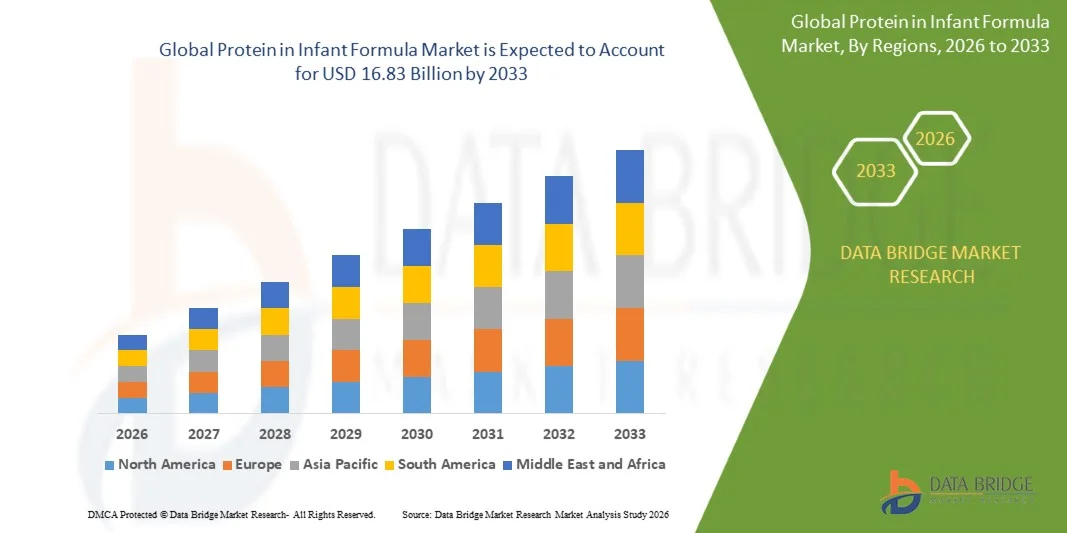
- As per Data Bridge Market Research analysis, the protein in infant formula market was valued at USD 8.94 billion in 2025 and is projected to reach USD 16.83 billion by 2033, growing at a CAGR of 8.25% from 2026 to 2033.
- The market is experiencing steady growth driven by rising global birth rates in emerging economies, declining exclusive breastfeeding rates among working mothers, and growing parental preference for protein blends that closely mimic the amino acid composition of human breast milk.
- The increasing prevalence of cow's milk protein allergy and lactose intolerance among infants, combined with expanding clinical validation of hydrolyzed and partially hydrolyzed whey protein ingredients, is compelling formula manufacturers to reformulate products with gentler, easier-to-digest protein sources. Whey-predominant and hydrolyzed formulas are increasingly replacing conventional casein-heavy formulations, offering improved digestibility and reduced allergenicity for sensitive infants.
Market Size & Forecast
- Global Market Value (2025): USD 8.94 Billion
- Expected Market Value (2033): USD 16.83 Billion
- Forecast CAGR (2026–2033): 8.25%
- Leading Region in 2025: Asia-Pacific
- Fastest Growing Region: North America
What are the Major Takeaways of the Protein in Infant Formula Market?
- Asia-Pacific dominated the global protein in infant formula market with the largest revenue share of 44.60% in 2025, supported by large infant populations, rising birth rates, and expanding domestic infant nutrition manufacturing across China, India, and Indonesia.
- North America is expected to be the fastest-growing region at a CAGR of 9.30% from 2026 to 2033, fueled by rising diagnosis of cow's milk protein allergy and growing adoption of hydrolyzed and specialty protein formulas.
- The whey protein segment led the market with a 46.20% share in 2025, driven by its superior digestibility, rapid gastric emptying, and close resemblance to the whey-to-casein ratio found in human breast milk.
- Hydrolyzed protein is the fastest-growing protein source, projected to register a CAGR of 9.10%, reflecting rising demand for allergy-friendly and easily digestible infant nutrition.
- The cow milk-based formula segment dominated the formula type category with a 61.35% revenue share in 2025, owing to its widespread availability, established nutritional profile, and broad consumer familiarity.
- Powder form accounted for 63.40% of the market share in 2025, preferred for its longer shelf life, cost-effectiveness, and ease of storage and transport.
- The online retail distribution channel is the fastest-growing segment, with a CAGR of 10.20%, driven by increasing e-commerce penetration and subscription-based delivery models for infant nutrition products.
Report Scope and Protein in Infant Formula Market Segmentation
|
Attributes |
Protein in Infant Formula Key Market Insights |
|
Segments Covered |
|
|
Countries Covered |
North America
Europe
Asia-Pacific
Middle East and Africa
South America
|
|
Key Market Players |
|
|
Market Opportunities |
|
|
Value Added Data Infosets |
In addition to the insights on market scenarios such as market value, growth rate, segmentation, geographical coverage, and major players, the market reports curated by the Data Bridge Market Research also include in-depth expert analysis, geographically represented company-wise production and capacity, network layouts of distributors and partners, detailed and updated price trend analysis and deficit analysis of supply chain and demand. |
What is the Key Trend in the Protein in Infant Formula Market?
- Formula manufacturers and ingredient suppliers are increasingly reformulating infant nutrition products with partially hydrolyzed, whey-predominant protein blends to improve digestibility and more closely mirror the amino acid profile of human breast milk.
- For instance, in October 2024, FrieslandCampina Ingredients' Hyvital Whey HA 300 partially hydrolyzed whey protein received European Commission approval for use in newborn and follow-on formula, reflecting the industry's continued shift toward gentler, easier-to-digest protein ingredients.
- Growing clinical validation of whey protein hydrolysates for allergy management and gastrointestinal comfort is encouraging regulators such as the U.S. FDA and EFSA to authorize new hydrolysate ingredients for early-life nutrition applications.
- Rising parental interest in A2 beta-casein protein and goat milk-based formulas is also gaining momentum, as these alternatives are perceived by consumers as gentler on infant digestion compared with conventional cow milk protein.
What are the Key Drivers of the Protein in Infant Formula Market?
- Rising global birth rates in emerging economies, combined with declining exclusive breastfeeding rates among working mothers, is driving sustained demand for protein-fortified infant formula as a reliable nutritional alternative.
- For instance, in 2024, Arla Foods Ingredients received U.S. FDA confirmation that four of its Peptigen and Lacprodan whey protein hydrolysate ingredients meet the peptone definition, enabling their use in infant nutrition products aimed at managing cow's milk allergy and reducing gastrointestinal discomfort.
- Growing prevalence of cow's milk protein allergy and lactose intolerance among infants is boosting demand for hydrolyzed, amino acid-based, and other specialty protein formulations across both developed and emerging markets.
- Increasing R&D investment by dairy and nutrition companies to develop protein blends that replicate the composition of human breast milk, supported by growing clinical research into whey-to-casein ratios and bioactive protein fractions, continues to strengthen product pipelines across the industry.
Which Factors are Challenging the Growth of the Protein in Infant Formula Market?
- High costs associated with specialty and hydrolyzed protein ingredients, combined with complex, multi-year regulatory approval processes across different regions, restrict affordability and slow new product launches, particularly for smaller manufacturers and ingredient suppliers.
- For instance, obtaining nutritional safety and suitability opinions from bodies such as EFSA and the U.S. FDA for new protein hydrolysates typically requires extensive clinical study data, limiting the pace of innovation for small and mid-sized ingredient companies.
- Recurring product recalls linked to contamination risks, including bacterial and toxin-related incidents, continue to erode consumer confidence in certain formula categories, creating headwinds for market growth despite otherwise strong underlying demand.
- The high capital investment and stringent quality-control requirements associated with advanced protein processing technologies continue to restrict entry for new players, particularly in price-sensitive and emerging markets, slowing the pace of market penetration.
How is the Protein in Infant Formula Market Segmented?
The protein in infant formula market is segmented on the basis of protein source, formula type, age group, application, form, distribution channel, packaging, and end user.
- By Protein Source
On the basis of protein source, the global protein in infant formula market is segmented into whey protein, casein protein, soy protein, rice protein, hydrolyzed protein, and amino acid-based protein. The whey protein segment dominated the market with a 46.20% share in 2025, owing to its superior digestibility, rapid gastric emptying, and closer resemblance to the whey-to-casein ratio found in human breast milk compared with casein-predominant formulations.
The hydrolyzed protein segment is projected to register the fastest growth at a CAGR of 9.10% from 2026 to 2033, driven by rising diagnosis of cow's milk protein allergy and expanding clinical validation of partially and extensively hydrolyzed whey ingredients for allergy management and digestive comfort.
- By Formula Type
On the basis of formula type, the global protein in infant formula market is segmented into cow milk-based formula, goat milk-based formula, soy-based formula, hydrolyzed formula, and amino acid-based formula. The cow milk-based formula segment led the market with a 61.35% share in 2025, supported by its widespread availability, established nutritional profile, and broad consumer familiarity across both developed and emerging markets.
The goat milk-based formula segment is expected to witness the fastest growth at a CAGR of 9.40% from 2026 to 2033, driven by rising parental perception of goat milk protein as easier to digest and less allergenic than conventional cow milk protein.
- By Age Group
On the basis of age group, the global protein in infant formula market is segmented into infant formula (0–6 months), follow-on formula (6–12 months), and toddler/growing-up formula (12–36 months). The infant formula (0–6 months) segment dominated the market with a share of 42.80% in 2025, owing to its critical role as a primary or supplementary nutrition source during the earliest and most nutritionally sensitive stage of an infant's life.
The follow-on formula (6–12 months) segment is anticipated to witness the fastest CAGR of 8.70% from 2026 to 2033, driven by increasing parental focus on continued protein and micronutrient support as infants transition toward solid foods.
- By Application
On the basis of application, the global protein in infant formula market is segmented into standard nutrition, hypoallergenic nutrition, preterm & low birth weight nutrition, lactose intolerance management, and digestive health support. The standard nutrition segment dominated the market with a share of 54.60% in 2025 due to its broad applicability across the general infant population and widespread pediatric recommendation.
The hypoallergenic nutrition segment is expected to witness the fastest CAGR of 9.80% from 2026 to 2033, driven by rising global incidence of cow's milk protein allergy and growing healthcare provider recommendation of extensively hydrolyzed and amino acid-based formulas for at-risk infants.
- By Form
On the basis of form, the global protein in infant formula market is segmented into powder, liquid concentrate, and ready-to-feed. The powder segment dominated the market with a share of 63.40% in 2025 due to its longer shelf life, lower transportation costs, and ease of storage compared with liquid formats.
The ready-to-feed segment is expected to witness the fastest CAGR of 8.90% from 2026 to 2033, driven by rising demand for convenient, no-preparation feeding solutions among working parents and increasing institutional use in hospitals and neonatal care units.
- By Distribution Channel
On the basis of distribution channel, the global protein in infant formula market is segmented into supermarkets & hypermarkets, pharmacies & drug stores, specialty stores, online retail, and hospital & clinic pharmacies. The supermarkets & hypermarkets segment dominated the market with a share of 41.25% in 2025, supported by extensive retail reach, wide product assortment, and competitive pricing.
The online retail segment is expected to witness the fastest CAGR of 10.20% from 2026 to 2033, driven by rising e-commerce penetration, subscription-based delivery models, and growing parental preference for convenient, doorstep access to infant nutrition products.
- By Packaging
On the basis of packaging, the global protein in infant formula market is segmented into cans, cartons, pouches, and bottles. The cans segment dominated the market with a share of 48.70% in 2025 due to superior product protection, extended shelf stability, and established consumer trust in tin and metal canister formats.
The pouches segment is expected to witness the fastest CAGR of 8.60% from 2026 to 2033, driven by lower material and shipping costs, growing sustainability concerns, and rising manufacturer adoption of lightweight, resealable packaging formats.
- By End User
On the basis of end user, the global protein in infant formula market is segmented into full-term infants, preterm & low birth weight infants, and infants with allergies & intolerances. The full-term infants segment dominated the market with a share of 71.50% in 2025, reflecting its position as the largest overall consumer base for standard infant nutrition products.
The infants with allergies & intolerances segment is expected to witness the fastest CAGR of 9.50% from 2026 to 2033, driven by rising pediatric diagnosis rates and expanding availability of clinically validated hydrolyzed and amino acid-based formula options.
Which Region Holds the Largest Share of the Protein in Infant Formula Market?
- Asia-Pacific dominated the protein in infant formula market and accounted for the largest revenue share of 44.60% in 2025, supported by large infant populations, rising birth rates, and expanding domestic infant nutrition manufacturing capacity across China, India, and Southeast Asia.
- The region also benefits from growing disposable incomes, increasing parental awareness of specialty and hypoallergenic nutrition, and rising government focus on infant and maternal health. Continued expansion of retail and e-commerce distribution networks is further strengthening Asia-Pacific's leadership position in the global market.
U.S. Protein in Infant Formula Market Insight
The U.S. protein in infant formula market is expanding steadily, supported by rising diagnosis of cow's milk protein allergy, growing pediatrician recommendation of hydrolyzed and amino acid-based formulas, and increasing regulatory approvals for novel protein hydrolysate ingredients. Continued investment in domestic manufacturing infrastructure and expanding retail and online distribution are further strengthening market growth.
Germany Protein in Infant Formula Market Insight
The Germany protein in infant formula market is growing steadily, supported by the country's strong dairy processing base, stringent product quality standards, and rising parental preference for organic and specialty protein formulations. Increasing collaboration between dairy processors and infant nutrition brands on novel protein ingredients is further supporting market expansion.
China Protein in Infant Formula Market Insight
The China protein in infant formula market is growing rapidly, driven by a large infant population, rising household incomes, and strong government focus on domestic infant nutrition quality and safety standards. Growing consumer preference for premium, imported, and specialty protein formulations is significantly boosting demand across both offline and online retail channels.
India Protein in Infant Formula Market Insight
The India protein in infant formula market is witnessing consistent growth, supported by rising birth rates, increasing urbanization, and growing awareness of infant nutrition among working parents. Expanding retail pharmacy networks and rising adoption of e-commerce for infant nutrition purchases are further contributing to market growth.
Which are the Top Companies in Protein in Infant Formula Market?
The protein in infant formula industry is primarily led by well-established companies, including:
- Nestlé S.A. (Switzerland)
- Danone S.A. (France)
- Abbott Laboratories (U.S.)
- Reckitt Benckiser Group plc (U.K.)
- Royal FrieslandCampina N.V. (Netherlands)
- Arla Foods amba (Denmark)
- Kraft Heinz Company (U.S.)
- Perrigo Company plc (Ireland)
- Bellamy's Organic (Australia)
- Hain Celestial Group, Inc. (U.S.)
- Fonterra Co-operative Group Limited (New Zealand)
- Glanbia plc (Ireland)
- Kerry Group plc (Ireland)
- Ingredion Incorporated (U.S.)
- dsm-firmenich (Netherlands)
- Meiji Holdings Co., Ltd. (Japan)
- Morinaga Milk Industry Co., Ltd. (Japan)
- Synlait Milk Ltd. (New Zealand)
- The a2 Milk Company Limited (New Zealand)
What are Latest Developments in Protein in Infant Formula Market?
- In October 2024, FrieslandCampina Ingredients received European Commission approval for its Hyvital Whey HA 300 partially hydrolyzed whey protein for use in newborn and follow-on formula, expanding manufacturers' access to clinically supported, easier-to-digest protein ingredients across the European market.
- In 2024, Arla Foods Ingredients received U.S. FDA confirmation that four of its Peptigen and Lacprodan whey protein hydrolysate ingredients meet the U.S. peptone definition, enabling their use by American infant formula manufacturers in products targeting cow's milk allergy management and gastrointestinal comfort.
- In 2025, the European Food Safety Authority issued a positive opinion on the nutritional safety and suitability of a whey protein concentrate-derived hydrolysate developed by Fonterra Co-operative Group for use in infant and follow-on formula across the European Union.
- In 2025, Arla Foods Ingredients published new clinical trial results for its Lacprodan IF-3070 partially hydrolyzed whey protein, showing that infants fed formula containing the ingredient achieved growth outcomes comparable to breastfed infants while also supporting gastrointestinal comfort.
- In January 2023, ByHeart, Inc. acquired Cascadia Nutrition, strengthening its U.S.-based infant formula manufacturing infrastructure and supporting the company's strategy to build a more resilient, vertically integrated supply chain for protein-based infant nutrition products.

- Interactive Data Analysis Dashboard
- Company Analysis Dashboard for high growth potential opportunities
- Research Analyst Access for customization & queries
- Competitor Analysis with Interactive dashboard
- Latest News, Updates & Trend analysis
- Harness the Power of Benchmark Analysis for Comprehensive Competitor Tracking
Global Protein In Infant Formula Market, Supply Chain Analysis and Ecosystem Framework
To support market growth and help clients navigate the impact of geopolitical shifts, DBMR has integrated in-depth supply chain analysis into its Global Protein In Infant Formula Market research reports. This addition empowers clients to respond effectively to global changes affecting their industries. The supply chain analysis section includes detailed insights such as Global Protein In Infant Formula Market consumption and production by country, price trend analysis, the impact of tariffs and geopolitical developments, and import and export trends by country and HSN code. It also highlights major suppliers with data on production capacity and company profiles, as well as key importers and exporters. In addition to research, DBMR offers specialized supply chain consulting services backed by over a decade of experience, providing solutions like supplier discovery, supplier risk assessment, price trend analysis, impact evaluation of inflation and trade route changes, and comprehensive market trend analysis.
Data collection and base year analysis are done using data collection modules with large sample sizes. The stage includes obtaining market information or related data through various sources and strategies. It includes examining and planning all the data acquired from the past in advance. It likewise envelops the examination of information inconsistencies seen across different information sources. The market data is analysed and estimated using market statistical and coherent models. Also, market share analysis and key trend analysis are the major success factors in the market report. To know more, please request an analyst call or drop down your inquiry.
The key research methodology used by DBMR research team is data triangulation which involves data mining, analysis of the impact of data variables on the market and primary (industry expert) validation. Data models include Vendor Positioning Grid, Market Time Line Analysis, Market Overview and Guide, Company Positioning Grid, Patent Analysis, Pricing Analysis, Company Market Share Analysis, Standards of Measurement, Global versus Regional and Vendor Share Analysis. To know more about the research methodology, drop in an inquiry to speak to our industry experts.
Data Bridge Market Research is a leader in advanced formative research. We take pride in servicing our existing and new customers with data and analysis that match and suits their goal. The report can be customized to include price trend analysis of target brands understanding the market for additional countries (ask for the list of countries), clinical trial results data, literature review, refurbished market and product base analysis. Market analysis of target competitors can be analyzed from technology-based analysis to market portfolio strategies. We can add as many competitors that you require data about in the format and data style you are looking for. Our team of analysts can also provide you data in crude raw excel files pivot tables (Fact book) or can assist you in creating presentations from the data sets available in the report.













