


What is the Public Transport Market Size and Growth Rate?
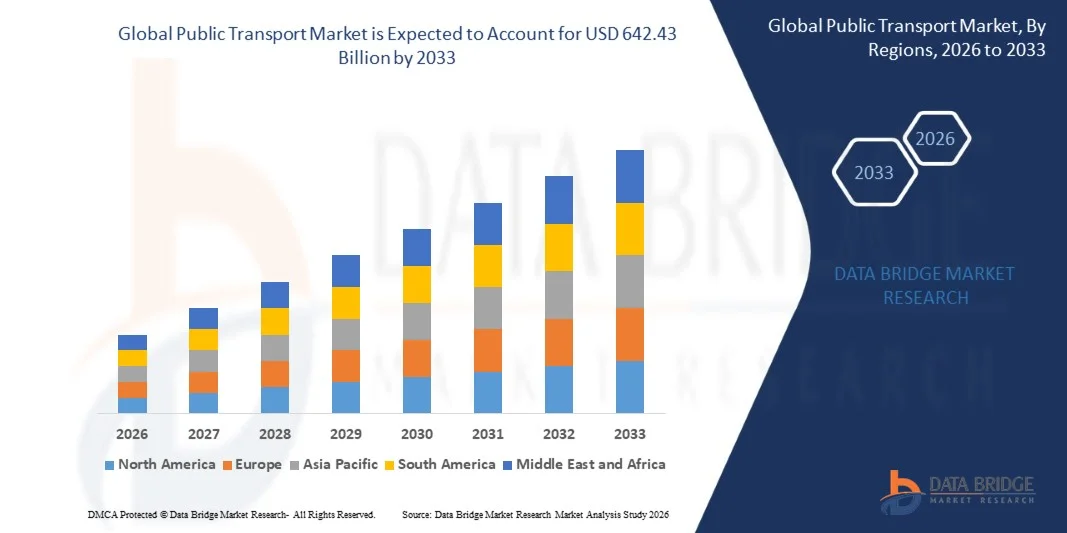
- As per Data Bridge Market Research analysis, the public transport market was valued at USD 281.80 billion in 2025 and is projected to reach USD 642.43 billion by 2033, growing at a CAGR of 10.85% from 2026 to 2033.
- The market is experiencing consistent growth driven by increasing urbanization, rising demand for efficient and sustainable transportation solutions, growing investments in public transit infrastructure, and the adoption of smart transportation technologies across cities worldwide.
- The increasing need to reduce traffic congestion, minimize carbon emissions, and improve urban mobility, combined with government initiatives supporting electric buses, metro systems, and intelligent transportation solutions, is compelling cities and transportation authorities to modernize public transit networks. Digital ticketing systems, connected mobility platforms, and sustainable transit solutions are transforming traditional public transportation into efficient, accessible, and environmentally friendly mobility systems.
Market Size & Forecast
- Global Market Value (2025): USD 281.80 Billion
- Expected Market Value (2033): USD 642.43 Billion
- Forecast CAGR (2026–2033): 10.85%
- Leading Region in 2025: North America
- Fastest Growing Region: Asia Pacific
What are the Major Takeaways of the Public Transport Market?
- North America dominated the public transport market with the largest revenue share of 38.6% in 2025, supported by established transit infrastructure and continued investments in rail and bus network modernization
- Asia-Pacific is expected to be the fastest-growing region at a CAGR of 6.1% from 2026 to 2033, fueled by rapid urbanization, expanding metro networks, and increasing public transportation investments.
- The bus segment led the market with a 38.2% share in 2025, driven by its extensive route coverage, operational flexibility, and relatively lower infrastructure requirements compared with fixed-rail transportation.
- High-speed line are the fastest-growing type, projected to register a CAGR of 6.5%, reflecting the surge in investment in high-capacity intercity transportation infrastructure.
- The diesel segment dominated the propulsion category with a 44.3% revenue share in 2025, led by the extensive installed base of diesel-powered public transportation vehicles.
- Road accounted for 54% of the market share in 2025, preferred by the widespread availability of bus-based transportation and flexible road networks.
- The rural segment is the fastest-growing application category, with a CAGR of 6.0%, driven by increasing efforts to improve transportation accessibility outside major urban centers.
Report Scope and Public Transport Market Segmentation
|
Attributes |
Public Transport Key Market Insights |
|
Segments Covered |
|
|
Countries Covered |
North America
Europe
Asia-Pacific
Middle East and Africa
South America
|
|
Key Market Players |
|
|
Market Opportunities |
|
|
Value Added Data Infosets |
In addition to the market insights such as market value, growth rate, market segments, geographical coverage, market players, and market scenario, the market report curated by the Data Bridge Market Research team includes in-depth expert analysis, import/export analysis, pricing analysis, production consumption analysis, and pestle analysis. |
What is the Key Trend in the Public Transport Market?
- Public transport operators are increasingly shifting toward electric and zero-emission buses to reduce operating emissions, improve urban air quality, and modernize aging transit fleets while supporting long-term sustainable mobility objectives.
- For instance, in July 2025, Bengaluru integrated its metro and bus services with the Open Network for Digital Commerce (ONDC), enabling commuters to purchase tickets through multiple mobile applications.
- Digital ticketing, integrated fare systems, and real-time passenger information are enabling operators to improve convenience, streamline boarding, and strengthen operational efficiency across increasingly multimodal public transport networks.
- Public transport authorities are increasingly combining electric mobility with digitalization and data-driven planning to optimize vehicle deployment, charging infrastructure, scheduling, and passenger services across urban transit networks.
- For instance, in March 2025, Mint reported that India continued its push to expand electric buses in public transportation, although electric-bus sales faced challenges during FY2025.
- As cities and transport authorities continue to prioritize cleaner fleets, digital passenger services, and operational optimization, the adoption of electrified and connected public transport systems is expected to accelerate, reinforcing sustainable mobility as a core component of urban transportation
What are the Key Drivers of the Public Transport Market?
- The rapid urbanization, rising congestion, and growing passenger mobility requirements are significantly increasing demand for reliable public transportation systems capable of providing efficient connectivity across densely populated cities and expanding metropolitan regions.
- For instance, in September 2024, Reuters reported that India approved the PM E-DRIVE scheme, allocating INR 43.91 billion to help public transport agencies procure 14,028 electric buses, supporting the transition toward cleaner public mobility.
- Governments, transportation authorities, and infrastructure developers are integrating public transport expansion into urban development strategies to improve connectivity, reduce congestion, strengthen accessibility, and support sustainable economic growth across rapidly developing metropolitan areas.
- For instance, in April 2024, Reuters reported that cities across Latin America were accelerating electric-bus deployment, with planned e-bus fleets in 32 major cities expected to increase from around 4,000 to 25,000 by 2030, supported by financing mechanisms and government initiatives.
- With governments increasingly prioritizing mass transit infrastructure to address congestion, urban expansion, and sustainability objectives, public transport will remain essential for improving mobility, supporting economic activity, and strengthening connected urban transportation networks.
What Factors are Challenging the Growth of the Public Transport Market?
- Public transport systems require substantial capital investment and continuous operating expenditure due to infrastructure construction, fleet procurement, maintenance requirements, energy costs, and the need for technology upgrades across transportation networks.
- For instance, in March 2026, Reuters reported that New York’s Metropolitan Transportation Authority sued over nearly USD 60 million in withheld funding for the Second Avenue Subway project, highlighting how funding interruptions can affect large-scale transit infrastructure development.
- These financial requirements can constrain service expansion among transit agencies facing limited fare revenues, restricted public budgets, and increasing operating costs, particularly in regions dependent on government subsidies.
- The combination of high infrastructure expenditure and persistent operating-cost pressures continues to challenge public transport expansion, particularly among agencies requiring fleet modernization, infrastructure renewal, and service improvements.
- For instance, in June 2025, Reuters reported that South Africa secured a USD 1.5 billion World Bank loan to address struggling transport and energy infrastructure, while deteriorating rail networks and financial problems at state-owned transport company Transnet had constrained economic activity.
- These financial constraints can slow network development and limit the widespread deployment of advanced and sustainable transit solutions despite growing passenger mobility requirements.
How is the Public Transport Market Segmented?
The public transport market is segmented on the basis of type, propulsion, mode, application, and end use.
- By Type
On the basis of type, the public transport market is segmented into bus, tram, underground (metro), regional taxi, light rail, train, and high-speed line. The bus segment dominated the market with 38.2% share in 2025, owing to its extensive route coverage, operational flexibility, and relatively lower infrastructure requirements compared with fixed-rail transportation. Buses can serve both densely populated urban areas and suburban or regional communities without requiring dedicated rail infrastructure. They are also widely used for feeder services connecting passengers to metro and railway stations. Increasing investment in bus rapid transit systems is further supporting the segment. The growing adoption of electric and low-emission buses is enabling operators to modernize fleets while maintaining flexible routes
The high-speed line segment is projected to register the fastest growth at a CAGR of 6.5% from 2026 to 2033, supported by increasing investment in high-capacity intercity transportation infrastructure. High-speed rail provides rapid connections between major cities and can reduce travel times compared with conventional rail and road transportation. Governments are investing in dedicated high-speed corridors to improve regional connectivity and reduce congestion on major road networks. Expansion of high-speed rail networks is particularly prominent across Asia and Europe. Integration with conventional rail, metro networks, and multimodal transportation hubs is further improving passenger accessibility.
- By Propulsion
On the basis of propulsion, the public transport market is segmented into diesel, gasoline, electric, and others. The diesel segment dominated the market with 44.3% share in 2025, primarily due to the extensive installed base of diesel-powered public transportation vehicles. Diesel vehicles continue to benefit from established fueling infrastructure and widespread availability of maintenance capabilities. They are particularly important for regional and rural routes where charging infrastructure may remain limited. Existing transit fleets are also generally replaced gradually according to normal vehicle life cycles. Diesel propulsion continues to provide long operating ranges and rapid refueling for demanding routes. These characteristics maintain its substantial presence despite increasing pressure to transition toward lower-emission propulsion technologies.
The electric segment is projected to register the fastest growth at a CAGR of 8.7% from 2026 to 2033, driven by increasing government support for public transport electrification and growing environmental concerns. Electric buses, trains, trams, and metro systems are increasingly being deployed as cities seek to reduce transportation-related emissions. Improvements in battery technology are enhancing vehicle range and operational performance. Expanding charging infrastructure is also improving the feasibility of electric fleet deployment. Transit authorities are increasingly incorporating electric vehicles into fleet replacement programs. Declining battery costs and stricter emission regulations are further strengthening the economic and environmental case for electrification.
- By Mode
On the basis of mode, the public transport market is segmented into road, rail, and others. The road segment dominated the market with 54% share in 2025, supported by the widespread availability of bus-based transportation and flexible road networks. Road-based public transport can reach locations that are not served by fixed rail infrastructure. Buses can also modify routes and schedules according to changing passenger demand. The segment benefits from relatively lower infrastructure requirements compared with rail systems. Road transportation is particularly important in emerging economies where extensive rail networks may not yet be available. Continued urbanization and investment in bus networks are supporting the sustained importance of road-based public transportation.
The rail segment is projected to register the fastest growth at a CAGR of 6.4% from 2026 to 2033, driven by increasing investment in metro, commuter rail, light rail, and intercity rail infrastructure. Rail systems provide high passenger capacity and efficient transportation along heavily traveled corridors. Growing urban congestion is encouraging governments to develop mass-transit rail networks as alternatives to private vehicles. Expansion of metro and light rail systems is particularly important in rapidly urbanizing cities. Rail electrification and modern signaling technologies are also improving operational efficiency. Increasing investment in high-speed and regional rail networks is further strengthening demand for rail-based public transportation.
- By Application
On the basis of application, the public transport market is segmented into city and rural. The city segment dominated the market with 72% share in 2025, supported by high population density and substantial daily commuting requirements in metropolitan areas. Urban residents frequently rely on buses, metro systems, trams, and light rail for work, education, shopping, and other activities. Traffic congestion and limited parking availability encourage greater use of public transportation in cities. Municipal authorities are expanding transit networks to accommodate growing urban populations. Investments in integrated mobility systems are also improving connections between different forms of urban transportation. Increasing urbanization and the need for efficient mass mobility continue to strengthen the dominance of the city segment.
The rural segment is projected to register the fastest growth at a CAGR of 6.0% from 2026 to 2033, supported by increasing efforts to improve transportation accessibility outside major urban centers. Rural public transportation provides important connections to employment, education, healthcare, and commercial facilities. Governments are increasingly focusing on reducing mobility gaps between rural communities and larger cities. Improvements in road infrastructure are supporting the expansion of bus and regional transportation services. Demand-responsive transportation and smaller vehicles are also helping operators serve lower-density areas more efficiently. Greater integration between rural services and regional or intercity transportation networks is expected to support continued segment growth.
- By End Use
On the basis of end use, the public transport market is segmented into intracity, intercity, and others. The intracity segment dominated the market with 67% share in 2025, driven by high daily passenger volumes associated with employment, education, shopping, and other routine urban activities. Intracity services include buses, metro systems, trams, and light rail operating within metropolitan areas. Rapid urban population growth is increasing demand for frequent and reliable transportation services. Traffic congestion is also encouraging commuters to shift toward shared mobility solutions. Transit authorities are expanding routes and improving service frequency to accommodate growing passenger demand. Integration of multiple urban transportation modes is further supporting the segment's continued importance.
The intercity segment is projected to register the fastest growth at a CAGR of 6.8% from 2026 to 2033, supported by increasing passenger movement between major urban centers and improvements in regional transportation infrastructure. High-speed rail and upgraded conventional rail networks are improving the speed and reliability of intercity travel. Expansion of intercity bus services is also providing affordable alternatives for medium- and long-distance journeys. Governments are investing in transportation corridors that strengthen economic connections between cities. Integration between intercity services and urban transit networks is improving the overall passenger journey. Rising demand for convenient, affordable, and time-efficient travel between cities is expected to support the segment's expansion.
Which Region Holds the Largest Share of the Public Transport Market?
- North America dominated the public transport market with the largest revenue share of 38.6% in 2025, supported by established transit infrastructure and continued investments in rail and bus network modernization
- The region also benefits from increasing investment in public transit modernization, expansion of electric and low-emission bus fleets, smart transportation technologies, and government initiatives aimed at improving urban mobility. The United States and Canada remain important contributors, while ongoing infrastructure upgrades and growing demand for sustainable transportation continue to strengthen North America's position in the global market.
U.S. Public Transport Market Insight
The U.S. public transport market is witnessing strong growth due to rising investments in transit infrastructure, fleet modernization, and sustainable urban mobility solutions. The country’s extensive bus, rail, and metro networks, along with increasing adoption of electric buses, smart ticketing, and connected transportation systems, is driving demand across major cities. In addition, growing emphasis on reducing traffic congestion, improving accessibility, and upgrading aging transportation infrastructure is accelerating public transport development across urban and regional areas.
Asia-Pacific Public Transport Market Insight
The Asia-Pacific public transport market is expected to witness rapid growth, driven by increasing urbanization, expanding metropolitan populations, and rising investments in public transportation infrastructure across countries such as China, India, and Japan. Growing demand for efficient mobility, expansion of metro and rail networks, and increasing adoption of electric buses are supporting regional market expansion. In addition, government-led smart-city initiatives, infrastructure development, and growing focus on sustainable transportation are accelerating the deployment of advanced public transport systems across the region.
Japan Public Transport Market Insight
The Japan public transport market is witnessing consistent growth due to rising investments in rail modernization, advanced mobility technologies, and sustainable transportation infrastructure. Railway operators and urban transit authorities are increasingly adopting digital ticketing, automated systems, energy-efficient vehicles, and connected transportation solutions to improve passenger services. Moreover, increasing integration of smart mobility technologies and the country’s focus on reliable, efficient, and environmentally sustainable transportation solutions are further contributing to market growth.
China Public Transport Market Insight
The China public transport market is growing rapidly, driven by increasing urbanization, expanding metropolitan transportation networks, and rising government focus on sustainable mobility. Growing adoption of high-speed rail, metro systems, electric buses, and smart transportation platforms is significantly boosting market demand. In addition, rising investments in urban rail infrastructure, intelligent transportation systems, and low-emission mobility solutions are strengthening public transport connectivity and positioning China as one of the major markets for public transportation globally.
U.K. Public Transport Market Insight
The U.K. public transport market is experiencing steady growth, supported by rising investments in rail infrastructure, bus network modernization, and sustainable urban transportation. Increasing deployment of electric buses, digital ticketing systems, and integrated mobility solutions is contributing to market development. Furthermore, growing demand for reliable public transportation, infrastructure upgrades, and government initiatives focused on reducing emissions and improving connectivity are supporting the continued development of public transport services across the U.K.
Germany Public Transport Market Insight
The Germany public transport market is expanding steadily due to the country’s established rail infrastructure, strong public transportation networks, and increasing adoption of sustainable mobility technologies. Transit operators and municipalities are increasingly investing in electric buses, rail modernization, digital passenger services, and integrated transportation systems. Continuous advancements in intelligent mobility solutions, combined with strong emphasis on reducing transportation emissions and improving urban connectivity, are further driving market development in Germany.
Which are the Top Companies in Public Transport Market?
The public transport industry is primarily led by well-established companies, including:
- Alstom SA (France)
- Siemens Mobility (Germany)
- Hitachi Rail, Ltd. (Japan)
- Stadler Rail AG (Switzerland)
- Transdev Group (France)
- Keolis (France)
- FirstGroup plc (U.K.)
- ComfortDelGro Corporation Limited (Singapore)
- Mobico Group plc (U.K.)
- MTR Corporation Limited (Hong Kong)
- Deutsche Bahn AG (Germany)
- SNCF (France)
- RATP Group (France)
- CAF (Spain)
- Škoda Group (Czech Republic)
- CRRC Corporation Limited (China)
- BYD Auto Industry Co., Ltd. (China)
- Yutong Bus Co., Ltd. (China)
- Volvo Bus Corporation (Sweden)
- IVECO Group N.V. (Italy)
What are Latest Developments in Public Transport Market?
- In September 2025, Waymo and Via announced a partnership to integrate autonomous robotaxi services into Chandler, Arizona’s public transit system through Via’s Chandler Flex on-demand service. The initiative is designed to connect autonomous vehicles with existing public transportation infrastructure, expanding flexible mobility options and demonstrating the growing integration of autonomous technology into public transit systems.
- In June 2025, Alstom delivered the first metro trainset for Line 18 of the Grand Paris Express, marking the beginning of testing ahead of the planned opening of the first section. The project includes 15 metro trainsets ordered by Île-de-France Mobilités and represents continued expansion of high-capacity urban rail infrastructure in the Paris region.
- In September 2024, the Government of India approved the PM E-DRIVE scheme, allocating funding to support public transport agencies in procuring 14,028 electric buses. The initiative also supports charging infrastructure and broader electric-mobility adoption, strengthening the transition toward cleaner public transportation fleets in India.
- In April 2023, Oslo’s public transport operator Ruter deployed 183 new electric articulated buses under its Inner City contract as part of the city’s transition toward emission-free public transportation. The development formed part of a wider program to electrify Oslo’s bus network and improve the sustainability of urban transit services.
- In February 2021, Moscow announced plans to substantially expand its electric-bus fleet and replace petrol- and diesel-powered public transport vehicles with electric alternatives by 2030. The city planned additional electric buses and more energy-efficient trams as part of its broader effort to modernize public transportation and reduce emissions.

- Interactive Data Analysis Dashboard
- Company Analysis Dashboard for high growth potential opportunities
- Research Analyst Access for customization & queries
- Competitor Analysis with Interactive dashboard
- Latest News, Updates & Trend analysis
- Harness the Power of Benchmark Analysis for Comprehensive Competitor Tracking
Data collection and base year analysis are done using data collection modules with large sample sizes. The stage includes obtaining market information or related data through various sources and strategies. It includes examining and planning all the data acquired from the past in advance. It likewise envelops the examination of information inconsistencies seen across different information sources. The market data is analysed and estimated using market statistical and coherent models. Also, market share analysis and key trend analysis are the major success factors in the market report. To know more, please request an analyst call or drop down your inquiry.
The key research methodology used by DBMR research team is data triangulation which involves data mining, analysis of the impact of data variables on the market and primary (industry expert) validation. Data models include Vendor Positioning Grid, Market Time Line Analysis, Market Overview and Guide, Company Positioning Grid, Patent Analysis, Pricing Analysis, Company Market Share Analysis, Standards of Measurement, Global versus Regional and Vendor Share Analysis. To know more about the research methodology, drop in an inquiry to speak to our industry experts.
Data Bridge Market Research is a leader in advanced formative research. We take pride in servicing our existing and new customers with data and analysis that match and suits their goal. The report can be customized to include price trend analysis of target brands understanding the market for additional countries (ask for the list of countries), clinical trial results data, literature review, refurbished market and product base analysis. Market analysis of target competitors can be analyzed from technology-based analysis to market portfolio strategies. We can add as many competitors that you require data about in the format and data style you are looking for. Our team of analysts can also provide you data in crude raw excel files pivot tables (Fact book) or can assist you in creating presentations from the data sets available in the report.













