


Pulsed Dye Laser Market Size
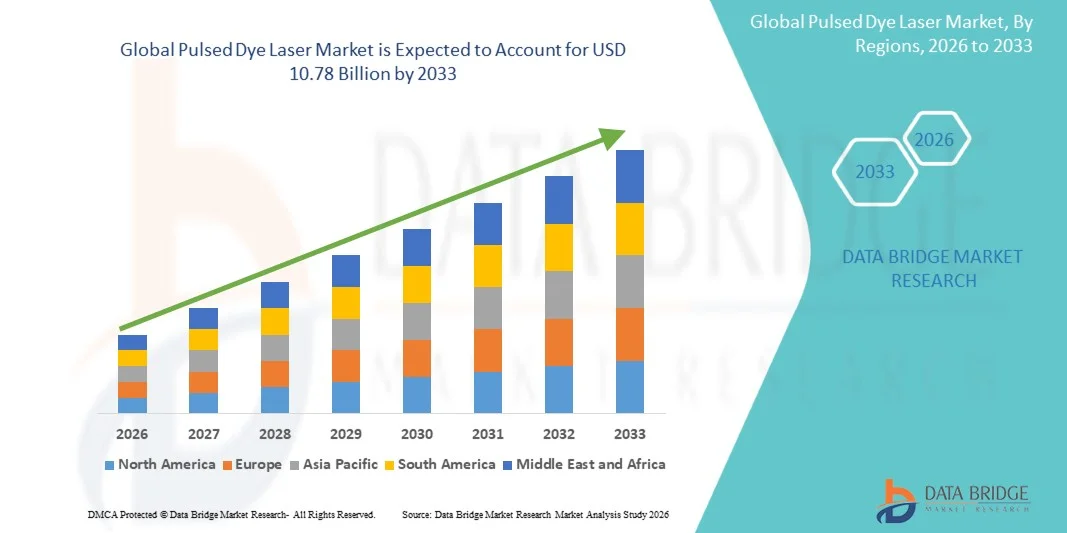
- The global Pulsed Dye Laser market size was valued at USD 4.58 billion in 2025 and is expected to reach USD 10.78 billion by 2033, at a CAGR of 11.30% during the forecast period
- The market growth is largely fueled by the increasing prevalence of vascular and dermatological conditions, such as port-wine stains, hemangiomas, and rosacea, driving the adoption of pulsed dye laser solutions in clinical and cosmetic dermatology
- Furthermore, rising demand for non-invasive, precise, and effective skin treatment solutions is establishing pulsed dye laser systems as the preferred choice for dermatologists and cosmetic practitioners, thereby significantly boosting the market’s growth
Pulsed Dye Laser Market Analysis
- Pulsed dye lasers, widely used for the treatment of vascular lesions, pigmented lesions, and various dermatological conditions, are increasingly becoming essential tools in both medical and cosmetic dermatology due to their precision, safety, and non-invasive treatment capabilities
- The escalating demand for pulsed dye lasers is primarily driven by the rising prevalence of skin disorders, growing awareness of cosmetic dermatology treatments, and increasing preference for non-invasive, effective skin therapies
- North America dominated the pulsed dye laser market with the largest revenue share of 37.8% in 2025, supported by advanced healthcare infrastructure, high adoption of aesthetic and dermatology procedures, and a strong presence of key industry players in the U.S.
- Asia-Pacific is expected to be the fastest growing region in the pulsed dye laser market during the forecast period, owing to rising disposable incomes, increasing urbanization, and growing awareness of dermatological and cosmetic treatments in countries such as China, India, and Japan
- The standalone lasers segment dominated the largest market revenue share of 52.6% in 2025, driven by their dedicated design for vascular and dermatological treatments, high precision, and consistent performance
Report Scope and Pulsed Dye Laser Market Segmentation
|
Attributes |
Pulsed Dye Laser Key Market Insights |
|
Segments Covered |
|
|
Countries Covered |
North America
Europe
Asia-Pacific
Middle East and Africa
South America
|
|
Key Market Players |
• Candela Corporation (U.S.) |
|
Market Opportunities |
|
|
Value Added Data Infosets |
In addition to the insights on market scenarios such as market value, growth rate, segmentation, geographical coverage, and major players, the market reports curated by the Data Bridge Market Research also include in-depth expert analysis, patient epidemiology, pipeline analysis, pricing analysis, and regulatory framework. |
Pulsed Dye Laser Market Trends
“Technological Advancements in Laser Systems and Precision Treatments”
- A significant and accelerating trend in the global Pulsed Dye Laser market is the development of advanced laser systems with enhanced precision, reduced side effects, and multi-functional capabilities. Modern systems are capable of targeting specific vascular and pigmented lesions with minimal damage to surrounding tissue
- For instance, Candela’s Vbeam Prima pulsed dye laser offers higher pulse energy control and adjustable wavelengths, enabling dermatologists to treat a wider variety of skin conditions such as port-wine stains, rosacea, and hemangiomas more effectively
- Increasing integration of cooling technologies and real-time skin monitoring in pulsed dye lasers is improving patient comfort and procedural safety. These innovations help reduce post-treatment erythema, pain, and recovery time, making procedures more patient-friendly
- The trend toward compact and portable laser devices is also expanding clinical applications across dermatology clinics, hospitals, and aesthetic centers, allowing smaller facilities to adopt high-performance treatments
- In addition, improvements in software-controlled pulse modulation and customizable treatment parameters are enabling clinicians to tailor therapies to individual patient needs, enhancing efficacy and treatment outcomes
- Overall, these technological advancements are setting higher standards for patient care and expanding the adoption of pulsed dye laser systems in clinical and cosmetic dermatology
Pulsed Dye Laser Market Dynamics
Driver
“Rising Demand for Dermatological and Cosmetic Treatments”
- The growing awareness of dermatological health and aesthetic enhancement is a major driver of the Pulsed Dye Laser market. Patients are increasingly seeking non-invasive procedures for conditions such as vascular lesions, scar management, rosacea, and skin rejuvenation
- For instance, Syneron Candela reported an increase in Vbeam pulsed dye laser treatments across cosmetic clinics in the U.S. in 2024, reflecting rising patient demand for minimally invasive skin therapies
- Advances in clinical applications, including treatment of acne scars, stretch marks, and pigmentation disorders, are expanding the market reach of pulsed dye laser systems
- The trend toward personalized dermatology and tailored treatment protocols is further driving adoption among hospitals, aesthetic centers, and specialized dermatology clinics
- Rising disposable incomes and the growing popularity of cosmetic procedures in both developed and emerging markets are also contributing to the increased use of pulsed dye lasers worldwide
Restraint/Challenge
“High Device Costs, Maintenance Complexities, and Regulatory Constraints”
- The relatively high upfront cost of pulsed dye laser systems remains a significant barrier to widespread adoption, particularly among small clinics and budget-conscious healthcare providers. Advanced systems with multi-functional capabilities, precise pulse control, and integrated cooling technologies often require substantial initial investment, which can limit accessibility in emerging markets
- For instance, premium devices such as Candela Vbeam Prima or Quanta Discovery PDL can cost tens of thousands of dollars, making it challenging for smaller dermatology centers or aesthetic clinics to incorporate them into their treatment offerings
- Ongoing maintenance and calibration requirements for pulsed dye lasers further contribute to operational expenses. Regular servicing, replacement of laser components, and software updates are necessary to ensure consistent performance and patient safety, adding financial and logistical burdens to healthcare providers
- Regulatory compliance and certification hurdles also pose challenges. Pulsed dye laser systems must meet strict medical device regulations and safety standards in various countries, and obtaining approvals can be time-consuming, especially for newer or innovative models
- Technical expertise and operator training are essential for effective and safe use of pulsed dye laser systems. The shortage of skilled dermatologists or technicians trained in laser procedures in some regions can limit adoption, particularly in developing countries or smaller clinics
- Limited awareness in emerging markets can also restrain growth. While awareness of non-invasive aesthetic and therapeutic treatments is increasing globally, patients and healthcare providers in certain regions may still lack sufficient knowledge of pulsed dye laser benefits, reducing demand
- Competition from alternative treatment modalities, such as IPL (Intense Pulsed Light) systems, fractional CO₂ lasers, and other minimally invasive therapies, can divert potential users, especially when these alternatives are perceived as more cost-effective or versatile
Pulsed Dye Laser Market Scope
The market is segmented on the basis of type, application, and end user.
• By Type
On the basis of type, the Global Pulsed Dye Laser (PDL) market is segmented into standalone lasers and multiplatform lasers. The standalone lasers segment dominated the largest market revenue share of 52.6% in 2025, driven by their dedicated design for vascular and dermatological treatments, high precision, and consistent performance. Hospitals and dermatology clinics prefer standalone lasers for targeted applications such as treatment of vascular lesions and scar reduction due to their reliability and ease of maintenance. These lasers offer high pulse energy, customizable settings, and improved patient outcomes, which support their widespread adoption. In addition, the availability of established brands and service support encourages clinicians to invest in standalone units. The segment benefits from the growing prevalence of cosmetic dermatology procedures and the rising awareness of skin health and aesthetics globally. Moreover, standalone lasers are easier to operate for trained clinicians and often require lower initial investment compared to complex multiplatform systems, further strengthening their market share.
The multiplatform lasers segment is expected to witness the fastest CAGR of 18.7% from 2026 to 2033, fueled by the increasing demand for versatile systems capable of performing multiple dermatological and aesthetic procedures. These systems allow clinics to treat a variety of conditions such as vascular lesions, pigmented lesions, acne scars, and hair removal using a single device. Their flexibility reduces capital expenditure for clinics and enhances patient convenience. Technological advancements in cooling systems, pulse modulation, and wavelength optimization are also driving the adoption of multiplatform lasers. Cosmetic surgery centers and skin care clinics prefer multiplatform lasers for high-volume patient treatment and expanded service offerings. The trend toward clinic consolidation and multifunctional devices further boosts growth, particularly in emerging markets with increasing disposable incomes and demand for aesthetic treatments.
• By Application
On the basis of application, the Global Pulsed Dye Laser (PDL) market is segmented into hair removal, skin rejuvenation, vascular lesions, acne and scars, pigmented lesion and tattoo removal, leg and varicose veins, and others. The vascular lesions segment dominated the largest market revenue share of 41.3% in 2025, driven by the high prevalence of vascular skin conditions such as rosacea, port-wine stains, and spider veins. PDL treatments offer precise targeting of blood vessels with minimal damage to surrounding tissues, providing effective and safe clinical outcomes. Hospitals and dermatology clinics rely on PDL for vascular treatments due to their high efficacy, low downtime, and patient preference for non-invasive solutions. The growing awareness of cosmetic dermatology procedures and the increasing number of dermatology clinics worldwide further support the segment’s market dominance. Moreover, ongoing innovations in laser wavelength customization and pulse duration enhance treatment efficacy for various vascular disorders, strengthening adoption.
The skin rejuvenation segment is projected to witness the fastest CAGR of 17.9% from 2026 to 2033, fueled by rising consumer demand for anti-aging and aesthetic treatments. Skin rejuvenation procedures using PDL help reduce fine lines, wrinkles, and age spots while promoting collagen production. Cosmetic clinics and surgical centers increasingly adopt these procedures due to the minimal invasiveness, short recovery time, and high patient satisfaction. The trend toward preventive and aesthetic dermatology combined with increasing disposable income in emerging economies supports market growth. Technological advancements such as improved pulse modulation, cooling mechanisms, and combination therapies with other laser types are also driving the adoption of PDL for skin rejuvenation applications.
• By End User
On the basis of end user, the Global Pulsed Dye Laser (PDL) market is segmented into hospitals, skin care clinics, and cosmetic surgical centers. The hospitals segment accounted for the largest market revenue share of 46.8% in 2025, driven by the integration of PDL systems into dermatology and vascular treatment departments. Hospitals prefer PDL for its high precision, reliability, and versatility in treating vascular lesions, pigmented lesions, and scars. The availability of trained clinicians, advanced infrastructure, and patient trust in hospital-based treatments contribute to the segment’s dominance. In addition, hospital adoption is supported by insurance coverage in some regions for certain vascular and dermatological procedures, further enhancing utilization.
The skin care clinics segment is expected to witness the fastest CAGR of 19.3% from 2026 to 2033, fueled by the rising demand for non-invasive aesthetic procedures and outpatient cosmetic services. Clinics favor PDL systems for procedures such as hair removal, skin rejuvenation, and treatment of pigmented lesions due to lower cost, shorter procedure times, and high patient throughput. The growth of medical tourism in dermatology and aesthetic procedures also contributes to this segment’s expansion. Increasing awareness of minimally invasive cosmetic treatments and the expansion of clinic networks in urban and semi-urban regions are key drivers supporting the adoption of PDL in skin care clinics globally.
Pulsed Dye Laser Market Regional Analysis
- North America dominated the pulsed dye laser market with the largest revenue share of 37.8% in 2025, supported by advanced healthcare infrastructure, high adoption of aesthetic and dermatology procedures, and a strong presence of key industry players in the U.S.
- Hospitals, dermatology clinics, and research institutions are increasingly adopting pulsed dye laser systems for treatments such as vascular lesion removal, scar management, and skin rejuvenation
- The widespread adoption is further supported by growing investments in cosmetic dermatology, rising patient awareness of non-invasive treatments, and strong regulatory standards ensuring device safety and efficacy. Leading clinics and research centers are integrating these lasers into routine dermatological procedures to enhance patient outcomes and operational efficiency
U.S. Pulsed Dye Laser Market Insight
The U.S. pulsed dye laser market captured the largest revenue share in North America in 2025, driven by the country’s advanced dermatology sector and increasing patient demand for aesthetic and therapeutic treatments. Hospitals, specialized skin clinics, and research laboratories are widely using pulsed dye lasers for conditions including port-wine stains, rosacea, hemangiomas, and acne scars. The presence of major industry players, coupled with continuous technological advancements in laser systems, is further propelling the market’s growth.
Europe Pulsed Dye Laser Market Insight
The Europe pulsed dye laser market is projected to expand at a substantial CAGR during the forecast period, supported by increasing adoption of aesthetic and dermatology treatments, rising awareness of cosmetic procedures, and strong healthcare infrastructure. Hospitals, dermatology centers, and research institutions in Europe are adopting pulsed dye laser systems for therapeutic and cosmetic applications. The growing focus on skin health, combined with investments in advanced laser technologies, is driving market expansion across both clinical and cosmetic settings.
U.K. Pulsed Dye Laser Market Insight
The U.K. pulsed dye laser market is anticipated to grow at a noteworthy CAGR during the forecast period, fueled by rising demand for dermatological and cosmetic treatments in hospitals, clinics, and research facilities. Growing patient awareness regarding non-invasive skin therapies and increasing investments in dermatology services are encouraging the adoption of pulsed dye laser systems. In addition, the U.K.’s advanced healthcare framework and regulatory support for aesthetic procedures are expected to stimulate market growth.
Germany Pulsed Dye Laser Market Insight
The Germany pulsed dye laser market is expected to expand at a considerable CAGR during the forecast period, driven by well-established healthcare infrastructure, advanced dermatology practices, and research-driven adoption of laser technologies. Hospitals, cosmetic dermatology centers, and research institutes are leveraging pulsed dye lasers for both therapeutic and cosmetic treatments. The growing focus on patient safety, precision procedures, and minimally invasive dermatological solutions further supports market growth.
Asia-Pacific Pulsed Dye Laser Market Insight
The Asia-Pacific pulsed dye laser market is expected to be the fastest-growing region during the forecast period, owing to rising disposable incomes, increasing urbanization, and growing awareness of dermatological and cosmetic treatments in countries such as China, India, and Japan. Hospitals, dermatology clinics, and aesthetic centers are increasingly adopting pulsed dye laser systems for treatments ranging from vascular lesions to skin rejuvenation. Rapid expansion of healthcare infrastructure, government support for modern dermatology services, and increasing investments in cosmetic and therapeutic laser technologies are further driving market growth in the region. Affordable and technologically advanced laser systems are also improving accessibility, enabling a wider patient base to benefit from non-invasive dermatological treatments.
Japan Pulsed Dye Laser Market Insight
The Japan pulsed dye laser market is gaining momentum due to the country’s strong focus on advanced healthcare, aesthetic procedures, and research-driven adoption of dermatological technologies. Hospitals and dermatology centers are increasingly using pulsed dye lasers for treating vascular and pigmented lesions. In addition, Japan’s high patient awareness, rising cosmetic procedure demand, and advanced medical infrastructure are supporting continued market growth.
China Pulsed Dye Laser Market Insight
The China pulsed dye laser market accounted for the largest revenue share in Asia-Pacific in 2025, attributed to rapid urbanization, rising disposable incomes, and increasing awareness of aesthetic and dermatological treatments. Hospitals, dermatology clinics, and research institutes are driving adoption through expanded usage of pulsed dye lasers for therapeutic and cosmetic applications. Moreover, growing domestic manufacturing of advanced laser systems and government initiatives promoting modern dermatology practices are key factors propelling market growth in China.
Pulsed Dye Laser Market Share
The Pulsed Dye Laser industry is primarily led by well-established companies, including:
• Candela Corporation (U.S.)
• Lumenis Ltd. (Israel)
• Cutera, Inc. (U.S.)
• Cynosure, Inc. (U.S.)
• Alma Lasers (Israel)
• Sciton, Inc. (U.S.)
• Asclepion Laser Technologies GmbH (Germany)
• Quanta System S.p.A. (Italy)
• Fotona d.o.o. (Slovenia)
• Lutronic Corporation (South Korea)
• Bison Medical Co., Ltd. (China)
• Shanghai Junheng Medical Equipment Co., Ltd. (China)
• Shanghai Fosun Pharmaceutical Group Co., Ltd. (China)
• DEKA M.E.L.A. S.r.l. (Italy)
• Beijing Lasertech Co., Ltd. (China)
• Reliant Technologies, Inc. (U.S.)
• Zimmer MedizinSysteme GmbH (Germany)
• Hoya ConBio (U.S.)
• Shenzhen Meiyume Technology Co., Ltd. (China)
Latest Developments in Global Pulsed Dye Laser Market
- In April 2025, Candela Medical Inc. unveiled the Vbeam Pro laser platform, a dual‑wavelength device combining a 595 nm pulsed dye laser with a 1064 nm Nd:YAG laser, designed to treat a broad range of vascular and dermatological conditions with improved accuracy, flexibility, and treatment efficiency compared to earlier models
- In April 2025, at the American Society for Laser Medicine and Surgery (ASLMS) 2025 Annual Meeting, researchers presented evidence that pulsed‑dye laser (PDL) facial treatments may reduce the development of keratinocyte cancers based on clinical observational data, highlighting emerging therapeutic insights beyond traditional cosmetic uses
- In August 2023, Lumenis announced the acquisition of a boutique laser technology firm focused on developing next‑generation pulsed dye lasers, a strategic move to bolster its R&D capabilities and broaden its product portfolio in advanced laser treatments
- In September 2023, Candela Medical, a key provider of aesthetic and medical laser systems, launched the latest iteration of its pulsed dye laser technology with enhanced energy delivery systems and customizable treatment protocols designed to improve treatment efficacy and operational efficiency in dermatological applications. This new pulsed dye laser platform aims to deliver superior clinical outcomes for vascular lesions and other skin conditions, strengthening Candela’s market position
- In June 2023, the 595‑nm wavelength pulsed dye laser received FDA clearance for the treatment of pediatric port‑wine birthmarks and infantile hemangiomas, expanding the clinical indications for this laser technology in young patients and underscoring regulatory progress in pulsed dye laser applications

- Interactive Data Analysis Dashboard
- Company Analysis Dashboard for high growth potential opportunities
- Research Analyst Access for customization & queries
- Competitor Analysis with Interactive dashboard
- Latest News, Updates & Trend analysis
- Harness the Power of Benchmark Analysis for Comprehensive Competitor Tracking
Data collection and base year analysis are done using data collection modules with large sample sizes. The stage includes obtaining market information or related data through various sources and strategies. It includes examining and planning all the data acquired from the past in advance. It likewise envelops the examination of information inconsistencies seen across different information sources. The market data is analysed and estimated using market statistical and coherent models. Also, market share analysis and key trend analysis are the major success factors in the market report. To know more, please request an analyst call or drop down your inquiry.
The key research methodology used by DBMR research team is data triangulation which involves data mining, analysis of the impact of data variables on the market and primary (industry expert) validation. Data models include Vendor Positioning Grid, Market Time Line Analysis, Market Overview and Guide, Company Positioning Grid, Patent Analysis, Pricing Analysis, Company Market Share Analysis, Standards of Measurement, Global versus Regional and Vendor Share Analysis. To know more about the research methodology, drop in an inquiry to speak to our industry experts.
Data Bridge Market Research is a leader in advanced formative research. We take pride in servicing our existing and new customers with data and analysis that match and suits their goal. The report can be customized to include price trend analysis of target brands understanding the market for additional countries (ask for the list of countries), clinical trial results data, literature review, refurbished market and product base analysis. Market analysis of target competitors can be analyzed from technology-based analysis to market portfolio strategies. We can add as many competitors that you require data about in the format and data style you are looking for. Our team of analysts can also provide you data in crude raw excel files pivot tables (Fact book) or can assist you in creating presentations from the data sets available in the report.













