


Pyrimethamine Market Size
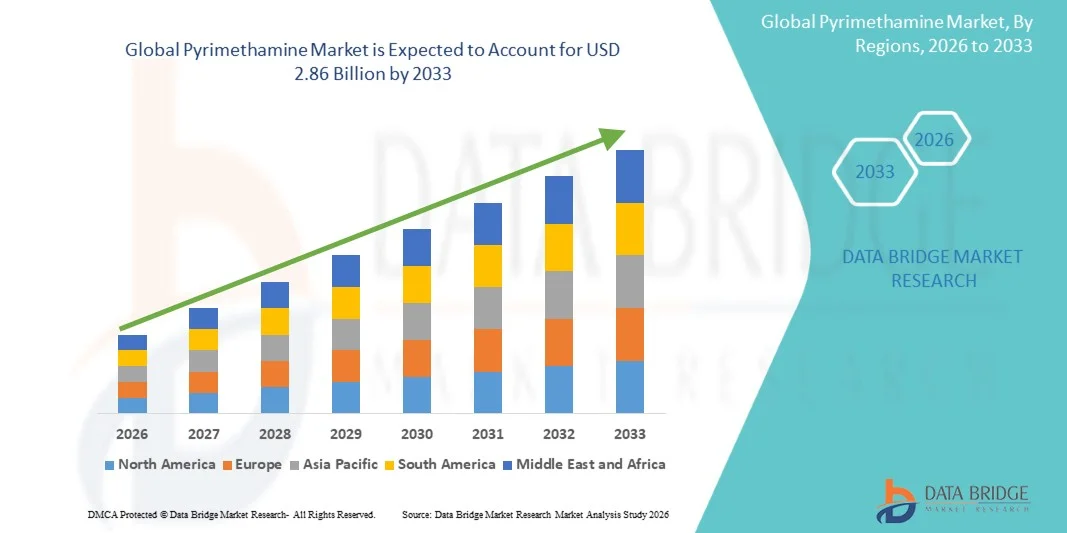
- The global pyrimethamine market size was valued at USD 1.87 billion in 2025and is expected to reach USD 2.86 billion by 2033, at a CAGR of 5.50% during the forecast period
- The market growth is primarily driven by the increasing prevalence of parasitic and protozoal infections such as toxoplasmosis and malaria, along with the continued clinical reliance on antiparasitic combination therapies across hospital and specialty care settings
- Furthermore, growing awareness regarding early infectious disease treatment, expanding access to essential medicines in developing regions, and ongoing improvements in pharmaceutical manufacturing and distribution networks are positioning pyrimethamine as an important therapeutic agent in infectious disease management. These combined factors are contributing significantly to the growth of the global pyrimethamine market
Pyrimethamine Market Analysis
- Pyrimethamine, an antiparasitic medication primarily used for the treatment of malaria and toxoplasmosis, continues to play a significant role in infectious disease management across hospitals, specialty clinics, and public healthcare systems due to its effectiveness against protozoal infections and established therapeutic usage
The increasing demand for pyrimethamine is mainly driven by the rising prevalence of malaria and toxoplasmosis cases, growing awareness regarding timely infectious disease treatment, and the continued adoption of antiparasitic therapies in emerging and tropical regions
- North America dominated the pyrimethamine market with the largest revenue share of 38.7% in 2025, supported by advanced healthcare infrastructure, strong availability of specialty anti-infective medications, and increasing diagnosis and treatment rates for toxoplasmosis among immunocompromised patients, particularly in the U.S., where healthcare providers emphasize effective infectious disease management strategies
- Asia-Pacific is expected to be the fastest growing region in the pyrimethamine market during the forecast period due to expanding healthcare access, rising healthcare expenditure, and the persistent burden of malaria and other parasitic infections across densely populated countries
- Toxoplasmosis segment dominated the pyrimethamine market with a market share of 46.3% in 2025, driven by the widespread use of pyrimethamine-based treatment regimens for toxoplasmosis management, particularly among HIV/AIDS patients and individuals with weakened immune systems
Report Scope and Pyrimethamine Market Segmentation
|
Attributes |
Pyrimethamine Key Market Insights |
|
Segments Covered |
|
|
Countries Covered |
North America · U.S. · Canada · Mexico Europe · Germany · France · U.K. · Netherlands · Switzerland · Belgium · Russia · Italy · Spain · Turkey · Rest of Europe Asia-Pacific · China · Japan · India · South Korea · Singapore · Malaysia · Australia · Thailand · Indonesia · Philippines · Rest of Asia-Pacific Middle East and Africa · Saudi Arabia · U.A.E. · South Africa · Egypt · Israel · Rest of Middle East and Africa South America · Brazil · Argentina · Rest of South America |
|
Key Market Players |
|
|
Market Opportunities |
· Increasing government and global health organization initiatives for malaria elimination programs · The rising number of immunocompromised patients, including HIV/AIDS and organ transplant recipients |
|
Value Added Data Infosets |
In addition to the insights on market scenarios such as market value, growth rate, segmentation, geographical coverage, and major players, the market reports curated by the Data Bridge Market Research also include in-depth expert analysis, patient epidemiology, pipeline analysis, pricing analysis, and regulatory framework |
Pyrimethamine Market Trends
“Rising Focus on Combination Therapies for Opportunistic Infections”
- A significant and accelerating trend in the global pyrimethamine market is the increasing adoption of combination drug therapies for the treatment of toxoplasmosis, malaria, and other opportunistic parasitic infections. This therapeutic approach is significantly improving treatment effectiveness and patient management outcomes
- For instance, pyrimethamine is widely administered in combination with sulfadiazine and leucovorin for toxoplasmosis treatment, particularly among immunocompromised patients. Similarly, combination antimalarial therapies containing pyrimethamine continue to be utilized in several malaria-endemic regions to enhance therapeutic efficacy
- The growing use of combination therapies enables healthcare providers to reduce treatment resistance risks, improve patient recovery rates, and enhance infection management protocols. For instance, healthcare institutions increasingly recommend pyrimethamine-based multidrug regimens to optimize treatment outcomes in patients suffering from severe protozoal infections. Furthermore, ongoing pharmaceutical developments are improving the safety and accessibility of these combination therapies across healthcare systems
- The expanding integration of pyrimethamine into broader infectious disease treatment programs is facilitating improved disease management across hospitals, specialty clinics, and public health organizations. Through coordinated treatment strategies, healthcare providers can better address complex parasitic infections while minimizing complications associated with delayed or ineffective therapy
- This trend towards more advanced, effective, and integrated antiparasitic treatment approaches is fundamentally reshaping infectious disease management practices. Consequently, companies such as GlaxoSmithKline and Hikma Pharmaceuticals are focusing on strengthening anti-infective product portfolios and expanding access to pyrimethamine-based therapies across key healthcare markets
- The demand for pyrimethamine therapies that support effective combination treatment strategies is growing steadily across both developed and developing healthcare systems, as healthcare providers increasingly prioritize improved infection control and patient treatment outcomes
- Furthermore, advancements in hospital-based infectious disease management programs and rising investments in anti-parasitic drug procurement are contributing to the growing clinical utilization of pyrimethamine therapies across public and private healthcare institutions
Pyrimethamine Market Dynamics
Driver
“Growing Need Due to Rising Prevalence of Parasitic and Protozoal Infections”
- The increasing prevalence of parasitic and protozoal infections across developing and developed regions, coupled with the growing focus on effective infectious disease treatment, is a significant driver for the heightened demand for pyrimethamine
- For instance, in March 2025, Hikma Pharmaceuticals announced continued expansion of its anti-infective product portfolio to strengthen the availability of essential therapies for toxoplasmosis and malaria treatment. Such strategies by key companies are expected to drive the pyrimethamine industry growth in the forecast period
- As healthcare providers become more focused on reducing the burden of opportunistic infections and improving patient outcomes, pyrimethamine offers proven therapeutic effectiveness against toxoplasmosis and malaria, providing an important treatment option within infectious disease management protocols
- Furthermore, the growing awareness regarding early diagnosis and treatment of parasitic infections and the expansion of healthcare access programs are making pyrimethamine an essential component of infectious disease treatment strategies, particularly in regions with high disease prevalence
- The increasing use of combination treatment regimens, improved healthcare infrastructure in emerging economies, and rising government initiatives for malaria control are key factors propelling the adoption of pyrimethamine across hospital and specialty healthcare settings. The trend towards expanding pharmaceutical manufacturing capabilities and improving medicine accessibility further contributes to market growth
- In addition, the growing number of immunocompromised patients, including individuals with HIV/AIDS and organ transplant recipients, is increasing the clinical demand for pyrimethamine-based toxoplasmosis treatment regimens across specialized healthcare facilities
- Rising investments in infectious disease surveillance programs and the strengthening of public healthcare systems in developing countries are further supporting the consistent demand for antiparasitic therapies such as pyrimethamine in regional healthcare markets
Restraint/Challenge
“Drug Resistance Concerns and Limited Treatment Accessibility”
- Concerns surrounding the growing resistance of parasitic organisms to existing antimalarial and antiparasitic therapies, including pyrimethamine-based treatments, pose a significant challenge to broader market expansion. As resistance levels increase in certain endemic regions, healthcare providers face difficulties in maintaining long-term treatment effectiveness and infection control outcomes
- For instance, reports regarding resistance to pyrimethamine-containing malaria therapies in several endemic countries have increased concerns among healthcare organizations regarding the continued effectiveness of standard treatment regimens
- Addressing these resistance-related concerns through ongoing pharmaceutical research, combination therapy optimization, and improved infectious disease surveillance is crucial for sustaining treatment effectiveness. Companies such as GlaxoSmithKline and Pfizer emphasize continued anti-infective research and therapeutic development initiatives to strengthen treatment reliability and disease management capabilities. In addition, the relatively limited accessibility and affordability of antiparasitic therapies in low-income regions can be a barrier to widespread treatment adoption, particularly in underserved healthcare markets or rural populations with inadequate medical infrastructure
- While healthcare access programs are gradually improving, the persistent challenges associated with medicine affordability and uneven healthcare distribution can still hinder broader adoption, especially in regions heavily affected by parasitic diseases and limited healthcare resources
- Overcoming these challenges through enhanced drug development initiatives, expanded healthcare access programs, and increased investment in infectious disease treatment infrastructure will be vital for sustained market growth
- Furthermore, stringent regulatory approval processes and varying treatment guidelines across different countries can create delays in product availability and limit the efficient commercialization of pyrimethamine-based therapies in global markets
- The limited presence of advanced healthcare infrastructure and diagnostic capabilities in certain underdeveloped regions may also restrict timely disease detection and appropriate treatment adoption, thereby affecting overall market penetration and therapeutic accessibility
Pyrimethamine Market Scope
The market is segmented on the basis of indications, end-users, and distribution channel.
- By Indications
On the basis of indications, the pyrimethamine market is segmented into malaria, toxoplasmosis, and others. The toxoplasmosis segment dominated the market with the largest market revenue share of 46.3% in 2025, driven by the widespread clinical use of pyrimethamine in combination therapy regimens for toxoplasmosis treatment, particularly among immunocompromised patients and individuals living with HIV/AIDS. Healthcare providers frequently prescribe pyrimethamine alongside sulfadiazine and leucovorin for effective management of severe toxoplasmosis infections. The growing prevalence of opportunistic infections and increasing awareness regarding early diagnosis and treatment have further strengthened the segment’s market position. In addition, the expansion of hospital-based infectious disease treatment programs and improved access to specialty therapies continue to support segment growth globally. The strong presence of established treatment protocols and increasing healthcare investments in infectious disease management are also contributing to the sustained demand for toxoplasmosis-related therapies.
The malaria segment is anticipated to witness the fastest growth rate of 7.9% from 2026 to 2033, fueled by the continued burden of malaria infections across several developing countries and increasing government initiatives aimed at malaria prevention and treatment. Pyrimethamine remains an important component in certain antimalarial combination therapies utilized in endemic regions with high disease prevalence. Rising healthcare expenditure and expanding pharmaceutical access programs are supporting the broader availability of malaria treatment medications in underserved regions. Furthermore, collaborations between public health organizations and pharmaceutical manufacturers are improving the supply and distribution of antiparasitic therapies. The growing focus on reducing malaria-related mortality rates and strengthening infectious disease control programs is expected to further accelerate segment growth during the forecast period.
- By End-Users
On the basis of end-users, the pyrimethamine market is segmented into hospitals, homecare, specialty clinics, and others. The hospitals segment dominated the market with the largest market revenue share in 2025, driven by the high volume of infectious disease treatments administered within hospital settings and the availability of advanced diagnostic and therapeutic infrastructure. Hospitals remain the primary point of care for patients suffering from severe toxoplasmosis, malaria, and other opportunistic parasitic infections requiring specialized treatment regimens. The presence of trained healthcare professionals and access to combination drug therapies support the extensive utilization of pyrimethamine across inpatient and outpatient hospital departments. In addition, rising hospitalization rates associated with immunocompromised conditions and infectious diseases continue to strengthen the segment’s dominance. Increasing investments in hospital infrastructure and infectious disease management capabilities are also contributing to sustained segment growth globally.
The specialty clinics segment is anticipated to witness the fastest growth rate from 2026 to 2033, fueled by the increasing number of dedicated infectious disease and parasitic treatment centers across both developed and emerging healthcare markets. Specialty clinics offer focused treatment services, faster patient management, and personalized therapeutic approaches for complex infectious disease cases. The growing demand for specialized care among immunocompromised patients and individuals requiring long-term antiparasitic treatment is supporting the expansion of these healthcare facilities. Furthermore, advancements in diagnostic technologies and improved patient awareness regarding infectious disease treatment options are increasing patient preference for specialty clinic services. Expanding healthcare access in urban regions and rising investments in specialized healthcare infrastructure are expected to further support the rapid growth of this segment during the forecast period.
- By Distribution Channel
On the basis of distribution channel, the pyrimethamine market is segmented into hospital pharmacy, online pharmacy, and retail pharmacy. The hospital pharmacy segment held the largest market revenue share in 2025 driven by the high dependency on hospital-based dispensing of prescription antiparasitic medications and the widespread treatment of severe infectious diseases within healthcare institutions. Hospital pharmacies ensure controlled medication distribution, proper dosage management, and continuous patient monitoring during pyrimethamine therapy administration. The growing number of hospital admissions related to parasitic and opportunistic infections has further strengthened the demand for hospital pharmacy services. In addition, the availability of specialized infectious disease medications and supportive healthcare infrastructure within hospitals contributes significantly to segment growth. The increasing emphasis on safe medication practices and regulated pharmaceutical distribution channels also supports the continued dominance of hospital pharmacies in the market.
The online pharmacy segment is expected to witness the fastest CAGR from 2026 to 2033, driven by the growing adoption of digital healthcare platforms and increasing consumer preference for convenient medicine purchasing options. Online pharmacies provide improved accessibility to prescription medications, particularly for patients residing in remote or underserved regions with limited physical pharmacy infrastructure. The expansion of e-commerce healthcare services and rising smartphone and internet penetration are further supporting the growth of this segment. Furthermore, online pharmaceutical platforms often offer competitive pricing, home delivery services, and enhanced patient convenience, contributing to increasing adoption among consumers. The growing integration of digital prescription management systems and telehealth services is also expected to accelerate the utilization of online pharmacies for antiparasitic medication distribution during the forecast period
Pyrimethamine Market Regional Analysis
- North America dominated the pyrimethamine market with the largest revenue share of 38.7% in 2025, supported by advanced healthcare infrastructure, strong availability of specialty anti-infective medications, and increasing diagnosis and treatment rates for toxoplasmosis among immunocompromised patients
- Healthcare providers in the region highly prioritize effective antiparasitic therapies, advanced diagnostic capabilities, and specialized treatment regimens for immunocompromised patients suffering from severe parasitic infections
- This widespread market dominance is further supported by high healthcare expenditure, strong pharmaceutical distribution networks, a well-established hospital infrastructure, and the growing focus on infectious disease management, establishing pyrimethamine as an important therapeutic option across both hospital and specialty healthcare settings
U.S. Pyrimethamine Market Insight
The U.S. pyrimethamine market captured the largest revenue share in 2025 within North America, fueled by the growing prevalence of toxoplasmosis among immunocompromised patients and the strong availability of advanced infectious disease treatment infrastructure. Healthcare providers are increasingly prioritizing effective antiparasitic treatment regimens and specialized therapies for opportunistic infections. The growing demand for hospital-based infectious disease management, combined with increased awareness regarding early diagnosis and treatment, further propels the pyrimethamine industry. Moreover, the presence of major pharmaceutical manufacturers and well-established healthcare reimbursement systems is significantly contributing to the market's expansion.
Europe Pyrimethamine Market Insight
The Europe pyrimethamine market is projected to expand at a substantial CAGR throughout the forecast period, primarily driven by increasing awareness regarding infectious disease management and the growing demand for advanced antiparasitic therapies across healthcare institutions. The rising prevalence of opportunistic infections, coupled with improving healthcare accessibility, is fostering the adoption of pyrimethamine therapies. European healthcare providers are also emphasizing effective combination treatment approaches and improved patient care outcomes. The region is experiencing significant growth across hospital and specialty healthcare settings, with antiparasitic therapies being increasingly incorporated into infectious disease treatment programs and public healthcare initiatives.
U.K. Pyrimethamine Market Insight
The U.K. pyrimethamine market is anticipated to grow at a noteworthy CAGR during the forecast period, driven by the increasing focus on infectious disease treatment and the rising demand for effective therapies targeting toxoplasmosis and malaria-related conditions. In addition, growing awareness regarding opportunistic infections among immunocompromised patients is encouraging healthcare providers to adopt advanced antiparasitic treatment regimens. The U.K.’s well-established healthcare infrastructure, alongside increasing investments in hospital-based infectious disease management programs, is expected to continue to stimulate market growth.
Germany Pyrimethamine Market Insight
The Germany pyrimethamine market is expected to expand at a considerable CAGR during the forecast period, fueled by increasing awareness regarding infectious disease prevention and the demand for technologically advanced healthcare solutions. Germany’s strong pharmaceutical industry presence, combined with its emphasis on research and healthcare innovation, promotes the adoption of pyrimethamine therapies, particularly across hospital and specialty clinic settings. The integration of advanced diagnostic technologies with infectious disease treatment programs is also becoming increasingly prevalent, with a strong preference for effective and evidence-based therapeutic solutions aligning with local healthcare standards.
Asia-Pacific Pyrimethamine Market Insight
The Asia-Pacific pyrimethamine market is poised to grow at the fastest CAGR during the forecast period of 2026 to 2033, driven by the increasing burden of malaria and parasitic infections, rising healthcare expenditure, and expanding healthcare infrastructure in countries such as China, India, and Southeast Asian nations. The region's growing focus on infectious disease control programs, supported by government healthcare initiatives and global health organization efforts, is driving the adoption of pyrimethamine therapies. Furthermore, as APAC continues to strengthen pharmaceutical manufacturing capabilities and healthcare accessibility, the availability and distribution of antiparasitic medications are expanding to a wider patient population.
Japan Pyrimethamine Market Insight
The Japan pyrimethamine market is gaining momentum due to the country’s advanced healthcare infrastructure, increasing focus on infectious disease management, and growing demand for effective antiparasitic therapies. The Japanese healthcare system places a significant emphasis on early diagnosis and specialized treatment approaches, and the adoption of pyrimethamine therapies is supported by the increasing availability of advanced healthcare services and hospital-based treatment programs. The integration of improved diagnostic technologies with infectious disease management systems is fueling growth. Moreover, Japan's strong pharmaceutical research environment is likely to support the continued development and accessibility of effective antiparasitic treatment solutions across healthcare settings.
India Pyrimethamine Market Insight
The India pyrimethamine market accounted for the largest market revenue share in Asia Pacific in 2025, attributed to the country’s high burden of parasitic and vector-borne diseases, expanding healthcare infrastructure, and rising healthcare awareness among the population. India stands as one of the major markets for antiparasitic therapies, and pyrimethamine is increasingly utilized across hospital, specialty clinic, and public healthcare programs. The growing focus on malaria elimination initiatives and the availability of cost-effective pharmaceutical manufacturing capabilities, alongside strong government healthcare support, are key factors propelling the market in India
Pyrimethamine Market Share
The Pyrimethamine industry is primarily led by well-established companies, including:
- Pfizer Inc. (U.S.)
- GSK plc (U.K.)
- Novartis AG (Switzerland)
- Sanofi (France)
- Bayer AG (Germany)
- Merck & Co., Inc. (U.S.)
- AstraZeneca (U.K.)
- Teva Pharmaceutical Industries Ltd. (Israel)
- Takeda Pharmaceutical Company Limited (Japan)
- Sun Pharmaceutical Industries Ltd. (India)
- Cipla Ltd (India)
- Dr. Reddy’s Laboratories Ltd. (India)
- Hikma Pharmaceuticals PLC (U.K.)
- Ajanta Pharma Limited (India)
- Anuh Pharma Ltd. (India)
- Alvogen, Inc. (U.S.)
- Fera Pharmaceuticals, LLC (U.S.)
- Oakrum Pharma, LLC (U.S.)
- Cerovene, Inc. (U.S.)
- PRN Pharmacal, Inc. (U.S.)
What are the Recent Developments in Global Pyrimethamine Market?
- In November 2025, Novartis AG reported positive Phase III trial results for its next-generation malaria treatment KLU156 (ganaplacide/lumefantrine), demonstrating strong efficacy against drug-resistant malaria parasites. The study highlighted the growing focus on advanced antimalarial therapies and reinforced ongoing efforts to combat rising resistance associated with traditional malaria treatment regimens, including pyrimethamine-based therapies
- In November 2025, the World Health Organization and Bayer AG renewed their long-term collaboration to support treatment programs for neglected tropical diseases, including expanded access to antiparasitic medicines in endemic regions. The partnership extension through 2030 aims to strengthen disease elimination programs, healthcare accessibility, and pharmaceutical support for infectious disease management globally
- In September 2025, Ajanta Pharma Limited announced that the World Health Organization (WHO) prequalified its sulfadoxine/pyrimethamine + amodiaquine dispersible tablets for malaria treatment, strengthening access to pediatric antimalarial therapies in endemic countries. The WHO prequalification supports broader procurement and distribution of combination antiparasitic medications across public healthcare systems, enhancing global malaria control initiatives
- In July 2025, Novartis AG announced the approval of Coartem Baby, the first malaria medicine specifically designed for newborn babies and young infants. The treatment was developed in collaboration with Medicines for Malaria Venture (MMV) to improve malaria treatment accessibility and safety for vulnerable pediatric populations in malaria-endemic regions
- In March 2021, Dr. Reddy’s Laboratories Ltd. announced the launch of Pyrimethamine Tablets USP, 25 mg, a therapeutic equivalent generic version of Daraprim for the treatment of toxoplasmosis when used alongside sulfonamide therapy. The launch expanded the availability of cost-effective pyrimethamine treatment options and strengthened access to antiparasitic therapies within the global infectious disease treatment market

- Interactive Data Analysis Dashboard
- Company Analysis Dashboard for high growth potential opportunities
- Research Analyst Access for customization & queries
- Competitor Analysis with Interactive dashboard
- Latest News, Updates & Trend analysis
- Harness the Power of Benchmark Analysis for Comprehensive Competitor Tracking
Data collection and base year analysis are done using data collection modules with large sample sizes. The stage includes obtaining market information or related data through various sources and strategies. It includes examining and planning all the data acquired from the past in advance. It likewise envelops the examination of information inconsistencies seen across different information sources. The market data is analysed and estimated using market statistical and coherent models. Also, market share analysis and key trend analysis are the major success factors in the market report. To know more, please request an analyst call or drop down your inquiry.
The key research methodology used by DBMR research team is data triangulation which involves data mining, analysis of the impact of data variables on the market and primary (industry expert) validation. Data models include Vendor Positioning Grid, Market Time Line Analysis, Market Overview and Guide, Company Positioning Grid, Patent Analysis, Pricing Analysis, Company Market Share Analysis, Standards of Measurement, Global versus Regional and Vendor Share Analysis. To know more about the research methodology, drop in an inquiry to speak to our industry experts.
Data Bridge Market Research is a leader in advanced formative research. We take pride in servicing our existing and new customers with data and analysis that match and suits their goal. The report can be customized to include price trend analysis of target brands understanding the market for additional countries (ask for the list of countries), clinical trial results data, literature review, refurbished market and product base analysis. Market analysis of target competitors can be analyzed from technology-based analysis to market portfolio strategies. We can add as many competitors that you require data about in the format and data style you are looking for. Our team of analysts can also provide you data in crude raw excel files pivot tables (Fact book) or can assist you in creating presentations from the data sets available in the report.












