


Radiation-Induced Dermatitis Drug Market Size
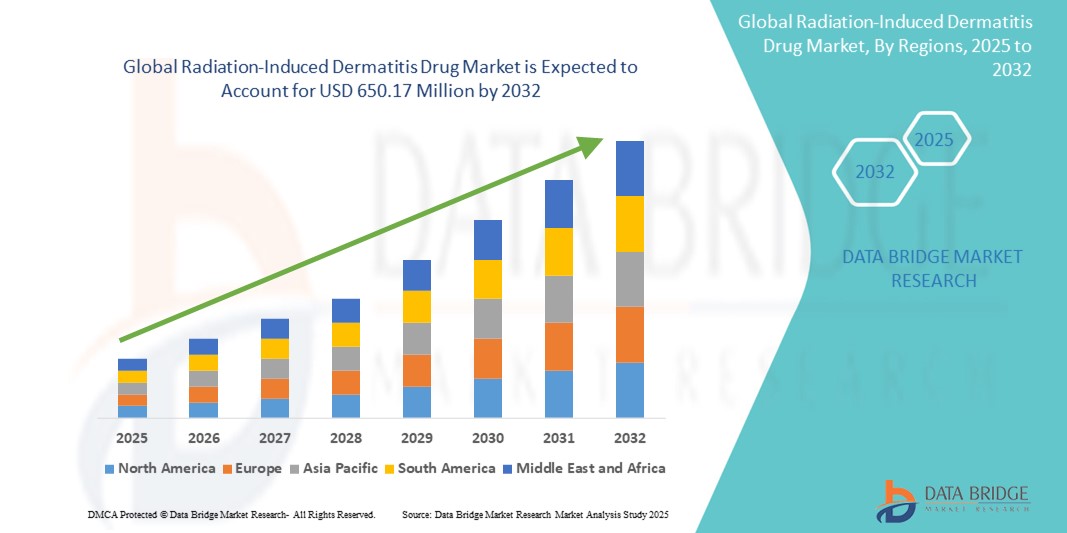
- The global radiation-induced dermatitis drug market size was valued at USD 489.95 million in 2024 and is expected to reach USD 650.17 million by 2032, at a CAGR of 3.60% during the forecast period
- The market growth is largely fueled by the growing adoption and technological progress within oncology treatment protocols and radiation therapy advancements, leading to increased incidences of radiation-induced side effects such as dermatitis in both hospital and outpatient cancer care settings
- Furthermore, rising patient awareness regarding effective skin management during cancer treatment, along with increasing clinical recommendations for prophylactic and therapeutic topical agents, is establishing radiation-induced dermatitis drugs as the preferred intervention of choice. These converging factors are accelerating the uptake of radiation-induced dermatitis drug solutions, thereby significantly boosting the industry's growth
Radiation-Induced Dermatitis Drug Market Analysis
- Radiation-Induced Dermatitis drugs, used to treat skin damage caused by radiation therapy, are becoming increasingly vital in oncology supportive care due to their ability to reduce inflammation, pain, and the risk of infection. These treatments are widely utilized in both hospital and outpatient oncology settings, supporting patient compliance and improving quality of life during cancer treatment
- The growing demand for radiation-induced dermatitis drugs is primarily fueled by the increasing prevalence of cancer worldwide, expanding radiotherapy procedures, and rising awareness about skin-related side effects of radiation therapy. The need for effective, accessible, and patient-friendly solutions is driving the uptake of topical agents, corticosteroids, barrier films, and other advanced formulations
- North America dominated the radiation-induced dermatitis drug market with the largest revenue share of 42.7% in 2024, attributed to a high number of radiation therapy procedures, well-established oncology care infrastructure, and the presence of major pharmaceutical and biotech companies. The U.S., in particular, is experiencing significant adoption of prescription-based topical corticosteroids and novel skin barrier protectants, supported by ongoing clinical trials and regulatory approvals
- Asia-Pacific is expected to be the fastest-growing region, projected to register a CAGR of 9.1% from 2025 to 2032, driven by rising cancer incidence, increased accessibility to radiotherapy facilities, and growing investments in healthcare infrastructure across countries such as China, India, and Japan. Favorable government policies and the expansion of oncology centers are expected to accelerate market penetration
- The topical segment dominated the market with the largest revenue share of 46.7% in 2024, owing to its non-invasive nature, ease of application, and rapid onset of action. Topicals such as corticosteroid creams and moisturizing agents are routinely used to manage mild to moderate dermatitis caused by radiation exposure
Report Scope and Radiation-Induced Dermatitis Drug Market Segmentation
|
Attributes |
Radiation-Induced Dermatitis Drug Key Market Insights |
|
Segments Covered |
|
|
Countries Covered |
North America
Europe
Asia-Pacific
Middle East and Africa
South America
|
|
Key Market Players |
|
|
Market Opportunities |
|
|
Value Added Data Infosets |
In addition to the insights on market scenarios such as market value, growth rate, segmentation, geographical coverage, and major players, the market reports curated by the Data Bridge Market Research also include in-depth expert analysis, pricing analysis, brand share analysis, consumer survey, demography analysis, supply chain analysis, value chain analysis, raw material/consumables overview, vendor selection criteria, PESTLE Analysis, Porter Analysis, and regulatory framework. |
Radiation-Induced Dermatitis Drug Market Trends
“Emerging Trends in the Global Radiation-Induced Dermatitis Drug Market”
- A significant and accelerating trend in the global radiation-induced dermatitis drug market is the growing focus on patient-centric, non-invasive treatment modalities that offer rapid relief with minimal side effects. The increasing burden of cancer patients undergoing radiotherapy, especially for breast, head & neck, and pelvic cancers, has amplified demand for effective dermatitis management solutions
- For instance, topical corticosteroids and antioxidant creams are widely recommended during and after radiation therapy to mitigate skin inflammation and reduce oxidative stress, making them essential components in treatment regimens. Similarly, natural and herbal-based formulations are gaining traction as patients and healthcare providers seek gentler, skin-friendly alternatives to synthetic drugs
- Clinical innovations such as biologic-based therapies and targeted anti-inflammatory agents are paving the way for next-generation treatments. These therapies aim to address the molecular causes of radiation-induced skin damage, offering more precise and personalized care. Furthermore, developments in polymeric gel delivery systems and film-forming formulations are enhancing drug retention and skin penetration, leading to improved patient outcomes
- The growing emphasis on combination therapies that blend corticosteroids with antibiotics or antioxidants is also reshaping market dynamics. These combinations help manage not only inflammation but also reduce the risk of secondary infections in irradiated skin areas, especially in immunocompromised patients
- This trend toward more intelligent, effective, and safer drug delivery systems is fundamentally redefining expectations for radiation dermatitis care. Consequently, companies are investing in research collaborations and clinical trials to expand their product pipelines with more efficient and well-tolerated solutions tailored to various cancer types and patient demographics
- The demand for radiation-induced dermatitis drugs is expected to grow significantly across hospitals, specialty oncology clinics, and homecare settings, as cancer prevalence rises and the need for quality of life improvements during treatment becomes a clinical priority
Radiation-Induced Dermatitis Drug Market Dynamics
Driver
“Growing Need Due to Rising Cancer Prevalence and Radiotherapy Usage”
- The increasing prevalence of cancer globally, especially among populations undergoing radiotherapy, is a significant driver for the heightened demand for Radiation-Induced Dermatitis (RID) Drug solutions
- For instance, in April 2024, the American Society for Radiation Oncology (ASTRO) emphasized the importance of early skin care intervention protocols in radiotherapy regimens. Such strategic recommendations by clinical bodies are expected to drive the Radiation-Induced Dermatitis Drug industry growth during the forecast period
- As awareness about the adverse effects of radiation therapy on skin health grows, healthcare providers and patients are increasingly seeking advanced pharmaceutical and dermatological interventions. These include topical corticosteroids, barrier creams, and antioxidant-based formulations that provide targeted relief and prevent progression to more severe skin reactions
- Furthermore, the growing popularity of personalized medicine and oncology support therapies is making RID drug formulations an essential component of integrated cancer treatment strategies. Innovations in biologics and combination therapies are offering more effective and patient-tailored approaches
- The convenience of topical application, localized action, and minimal systemic side effects are key factors propelling the adoption of radiation-induced dermatitis treatments in both hospital and outpatient settings. The trend towards home-based care and availability of over-the-counter options further contribute to market growth
Restraint/Challenge
“Concerns Regarding Side Effects and Cost of Advanced Therapies”
- Concerns surrounding the potential side effects of certain corticosteroid-based and systemic RID therapies, such as skin thinning, irritation, or hormonal effects, pose a significant challenge to broader market penetration
- For instance, various clinical reports have highlighted the need for cautious and supervised use of long-term corticosteroids to avoid skin damage, which has made some patients hesitant to use certain formulations
- Addressing these safety concerns through clinical validation, improved formulations, and increased use of natural or herbal alternatives is crucial for building patient and physician confidence. Companies such as Strata Skin Sciences and Smith+Nephew are actively promoting safer, non-invasive skin therapies that reduce the incidence of dermatitis in radiotherapy patients
- In addition, the relatively high cost of biologic or next-generation RID treatments compared to basic creams and emollients can be a barrier to adoption, particularly in low- and middle-income countries where healthcare reimbursement policies may be limited
- While generic topical formulations are available at lower prices, premium treatments offering enhanced efficacy, such as polymer-based delivery systems or combined anti-inflammatory/antioxidant therapies, often come with higher price tags
- Overcoming these challenges through price optimization, awareness campaigns, inclusion in reimbursement plans, and regional partnerships will be critical for ensuring wider access and sustained market growth across all economic segments
Radiation-Induced Dermatitis Drug Market Scope
The market is segmented on the basis of type, therapeutic category, formulation type, and application.
- By Type
On the basis of type, the radiation-induced dermatitis drug market is segmented into topical, oral, injectable, biologic-based, corticosteroid-based, and others. The topical segment dominated the market with the largest revenue share of 46.7% in 2024, owing to its non-invasive nature, ease of application, and rapid onset of action. Topicals such as corticosteroid creams and moisturizing agents are routinely used to manage mild to moderate dermatitis caused by radiation exposure.
The biologic-based segment is anticipated to witness the fastest growth at a CAGR of 18.3% from 2025 to 2032, driven by increasing clinical trials and promising results in mitigating severe inflammation and immune-related skin responses during radiotherapy.
- By Therapeutic Category
On the basis of therapeutic category, the radiation-induced dermatitis drug market is segmented into anti-inflammatory agents, antibiotics, antioxidants, corticosteroids, and others. The corticosteroids segment held the largest revenue share of 39.1% in 2024, due to their proven efficacy in reducing erythema, itching, and swelling associated with radiation-induced dermatitis. They are often considered first-line treatment.
The antioxidants segment is projected to grow at the fastest pace, with a CAGR of 17.6% from 2025 to 2032, as these agents help neutralize oxidative stress caused by ionizing radiation and promote skin healing.
- By Formulation Type
On the basis of formulation type the radiation-induced dermatitis drug market is segmented into creams, gels, ointments, sprays, oral pills, and others. The creams segment held the highest market share of 34.5% in 2024, supported by widespread physician recommendation, good patient compliance, and versatile applicability.
The sprays segment is expected to grow at the highest CAGR of 16.8% from 2025 to 2032, owing to their ease of use in hard-to-reach areas and reduced skin contact, making them suitable for patients with sensitive or broken skin.
- By Application
On the basis of application, the radiation-induced dermatitis drug market is segmented into breast cancer, head & neck cancer, prostate cancer, lung cancer, and others. The breast cancer segment accounted for the largest share of 38.9% in 2024, driven by the high global prevalence of breast cancer and routine use of radiotherapy post-surgery, which often leads to dermatitis.
The head & neck cancer segment is projected to grow at the fastest CAGR of 19.4% from 2025 to 2032, as radiotherapy for these cancers frequently causes severe skin reactions in highly sensitive areas like the neck and jaw.
Radiation-Induced Dermatitis Drug Market Regional Analysis
- North America dominated the radiation-induced dermatitis drug market with the largest revenue share of 42.7% in 2024, driven by the rising incidence of cancer and increased utilization of radiation therapy across various oncology settings
- Patients and healthcare providers in the region prioritize the management of skin toxicity associated with radiation, fueling demand for effective radiation-induced dermatitis therapies including corticosteroids, non-steroidal anti-inflammatory drugs (NSAIDs), and advanced barrier creams
- This growing adoption is further supported by high healthcare expenditure, widespread availability of advanced treatment products, and favorable reimbursement scenarios, establishing the region as a key contributor to overall market growth
U.S. Radiation-Induced Dermatitis Drug Market Insight
The U.S. radiation-induced dermatitis drug market captured the largest revenue share of 76.6% in 2024 within North America, fueled by an increasing number of cancer cases and a robust oncology care infrastructure. The growing awareness among patients about side effects of radiotherapy, along with the introduction of targeted formulations like biologics and polymer-based creams, is driving strong market expansion in the U.S. In addition, well-established pharmaceutical players and the adoption of clinical practice guidelines recommending early intervention for radiation dermatitis are propelling market growth.
Europe Radiation-Induced Dermatitis Drug Market Insight
The Europe radiation-induced dermatitis drug market is projected to expand at a substantial CAGR throughout the forecast period, driven by strong oncology care networks and rising demand for dermatology support during cancer treatments.With increasing awareness around radiation-induced skin complications, European healthcare systems are integrating prophylactic and therapeutic options into treatment protocols for breast, head and neck, and lung cancer patients. Government funding for cancer care, ongoing clinical trials, and growing patient education initiatives are contributing to the regional market’s steady growth trajectory.
U.K. Radiation-Induced Dermatitis Drug Market Insight
The U.K. radiation-induced dermatitis drug market is anticipated to grow at a noteworthy CAGR, fueled by the rising prevalence of radiotherapy in cancer treatment and growing demand for skin-care-based supportive treatments. NHS initiatives and collaborations with dermatology specialists have led to increased access to over-the-counter and prescription-based formulations to prevent and treat radiation dermatitis, promoting robust market demand.
Germany Radiation-Induced Dermatitis Drug Market Insight
The Germany radiation-induced dermatitis drug market is expected to expand at a considerable CAGR, driven by increasing clinical awareness and adoption of innovative treatment options including herbal and bio-based creams for radiation-induced skin reactions. Germany’s strong clinical trial base, high cancer incidence rates, and focus on integrative oncology solutions contribute significantly to its growing role in the European Radiation-Induced Dermatitis Drug Market.
Asia-Pacific Radiation-Induced Dermatitis Drug Market Insight
The Asia-Pacific radiation-induced dermatitis drug market is poised to grow at the fastest CAGR of 9.1% during the forecast period (2025–2032), owing to rapidly expanding radiotherapy infrastructure and increasing cancer burden in countries such as China, India, and Japan. Rising healthcare investments, improving access to oncology services, and government-supported cancer awareness programs are collectively fostering the adoption of radiation-induced dermatitis treatments across the region.
Japan Radiation-Induced Dermatitis Drug Market Insight
The Japan radiation-induced dermatitis drug market is gaining momentum due to the country’s technologically advanced healthcare system, aging population, and proactive approach to managing cancer therapy-related side effects.
An emphasis on skin integrity, comfort, and patient compliance is encouraging the use of non-irritating, hydrating, and therapeutic creams in radiotherapy departments, especially for elderly cancer patients.
China Radiation-Induced Dermatitis Drug Market Insight
The China radiation-induced dermatitis drug market accounted for the largest revenue share in Asia-Pacific in 2024, attributed to its large patient base, rapid urbanization, and government-driven cancer treatment initiatives. With increasing numbers of cancer centers and radiotherapy units across tier-1 and tier-2 cities, the demand for effective radiation dermatitis solutions is rising sharply. Domestic pharmaceutical companies are also entering the segment, enhancing accessibility and affordability of treatments.
Radiation-Induced Dermatitis Drug Market Share
The Radiation-Induced Dermatitis Drug industry is primarily led by well-established companies, including:
- Smith + Nephew (U.K.)
- 3M (U.S.)
- Derma Sciences (Integra LifeSciences) (U.S.)
- Mölnlycke Health Care (Sweden)
- ConvaTec Group PLC (U.K.)
- Radpharm Scientific (Australia)
- Stratpharma AG (Switzerland)
- Medline Industries, LP (U.S.)
- Alliqua Biomedical (U.S.)
- Cerus Corporation (U.S.)
- Regeneca Inc. (U.S.)
- Soluscope (France)
- Ferring Pharmaceuticals (Switzerland)
- Crown Laboratories (U.S.)
- Avène (Pierre Fabre Group) (France)
Latest Developments in Global Radiation-Induced Dermatitis Drug Market
- In June 2025, Oneness Biotech published mechanistic insights in Life Sciences, showing its ON101 cream promotes skin repair by modulating the Keap1/Nrf2 pathway and reducing oxidative stress and inflammation in radiation dermatitis
- In December 2024, a phase III trial presented at the San Antonio Breast Cancer Symposium showed that applying Mepitel Film, a silicone-based dressing, reduced grade 2–3 radiation dermatitis from 44.6 % to 25.2 % among post-mastectomy patients compared to standard care

- Interactive Data Analysis Dashboard
- Company Analysis Dashboard for high growth potential opportunities
- Research Analyst Access for customization & queries
- Competitor Analysis with Interactive dashboard
- Latest News, Updates & Trend analysis
- Harness the Power of Benchmark Analysis for Comprehensive Competitor Tracking
Data collection and base year analysis are done using data collection modules with large sample sizes. The stage includes obtaining market information or related data through various sources and strategies. It includes examining and planning all the data acquired from the past in advance. It likewise envelops the examination of information inconsistencies seen across different information sources. The market data is analysed and estimated using market statistical and coherent models. Also, market share analysis and key trend analysis are the major success factors in the market report. To know more, please request an analyst call or drop down your inquiry.
The key research methodology used by DBMR research team is data triangulation which involves data mining, analysis of the impact of data variables on the market and primary (industry expert) validation. Data models include Vendor Positioning Grid, Market Time Line Analysis, Market Overview and Guide, Company Positioning Grid, Patent Analysis, Pricing Analysis, Company Market Share Analysis, Standards of Measurement, Global versus Regional and Vendor Share Analysis. To know more about the research methodology, drop in an inquiry to speak to our industry experts.
Data Bridge Market Research is a leader in advanced formative research. We take pride in servicing our existing and new customers with data and analysis that match and suits their goal. The report can be customized to include price trend analysis of target brands understanding the market for additional countries (ask for the list of countries), clinical trial results data, literature review, refurbished market and product base analysis. Market analysis of target competitors can be analyzed from technology-based analysis to market portfolio strategies. We can add as many competitors that you require data about in the format and data style you are looking for. Our team of analysts can also provide you data in crude raw excel files pivot tables (Fact book) or can assist you in creating presentations from the data sets available in the report.












