


What is the Rail Brace Market Size and Growth Rate?
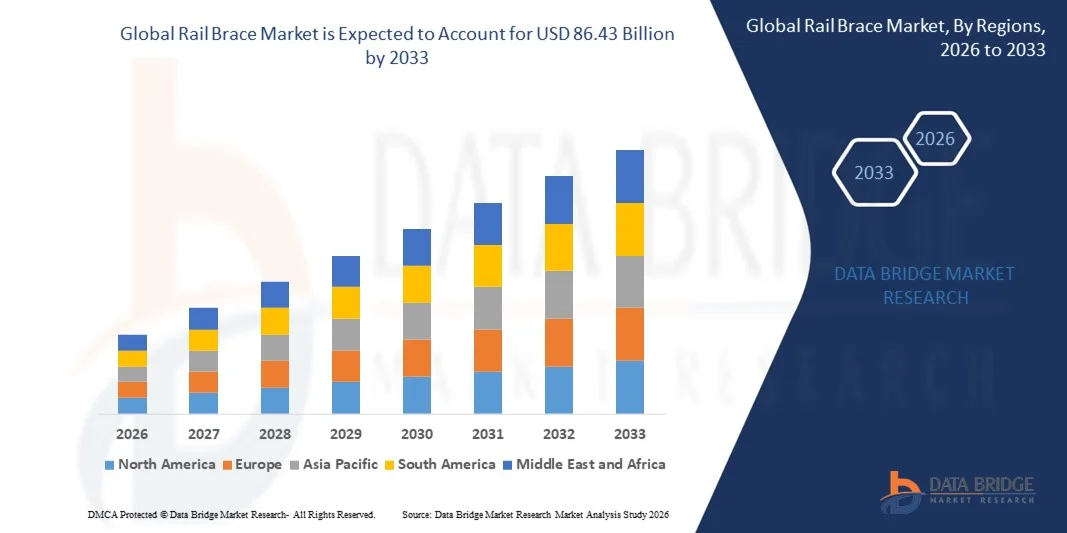
- As per Data Bridge Market Research Analysis the global rail brace market size was valued at USD 58.05 billion in 2025 and is expected to reach USD 86.43 billion by 2033, at a CAGR of 5.10% during the forecast period
- The market growth is largely fuelled by the increasing investments in railway infrastructure development and modernization projects across both developed and emerging economies
- Rising demand for efficient rail transportation systems, expansion of high-speed rail networks, and growing urban transit projects are further supporting the demand for rail braces
Market Size & Forecast
- Global Market Value (2025): USD 58.05 billion in 2025
- Expected Market Value (2033): USD 86.43 billion by 2033
- Forecast CAGR (2026–2033): 5.10%
Rail Brace Market Analysis
- The rail brace market is witnessing steady expansion as railway operators and infrastructure developers focus on improving track stability, safety, and operational efficiency across passenger and freight rail networks
- Continuous investments in railway track maintenance, modernization of existing rail infrastructure, and the expansion of urban rail transit systems are expected to support long-term demand for rail brace components
- North America dominated the rail brace market with the largest revenue share in 2025, driven by increasing investments in railway infrastructure modernization and the maintenance of existing rail networks. The presence of extensive freight and passenger rail systems across the region significantly contributes to the demand for durable rail track components such as rail braces
- Asia-Pacific region is expected to witness the highest growth rate in the global rail brace market, driven by rapid urbanization, expanding metro and high-speed rail projects, and strong government initiatives to enhance transportation infrastructure across emerging economies
- The steel segment held the largest market revenue share in 2025 driven by its high strength, durability, and ability to withstand heavy train loads and extreme environmental conditions. Steel rail braces are widely used in railway infrastructure due to their superior resistance to wear and deformation, making them a preferred choice for maintaining track alignment and long-term operational stability
Report Scope and Rail Brace Market Segmentation
|
Attributes |
Rail Brace Key Market Insights |
|
Segments Covered |
|
|
Countries Covered |
North America
Europe
Asia-Pacific
Middle East and Africa
South America
|
|
Key Market Players |
|
|
Market Opportunities |
|
|
Value Added Data Infosets |
In addition to the market insights such as market value, growth rate, market segments, geographical coverage, market players, and market scenario, the market report curated by the Data Bridge Market Research team includes in-depth expert analysis, import/export analysis, pricing analysis, production consumption analysis, and pestle analysis. |
What is the Key Trend in the Rail Brace Market?
Increasing Investment in Railway Infrastructure Development
- The growing focus on expanding and modernizing railway infrastructure is significantly shaping the rail brace market, as governments and transportation authorities increasingly invest in durable and high-performance rail track components. Rail braces play a crucial role in maintaining track alignment and stability, ensuring safe and efficient rail operations. This trend is strengthening their adoption across freight and passenger rail networks, encouraging manufacturers to develop advanced and durable rail fastening solutions
- Increasing demand for efficient and reliable rail transportation has accelerated the adoption of rail braces in both urban and intercity railway systems. Rapid urbanization and population growth are prompting governments to expand metro rail and suburban rail networks, which require strong and stable track structures. Rail braces help enhance track durability, reduce maintenance requirements, and improve operational safety, supporting long-term infrastructure performance
- Infrastructure modernization initiatives and technological advancements in railway engineering are influencing the demand for high-quality rail components. Manufacturers are focusing on producing rail braces using advanced materials and improved manufacturing processes to increase durability and resistance to environmental stress. These developments are helping railway operators improve track performance while minimizing operational disruptions and maintenance costs
- For instance, in 2024, railway infrastructure projects in countries such as India and China introduced advanced rail fastening systems including reinforced rail braces as part of major rail expansion programs. These developments were implemented to enhance track safety and operational efficiency across high-speed and urban rail networks. The projects also emphasized long-term infrastructure durability and improved transportation capacity to support growing passenger demand
- While demand for rail braces is increasing, sustained market expansion depends on continuous infrastructure investment, technological innovation, and efficient manufacturing capabilities. Companies are focusing on improving product performance, expanding production capacity, and developing cost-effective solutions to meet the growing demand for railway infrastructure components worldwide
Rail Brace Market Dynamics
Driver
Growing Expansion of Railway Infrastructure and Urban Transit Systems
- Rising investment in railway infrastructure and urban transit systems is a major driver for the rail brace market. Governments and transportation authorities worldwide are expanding rail networks to support efficient transportation and reduce road congestion. Rail braces play a critical role in maintaining track stability and ensuring safe train operations, supporting the growing demand for reliable rail infrastructure components
- Expanding freight rail networks and increasing demand for high-speed rail services are also contributing to market growth. Rail braces help improve track strength and durability, enabling railway systems to handle heavier loads and higher operating speeds. This demand is particularly significant in regions investing heavily in large-scale railway modernization projects
- Railway operators and infrastructure developers are actively investing in advanced track maintenance solutions and durable rail components. These initiatives are supported by the need to improve operational safety, reduce long-term maintenance costs, and enhance the efficiency of rail transportation systems. Strategic partnerships between infrastructure companies and railway authorities are further supporting product innovation and adoption
- For instance, in 2023, railway development programs in Germany and Japan incorporated improved rail fastening systems including advanced rail braces in high-speed rail corridors and urban metro projects. These initiatives were introduced to strengthen rail track structures and improve safety standards. The projects also focused on increasing transportation capacity and supporting sustainable public transit systems
- Although infrastructure expansion supports market growth, wider adoption depends on cost-effective production, supply chain stability, and consistent government investment in railway development projects. Continuous technological advancements and efficient manufacturing processes will be essential for meeting the increasing demand for rail brace components worldwide
Restraint/Challenge
High Installation And Maintenance Costs of Railway Components
- The relatively high cost associated with railway infrastructure components remains a key challenge for the rail brace market. Manufacturing durable rail braces using high-strength materials and precision engineering processes can increase overall infrastructure project costs. Budget constraints in some developing economies may limit the adoption of advanced rail fastening systems
- Maintenance requirements and operational disruptions during rail track upgrades can also affect market growth. Replacing or installing rail braces often requires temporary suspension of rail services, which can increase operational challenges for railway operators. Efficient maintenance planning and advanced installation techniques are necessary to minimize disruptions and maintain service continuity
- Supply chain challenges and fluctuations in raw material prices can also impact manufacturing costs and product availability. Steel and other metal components used in rail braces are subject to price volatility, which can influence production expenses. Manufacturers must adopt efficient procurement strategies and maintain stable supply networks to ensure consistent product availability
- For instance, in 2024, several railway infrastructure contractors in Southeast Asia reported project delays due to rising steel prices and logistical challenges affecting the supply of rail fastening components including rail braces. These factors increased construction costs and required project rescheduling to manage infrastructure budgets effectively
- Overcoming these challenges will require improved manufacturing efficiency, strategic sourcing of raw materials, and continuous collaboration between railway authorities and infrastructure manufacturers. Investments in advanced production technologies and long-term infrastructure planning will be essential to support sustainable growth in the global rail brace market.
Rail Brace Market Scope
The market is segmented on the basis of material type and train track.
- By Material Type
On the basis of material type, the rail brace market is segmented into Cast Iron, Steel, Alloy, and Others. The steel segment held the largest market revenue share in 2025 driven by its high strength, durability, and ability to withstand heavy train loads and extreme environmental conditions. Steel rail braces are widely used in railway infrastructure due to their superior resistance to wear and deformation, making them a preferred choice for maintaining track alignment and long-term operational stability.
The alloy segment is expected to witness the fastest growth rate from 2026 to 2033, driven by increasing demand for high-performance rail components that offer enhanced corrosion resistance and improved mechanical strength. Alloy rail braces are increasingly adopted in modern railway systems where durability and reduced maintenance requirements are essential for efficient rail operations.
- By Train Track
On the basis of train track, the rail brace market is segmented into Mainline Railway Track, Metro Railway Track, Monorail Track, and Other. The mainline railway track segment held the largest market revenue share in 2025 driven by the extensive use of rail braces across long-distance passenger and freight railway networks. Rail braces are essential components in mainline tracks to maintain rail alignment and ensure safe operations under heavy loads and continuous usage.
The metro railway track segment is expected to witness the fastest growth rate from 2026 to 2033, driven by rapid urbanization and increasing investments in urban rail transit systems. The expansion of metro rail networks in major cities requires reliable track support components such as rail braces to ensure operational safety, reduce maintenance frequency, and support efficient mass transportation systems.
Rail Brace Market Regional Analysis
- North America dominated the rail brace market with the largest revenue share in 2025, driven by increasing investments in railway infrastructure modernization and the maintenance of existing rail networks. The presence of extensive freight and passenger rail systems across the region significantly contributes to the demand for durable rail track components such as rail braces
- Railway operators in the region emphasize safety, stability, and long-term track performance, leading to the widespread adoption of high-quality rail fastening components. Rail braces are widely used to maintain track alignment and ensure reliable rail operations across long-distance freight corridors and passenger rail routes
- This strong adoption is further supported by government funding for infrastructure development, advanced railway engineering capabilities, and continuous upgrades to rail networks. These factors collectively strengthen the demand for rail braces in both new railway construction and maintenance projects across the region
U.S. Rail Brace Market Insight
The U.S. rail brace market captured the largest revenue share in 2025 within North America, fueled by the presence of one of the world’s largest freight rail networks and continuous investment in rail infrastructure maintenance. Railway operators increasingly prioritize durable track components to improve operational safety and efficiency. The growing demand for heavy freight transportation and the modernization of rail corridors further support the adoption of rail braces. Moreover, infrastructure development programs and technological advancements in railway engineering continue to contribute to market growth in the country.
Europe Rail Brace Market Insight
The Europe rail brace market is expected to witness the fastest growth rate from 2026 to 2033, primarily driven by strong investments in high-speed rail networks and railway modernization initiatives. Governments across the region are actively expanding rail transportation systems to support sustainable mobility and reduce road congestion. The increasing adoption of advanced rail fastening systems is enhancing track stability and operational safety. In addition, the integration of modern railway technologies and infrastructure upgrades is strengthening the demand for rail braces across the region.
U.K. Rail Brace Market Insight
The U.K. rail brace market is expected to witness the fastest growth rate from 2026 to 2033, driven by continuous upgrades to railway infrastructure and the expansion of urban transit systems. Increasing demand for reliable and safe rail transportation is encouraging the adoption of advanced track components. Government investments in rail modernization and the development of high-capacity rail corridors are also supporting market growth. Furthermore, the focus on improving railway efficiency and reducing maintenance disruptions is promoting the use of durable rail brace solutions.
Germany Rail Brace Market Insight
The Germany rail brace market is expected to witness the fastest growth rate from 2026 to 2033, fueled by strong railway infrastructure and the country’s focus on advanced engineering and transportation efficiency. Germany’s extensive rail network and the expansion of high-speed rail services are increasing the demand for durable rail track components. Railway operators are prioritizing safety and operational reliability, encouraging the adoption of improved rail fastening systems. The integration of advanced technologies in railway construction and maintenance is also contributing to market expansion.
Asia-Pacific Rail Brace Market Insight
The Asia-Pacific rail brace market is expected to witness the fastest growth rate from 2026 to 2033, driven by rapid urbanization, population growth, and increasing investments in railway infrastructure development. Governments across the region are actively expanding metro, suburban, and high-speed rail networks to support efficient transportation systems. The growing demand for reliable rail infrastructure and the expansion of large-scale rail projects are significantly boosting the adoption of rail braces across the region.
Japan Rail Brace Market Insight
The Japan rail brace market is expected to witness the fastest growth rate from 2026 to 2033 due to the country’s highly advanced railway network and continuous investment in rail technology. Japan places strong emphasis on railway safety, efficiency, and precision engineering, which supports the adoption of durable track components. The expansion of high-speed rail systems and modernization of existing rail lines are increasing the demand for rail braces. In addition, the country’s focus on maintaining world-class rail infrastructure standards continues to drive market growth.
China Rail Brace Market Insight
The China rail brace market accounted for the largest market revenue share in Asia Pacific in 2025, attributed to the country’s massive railway expansion programs and rapid development of high-speed rail networks. China operates one of the largest rail systems globally, requiring strong and reliable track components for efficient operations. The government’s continuous investment in railway infrastructure and urban transit systems is driving the demand for rail braces. Furthermore, the presence of large-scale rail manufacturing capabilities and domestic infrastructure projects continues to propel the market in China.
Which are the Top Companies in Rail Brace Market?
The Rail Brace industry is primarily led by well-established companies, including:
- MUNSTER (Germany)
- voestalpine Railway Systems Nortrak (Austria)
- Llagas Creek Railways (U.S.)
- TKI CNC (Turkey)
- Cinetics (U.S.)
- Ningbo Yinzhou Nord Machinery Co., Ltd. (China)
- Ningbo Yifei Machinery Parts Co., Ltd. (China)
- Taicang Zhongbo Railway Fastening Co., Ltd. (China)
- Vossloh (Germany)
- Pandrol (U.K.)
- MNP (India)
- LB Foster Rail Products (U.S.)
- Pankaj Steel Industries (India)
- Shreeji Industries (India)
- Steel Wave Manufacture (China)
- Zolon Architectural Hardware (India)
- Rajguru Steel Industries (India)

- Interactive Data Analysis Dashboard
- Company Analysis Dashboard for high growth potential opportunities
- Research Analyst Access for customization & queries
- Competitor Analysis with Interactive dashboard
- Latest News, Updates & Trend analysis
- Harness the Power of Benchmark Analysis for Comprehensive Competitor Tracking
Data collection and base year analysis are done using data collection modules with large sample sizes. The stage includes obtaining market information or related data through various sources and strategies. It includes examining and planning all the data acquired from the past in advance. It likewise envelops the examination of information inconsistencies seen across different information sources. The market data is analysed and estimated using market statistical and coherent models. Also, market share analysis and key trend analysis are the major success factors in the market report. To know more, please request an analyst call or drop down your inquiry.
The key research methodology used by DBMR research team is data triangulation which involves data mining, analysis of the impact of data variables on the market and primary (industry expert) validation. Data models include Vendor Positioning Grid, Market Time Line Analysis, Market Overview and Guide, Company Positioning Grid, Patent Analysis, Pricing Analysis, Company Market Share Analysis, Standards of Measurement, Global versus Regional and Vendor Share Analysis. To know more about the research methodology, drop in an inquiry to speak to our industry experts.
Data Bridge Market Research is a leader in advanced formative research. We take pride in servicing our existing and new customers with data and analysis that match and suits their goal. The report can be customized to include price trend analysis of target brands understanding the market for additional countries (ask for the list of countries), clinical trial results data, literature review, refurbished market and product base analysis. Market analysis of target competitors can be analyzed from technology-based analysis to market portfolio strategies. We can add as many competitors that you require data about in the format and data style you are looking for. Our team of analysts can also provide you data in crude raw excel files pivot tables (Fact book) or can assist you in creating presentations from the data sets available in the report.













