Rapeseed Market Size
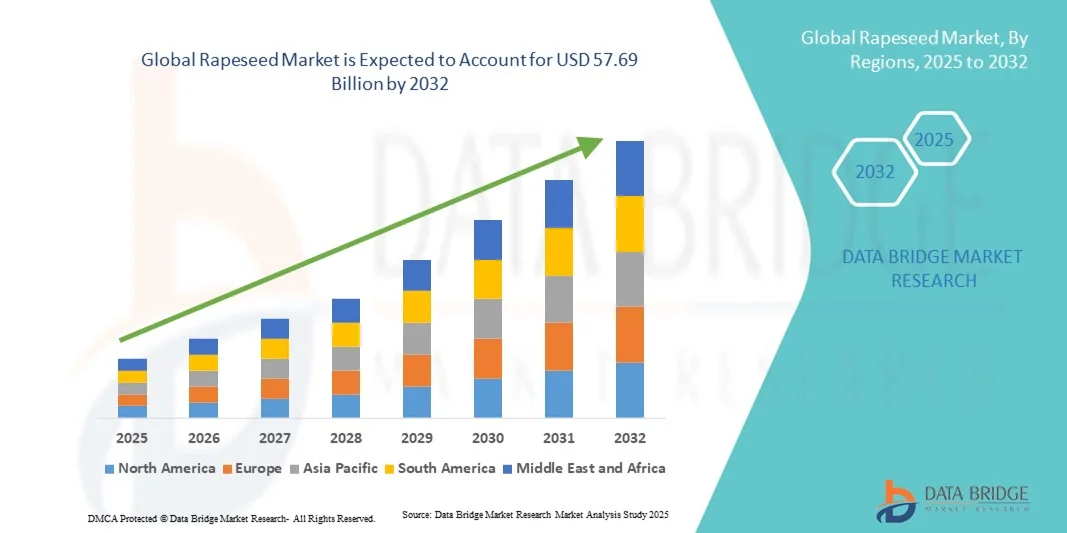
- The global rapeseed market size was valued at USD 42.57 billion in 2024 and is expected to reach USD 57.69 billion by 2032, at a CAGR of 5.00% during the forecast period
- The market growth is largely fuelled by the increasing demand for vegetable oils, growing consumption of rapeseed oil in food processing, and expanding applications in biofuel production
- Rising awareness of the health benefits of rapeseed oil, such as its low saturated fat content and high omega-3 fatty acids, is further supporting market expansion
Rapeseed Market Analysis
- The rapeseed market is experiencing steady growth due to the rising use of rapeseed oil as a sustainable alternative to other vegetable oils in both food and industrial applications
- Increasing biodiesel production, particularly in Europe and North America, has significantly boosted rapeseed demand as a key feedstock for biofuel manufacturing
- Asia-Pacific dominated the rapeseed market with the largest revenue share of 42.10% in 2024, driven by expanding agricultural production, growing demand for edible oils, and the increasing use of rapeseed oil in both food and industrial applications
- North America region is expected to witness the highest growth rate in the global rapeseed market, driven by rapid adoption of rapeseed-based biofuel production, growing consumer shift toward plant-based products, and enhanced investment in oilseed processing facilities
- The processed segment held the largest market revenue share in 2024, driven by its extensive use in packaged foods, bakery items, and industrial applications such as biodiesel manufacturing and lubricants. Processed rapeseed oil is preferred for its longer shelf life, cost efficiency, and consistent quality standards, making it highly suitable for large-scale commercial use.
Report Scope and Rapeseed Market Segmentation
|
Attributes |
Rapeseed Key Market Insights |
|
Segments Covered |
|
|
Countries Covered |
North America
Europe
Asia-Pacific
Middle East and Africa
South America
|
|
Key Market Players |
|
|
Market Opportunities |
• Cargill, Incorporated (U.S.) |
|
Value Added Data Infosets |
In addition to the insights on market scenarios such as market value, growth rate, segmentation, geographical coverage, and major players, the market reports curated by the Data Bridge Market Research also include import export analysis, production capacity overview, production consumption analysis, price trend analysis, climate change scenario, supply chain analysis, value chain analysis, raw material/consumables overview, vendor selection criteria, PESTLE Analysis, Porter Analysis, and regulatory framework. |
Rapeseed Market Trends
Growing Adoption of Rapeseed Oil in Biofuel Production
- The increasing emphasis on renewable energy and sustainable fuel alternatives is driving the use of rapeseed oil in biodiesel production. Governments across Europe and North America are promoting biofuel blending mandates, which has positioned rapeseed as a key feedstock for biodiesel manufacturing. This transition is reducing dependence on fossil fuels and supporting carbon neutrality goals while opening new income streams for farmers and processors
- The expansion of biodiesel refineries, coupled with supportive policies such as tax incentives and blending targets, is further fuelling demand for rapeseed oil. The versatility and high oil yield of rapeseed make it one of the most preferred options for renewable fuel generation among oilseed crops. In addition, collaborations between agricultural cooperatives and energy companies are boosting investment in rapeseed-based fuel infrastructure
- The rising adoption of cleaner fuels in transportation and agriculture sectors is strengthening the demand outlook for rapeseed. In addition, rapid technological advancements in oil extraction and refining processes are enhancing production efficiency and minimizing waste, improving overall profitability for producers. The use of advanced enzymatic transesterification methods is further reducing processing costs and environmental impact
- For instance, in 2023, Germany witnessed a significant increase in rapeseed cultivation after the government expanded its biodiesel blending target under the Renewable Energy Directive. This policy shift led to a surge in domestic demand for rapeseed oil, benefiting both farmers and biofuel producers. Similar initiatives are emerging in Canada and France, where rapeseed is being prioritized in green energy programs
- While the use of rapeseed oil in biofuels supports energy transition goals, sustained market growth depends on balancing food and fuel needs, ensuring stable raw material availability, and promoting sustainable agricultural practices. Long-term success also relies on adopting crop rotation methods, reducing greenhouse gas emissions, and strengthening supply chain transparency for sustainability compliance
Rapeseed Market Dynamics
Driver
Increasing Demand for Healthier Edible Oils and Plant-Based Products
- Rising consumer preference for healthier edible oils is driving the demand for rapeseed oil due to its low saturated fat content and high levels of omega-3 and omega-6 fatty acids. Growing awareness of lifestyle-related diseases such as obesity and cardiovascular disorders is pushing consumers toward heart-friendly oils such as rapeseed. This trend is particularly strong in developed nations with mature health-conscious populations
- The food industry’s growing use of rapeseed oil in packaged foods, bakery items, and culinary applications has further strengthened its market presence. Its neutral flavor and high smoke point make it an ideal choice for both home and industrial cooking purposes. The rising popularity of ready-to-eat meals and processed foods is further boosting the oil’s consumption in large-scale food manufacturing
- The expansion of the plant-based food sector is also contributing to market growth, as rapeseed oil serves as a key ingredient in dairy alternatives, plant-based meats, and vegan dressings. Health-conscious and environmentally aware consumers are driving this shift globally. Moreover, the trend aligns with global sustainability goals, as rapeseed oil production has a lower carbon footprint than animal-based fats
- For instance, in 2023, major food manufacturers in Canada and the UK reformulated several product lines using rapeseed oil to meet the increasing demand for healthier and sustainable food options. This substitution not only improved product nutritional value but also supported corporate sustainability initiatives aimed at reducing carbon emissions. Such moves are influencing smaller brands to follow suit in regional markets
- While rising health awareness is a major driver, continued product innovation, marketing strategies highlighting nutritional benefits, and stable oil supply will be essential for maintaining growth momentum. Companies are increasingly investing in premium rapeseed oil variants and cold-pressed products to cater to the expanding consumer base seeking minimally processed, high-quality oils
Restraint/Challenge
Volatile Raw Material Prices and Competition from Other Oilseeds
- Fluctuating prices of rapeseed due to variable weather conditions, changing crop yields, and global supply-demand imbalances pose a major challenge to market stability. Price volatility affects both producers and processors, leading to uncertain profit margins across the supply chain. Adverse climatic events such as droughts or floods can significantly disrupt supply, impacting downstream industries
- Intense competition from alternative oilseeds such as soybean, sunflower, and palm reduces rapeseed’s market share, particularly in regions with lower production costs or established supply networks. This competition limits expansion potential in price-sensitive markets. Moreover, government subsidies in favor of rival oilseeds further intensify pricing pressures and affect rapeseed’s export competitiveness
- The market is also challenged by trade barriers, inconsistent export policies, and logistical disruptions that affect cross-border rapeseed oil movement. Such uncertainties impact long-term supply planning and discourage investment in large-scale production facilities. Restrictions on genetically modified crop imports in certain regions add another layer of complexity to international trade
- For instance, in 2022, disruptions in global trade routes and a poor harvest season in parts of Europe led to a sharp increase in rapeseed prices, affecting biodiesel manufacturers and food processors dependent on stable oil supply. This volatility prompted several companies to diversify their sourcing strategies and enter into forward contracts to secure long-term supply stability
- While market players are focusing on diversifying sourcing strategies and improving storage infrastructure, ensuring price stability and competitiveness against other vegetable oils remains a critical challenge for sustained market growth. Strategic investments in weather-resilient crop varieties, efficient logistics, and advanced supply forecasting tools are key to mitigating future risks
Rapeseed Market Scope
The market is segmented on the basis of product type, application, end user, and distribution channel.
- By Product Type
On the basis of product type, the global rapeseed market is segmented into processed and virgin. The processed segment held the largest market revenue share in 2024, driven by its extensive use in packaged foods, bakery items, and industrial applications such as biodiesel manufacturing and lubricants. Processed rapeseed oil is preferred for its longer shelf life, cost efficiency, and consistent quality standards, making it highly suitable for large-scale commercial use.
The virgin segment is expected to witness the fastest growth rate from 2025 to 2032, driven by the rising consumer preference for minimally processed and nutrient-rich edible oils. Virgin rapeseed oil, being cold-pressed and chemical-free, is gaining popularity in premium cooking and health-conscious consumer segments, particularly in North America and Europe.
- By Application
On the basis of application, the rapeseed market is segmented into food processing, bio-fuel, personal care, and others. The food processing segment dominated the market in 2024 due to the widespread use of rapeseed oil in cooking, frying, and food manufacturing. Its neutral flavor and high smoke point make it ideal for diverse culinary uses across both residential and industrial settings.
The bio-fuel segment is projected to witness the highest growth from 2025 to 2032, driven by increasing adoption of rapeseed oil as a renewable energy source in biodiesel production. Growing government initiatives for clean energy, along with rising global fuel blending mandates, are strengthening the demand for rapeseed oil in the energy sector.
- By End User
On the basis of end user, the market is categorized into food service, food processor, and retail. The food processor segment held the dominant share in 2024, supported by large-scale utilization of rapeseed oil in packaged and processed food production. Its cost-effectiveness and nutritional profile make it a preferred choice for manufacturers seeking to develop healthier product lines.
The retail segment is projected to witness the highest growth from 2025 to 2032, driven by growing household consumption and the increasing availability of branded rapeseed oil across supermarkets, hypermarkets, and online platforms. Rising consumer awareness about healthy cooking oils is further encouraging direct retail purchases.
- By Distribution Channel
On the basis of distribution channel, the global rapeseed market is segmented into modern trade, franchise outlets, specialty stores, and online. The modern trade segment accounted for the largest market revenue share in 2024, attributed to the extensive presence of supermarkets and hypermarkets offering a wide variety of rapeseed oil products under different brands. The convenience of one-stop purchasing and promotional pricing strategies continue to drive this segment.
The online segment is projected to witness the highest growth from 2025 to 2032, supported by the rapid expansion of e-commerce platforms and growing consumer inclination toward doorstep delivery options. Online retail channels are also enabling small and regional rapeseed oil producers to reach broader markets through digital distribution networks.
Rapeseed Market Regional Analysis
- Asia-Pacific dominated the rapeseed market with the largest revenue share of 42.10% in 2024, driven by expanding agricultural production, growing demand for edible oils, and the increasing use of rapeseed oil in both food and industrial applications
- Consumers in the region are increasingly adopting rapeseed oil due to its health benefits, affordability, and versatility in cooking, which have made it one of the most preferred vegetable oils for daily consumption
- This dominance is further supported by large-scale cultivation in countries such as China and India, government support for oilseed farming, and rising investment in biofuel projects utilizing rapeseed oil as a sustainable feedstock
China Rapeseed Market Insight
The China rapeseed market captured the largest revenue share in 2024 within Asia-Pacific, driven by the country’s strong agricultural base, large domestic consumption, and growing demand for healthier edible oils. Rapeseed oil is a staple cooking ingredient in Chinese households and food processing industries. The government’s focus on improving oilseed self-sufficiency and promoting sustainable farming practices continues to support production growth. In addition, China’s investments in biodiesel production using locally produced rapeseed are further strengthening the market outlook.
Japan Rapeseed Market Insight
The Japan rapeseed market is expected to witness steady growth from 2025 to 2032, driven by the country’s high demand for premium edible oils and increasing interest in sustainable and imported vegetable oils. The nation’s limited domestic production leads to strong import dependency, particularly from Canada and Australia. Japanese consumers value the light flavor and health benefits of rapeseed oil, especially its low saturated fat and high omega-3 content. Moreover, growing use in ready-to-eat meals, processed foods, and eco-friendly bio-based products is supporting market expansion.
Europe Rapeseed Market Insight
The Europe rapeseed market is expected to witness significant growth from 2025 to 2032, supported by strong demand for rapeseed oil in both food and biofuel applications. The European Union’s renewable energy targets and blending mandates have positioned rapeseed as a leading biofuel feedstock. In addition, European consumers’ preference for sustainably sourced and non-GMO oils continues to drive market expansion. The region’s advanced agricultural infrastructure and focus on circular economy practices are expected to sustain long-term growth in the rapeseed sector.
Germany Rapeseed Market Insight
The Germany rapeseed market is expected to experience notable growth from 2025 to 2032, fuelled by its prominent role in biodiesel production and increasing demand for sustainable edible oils. Germany’s well-established oilseed processing facilities and favorable policies under the Renewable Energy Directive are supporting rapeseed oil’s widespread adoption. Moreover, the country’s growing focus on reducing carbon emissions and promoting bio-based alternatives in transportation and manufacturing is further driving rapeseed utilization. Technological innovations in precision farming are also improving yield efficiency and crop quality.
U.K. Rapeseed Market Insight
The U.K. rapeseed market is expected to experience notable growth from 2025 to 2032, driven by rising consumer demand for sustainable, locally produced oils and the growing importance of renewable energy sources. Domestic production has been supported by technological advancements and the adoption of high-yield rapeseed varieties. The shift toward healthier cooking oils, coupled with the use of rapeseed oil in food service and packaged foods, continues to strengthen market demand. In addition, the U.K.’s focus on biofuel production and environmentally conscious agriculture supports further expansion.
North America Rapeseed Market Insight
The North America rapeseed market is expected to experience notable growth from 2025 to 2032, driven by rising consumer preference for healthier cooking oils and expanding biodiesel production capacity. The U.S. and Canada are major contributors, with Canada being one of the leading global exporters of rapeseed (canola). Increasing investment in sustainable agriculture and renewable energy sectors is enhancing regional market prospects. In addition, the adoption of genetically improved rapeseed varieties is helping farmers achieve higher oil content and better resistance to pests and climate variability.
U.S. Rapeseed Market Insight
The U.S. rapeseed market is expected to experience notable growth from 2025 to 2032, supported by the increasing adoption of canola oil as a healthier alternative to conventional vegetable oils. Rising awareness regarding heart health and clean-label food trends is driving consumer preference toward low-saturated-fat oils. Furthermore, growing investments in renewable energy infrastructure and government support for biodiesel blending are expanding industrial demand for rapeseed oil. The presence of advanced oilseed processing facilities and research initiatives aimed at developing high-oil-content varieties are further strengthening market growth.
Rapeseed Market Share
The Rapeseed industry is primarily led by well-established companies, including:
• Cargill, Incorporated (U.S.)
• Ola Oils (U.K.)
• Mackintosh of Glendaveny (U.K.)
• ConAgra Foods Inc. (U.S.)
• Breckenholme Trading Company (U.K.)
• Helmike Plc (U.K.)
• "Sodrugestvo" Group of Companies (Belarus)
• ADM (U.S.)
• K. S. Oils Limited (India)
• Adani Group (India)
• Ruchi Soya Industries Ltd. (India)
• Associated British Foods plc. (U.K.)
• Bunge Limited (U.S.)
• Adams Group (U.S.)
• American Vegetable Oils, Inc. (U.S.)
• BORGES INTERNATIONAL GROUP, S.L. (Spain)
• Marico (India)
• SME Business Services Limited (U.K.)
• Walter Rau Neusser (Germany)
• INTERFAT (Spain)
Latest Developments in Global Rapeseed Market
- In September 2024, Burcon NutraScience Corporation announced the launch of Puratein, a rapeseed protein isolate designed to serve as an egg substitute in baked goods. This innovation supports the growing demand for plant-based and allergen-free ingredients, offering food manufacturers a sustainable alternative to traditional animal proteins and broadening rapeseed’s application in the food industry
- In June 2024, Bayer introduced its latest DEKALB rapeseed hybrid, DK401TL, to farmers across Western Canada. The new hybrid delivers superior yield performance compared to competitor varieties, enhancing productivity and profitability for growers while supporting the region’s sustainable agriculture initiatives
- In April 2024, Cargill, in collaboration with CBH Group, unveiled plans to construct a large-scale rapeseed-crushing facility near Perth. The plant aims to supply feedstock for BP’s upcoming biofuel hub, strengthening the renewable energy supply chain and reinforcing rapeseed’s role in global biofuel production and carbon reduction efforts

- Interactive Data Analysis Dashboard
- Company Analysis Dashboard for high growth potential opportunities
- Research Analyst Access for customization & queries
- Competitor Analysis with Interactive dashboard
- Latest News, Updates & Trend analysis
- Harness the Power of Benchmark Analysis for Comprehensive Competitor Tracking
Data collection and base year analysis are done using data collection modules with large sample sizes. The stage includes obtaining market information or related data through various sources and strategies. It includes examining and planning all the data acquired from the past in advance. It likewise envelops the examination of information inconsistencies seen across different information sources. The market data is analysed and estimated using market statistical and coherent models. Also, market share analysis and key trend analysis are the major success factors in the market report. To know more, please request an analyst call or drop down your inquiry.
The key research methodology used by DBMR research team is data triangulation which involves data mining, analysis of the impact of data variables on the market and primary (industry expert) validation. Data models include Vendor Positioning Grid, Market Time Line Analysis, Market Overview and Guide, Company Positioning Grid, Patent Analysis, Pricing Analysis, Company Market Share Analysis, Standards of Measurement, Global versus Regional and Vendor Share Analysis. To know more about the research methodology, drop in an inquiry to speak to our industry experts.
Data Bridge Market Research is a leader in advanced formative research. We take pride in servicing our existing and new customers with data and analysis that match and suits their goal. The report can be customized to include price trend analysis of target brands understanding the market for additional countries (ask for the list of countries), clinical trial results data, literature review, refurbished market and product base analysis. Market analysis of target competitors can be analyzed from technology-based analysis to market portfolio strategies. We can add as many competitors that you require data about in the format and data style you are looking for. Our team of analysts can also provide you data in crude raw excel files pivot tables (Fact book) or can assist you in creating presentations from the data sets available in the report.