


Rapid Eye Movement Sleep Behaviour Disorder Market Size
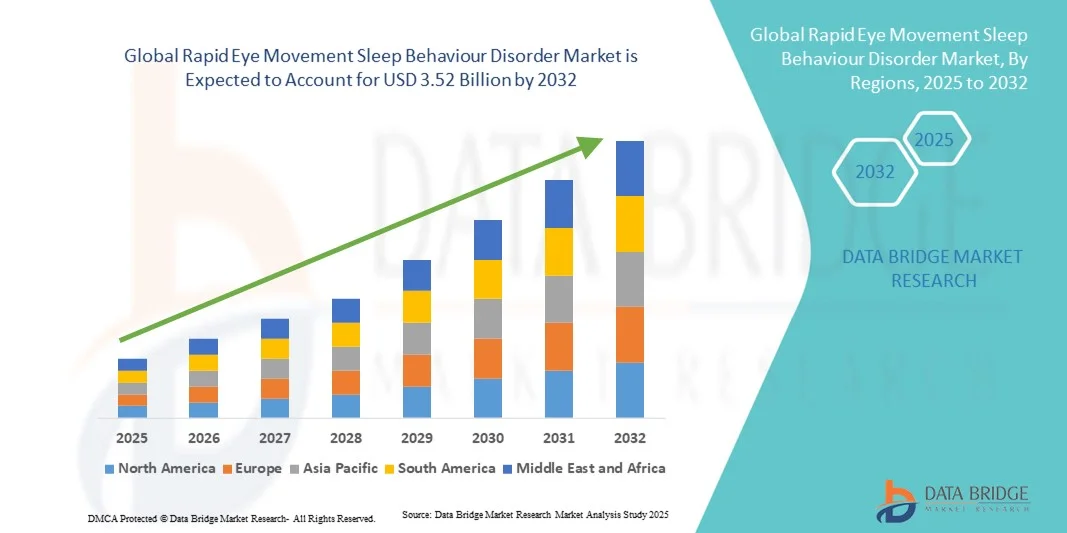
- The global rapid eye movement sleep behaviour disorder market size was valued at USD 2.26 billion in 2024 and is expected to reach USD 3.52 billion by 2032, at a CAGR of 5.70% during the forecast period
- The market growth is largely fueled by the increasing prevalence of neurological disorders, particularly neurodegenerative diseases such as Parkinson’s disease, as well as advancements in diagnostic technologies and treatment methods for sleep-related disorders
- Furthermore, rising consumer awareness about sleep health, coupled with the adoption of AI-driven diagnostic tools and personalized therapeutic solutions, is establishing effective management of RBD as a priority in clinical and home-based care. These converging factors are accelerating the uptake of RBD treatments and monitoring solutions, thereby significantly boosting the industry's growth
Rapid Eye Movement Sleep Behaviour Disorder Market Analysis
- Rapid REM Sleep Behaviour Disorder (RBD), a neurological condition characterized by abnormal enactment of dreams during REM sleep, is increasingly recognized as a significant sleep disorder, with growing importance in both clinical and home-based monitoring due to its association with neurodegenerative diseases such as Parkinson’s and Alzheimer’s
- The escalating demand for RBD management is primarily fueled by the rising prevalence of neurological disorders, increasing awareness among healthcare professionals and patients, and advancements in diagnostic and therapeutic technologies that enable timely detection and effective treatment
- North America dominated the rapid eye movement sleep behaviour disorder market with the largest revenue share of 42.7% in 2024, characterized by advanced healthcare infrastructure, early adoption of diagnostic technologies, and strong research initiatives, with the U.S. experiencing substantial growth in RBD diagnosis and treatment, driven by innovations in clinical monitoring, pharmacological therapies, and AI-enabled diagnostic tools
- Asia-Pacific is expected to be the fastest-growing region in the rapid eye movement sleep behaviour disorder market during the forecast period, due to rising awareness of sleep disorders, increasing geriatric populations, and expanding access to healthcare facilities equipped with advanced diagnostic solutions
- Polysomnography segment dominated the rapid eye movement sleep behaviour disorder market in 2024 with a market share of 45.2%, due to its critical role in accurately detecting REM sleep abnormalities and differentiating between idiopathic and symptomatic RBD
Report Scope and Rapid Eye Movement Sleep Behaviour Disorder Market Segmentation
|
Attributes |
Rapid Eye Movement Sleep Behaviour Disorder Key Market Insights |
|
Segments Covered |
|
|
Countries Covered |
North America
Europe
Asia-Pacific
Middle East and Africa
South America
|
|
Key Market Players |
|
|
Market Opportunities |
|
|
Value Added Data Infosets |
In addition to the insights on market scenarios such as market value, growth rate, segmentation, geographical coverage, and major players, the market reports curated by the Data Bridge Market Research also include in-depth expert analysis, pricing analysis, brand share analysis, consumer survey, demography analysis, supply chain analysis, value chain analysis, raw material/consumables overview, vendor selection criteria, PESTLE Analysis, Porter Analysis, and regulatory framework. |
Rapid Eye Movement Sleep Behaviour Disorder Market Trends
Advancements in AI-Enabled Diagnostics and Sleep Monitoring
- A significant and accelerating trend in the global RBD market is the integration of artificial intelligence (AI) and wearable sleep monitoring devices, which are enhancing early detection, continuous monitoring, and personalized treatment of REM sleep abnormalities
- For Instance, AI-powered polysomnography systems can automatically analyze sleep patterns and detect abnormal REM behaviors, providing clinicians with detailed insights for accurate diagnosis and intervention planning
- AI integration enables features such as predictive alerts for potential neurological progression and personalized therapy suggestions based on patient-specific sleep data, improving overall disease management
- Integration of wearable devices with mobile applications allows continuous home-based monitoring, enabling healthcare providers to track patient sleep activity remotely and adjust treatment plans in real time
- This trend toward intelligent, data-driven, and patient-centered diagnostic systems is reshaping clinical expectations for REM sleep disorder management, prompting companies to develop AI-enabled RBD monitoring solutions with cloud-based analytics and mobile app compatibility
- The demand for RBD diagnostic tools offering seamless AI integration is growing rapidly across both clinical and home-care settings, as healthcare providers increasingly prioritize early detection and comprehensive patient monitoring
Rapid Eye Movement Sleep Behaviour Disorder Market Dynamics
Driver
Rising Prevalence of Neurological Disorders and Awareness
- The increasing incidence of neurodegenerative diseases such as Parkinson’s and Alzheimer’s, coupled with rising awareness of sleep-related disorders, is a key driver of RBD market growth
- For Instance, research institutions and hospitals are incorporating advanced diagnostic protocols, including polysomnography and AI-based sleep monitoring, to improve early detection and management of RBD
- As patients and healthcare providers become more aware of the link between REM sleep disorders and neurological conditions, demand for effective monitoring and personalized treatment is increasing
- Furthermore, advancements in wearable sleep tracking devices and home-based diagnostic solutions are expanding access to accurate RBD detection, particularly in remote or underserved regions
- Strong government initiatives and funding for neurological disorder research are supporting the development of new diagnostic tools and therapies, driving market expansion
- Increasing investment by pharmaceutical and medical device companies in RBD-focused solutions is creating additional growth opportunities and enhancing treatment accessibility
- The growing adoption of patient-centered care models and integration of sleep disorder diagnostics into broader neurological assessment programs are further propelling the market, enabling timely intervention and improved treatment outcomes
Restraint/Challenge
Limited Awareness and High Cost of Advanced Diagnostics
- Limited awareness among patients and healthcare providers in certain regions, along with the high cost of advanced diagnostic technologies, poses a significant challenge to market growth
- For Instance, despite the availability of AI-enabled polysomnography and wearable devices, some healthcare facilities and patients are hesitant to adopt due to lack of knowledge or perceived complexity of the technology
- Addressing these barriers through awareness campaigns, clinician training programs, and patient education is essential to increase adoption rates and ensure effective disease management
- Moreover, the high upfront cost of sophisticated RBD monitoring systems can limit access in developing regions, where budget constraints affect healthcare infrastructure investment
- Regulatory challenges and the need for clinical validation of new AI-based diagnostic tools can delay product approvals and market entry, constraining short-term growth
- The complexity of integrating RBD diagnostics with existing hospital IT systems and electronic health records may also pose operational challenges, limiting widespread adoption
- Overcoming these challenges through affordable diagnostic solutions, telemedicine integration, and targeted education initiatives will be vital for sustained growth of the RBD market
Rapid Eye Movement Sleep Behaviour Disorder Market Scope
The market is segmented on the basis of type, treatment, diagnosis, dosage, route of administration, end-users, and distribution channel
- By Type
On the basis of type, the global rapid eye movement sleep behaviour disorder market is segmented into idiopathic and symptomatic. The Idiopathic segment dominated the market in 2024, accounting for the largest revenue share. Idiopathic RBD is more commonly diagnosed and occurs independently of other underlying neurological conditions, making it the primary focus for clinicians and researchers. Patients often seek treatment for idiopathic RBD to improve sleep quality and reduce injury risk during abnormal dream enactment. The established prevalence and awareness of idiopathic RBD, combined with standardized treatment protocols such as melatonin therapy, contribute to its dominant market position. In addition, idiopathic cases are often prioritized for long-term monitoring using polysomnography and wearable sleep trackers, which supports the segment’s growth. Growing research funding and clinical studies focusing on idiopathic RBD also enhance its market share.
The Symptomatic segment is expected to witness the fastest growth from 2025 to 2032, driven by increasing recognition of RBD as an early marker for neurodegenerative disorders such as Parkinson’s and Alzheimer’s disease. Symptomatic RBD is typically associated with underlying neurological conditions, creating a rising demand for early detection and targeted interventions. Enhanced awareness among neurologists and sleep specialists about the link between symptomatic RBD and progressive neurodegenerative diseases is fueling adoption of diagnostic and treatment solutions. The use of AI-assisted polysomnography and home-based monitoring devices for symptomatic RBD is accelerating market growth. Furthermore, ongoing clinical research and increasing patient referrals from neurology departments contribute to rapid expansion of this segment.
- By Treatment
On the basis of treatment, the global rapid eye movement sleep behaviour disorder market is segmented into antidepressants, anticonvulsants, and others. The Anticonvulsants segment dominated the market in 2024, with clonazepam being the most prescribed drug for RBD. This treatment has proven efficacy in reducing abnormal REM sleep behaviors, making it the preferred choice for clinicians. The segment’s dominance is supported by well-established clinical guidelines, physician familiarity, and strong patient outcomes. Anticonvulsants are widely used across both idiopathic and symptomatic RBD cases, driving sustained demand. The availability of generic formulations and relatively lower cost compared to novel therapies also contributes to its market leadership. In addition, long-term efficacy data from multiple studies reinforces clinician confidence in prescribing anticonvulsants.
The Antidepressants segment is expected to witness the fastest growth during forecast period, due to their role in managing RBD symptoms associated with comorbid mood and psychiatric disorders. Selective serotonin reuptake inhibitors (SSRIs) and other antidepressants are increasingly prescribed when RBD coincides with depression or anxiety, creating rising market demand. Growing awareness among psychiatrists and sleep specialists regarding the dual benefits of antidepressants for mood regulation and sleep stabilization is accelerating adoption. The development of newer antidepressants with improved safety profiles further fuels market growth. Telemedicine platforms are also facilitating easier access to antidepressant prescriptions, particularly in regions with limited specialist availability.
- By Diagnosis
On the basis of diagnosis, the global rapid eye movement sleep behaviour disorder market is segmented into physical examination, polysomnography, imaging tests, and others. The Polysomnography segment dominated the market in 2024, with a market share of 45.2%, due to its critical role in accurately detecting REM sleep abnormalities and differentiating between idiopathic and symptomatic RBD. Polysomnography provides comprehensive overnight monitoring of brain activity, eye movement, muscle tone, and other physiological parameters, enabling precise diagnosis. Clinicians widely rely on polysomnography as the gold standard for RBD detection. The segment’s dominance is further supported by integration with AI-based analytics and wearable adjuncts for home monitoring. Polysomnography also facilitates early intervention, reducing injury risk and improving patient outcomes. Increasing availability in sleep clinics and hospitals globally reinforces its leading market position.
The Physical Examination segment is expected to witness the fastest growth from 2025 to 2032, driven by its increasing use in initial screening and preliminary evaluation of patients suspected to have RBD. Physical examinations, often combined with patient questionnaires and clinical interviews, allow neurologists and sleep specialists to quickly identify potential RBD cases for further testing. Rising awareness among general practitioners and primary care providers about the significance of early detection is fueling adoption. Cost-effectiveness and ease of implementation in outpatient settings also contribute to the segment’s growth. The integration of teleconsultations for physical assessments is further boosting demand.
- By Dosage
On the basis of dosage, the global rapid eye movement sleep behaviour disorder market is segmented into tablet, injection, and others. The Tablet segment dominated the market in 2024, driven by the widespread use of oral medications such as clonazepam and melatonin for RBD management. Tablets are convenient, easy to administer, and suitable for long-term therapy. High patient compliance and availability in generic formulations enhance the segment’s adoption. Tablets are widely used across idiopathic and symptomatic cases, supporting large market revenue. Clinical guidelines recommend tablet-based administration as the first-line therapy, reinforcing its dominant position. The convenience of self-administration and accessibility through retail and hospital pharmacies also contribute to its market leadership.
The Injection segment is expected to witness the fastest growth from 2025 to 2032, driven by research into novel pharmacological therapies administered intravenously for severe or treatment-resistant RBD cases. Injectable formulations allow precise dosing and rapid therapeutic effect, particularly in hospital or clinic settings. Clinical trials and specialty neurology programs are contributing to increased adoption. Rising awareness among healthcare providers regarding advanced treatment options is also fueling growth. In addition, injection therapies are increasingly integrated into combination treatment regimens, supporting expansion of this segment.
- By Route of Administration
On the basis of route of administration, the global rapid eye movement sleep behaviour disorder market is segmented into oral, intravenous, and others. The Oral segment dominated the market in 2024 due to its convenience, high patient compliance, and extensive use of tablet-based therapies such as clonazepam and melatonin. Oral administration is preferred for home-based treatment and long-term therapy management. The segment benefits from broad availability across hospital, retail, and online pharmacies. Physicians favor oral therapies due to their safety, ease of dose adjustment, and well-documented efficacy. Patient preference for non-invasive administration reinforces segment dominance. Oral route adoption is also boosted by telemedicine consultations allowing prescriptions to be filled remotely.
The Intravenous segment is expected to witness the fastest growth from 2025 to 2032, as clinical research into hospital-based administration of novel agents expands. Intravenous administration enables rapid onset of action and precise control over drug delivery, particularly for acute or severe cases of symptomatic RBD. Growing clinical adoption in neurology and sleep disorder centers is fueling market expansion. Injectable therapies are often combined with oral regimens for enhanced efficacy. The segment also benefits from increasing availability of advanced infusion technologies in developed regions.
- By End-Users
On the basis of end-users, the global rapid eye movement sleep behaviour disorder market is segmented into clinic, hospital, and others. The Hospital segment dominated the market in 2024, driven by the concentration of specialized sleep disorder centers, access to advanced polysomnography equipment, and availability of multidisciplinary clinical teams. Hospitals provide comprehensive diagnosis, treatment, and monitoring services, attracting a larger patient base. The dominance is also supported by insurance coverage and government healthcare programs. Hospitals offer integrated services including pharmacological therapy, counseling, and follow-up care, enhancing patient adherence. Growing investment in hospital sleep labs globally reinforces this segment’s leadership.
The Clinic segment is expected to witness the fastest growth from 2025 to 2032, due to the rising number of outpatient sleep clinics offering home-based diagnostics, wearable monitoring, and teleconsultation services. Clinics provide convenient access for initial screening and ongoing patient management. Expansion of small- and medium-sized clinics in urban areas contributes to adoption. Telehealth-enabled clinics are increasingly popular for managing idiopathic and symptomatic RBD cases. Clinics also play a key role in patient education and long-term compliance, supporting segment growth.
- By Distribution Channel
On the basis of distribution channel, the global rapid eye movement sleep behaviour disorder market is segmented into hospital pharmacy, retail pharmacy, and online pharmacy. The Hospital Pharmacy segment dominated the market in 2024, due to direct availability of prescription medications and diagnostic devices in hospital settings. Hospital pharmacies ensure controlled distribution of specialized RBD medications such as clonazepam, alongside patient counseling and monitoring services. The dominance is supported by insurance coverage and physician-driven prescriptions. Hospitals also offer bundled diagnostic and treatment services, enhancing convenience for patients. Strong hospital infrastructure in developed regions further reinforces this segment’s leading position.
The Online Pharmacy segment is expected to witness the fastest growth from 2025 to 2032, fueled by increasing patient preference for home delivery, convenience, and access to specialty RBD medications. The rise of telemedicine consultations supports the online pharmacy model, enabling prescriptions to be filled remotely. Availability of both generic and branded formulations online expands treatment accessibility. The growth of e-commerce and digital healthcare platforms also accelerates segment adoption. Online pharmacies provide cost-competitive options and flexible delivery, driving rapid uptake.
Rapid Eye Movement Sleep Behaviour Disorder Market Regional Analysis
- North America dominated the global rapid eye movement sleep behaviour disorder market with the largest revenue share of 42.7% in 2024, characterized by advanced healthcare infrastructure, early adoption of diagnostic technologies, and strong research initiatives, with the U.S. experiencing substantial growth in RBD diagnosis and treatment, driven by innovations in clinical monitoring, pharmacological therapies, and AI-enabled diagnostic tools
- Patients and healthcare providers in the region highly value accurate diagnostics, personalized treatment plans, and integration of AI-enabled monitoring tools, which enable effective management of both idiopathic and symptomatic RBD cases
- This widespread adoption is further supported by strong research initiatives, increasing awareness of sleep disorders, and a technologically advanced medical ecosystem, establishing RBD monitoring and treatment solutions as preferred choices for clinics, hospitals, and home-based care in North America
U.S. Rapid Eye Movement Sleep Behaviour Disorder Market Insight
The U.S. rapid eye movement sleep behaviour disorder market captured the largest revenue share of 81% in North America in 2024, fueled by the increasing prevalence of neurodegenerative disorders such as Parkinson’s and Alzheimer’s. Patients and clinicians are prioritizing early detection and accurate monitoring of RBD through polysomnography and wearable AI-enabled devices. The growing preference for home-based sleep monitoring solutions, combined with telemedicine adoption and integration with mobile health applications, further propels the market. Moreover, research initiatives and government support for sleep disorder studies are significantly contributing to market expansion.
Europe Rapid Eye Movement Sleep Behaviour Disorder Market Insight
The Europe rapid eye movement sleep behaviour disorder market is projected to expand at a substantial CAGR throughout the forecast period, primarily driven by growing awareness of sleep disorders and the rising prevalence of neurological conditions. The increase in urbanization, along with well-established healthcare infrastructure, is fostering adoption of advanced diagnostic tools and therapies. European patients are also increasingly seeking personalized treatment solutions and home-based monitoring for improved sleep quality. The region is experiencing significant growth across clinics, hospitals, and specialized sleep centers, with RBD management becoming an integral part of neurodegenerative care programs.
U.K. Rapid Eye Movement Sleep Behaviour Disorder Market Insight
The U.K. rapid eye movement sleep behaviour disorder market is anticipated to grow at a noteworthy CAGR during the forecast period, driven by rising awareness about REM sleep disorders and the need for early diagnosis and treatment. Increasing concerns about sleep-related health complications are encouraging both patients and healthcare providers to adopt polysomnography and AI-assisted monitoring. The U.K.’s strong healthcare infrastructure, coupled with high digital adoption and telemedicine platforms, is expected to continue supporting market growth. In addition, ongoing research and clinical studies are further boosting adoption of advanced treatment and monitoring solutions.
Germany Rapid Eye Movement Sleep Behaviour Disorder Market Insight
The Germany rapid eye movement sleep behaviour disorder market is expected to expand at a considerable CAGR during the forecast period, fueled by high awareness of sleep disorders and the demand for technologically advanced diagnostic and treatment solutions. Germany’s well-developed healthcare system, combined with emphasis on innovation and research in neurodegenerative diseases, promotes adoption of polysomnography, wearable devices, and AI-enabled monitoring tools. Clinics and hospitals are increasingly integrating RBD diagnosis and treatment into neurological care programs. The emphasis on precise, privacy-focused solutions aligns with local patient expectations, further supporting market expansion.
Asia-Pacific Rapid Eye Movement Sleep Behaviour Disorder Market Insight
The Asia-Pacific rapid eye movement sleep behaviour disorder market is poised to grow at the fastest CAGR from 2025 to 2032, driven by increasing awareness of sleep disorders, rising prevalence of neurodegenerative conditions, and growing access to healthcare facilities in countries such as China, Japan, and India. The region’s inclination toward digital health solutions and telemedicine is accelerating adoption of home-based and wearable monitoring devices. Furthermore, increasing research initiatives and government support for neurological disorder management are driving market growth. Rising disposable incomes and technological adoption also expand access to affordable diagnostic and treatment solutions.
Japan Rapid Eye Movement Sleep Behaviour Disorder Market Insight
The Japan rapid eye movement sleep behaviour disorder market is gaining momentum due to high awareness of neurological health, rapid urbanization, and increasing adoption of wearable and AI-assisted sleep monitoring devices. Japanese patients and clinicians place a significant emphasis on early diagnosis and accurate management of RBD, driving demand for polysomnography and home-based monitoring solutions. Integration with mobile health platforms and telemedicine services is fueling market growth. Moreover, the country’s aging population is such asly to increase demand for easier-to-use, reliable diagnostic and treatment solutions in both clinical and home settings.
India Rapid Eye Movement Sleep Behaviour Disorder Market Insight
The India rapid eye movement sleep behaviour disorder market accounted for the largest market revenue share in Asia-Pacific in 2024, attributed to increasing awareness of sleep disorders, rising neurodegenerative disease prevalence, and expanding healthcare infrastructure. India is witnessing growing adoption of home-based monitoring devices, polysomnography services, and AI-enabled diagnostic tools in both urban and semi-urban areas. The push towards digital health initiatives, telemedicine expansion, and availability of affordable treatment solutions are key factors propelling the market in India. Increasing patient focus on early diagnosis and improved sleep quality is further supporting market growth.
Rapid Eye Movement Sleep Behaviour Disorder Market Share
The Rapid Eye Movement Sleep Behaviour Disorder industry is primarily led by well-established companies, including:
- CND Life Sciences (U.S.)
- Mayo Foundation for Medical Education and Research (U.S.)
- Houston Methodist (U.S.)
- Icahn School of Medicine at Mount Sinai (U.S.)
- Northwestern University (U.S.)
- Vanderbilt University Medical Center (U.S.)
- Avadel (Ireland)
- Synapse Biomedical Inc. (U.S.)
- Axsome Therapeutics, Inc. (U.S.)
- Jazz Pharmaceuticals, Inc. (Ireland)
- UCB Pharma (Belgium)
- Pfizer Inc. (U.S.)
- Merck & Co., Inc. (U.S.)
- Honeynaps (U.S.)
- Apnimed, Inc. (U.S.)
- Inspire Medical Systems, Inc. (U.S.)
- Nyxoah S.A. (Belgium)
- Somnair (U.S.)
- The Michael J. Fox Foundation for Parkinson's Research (U.S.)
What are the Recent Developments in Global Rapid Eye Movement Sleep Behaviour Disorder Market?
- In June 2025, Vanderbilt researchers unveiled an AI-enhanced wearable sleep monitoring device intended to improve the detection of sleep disorders. This device utilizes advanced algorithms to analyze sleep data, facilitating early identification and intervention for conditions such as RBD
- In June 2025, Northwestern scientists introduced a wearable, wireless device designed to monitor sleep stages, potentially enhancing the detection of sleep disorders, including RBD. This device offers an in-depth analysis of sleep patterns, providing valuable insights for early diagnosis and management
- In June 2025, CND Life Sciences introduced the Syn-One Test, a diagnostic tool capable of detecting phosphorylated alpha-synuclein in skin biopsies of patients with idiopathic REM Sleep Behavior Disorder (iRBD). This test aids in identifying individuals at risk for neurodegenerative diseases associated with RBD
- In May 2025, The NAPS Consortium organized the 2025 International RBD Study Group Meeting, bringing together researchers and clinicians to discuss advancements in RBD research. Topics included neurophysiology, ethics, and patient risk communication, fostering collaborative efforts to enhance understanding and treatment of RBD
- In May 2025, An RBD Symposium held in London focused on the diagnosis, treatment, and prognosis of REM Sleep Behavior Disorder, emphasizing its link to neurodegeneration. The event gathered experts and patient representatives to share research findings and foster clinical collaboration in the field of RBD

- Interactive Data Analysis Dashboard
- Company Analysis Dashboard for high growth potential opportunities
- Research Analyst Access for customization & queries
- Competitor Analysis with Interactive dashboard
- Latest News, Updates & Trend analysis
- Harness the Power of Benchmark Analysis for Comprehensive Competitor Tracking
Data collection and base year analysis are done using data collection modules with large sample sizes. The stage includes obtaining market information or related data through various sources and strategies. It includes examining and planning all the data acquired from the past in advance. It likewise envelops the examination of information inconsistencies seen across different information sources. The market data is analysed and estimated using market statistical and coherent models. Also, market share analysis and key trend analysis are the major success factors in the market report. To know more, please request an analyst call or drop down your inquiry.
The key research methodology used by DBMR research team is data triangulation which involves data mining, analysis of the impact of data variables on the market and primary (industry expert) validation. Data models include Vendor Positioning Grid, Market Time Line Analysis, Market Overview and Guide, Company Positioning Grid, Patent Analysis, Pricing Analysis, Company Market Share Analysis, Standards of Measurement, Global versus Regional and Vendor Share Analysis. To know more about the research methodology, drop in an inquiry to speak to our industry experts.
Data Bridge Market Research is a leader in advanced formative research. We take pride in servicing our existing and new customers with data and analysis that match and suits their goal. The report can be customized to include price trend analysis of target brands understanding the market for additional countries (ask for the list of countries), clinical trial results data, literature review, refurbished market and product base analysis. Market analysis of target competitors can be analyzed from technology-based analysis to market portfolio strategies. We can add as many competitors that you require data about in the format and data style you are looking for. Our team of analysts can also provide you data in crude raw excel files pivot tables (Fact book) or can assist you in creating presentations from the data sets available in the report.












