


Rare Biomarkers Specimen Collection and Stabilization Market Size
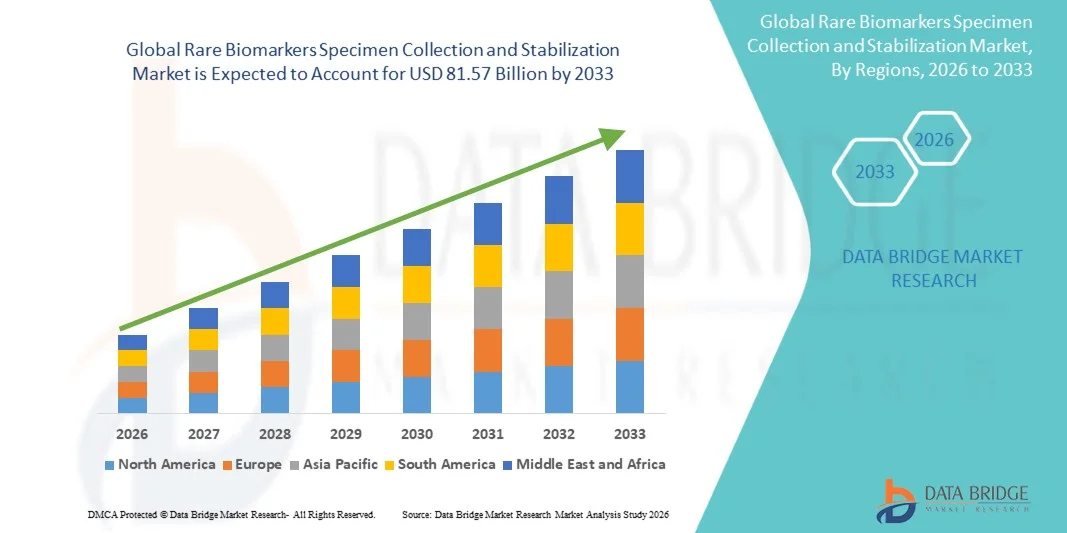
- The global rare biomarkers specimen collection and stabilization market size was valued at USD 40.64 billion in 2025and is expected to reach USD 81.57 billion by 2033, at a CAGR of 9.10% during the forecast period
- The market growth is primarily driven by increasing demand for high-quality biospecimen integrity, rising adoption of precision medicine, and expanding clinical research activities focused on rare diseases and biomarker discovery, which require highly reliable collection and stabilization techniques
- Furthermore, growing investments in biobanking infrastructure, advancements in specimen preservation technologies, and the rising need for standardized sample handling protocols in diagnostics and pharmaceutical R&D are strengthening market adoption, thereby significantly accelerating industry growth
Rare Biomarkers Specimen Collection and Stabilization Market Analysis
- Rare biomarkers specimen collection and stabilization solutions, including specialized kits, blood collection tubes, and stabilization systems used to preserve circulating biomolecules such as cell-free DNA, circulating tumor cells, and exosomes, are becoming essential tools in modern diagnostics and translational research due to their ability to maintain sample integrity for highly sensitive downstream molecular analysis
- The escalating demand for these solutions is primarily driven by the growing adoption of liquid biopsy approaches, expanding applications in oncology and non-invasive prenatal testing (NIPT), and increasing focus on precision medicine and biomarker-driven drug development requiring reliable nucleic acid preservation and isolation workflows
- North America dominated the rare biomarkers specimen collection and stabilization market with the largest revenue share 40.7% in 2025, supported by advanced molecular diagnostics infrastructure, strong funding for cancer and rare disease research, and widespread adoption of liquid biopsy technologies, particularly across oncology and clinical genomics applications
- Asia-Pacific is expected to be the fastest growing region in the market during the forecast period due to rising investment in genomic medicine, expanding clinical diagnostics capabilities, and increasing utilization of advanced biomarker-based testing in countries such as China, Japan, and India
- The circulating cell-free DNA (ccfDNA) segment dominated the market with a share of 38.9% in 2025, driven by its extensive use in non-invasive prenatal testing (NIPT), oncology liquid biopsy applications, and increasing clinical adoption for early disease detection and monitoring
Report Scope and Rare Biomarkers Specimen Collection and Stabilization Market Segmentation
|
Attributes |
Rare Biomarkers Specimen Collection and Stabilization Key Market Insights |
|
Segments Covered |
|
|
Countries Covered |
North America · U.S. · Canada · Mexico Europe · Germany · France · U.K. · Netherlands · Switzerland · Belgium · Russia · Italy · Spain · Turkey · Rest of Europe Asia-Pacific · China · Japan · India · South Korea · Singapore · Malaysia · Australia · Thailand · Indonesia · Philippines · Rest of Asia-Pacific Middle East and Africa · Saudi Arabia · U.A.E. · South Africa · Egypt · Israel · Rest of Middle East and Africa South America · Brazil · Argentina · Rest of South America |
|
Key Market Players |
|
|
Market Opportunities |
· Expanding integration of liquid biopsy-based diagnostics in routine clinical workflows · Growing adoption of decentralized clinical trials (DCTs) is increasing demand for robust, transport-stable biospecimen collection systems |
|
Value Added Data Infosets |
In addition to the insights on market scenarios such as market value, growth rate, segmentation, geographical coverage, and major players, the market reports curated by the Data Bridge Market Research also include in-depth expert analysis, patient epidemiology, pipeline analysis, pricing analysis, and regulatory framework |
Rare Biomarkers Specimen Collection and Stabilization Market Trends
“Rising Adoption of Liquid Biopsy and Multi-Omics Sample Preservation Technologies”
- A significant and accelerating trend in the global rare biomarkers specimen collection and stabilization market is the increasing adoption of liquid biopsy workflows and advanced stabilization systems designed to preserve circulating tumor cells, cell-free DNA, and exosomes for high-precision molecular analysis
- For instance, Streck Cell-Free DNA BCT tubes and similar stabilization products are widely used to maintain cfDNA integrity during transport and storage for downstream NIPT and oncology testing applications
- Integration of advanced preservation chemistries in collection kits is enabling improved stability of RNA, DNA, and extracellular vesicles, reducing pre-analytical variability and enhancing reproducibility in biomarker research studies
- Furthermore, growing adoption of multi-omics approaches combining genomics, transcriptomics, and proteomics is driving demand for specimen collection systems capable of preserving multiple biomolecule types from a single sample
- This trend toward standardized, high-integrity biospecimen handling is reshaping expectations in clinical trials and research, with companies such as QIAGEN developing specialized kits and stabilization solutions for rare biomarker workflows
- The demand for reliable, contamination-free, and long-term stable biospecimen collection systems is increasing rapidly across oncology, NIPT, and translational research applications
- In addition, rising collaborations between diagnostic companies and research institutes are accelerating the development of next-generation stabilization technologies for rare and sensitive biomolecules
Rare Biomarkers Specimen Collection and Stabilization Market Dynamics
Driver
“Growing Demand for Precision Medicine and Liquid Biopsy-Based Diagnostics”
- The increasing demand for precision medicine and non-invasive diagnostic approaches is a significant driver for the rising adoption of rare biomarkers specimen collection and stabilization solutions in clinical and research settings
- For instance, in April 2025, Roche expanded its liquid biopsy capabilities by enhancing cfDNA-based oncology testing solutions to support earlier cancer detection and treatment monitoring
- As healthcare systems shift toward early disease detection and personalized treatment strategies, demand for high-quality stabilized biospecimens for circulating tumor cells, cfDNA, and RNA analysis is increasing significantly
- Furthermore, the expansion of genomic research programs and clinical trials focused on rare diseases and oncology is strengthening the need for standardized and reliable specimen preservation systems
- The ability to ensure sample integrity during collection, transport, and storage is a key factor driving adoption of advanced stabilization kits and blood collection tubes across research institutions and diagnostic laboratories
- The growing integration of biomarker-driven decision-making in drug development is further accelerating the use of specialized biospecimen collection solutions in pharmaceutical pipelines
- Furthermore, increasing regulatory emphasis on sample traceability and data integrity in clinical trials is boosting demand for standardized specimen stabilization systems
- In addition, rising investments in next-generation sequencing (NGS) platforms are expanding the need for high-quality nucleic acid preservation across global research networks
Restraint/Challenge
“High Cost of Specialized Collection Systems and Pre-Analytical Variability Issues”
- Concerns related to the high cost of advanced rare biomarker specimen collection and stabilization systems, along with complex handling requirements, pose a significant challenge to widespread market adoption
- For instance, premium cfDNA stabilization tubes and exosome preservation kits often require strict temperature control and validated workflows, increasing operational costs for diagnostic laboratories and research centers
- Variability in pre-analytical conditions such as collection timing, transport delays, and storage environments can compromise biomolecule integrity and affect test accuracy, limiting reproducibility across studies
- Furthermore, limited standardization across global laboratories in sample processing protocols creates inconsistencies in biomarker analysis outcomes, reducing confidence in cross-study comparability
- The need for trained personnel and specialized infrastructure for handling sensitive biospecimens adds additional financial and operational burden on end users
- Addressing these challenges through cost-effective stabilization technologies, standardized protocols, and improved logistics systems will be critical for sustained market growth
- Furthermore, limited reimbursement coverage for advanced biomarker-based diagnostic tests restricts adoption in cost-sensitive healthcare systems
- In addition, supply chain dependencies for specialized reagents and collection materials can lead to delays and increased procurement costs in emerging markets
Rare Biomarkers Specimen Collection and Stabilization Market Scope
The market is segmented on the basis of type, product, specimen, biomolecules, application, and end use.
- By Type
On the basis of type, the market is segmented into circulating cell-free DNA (ccfDNA), circulating tumor cells (CTCs), and exosomes/extracellular vesicles. The ccfDNA segment dominated the market with the largest revenue share of 38.9% in 2025, driven by its extensive clinical utilization in non-invasive prenatal testing (NIPT), oncology liquid biopsy, and early disease detection workflows. Its strong demand is supported by the requirement for highly stable blood-based sampling and reliable downstream genetic analysis. The segment benefits from increasing adoption in routine diagnostic testing and precision medicine programs. Expanding use in cancer screening and genetic disorder detection further strengthens its dominance. Continuous advancements in cfDNA stabilization tubes and reagents are also supporting market leadership.
The exosomes/extracellular vesicles segment is expected to witness the fastest growth rate during 2026–2033, driven by rising interest in intercellular communication studies and advanced biomarker discovery applications. These vesicles carry RNA, proteins, and lipids, making them highly valuable for next-generation diagnostics. Increasing research in oncology, neurodegenerative disorders, and cardiovascular diseases is significantly boosting demand. Technological improvements in isolation and stabilization techniques are enhancing clinical feasibility. Growing funding from biotech firms and research institutes is accelerating innovation in this segment. Expanding adoption in multi-omics studies is further supporting rapid growth.
- By Product
On the basis of product, the market is segmented into isolation kits and reagents, blood collection tubes, and systems. The blood collection tubes segment dominated the market with the largest revenue share of 42% in 2025, driven by widespread use in cfDNA stabilization and liquid biopsy workflows. These tubes are preferred due to their ease of use, compatibility with standard phlebotomy procedures, and ability to preserve biomolecule integrity during transport. Their strong adoption in large-scale clinical trials and diagnostic testing further strengthens market leadership. Increasing demand for standardized pre-analytical sample handling supports growth. Rising use in oncology and prenatal screening applications is also contributing significantly. Continuous product innovations are improving sample stability and storage duration.
The systems segment is expected to witness the fastest growth rate during 2026–2033, driven by increasing automation in specimen processing and integrated workflow solutions. These systems reduce manual errors and improve consistency in sample collection and stabilization. Their adoption is growing in biobanking facilities and high-throughput genomic laboratories. Integration with digital tracking and laboratory information systems enhances operational efficiency. Expanding use in multi-center clinical studies is further driving demand. Increasing focus on end-to-end sample traceability is accelerating segment growth.
- By Specimen
On the basis of specimen, the market is segmented into serum/plasma and others. The serum/plasma segment dominated the market with the largest revenue share of 45% in 2025, driven by its extensive application in liquid biopsy and biomarker-based diagnostic testing. Serum and plasma are preferred due to minimally invasive collection methods and strong compatibility with cfDNA, RNA, and protein analysis. Their high reproducibility in clinical and research settings strengthens adoption. Widespread use in oncology and prenatal diagnostics further supports dominance. Established global protocols for handling and processing improve reliability. Increasing demand for large-scale clinical studies also contributes to segment leadership.
The others segment is expected to witness the fastest growth rate during 2026–2033, driven by increasing use of alternative specimens such as urine, cerebrospinal fluid, and tissue-derived fluids. These samples provide deeper insights into rare and complex disease mechanisms. Growing research in neurological and infectious diseases is boosting adoption. Advancements in stabilization technologies are improving sample integrity. Expanding multi-sample comparative studies are further driving demand. Rising focus on personalized medicine is accelerating growth in this segment.
- By Nucleic Acid and Other Biomolecules
On the basis of biomolecules, the market is segmented into RNA, DNA, and others. The DNA segment dominated the market with the largest revenue share of 40% in 2025, driven by strong reliance on cfDNA in liquid biopsy and genetic testing applications. DNA stability during collection and transport is critical for accurate genomic sequencing results. Increasing use in oncology diagnostics and NIPT further strengthens demand. Expanding adoption in precision medicine programs supports segment leadership. Continuous improvements in DNA stabilization reagents enhance performance reliability. Growing clinical integration of genetic screening is also contributing to dominance.
The RNA segment is expected to witness the fastest growth rate during 2026–2033, driven by increasing focus on transcriptomics and gene expression profiling. RNA’s instability requires advanced stabilization solutions, boosting product demand. Rising applications in infectious disease diagnostics and cancer biomarker discovery are accelerating growth. Expanding adoption of RNA sequencing technologies in research and clinical settings supports market expansion. Increasing funding for molecular biology research is further strengthening uptake. Continuous innovation in RNA preservation chemistry is enabling broader clinical use.
- By Application
On the basis of application, the market is segmented into NIPT, oncology, transcriptomics, pharmacogenomics, transplant rejection, population screening, cardiovascular diseases, and others. The oncology segment dominated the market with the largest revenue share of 35% in 2025, driven by widespread adoption of liquid biopsy for cancer detection, monitoring, and treatment response evaluation. High demand for circulating tumor cell and cfDNA analysis significantly boosts specimen stabilization requirements. Rising global cancer incidence further strengthens segment dominance. Increasing pharmaceutical investment in oncology biomarker development supports growth. Expanding use of personalized cancer therapies is also driving demand. Continuous clinical adoption of early detection methods reinforces market leadership.
The NIPT segment is expected to witness the fastest growth rate during 2026–2033, driven by increasing awareness of non-invasive prenatal screening for chromosomal abnormalities. Rising demand for early and safe fetal testing is supporting adoption of cfDNA-based methods. Expanding healthcare access in emerging economies is further accelerating growth. Improvements in test accuracy and affordability are increasing patient acceptance. Growing government support for maternal healthcare programs is also contributing to expansion. Continuous technological advancements in prenatal diagnostics are boosting market penetration.
- By End Use
On the basis of end use, the market is segmented into hospitals, perinatal clinics, public health labs, private/commercial labs, physician labs, research institutes, and others. The private/commercial labs segment dominated the market with the largest revenue share of 38% in 2025, driven by high-throughput diagnostic testing and advanced laboratory infrastructure. These labs handle large volumes of liquid biopsy and genomic tests, strengthening demand for standardized specimen stabilization systems. Increasing outsourcing of diagnostic services from hospitals supports growth. Adoption of automation and AI-based workflows enhances efficiency. Strong investment in advanced molecular diagnostics further reinforces dominance. Expanding use of cfDNA and RNA testing in commercial labs is also driving demand.
The research institutes segment is expected to witness the fastest growth rate during 2026–2033, driven by increasing academic and clinical research in rare diseases and oncology. Rising government and private funding for biomarker discovery programs is boosting adoption. Growing collaboration between biotech companies and universities is accelerating innovation. Expanding use of multi-omics research platforms supports demand for high-quality biospecimen preservation. Increasing focus on precision medicine research is further driving growth. Continuous development of advanced stabilization technologies is enhancing research capabilities.
Rare Biomarkers Specimen Collection and Stabilization Market Regional Analysis
- North America dominated the rare biomarkers specimen collection and stabilization market with the largest revenue share 40.7% in 2025, supported by advanced molecular diagnostics infrastructure, strong funding for cancer and rare disease research, and widespread adoption of liquid biopsy technologies, particularly across oncology and clinical genomics applications
- The region benefits from a high concentration of biotechnology and pharmaceutical companies actively investing in cfDNA, CTC, and exosome-based biomarker research, which significantly increases demand for standardized specimen collection and stabilization solutions
- Furthermore, widespread use of NIPT and oncology liquid biopsy testing, along with strong funding for rare disease research programs, is accelerating adoption of advanced blood collection tubes, isolation kits, and stabilization systems in both clinical and research settings
U.S. Rare Biomarkers Specimen Collection and Stabilization Market Insight
The U.S. rare biomarkers specimen collection and stabilization market captured the largest revenue share of 82% in North America in 2025, fueled by strong adoption of liquid biopsy technologies and rapid expansion of precision medicine initiatives. The country’s advanced biotechnology ecosystem and high investment in genomic research are significantly driving demand for cfDNA, CTC, and exosome-based specimen collection solutions. Consumers and healthcare providers increasingly rely on high-integrity biospecimen workflows to support oncology diagnostics, NIPT, and rare disease research. Moreover, strong presence of leading biotech and diagnostic companies, along with continuous innovation in stabilization tubes, isolation kits, and automated systems, is significantly contributing to market expansion.
Europe Rare Biomarkers Specimen Collection and Stabilization Market Insight
The Europe rare biomarkers specimen collection and stabilization market is projected to expand at a substantial CAGR during the forecast period, primarily driven by strong regulatory frameworks supporting clinical research and increasing adoption of personalized medicine. The region is witnessing rising demand for standardized biospecimen handling in oncology, genetic testing, and biobanking applications. Growing emphasis on high-quality healthcare systems and structured clinical trials is further accelerating adoption of advanced stabilization technologies. In addition, increasing investments in multi-omics research and expanding use of liquid biopsy in cancer screening are strengthening market growth across both public and private healthcare sectors.
U.K. Rare Biomarkers Specimen Collection and Stabilization Market Insight
The U.K. rare biomarkers specimen collection and stabilization market is anticipated to grow at a noteworthy CAGR during the forecast period, driven by expanding clinical research activities and increasing adoption of non-invasive diagnostic technologies. Rising concerns regarding cancer and genetic disorders are encouraging greater use of cfDNA-based liquid biopsy testing. The country’s strong academic research base and collaboration between biotech firms and healthcare institutions are further supporting innovation in specimen stabilization solutions. Moreover, the growing focus on early disease detection and precision medicine is significantly boosting demand for advanced biospecimen collection systems across healthcare and research settings.
Germany Rare Biomarkers Specimen Collection and Stabilization Market Insight
The Germany rare biomarkers specimen collection and stabilization market is expected to expand at a considerable CAGR during the forecast period, fueled by strong emphasis on innovation, digital healthcare transformation, and precision diagnostics. Increasing demand for high-quality biospecimen integrity in oncology and genetic screening is driving adoption of advanced stabilization kits and collection systems. Germany’s well-developed healthcare infrastructure and strong focus on data accuracy and regulatory compliance are further supporting market growth. In addition, growing integration of automated laboratory systems and liquid biopsy technologies is enhancing efficiency in clinical and research workflows.
Asia-Pacific Rare Biomarkers Specimen Collection and Stabilization Market Insight
The Asia-Pacific rare biomarkers specimen collection and stabilization market is poised to grow at the fastest CAGR of 23% during 2026–2033, driven by rapid expansion of genomics research, increasing healthcare expenditure, and rising awareness of early disease detection. Countries such as China, Japan, and India are experiencing strong growth in oncology screening, NIPT adoption, and clinical trial activities. The region is also benefiting from expanding diagnostic laboratory infrastructure and increasing availability of cost-effective biospecimen stabilization solutions. Furthermore, government initiatives supporting healthcare digitalization and life sciences innovation are significantly accelerating market penetration.
Japan Rare Biomarkers Specimen Collection and Stabilization Market Insight
The Japan rare biomarkers specimen collection and stabilization market is gaining momentum due to advanced healthcare infrastructure, strong adoption of precision medicine, and increasing use of liquid biopsy technologies. The country’s aging population is driving demand for early disease detection and minimally invasive diagnostic solutions. High emphasis on quality and accuracy in clinical diagnostics is supporting adoption of advanced cfDNA and RNA stabilization systems. In addition, integration of laboratory automation and digital tracking systems is improving efficiency and reliability in biospecimen handling across research and clinical environments.
India Rare Biomarkers Specimen Collection and Stabilization Market Insight
The India rare biomarkers specimen collection and stabilization market accounted for the largest revenue share in Asia-Pacific in 2025, attributed to rapid urbanization, expanding healthcare infrastructure, and increasing adoption of molecular diagnostics. Rising prevalence of cancer and genetic disorders is significantly boosting demand for liquid biopsy-based testing solutions. The country’s growing focus on NIPT and preventive healthcare is further supporting market expansion. In addition, government initiatives promoting digital health and biotechnology development, along with the presence of emerging domestic manufacturers, are improving affordability and accessibility of advanced specimen collection and stabilization products.
Rare Biomarkers Specimen Collection and Stabilization Market Share
The Rare Biomarkers Specimen Collection and Stabilization industry is primarily led by well-established companies, including:
- Thermo Fisher Scientific Inc. (U.S.)
- F. Hoffmann-La Roche Ltd. (Switzerland)
- BD (U.S.)
- QIAGEN (Netherlands)
- Merck KGaA (Germany)
- Bio-Rad Laboratories, Inc. (U.S.)
- Agilent Technologies, Inc. (U.S.)
- PerkinElmer Inc. (U.S.)
- Abbott (U.S.)
- Illumina, Inc. (U.S.)
- Charles (U.S.)
- Eurofins Scientific SE (Luxembourg)
- Promega Corporation (U.S.)
- Myriad Genetics, Inc. (U.S.)
- Natera, Inc. (U.S.)
- Streck, Inc. (U.S.)
- OraSure Technologies, Inc. (U.S.)
- Hamilton Company (U.S.)
- Miltenyi Biotec B.V. & Co. KG (Germany)
- Bio-Techne Corporation (U.S.)
What are the Recent Developments in Global Rare Biomarkers Specimen Collection and Stabilization Market?
- In October 2025, Qiagen strengthened its rare biomarker specimen collection and stabilization capabilities by enhancing its cfDNA and RNA preservation workflow solutions used in liquid biopsy and multi-omics research. The company focused on improving sample integrity across transportation and storage to support oncology diagnostics and rare disease research
- In October 2023, Streck enhanced its cfDNA Blood Collection Tube (BCT) platform to improve stabilization of circulating cell-free DNA for extended periods during transport and storage. The innovation helps prevent contamination from genomic DNA released by blood cells, ensuring higher accuracy in oncology and NIPT testing. This development strengthens the reliability of liquid biopsy workflows, especially in decentralized clinical testing environments
- In March 2023, OraSure Technologies collaborated with nRichDX to develop advanced specimen collection approaches for liquid biopsy using non-blood-based samples such as first-void urine. The initiative aims to improve biomarker yield and stabilization for cancer and infectious disease diagnostics.
- In October 2022, Thermo Fisher Scientific expanded its specimen stabilization and molecular diagnostic workflow portfolio to support high-quality sample handling for genomic and proteomic research. The company focused on improving reproducibility and standardization in clinical trial and research sample processing
- In June 2021, QIAGEN and other molecular diagnostics companies broadened their RNA and cfDNA stabilization product usage, including PAXgene and related preservation systems, for transcriptomics and liquid biopsy applications. These technologies were widely adopted in oncology, infectious disease, and rare disease research to maintain biomolecule integrity

- Interactive Data Analysis Dashboard
- Company Analysis Dashboard for high growth potential opportunities
- Research Analyst Access for customization & queries
- Competitor Analysis with Interactive dashboard
- Latest News, Updates & Trend analysis
- Harness the Power of Benchmark Analysis for Comprehensive Competitor Tracking
Data collection and base year analysis are done using data collection modules with large sample sizes. The stage includes obtaining market information or related data through various sources and strategies. It includes examining and planning all the data acquired from the past in advance. It likewise envelops the examination of information inconsistencies seen across different information sources. The market data is analysed and estimated using market statistical and coherent models. Also, market share analysis and key trend analysis are the major success factors in the market report. To know more, please request an analyst call or drop down your inquiry.
The key research methodology used by DBMR research team is data triangulation which involves data mining, analysis of the impact of data variables on the market and primary (industry expert) validation. Data models include Vendor Positioning Grid, Market Time Line Analysis, Market Overview and Guide, Company Positioning Grid, Patent Analysis, Pricing Analysis, Company Market Share Analysis, Standards of Measurement, Global versus Regional and Vendor Share Analysis. To know more about the research methodology, drop in an inquiry to speak to our industry experts.
Data Bridge Market Research is a leader in advanced formative research. We take pride in servicing our existing and new customers with data and analysis that match and suits their goal. The report can be customized to include price trend analysis of target brands understanding the market for additional countries (ask for the list of countries), clinical trial results data, literature review, refurbished market and product base analysis. Market analysis of target competitors can be analyzed from technology-based analysis to market portfolio strategies. We can add as many competitors that you require data about in the format and data style you are looking for. Our team of analysts can also provide you data in crude raw excel files pivot tables (Fact book) or can assist you in creating presentations from the data sets available in the report.













