


Rare Disease Genetic Testing Market Overview
The Rare Disease Genetic Testing Market was valued at USD 1.24 billion in 2025 and is projected to reach USD 3.12 billion by 2033, growing at a CAGR of 12.26% from 2026 to 2033. The market is experiencing strong growth driven by the increasing prevalence of rare genetic disorders, growing awareness of early disease diagnosis, and rapid advancements in next-generation sequencing (NGS) and molecular diagnostic technologies. Expanding adoption of precision medicine, rising government support for newborn screening programs, and increasing availability of genetic counseling services are further accelerating demand for rare disease genetic testing solutions across healthcare systems worldwide.
The growing burden of undiagnosed rare diseases, combined with advancements in genomic research and declining sequencing costs, is encouraging hospitals, diagnostic laboratories, and research institutions to adopt advanced genetic testing technologies. Whole exome sequencing (WES), whole genome sequencing (WGS), chromosomal microarray analysis, and targeted gene panels are increasingly replacing conventional diagnostic approaches by providing faster, more accurate, and comprehensive identification of disease-causing genetic variants. In addition, increasing investments in rare disease research, expanding biobank initiatives, and growing collaborations between diagnostic companies, pharmaceutical manufacturers, and research organizations are supporting market expansion. The integration of artificial intelligence, bioinformatics platforms, and cloud-based genomic analysis tools is further improving diagnostic accuracy, reducing turnaround times, and enhancing clinical decision-making, making rare disease genetic testing an essential component of modern precision healthcare.
Key Market Trends & Insights
- North America dominated the Rare Disease Genetic Testing Market with the largest revenue share of 38.42% in 2025, driven by advanced genomic research infrastructure, high adoption of precision medicine, favorable reimbursement policies, increasing awareness of rare diseases, and strong government support for genetic testing and rare disease diagnosis programs.
- The Molecular Genetic Tests segment dominated the market with a 51.23% share in 2025 due to its extensive use in identifying gene mutations responsible for rare inherited disorders.
- Asia-Pacific is expected to be the fastest-growing region at a CAGR of 8.6% from 2026 to 2033, fueled by expanding genomic research initiatives, improving healthcare infrastructure, rising awareness of genetic disorders, increasing healthcare expenditure, and growing adoption of advanced molecular diagnostic technologies across China, India, Japan, and South Korea.
- PCR-based Testing is projected to be the fastest-growing technology segment, registering a CAGR of 8.1%, reflecting increasing demand for rapid, sensitive, and cost-effective genetic testing solutions for targeted mutation detection and confirmatory diagnosis of rare diseases.
- The Neurological Disorders segment dominates the disease type category with a 27.34% revenue share in 2025, driven by the growing diagnosis of rare neurogenetic disorders, increasing utilization of genomic testing for inherited neurological conditions, and expanding research activities focused on neurological disease pathways.
- The Molecular Genetic Tests segment accounted for 58.76% of the market in 2025, supported by widespread use of DNA and RNA-based testing methods for identifying disease-causing mutations, enabling early diagnosis, personalized treatment planning, and improved patient management.
- The Diagnostic Centers segment dominated the end-use category with a 43.29% share in 2025, driven by increasing demand for specialized genetic testing services, expanding availability of advanced sequencing platforms, growing physician referrals, and rising patient access to rare disease diagnostic programs worldwide.
Market Size & Forecast
- Global Market Value (2025): USD 1.24 Billion
- Expected Market Value (2033): USD 3.12 Billion
- Forecast CAGR (2026–2033): 12.26%
- Leading Region in 2025: North America
- Fastest Growing Region: Asia-Pacific
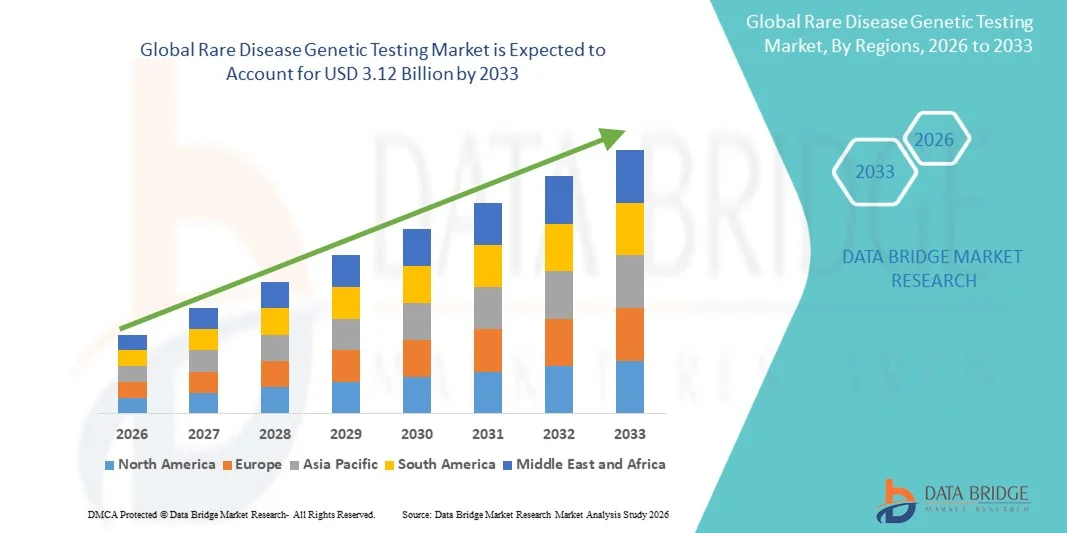
Report Scope and Rare Disease Genetic Testing Market Segmentation
|
Attributes |
Rare Disease Genetic Testing Key Market Insights |
|
Segments Covered |
|
|
Countries Covered |
North America · U.S. · Canada · Mexico Europe · Germany · France · U.K. · Netherlands · Switzerland · Belgium · Russia · Italy · Spain · Turkey · Rest of Europe Asia-Pacific · China · Japan · India · South Korea · Singapore · Malaysia · Australia · Thailand · Indonesia · Philippines · Rest of Asia-Pacific Middle East and Africa · Saudi Arabia · U.A.E. · South Africa · Egypt · Israel · Rest of Middle East and Africa South America · Brazil · Argentina · Rest of South America |
|
Key Market Players |
• F. Hoffmann-La Roche Ltd. (Switzerland) |
|
Market Opportunities |
· Expansion of Newborn Genetic Screening Programs · Growing Adoption of Precision Medicine and Personalized Therapies · Increasing Penetration in Emerging Markets |
|
Value Added Data Infosets |
In addition to the insights on market scenarios such as market value, growth rate, segmentation, geographical coverage, and major players, the market reports curated by the Data Bridge Market Research also include in-depth expert analysis, geographically represented company-wise production and capacity, network layouts of distributors and partners, detailed and updated price trend analysis and deficit analysis of supply chain and demand. |
Rare Disease Genetic Testing Market Trends
Trend: Increasing Adoption of Next-Generation Sequencing (NGS) for Rare Disease Diagnosis
The Rare Disease Genetic Testing market is witnessing a significant shift toward the adoption of Next-Generation Sequencing (NGS) technologies, driven by their ability to analyze multiple genes simultaneously and identify complex genetic variants associated with rare disorders. As more than 7,000 rare diseases have been identified globally and approximately 80% are estimated to have a genetic origin, healthcare providers and researchers are increasingly utilizing NGS-based testing to improve diagnostic accuracy and reduce diagnostic delays. Whole exome sequencing (WES) and whole genome sequencing (WGS) are becoming integral tools for diagnosing patients with unexplained symptoms and complex genetic conditions. Furthermore, growing integration of genomic data into clinical decision-making, coupled with declining sequencing costs and expanding access to precision medicine programs, is accelerating the adoption of advanced genetic testing solutions worldwide.
Rare Disease Genetic Testing Market Dynamics
Key Market Driver: Growing Prevalence of Rare Genetic Disorders and Demand for Early Diagnosis The rapid development of autonomous vehicles and Advanced Driver Assistance Systems (ADAS) has created substantial demand for high-fidelity Rare Disease Genetic Testing that can validate AI algorithms, sensor models, and vehicle behavior in millions of virtual scenarios impossible to replicate through physical testing. Automotive OEMs, Tier-1 suppliers, and technology companies are deploying simulators as a core component of their development pipeline, reducing costs, accelerating iteration cycles, and improving system safety.
Key Restraint/Challenge: High Cost and Limited Accessibility of Advanced Genetic Testing
A significant challenge facing the Rare Disease Genetic Testing market is the high cost associated with advanced genomic testing technologies and the limited availability of specialized testing services in many regions. Comprehensive genetic analyses such as whole genome sequencing and whole exome sequencing often require sophisticated laboratory infrastructure, highly skilled personnel, and extensive bioinformatics capabilities. In addition, reimbursement coverage for rare disease testing varies significantly across countries, creating financial barriers for patients and healthcare providers. Limited awareness, insufficient genetic counseling resources, and disparities in access to genomic medicine, particularly in low- and middle-income countries, further restrict market growth and delay diagnosis for many rare disease patients.
Key Market Opportunity: Expansion of Precision Medicine and AI-Driven Genomic Analysis
The growing integration of artificial intelligence, bioinformatics, and precision medicine represents a significant opportunity for the Rare Disease Genetic Testing market. AI-powered genomic analysis platforms are helping researchers and clinicians identify disease-causing variants more efficiently, reduce interpretation time, and improve diagnostic yields for complex rare disorders. In addition, increasing investments in national genome sequencing initiatives, rare disease research programs, and personalized medicine strategies are expanding access to advanced genetic testing. Collaborative efforts among biotechnology companies, healthcare providers, research institutions, and patient advocacy organizations are accelerating the discovery of novel disease-associated genes and enabling more targeted therapeutic development. Emerging markets in Asia-Pacific, Latin America, and the Middle East are also presenting substantial growth opportunities as healthcare infrastructure improves and genomic medicine adoption continues to increase.
Rare Disease Genetic Testing Market Scope
The Rare Disease Genetic Testing market is segmented on the basis of disease type, technology, specialty, and end use.
- By Disease Type
On the basis of disease type, the Rare Disease Genetic Testing Market is segmented into neurological disorders, immunological disorders, hematology diseases, endocrine and metabolism diseases, cancer, musculoskeletal disorders, cardiovascular disorders (CVDs), dermatology disease, and others. The Neurological Disorders segment dominated the market with a 29.84% share in 2025 due to the high prevalence of genetically inherited neurological conditions such as Huntington’s disease, spinal muscular atrophy, muscular dystrophy, epilepsy syndromes, and rare neurodevelopmental disorders. Growing utilization of next-generation sequencing (NGS), whole-exome sequencing, and targeted gene panels has significantly improved the diagnosis of complex neurological diseases. Increasing awareness among healthcare professionals regarding early genetic diagnosis and precision medicine approaches has further strengthened segment growth. In addition, expanding newborn screening programs, rising investments in neuroscience research, and increasing availability of advanced molecular diagnostics are supporting adoption. The growing number of approved gene therapies for neurological disorders is also increasing the demand for companion genetic testing. Furthermore, favorable reimbursement policies in developed countries and strong support from patient advocacy organizations continue to accelerate testing rates. The increasing burden of undiagnosed neurological diseases globally further reinforces the dominance of this segment in the market.
The Immunological Disorders segment is expected to witness the fastest CAGR of 8.1% from 2026 to 2033, driven by increasing recognition of rare primary immunodeficiency disorders and advancements in genomic technologies. Rising awareness among clinicians regarding genetically inherited immune system abnormalities is leading to higher diagnostic testing volumes. Growing adoption of NGS-based immunodeficiency panels is enabling faster and more accurate diagnosis. Increasing research activities focused on immune-related rare diseases and personalized medicine are supporting segment expansion. In addition, expanding government funding for rare disease diagnosis and treatment programs is creating growth opportunities. The increasing use of genetic testing in pediatric populations for early detection of immune disorders is further contributing to demand. Technological advancements in bioinformatics and genomic interpretation tools are improving diagnostic efficiency. Moreover, the development of targeted biologics and gene therapies requires precise genetic identification, further accelerating testing adoption. Rising healthcare expenditure and expanding access to advanced diagnostics across emerging economies are expected to sustain strong segment growth through 2033.
- By Technology
On the basis of technology, the Rare Disease Genetic Testing Market is segmented into next-generation sequencing (NGS), array technology, PCR-based testing, FISH, Sanger sequencing, and karyotyping. The Next-Generation Sequencing (NGS) segment dominated the market with a 42.67% share in 2025 owing to its ability to simultaneously analyze thousands of genes with high accuracy and efficiency. NGS has become the preferred technology for diagnosing complex and rare genetic disorders due to its comprehensive genomic coverage and declining sequencing costs. The technology is widely used for whole-genome sequencing, whole-exome sequencing, and targeted gene panel testing. Increasing adoption by hospitals, research institutions, and diagnostic laboratories is driving demand globally. In addition, advancements in sequencing platforms, bioinformatics software, and data analysis tools have improved diagnostic yield and reduced turnaround times. Growing investments in precision medicine initiatives and rare disease research programs further support market leadership. Pharmaceutical companies are increasingly utilizing NGS for patient stratification and companion diagnostics. The technology’s ability to identify novel genetic variants continues to reinforce its dominant position in the rare disease genetic testing market.
The Array Technology segment is projected to register the fastest CAGR of 7.9% from 2026 to 2033, driven by increasing utilization of chromosomal microarray analysis for detecting copy number variations and chromosomal abnormalities. Array-based technologies are gaining traction due to their high sensitivity in identifying submicroscopic genetic alterations associated with rare diseases. Growing use in prenatal testing, pediatric diagnostics, and developmental disorder evaluations is supporting adoption. Continuous improvements in array platforms are enhancing resolution and diagnostic capabilities. Healthcare providers are increasingly integrating array testing into routine diagnostic workflows for rare disease assessment. In addition, favorable clinical guidelines recommending chromosomal microarray testing are driving utilization. Expanding laboratory infrastructure and increasing accessibility of advanced diagnostics in developing countries are further contributing to growth. The technology also offers cost advantages in specific diagnostic applications, making it attractive for broader implementation. Increasing demand for early and accurate diagnosis is expected to fuel strong growth throughout the forecast period.
- By Specialty
On the basis of specialty, the Rare Disease Genetic Testing Market is segmented into molecular genetic tests, chromosomal genetic tests, and biochemical genetic tests. The Molecular Genetic Tests segment dominated the market with a 51.23% share in 2025 due to its extensive use in identifying gene mutations responsible for rare inherited disorders. These tests provide highly accurate information regarding disease-causing variants and are widely utilized across diagnostic laboratories and healthcare institutions. Rising adoption of NGS, PCR, and sequencing-based methodologies is significantly contributing to segment growth. Molecular testing plays a critical role in personalized medicine, enabling targeted treatment decisions and genetic counseling. Increasing prevalence of rare genetic diseases and growing awareness regarding early diagnosis further support demand. Technological advancements have improved testing accuracy, speed, and affordability, encouraging broader adoption. In addition, expanding gene therapy pipelines require precise molecular diagnosis before treatment initiation. Growing government initiatives supporting genetic testing and rare disease research are also reinforcing segment dominance. The increasing integration of molecular diagnostics into routine clinical practice continues to drive market expansion.
The Chromosomal Genetic Tests segment is expected to witness the fastest CAGR of 7.7% from 2026 to 2033, driven by increasing demand for detecting structural chromosomal abnormalities associated with rare diseases. Advancements in cytogenetic technologies and chromosomal microarray analysis are improving diagnostic capabilities. Healthcare providers are increasingly utilizing chromosomal testing for developmental disorders, congenital anomalies, and intellectual disabilities. Rising awareness regarding the importance of early genetic diagnosis is supporting adoption globally. Expanding prenatal and neonatal screening programs are further driving testing volumes. Improvements in laboratory automation and digital cytogenetics are enhancing workflow efficiency and result accuracy. In addition, increasing research focused on chromosomal abnormalities and rare syndromes is creating new opportunities for market growth. Favorable reimbursement frameworks in developed markets are encouraging broader clinical implementation. Growing investments in genomic healthcare infrastructure are expected to accelerate segment expansion during the forecast period.
- By End Use
On the basis of end use, the Rare Disease Genetic Testing Market is segmented into research laboratories and CROs, diagnostic centers, and hospitals and clinics. The Diagnostic Centers segment dominated the market with a 44.58% share in 2025 due to their specialized expertise, advanced testing infrastructure, and growing availability of comprehensive genetic testing services. Diagnostic centers serve as primary facilities for rare disease screening, confirmatory testing, and genomic analysis. Increasing referrals from hospitals and physicians are contributing to higher testing volumes. These centers offer access to advanced sequencing technologies, bioinformatics platforms, and specialized genetic counseling services. Growing awareness among patients and healthcare professionals regarding the benefits of early diagnosis is further supporting market growth. In addition, collaborations between diagnostic laboratories and pharmaceutical companies are expanding testing capabilities. Rising demand for precision medicine and personalized treatment approaches is increasing dependence on specialized diagnostic centers. Their ability to provide rapid, accurate, and cost-effective testing solutions continues to strengthen their leading position within the market.
The Research Laboratories and CROs segment is anticipated to register the fastest CAGR of 8.3% from 2026 to 2033, driven by increasing investments in genomic research, rare disease drug development, and precision medicine programs. Pharmaceutical and biotechnology companies are collaborating extensively with CROs to identify genetic biomarkers and support clinical trials. Growing funding from governments, academic institutions, and private organizations for rare disease research is creating significant growth opportunities. Research laboratories are increasingly adopting advanced sequencing technologies and AI-powered genomic analysis platforms to accelerate discoveries. The expansion of gene therapy and gene-editing programs is further increasing demand for specialized genetic testing services. In addition, rising clinical trial activity focused on orphan diseases is supporting segment expansion. The need for large-scale genomic databases and population studies is driving testing volumes globally. Continuous advancements in molecular biology and bioinformatics are enhancing research efficiency and accuracy. These factors are expected to position research laboratories and CROs as the fastest-growing end-use segment through 2033.
Rare Disease Genetic Testing Market Regional Analysis
North America dominated the Rare Disease Genetic Testing Market and accounted for the largest revenue share of 38.42% in 2025, driven by advanced genomic research infrastructure, high adoption of precision medicine, favorable reimbursement policies, increasing awareness of rare diseases, and strong government support for genetic testing and rare disease diagnosis programs. The region benefits from the presence of leading genomic testing companies, extensive research funding, and widespread integration of genetic testing into clinical practice. Growing demand for early diagnosis and personalized treatment strategies continues to strengthen market growth across North America.
U.S. Rare Disease Genetic Testing Market Insight
The U.S. Rare Disease Genetic Testing market is witnessing strong growth due to increasing adoption of precision medicine, expanding genomic research programs, and growing awareness of rare genetic disorders. Strong government support through rare disease initiatives, favorable reimbursement frameworks, and the presence of advanced diagnostic laboratories are driving market expansion. In addition, increasing utilization of next-generation sequencing technologies and growing investments in personalized healthcare are accelerating demand for rare disease genetic testing services across the country.
Europe Rare Disease Genetic Testing Market Insight
The Europe Rare Disease Genetic Testing market remains a major contributor to global revenue, driven by strong government support for rare disease research, increasing adoption of genomic medicine, and expanding access to advanced diagnostic technologies. The region benefits from well-established healthcare systems, growing investments in genetic testing infrastructure, and collaborative research initiatives focused on rare disease diagnosis and treatment. Furthermore, increasing awareness among healthcare professionals and patients is supporting market growth across Europe.
U.K. Rare Disease Genetic Testing Market Insight
The U.K. Rare Disease Genetic Testing market is experiencing steady growth, supported by increasing investments in genomic medicine, expanding national sequencing programs, and rising awareness of inherited disorders. Government-backed initiatives aimed at improving early diagnosis and access to genetic testing are contributing significantly to market expansion. In addition, growing integration of next-generation sequencing and precision medicine approaches into routine clinical care is supporting the adoption of rare disease genetic testing solutions.
Germany Rare Disease Genetic Testing Market Insight
The Germany Rare Disease Genetic Testing market is expanding steadily due to the country's strong biotechnology sector, advanced healthcare infrastructure, and growing focus on personalized medicine. Increasing adoption of genomic testing technologies, rising research activities related to rare diseases, and expanding availability of specialized diagnostic services are supporting market growth. Furthermore, government initiatives promoting genetic research and precision healthcare continue to strengthen Germany's position within the European market.
Asia-Pacific Rare Disease Genetic Testing Market Insight
The Asia-Pacific Rare Disease Genetic Testing market is expected to witness the fastest growth, registering a CAGR of 8.6% from 2026 to 2033. Growth is fueled by expanding genomic research initiatives, improving healthcare infrastructure, rising awareness of genetic disorders, increasing healthcare expenditure, and growing adoption of advanced molecular diagnostic technologies across China, India, Japan, and South Korea. Government support for genetic disease screening programs and increasing investments in precision medicine are further contributing to regional market expansion.
Japan Rare Disease Genetic Testing Market Insight
The Japan Rare Disease Genetic Testing market is witnessing consistent growth due to increasing investments in genomic research, growing adoption of precision medicine, and rising awareness of inherited disorders. Healthcare providers and research institutions are increasingly utilizing advanced sequencing technologies to improve diagnostic accuracy and patient outcomes. Moreover, supportive government initiatives and the country's strong focus on healthcare innovation continue to drive demand for rare disease genetic testing services.
China Rare Disease Genetic Testing Market Insight
The China Rare Disease Genetic Testing market is growing rapidly, driven by expanding genomic research capabilities, increasing government support for rare disease diagnosis, and rising adoption of advanced molecular testing technologies. Growing healthcare expenditure, improving access to genetic testing services, and increasing awareness regarding inherited diseases are significantly boosting market demand. Furthermore, ongoing investments in biotechnology and precision medicine initiatives are positioning China as one of the fastest-growing markets for rare disease genetic testing globally.
Rare Disease Genetic Testing Market Share
The Rare Disease Genetic Testing industry is primarily led by well-established companies, including:
- F. Hoffmann-La Roche Ltd. (Switzerland)
- Illumina, Inc. (U.S.)
- Thermo Fisher Scientific Inc. (U.S.)
- QIAGEN N.V. (Netherlands)
- Eurofins Scientific SE (Luxembourg)
- Agilent Technologies, Inc. (U.S.)
- Bio-Rad Laboratories, Inc. (U.S.)
- Revvity, Inc. (U.S.)
- BGI Genomics Co., Ltd. (China)
- Natera, Inc. (U.S.)
- Invitae Corporation (U.S.)
- GeneDx, LLC (U.S.)
- Centogene N.V. (Germany)
- Blueprint Genetics Oy (Finland)
- Ambry Genetics Corporation (U.S.)
- Myriad Genetics, Inc. (U.S.)
- Quest Diagnostics Incorporated (U.S.)
- Laboratory Corporation of America Holdings (Labcorp) (U.S.)
- Exact Sciences Corporation (U.S.)
- Sophia Genetics SA (Switzerland)
- Oxford Nanopore Technologies plc (U.K.)
- PacBio (Pacific Biosciences of California, Inc.) (U.S.)
- Fulgent Genetics, Inc. (U.S.)
- 3billion, Inc. (South Korea)
- Macrogen, Inc. (South Korea)
- MedGenome Labs Ltd. (India)
- Strand Life Sciences Pvt. Ltd. (India)
- Genea Limited (Australia)
Latest Developments in Rare Disease Genetic Testing Market
- In October 2021, Illumina announced its support for Israel's national rapid whole-genome sequencing program for critically ill newborns with suspected genetic diseases. The initiative aimed to accelerate rare disease diagnosis through advanced genomic sequencing technologies, enabling earlier clinical intervention and improved patient outcomes. This development highlighted the growing adoption of next-generation sequencing (NGS) in national rare disease diagnostic programs
- In April 2022, Invitae Corporation launched its comprehensive Neurodevelopmental Disorders (NDD) testing suite. The package combined chromosomal microarray analysis, fragile X testing, and a next-generation sequencing panel covering more than 200 genes associated with neurodevelopmental disorders. The launch strengthened genetic testing capabilities for rare pediatric disorders and improved access to comprehensive diagnostic solutions
- In May 2023, the U.S. FDA approved Blueprint Medicines’ Ayvakit (avapritinib) for the treatment of indolent systemic mastocytosis, a rare genetic disease. The approval significantly expanded treatment options for patients suffering from this rare disorder and underscored the increasing importance of genetic diagnostics in identifying eligible patients for targeted therapies
- In March 2023, Invitae and Deerfield Management announced a collaboration to advance genetics-based drug discovery for rare diseases. The partnership leveraged Invitae’s extensive genetic testing database and clinical data resources to identify novel therapeutic targets and accelerate research into rare genetic disorders
- In October 2023, Invitae received FDA market authorization for its Common Hereditary Cancers Panel. Although focused on hereditary cancer genetics, the approval represented a major regulatory milestone for high-throughput genomic testing technologies that are widely utilized across rare disease genetic testing applications and precision medicine programs
- In January 2024, Invitae partnered with BridgeBio Pharma to harness genetic insights for rare disease therapeutic discovery. The collaboration combined BridgeBio’s expertise in rare disease drug development with Invitae’s large-scale genomic dataset to identify genetic modifiers and novel treatment targets for rare inherited disorders
- In March 2024, Invitae launched an enhanced version of Invitae Generation featuring Clinical Variant Modeling. The AI-driven platform utilizes machine learning and genomic data from over four million patients to improve variant classification, reduce variants of uncertain significance (VUS), and provide more definitive diagnoses for patients with rare genetic conditions
- In August 2024, Illumina received FDA approval for its TruSight Oncology Comprehensive test. While primarily developed for oncology applications, the approval demonstrated continued advancement in next-generation sequencing technologies that are also widely used in rare disease genetic testing, supporting broader adoption of comprehensive genomic profiling
- In April 2025, Illumina highlighted the growing role of exome sequencing and genomic testing in diagnosing ultra-rare diseases during Rare Disease Day activities. The company emphasized how advances in sequencing technologies are shortening diagnostic odysseys for rare disease patients and enabling more precise clinical management

- Interactive Data Analysis Dashboard
- Company Analysis Dashboard for high growth potential opportunities
- Research Analyst Access for customization & queries
- Competitor Analysis with Interactive dashboard
- Latest News, Updates & Trend analysis
- Harness the Power of Benchmark Analysis for Comprehensive Competitor Tracking
Data collection and base year analysis are done using data collection modules with large sample sizes. The stage includes obtaining market information or related data through various sources and strategies. It includes examining and planning all the data acquired from the past in advance. It likewise envelops the examination of information inconsistencies seen across different information sources. The market data is analysed and estimated using market statistical and coherent models. Also, market share analysis and key trend analysis are the major success factors in the market report. To know more, please request an analyst call or drop down your inquiry.
The key research methodology used by DBMR research team is data triangulation which involves data mining, analysis of the impact of data variables on the market and primary (industry expert) validation. Data models include Vendor Positioning Grid, Market Time Line Analysis, Market Overview and Guide, Company Positioning Grid, Patent Analysis, Pricing Analysis, Company Market Share Analysis, Standards of Measurement, Global versus Regional and Vendor Share Analysis. To know more about the research methodology, drop in an inquiry to speak to our industry experts.
Data Bridge Market Research is a leader in advanced formative research. We take pride in servicing our existing and new customers with data and analysis that match and suits their goal. The report can be customized to include price trend analysis of target brands understanding the market for additional countries (ask for the list of countries), clinical trial results data, literature review, refurbished market and product base analysis. Market analysis of target competitors can be analyzed from technology-based analysis to market portfolio strategies. We can add as many competitors that you require data about in the format and data style you are looking for. Our team of analysts can also provide you data in crude raw excel files pivot tables (Fact book) or can assist you in creating presentations from the data sets available in the report.













