


Rare Immunodeficiency Disorders Drug Market Size
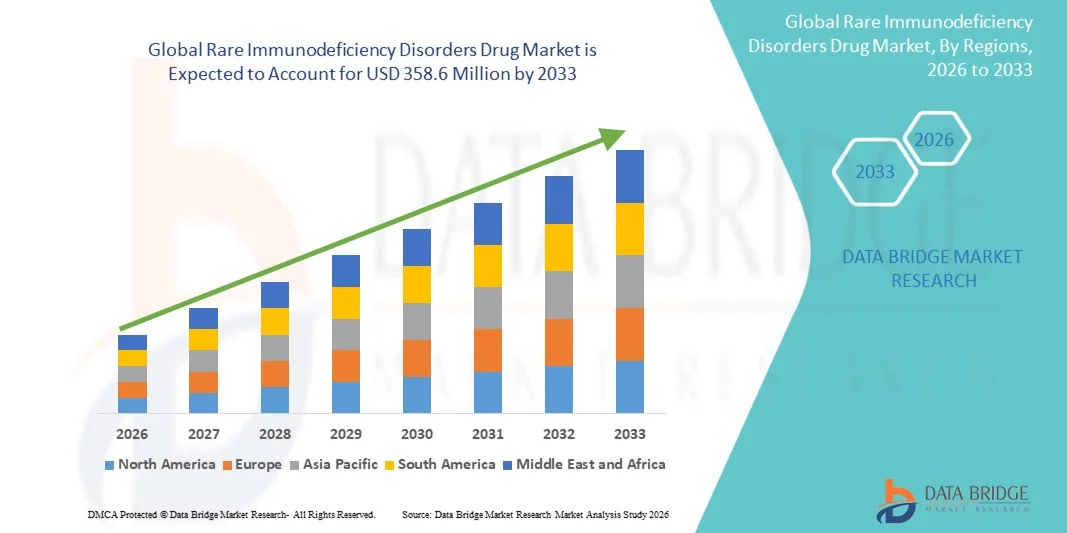
- The global rare immunodeficiency disorders drug market size was valued at USD 158.4 million in 2025 and is expected to reach USD 358.6 million by 2033, at a CAGR of 10.75% during the forecast period
- The market growth is largely driven by the rising diagnosis of rare primary immunodeficiency disorders, increasing availability of advanced therapies such as immunoglobulins, biologics, and gene-based treatments, and expanding access to specialized clinical care across developed and emerging regions
- Furthermore, growing patient awareness, improved screening programs, and accelerating research investments aimed at developing curative and targeted treatment options are strengthening adoption, thereby significantly boosting the overall growth of the rare immunodeficiency disorders drug industry
Rare Immunodeficiency Disorders Drug Market Analysis
- Rare immunodeficiency disorders drugs, encompassing polyclonal immunoglobulins, monoclonal antibodies, gene-based products, and small-molecule modulators, are increasingly essential in managing severe immune dysfunctions by preventing recurrent infections and restoring immune balance across both pediatric and adult patient groups
- The rising demand for rare immunodeficiency treatments is primarily fueled by improved genetic and newborn screening, growing awareness of primary immunodeficiency disorders, and expanding access to advanced therapies that offer targeted, long-term disease management and better clinical outcomes
- North America dominated the rare immunodeficiency disorders drug market with the largest revenue share of 45.6% in 2025, driven by a strong presence of specialty care centers, high adoption of immunoglobulin therapies, favorable reimbursement structures, and ongoing research advancements in gene-based and monoclonal antibody treatments across the U.S.
- Asia-Pacific is expected to be the fastest growing region in the rare immunodeficiency disorders drug market during the forecast period due to rapidly improving healthcare infrastructure, increasing diagnosis rates, and rising treatment accessibility in countries such as China, Japan, and India
- Polyclonal immunoglobulins dominated the rare immunodeficiency disorders drug market with a market share of about 68.9% in 2025, supported by their role as the primary standard of care for disorders such as Common Variable Immunodeficiency (CVID) and X-linked Agammaglobulinemia (XLA), along with their broad clinical use across hospitals, specialty clinics, and home healthcare settings
Report Scope and Rare Immunodeficiency Disorders Drug Market Segmentation
|
Attributes |
Rare Immunodeficiency Disorders Drug Key Market Insights |
|
Segments Covered |
|
|
Countries Covered |
North America
Europe
Asia-Pacific
Middle East and Africa
South America
|
|
Key Market Players |
|
|
Market Opportunities |
|
|
Value Added Data Infosets |
In addition to the insights on market scenarios such as market value, growth rate, segmentation, geographical coverage, and major players, the market reports curated by the Data Bridge Market Research also include in-depth expert analysis, patient epidemiology, pipeline analysis, pricing analysis, and regulatory framework |
Rare Immunodeficiency Disorders Drug Market Trends
“Expansion of Gene-Based and Targeted Therapies Enhancing Treatment Precision”
- A significant and accelerating trend in the global rare immunodeficiency disorders drug market is the rapid expansion of gene-based and targeted therapies, offering more precise and potentially curative solutions compared to traditional lifelong immunoglobulin replacement approaches
- For instance, ongoing advancements in gene therapy platforms for Severe Combined Immunodeficiency (SCID) and X-linked Chronic Granulomatous Disease (CGD) are enabling the development of long-lasting treatments that address the underlying genetic defects rather than only managing symptoms
- Gene correction methods, viral vector innovations, and CRISPR-based technologies are improving therapeutic safety and efficacy, allowing researchers to target disease-causing mutations with higher accuracy and lower treatment risks across multiple immunodeficiency types
- Furthermore, biologics and monoclonal antibodies designed to modulate immune pathways are expanding treatment options, offering new opportunities for customized therapy regimens tailored to specific disorders within the rare immunodeficiency spectrum
- The increasing focus on precision medicine and advanced therapeutic modalities is reshaping clinical expectations, with research institutions and biotech companies intensifying their efforts to develop durable, disease-modifying interventions for previously difficult-to-treat immunodeficiencies
- The growing demand for therapies that offer targeted, long-term correction of immune dysfunction is rapidly increasing across both developed and emerging regions as healthcare providers prioritize improved clinical outcomes and reduced treatment burden
Rare Immunodeficiency Disorders Drug Market Dynamics
Driver
“Advancements in Screening and Rising Diagnosis Rates Increasing Treatment Demand”
- The growing global implementation of newborn screening, genetic testing, and early immunological diagnostics is significantly increasing the identification of rare immunodeficiency disorders, driving higher demand for specialized drug therapies
- For instance, the expansion of national newborn screening programs for SCID in regions such as the U.S., Europe, and parts of Asia is enabling earlier intervention and supporting broader adoption of lifesaving treatments including immunoglobulins and gene-corrective therapies
- As awareness of immune-related genetic disorders continues to rise among clinicians and patients, the need for accurate, early diagnosis is accelerating, supporting the rapid uptake of advanced therapeutics designed to manage or correct underlying immune dysfunction
- Furthermore, improvements in healthcare infrastructure in developing regions are expanding access to diagnosis and treatment, allowing more patients to enter the therapeutic pathway and contributing to market growth across multiple immunodeficiency categories
- The increasing emphasis on early detection and targeted intervention is making advanced drug therapies central to patient management, strengthening market growth as more individuals gain access to timely and effective treatment options
- The shift toward early, precise diagnosis combined with growing demand for long-term disease control is significantly driving global adoption of immunoglobulins, biologics, and emerging gene-based modalities
Restraint/Challenge
“High Treatment Costs and Limited Accessibility to Advanced Therapies”
- The substantial cost associated with immunoglobulin replacement therapy, monoclonal antibodies, and advanced gene-based treatments poses a major restraint to broader adoption, particularly in low- and middle-income regions with limited reimbursement support
- For instance, the high price of SCIG/IVIG formulations and the extremely elevated cost of emerging gene therapies create significant access barriers for patients who may require lifelong or highly specialized treatment
- Reimbursement challenges and uneven insurance coverage for rare disease therapies further limit patient access, as many healthcare systems struggle to absorb the financial burden associated with high-cost immunological treatments
- In addition, the scarcity of specialized treatment centers and trained clinical immunologists in many regions restricts timely diagnosis and appropriate therapy initiation, delaying effective disease management
- The limited availability of advanced biologics and gene-based products in developing markets continues to hinder uniform adoption, slowing global market expansion despite rising medical need
- Overcoming these challenges through reduced treatment costs, stronger reimbursement frameworks, and expanded specialty care infrastructure will be critical for ensuring wider access to advanced therapies and sustaining long-term market growth
Rare Immunodeficiency Disorders Drug Market Scope
The market is segmented on the basis of drug class, route of administration, disease, and end user.
- By Drug Class
On the basis of drug class, the global rare immunodeficiency disorders drug market is segmented into polyclonal immunoglobulins, monoclonal antibodies, gene-based products, and small-molecule modulators. The polyclonal immunoglobulins segment dominated the market with the largest revenue share of 68.9% in 2025, driven by their role as the standard of care for a wide range of primary and secondary immunodeficiency disorders. Their long history of clinical success, broad therapeutic applicability, and continuous treatment cycles contribute to sustained demand. This segment also benefits from the increasing availability of high-purity IVIG and SCIG formulations, allowing clinicians flexibility in tailoring dosing approaches. Rising diagnosis rates of CVID, XLA, and related conditions further strengthen consumption. Expanding global plasma collection capacity and improved manufacturing technologies also reinforce segment leadership.
The gene-based products segment is anticipated to witness the fastest growth rate from 2026 to 2033, fueled by significant breakthroughs in gene editing, vector engineering, and curative therapy models. Gene therapies for SCID, CGD, and other severe immunodeficiency conditions are rapidly advancing from clinical trials into commercial availability. These therapies offer long-term or permanent correction, reducing reliance on chronic immunoglobulin replacement. Increasing investment from biotech companies, regulatory support for accelerated approvals, and expanding newborn screening programs collectively boost segment momentum. As clinical data continues to validate durable outcomes, adoption of gene-based treatments is expected to accelerate globally.
- By Route of Administration
On the basis of route of administration, the market is segmented into intravenous, subcutaneous, oral, and others. The intravenous segment held the largest market revenue share in 2025, attributed to its foundational use in IVIG administration and high-strength monoclonal antibodies for severe immunodeficiency conditions. Intravenous delivery remains preferred for acute management and for patients requiring rapid therapeutic response. Hospitals and specialty infusion centers maintain robust IV infrastructure, supporting efficient administration workflows. The segment is also reinforced by long-standing clinical guidelines favoring IV routes in complex or unstable cases. High dosing volumes and repeat infusion cycles further consolidate leadership.
The subcutaneous segment is expected to witness the fastest CAGR from 2026 to 2033, driven by rising demand for home-based SCIG therapies that offer improved patient convenience and steady serum IgG levels. SCIG reduces systemic side effects, enables self-administration, and minimizes dependency on hospital-based infusions. Advancements in portable infusion pumps and flexible dosing schedules are improving patient adherence and satisfaction. The trend toward decentralized care and payer support for cost-effective home therapies further accelerates growth. Expanding adoption among pediatric and chronic-care patients solidifies this segment’s rapid expansion.
- By Disease
On the basis of disease, the market is segmented into common variable immunodeficiency, severe combined immunodeficiency, X-linked agammaglobulinemia, chronic granulomatous disease, WHIM syndrome, other primary immunodeficiency disorders, and secondary immunodeficiency disorders. The common variable immunodeficiency (CVID) segment dominated the market with the largest revenue share in 2025, owing to its comparatively high prevalence and chronic therapeutic need. CVID patients rely heavily on lifelong immunoglobulin replacement, creating consistent and recurring demand. Improved diagnostic tools, increased physician awareness, and wider access to genetic testing have significantly elevated identification rates. The chronic and lifelong nature of CVID therapy ensures stable annual consumption. The segment is further supported by well-established treatment guidelines and favorable reimbursement across developed markets.
The severe combined immunodeficiency (SCID) segment is anticipated to witness the fastest growth rate from 2026 to 2033, driven by rising adoption of gene therapy and hematopoietic stem cell transplantation as curative approaches. Universal newborn screening programs are identifying SCID earlier, increasing treatment eligibility and improving long-term outcomes. Advances in viral vectors, conditioning regimens, and gene-corrective technologies are accelerating clinical success. Strong pipeline activity, regulatory fast-track designations, and substantial investment from rare-disease foundations further propel growth. The shift toward single-dose curative models significantly enhances the segment's trajectory.
- By End User
On the basis of end user, the market is segmented into hospitals, specialty clinics, home healthcare, and retail & specialty pharmacies. The hospital segment dominated the market with the largest revenue share in 2025, reflecting its central role in administering IVIG, monoclonal antibodies, and advanced therapies requiring clinical supervision. Hospitals remain the primary setting for diagnosis, acute management, complex infusions, and monitoring for adverse reactions. Multidisciplinary immunology teams, laboratory infrastructure, and emergency response capabilities enhance hospital utilization. Reimbursement systems in many regions also favor hospital-based administration. Their pivotal role in managing severe and newly diagnosed cases further reinforces segment dominance.
The home healthcare segment is expected to witness the fastest growth rate during the forecast period, driven by increasing adoption of SCIG self-administration and expanding home-infusion services. Home-based care offers enhanced convenience, reduced travel burden, and improved quality of life for chronic immunodeficiency patients. Technological advancements, including portable pumps and simplified infusion sets, support a smooth transition from facility-based to home-based therapy. Payers increasingly endorse home care due to cost efficiencies and high patient adherence. Rising preference for patient-centric treatment environments further accelerates segment expansion.
Rare Immunodeficiency Disorders Drug Market Regional Analysis
- North America dominated the rare immunodeficiency disorders drug market with the largest revenue share of 45.6% in 2025, driven by a strong presence of specialty care centers, high adoption of immunoglobulin therapies, favorable reimbursement structures, and ongoing research advancements in gene-based and monoclonal antibody treatments across the U.S.
- Patients in the region benefit from wider access to newborn screening, genetic testing, and specialized immunology centers, enabling earlier detection and more effective long-term management of rare immunodeficiencies
- This widespread adoption is further supported by favorable reimbursement frameworks, strong presence of leading biopharmaceutical companies, and a robust pipeline of clinical trials focused on SCID, CVID, and other primary immunodeficiencies, reinforcing North America’s leadership in innovative treatment availability
U.S. Rare Immunodeficiency Disorders Drug Market Insight
The U.S. rare immunodeficiency disorders drug market captured the largest revenue share within North America in 2025, fueled by the widespread availability of advanced immunology centers and strong adoption of immunoglobulin and biologic therapies. Patients in the U.S. benefit from early screening, comprehensive insurance coverage, and timely access to innovative treatments including gene therapies. The growing prevalence of diagnosed primary immunodeficiency disorders, combined with increased awareness among clinicians and patients, is accelerating demand for specialized therapeutics. Moreover, the presence of leading biopharmaceutical companies, robust clinical trial activity, and rapid incorporation of genomic diagnostics are significantly contributing to the market’s expansion.
Europe Rare Immunodeficiency Disorders Drug Market Insight
The Europe rare immunodeficiency disorders drug market is projected to expand at a substantial CAGR throughout the forecast period, primarily driven by strong government-supported screening programs and the rising emphasis on early diagnosis of primary immunodeficiency diseases. The increase in awareness among healthcare professionals, coupled with the steady adoption of monoclonal antibodies and subcutaneous immunoglobulin therapies, is fostering market growth. European patients also benefit from structured care pathways and well-developed specialty immunology networks. The region is experiencing notable expansion across hospitals, specialty clinics, and home-based infusion settings, with advanced therapies increasingly incorporated into national healthcare systems.
U.K. Rare Immunodeficiency Disorders Drug Market Insight
The U.K. rare immunodeficiency disorders drug market is anticipated to grow at a noteworthy CAGR during the forecast period, driven by rising adoption of genetic testing, expanded newborn screening, and enhanced awareness of immunodeficiency disorders. In addition, increasing infections associated with undiagnosed immune dysfunction are encouraging both patients and healthcare providers to prioritize early intervention through targeted therapies. The U.K.’s strong clinical research environment, coupled with advanced regulatory frameworks supporting rare disease treatment approvals, is expected to stimulate further market growth. The growing focus on decentralized care and home-based immunoglobulin therapy continues to support adoption.
Germany Rare Immunodeficiency Disorders Drug Market Insight
The Germany rare immunodeficiency disorders drug market is expected to expand at a considerable CAGR during the forecast period, fueled by high diagnostic accuracy, rising physician awareness, and strong demand for technologically advanced biologics. Germany’s well-established hospital network, combined with its emphasis on precision medicine and genomic research, promotes the adoption of immunoglobulin, monoclonal antibody, and gene-based treatments. The integration of advanced therapeutic options with national rare disease registries is also becoming increasingly prevalent, with a strong preference for evidence-backed, safety-focused solutions aligning with local healthcare expectations. Growing investment in immunology research further supports market expansion.
Asia-Pacific Rare Immunodeficiency Disorders Drug Market Insight
The Asia-Pacific rare immunodeficiency disorders drug market is poised to grow at the fastest CAGR during the forecast period, driven by increasing diagnostic capabilities, rising healthcare expenditure, and expanding patient awareness across countries such as China, Japan, and India. The region’s evolving focus on immunology, supported by government initiatives promoting early detection and rare disease management, is driving therapeutic adoption. Furthermore, as APAC strengthens its role in biologics manufacturing and gene-therapy research, the affordability and availability of immunodeficiency drugs continue to improve. Rapid urbanization and expanding insurance coverage are further accelerating demand across both pediatric and adult populations.
Japan Rare Immunodeficiency Disorders Drug Market Insight
The Japan rare immunodeficiency disorders drug market is gaining momentum due to the country’s advanced medical ecosystem, widespread genetic testing, and strong demand for precision-based healthcare solutions. The Japanese market places significant emphasis on safety and clinical reliability, and the adoption of immunoglobulin therapies and targeted biologics is driven by the growing number of diagnosed primary immunodeficiency cases. The integration of immunodeficiency treatments with digital health platforms and hospital networks is fueling growth. Moreover, Japan’s aging population is such asly to spur demand for convenient, reliable therapies that reduce hospitalization and support long-term management.
India Rare Immunodeficiency Disorders Drug Market Insight
The India rare immunodeficiency disorders drug market accounted for the largest market revenue share in Asia Pacific in 2025, attributed to rapidly expanding diagnostic capabilities, growth of specialty immunology practices, and heightened awareness of primary immunodeficiency disorders. India stands as one of the fastest-developing markets for immunoglobulin therapies, and demand is rising sharply across hospitals, specialty clinics, and home-care settings. The push toward improved healthcare infrastructure, rising middle-class income, and the availability of more affordable therapeutic options are key factors propelling market growth. Increased participation in global clinical trials and strong domestic pharmaceutical manufacturing further support the market’s expansion.
Rare Immunodeficiency Disorders Drug Market Share
The Rare Immunodeficiency Disorders Drug industry is primarily led by well-established companies, including:
- Grifols, S.A. (Spain)
- CSL (Australia)
- Octapharma AG (Switzerland)
- Takeda Pharmaceutical Company Limited (Japan)
- Kedrion (Italy)
- Baxter (U.S.)
- ADMA Biologics, Inc. (U.S.)
- Bio Products Laboratory Ltd. (U.K.)
- LFB Group (France)
- Biotest AG (Germany)
- Shanghai RAAS Blood Products Co., Ltd. (China)
- China Biologic Products Holdings, Inc. (China)
- Sanquin Plasma Products (Netherlands)
- Hualan Biological Engineering Inc. (China)
- BPL Inc. (U.K.)
- Medac GmbH (Germany)
- Pharming Group (Netherlands)
- F. Hoffmann La Roche Ltd (Switzerland)
- UCB S.A. (Belgium)
- Amgen Inc. (U.S.)
What are the Recent Developments in Global Rare Immunodeficiency Disorders Drug Market?
- In October 2025, Yimmugo became commercially available in the U.S., after regulatory approval, enabling actual access for patients with primary immunodeficiency (PI). This launch is a significant step toward making advanced immunoglobulin therapies more accessible in North America for rare immunodeficiency care
- In February 2025, taiba rare and X4 Pharmaceuticals announced an exclusive agreement for distribution and commercialization of XOLREMDI in multiple Middle East and North Africa (MENA) countries. This indicates the geographic expansion of rare immunodeficiency treatment moving beyond North America and Europe, potentially improving global access to rare‑disease therapies
- In January 2025, the European Medicines Agency (EMA) validated the Marketing Authorization Application (MAA) for mavorixafor (XOLREMDI) for treatment of WHIM syndrome a step toward making the first WHIM‑specific therapy available in Europe. If approved, this could potentially expand access across EU countries under orphan‑drug regulatory pathways
- In June 2024, Yimmugo an intravenous immunoglobulin (IVIG) therapy from Grifols / Biotest received FDA approval for treatment of primary immunodeficiencies. This adds a modern, high‑purity Ig therapy to the market, expanding options for patients needing immunoglobulin replacement across a broad spectrum of immunodeficiency disorders
- In April 2024, XOLREMDI (mavorixafor) from X4 Pharmaceuticals was approved by the U.S. Food and Drug Administration (FDA) this is the first‑ever therapy specifically indicated for WHIM syndrome, a rare immunodeficiency disorder. The approval marks a transformational milestone as it addresses the underlying CXCR4‑pathway dysfunction, increasing mature neutrophil and lymphocyte counts and reducing infection rates in patients

- Interactive Data Analysis Dashboard
- Company Analysis Dashboard for high growth potential opportunities
- Research Analyst Access for customization & queries
- Competitor Analysis with Interactive dashboard
- Latest News, Updates & Trend analysis
- Harness the Power of Benchmark Analysis for Comprehensive Competitor Tracking
Data collection and base year analysis are done using data collection modules with large sample sizes. The stage includes obtaining market information or related data through various sources and strategies. It includes examining and planning all the data acquired from the past in advance. It likewise envelops the examination of information inconsistencies seen across different information sources. The market data is analysed and estimated using market statistical and coherent models. Also, market share analysis and key trend analysis are the major success factors in the market report. To know more, please request an analyst call or drop down your inquiry.
The key research methodology used by DBMR research team is data triangulation which involves data mining, analysis of the impact of data variables on the market and primary (industry expert) validation. Data models include Vendor Positioning Grid, Market Time Line Analysis, Market Overview and Guide, Company Positioning Grid, Patent Analysis, Pricing Analysis, Company Market Share Analysis, Standards of Measurement, Global versus Regional and Vendor Share Analysis. To know more about the research methodology, drop in an inquiry to speak to our industry experts.
Data Bridge Market Research is a leader in advanced formative research. We take pride in servicing our existing and new customers with data and analysis that match and suits their goal. The report can be customized to include price trend analysis of target brands understanding the market for additional countries (ask for the list of countries), clinical trial results data, literature review, refurbished market and product base analysis. Market analysis of target competitors can be analyzed from technology-based analysis to market portfolio strategies. We can add as many competitors that you require data about in the format and data style you are looking for. Our team of analysts can also provide you data in crude raw excel files pivot tables (Fact book) or can assist you in creating presentations from the data sets available in the report.












