


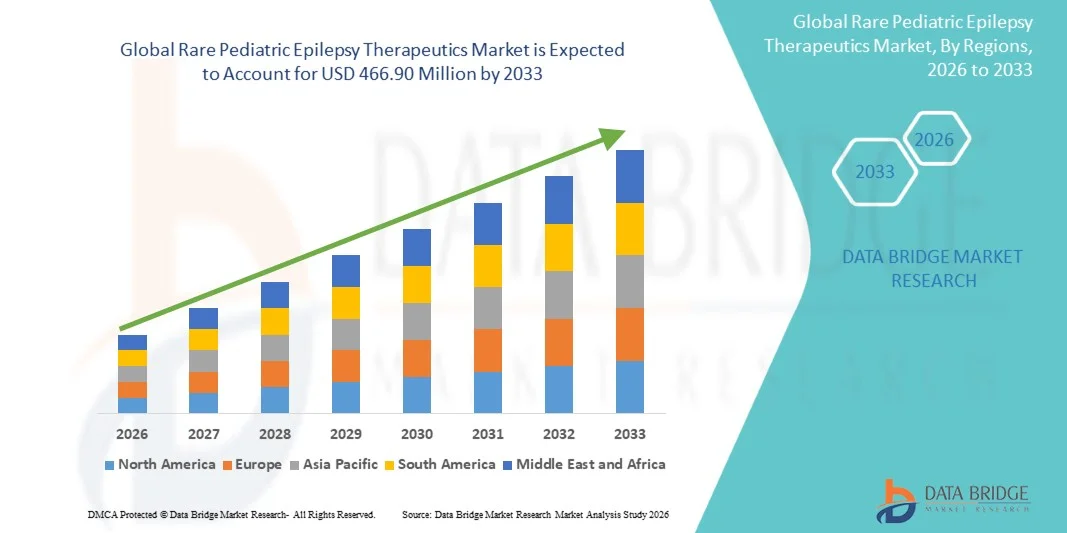
Rare Pediatric Epilepsy Therapeutics Market Size
- The global rare pediatric epilepsy therapeutics market size was valued at USD 198.00 Million in 2025 and is expected to reach USD 466.90 Million by 2033, at a CAGR of 11.32% during the forecast period
- The market growth is largely fueled by the increasing prevalence of rare pediatric epilepsy cases, rising awareness among healthcare professionals and caregivers, and advancements in targeted therapies for treatment-resistant forms of the disease
- Furthermore, growing investments in research and development, government incentives for rare disease treatment, and improved access to novel therapies are accelerating the uptake of Rare Pediatric Epilepsy Therapeutics solutions, thereby significantly boosting the industry's growth
Rare Pediatric Epilepsy Therapeutics Market Analysis
- Rare Pediatric Epilepsy Therapeutics, offering targeted and precision treatment solutions for children with rare epilepsy disorders, are increasingly vital components of modern pediatric neurology and healthcare systems in both hospitals and specialty clinics due to their effectiveness, safety profiles, and integration with existing treatment protocols
- The escalating demand for Rare Pediatric Epilepsy Therapeutics is primarily fueled by the increasing prevalence of rare pediatric epilepsy, growing awareness among healthcare professionals and caregivers, and rising investments in research and development of innovative therapies
- North America dominated the rare pediatric epilepsy therapeutics market with the largest revenue share of approximately 42% in 2025, supported by advanced healthcare infrastructure, high adoption of specialty therapeutics, well-established pediatric neurology networks, and the presence of leading pharmaceutical companies focused on rare disease treatments. The U.S. accounted for the majority of regional demand due to increasing incidence rates, strong reimbursement policies, and investments in early diagnosis and therapy programs
- Asia-Pacific is expected to be the fastest-growing region in the rare pediatric epilepsy Therapeutics market during the forecast period, registering a CAGR of around 12.5% from 2026 to 2033, driven by improving healthcare infrastructure, rising awareness of rare pediatric neurological disorders, increasing healthcare expenditure, and expansion of specialty clinics and hospitals in countries such as China, India, and Japan
- The Antiepileptic Drugs (AEDs) segment dominated the largest market revenue share of approximately 46% in 2025, driven by their established efficacy in managing a wide range of rare pediatric epilepsy syndromes and well-documented safety profiles
Report Scope and Rare Pediatric Epilepsy Therapeutics Market Segmentation
|
Attributes |
Rare Pediatric Epilepsy Therapeutics Key Market Insights |
|
Segments Covered |
|
|
Countries Covered |
North America
Europe
Asia-Pacific
Middle East and Africa
South America
|
|
Key Market Players |
|
|
Market Opportunities |
|
|
Value Added Data Infosets |
In addition to the insights on market scenarios such as market value, growth rate, segmentation, geographical coverage, and major players, the market reports curated by the Data Bridge Market Research also include in-depth expert analysis, patient epidemiology, pipeline analysis, pricing analysis, and regulatory framework. |
Rare Pediatric Epilepsy Therapeutics Market Trends
“Expansion of Targeted Therapies and Personalized Treatment Approaches”
- A significant and accelerating trend in the global rare pediatric epilepsy therapeutics market is the increasing focus on targeted therapies and precision medicine designed specifically for children with rare genetic and treatment-resistant epilepsies. These innovations aim to improve clinical outcomes and reduce adverse effects compared to conventional antiepileptic drugs
- For instance, in March 2023, UCB Pharma launched an expanded access program for cenobamate in pediatric patients with treatment-resistant epilepsy in Latin America, providing specialized dosing and monitoring protocols to improve efficacy and safety
- Development of novel therapies based on genetic biomarkers allows clinicians to personalize treatment, reducing trial-and-error approaches and improving seizure control
- Increasing investment in clinical trials for orphan pediatric epilepsy drugs is expanding the treatment landscape. Regulatory incentives, such as orphan drug designation and fast-track approvals by the FDA and EMA, further support innovation
- Pharmaceutical companies are collaborating with pediatric hospitals and epilepsy centers to enhance research and develop age-appropriate formulations, including liquid suspensions and chewable tablets
- Rising awareness among caregivers and clinicians about newly approved therapies contributes to faster adoption. Educational programs and patient support initiatives help families manage complex treatment regimens
- The integration of multidisciplinary care, combining pharmacological therapy with dietary interventions and neuromodulation, is influencing treatment standards globally
- Improved access to advanced therapies through public and private healthcare programs accelerates growth in emerging markets. Investments in patient registries and real-world evidence generation allow continuous monitoring of therapy effectiveness and safety
- The trend towards more precise and tailored therapies is reshaping expectations for pediatric epilepsy treatment worldwide. Market players are increasingly focusing on combination therapies and adjunctive treatment options to address drug-resistant cases
Rare Pediatric Epilepsy Therapeutics Market Dynamics
Driver
“Increasing Prevalence of Pediatric Epilepsy and Unmet Treatment Needs”
- The rising prevalence of pediatric epilepsy, particularly rare and drug-resistant forms, is a major driver for the growth of the Rare Pediatric Epilepsy Therapeutics market. According to the WHO, approximately 0.5–1% of children worldwide are affected by treatment-resistant epilepsies
- For instance, in June 2024, Zogenix Inc. expanded access to its pediatric formulation of fintepla in Brazil, targeting patients with Dravet syndrome, a rare and severe form of epilepsy. Such initiatives highlight efforts by key companies to meet unmet medical needs
- Parents and caregivers are increasingly seeking advanced treatment options for children who do not respond to conventional antiepileptic drugs
- Expanding healthcare infrastructure in emerging regions improves access to specialized therapies and pediatric neurology services
- Increased funding and grants for rare disease research enable faster development and clinical testing of new drugs. Government initiatives, such as national pediatric epilepsy programs, support early diagnosis and access to treatment, further propelling market growth
- Improved awareness and education among healthcare professionals help identify rare epilepsy subtypes, ensuring timely and appropriate therapy selection. Collaboration between academic institutions, pharmaceutical companies, and hospitals strengthens research pipelines
- Technological advances in genetic testing and biomarker identification facilitate the development of targeted therapies. Rising patient advocacy and support organizations increase demand for specialized pediatric epilepsy drugs
- Insurance coverage expansion and reimbursement policies in developed and emerging markets reduce financial barriers to therapy access. The combination of high unmet medical needs and growing awareness of effective treatment options continues to drive the market forward
Restraint/Challenge
“High Development Costs and Regulatory Hurdles”
- High research and development costs for pediatric-specific epilepsy therapies pose a significant challenge to market growth. Developing age-appropriate formulations and conducting pediatric clinical trials require substantial investment
- For instance, in February 2025, GW Pharmaceuticals reported delays in regulatory approval for its pediatric cannabidiol formulation in Latin America due to additional clinical safety requirements, illustrating challenges faced by companies in meeting local regulatory standards
- Stringent regulatory frameworks for orphan and pediatric drugs, including safety, efficacy, and post-marketing surveillance requirements, can delay product launches. The relatively small patient population for rare pediatric epilepsies limits market size, making it challenging to recover high development costs
- Limited access to specialized neurology centers in rural and semi-urban regions restricts adoption. High therapy costs may lead to affordability issues in emerging economies
- Insurance and reimbursement challenges for novel therapies can impede widespread use. Awareness gaps among healthcare providers regarding new treatment options may delay adoption
- Competition from generic antiepileptic drugs offering lower cost alternatives can slow the uptake of novel therapies
- Logistical challenges in cold chain distribution or specialized drug handling further complicate market expansion
- Addressing these challenges through regulatory support, patient assistance programs, and strategic partnerships is essential for sustained growth
- Continued efforts to optimize clinical trial designs and reduce development timelines will be critical in overcoming market constraints
Rare Pediatric Epilepsy Therapeutics Market Scope
The market is segmented on the basis of drug type, mechanism of action, and end-user.
• By Drug Type
On the basis of drug type, the Rare Pediatric Epilepsy Therapeutics market is segmented into Antiepileptic Drugs (AEDs), Cannabidiol-based Therapeutics, and Other Novel Therapeutics. The Antiepileptic Drugs (AEDs) segment dominated the largest market revenue share of approximately 46% in 2025, driven by their established efficacy in managing a wide range of rare pediatric epilepsy syndromes and well-documented safety profiles. The availability of multiple formulations, including oral, intravenous, and extended-release options, allows for tailored therapy for pediatric patients. Strong clinical evidence and guideline recommendations reinforce AED adoption among healthcare providers. Leading pharmaceutical companies have robust pipelines for next-generation AEDs, further solidifying market dominance. High awareness among neurologists and pediatricians about the benefits of AEDs ensures broad prescription patterns. Established reimbursement policies and insurance coverage facilitate patient access, especially in developed regions. Educational programs and clinical support from pharmaceutical companies help caregivers manage therapy compliance effectively. AEDs are often the first-line therapy, making them the default choice for initial management of rare pediatric epilepsy. Research collaborations and post-marketing studies continue to support long-term use and safety monitoring. Partnerships between hospitals, specialty clinics, and research organizations enhance distribution and patient reach. In addition, the integration of AED therapy with seizure monitoring devices strengthens patient care management. Overall, AEDs remain the backbone of rare pediatric epilepsy treatment globally.
The Cannabidiol-based Therapeutics segment is expected to witness the fastest CAGR of approximately 13.2% from 2026 to 2033, driven by growing clinical evidence supporting its efficacy in treatment-resistant pediatric epilepsy, including syndromes such as Dravet and Lennox-Gastaut. Increased regulatory approvals across North America, Europe, and Asia-Pacific enhance adoption opportunities. Rising awareness among physicians and caregivers about the benefits of cannabidiol in reducing seizure frequency drives prescription rates. Expansion of specialty clinics offering cannabinoid therapies improves accessibility. Investment in research and development for novel formulations and combination therapies further stimulates growth. Increasing government and insurance support for rare disease therapies also contributes to adoption. Marketing and educational campaigns from pharmaceutical companies help overcome stigma and misinformation. Clinical trials and observational studies demonstrate safety and long-term tolerability in pediatric populations. Advances in formulation technology, such as oil-based solutions and chewable tablets, improve dosing flexibility for children. Strategic partnerships between cannabis research organizations and pharmaceutical firms accelerate market entry. The growing number of treatment-resistant cases ensures sustained demand. The segment’s potential for addressing unmet clinical needs positions it as the fastest-growing drug type in the Rare Pediatric Epilepsy Therapeutics market.
• By Mechanism of Action
On the basis of mechanism of action, the market is segmented into Sodium Channel Blockers, GABA Enhancers, Glutamate Modulators, and Others. The Sodium Channel Blockers segment dominated the largest market revenue share of approximately 44% in 2025, supported by their effectiveness in controlling seizures in multiple rare pediatric epilepsy syndromes. Their established safety and efficacy profile makes them a first-line treatment option. Availability in multiple dosage forms and global adoption by pediatric neurologists reinforce market leadership. Strong clinical trial data, treatment guidelines, and extensive use in both hospitals and specialty clinics further support dominance. Widespread awareness among caregivers and physicians about the benefits of sodium channel blockers ensures broad usage. Robust pipelines for next-generation blockers increase innovation and treatment options. Well-established manufacturing capabilities ensure consistent drug supply worldwide. Regulatory approvals in key markets such as the U.S., Europe, and Japan facilitate broad access. Insurance coverage and reimbursement policies reduce financial barriers to therapy. Educational initiatives and clinical support programs help optimize adherence and patient outcomes. Collaborative research and multi-center trials continue to validate efficacy. The segment’s strong integration in standard epilepsy care cements its position as the leading mechanism of action in the market.
The GABA Enhancers segment is expected to witness the fastest CAGR of approximately 12.8% from 2026 to 2033, due to their growing application in treatment-resistant pediatric epilepsies and supportive clinical evidence demonstrating seizure reduction and improved quality of life. Expansion of pediatric neurology centers and specialty epilepsy clinics enhances therapy accessibility. Regulatory approvals for pediatric use in multiple regions drive adoption. Increasing clinical trials on novel GABAergic compounds further stimulate growth. Partnerships between pharmaceutical companies and hospitals enable faster patient access. Growing awareness among caregivers and physicians about benefits of enhancing inhibitory neurotransmission boosts prescriptions. Insurance coverage and government initiatives for rare pediatric disorders reduce financial barriers. Development of combination therapies with GABA enhancers improves treatment outcomes. Technological advancements in drug delivery allow for precise pediatric dosing. Observational studies demonstrate long-term safety and tolerability. Rising incidence of drug-resistant epilepsy creates higher demand for innovative therapies. Expanding distribution channels and specialty pharmacy support reinforce market penetration.
• By End-User
On the basis of end-user, the Rare Pediatric Epilepsy Therapeutics market is segmented into Hospitals, Specialty Clinics, and Home Care Settings. The Hospitals segment dominated the largest market revenue share of approximately 51% in 2025, due to the concentration of pediatric neurology departments, access to advanced diagnostic tools, and the ability to manage complex treatment regimens. Hospitals provide multidisciplinary care teams, facilitating comprehensive management of rare pediatric epilepsies. The presence of specialized epilepsy centers ensures early diagnosis, proper therapy initiation, and continuous monitoring. Large-scale procurement and reimbursement policies support hospital adoption. Research collaborations, clinical trials, and patient registries conducted in hospitals strengthen treatment evidence. Hospitals also serve as education hubs for physicians and caregivers. Availability of advanced supportive therapies, including emergency interventions and monitoring equipment, enhances patient outcomes. Integration of hospital pharmacies ensures reliable access to therapeutics. Collaboration with pharmaceutical companies improves supply chain efficiency. Standardized treatment protocols ensure adherence to best practices. Overall, hospitals remain the primary point of care for pediatric epilepsy patients globally.
The Specialty Clinics segment is expected to witness the fastest CAGR of approximately 13% from 2026 to 2033, driven by the rise of dedicated pediatric neurology centers, increased focus on personalized therapy, and greater accessibility to advanced therapeutics. Expansion of specialty clinics in urban and semi-urban regions improves access to expert care. Adoption of cutting-edge diagnostic and monitoring technologies supports individualized treatment planning. Partnerships with pharmaceutical companies enhance availability of novel therapeutics. Growing awareness and education initiatives among caregivers encourage clinic visits. Government programs and insurance coverage increase affordability. Clinical trials conducted at specialty clinics allow access to innovative therapies. Focus on multidisciplinary care in smaller settings improves patient satisfaction. Convenience and reduced hospital wait times favor specialty clinic adoption. Rising prevalence of rare pediatric epilepsies ensures a steady patient flow. Specialty clinics’ ability to provide follow-up care and therapy optimization strengthens long-term outcomes.
Rare Pediatric Epilepsy Therapeutics Market Regional Analysis
- North America dominated the rare pediatric epilepsy therapeutics market with the largest revenue share of approximately 42% in 2025, supported by a well-established healthcare infrastructure, high adoption of specialty therapeutics, extensive pediatric neurology networks, and the presence of leading pharmaceutical companies focused on rare disease treatments
- The market accounted for the majority of regional demand, driven by increasing incidence rates, strong reimbursement policies, robust insurance coverage, and strategic investments in early diagnosis and therapy programs
- High patient awareness, widespread clinical research initiatives, and the availability of advanced treatment options further strengthened the market position
U.S. Rare Pediatric Epilepsy Therapeutics Market Insight
The U.S. rare pediatric epilepsy therapeutics market captured the largest revenue share of 80% in 2025 within North America, fueled by the swift adoption of innovative therapies, the prevalence of specialized pediatric neurology centers, and strong government and private healthcare support. Increasing focus on early diagnosis, personalized medicine, and clinical trials for novel therapeutics has accelerated the uptake of rare pediatric epilepsy treatments. Strategic collaborations between pharmaceutical companies and research institutions are further driving market expansion, alongside growing patient and caregiver awareness of advanced treatment options.
Europe Rare Pediatric Epilepsy Therapeutics Market Insight
The Europe rare pediatric epilepsy therapeutics market is projected to expand at a substantial CAGR of around 9% throughout the forecast period. Growth is primarily driven by increasing awareness of rare pediatric neurological disorders, strong healthcare infrastructure, supportive government policies, and adoption of innovative therapies across countries such as the U.K. and Germany. Enhanced access to pediatric neurology services, increasing clinical research initiatives, and the rising availability of specialty therapeutics contribute to market development.
U.K. Rare Pediatric Epilepsy Therapeutics Market Insight
The U.K. rare pediatric epilepsy therapeutics market is expected to grow at a noteworthy CAGR during the forecast period, supported by advanced healthcare services, high adoption of specialty therapeutics, and increasing investments in pediatric neurology research. Government programs promoting early diagnosis, insurance coverage for rare disease treatments, and collaborations between hospitals and pharmaceutical companies are significant growth drivers.
Germany Rare Pediatric Epilepsy Therapeutics Market Insight
The Germany rare pediatric epilepsy therapeutics market is anticipated to witness significant growth due to rising healthcare expenditure, expansion of pediatric neurology centers, and strong adoption of innovative therapeutics for rare epileptic conditions. Increased focus on research and development, advanced hospital infrastructure, and rising patient awareness are further fueling market momentum.
Asia-Pacific Rare Pediatric Epilepsy Therapeutics Market Insight
The Asia-Pacific rare pediatric epilepsy therapeutics market is poised to grow at the fastest CAGR of around 12.5% from 2026 to 2033, driven by improving healthcare infrastructure, rising awareness of rare pediatric neurological disorders, increasing healthcare expenditure, and expansion of specialty clinics and hospitals in countries such as China, India, and Japan. Growth is supported by increasing investments in pediatric healthcare, rising adoption of advanced therapeutics, and government initiatives to improve access to treatment. Expanding pharmaceutical R&D activities and greater patient awareness are further contributing to the market’s rapid growth.
Japan Rare Pediatric Epilepsy Therapeutics Market Insight
The Japan rare pediatric epilepsy therapeutics market is gaining momentum due to well-developed healthcare infrastructure, advanced pediatric neurology services, high adoption of specialty therapeutics, and strong government support for rare disease management. Early diagnosis programs, increasing clinical trials, and growing investments in pediatric neurology are driving the demand for innovative epilepsy treatments.
China Rare Pediatric Epilepsy Therapeutics Market Insight
China rare pediatric epilepsy therapeutics market accounted for a significant revenue share in 2025, attributed to growing awareness of rare pediatric epilepsy, increasing healthcare expenditure, expansion of specialty clinics, and the presence of domestic pharmaceutical companies focusing on rare disease therapeutics. Rapid urbanization, rising disposable incomes, and enhanced accessibility to innovative treatments are further fueling market growth.
Rare Pediatric Epilepsy Therapeutics Market Share
The Rare Pediatric Epilepsy Therapeutics industry is primarily led by well-established companies, including:
- UCB Pharma (Belgium)
- Greenwich Biosciences (U.S.)
- Biocodex (France)
- Marinus Pharmaceuticals (U.S.)
- Neurelis (U.S.)
- Eisai Co., Ltd. (Japan)
- Encodia Therapeutics (U.S.)
- Ovid Therapeutics (U.S.)
- Medice Arzneimittel Pütter GmbH & Co. KG (Germany)
- PharmaMar (Spain)
- Recordati Rare Diseases (Italy)
- Ultragenyx Pharmaceutical (U.S.)
- Horizon Therapeutics (U.S.)
- Bial (Portugal)
- Supernus Pharmaceuticals (U.S.)
- Catalent Pharma Solutions (U.S.)
Latest Developments in Global Rare Pediatric Epilepsy Therapeutics Market
- In December 2024, Praxis Precision Medicines announced that the Relutrigine (PRAX‑562) received a Rare Pediatric Disease Designation (RPDD) from the U.S. Food and Drug Administration (FDA) for use in Dravet syndrome — a severe developmental and epileptic encephalopathy. This designation is intended to expedite the development process and underscores relutrigine’s potential as a new therapeutic for rare pediatric epilepsy
- In January 2024, Akumentis Healthcare launched Clasepi — a prescription cannabidiol (CBD) product — in India, intended to treat seizures caused by LGS, Dravet syndrome, or TSC in patients as young as one year. Clasepi is claimed to be the first synthetic‑CBD product of its kind in India, representing an important regional availability milestone
- In November 2023, Epidiolex (purified cannabidiol / CBD oral solution) was approved in Canada for treatment of seizures associated with several rare childhood epilepsy syndromes — including Dravet syndrome, Lennox–Gastaut syndrome (LGS), and Tuberous sclerosis complex (TSC) — in patients age 2 years and older. This broadened the geographic availability of an established pediatric epilepsy therapy

- Interactive Data Analysis Dashboard
- Company Analysis Dashboard for high growth potential opportunities
- Research Analyst Access for customization & queries
- Competitor Analysis with Interactive dashboard
- Latest News, Updates & Trend analysis
- Harness the Power of Benchmark Analysis for Comprehensive Competitor Tracking
Data collection and base year analysis are done using data collection modules with large sample sizes. The stage includes obtaining market information or related data through various sources and strategies. It includes examining and planning all the data acquired from the past in advance. It likewise envelops the examination of information inconsistencies seen across different information sources. The market data is analysed and estimated using market statistical and coherent models. Also, market share analysis and key trend analysis are the major success factors in the market report. To know more, please request an analyst call or drop down your inquiry.
The key research methodology used by DBMR research team is data triangulation which involves data mining, analysis of the impact of data variables on the market and primary (industry expert) validation. Data models include Vendor Positioning Grid, Market Time Line Analysis, Market Overview and Guide, Company Positioning Grid, Patent Analysis, Pricing Analysis, Company Market Share Analysis, Standards of Measurement, Global versus Regional and Vendor Share Analysis. To know more about the research methodology, drop in an inquiry to speak to our industry experts.
Data Bridge Market Research is a leader in advanced formative research. We take pride in servicing our existing and new customers with data and analysis that match and suits their goal. The report can be customized to include price trend analysis of target brands understanding the market for additional countries (ask for the list of countries), clinical trial results data, literature review, refurbished market and product base analysis. Market analysis of target competitors can be analyzed from technology-based analysis to market portfolio strategies. We can add as many competitors that you require data about in the format and data style you are looking for. Our team of analysts can also provide you data in crude raw excel files pivot tables (Fact book) or can assist you in creating presentations from the data sets available in the report.












