


Rare Pulmonary Disease Therapeutics Market Size
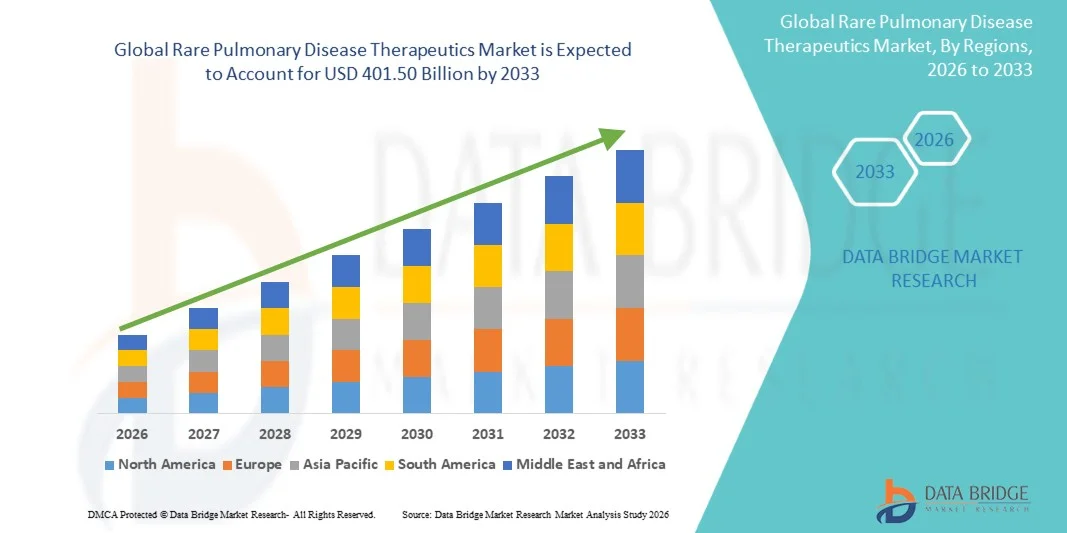
- The global rare pulmonary disease therapeutics market size was valued at USD 178.20 billion in 2025 and is expected to reach USD 401.50 billion by 2033, at a CAGR of 10.70% during the forecast period
- The market growth is largely fueled by increasing prevalence and awareness of rare pulmonary diseases, advancements in therapeutic research, and the development of targeted treatment options. Improved diagnostic capabilities and better understanding of genetic and environmental factors contributing to these diseases are driving adoption of specialized therapeutics in both hospital and clinical settings
- Furthermore, rising demand for effective, patient-specific, and safer treatment options is establishing rare pulmonary disease therapeutics as a critical segment within respiratory care. These converging factors are accelerating the uptake of Rare Pulmonary Disease Therapeutics solutions, thereby significantly boosting the industry’s growth
Rare Pulmonary Disease Therapeutics Market Analysis
- Rare Pulmonary Disease Therapeutics, offering targeted treatment options for patients with rare pulmonary conditions, are increasingly vital components of modern respiratory care in both hospital and clinical settings due to their enhanced efficacy, safety profile, and ability to address unmet medical needs
- The escalating demand for Rare Pulmonary Disease Therapeutics is primarily fueled by the rising prevalence of rare pulmonary disorders, growing awareness among healthcare providers and patients, and increasing adoption of advanced treatment protocols
- North America dominated the rare pulmonary disease therapeutics market with the largest revenue share of approximately 41% in 2025, supported by advanced healthcare infrastructure, high adoption of innovative therapeutics, well-established pharmaceutical and biotech companies, and favorable reimbursement policies. The U.S. accounts for the majority of this share due to high diagnosis rates and growing investment in rare disease research
- Asia-Pacific is expected to be the fastest-growing region in the rare pulmonary disease therapeutics market during the forecast period, registering a high CAGR of around 12.8%, driven by increasing healthcare spending, growing awareness of rare pulmonary diseases, expansion of specialized treatment centers, and improving access to novel therapeutics in countries such as China, India, and Japan
- The oral segment dominated with a market revenue share of 48% in 2025, driven by patient preference, ease of administration, and convenience for chronic therapy
Report Scope and Rare Pulmonary Disease Therapeutics Market Segmentation
|
Attributes |
Rare Pulmonary Disease Therapeutics Key Market Insights |
|
Segments Covered |
|
|
Countries Covered |
North America
Europe
Asia-Pacific
Middle East and Africa
South America
|
|
Key Market Players |
|
|
Market Opportunities |
|
|
Value Added Data Infosets |
In addition to the insights on market scenarios such as market value, growth rate, segmentation, geographical coverage, and major players, the market reports curated by the Data Bridge Market Research also include in-depth expert analysis, patient epidemiology, pipeline analysis, pricing analysis, and regulatory framework. |
Rare Pulmonary Disease Therapeutics Market Trends
“Advancements in Targeted and Personalized Therapies”
- A significant and accelerating trend in the global rare pulmonary disease therapeutics market is the growing focus on the development of targeted and personalized treatment options. This includes novel biologics, gene therapies, and small-molecule drugs designed to address specific disease mechanisms and patient subpopulations
- For instance, several clinical-stage therapies for pulmonary arterial hypertension (PAH) and interstitial lung diseases are increasingly being tailored based on genetic profiles, biomarkers, and disease severity, offering improved efficacy and safety outcomes
- Pharmaceutical companies are leveraging advances in molecular biology and immunotherapy to design therapies that specifically target pathogenic pathways, reducing off-target effects and improving patient quality of life
- The expansion of companion diagnostic tools and precision medicine approaches is facilitating earlier diagnosis, better monitoring, and more effective intervention, which is a key trend driving innovation in the Rare Pulmonary Disease Therapeutics market
- This trend towards personalized therapies is shaping both R&D strategies and clinical trial designs, as stakeholders aim to deliver more effective treatment regimens to address unmet patient needs
- The increasing focus on orphan drug development and regulatory incentives for rare disease therapies is also accelerating the development and commercialization of these specialized therapeutics
Rare Pulmonary Disease Therapeutics Market Dynamics
Driver
“Rising Incidence of Rare Pulmonary Diseases and Unmet Medical Needs”
- The increasing prevalence of rare pulmonary diseases, such as idiopathic pulmonary fibrosis, pulmonary arterial hypertension, and other interstitial lung conditions, is a primary driver for market growth
- For instance, in March 2024, Actelion Pharmaceuticals reported positive Phase III results for a novel PAH therapy, demonstrating significant improvements in patient exercise capacity and pulmonary hemodynamics. Such breakthroughs are expected to boost market expansion
- Growing awareness among healthcare providers and patients regarding early diagnosis and treatment of rare pulmonary conditions is further fueling demand for advanced therapeutics
- Improved access to specialty care centers and referral networks is facilitating timely initiation of therapy, which is particularly critical for progressive diseases
- The trend toward combination therapies and multi-target approaches is also driving growth, as these solutions often provide enhanced clinical outcomes and address complex pathophysiology
- Favorable regulatory frameworks, such as orphan drug designations and expedited approval pathways, are incentivizing pharmaceutical companies to invest in research and commercialization of rare pulmonary disease therapeutics
Restraint/Challenge
“High Cost of Therapies and Limited Reimbursement”
- High treatment costs, coupled with limited insurance coverage or reimbursement in several regions, pose a significant challenge to market expansion. Advanced biologics, gene therapies, and orphan drugs often require substantial financial investment, making them less accessible to patients in low- and middle-income countries
- For instance, several reports from healthcare authorities in Europe and North America highlight challenges in broad patient access due to reimbursement restrictions on novel therapies for rare pulmonary diseases
- Addressing these cost and access barriers through patient assistance programs, value-based pricing models, and broader insurance coverage will be essential to increase adoption rates
- Manufacturing complexities and stringent regulatory requirements for biologics and gene therapies also increase the time and cost of bringing new therapies to market
- While innovative therapies are transforming clinical outcomes, the perceived high financial burden can hinder widespread use, especially in regions with limited healthcare infrastructure or budget constraints
- Overcoming these challenges through policy support, cost-optimization strategies, and patient-centric programs will be critical for sustained growth in the Rare Pulmonary Disease Therapeutics market
Rare Pulmonary Disease Therapeutics Market Scope
The market is segmented on the basis of type, indication, and route of administration.
• By Type
On the basis of type, the Rare Pulmonary Disease Therapeutics market is segmented into small-molecule drugs, biologics/monoclonal antibodies, advanced/emerging modalities, and others. The small-molecule drugs segment dominated the largest market revenue share of 45% in 2025, owing to their proven efficacy, oral administration convenience, and broad clinical adoption across multiple rare pulmonary disease indications. These drugs are widely used for pulmonary arterial hypertension (PAH), idiopathic pulmonary fibrosis (IPF), and connective tissue disease-associated ILDs, where long-term therapy and patient adherence are critical. Their established manufacturing processes and lower production costs compared to biologics further strengthen their dominance. Clinicians often rely on small molecules due to extensive clinical trial evidence and well-characterized safety profiles. Growing patient populations, increasing awareness of rare pulmonary conditions, and strong reimbursement policies in developed regions contribute to sustained market leadership. Ongoing R&D efforts focus on combination therapies and novel formulations to improve pharmacokinetics and reduce adverse effects. Patient support programs, specialty pharmacies, and global distribution networks further bolster market penetration.
The advanced/emerging modalities segment is expected to witness the fastest CAGR of 22% from 2026 to 2033, driven by the rise of gene therapies, RNA-based therapeutics, and targeted biologics designed for disease modification in rare pulmonary diseases. These innovative therapies aim to address underlying pathophysiology in conditions such as PAH and IPF, offering improved outcomes over conventional treatment. Regulatory incentives for orphan drugs, accelerated approval pathways, and high unmet clinical need are fostering rapid adoption. Partnerships between biotech companies and academic institutions are accelerating clinical development and commercialization. Patient demand for personalized treatment and improved survival rates is supporting growth. Technological advances in drug delivery, stability, and targeting are enhancing efficacy and reducing side effects. The segment benefits from increasing awareness of rare pulmonary disease diagnostics, improved early detection, and expanding access to specialty care centers globally.
• By Indication
On the basis of indication, the market is segmented into interstitial lung diseases (IPF, CTD-ILD, hypersensitivity pneumonitis), pulmonary vascular diseases (PAH, CTEPH), and other rare pulmonary conditions. The interstitial lung diseases segment held the largest market revenue share of 42% in 2025, due to the rising prevalence of IPF and CTD-ILD, increasing disease awareness, and guideline-driven clinical adoption. Hospitals and specialty clinics emphasize early diagnosis and timely therapy initiation, supporting market growth. Patients benefit from improved survival rates and symptom management using approved small-molecule and biologic therapies. Payers and insurance coverage facilitate access to treatment, especially in North America and Europe. Ongoing clinical research, real-world evidence, and long-term follow-up studies strengthen confidence in ILD therapies. Specialty centers and multidisciplinary care models further enhance adoption. Patient support programs, advocacy initiatives, and educational campaigns contribute to awareness and adherence. Market dominance is also supported by combination therapy options and continuous pipeline innovations targeting disease progression and symptom control.
The pulmonary vascular diseases segment is projected to register the fastest CAGR of 20.5% from 2026 to 2033, supported by rising diagnoses of PAH and CTEPH, new treatment approvals, and increased patient access. Targeted therapies including prostacyclin analogs, endothelin receptor antagonists, and combination regimens are expanding therapeutic options. Government and non-profit initiatives promoting awareness and early screening enhance uptake. Clinical trials exploring novel mechanisms, such as soluble guanylate cyclase stimulators, are expected to drive adoption. Specialty centers and expert physician networks facilitate patient management. Patient advocacy, increased diagnostic capability, and telemedicine support early therapy initiation. Emerging economies with growing healthcare infrastructure are contributing to expansion. Improved patient outcomes, reduced hospitalization rates, and focus on quality of life reinforce the attractiveness of this segment for pharmaceutical investment.
• By Route of Administration
On the basis of route of administration, the market is segmented into oral, inhalational, injectable/parenteral, and others. The oral segment dominated with a market revenue share of 48% in 2025, driven by patient preference, ease of administration, and convenience for chronic therapy. Oral therapies are widely prescribed for PAH, ILD, and other rare pulmonary diseases, allowing outpatient management and improving adherence. Sustained-release and combination formulations further support growth. Healthcare providers favor oral therapy for ease of monitoring and minimal infrastructure needs. Developed markets with strong reimbursement systems encourage oral treatment adoption. Regulatory approvals and well-established clinical data strengthen clinician confidence. Ongoing R&D continues to optimize bioavailability and reduce adverse effects. Patient-centric care models and digital adherence tools also enhance oral therapy utilization. Global distribution networks ensure wide availability.
The injectable/parenteral segment is expected to witness the fastest CAGR of 21% from 2026 to 2033, due to the growing use of biologics, monoclonal antibodies, and advanced therapies requiring precise pharmacokinetics. Hospital and clinic-based administration ensures safe delivery of complex therapies. Targeted biologics and emerging modalities for PAH and ILD benefit from parenteral administration. Clinical trials demonstrating efficacy and safety enhance clinician and patient confidence. Investments in infusion centers and specialty pharmacy networks facilitate adoption. Improved patient outcomes, reduced disease progression, and availability of combination regimens drive growth. Expanding private healthcare infrastructure in Asia-Pacific and emerging regions is supporting market penetration. Ongoing innovation in drug formulation, administration devices, and patient monitoring systems continues to fuel rapid growth.
Rare Pulmonary Disease Therapeutics Market Regional Analysis
- North America dominated the global rare pulmonary disease therapeutics market with the largest revenue share of approximately 41% in 2025, primarily driven by advanced healthcare infrastructure, high adoption of innovative therapeutics, well-established pharmaceutical and biotech companies, and favorable reimbursement policies
- The market accounted for the majority of this share due to high diagnosis rates, growing investment in rare pulmonary disease research, and the availability of a wide portfolio of treatment options. The region benefits from strong clinical trial activity, robust regulatory frameworks, and significant public and private funding, all of which are accelerating the development and uptake of novel therapies
- Furthermore, increasing patient awareness, collaborations between biotech firms and healthcare institutions, and early adoption of advanced therapeutics are reinforcing North America’s position as the leading market for rare pulmonary disease treatments
U.S. Rare Pulmonary Disease Therapeutics Market Insight
The U.S. rare pulmonary disease therapeutics market captured the largest revenue share in North America in 2025, driven by the country’s advanced healthcare infrastructure, high prevalence and diagnosis rates of rare pulmonary diseases, and robust investment in innovative therapeutics. The market growth is supported by the presence of leading pharmaceutical and biotechnology companies actively developing novel biologics, small-molecule drugs, and emerging modalities targeting conditions such as Pulmonary Arterial Hypertension (PAH), interstitial lung diseases (ILD), and other rare pulmonary disorders.
Europe Rare Pulmonary Disease Therapeutics Market Insight
The Europe rare pulmonary disease therapeutics market is projected to witness substantial growth at a noteworthy CAGR throughout the forecast period, underpinned by strong government support for rare disease research, stringent healthcare regulations, and increasing awareness of rare pulmonary disorders. Countries such as Germany, France, and Italy are investing in specialized treatment centers and early diagnosis programs, which enhance patient access to innovative therapies. The rising prevalence of pulmonary arterial hypertension (PAH) and interstitial lung diseases (ILD) has prompted healthcare providers to integrate novel biologics and small-molecule drugs into treatment regimens. Additionally, the expansion of reimbursement coverage, growing clinical trials, and collaborations between research institutions and pharmaceutical companies are driving market adoption across the region.
U.K. Rare Pulmonary Disease Therapeutics Market Insight
The U.K. rare pulmonary disease therapeutics market is expected to grow at a significant CAGR during the forecast period, fueled by increasing public and private funding for rare disease research, early diagnosis programs, and expanding access to innovative therapeutics. High awareness among healthcare professionals and patients regarding rare pulmonary conditions is leading to faster adoption of advanced treatment options, including biologics and emerging modalities. The country’s well-developed healthcare system, coupled with strategic partnerships between pharmaceutical firms and NHS programs, ensures streamlined patient access and reimbursement support. Moreover, government initiatives to promote rare disease registries and patient monitoring are expected to further boost market growth in the U.K.
Germany Rare Pulmonary Disease Therapeutics Market Insight
Germany rare pulmonary disease therapeutics market represents a key market in Europe, expected to grow at a considerable CAGR during the forecast period. The growth is driven by increasing awareness of rare pulmonary diseases, high investment in healthcare innovation, and an emphasis on patient-centric treatment strategies. Germany’s strong pharmaceutical and biotech sector supports the rapid introduction of novel therapeutics, including biologics and advanced small-molecule drugs. The country also benefits from a structured healthcare infrastructure, advanced diagnostic capabilities, and reimbursement policies that facilitate patient access to high-cost therapies. Rising collaborations between research institutes and pharmaceutical companies are further accelerating the adoption of rare pulmonary disease treatments.
Asia-Pacific Rare Pulmonary Disease Therapeutics Market Insight
The Asia-Pacific (APAC) rare pulmonary disease therapeutics market is expected to be the fastest-growing region, registering a high CAGR of around 12.8% during the forecast period. Growth is fueled by rising healthcare expenditure, expanding private healthcare facilities, increasing awareness of rare pulmonary conditions, and improving access to novel therapeutics in countries such as China, India, and Japan. Rapid urbanization, growing middle-class populations, and government initiatives promoting specialized treatment centers are further driving market adoption. Additionally, increasing clinical trial activity, local manufacturing of biologics and small-molecule drugs, and collaborations between multinational pharmaceutical companies and regional healthcare providers are contributing to the robust growth of the APAC market.
Japan Rare Pulmonary Disease Therapeutics Market Insight
Japan’s rare pulmonary disease therapeutics market is gaining momentum due to the country’s high healthcare standards, growing geriatric population, and strong adoption of innovative therapeutics. The prevalence of rare pulmonary diseases such as PAH and ILD, combined with well-established reimbursement frameworks and advanced diagnostic capabilities, is encouraging faster adoption of novel biologics and emerging treatment modalities. Furthermore, collaborations between local biotech firms and global pharmaceutical companies, alongside government support for rare disease research, are reinforcing Japan’s role as a key growth market in the region.
China Rare Pulmonary Disease Therapeutics Market Insight
China rare pulmonary disease therapeutics market accounted for a significant share of the APAC market in 2025, driven by increasing healthcare investment, expanding urban healthcare infrastructure, and growing awareness of rare pulmonary diseases. The country is witnessing rising patient access to advanced therapeutics, supported by government initiatives for rare disease treatment, the emergence of specialized hospitals, and the presence of local pharmaceutical manufacturers producing innovative biologics and small-molecule drugs. Rapid urbanization, rising disposable incomes, and improvements in healthcare delivery are further propelling market growth in China, making it one of the largest and fastest-expanding markets in the region.
Rare Pulmonary Disease Therapeutics Market Share
The Rare Pulmonary Disease Therapeutics industry is primarily led by well-established companies, including:
- Roche (Switzerland)
- Novartis (Switzerland)
- Pfizer (U.S.)
- Johnson & Johnson (U.S.)
- GlaxoSmithKline (U.K.)
- Amgen (U.S.)
- Sanofi (France)
- Takeda Pharmaceutical (Japan)
- Boehringer Ingelheim (Germany)
- Bayer (Germany)
- Bristol-Myers Squibb (U.S.)
- AbbVie (U.S.)
- Vertex Pharmaceuticals (U.S.)
- Merck & Co. (U.S.)
- Eli Lilly and Company (U.S.)
- Astellas Pharma (Japan)
- AstraZeneca (U.K.)
- Regeneron Pharmaceuticals (U.S.)
- Biogen (U.S.)
- CSL Behring (Australia)
Latest Developments in Global Rare Pulmonary Disease Therapeutics Market
- In April 2021, the inhaled therapy Tyvaso (treprostinil, inhalation solution) was approved by the FDA for adults with pulmonary hypertension associated with interstitial lung disease (PH‑ILD), adding a treatment option for a rare lung‑disease population with previously very limited options
- In March 2024, the U.S. Food and Drug Administration (FDA) granted approval for sotatercept, marketed under the brand name Winrevair, as a treatment for adults suffering from Pulmonary Arterial Hypertension (PAH). This approval marked a significant milestone in the management of PAH, a rare and progressive condition characterized by high blood pressure in the arteries of the lungs, which can lead to right heart failure and severe limitations in daily activities. Sotatercept is the first-in-class therapy targeting the underlying molecular pathways of PAH, specifically addressing the dysregulated activin signaling that contributes to vascular remodeling and elevated pulmonary pressures
- In May 2025, the FDA approved the inhalation‑powder therapy YUTREPIA (treprostinil) for treatment of adults with pulmonary arterial hypertension (PAH) and pulmonary hypertension associated with interstitial lung disease (PH‑ILD)

- Interactive Data Analysis Dashboard
- Company Analysis Dashboard for high growth potential opportunities
- Research Analyst Access for customization & queries
- Competitor Analysis with Interactive dashboard
- Latest News, Updates & Trend analysis
- Harness the Power of Benchmark Analysis for Comprehensive Competitor Tracking
Data collection and base year analysis are done using data collection modules with large sample sizes. The stage includes obtaining market information or related data through various sources and strategies. It includes examining and planning all the data acquired from the past in advance. It likewise envelops the examination of information inconsistencies seen across different information sources. The market data is analysed and estimated using market statistical and coherent models. Also, market share analysis and key trend analysis are the major success factors in the market report. To know more, please request an analyst call or drop down your inquiry.
The key research methodology used by DBMR research team is data triangulation which involves data mining, analysis of the impact of data variables on the market and primary (industry expert) validation. Data models include Vendor Positioning Grid, Market Time Line Analysis, Market Overview and Guide, Company Positioning Grid, Patent Analysis, Pricing Analysis, Company Market Share Analysis, Standards of Measurement, Global versus Regional and Vendor Share Analysis. To know more about the research methodology, drop in an inquiry to speak to our industry experts.
Data Bridge Market Research is a leader in advanced formative research. We take pride in servicing our existing and new customers with data and analysis that match and suits their goal. The report can be customized to include price trend analysis of target brands understanding the market for additional countries (ask for the list of countries), clinical trial results data, literature review, refurbished market and product base analysis. Market analysis of target competitors can be analyzed from technology-based analysis to market portfolio strategies. We can add as many competitors that you require data about in the format and data style you are looking for. Our team of analysts can also provide you data in crude raw excel files pivot tables (Fact book) or can assist you in creating presentations from the data sets available in the report.












