


Rare Renal Disorders Therapeutics Market Size
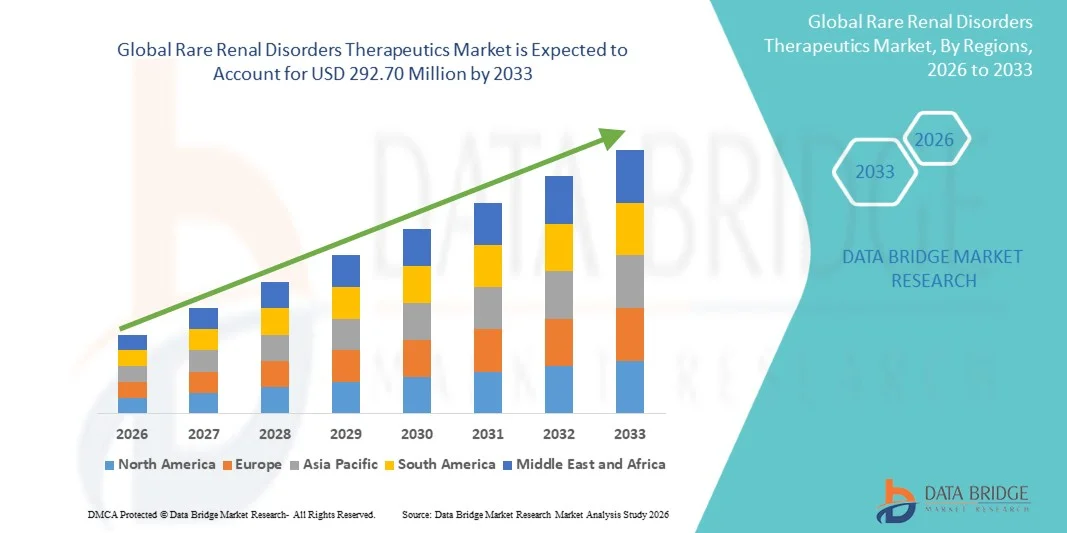
- The global rare renal disorders therapeutics market size was valued at USD 128.70 Million in 2025 and is expected to reach USD 292.70 Million by 2033, at a CAGR of 10.80% during the forecast period
- The market growth is largely fueled by increasing prevalence of rare renal disorders, such as autosomal dominant polycystic kidney disease (ADPKD), Alport syndrome, and Fabry disease, along with advancements in targeted therapies, biologics, and gene therapies that improve patient outcomes and slow disease progression
- Furthermore, rising awareness among healthcare providers, expanding research and development initiatives, and growing investments in innovative treatment solutions are accelerating the uptake of rare renal disorders therapeutics, thereby significantly boosting the industry's growth
Rare Renal Disorders Therapeutics Market Analysis
- Rare Renal Disorders Therapeutics, including small molecule drugs, biologics, and gene therapies, are increasingly vital in managing rare kidney diseases such as ADPKD, Alport syndrome, Fabry disease, and FSGS, due to their ability to slow disease progression, improve patient outcomes, and address previously unmet medical needs
- The escalating demand for these therapeutics is primarily fueled by increasing prevalence of rare renal disorders, growing awareness among healthcare providers, and rising investments in research and development for novel and targeted therapies
- North America dominated the rare renal disorders therapeutics market with the largest revenue share of approximately 45% in 2025, supported by a strong healthcare infrastructure, extensive clinical research activities, high adoption of advanced therapeutics, and the presence of leading market players. The U.S. remains the key contributor, driven by high procedural volumes and widespread access to innovative therapies
- Asia-Pacific is expected to be the fastest-growing region in the rare renal disorders Therapeutics market during the forecast period, with growth driven by increasing healthcare access, rising prevalence of rare renal disorders, expanding research initiatives, and growing awareness of advanced treatment options in countries such as China, India, and Japan
- The Small Molecule Drugs segment dominated the largest market revenue share of 41.5% in 2025, owing to their well-established clinical use, easier administration, and cost-effectiveness compared to biologics and gene therapies
Report Scope and Rare Renal Disorders Therapeutics Market Segmentation
|
Attributes |
Rare Renal Disorders Therapeutics Key Market Insights |
|
Segments Covered |
|
|
Countries Covered |
North America
Europe
Asia-Pacific
Middle East and Africa
South America
|
|
Key Market Players |
|
|
Market Opportunities |
|
|
Value Added Data Infosets |
In addition to the insights on market scenarios such as market value, growth rate, segmentation, geographical coverage, and major players, the market reports curated by the Data Bridge Market Research also include in-depth expert analysis, patient epidemiology, pipeline analysis, pricing analysis, and regulatory framework. |
Rare Renal Disorders Therapeutics Market Trends
“Rising Focus on Precision Medicine and Targeted Therapies”
- A major and accelerating trend in the global rare renal disorders therapeutics market is the increasing focus on precision medicine and development of targeted therapies tailored for specific genetic and rare renal conditions
- For instance, advances in genomic profiling and biomarker identification are enabling pharmaceutical companies to develop therapies for conditions such as focal segmental glomerulosclerosis (FSGS), Alport syndrome, and polycystic kidney disease (PKD)
- Targeted therapies are being designed to act on specific molecular pathways, improving efficacy while reducing adverse effects. This trend is driven by the increasing prevalence of rare renal disorders and the unmet medical need in these patient populations
- Companies are increasingly investing in biologics, small molecule inhibitors, and gene therapy approaches to address disease-specific mechanisms
- Clinical trials are incorporating personalized medicine approaches, enabling better patient stratification and outcome prediction
- The development of companion diagnostics alongside therapeutic interventions further enhances treatment precision
- Regulatory agencies are also supporting orphan drug development through accelerated approvals and incentives, fueling the trend toward specialized therapies
- Improved patient registries and real-world evidence studies are guiding research and development in rare renal disorders
- Overall, the movement toward targeted, precision therapies is reshaping research strategies, clinical development, and patient care in rare renal disorders therapeutics
Rare Renal Disorders Therapeutics Market Dynamics
Driver
“Growing Prevalence of Rare Renal Disorders and Increasing R&D Investments”
- The increasing prevalence of rare renal disorders globally, coupled with rising awareness among healthcare professionals and patients, is a significant driver for market growth
- For instance, in 2024, Otsuka Pharmaceutical announced the expansion of its rare disease pipeline, focusing on therapies for inherited kidney diseases, reflecting increasing R&D investments
- The high burden of chronic kidney disease and complications associated with rare renal disorders such as nephrotic syndrome and congenital anomalies of the kidney and urinary tract (CAKUT) has prompted demand for innovative treatments
- Advancements in genetic testing and early diagnosis enable timely intervention, further driving therapeutic adoption
- Increased funding by governments, non-profits, and private companies supports clinical trials and development of orphan drugs
- Pharmaceutical firms are actively pursuing collaborations and partnerships to accelerate therapy development
- Patient advocacy groups and awareness campaigns are enhancing diagnosis rates and highlighting the need for specialized therapeutics
- The combination of high unmet medical need, regulatory incentives, and technological advancements in drug development is fueling market expansion
- Overall, rising prevalence and increased R&D investments are key factors propelling the rare renal disorders therapeutics market forward
Restraint/Challenge
“High Cost of Treatment and Market Access Barriers”
- The high cost of developing and administering therapies for rare renal disorders remains a major challenge, limiting patient access, particularly in emerging economies
- Therapies such as gene therapy, biologics, and novel small molecules often involve significant manufacturing and clinical trial costs, resulting in high treatment prices
- Reimbursement challenges and limited insurance coverage can hinder patient uptake and market penetration
- For instance, while orphan drug designations provide incentives, pricing remains a critical concern for healthcare providers and payers
- Clinical development for rare disorders is often prolonged and complex due to limited patient populations, resulting in higher uncertainty for manufacturers
- Lack of standardized treatment guidelines in some regions adds to variability in adoption
- Overcoming these challenges requires policy support, patient assistance programs, and innovative pricing models to improve affordability
- Strategies such as collaboration with governments, healthcare organizations, and patient advocacy groups are increasingly being explored to mitigate access barriers
Addressing high costs and improving access will be vital for sustainable market growth and ensuring that therapies reach the patients in need
Rare Renal Disorders Therapeutics Market Scope
The market is segmented on the basis of type, mechanism of action, and application.
• By Type
On the basis of type, the Rare Renal Disorders Therapeutics market is segmented into Small Molecule Drugs, Biologics, Gene Therapy, and Others. The Small Molecule Drugs segment dominated the largest market revenue share of 41.5% in 2025, owing to their well-established clinical use, easier administration, and cost-effectiveness compared to biologics and gene therapies. Small molecule therapies are widely used to manage rare renal conditions such as Fabry Disease and FSGS due to their proven efficacy and regulatory approvals. Furthermore, ongoing research is expanding their applicability to multiple rare renal disorders, which enhances their market presence. These drugs are compatible with oral or injectable forms, providing flexibility for patients and healthcare providers. The availability of generic options for some small molecule therapies further strengthens adoption across developed and emerging markets. Clinical familiarity and physician preference also contribute to the dominance of this segment. Additionally, healthcare payers and insurance coverage often favor small molecule options, further reinforcing market share. Patient adherence is improved due to less complex administration compared to biologics. The market benefits from steady pipeline activity in small molecule drug development, particularly for anti-fibrotic and enzyme-targeted therapies. Overall, small molecule drugs continue to drive revenue growth and remain the backbone of rare renal disorders therapeutics.
The Gene Therapy segment is anticipated to witness the fastest CAGR of 22.4% from 2026 to 2033, propelled by advances in genetic editing technologies, increasing approvals for orphan diseases, and high unmet medical needs. Gene therapy offers potential curative approaches for monogenic disorders such as Alport Syndrome and Fabry Disease, which significantly boosts patient and clinician interest. Investment in research and development for gene therapies is rising due to promising clinical outcomes and long-term benefits. Early-stage pipelines targeting rare renal disorders are expanding rapidly across North America, Europe, and Asia-Pacific. Regulatory incentives, including fast-track and orphan drug designations, further accelerate the adoption of gene therapies. Healthcare providers are increasingly participating in specialized clinical trials, driving market confidence. Patient advocacy and awareness programs also support accelerated adoption. Furthermore, advancements in delivery vectors, such as AAV and lentiviral systems, improve safety and efficacy profiles. Despite high costs, the transformative potential of gene therapies encourages investment from pharmaceutical companies. Partnerships between biotech firms and academic institutions strengthen pipeline innovations. Over the forecast period, the segment is expected to gain substantial market share, reshaping treatment paradigms for rare renal disorders.
• By Mechanism of Action
On the basis of mechanism of action, the market is segmented into Enzyme Replacement Therapy (ERT), Anti-fibrotic Agents, Immunosuppressants, and Others. The Enzyme Replacement Therapy segment held the largest market revenue share of 38.7% in 2025, driven by its established role in treating lysosomal storage disorders such as Fabry Disease. ERT provides a direct therapeutic approach by supplementing deficient enzymes, improving clinical outcomes, and reducing disease progression. Robust clinical trial evidence and long-term safety data further strengthen adoption. ERT products are widely accepted among clinicians due to predictable pharmacokinetics and dosing regimens. Reimbursement support and government programs for rare disease patients also facilitate market penetration. The segment benefits from ongoing innovation, including optimized formulations, improved delivery systems, and reduced infusion times. Patient compliance is enhanced through structured infusion schedules and supportive care programs. Healthcare infrastructure in developed regions supports widespread administration of ERT. Moreover, awareness programs and patient registries improve early diagnosis and timely treatment. Overall, ERT continues to dominate the mechanism of action landscape due to its proven effectiveness and widespread clinical utilization.
The Anti-fibrotic Agents segment is projected to witness the fastest CAGR of 19.6% from 2026 to 2033, fueled by growing clinical focus on slowing renal fibrosis in conditions such as Autosomal Dominant Polycystic Kidney Disease (ADPKD) and FSGS. Anti-fibrotic therapies aim to halt disease progression by targeting pathways involved in tissue scarring and renal function decline. Innovative drug candidates are being evaluated in advanced clinical trials, demonstrating promising efficacy and safety. Increased awareness of fibrosis-related complications is encouraging early intervention. Pharmaceutical companies are expanding pipelines to include combination therapies that enhance patient outcomes. The market growth is further supported by regulatory incentives for orphan and rare renal diseases. Emerging markets are witnessing rising adoption as healthcare access improves. Anti-fibrotic agents provide a complementary approach to conventional therapies, increasing overall treatment options. Physicians are increasingly adopting these agents to improve long-term renal outcomes. Research initiatives and collaborations between biotech firms and academic institutions strengthen pipeline innovations. Overall, the anti-fibrotic agents segment is expected to experience rapid adoption and substantial CAGR growth during the forecast period.
• By Application
On the basis of application, the market is segmented into Autosomal Dominant Polycystic Kidney Disease (ADPKD), Alport Syndrome, Fabry Disease, Focal Segmental Glomerulosclerosis (FSGS), and Other Rare Renal Disorders. The ADPKD segment accounted for the largest market revenue share of 36.9% in 2025, driven by the high prevalence of the condition, progressive renal impairment, and increasing availability of targeted therapies. Patients benefit from early diagnosis through genetic testing, which facilitates timely treatment interventions. The availability of both small molecule drugs and biologics for ADPKD supports comprehensive care. Clinical guidelines recommend early treatment to slow cyst growth and preserve renal function, boosting adoption. Healthcare infrastructure in North America and Europe provides access to advanced therapeutics. Reimbursement support and patient assistance programs further enhance treatment uptake. Physician awareness programs and clinical advocacy efforts improve diagnosis and therapy initiation rates. Real-world data supporting improved renal outcomes encourages adoption among nephrologists. The segment is supported by robust R&D activity in pipeline drugs targeting cystogenesis and renal function preservation.
The Fabry Disease segment is projected to witness the fastest CAGR of 20.3% from 2026 to 2033, driven by increasing adoption of enzyme replacement therapy and novel gene therapies addressing the underlying genetic cause. Expanding diagnostic programs and newborn screening initiatives facilitate early detection, supporting timely therapy. Advanced therapeutics targeting specific mutations are gaining traction in developed markets. Collaborations between biotech companies and research institutions accelerate clinical development. Regulatory approvals and orphan drug incentives enable faster market entry. Patient advocacy groups and educational campaigns enhance awareness and encourage early intervention. Improved formulations with longer dosing intervals increase patient adherence. Emerging markets are increasingly accessing therapies due to better healthcare infrastructure. Clinical trials demonstrate consistent efficacy in reducing renal and cardiac complications, driving confidence in adoption. Overall, Fabry Disease therapeutics are expected to experience strong growth, capturing increasing market share over the forecast period.
Rare Renal Disorders Therapeutics Market Regional Analysis
- North America dominated the rare renal disorders therapeutics market with the largest revenue share of approximately 45% in 2025
- Supported by a strong healthcare infrastructure, extensive clinical research activities, high adoption of advanced therapeutics, and the presence of leading market players
- The market remains the key contributor, driven by high procedural volumes and widespread access to innovative therapies. Growing investments in R&D, government support for rare disease initiatives, and the availability of advanced treatment options further propel market growth
U.S. Rare Renal Disorders Therapeutics Market Insight
The U.S. Rare Renal Disorders Therapeutics ma rare renal disorders therapeutics market captured the largest revenue share in North America in 2025, fueled by a high prevalence of rare renal disorders, robust healthcare infrastructure, and widespread adoption of novel therapeutics. Increased clinical trials, availability of orphan drugs, and advancements in gene therapies and biologics are driving demand. Hospitals, specialty clinics, and research institutions are investing in innovative treatment options, improving patient outcomes and expanding market adoption.
Europe Rare Renal Disorders Therapeutics Market Insight
The Europe rare renal disorders therapeutics market is projected to expand at a substantial CAGR throughout the forecast period, driven by rising healthcare expenditure, increasing focus on rare disease research, and supportive regulatory frameworks for orphan drugs. Germany, France, and the U.K. are witnessing growing adoption of advanced therapeutics and expansion of clinical research programs for rare renal disorders.
U.K. Rare Renal Disorders Therapeutics Market Insight
The U.K. rare renal disorders therapeutics market is anticipated to grow at a noteworthy CAGR during the forecast period, driven by government initiatives to support rare disease treatment, increased clinical trial activities, and rising patient awareness. Adoption of novel therapeutics and biologics is rising in specialty clinics and hospitals, contributing to market expansion.
Germany Rare Renal Disorders Therapeutics Market Insight
The Germany rare renal disorders therapeutics market is expected to expand at a considerable CAGR during the forecast period, fueled by advanced healthcare infrastructure, high adoption of innovative therapies, and increasing prevalence of rare renal conditions. Expansion of clinical research programs and availability of cutting-edge treatment options are key drivers of growth.
Asia-Pacific Rare Renal Disorders Therapeutics Market Insight
Asia-Pacific rare renal disorders therapeutics market is expected to be the fastest-growing region in the Rare Renal Disorders Therapeutics market during the forecast period, with growth driven by increasing healthcare access, rising prevalence of rare renal disorders, expanding research initiatives, and growing awareness of advanced treatment options in countries such as China, India, and Japan. Investments in healthcare infrastructure, expansion of specialty clinics, and increased availability of novel therapeutics are supporting market growth.
Japan Rare Renal Disorders Therapeutics Market Insight
The Japan rare renal disorders therapeutics market is gaining momentum due to the country’s advanced healthcare system, high patient awareness, and growing adoption of innovative therapeutics. Expansion of clinical research and availability of gene therapies and biologics are driving the market in hospitals and specialty clinics.
China Rare Renal Disorders Therapeutics Market Insight
The China rare renal disorders therapeutics market accounted for the largest market revenue share in Asia-Pacific in 2025, attributed to increasing healthcare access, rising prevalence of rare renal disorders, and growing adoption of advanced treatment options. Government support for rare disease programs, expansion of clinical trials, and increased availability of novel therapeutics are propelling market growth.
Rare Renal Disorders Therapeutics Market Share
The Rare Renal Disorders Therapeutics industry is primarily led by well-established companies, including:
- Sanofi (France)
- Pfizer Inc. (U.S.)
- AstraZeneca (U.K.)
- Bayer AG (Germany)
- Novartis AG (Switzerland)
- Otsuka Pharmaceutical Co., Ltd. (Japan)
- Mallinckrodt Pharmaceuticals (U.K.)
- Amgen Inc. (U.S.)
- Takeda Pharmaceutical Company Ltd. (Japan)
- Ipsen (France)
- Orphan Technologies (U.S.)
- Sarepta Therapeutics (U.S.)
- Vertex Pharmaceuticals (U.S.)
- Shire Pharmaceuticals (Ireland)
- Roche Holding AG (Switzerland)
- Horizon Therapeutics (U.S.)
- Vifor Pharma (Switzerland)
- Chugai Pharmaceutical Co., Ltd. (Japan)
- Santhera Pharmaceuticals (Switzerland)
- Ultragenyx Pharmaceutical Inc. (U.S.)
Latest Developments in Global Rare Renal Disorders Therapeutics Market
- In May 2023, pegunigalsidase alfa (brand name Elfabrio), an enzyme replacement therapy for Fabry disease, was approved for medical use in both the European Union and the United States, marking a significant advancement in treatment availability for this rare renal disorder that can lead to progressive kidney damage
- In January 2025, Regulus Therapeutics was acquired by Novartis in a deal that included farabursen, an investigational microRNA inhibitor targeted at treating autosomal dominant polycystic kidney disease (ADPKD), which completed Phase 1b trials and is expected to progress into later‑stage clinical development, signaling increased investment in novel ADPKD therapies
- In May 2025, Travere Therapeutics reported strong Filspari (fostamatinib) sales and anticipated FDA priority review for its supplemental application for treating focal segmental glomerulosclerosis (FSGS), reflecting expanded potential indications for existing rare kidney disease therapeutics and increased commercial momentum
- In October 2025, Novartis announced that its investigational therapy Fabhalta demonstrated significant ability to slow the progression of IgA nephropathy in a late‑stage Phase III trial, supporting plans for a regulatory submission for traditional approval, which may broaden treatment options for this rare renal disease
- In December 2025, Akebia Therapeutics announced the establishment of its rare kidney disease pipeline with two core candidates—a next‑generation complement inhibitor (AKB‑097) and praliciguat for FSGS—with plans to begin Phase 2 clinical trials in 2026, underscoring growing R&D activity in rare kidney diseases

- Interactive Data Analysis Dashboard
- Company Analysis Dashboard for high growth potential opportunities
- Research Analyst Access for customization & queries
- Competitor Analysis with Interactive dashboard
- Latest News, Updates & Trend analysis
- Harness the Power of Benchmark Analysis for Comprehensive Competitor Tracking
Data collection and base year analysis are done using data collection modules with large sample sizes. The stage includes obtaining market information or related data through various sources and strategies. It includes examining and planning all the data acquired from the past in advance. It likewise envelops the examination of information inconsistencies seen across different information sources. The market data is analysed and estimated using market statistical and coherent models. Also, market share analysis and key trend analysis are the major success factors in the market report. To know more, please request an analyst call or drop down your inquiry.
The key research methodology used by DBMR research team is data triangulation which involves data mining, analysis of the impact of data variables on the market and primary (industry expert) validation. Data models include Vendor Positioning Grid, Market Time Line Analysis, Market Overview and Guide, Company Positioning Grid, Patent Analysis, Pricing Analysis, Company Market Share Analysis, Standards of Measurement, Global versus Regional and Vendor Share Analysis. To know more about the research methodology, drop in an inquiry to speak to our industry experts.
Data Bridge Market Research is a leader in advanced formative research. We take pride in servicing our existing and new customers with data and analysis that match and suits their goal. The report can be customized to include price trend analysis of target brands understanding the market for additional countries (ask for the list of countries), clinical trial results data, literature review, refurbished market and product base analysis. Market analysis of target competitors can be analyzed from technology-based analysis to market portfolio strategies. We can add as many competitors that you require data about in the format and data style you are looking for. Our team of analysts can also provide you data in crude raw excel files pivot tables (Fact book) or can assist you in creating presentations from the data sets available in the report.












