


Recreational Vehicles (RVs) Batteries Market Analysis
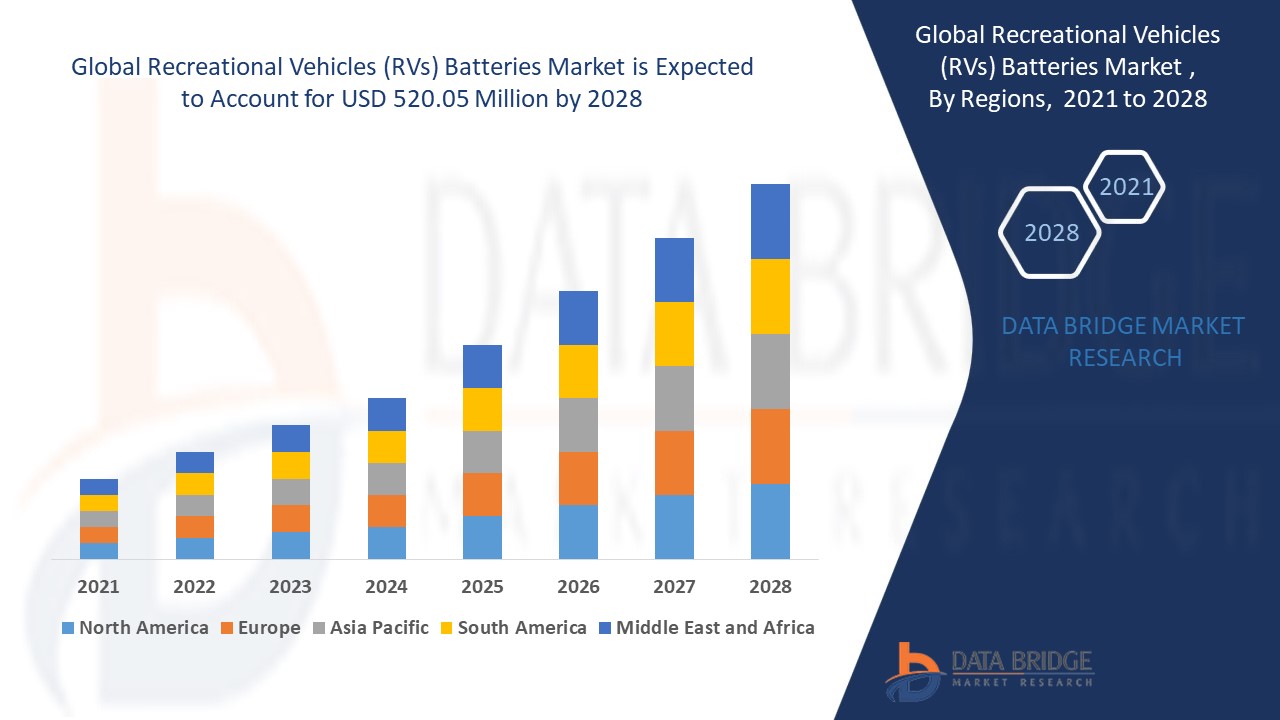
The recreational vehicle (RV) batteries market is witnessing steady growth, driven by the increasing adoption of RVs for travel, tourism, and outdoor adventures. With rising disposable incomes and a growing preference for sustainable mobility, the demand for efficient and long-lasting batteries has surged. Technological advancements have significantly transformed the market, with lithium-ion batteries gaining popularity due to their lightweight design, higher energy efficiency, and longer lifespan compared to traditional lead-acid batteries. Innovations such as smart battery management systems (BMS) and fast-charging capabilities are further enhancing battery performance, ensuring optimal power supply for modern RVs equipped with advanced electronics. In addition, the growing integration of solar panels in RVs is fueling the need for high-capacity deep-cycle batteries to store renewable energy. North America dominates the market, driven by high RV ownership and strong infrastructure, while the Asia-Pacific region is experiencing rapid growth due to expanding manufacturing capabilities. As sustainability becomes a key focus, the development of eco-friendly, recyclable battery technologies is expected to drive the future of the RV batteries market, making them more efficient and environmentally responsible.
Recreational Vehicles (RVs) Batteries Market Size
The global recreational vehicles (RVs) batteries market size was valued at USD 398.23 million in 2024 and is projected to reach USD 679.13 million by 2032, with a CAGR of 6.90% during the forecast period of 2025 to 2032. In addition to the market insights such as market value, growth rate, market segments, geographical coverage, market players, and market scenario, the market report curated by the Data Bridge Market Research team includes in-depth expert analysis, import/export analysis, pricing analysis, production consumption analysis, and pestle analysis.
Recreational Vehicles (RVs) Batteries Market Trends
“Increasing Adoption of Lithium-Ion Batteries”
The recreational vehicles (RVs) batteries market is evolving rapidly, with one key trend being the increasing adoption of lithium-ion batteries due to their superior performance, lightweight design, and longer lifespan. Unlike traditional lead-acid batteries, lithium-ion variants offer faster charging, deeper discharge cycles, and higher energy efficiency, making them ideal for modern RV power solutions. A prime instance is the Winnebago eRV2, North America’s first all-electric RV, which relies on high-capacity lithium batteries for extended off-grid travel. In addition, advancements in battery management systems (BMS) are enhancing energy optimization, ensuring reliable power supply for solar-powered RVs and other integrated electronic systems. The growing focus on sustainable mobility is also driving innovations in recyclable battery technologies, reducing environmental impact. As more manufacturers integrate solar panels and hybrid power systems, the demand for deep-cycle lithium batteries will continue to rise, shaping the future of the RV battery market with efficiency and sustainability.
Report Scope and Recreational Vehicles (RVs) Batteries Market Segmentation
|
Attributes |
Recreational Vehicles (RVs) Batteries Key Market Insights |
|
Segments Covered |
|
|
Countries Covered |
U.S., Canada and Mexico in North America, Germany, France, U.K., Netherlands, Switzerland, Belgium, Russia, Italy, Spain, Turkey, Rest of Europe in Europe, China, Japan, India, South Korea, Singapore, Malaysia, Australia, Thailand, Indonesia, Philippines, Rest of Asia-Pacific (APAC) in the Asia-Pacific (APAC), Saudi Arabia, U.A.E., South Africa, Egypt, Israel, Rest of Middle East and Africa (MEA) as a part of Middle East and Africa (MEA), Brazil, Argentina and Rest of South America as part of South America |
|
Key Market Players |
CROWN BATTERY (U.S.), Discover Battery (Canada), East Penn Manufacturing Company (U.S.), ENERSYS (U.S.), Exide Technologies (U.S.), Fullriver Battery (U.S.), Go Power (Canada), Harris Battery (U.S.), Interstate Batteries (U.S.), Johnson Controls (Ireland), Lifeline (U.S.), MIDAC S.p.A. (Italy), Navitas System, LLC Corporate (U.S.), RELiON Batteries (U.S.), C&D Technologies, Inc. (U.S.), U.S. Battery (U.S.), Winnebago Industries, Inc. (U.S.), Forest River Inc. (U.S.), and Triple E Recreational Vehicles (Canada) |
|
Market Opportunities |
|
|
Value Added Data Infosets |
In addition to the market insights such as market value, growth rate, market segments, geographical coverage, market players, and market scenario, the market report curated by the Data Bridge Market Research team includes in-depth expert analysis, import/export analysis, pricing analysis, production consumption analysis, and pestle analysis. |
Recreational Vehicles (RVs) Batteries Market Definition
Recreational Vehicle (RV) batteries are specialized power storage units designed to supply electricity to RVs, supporting essential functions such as lighting, heating, cooling, appliances, and electronic devices. These batteries come in various types, including lead-acid, AGM, gel, lithium-ion, and fuel cell batteries, each offering different performance characteristics based on energy capacity, lifespan, and maintenance requirements.
Recreational Vehicles (RVs) Batteries Market Dynamics
Drivers
- Rising RV Adoption
The growing popularity of RV travel, camping, and outdoor tourism is a major factor driving the demand for high-performance and durable batteries. As more people seek flexible and self-sufficient travel experiences, RV ownership has surged, particularly in regions such as North America and Europe, where recreational travel culture is strong. This trend is increasing the need for reliable power solutions, especially for off-grid and long-distance travelers who rely on batteries to power essential appliances, lighting, and climate control systems. In addition, modern RVs are equipped with advanced electronic systems, entertainment units, and solar panel integrations, requiring batteries with higher energy efficiency and longer lifespan. A notable instance is Winnebago’s eRV2, which utilizes lithium-ion battery technology to enable extended off-grid travel with a focus on sustainability. As RV adoption continues to grow, the demand for deep-cycle and lithium-ion batteries will expand, driving further innovation in the RV battery market.
- Increasing Government Initiatives and Incentives
Governments worldwide are implementing tax benefits, subsidies, and incentives to encourage the adoption of electric and hybrid RVs, thereby boosting the demand for advanced battery technologies. These initiatives aim to reduce carbon emissions and promote cleaner energy solutions in the recreational vehicle sector. For instance, in the U.S., the federal government offers tax credits for electric RVs and incentives for manufacturers investing in lithium-ion and fuel cell battery production. Similarly, European governments have introduced grants to support zero-emission travel solutions, leading to increased investments in solar-powered and hybrid RVs. An instance of this shift is THOR Industries’ hybrid Class A motorhome, developed in collaboration with Harbinger, featuring a low-emission gasoline range extender to charge its electric battery system. As more governments push for sustainable transportation solutions, these policies will accelerate the RV battery market’s expansion, fostering the development of eco-friendly and high-efficiency battery technologies.
Opportunities
- Increasing Technological Advancements
Ongoing innovations in lithium-ion batteries, battery management systems (BMS), and fast-charging technology are unlocking new growth opportunities in the RV battery market. Lithium-ion batteries have become the preferred choice over traditional lead-acid and AGM batteries due to their lighter weight, longer lifespan, faster charging, and higher energy efficiency. Advanced BMS technology is also enhancing battery monitoring, optimizing performance, and ensuring longer-lasting power solutions for modern RVs. In addition, fast-charging capabilities are reducing downtime, making electric and hybrid RVs more practical for long-distance travel. A key instance of this technological shift is Lightship’s AE.1, an all-electric travel trailer with an integrated solar and battery power system, allowing RV owners to travel with minimal reliance on external power sources. As RV electrification and smart energy solutions gain traction, these advancements will drive new market opportunities, attracting investments in next-generation, high-efficiency RV batteries.
- Growing Demand for Sustainable Solutions
The rising focus on solar-powered RVs and eco-friendly energy solutions presents a major market opportunity for deep-cycle and high-storage-capacity batteries. More consumers are shifting toward off-grid camping and renewable energy solutions, creating a surge in demand for efficient and long-lasting battery systems. Deep-cycle batteries, particularly lithium-ion and solar-compatible models, are essential for storing solar energy and providing extended power supply for RV appliances, climate control, and electronic devices. A prime instance of this trend is Winnebago’s eRV2, which integrates a high-capacity lithium battery system to maximize solar energy storage, allowing for extended off-grid travel. This transition toward sustainable RV solutions aligns with global green energy initiatives, driving manufacturers to develop recyclable, long-life, and eco-friendly battery technologies. As solar integration and off-grid RVing become mainstream, the demand for advanced deep-cycle batteries will continue to rise, creating lucrative opportunities in the RV battery market.
Restraints/Challenges
- High Initial Costs
One of the biggest challenges in the RV batteries market is the high upfront cost, especially for advanced battery technologies such as lithium-ion. Traditional lead-acid batteries are more affordable but offer lower performance and shorter lifespans. In contrast, lithium-ion batteries provide higher energy density, faster charging, and longer durability, but their price can be significantly higher than lead-acid options. For instance, a deep-cycle lead-acid battery is generally considered a budget-friendly choice, while a lithium-ion battery of similar capacity can cost several times more. This price gap discourages budget-conscious RV owners from upgrading, limiting widespread adoption. Manufacturers and retailers must find ways to reduce costs through economies of scale or offer financing options to attract more consumers.
- Limited Battery Lifespan
The lifespan of RV batteries varies depending on the type, usage patterns, and maintenance, making durability a key market challenge. Lead-acid batteries typically last 3–5 years with proper maintenance, but frequent deep discharges significantly reduce their lifespan. Lithium-ion batteries, while lasting 8–10 years on average, are still prone to degradation over time, especially in extreme temperatures. For instance, RV owners relying on flooded lead-acid batteries for boondocking may experience rapid battery deterioration due to repeated deep discharges, necessitating costly replacements. This issue creates additional expenses for consumers, impacting the overall cost-effectiveness of battery-powered RVs. As a result, battery manufacturers are under pressure to develop more durable and efficient solutions while educating users on best maintenance practices.
This market report provides details of new recent developments, trade regulations, import-export analysis, production analysis, value chain optimization, market share, impact of domestic and localized market players, analyses opportunities in terms of emerging revenue pockets, changes in market regulations, strategic market growth analysis, market size, category market growths, application niches and dominance, product approvals, product launches, geographic expansions, technological innovations in the market. To gain more info on the market contact Data Bridge Market Research for an Analyst Brief, our team will help you take an informed market decision to achieve market growth.
Recreational Vehicles (RVs) Batteries Market Scope
The market is segmented on the basis of RV type, battery type, voltage range, battery function, and sales channel. The growth amongst these segments will help you analyse meagre growth segments in the industries and provide the users with a valuable market overview and market insights to help them make strategic decisions for identifying core market applications.
RV Type
- Travel Trailer
- Fifth Wheel
- Class A
- Class B
- Class C
Battery Type
- Lead Acid Batteries
- Flooded Batteries
- AGM Batteries
- Gel-Type Batteries
- Lithium Batteries
- Fuel Cell
Voltage Range
- 6 Volt
- 8 Volt
- 12 Volt
- 24 and 36 Volt
- 48 Volt
- Others
Battery Function
- Starting Batteries
- Deep Cycle Batteries
- Dual Purpose Batteries
Sales Channel
- Original Equipment Manufacturers (OEMs)
- Aftermarket/Replacement
Recreational Vehicles (RVs) Batteries Market Regional Analysis
The market is analysed and market size insights and trends are provided by country, RV type, battery type, voltage range, battery function, and sales channel as referenced above.
The countries covered in the market report are U.S., Canada and Mexico in North America, Germany, France, U.K., Netherlands, Switzerland, Belgium, Russia, Italy, Spain, Turkey, Rest of Europe in Europe, China, Japan, India, South Korea, Singapore, Malaysia, Australia, Thailand, Indonesia, Philippines, Rest of Asia-Pacific (APAC) in the Asia-Pacific (APAC), Saudi Arabia, U.A.E, South Africa, Egypt, Israel, Rest of Middle East and Africa (MEA) as a part of Middle East and Africa (MEA), Brazil, Argentina and Rest of South America as part of South America.
North America is expected to dominate the recreational vehicle (RV) battery market, driven by rising disposable incomes that enable more people to invest in RVs. The region is also witnessing a surge in the adoption of advanced battery technologies, improving the efficiency and performance of RVs. Increasing interest in outdoor recreation and road travel further fuels the demand for high-quality batteries. In addition, strong manufacturing capabilities and a well-established aftermarket sector contribute to market growth.
Asia-Pacific is projected to experience significant growth in the recreational vehicle (RV) battery market during the forecast period of 2025-2032. This expansion is driven by the strong presence of numerous manufacturers, leading to increased production and competitive pricing. Rapid urbanization and rising disposable incomes in countries such as China, India, and Japan are further boosting RV adoption. In addition, advancements in battery technology and government initiatives supporting electric mobility are expected to accelerate market growth.
The country section of the report also provides individual market impacting factors and changes in regulation in the market domestically that impacts the current and future trends of the market. Data points such as down-stream and upstream value chain analysis, technical trends and porter's five forces analysis, case studies are some of the pointers used to forecast the market scenario for individual countries. Also, the presence and availability of global brands and their challenges faced due to large or scarce competition from local and domestic brands, impact of domestic tariffs and trade routes are considered while providing forecast analysis of the country data.
Recreational Vehicles (RVs) Batteries Market Share
The market competitive landscape provides details by competitor. Details included are company overview, company financials, revenue generated, market potential, investment in research and development, new market initiatives, global presence, production sites and facilities, production capacities, company strengths and weaknesses, product launch, product width and breadth, application dominance. The above data points provided are only related to the companies' focus related to market.
Recreational Vehicles (RVs) Batteries Market Leaders Operating in the Market Are:
- CROWN BATTERY (U.S.)
- Discover Battery (Canada)
- East Penn Manufacturing Company (U.S.)
- ENERSYS (U.S.)
- Exide Technologies (U.S.)
- Fullriver Battery (U.S.)
- Go Power (Canada)
- Harris Battery (U.S.)
- Interstate Batteries (U.S.)
- Johnson Controls (Ireland)
- Lifeline (U.S.)
- MIDAC S.p.A. (Italy)
- Navitas System, LLC Corporate (U.S.)
- RELiON Batteries (U.S.)
- C&D Technologies, Inc. (U.S.)
- U.S. Battery (U.S.)
- Winnebago Industries, Inc. (U.S.)
- Forest River Inc. (U.S.)
- Triple E Recreational Vehicles (Canada)
Latest Developments in Recreational Vehicles (RVs) Batteries Market
- In February 2025, electric vehicle manufacturer Revolt Motors expanded its electric motorcycle lineup in India by launching the RV BlazeX, a new commuter-focused model priced at Rs 1.15 lakh (ex-showroom). Bookings for the motorcycle are now open with a token amount of Rs 500, and deliveries are scheduled to begin in the first week of March 2025
- In December 2024 Lightship, a specialist in electric recreational vehicles, officially entered the RV segment with a rebranded version of its all-electric travel trailer, previously known as the L1. The company introduced the Lightship AE.1, the production-ready version of its predecessor
- In September 2024 THOR Industries, Inc. strengthened its position as a leader in RV industry innovation by unveiling the world's first hybrid Class A motorhome, the THOR Test Vehicle. Built on an electric vehicle (EV) platform developed by EV manufacturer Harbinger, the vehicle features a low-emissions gasoline range extender that recharges the electric battery system
- In August 2023 Ricardo, a global strategic, environmental, and engineering consulting firm, collaborated with Winnebago to develop and launch North America’s first all-electric, zero-emission recreational vehicle (RV), named the Winnebago eRV2
- In May 2021 Nissan initiated official discussions with the government to acquire an electric battery manufacturing facility in England. The factory is expected to produce 200,000 battery-powered cars annually

- Interactive Data Analysis Dashboard
- Company Analysis Dashboard for high growth potential opportunities
- Research Analyst Access for customization & queries
- Competitor Analysis with Interactive dashboard
- Latest News, Updates & Trend analysis
- Harness the Power of Benchmark Analysis for Comprehensive Competitor Tracking
Data collection and base year analysis are done using data collection modules with large sample sizes. The stage includes obtaining market information or related data through various sources and strategies. It includes examining and planning all the data acquired from the past in advance. It likewise envelops the examination of information inconsistencies seen across different information sources. The market data is analysed and estimated using market statistical and coherent models. Also, market share analysis and key trend analysis are the major success factors in the market report. To know more, please request an analyst call or drop down your inquiry.
The key research methodology used by DBMR research team is data triangulation which involves data mining, analysis of the impact of data variables on the market and primary (industry expert) validation. Data models include Vendor Positioning Grid, Market Time Line Analysis, Market Overview and Guide, Company Positioning Grid, Patent Analysis, Pricing Analysis, Company Market Share Analysis, Standards of Measurement, Global versus Regional and Vendor Share Analysis. To know more about the research methodology, drop in an inquiry to speak to our industry experts.
Data Bridge Market Research is a leader in advanced formative research. We take pride in servicing our existing and new customers with data and analysis that match and suits their goal. The report can be customized to include price trend analysis of target brands understanding the market for additional countries (ask for the list of countries), clinical trial results data, literature review, refurbished market and product base analysis. Market analysis of target competitors can be analyzed from technology-based analysis to market portfolio strategies. We can add as many competitors that you require data about in the format and data style you are looking for. Our team of analysts can also provide you data in crude raw excel files pivot tables (Fact book) or can assist you in creating presentations from the data sets available in the report.













