


What is the Reduced Salt Packaged Food Market Size and Growth Rate?
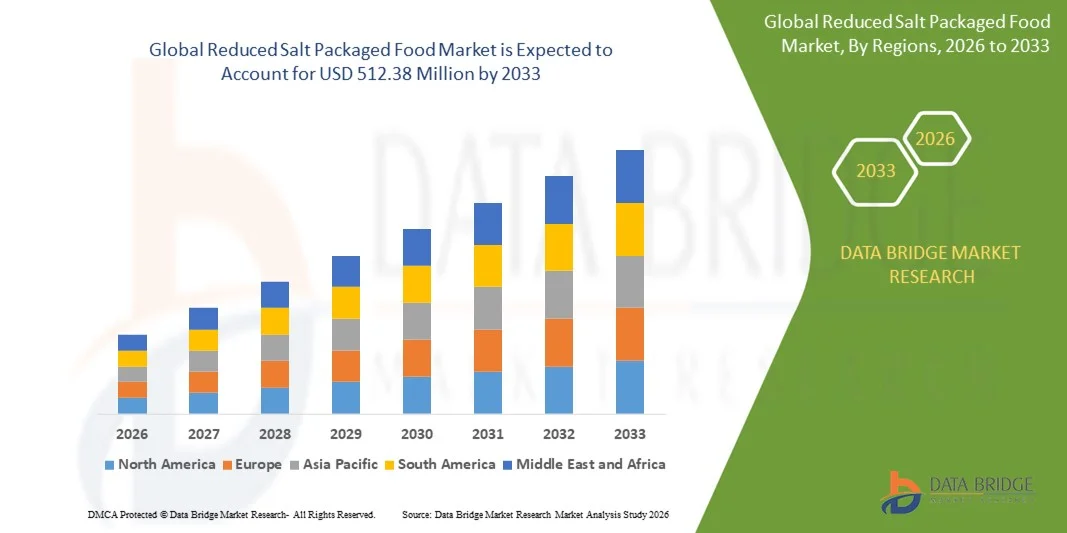
- As per Data Bridge Market Research Analysis the global Reduced Salt Packaged Food Market size was valued at USD 217.58 million in 2025 and is expected to reach USD 512.38 million by 2033, at a CAGR of 11.30% during the forecast period.
- The market growth is primarily driven by increasing health awareness among consumers and the rising prevalence of lifestyle-related diseases such as hypertension and cardiovascular disorders, prompting a shift towards low-sodium diets.
- Additionally, growing demand for convenient, nutritious, and ready-to-eat food products, coupled with innovations in flavor enhancement and salt substitutes, is encouraging manufacturers to expand their reduced salt product portfolios. These factors are collectively propelling the adoption of reduced salt packaged foods, thereby significantly boosting the industry’s growth.
Market Size & Forecast
Global Market Value (2025): USD 217.58 million
Expected Market Value (2033): USD 512.38 million
Forecast CAGR (2026–2033): 11.30%
What are the Major Takeaways of Reduced Salt Packaged Food Market?
- Reduced salt packaged foods, offering lower sodium alternatives across snacks, ready-to-eat meals, and processed products, are increasingly vital components of health-conscious diets in both residential and commercial settings due to their benefits in managing blood pressure, supporting cardiovascular health, and aligning with wellness trends.
- The escalating demand for reduced salt packaged foods is primarily fueled by growing health awareness among consumers, rising prevalence of lifestyle-related diseases, and a preference for convenient, nutritious, and ready-to-eat options.
- North America dominated the Global Reduced Salt Packaged Food Market with the largest revenue share of 35% in 2025, characterized by high health-conscious consumer adoption, widespread availability of low-sodium products, and a strong presence of key industry players, with the U.S. experiencing substantial growth in reduced salt product consumption, particularly in urban centers and grocery retail, driven by innovations from both established food brands and emerging health-focused startups.
- Asia-Pacific is expected to be the fastest-growing region in the Global Reduced Salt Packaged Food Market during the forecast period due to increasing urbanization, rising disposable incomes, and a growing inclination toward healthy eating habits.
- The Biscuits & Chips segment dominated the market with the largest revenue share of 38.6% in 2025, driven by strong consumer preference for convenient snack options and the rapid adoption of healthier, low-sodium alternatives.
Report Scope and Global Reduced Salt Packaged Food Market Segmentation
|
Attributes |
Reduced Salt Packaged Food Key Market Insights |
|
Segments Covered |
|
|
Countries Covered |
North America
Europe
Asia-Pacific
Middle East and Africa
South America
|
|
Key Market Players |
|
|
Market Opportunities |
|
|
Value Added Data Infosets |
In addition to the insights on market scenarios such as market value, growth rate, segmentation, geographical coverage, and major players, the market reports curated by the Data Bridge Market Research also include in-depth expert analysis, pricing analysis, brand share analysis, consumer survey, demography analysis, supply chain analysis, value chain analysis, raw material/consumables overview, vendor selection criteria, PESTLE Analysis, Porter Analysis, and regulatory framework. |
What is the Key Trend in the Reduced Salt Packaged Food Market?
Enhanced Convenience Through AI-Driven Nutrition and Personalization
- A significant and accelerating trend in the Global Reduced Salt Packaged Food Market is the deepening integration of artificial intelligence (AI) and digital health ecosystems, including nutrition-tracking apps, smart kitchen appliances, and personalized diet platforms. This fusion of technologies is greatly enhancing consumer convenience and supporting better dietary management.
- For instance, many leading brands now partner with AI-enabled meal-planning applications that recommend reduced-salt products based on user health profiles, daily sodium intake goals, and medical considerations such as hypertension. Similarly, smart kitchen devices—like connected ovens and meal-prep assistants—can suggest recipes using reduced-salt packaged foods for healthier cooking.
- AI integration in reduced-salt food solutions enables features such as analyzing consumer eating patterns to provide tailored nutritional suggestions, tracking sodium consumption in real time, and generating personalized health alerts when intake exceeds recommended levels. For example, some health-focused apps now scan barcodes of reduced-salt packaged foods and instantly evaluate sodium quality, offering smarter dietary guidance.
- The seamless integration of reduced-salt packaged products with digital wellness platforms and smart kitchen ecosystems facilitates centralized management of nutrition. Through a single interface, consumers can monitor sodium intake, receive recipe recommendations, and coordinate meal plans with other health goals such as weight control, heart health, and daily calorie limits.
- This trend toward more intelligent, intuitive, and interconnected dietary management systems is fundamentally reshaping consumer expectations for packaged food products. As a result, companies such as Nestlé and Unilever are developing AI-supported platforms that help consumers select reduced-salt alternatives and optimize their daily nutrition.
- The demand for reduced-salt packaged foods enhanced by AI-driven personalization and digital health compatibility is growing rapidly across both developed and emerging markets, as consumers increasingly prioritize convenience, proactive health management, and evidence-based dietary choices.
Global Reduced Salt Packaged Food Market Dynamics
Driver
Growing Need Due to Rising Health Concerns and Dietary Shifts
- The increasing prevalence of hypertension, cardiovascular diseases, and lifestyle-related disorders, combined with rising global awareness of sodium-related health risks, is a major driver of demand for reduced salt packaged foods.
- For instance, in 2025, several leading food manufacturers—including Nestlé and Unilever—announced new initiatives focused on reformulating product lines with lower sodium content through advanced food processing technologies and natural salt substitutes. Such strategies by key companies are expected to drive strong market expansion throughout the forecast period.
- As consumers become more conscious of the long-term health impacts of high sodium intake, reduced salt packaged foods provide a practical and accessible upgrade over conventional products, offering improved nutritional profiles without compromising convenience.
- Furthermore, the growing popularity of clean-label foods, health-oriented diets, and wellness-focused consumption habits is making reduced salt packaged foods an essential component of modern dietary preferences, with demand rising across retail, foodservice, and institutional sectors.
- The convenience of ready-to-eat and easy-to-prepare reduced-sodium meals, along with the availability of low-salt snacks, soups, sauces, and frozen foods, is propelling adoption in both developed and emerging regions. The rise of health-tracking apps and nutrition transparency tools further supports consumer awareness and encourages the shift toward reduced salt alternatives.
Restraint/Challenge
Concerns Regarding Taste, Formulation Costs, and Consumer Perception
- Challenges related to maintaining desirable taste and texture when reducing sodium content pose a significant barrier to wider adoption. Since salt contributes to flavor, preservation, and mouthfeel, its reduction can impact product appeal, making some consumers reluctant to switch from traditional versions.
- For instance, industry reports of consumer dissatisfaction with early low-salt formulations made some brands cautious about aggressive sodium reduction, slowing adoption in certain product categories.
- Addressing these concerns through innovative salt-reduction technologies—such as mineral-based substitutes, flavor enhancers, and microencapsulation methods—is crucial to strengthen consumer trust and ensure taste consistency. Companies like Kraft Heinz and General Mills are actively investing in R&D to improve low-sodium formulations and highlight enhanced flavor retention in marketing campaigns.
- Additionally, the relatively higher production cost of advanced salt-reduction technologies can elevate product pricing, limiting affordability for price-sensitive consumers, especially in emerging markets. While some brands have introduced cost-effective reduced salt products, premium options featuring clean-label ingredients or advanced formulation methods often carry higher price tags.
- Despite gradually declining costs, the perception that healthier, reduced-sodium products are more expensive can still hinder widespread adoption, particularly among consumers who do not immediately recognize the health benefits.
- Overcoming these challenges through improved taste innovation, greater consumer education on sodium-related health risks, and the development of affordable reduced salt alternatives will be essential for maintaining strong market growth.
How is the Reduced Salt Packaged Food Market Segmented?
The reduced salt packaged food market is segmented on the basis of type, and applications.
- By Type
On the basis of type, the Global Reduced Salt Packaged Food Market is segmented into Instant Food, Nuts, Biscuits & Chips, and Others. The Biscuits & Chips segment dominated the market with the largest revenue share of 38.6% in 2025, driven by strong consumer preference for convenient snack options and the rapid adoption of healthier, low-sodium alternatives. Leading brands are reformulating popular chips, crackers, and baked snacks using natural flavor enhancers and salt substitutes to maintain taste while significantly reducing sodium levels. Additionally, the popularity of on-the-go snacking and the growing penetration of reduced-salt products in retail shelves have strengthened the dominance of this segment.
The Instant Food segment is anticipated to witness the fastest CAGR from 2026 to 2033, fueled by rising demand for ready-to-eat and ready-to-cook meals among working professionals and urban consumers. Increasing awareness of sodium-related health risks is prompting manufacturers to launch low-sodium noodles, soups, and microwave meals, which is driving rapid segment expansion across both developed and emerging markets.
- By Application
On the basis of application, the Global Reduced Salt Packaged Food Market is segmented into Supermarkets, Retail Stores, Online Retail, and Others. The Supermarket segment accounted for the largest market revenue share of 46.3% in 2025, driven by the extensive availability of reduced-sodium product ranges, strong merchandising support, and dedicated health and wellness aisles. Supermarkets offer broad product visibility, allowing consumers to easily compare nutritional labels and select healthier, reduced-salt alternatives across snacks, sauces, instant foods, and canned goods. The segment also benefits from promotional campaigns, sampling programs, and the expansion of private-label reduced-salt offerings.
The Online Retail segment is expected to witness the fastest CAGR from 2026 to 2033, supported by the growing shift toward e-commerce grocery shopping and the increasing use of digital nutrition-tracking platforms. Online channels provide convenience, greater access to niche low-sodium brands, and detailed nutritional filters, making them a preferred choice for health-conscious consumers seeking reduced-salt packaged food options.
Which Region Holds the Largest Share of the Reduced Salt Packaged Food Market?
- North America dominated the Global Reduced Salt Packaged Food Market with the largest revenue share of 35% in 2025, driven by rising consumer awareness of sodium-related health risks and the strong adoption of healthier packaged food alternatives across the region.
- Consumers in North America increasingly prioritize low-sodium options due to growing concerns over hypertension, cardiovascular diseases, and overall dietary wellness. This shift is supported by clear nutrition labeling, widespread availability of reduced-salt products, and proactive health campaigns encouraging sodium reduction.
- The region’s leadership is further supported by high disposable incomes, strong penetration of premium and clean-label food products, and an expanding base of health-conscious consumers who actively seek nutritious, better-for-you packaged foods. Retailers and manufacturers continue to introduce innovative reduced-salt product lines, reinforcing North America’s position as a key market for both everyday consumption and specialized dietary needs.
U.S. Reduced Salt Packaged Food Market Insight
The U.S. reduced salt packaged food market captured the largest revenue share of 81% in 2025 within North America, driven by rising health consciousness and increasing awareness about the risks of high sodium intake. Consumers are actively shifting toward healthier alternatives as hypertension and cardiovascular diseases continue to affect large segments of the population. The growing popularity of clean-label, low-sodium snacks, ready meals, and pantry staples further supports market expansion. Additionally, strong retail networks, including major supermarket chains and online grocery platforms, are accelerating product visibility. Government-supported nutritional guidelines and sodium-reduction initiatives are also influencing manufacturers to reformulate products, further bolstering the market.
Europe Reduced Salt Packaged Food Market Insight
The Europe reduced salt packaged food market is projected to grow at a substantial CAGR throughout the forecast period, primarily driven by strict food labeling regulations and a growing push toward healthier dietary habits. Rising awareness of sodium-related health risks and increasing interest in preventive healthcare are fostering higher consumption of low-sodium packaged foods. European consumers favor clean-label, organic, and nutritionally improved products, accelerating reformulation efforts across snacks, soups, sauces, and bakery items. The region is experiencing strong adoption in residential consumption, foodservice, and institutional sectors. Additionally, ongoing public health campaigns urging sodium reduction are motivating both manufacturers and retailers to broaden reduced salt offerings.
U.K. Reduced Salt Packaged Food Market Insight
The U.K. reduced salt packaged food market is anticipated to grow at a noteworthy CAGR during the forecast period, driven by longstanding national initiatives aimed at reducing population-wide sodium intake. Increasing concerns about obesity, heart disease, and hypertension are encouraging consumers to choose reduced-salt alternatives across multiple food categories. The U.K.’s strong regulatory environment, combined with active participation from retailers and food manufacturers in sodium-reduction pledges, continues to boost market growth. Rising demand for convenient, healthier packaged foods and the growth of online grocery shopping further accelerate adoption among both households and foodservice operators.
Germany Reduced Salt Packaged Food Market Insight
The Germany reduced salt packaged food market is expected to expand at a considerable CAGR, supported by high consumer awareness surrounding nutritional quality and sustained preferences for natural, minimally processed food options. Germany’s strong emphasis on innovation and sustainability is prompting manufacturers to invest in advanced salt reduction technologies while maintaining product flavor and texture. The market is experiencing growing adoption across residential consumption, restaurants, and institutional catering. German consumers also place high value on transparency, clean-label formulations, and health-enhancing product attributes, supporting widespread acceptance of reduced salt packaged foods.
Asia-Pacific Reduced Salt Packaged Food Market Insight
The Asia-Pacific reduced salt packaged food market is poised to grow at the fastest CAGR of approximately 24% from 2026 to 2033, driven by rapid urbanization, rising disposable incomes, and the growing adoption of healthier eating habits. Countries such as China, Japan, India, South Korea, and Australia are witnessing increased demand for low-sodium snacks, instant meals, and ready-to-eat foods. Government-led health awareness programs and shifting consumer lifestyles toward convenient yet healthier foods are supporting overall market expansion. APAC’s strong manufacturing base also enables cost-effective production, improving the affordability and accessibility of reduced salt products across the region.
Japan Reduced Salt Packaged Food Market Insight
The Japan reduced salt packaged food market is gaining momentum due to the country’s health-conscious culture, aging population, and strong preference for nutritionally balanced foods. Japanese consumers place significant emphasis on heart health and long-term wellness, making reduced-sodium packaged foods increasingly popular. The integration of reduced-salt options into traditional and modern meal formats—such as soups, condiments, snacks, and bento meals—is driving market growth. Furthermore, technological advancements in flavor enhancement are helping manufacturers maintain taste while lowering sodium levels, supporting widespread adoption in both residential and commercial sectors.
China Reduced Salt Packaged Food Market Insight
The China reduced salt packaged food market accounted for the largest revenue share in Asia-Pacific in 2025, supported by an expanding middle class, rising health awareness, and strong government initiatives aimed at reducing national salt consumption. China is one of the largest consumers of packaged foods, and reduced-sodium variants are gaining rapid traction across snacks, seasonings, instant foods, and ready meals. Rapid urbanization, the popularity of e-commerce grocery platforms, and the presence of numerous domestic manufacturers offering affordable reduced-salt options are key factors driving market growth. Additionally, public health campaigns encouraging sodium reduction are further influencing consumer preferences.
Which are the Top Companies in Reduced Salt Packaged Food Market?
The Reduced Salt Packaged Food industry is primarily led by well-established companies, including:
- Nestlé S.A. (Switzerland)
- Unilever PLC (U.K.)
- PepsiCo, Inc. (U.S.)
- The Kraft Heinz Company (U.S.)
- General Mills, Inc. (U.S.)
- Kellogg Company (U.S.)
- Conagra Brands, Inc. (U.S.)
- Campbell Soup Company (U.S.)
- Mondelez International, Inc. (U.S.)
- Tyson Foods, Inc. (U.S.)
- Hormel Foods Corporation (U.S.)
- Danone S.A. (France)
- The Hain Celestial Group, Inc. (U.S.)
- Maple Leaf Foods Inc. (Canada)
- Ajinomoto Co., Inc. (Japan)
- Mars, Incorporated (U.S.)
- Smithfield Foods, Inc. (U.S.)
- The J.M. Smucker Company (U.S.)
- Barilla Group (Italy)
- Nestlé Purina (U.S.)
What are the Recent Developments in Reduced Salt Packaged Food Market?
- In April 2024, Nestlé S.A., a global leader in packaged foods, launched a strategic initiative in South Africa focused on expanding its portfolio of reduced-salt products across soups, seasonings, and ready-to-eat meals. This initiative underscores the company’s commitment to addressing rising health concerns related to high sodium intake by offering innovative, nutritionally improved food options tailored to the regional market. By leveraging its global R&D capabilities and adopting advanced salt-reduction technologies, Nestlé is not only supporting local health objectives but also reinforcing its position in the rapidly growing Global Reduced Salt Packaged Food Market.
- In March 2024, General Mills introduced a new line of reduced-salt snacks specifically formulated for school cafeterias and commercial foodservice environments. The reformulated products feature improved flavor retention using natural seasonings and mineral-based salt substitutes. This advancement highlights General Mills’ commitment to delivering healthier, regulated sodium options for institutions serving children and vulnerable populations, ensuring enhanced nutritional profiles without compromising taste or convenience.
- In March 2024, Unilever successfully partnered with the Bengaluru Smart Nutrition Initiative to promote lower-sodium packaged food choices across urban communities. The program integrates Unilever’s advanced food science technologies with public health campaigns aimed at reducing sodium consumption. This community-focused project underscores the increasing importance of nutrition-centric urban development and highlights the role of major food manufacturers in shaping healthier, more informed consumer behavior.
- In February 2024, Kraft Heinz announced a strategic collaboration with the Mid-Atlantic Retail Association to expand availability of reduced-salt packaged foods through a dedicated “Healthy Sodium Choice” retail marketplace across participating stores. This partnership is designed to improve accessibility, strengthen product visibility, and streamline consumer education on low-sodium alternatives, reinforcing Kraft Heinz’s commitment to innovation and nutritional improvement in the packaged food sector.
- In January 2024, PepsiCo unveiled its new reduced-salt snack range at the International Food & Beverage Expo (IFBE) 2024, featuring advanced flavor-enhancing technology that maintains taste while lowering sodium by up to 30%. This launch reflects the company’s dedication to integrating cutting-edge formulation innovations into popular snack categories, offering consumers greater convenience and healthier options without sacrificing flavor—further strengthening PepsiCo’s presence in the global reduced-salt packaged food market.

- Interactive Data Analysis Dashboard
- Company Analysis Dashboard for high growth potential opportunities
- Research Analyst Access for customization & queries
- Competitor Analysis with Interactive dashboard
- Latest News, Updates & Trend analysis
- Harness the Power of Benchmark Analysis for Comprehensive Competitor Tracking
Global Reduced Salt Packaged Food Market, Supply Chain Analysis and Ecosystem Framework
To support market growth and help clients navigate the impact of geopolitical shifts, DBMR has integrated in-depth supply chain analysis into its Global Reduced Salt Packaged Food Market research reports. This addition empowers clients to respond effectively to global changes affecting their industries. The supply chain analysis section includes detailed insights such as Global Reduced Salt Packaged Food Market consumption and production by country, price trend analysis, the impact of tariffs and geopolitical developments, and import and export trends by country and HSN code. It also highlights major suppliers with data on production capacity and company profiles, as well as key importers and exporters. In addition to research, DBMR offers specialized supply chain consulting services backed by over a decade of experience, providing solutions like supplier discovery, supplier risk assessment, price trend analysis, impact evaluation of inflation and trade route changes, and comprehensive market trend analysis.
Data collection and base year analysis are done using data collection modules with large sample sizes. The stage includes obtaining market information or related data through various sources and strategies. It includes examining and planning all the data acquired from the past in advance. It likewise envelops the examination of information inconsistencies seen across different information sources. The market data is analysed and estimated using market statistical and coherent models. Also, market share analysis and key trend analysis are the major success factors in the market report. To know more, please request an analyst call or drop down your inquiry.
The key research methodology used by DBMR research team is data triangulation which involves data mining, analysis of the impact of data variables on the market and primary (industry expert) validation. Data models include Vendor Positioning Grid, Market Time Line Analysis, Market Overview and Guide, Company Positioning Grid, Patent Analysis, Pricing Analysis, Company Market Share Analysis, Standards of Measurement, Global versus Regional and Vendor Share Analysis. To know more about the research methodology, drop in an inquiry to speak to our industry experts.
Data Bridge Market Research is a leader in advanced formative research. We take pride in servicing our existing and new customers with data and analysis that match and suits their goal. The report can be customized to include price trend analysis of target brands understanding the market for additional countries (ask for the list of countries), clinical trial results data, literature review, refurbished market and product base analysis. Market analysis of target competitors can be analyzed from technology-based analysis to market portfolio strategies. We can add as many competitors that you require data about in the format and data style you are looking for. Our team of analysts can also provide you data in crude raw excel files pivot tables (Fact book) or can assist you in creating presentations from the data sets available in the report.













