


Regenerative Cell Therapy Drug Market Size
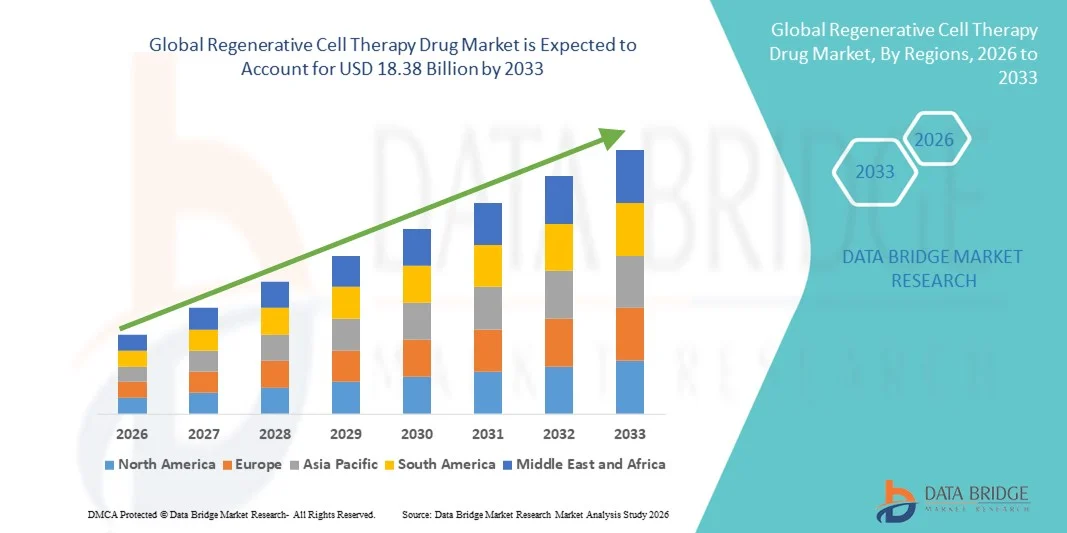
- The global regenerative cell therapy drug market size was valued at USD 6.18 billion in 2025 and is expected to reach USD 18.38 billion by 2033, at a CAGR of % during the forecast period
- The market growth is largely driven by increasing advancements in regenerative medicine, rising clinical research activities, and growing adoption of cell-based therapies for the treatment of chronic and degenerative diseases
- Furthermore, the expanding pipeline of stem cell therapies, supportive regulatory initiatives, and rising demand for innovative treatment options that can repair or regenerate damaged tissues are establishing regenerative cell therapy drugs as a transformative approach in modern medicine. These converging factors are accelerating the development and commercialization of regenerative cell therapies, thereby significantly boosting the industry's growth
Regenerative Cell Therapy Drug Market Analysis
- Regenerative cell therapy drugs, designed to repair, replace, or regenerate damaged tissues and cells, are becoming increasingly important in modern medicine across therapeutic areas such as oncology, cardiovascular diseases, neurological disorders, and orthopedics due to their potential to restore biological function and address underlying disease mechanisms rather than only treating symptoms
- The escalating demand for regenerative cell therapy drugs is primarily fueled by the rising prevalence of chronic and degenerative diseases, increasing investments in regenerative medicine research, and growing clinical adoption of advanced cell-based therapies for personalized and targeted treatment approaches
- North America dominated the regenerative cell therapy drug market with the largest revenue share of 41.6% in 2025, characterized by strong biotechnology infrastructure, significant funding for regenerative medicine research, and the presence of major biopharmaceutical companies, with the U.S. witnessing substantial growth in clinical trials and regulatory approvals of novel regenerative therapies supported by favorable regulatory pathways and advanced healthcare systems
- Asia-Pacific is expected to be the fastest growing region in the regenerative cell therapy drug market during the forecast period due to expanding biotechnology industries, increasing healthcare investments, and rising research initiatives in countries such as China, Japan, and South Korea focusing on stem cell and regenerative medicine innovation
- Stem Cell Therapy segment dominated the regenerative cell therapy drug market with a market share of 46.8% in 2025, driven by its extensive therapeutic potential, increasing clinical research activities, and its growing application in treating degenerative diseases, tissue injuries, and various chronic conditions
Report Scope and Regenerative Cell Therapy Drug Market Segmentation
|
Attributes |
Regenerative Cell Therapy Drug Key Market Insights |
|
Segments Covered |
|
|
Countries Covered |
North America
Europe
Asia-Pacific
Middle East and Africa
South America
|
|
Key Market Players |
|
|
Market Opportunities |
|
|
Value Added Data Infosets |
In addition to the insights on market scenarios such as market value, growth rate, segmentation, geographical coverage, and major players, the market reports curated by the Data Bridge Market Research also include in-depth expert analysis, patient epidemiology, pipeline analysis, pricing analysis, and regulatory framework |
Regenerative Cell Therapy Drug Market Trends
Advancements in Stem Cell and Gene-Modified Regenerative Therapies
- A significant and accelerating trend in the global regenerative cell therapy drug market is the rapid advancement of stem cell technologies and gene-modified cell therapies designed to repair, replace, or regenerate damaged tissues and organs. This convergence of regenerative biology and biotechnology is significantly enhancing treatment potential for complex and chronic diseases
- For instance, therapies such as Kymriah developed by Novartis AG and Yescarta developed by Gilead Sciences demonstrate the growing adoption of advanced cell-based therapies in oncology and regenerative medicine, offering targeted approaches for previously difficult-to-treat conditions
- Innovations in regenerative cell therapy drugs are enabling features such as improved cell engineering techniques, enhanced therapeutic efficacy, and the development of induced pluripotent stem cell (iPSC) platforms capable of generating specialized cell types for targeted disease treatment. Furthermore, advances in gene editing and cell expansion technologies are improving the scalability and clinical effectiveness of regenerative therapies
- The increasing integration of advanced biotechnology tools with regenerative medicine platforms facilitates the development of personalized therapeutic solutions tailored to patient-specific biological conditions. Through improved clinical research frameworks and manufacturing processes, companies can deliver highly specialized regenerative treatments aimed at restoring damaged tissues and organ function
- This trend toward more advanced, targeted, and regenerative therapeutic approaches is fundamentally transforming treatment strategies for chronic and degenerative diseases. Consequently, companies such as Mesoblast Limited are developing stem cell-based therapies focused on conditions including inflammatory diseases and cardiovascular disorders, accelerating innovation across regenerative medicine
- The demand for regenerative cell therapy drugs that provide long-term therapeutic benefits and tissue repair capabilities is growing rapidly across healthcare systems worldwide, as clinicians and patients increasingly prioritize disease-modifying and restorative treatment solutions
- Increasing collaborations between pharmaceutical companies, academic institutions, and biotechnology firms are supporting innovation in regenerative medicine, enabling large-scale clinical trials and strengthening the commercialization potential of regenerative cell therapy drug
Regenerative Cell Therapy Drug Market Dynamics
Driver
Rising Prevalence of Chronic Diseases and Expanding Regenerative Medicine Research
- The increasing prevalence of chronic and degenerative diseases worldwide, coupled with expanding investments in regenerative medicine research, is a significant driver for the heightened demand for regenerative cell therapy drugs
- For instance, in June 2023, Vertex Pharmaceuticals Incorporated reported encouraging clinical progress for VX-880, a stem cell-derived therapy being developed for type 1 diabetes, highlighting the growing role of regenerative cell therapies in addressing complex diseases and supporting industry growth in the forecast period
- As healthcare systems face increasing burdens from conditions such as cancer, cardiovascular diseases, neurological disorders, and musculoskeletal degeneration, regenerative cell therapies offer promising solutions by targeting underlying tissue damage and restoring cellular function
- Furthermore, the growing focus on precision medicine and biologically engineered therapeutics is making regenerative cell therapies an integral component of next-generation healthcare strategies, supported by strong academic research collaboration and biopharmaceutical innovation
- The increasing number of clinical trials, regulatory approvals, and investments in cell therapy manufacturing infrastructure are key factors propelling the development and commercialization of regenerative cell therapy drugs across global healthcare markets. The growing collaboration between biotechnology companies, research institutions, and healthcare providers further contributes to market growth
- Government initiatives and public funding programs supporting regenerative medicine research are also accelerating innovation and encouraging the development of advanced therapeutic solutions across multiple disease indications
- Rising awareness among healthcare professionals and patients regarding the long-term therapeutic benefits of regenerative treatments is further supporting the adoption of cell-based therapies in clinical practice
Restraint/Challenge
High Treatment Costs and Complex Regulatory Approval Processes
- Concerns surrounding the high cost of regenerative cell therapy treatments and the complexity of regulatory approval pathways pose significant challenges to broader market adoption. As these therapies involve advanced biological processes, specialized manufacturing facilities, and stringent clinical validation, development costs remain substantially high
- For instance, some approved regenerative cell therapies such as Zolgensma developed by Novartis AG are among the most expensive treatments globally, which has raised concerns among healthcare providers and payers regarding affordability and reimbursement policies
- Addressing these cost and regulatory challenges requires continuous innovation in cell manufacturing technologies, improved supply chain processes, and clearer regulatory frameworks to ensure the safety and efficacy of regenerative therapies. Companies such as Bluebird bio and CRISPR Therapeutics emphasize advanced gene-editing platforms and scalable production models to improve treatment accessibility
- In addition, the complexity associated with cell sourcing, processing, storage, and distribution can create logistical challenges for healthcare providers implementing regenerative cell therapies in routine clinical practice. While research institutions and biotechnology firms are working to streamline these processes, operational barriers still exist
- While technological progress and regulatory support are gradually improving the commercialization landscape, the perceived high cost and lengthy approval timelines can still hinder widespread adoption, particularly in developing healthcare markets
- Limited reimbursement coverage for certain regenerative therapies in many healthcare systems can restrict patient access and slow the adoption of innovative cell-based treatments
- Overcoming these challenges through improved manufacturing efficiency, supportive reimbursement frameworks, and collaborative regulatory initiatives will be vital for sustaining long-term growth in the regenerative cell therapy drug market
Regenerative Cell Therapy Drug Market Scope
The market is segmented on the basis of therapy type, cell type, application, and end user.
- By Therapy Type
On the basis of therapy type, the regenerative cell therapy drug market is segmented into stem cell therapy, gene-modified cell therapy, cell-based immunotherapy, tissue-engineered cell therapy, and others. The stem cell therapy segment dominated the market with the largest market revenue share of 46.8% in 2025, driven by its extensive clinical research activities and strong therapeutic potential in treating degenerative and chronic diseases. Stem cells possess the unique ability to differentiate into specialized cell types, enabling tissue repair and regeneration across multiple therapeutic areas. These therapies are increasingly used in the treatment of musculoskeletal disorders, neurological conditions, and cardiovascular diseases. In addition, strong investment from biotechnology companies and research institutions is accelerating the development of stem cell-based products. The growing number of clinical trials and regulatory approvals further strengthens the dominance of this segment in the regenerative medicine landscape.
The gene-modified cell therapy segment is anticipated to witness the fastest growth rate from 2026 to 2033, fueled by rapid advancements in gene editing technologies and personalized medicine approaches. Gene-modified therapies involve altering the genetic structure of cells to enhance their therapeutic effectiveness against complex diseases. These therapies have shown significant success in oncology, particularly through engineered immune cells designed to target cancer cells. Increasing collaborations between biotechnology firms and pharmaceutical companies are driving innovation in this segment. Furthermore, improvements in gene-editing tools such as CRISPR-based technologies are enabling more precise and efficient treatment development. As a result, gene-modified cell therapies are gaining significant momentum in next-generation regenerative medicine.
- By Cell Type
On the basis of cell type, the regenerative cell therapy drug market is segmented into adult stem cells, embryonic stem cells, induced pluripotent stem cells, immune cells, fibroblasts, and chondrocytes. The adult stem cells segment dominated the market with the largest market revenue share in 2025, primarily due to their wide clinical use and relatively fewer ethical concerns compared with embryonic stem cells. Adult stem cells are widely applied in regenerative treatments for orthopedic conditions, cardiovascular diseases, and tissue repair therapies. Their accessibility from sources such as bone marrow and adipose tissue supports their practical clinical use. In addition, adult stem cells demonstrate strong safety profiles in various therapeutic applications. Growing research in stem cell transplantation and regenerative medicine further strengthens this segment’s market leadership. The increasing number of approved therapies based on adult stem cells is also contributing to its continued dominance.
The induced pluripotent stem cells (iPSCs) segment is expected to witness the fastest CAGR from 2026 to 2033, driven by their ability to generate patient-specific cells for regenerative treatments and disease modeling. iPSCs are created by reprogramming adult cells into a pluripotent state, allowing them to differentiate into multiple specialized cell types. This technology offers significant advantages in personalized medicine and reduces the risk of immune rejection. In addition, iPSC platforms are widely used in drug discovery and regenerative therapy research. Pharmaceutical companies and biotechnology firms are increasingly investing in iPSC-based therapeutic development. As technological advancements continue to improve their safety and scalability, the adoption of iPSC-based therapies is expected to expand rapidly.
- By Application
On the basis of application, the regenerative cell therapy drug market is segmented into oncology, musculoskeletal & orthopedic disorders, cardiovascular diseases, neurological disorders, dermatology & wound healing, ophthalmology, gastrointestinal disorders, and others. The oncology segment dominated the market with the largest market revenue share in 2025, driven by the increasing use of advanced cell therapies for cancer treatment. Cell-based immunotherapies and engineered immune cells have shown promising outcomes in targeting specific cancer cells. The rising global burden of cancer and the limitations of conventional therapies are encouraging the adoption of regenerative cell-based treatments. In addition, strong clinical research investments and regulatory approvals are supporting the expansion of cell therapies in oncology. Pharmaceutical companies are focusing heavily on developing innovative cancer treatments using engineered cells. These factors collectively contribute to the dominant position of the oncology segment in the regenerative cell therapy drug market.
The neurological disorders segment is anticipated to witness the fastest growth rate from 2026 to 2033, fueled by increasing research aimed at treating neurodegenerative diseases such as Parkinson’s disease, Alzheimer’s disease, and spinal cord injuries. Regenerative cell therapies have shown significant potential in restoring damaged neural tissues and improving neurological functions. Rising healthcare investments in neuroscience research are accelerating the development of novel regenerative therapies for neurological conditions. In addition, advances in stem cell technologies are enabling new treatment strategies for previously untreatable disorders. Growing clinical trials and research collaborations are further supporting this segment’s rapid expansion. As neurological diseases continue to rise globally, demand for regenerative treatment options is expected to increase significantly.
- By End User
On the basis of end user, the regenerative cell therapy drug market is segmented into hospitals & clinics, regenerative medicine centers, research & academic institutes, and biotechnology & pharmaceutical companies. The hospitals & clinics segment dominated the market with the largest market revenue share in 2025, primarily due to their role as the primary centers for administering regenerative cell therapies. Hospitals possess the advanced medical infrastructure and specialized healthcare professionals required to deliver complex cell-based treatments. In addition, the growing integration of regenerative medicine within clinical treatment protocols is driving demand within hospital settings. Increasing patient awareness and the availability of specialized treatment programs are further supporting the growth of this segment. Hospitals also collaborate with biotechnology companies and research institutes to implement new regenerative therapies. These factors contribute significantly to the dominant position of hospitals and clinics in the market.
The regenerative medicine centers segment is anticipated to witness the fastest growth rate from 2026 to 2033, driven by the increasing establishment of specialized treatment facilities focused on regenerative therapies. These centers offer advanced therapeutic services dedicated to stem cell therapy and tissue regeneration treatments. Rising patient demand for innovative and minimally invasive regenerative treatments is encouraging the expansion of such facilities globally. In addition, many regenerative medicine centers collaborate with research institutions to conduct clinical studies and develop new therapies. The growing commercialization of regenerative treatments is also supporting the establishment of dedicated therapy centers. As a result, regenerative medicine centers are expected to play an increasingly important role in the delivery of advanced regenerative cell therapy drugs.
Regenerative Cell Therapy Drug Market Regional Analysis
- North America dominated the regenerative cell therapy drug market with the largest revenue share of 41.6% in 2025, characterized by strong biotechnology infrastructure, significant funding for regenerative medicine research, and the presence of major biopharmaceutical companies
- Healthcare providers and patients in the region strongly value the therapeutic potential, precision treatment capabilities, and long-term regenerative benefits offered by cell therapy drugs for conditions such as cancer, neurological disorders, and cardiovascular diseases
- This widespread adoption is further supported by strong biotechnology infrastructure, favorable regulatory frameworks for advanced therapies, and the presence of major biopharmaceutical companies, establishing regenerative cell therapy drugs as an emerging and transformative treatment approach across North American healthcare systems
U.S. Regenerative Cell Therapy Drug Market Insight
The U.S. regenerative cell therapy drug market captured the largest revenue share of 79% in 2025 within North America, fueled by strong biotechnology innovation and increasing clinical adoption of advanced cell-based therapies. Healthcare providers are increasingly prioritizing regenerative treatments that can address the underlying causes of chronic and degenerative diseases. The growing number of clinical trials and regulatory approvals for advanced therapies further supports market expansion. Moreover, significant investments from biotechnology and pharmaceutical companies, along with supportive regulatory frameworks for advanced therapeutics, are significantly contributing to the market’s growth across the country.
Europe Regenerative Cell Therapy Drug Market Insight
The Europe regenerative cell therapy drug market is projected to expand at a substantial CAGR throughout the forecast period, primarily driven by strong research activities in regenerative medicine and supportive regulatory initiatives for advanced therapies. The increasing burden of chronic diseases, coupled with rising investments in biotechnology research, is fostering the adoption of regenerative cell therapy drugs. European healthcare systems are also focusing on innovative treatment approaches that can improve long-term patient outcomes. The region is experiencing steady growth across oncology, neurological disorders, and orthopedic treatment applications, with regenerative therapies being incorporated into advanced clinical treatment programs and research initiatives.
U.K. Regenerative Cell Therapy Drug Market Insight
The U.K. regenerative cell therapy drug market is anticipated to grow at a noteworthy CAGR during the forecast period, driven by increasing investment in biomedical research and a strong focus on innovative therapeutic development. In addition, the rising prevalence of chronic diseases is encouraging healthcare providers to adopt advanced regenerative treatments. The UK’s well-established biotechnology sector, along with strong collaboration between academic institutions and pharmaceutical companies, is expected to stimulate market growth. Continuous government support for regenerative medicine research and clinical trials further strengthens the development and commercialization of regenerative therapies in the country.
Germany Regenerative Cell Therapy Drug Market Insight
The Germany regenerative cell therapy drug market is expected to expand at a considerable CAGR during the forecast period, fueled by growing research initiatives in biotechnology and the demand for advanced therapeutic solutions for chronic diseases. Germany’s well-developed healthcare infrastructure, combined with its strong focus on medical innovation and pharmaceutical research, supports the adoption of regenerative cell therapies. The integration of advanced cell-based treatments into specialized clinical programs is also becoming increasingly prevalent. Furthermore, Germany’s strong biotechnology industry and research funding programs are encouraging the development of next-generation regenerative medicine solutions.
Asia-Pacific Regenerative Cell Therapy Drug Market Insight
The Asia-Pacific regenerative cell therapy drug market is poised to grow at the fastest CAGR during the forecast period of 2026 to 2033, driven by expanding biotechnology industries, increasing healthcare investments, and rising research activities in countries such as China, Japan, and India. The region’s growing demand for innovative medical treatments, supported by government initiatives promoting biotechnology development, is driving the adoption of regenerative cell therapy drugs. Furthermore, as Asia-Pacific continues to strengthen its clinical research capabilities and manufacturing infrastructure, the accessibility and commercialization of regenerative therapies are expanding across a wider patient population.
Japan Regenerative Cell Therapy Drug Market Insight
The Japan regenerative cell therapy drug market is gaining momentum due to the country’s strong focus on regenerative medicine research and advanced biotechnology innovation. The Japanese healthcare system places significant emphasis on developing novel therapeutic approaches for complex diseases. The adoption of regenerative cell therapies is driven by increasing research on stem cells and induced pluripotent stem cell technologies. Moreover, Japan’s supportive regulatory environment for regenerative medicine products and strong collaboration between research institutions and biotechnology companies are accelerating market growth across multiple therapeutic areas.
India Regenerative Cell Therapy Drug Market Insight
The India regenerative cell therapy drug market accounted for a significant market revenue share in Asia-Pacific in 2025, attributed to the country’s expanding biotechnology sector, rising healthcare investments, and growing research initiatives in regenerative medicine. India is emerging as a key hub for clinical research and biopharmaceutical development, with increasing interest in advanced therapeutic solutions. The rising prevalence of chronic diseases and growing awareness of innovative treatment options are encouraging the adoption of regenerative cell therapies. In addition, government initiatives supporting biotechnology innovation and the expansion of specialized research centers are key factors propelling the market in India.
Regenerative Cell Therapy Drug Market Share
The Regenerative Cell Therapy Drug industry is primarily led by well-established companies, including:
- Novartis AG (Switzerland)
- Gilead Sciences, Inc. (U.S.)
- Bristol Myers Squibb Company (U.S.)
- bluebird bio, Inc. (U.S.)
- Mesoblast Limited (Australia)
- Vericel Corporation (U.S.)
- Lineage Cell Therapeutics, Inc. (U.S.)
- Fate Therapeutics, Inc. (U.S.)
- Sangamo Therapeutics, Inc. (U.S.)
- Cynata Therapeutics Limited (Australia)
- Gamida Cell Ltd. (Israel)
- BrainStorm Cell Therapeutics Inc. (U.S.)
- Pluri Inc. (Israel)
- Astellas Pharma Inc. (Japan)
- Vertex Pharmaceuticals Incorporated (U.S.)
- Organogenesis Holdings Inc. (U.S.)
- Smith & Nephew (U.K.)
- Medtronic (Ireland)
- Athersys, Inc. (U.S.)
What are the Recent Developments in Global Regenerative Cell Therapy Drug Market?
- In December 2025, Bristol Myers Squibb announced that the U.S. FDA approved the CAR-T cell therapy Breyanzi (lisocabtagene maraleucel) as the first CAR-T treatment for adults with relapsed or refractory marginal zone lymphoma. The therapy genetically engineers a patient’s own immune cells to identify and destroy cancer cells, offering a new treatment option for patients who have failed previous therapies
- In September 2025, researchers at Mayo Clinic reported a breakthrough development in CAR-T cell therapy targeting the PD-L1 protein to treat solid tumors. The experimental therapy is designed to attack both tumor cells and immunosuppressive cells in the tumor microenvironment, addressing one of the key challenges in applying CAR-T therapy to solid cancers. Early findings demonstrated promising therapeutic potential in improving immune cell penetration into tumors
- In March 2025, AstraZeneca announced plans to acquire biotechnology firm EsoBiotec for up to USD 1 billion to expand its cell therapy capabilities. The acquisition focuses on innovative technology that can genetically modify immune cells directly within the patient’s body, potentially reducing treatment preparation time from weeks to minutes. This development aims to accelerate the advancement of next-generation cell therapies for cancer and autoimmune diseases
- In February 2025, the National Cancer Institute highlighted ongoing clinical research demonstrating long-term benefits of CAR-T cell therapies such as Yescarta in treating aggressive blood cancers. Clinical trials showed that a significant proportion of patients treated with CAR-T therapies remained cancer-free several years after treatment. These results reinforce the potential of regenerative cell therapies to deliver durable remission in patients with otherwise difficult-to-treat cancers
- In March 2021, the U.S. FDA approved the CAR-T cell therapy Abecma (idecabtagene vicleucel), developed by Bristol Myers Squibb and 2seventy bio, for the treatment of relapsed or refractory multiple myeloma. The therapy works by engineering a patient’s T cells to target the B-cell maturation antigen (BCMA) present on cancer cells. This approval marked one of the first BCMA-targeting CAR-T therapies for multiple myeloma and significantly expanded the role of regenerative cell therapies in hematologic cancer treatment

- Interactive Data Analysis Dashboard
- Company Analysis Dashboard for high growth potential opportunities
- Research Analyst Access for customization & queries
- Competitor Analysis with Interactive dashboard
- Latest News, Updates & Trend analysis
- Harness the Power of Benchmark Analysis for Comprehensive Competitor Tracking
Data collection and base year analysis are done using data collection modules with large sample sizes. The stage includes obtaining market information or related data through various sources and strategies. It includes examining and planning all the data acquired from the past in advance. It likewise envelops the examination of information inconsistencies seen across different information sources. The market data is analysed and estimated using market statistical and coherent models. Also, market share analysis and key trend analysis are the major success factors in the market report. To know more, please request an analyst call or drop down your inquiry.
The key research methodology used by DBMR research team is data triangulation which involves data mining, analysis of the impact of data variables on the market and primary (industry expert) validation. Data models include Vendor Positioning Grid, Market Time Line Analysis, Market Overview and Guide, Company Positioning Grid, Patent Analysis, Pricing Analysis, Company Market Share Analysis, Standards of Measurement, Global versus Regional and Vendor Share Analysis. To know more about the research methodology, drop in an inquiry to speak to our industry experts.
Data Bridge Market Research is a leader in advanced formative research. We take pride in servicing our existing and new customers with data and analysis that match and suits their goal. The report can be customized to include price trend analysis of target brands understanding the market for additional countries (ask for the list of countries), clinical trial results data, literature review, refurbished market and product base analysis. Market analysis of target competitors can be analyzed from technology-based analysis to market portfolio strategies. We can add as many competitors that you require data about in the format and data style you are looking for. Our team of analysts can also provide you data in crude raw excel files pivot tables (Fact book) or can assist you in creating presentations from the data sets available in the report.












