


Regenerative Gene Therapy for Metabolic Disorders Market Size
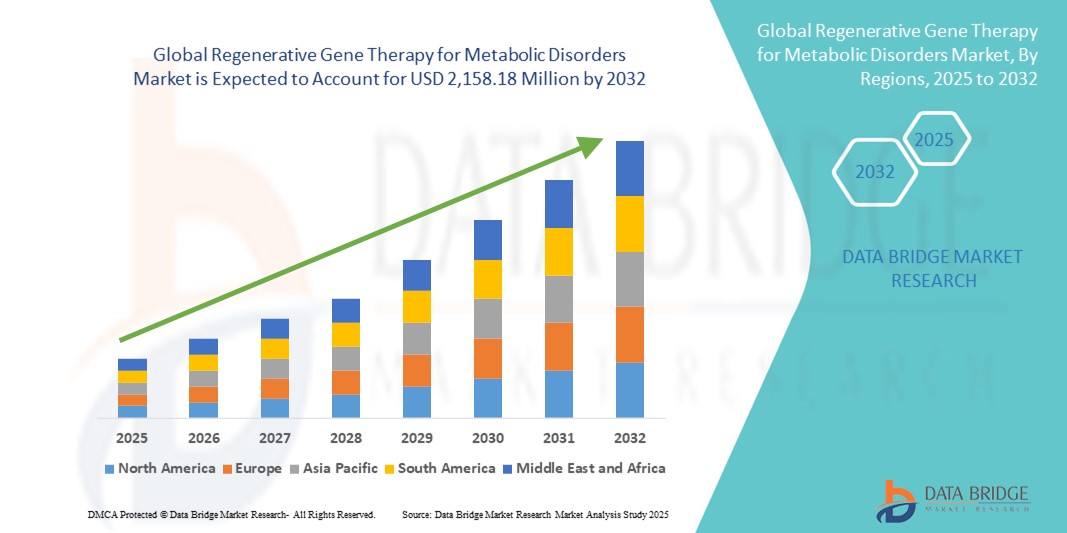
- The global regenerative gene therapy for metabolic disorders market size was valued at USD 594.0 million in 2024 and is expected to reach USD 2,158.18 million by 2032, at a CAGR of 17.50% during the forecast period
- The market growth is largely fueled by increasing advancements in genetic engineering and biotechnological innovations, leading to enhanced therapeutic options for metabolic disorders. Growing awareness and acceptance of gene therapy as a viable treatment method in both clinical and research settings are driving this digital transformation in healthcare
- Furthermore, rising patient demand for effective, personalized, and long-lasting treatment solutions for metabolic disorders is positioning regenerative gene therapy as a preferred therapeutic approach. These converging factors are accelerating the adoption of regenerative gene therapy solutions, thereby significantly boosting the growth of the metabolic disorders treatment market
Regenerative Gene Therapy for Metabolic Disorders Market Analysis
- Regenerative gene therapy for metabolic disorders is rapidly emerging as a transformative approach in precision medicine, offering potential cures by targeting the genetic root causes of metabolic diseases through advanced therapeutic techniques such as gene addition, editing, and silencing
- The market growth is primarily driven by increasing prevalence of inherited metabolic disorders, growing investments in gene therapy research, and rising adoption of personalized treatment approaches enabled by advancements in biotechnology and genomics
- North America dominated the regenerative gene therapy for metabolic disorders market with the largest revenue share of 42.3% in 2024, supported by well-established healthcare infrastructure, high R&D spending, favorable regulatory frameworks, and presence of leading biotech companies pioneering innovative gene therapies. The U.S. remains the largest contributor to this growth, with accelerating clinical trials and approvals for novel gene therapies targeting rare metabolic conditions
- Asia-Pacific is expected to be the fastest growing region in the regenerative gene therapy for metabolic disorders market during the forecast period, registering a CAGR of 24.1% from 2025 to 2032, driven by increasing healthcare investments, expanding patient pool, growing awareness of gene therapy benefits, and improving regulatory support in countries such as China, Japan, and India
- The viral vectors segment dominated the regenerative gene therapy for metabolic disorders market with a revenue share of 52.4% in 2024, driven by their high efficiency in delivering therapeutic genes and a well-established track record in clinical applications
Report Scope and Regenerative Gene Therapy for Metabolic Disorders Market Segmentation
|
Attributes |
Regenerative Gene Therapy for Metabolic Disorders Key Market Insights |
|
Segments Covered |
|
|
Countries Covered |
North America
Europe
Asia-Pacific
Middle East and Africa
South America
|
|
Key Market Players |
|
|
Market Opportunities |
|
|
Value Added Data Infosets |
In addition to the insights on market scenarios such as market value, growth rate, segmentation, geographical coverage, and major players, the market reports curated by the Data Bridge Market Research also include in-depth expert analysis, pricing analysis, brand share analysis, consumer survey, demography analysis, supply chain analysis, value chain analysis, raw material/consumables overview, vendor selection criteria, PESTLE Analysis, Porter Analysis, and regulatory framework. |
Regenerative Gene Therapy for Metabolic Disorders Market Trends
Advancements in Targeted Therapies and Growing Patient Awareness
- A key driver in the global regenerative gene therapy for metabolic disorders market is the rapid progress in gene editing and gene addition techniques that offer targeted, potentially curative treatments for previously untreatable metabolic diseases. Innovations in vector design and delivery methods are improving the safety and efficacy profiles of these therapies, expanding their clinical applicability
- Increasing patient awareness and education about the benefits of regenerative gene therapies are encouraging higher adoption rates globally. Efforts by healthcare providers and advocacy groups to promote early diagnosis and treatment of metabolic disorders are contributing significantly to market expansion
- Companies are investing heavily in clinical trials to develop therapies addressing a wide range of metabolic disorders such as lysosomal storage diseases, mitochondrial disorders, and glycogen storage diseases. Successful approvals and regulatory support in major markets such as the U.S., Europe, and Asia-Pacific are accelerating the introduction of novel gene therapies
- Growing healthcare infrastructure and rising government funding in emerging markets are enabling broader access to regenerative gene therapies. This is particularly evident in the Asia-Pacific region, which is projected to exhibit the fastest CAGR over the forecast period due to increasing diagnosis rates and expanding healthcare capabilities
- The market is also witnessing strategic collaborations between biotech firms, research institutes, and pharmaceutical companies to accelerate R&D and commercialization of gene therapies targeting metabolic disorders, reflecting the growing importance of this therapeutic segment in personalized medicine
Regenerative Gene Therapy for Metabolic Disorders Market Dynamics
Driver
Rising Demand Due to Increasing Prevalence of Metabolic Disorders and Advances in Gene Therapy
- The growing global incidence of inherited metabolic disorders such as lysosomal storage diseases, mitochondrial disorders, and glycogen storage diseases is significantly driving the demand for regenerative gene therapies. These disorders often lack effective conventional treatments, positioning gene therapy as a revolutionary option that can directly target the underlying genetic defects, offering potential long-term cures rather than symptomatic relief
- Breakthrough advancements in gene therapy technologies—including enhanced viral and non-viral delivery vectors, precise gene editing tools such as CRISPR, and improvements in safety profiles—are increasing the feasibility and appeal of these therapies among clinicians and patients alike. These innovations are helping overcome previous limitations related to treatment durability and off-target effects
- Heightened awareness among healthcare professionals, patient advocacy groups, and affected individuals is facilitating earlier diagnosis and timely intervention, which is critical for the successful application of gene therapies. Educational initiatives and growing availability of genetic screening programs further support this trend
- Significant investments from pharmaceutical and biotechnology companies in research and development have expanded the therapeutic pipeline, leading to a surge in clinical trials targeting a broad spectrum of metabolic disorders. This influx of promising candidates underscores the market’s dynamic growth potential
- Regulatory agencies in key markets such as North America and Europe have introduced accelerated approval pathways and orphan drug designations for gene therapies targeting rare diseases, expediting market entry and enhancing patient access. This favorable regulatory environment continues to attract robust industry interest and funding
Restraint/Challenge
High Costs, Regulatory Complexities, and Limited Accessibility Impede Market Penetration
- Despite its transformative potential, regenerative gene therapy remains associated with exceptionally high treatment costs, driven by complex manufacturing processes, personalized dosing regimens, and extensive post-treatment monitoring requirements. This pricing restricts accessibility, particularly in low- and middle-income countries where healthcare infrastructure and insurance coverage are limited
- The regulatory landscape governing gene therapies is often intricate and varies significantly across regions. Lengthy approval processes, stringent safety evaluations, and evolving guidelines can delay the introduction of novel therapies to the market, affecting patients’ timely access to these life-changing treatments
- Awareness gaps and limited healthcare infrastructure in underserved regions pose considerable barriers to diagnosis and treatment adoption, resulting in unequal access to regenerative gene therapies. The lack of trained specialists and genetic testing facilities exacerbates these challenges
- Long-term clinical data regarding the safety, durability, and potential adverse effects of gene therapies remain limited for many products, which may lead to cautious adoption by physicians, payers, and patients until more comprehensive evidence is available
- To overcome these obstacles, stakeholders must prioritize efforts to reduce manufacturing costs through technological innovations, implement supportive reimbursement policies, enhance global regulatory harmonization, and expand educational outreach. These measures are essential to ensure broader patient access and sustainable growth of the regenerative gene therapy market
Regenerative Gene Therapy for Metabolic Disorders Market Scope
The market is segmented on the basis of therapy type, delivery method, target metabolic disorder, and application.
- By Therapy Type
On the basis of therapy type, the regenerative gene therapy for metabolic disorders market is segmented into gene addition therapy, gene editing therapy, gene silencing therapy, and others. The gene addition therapy segment held the largest market revenue share of 45.6% in 2024, primarily due to its well-established role in supplementing defective or missing genes responsible for various metabolic dysfunctions. This therapy type has gained significant clinical acceptance, driven by successful outcomes in treating conditions such as lysosomal storage disorders and other inherited metabolic diseases.
On the other hand, the gene editing therapy segment is forecasted to witness the fastest growth, registering a robust CAGR of 22.3% from 2025 to 2032. This rapid expansion is largely attributed to technological breakthroughs, especially the development of CRISPR-Cas9 and other advanced gene editing platforms, which allow for precise correction of genetic mutations and hold promise for permanent cures of complex metabolic disorders.
- By Delivery Method
On the basis of delivery method, the regenerative gene therapy for metabolic disorders market is segmented into viral vectors, non-viral vectors, and physical methods. The viral vectors segment dominated the market with a revenue share of 52.4% in 2024, driven by their high efficiency in delivering therapeutic genes and a well-established track record in clinical applications. Widely used viral vectors such as adeno-associated viruses (AAV) and lentiviruses provide targeted delivery and sustained gene expression, making them the preferred choice among developers.
Meanwhile, the non-viral vectors segment is anticipated to exhibit the fastest CAGR of 19.8% during the forecast period, spurred by ongoing research into safer, less immunogenic delivery systems including lipid nanoparticles and polymer-based carriers. These non-viral methods are gaining attention due to their potential to overcome some limitations of viral vectors, such as immune responses and manufacturing complexities.
- By Target Metabolic Disorder
On the basis of target metabolic disorder, the regenerative gene therapy for metabolic disorders market is segmented into lysosomal storage disorders, mitochondrial disorders, glycogen storage diseases, and others. The lysosomal storage disorders segment commanded the largest market share of 40.9% in 2024, reflecting the high prevalence of diseases such as Gaucher disease, Fabry disease, and Pompe disease, along with the advancement of several gene therapies in late-stage development and commercialization targeting these conditions.
The mitochondrial disorders segment is poised to experience the fastest growth, with a projected CAGR of 21.5% from 2025 to 2032, driven by rising diagnostic rates and significant unmet needs in diseases impacting cellular energy metabolism.
- By Application
On the basis of application, the regenerative gene therapy for metabolic disorders market is segmented into hospitals, specialty clinics, research institutes, and others. The hospitals segment led the market with a revenue share of 47.3% in 2024, reflecting the widespread clinical adoption of gene therapy treatments for metabolic disorders within hospital settings, where comprehensive patient care and advanced therapeutic administration take place.
Specialty clinics are anticipated to register the fastest CAGR of 20.4% during the forecast period, as these centers increasingly focus on offering specialized, personalized gene therapy treatments and follow-up care.
Regenerative Gene Therapy for Metabolic Disorders Market Regional Analysis
- North America led the regenerative gene therapy for metabolic disorders market in 2024 with a commanding revenue share of 42.3%. This dominance stems from the region’s advanced healthcare infrastructure, substantial investments in biotechnology research, and a highly developed pharmaceutical sector actively engaged in gene therapy development
- The country’s progressive regulatory environment, extensive clinical trial networks, and focus on personalized medicine have accelerated the adoption of regenerative gene therapies for metabolic disorders
- In addition, high patient awareness and availability of cutting-edge treatment options are further propelling market expansion across both academic and commercial sectors
U.S. Regenerative Gene Therapy for Metabolic Disorders Market Insight
The U.S. gene therapy for metabolic disorders market represents the largest and most mature segment of the North American market, accounting for 78% of the regional revenue in 2024. This leadership is driven by the country’s highly advanced biopharmaceutical industry, significant investments in gene therapy research, and a strong focus on personalized medicine approaches. The presence of numerous leading biotech firms and academic research centers accelerates innovation and clinical trial activity, contributing to a steady pipeline of novel regenerative therapies targeting metabolic disorders. Additionally, supportive regulatory frameworks from the FDA, along with reimbursement policies that favor innovative treatments, encourage faster adoption of gene therapies. The U.S. healthcare system’s emphasis on early diagnosis and comprehensive patient care further fuels demand. Growing patient awareness and advocacy, combined with advancements in gene-editing technologies, position the U.S. as a key driver of global market growth in this sector.
Europe Regenerative Gene Therapy for Metabolic Disorders Market Insight
Europe regenerative gene therapy for metabolic disorders market is forecast to experience significant growth at a robust CAGR during the forecast period, driven by increasing government funding for rare and metabolic disease research and the rise of collaborative efforts between academic institutions and biotech companies. Countries such as Germany, France, and the U.K. are key contributors due to their strong healthcare systems and reimbursement frameworks that support innovative therapies. The growing prevalence of metabolic disorders coupled with enhanced diagnostic capabilities is fueling demand for advanced gene therapies. Moreover, regulatory agencies in Europe are progressively adapting to facilitate faster approval pathways for regenerative medicines, boosting market confidence.
U.K. Regenerative Gene Therapy for Metabolic Disorders Market Insight
The U.K. regenerative gene therapy for metabolic disorders market is poised for notable growth, supported by strategic government initiatives aimed at fostering advanced therapeutic medicinal products (ATMPs) and precision medicine. Increasing awareness among clinicians and patients about the efficacy of gene therapy in managing metabolic disorders is driving early diagnosis and treatment uptake. The country’s strong biopharmaceutical ecosystem, combined with extensive clinical research activity, makes it a key market in Europe. Additionally, growing investments in healthcare innovation and digital health integration are expected to enhance treatment accessibility and patient outcomes.
Germany Regenerative Gene Therapy for Metabolic Disorders Market Insight
The Germany’s regenerative gene therapy for metabolic disorders market expansion is underpinned by robust governmental support for biotech innovation and a healthcare system that prioritizes cutting-edge, sustainable medical solutions. The country’s significant public and private sector collaborations in regenerative medicine research, along with a focus on personalized treatment approaches, are catalyzing the development and adoption of gene therapies. German patients and healthcare providers increasingly demand effective, long-term solutions for metabolic disorders, positioning Germany as a pivotal market for advanced regenerative therapies.
Asia-Pacific Regenerative Gene Therapy for Metabolic Disorders Market Insight
The Asia-Pacific regenerative gene therapy for metabolic disorders market is set to be the fastest-growing region in the global market, expected to achieve a CAGR of 24.1% from 2025 to 2032. This rapid growth is driven by rising urbanization, increasing disposable incomes, and ongoing healthcare reforms across countries such as China, India, and Japan. Government initiatives focused on digital health innovation and biotechnology advancement are providing a conducive environment for regenerative therapies. Furthermore, expanding clinical research infrastructure and improving patient awareness are facilitating broader adoption. As a manufacturing hub for biotech products, the region is also benefiting from cost-effective production, which enhances accessibility to regenerative gene therapies for a wider population.
Japan Regenerative Gene Therapy for Metabolic Disorders Market Insight
The Japan’s regenerative gene therapy for metabolic disorders market growth is accelerated by the country’s emphasis on integrating next-generation medical technologies within its advanced healthcare system. The aging population, coupled with a rising incidence of metabolic disorders, is increasing demand for effective regenerative treatments. Japan’s regulatory framework, which supports expedited approvals for innovative therapies, along with strong investment in R&D, fuels the growth of gene therapy applications. The integration of regenerative medicine into routine clinical practice, especially in urban centers, highlights Japan’s role as a key market in the Asia-Pacific region.
China Regenerative Gene Therapy for Metabolic Disorders Market Insight
The China regenerative gene therapy for metabolic disorders market dominated the Asia-Pacific market in 2024 with the largest revenue share, attributed to the country’s rapid economic growth, expanding middle-class population, and strategic government focus on biotechnology innovation. Increasing urbanization and healthcare modernization programs have boosted the availability and acceptance of regenerative gene therapies. Domestic manufacturing capabilities and regulatory reforms aimed at accelerating therapy approvals further support market growth. China is also seeing rising clinical trial activities and partnerships between local and international firms, enhancing the development and commercialization of advanced therapies for metabolic disorders.
Regenerative Gene Therapy for Metabolic Disorders Market Share
The regenerative gene therapy for metabolic disorders industry is primarily led by well-established companies, including:
- Spark Therapeutics (U.S.)
- Bluebird Bio (U.S.)
- UniQure (U.S.)
- Sangamo Therapeutics (U.S.)
- REGENXBIO (U.S.)
- Avrobio (U.S.)
- Orchard Therapeutics (U.K.)
- GenSight Biologics (France)
- BioMarin Pharmaceutical (U.S.)
- MeiraGTx (U.K.)
- Abeona Therapeutics (U.S.)
- Lysogene (France)
- Tesa (Spain)
Latest Developments in Global Regenerative Gene Therapy for Metabolic Disorders Market
- In March 2025, Orchard Therapeutics announced positive Phase 3 trial results for their gene therapy OTL-200, targeting Metachromatic Leukodystrophy (MLD). The therapy demonstrated significant improvement in neurological functions of treated patients, marking a breakthrough in metabolic disorder treatments. This development underscores Orchard Therapeutics’ commitment to advancing gene therapies for rare metabolic diseases and solidifies its position in the growing global market
- In January 2025, Homology Medicines received Orphan Drug Designation from the U.S. Food and Drug Administration (FDA) for its gene therapy candidate HMI-203 for Phenylketonuria (PKU). The designation supports faster regulatory review and market exclusivity, reflecting Homology’s strategic efforts to address rare metabolic disorders through cutting-edge gene therapy solutions
- In December 2024, REGENXBIO announced the initiation of a clinical trial for RGX-202, a gene therapy aimed at treating Glycogen Storage Disease Type Ia (GSD Ia). The therapy focuses on restoring deficient enzyme activity to improve patient outcomes. This move highlights REGENXBIO’s growing pipeline in regenerative gene therapies addressing critical metabolic diseases globally
- In November 2024, Biogen partnered with Sangamo Therapeutics to accelerate the development of in vivo gene editing therapies for metabolic disorders. The collaboration utilizes Sangamo’s zinc finger nuclease technology to target and correct genetic mutations, illustrating the ongoing innovation and collaboration trends shaping the regenerative gene therapy landscape

- Interactive Data Analysis Dashboard
- Company Analysis Dashboard for high growth potential opportunities
- Research Analyst Access for customization & queries
- Competitor Analysis with Interactive dashboard
- Latest News, Updates & Trend analysis
- Harness the Power of Benchmark Analysis for Comprehensive Competitor Tracking
Data collection and base year analysis are done using data collection modules with large sample sizes. The stage includes obtaining market information or related data through various sources and strategies. It includes examining and planning all the data acquired from the past in advance. It likewise envelops the examination of information inconsistencies seen across different information sources. The market data is analysed and estimated using market statistical and coherent models. Also, market share analysis and key trend analysis are the major success factors in the market report. To know more, please request an analyst call or drop down your inquiry.
The key research methodology used by DBMR research team is data triangulation which involves data mining, analysis of the impact of data variables on the market and primary (industry expert) validation. Data models include Vendor Positioning Grid, Market Time Line Analysis, Market Overview and Guide, Company Positioning Grid, Patent Analysis, Pricing Analysis, Company Market Share Analysis, Standards of Measurement, Global versus Regional and Vendor Share Analysis. To know more about the research methodology, drop in an inquiry to speak to our industry experts.
Data Bridge Market Research is a leader in advanced formative research. We take pride in servicing our existing and new customers with data and analysis that match and suits their goal. The report can be customized to include price trend analysis of target brands understanding the market for additional countries (ask for the list of countries), clinical trial results data, literature review, refurbished market and product base analysis. Market analysis of target competitors can be analyzed from technology-based analysis to market portfolio strategies. We can add as many competitors that you require data about in the format and data style you are looking for. Our team of analysts can also provide you data in crude raw excel files pivot tables (Fact book) or can assist you in creating presentations from the data sets available in the report.













