


What is the Relaxin Size and Growth Rate?
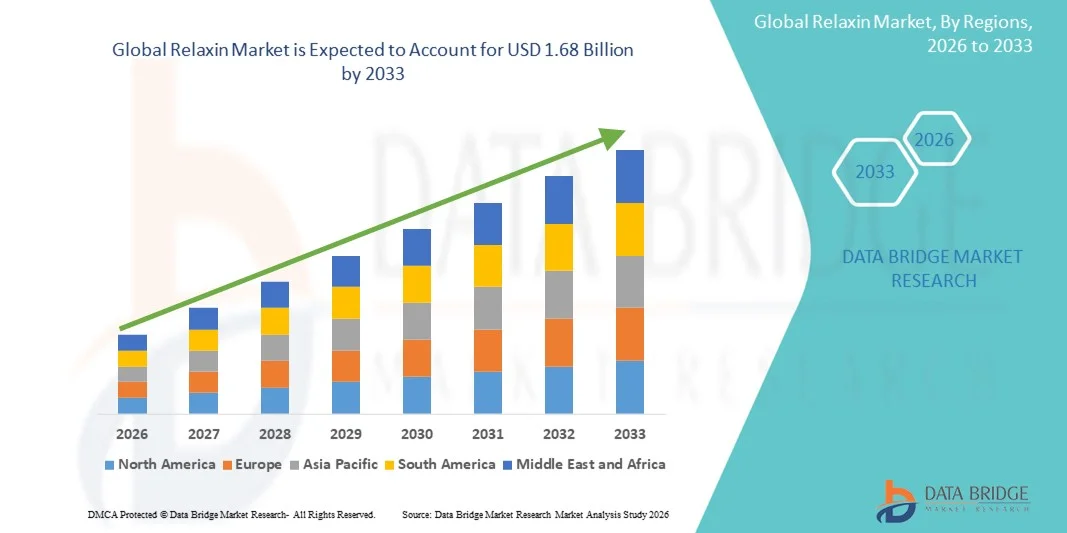
- As per Data Bridge Market Research Analysis the global relaxin market size was valued at USD 1.10 billion in 2025 and is expected to reach USD 1.68 billion by 2033, at a CAGR of 5.50% during the forecast period
- The market growth is largely fueled by the increasing awareness and adoption of Relaxin‑based therapies, driven by its expanding role in cardiovascular, fibrotic, and reproductive health applications, as well as growing R&D investments in peptide biologics
- Furthermore, rising demand for targeted, biologically derived treatments, coupled with innovations in controlled-release delivery systems and formulation stability, is driving the uptake of Relaxin solutions globally
Market Size & Forecast
- Global Market Value (2025): USD 1.10 billion
- Expected Market Value (2033): USD 1.68 billion
- Forecast CAGR (2026–2033): 5.50%
What are the Major Takeaways of Relaxin?
- Relaxin, a peptide hormone with applications in cardiovascular, fibrotic, and reproductive health, is increasingly vital in modern therapeutic research and clinical treatments due to its potential for targeted biological activity, tissue remodeling, and modulation of disease pathways
- The escalating demand for relaxin is primarily fueled by growing awareness of its therapeutic potential, increasing prevalence of cardiovascular and fibrotic diseases, and rising investments in peptide-based biologics and innovative drug delivery technologies
- North America dominated the relaxin market with the largest revenue share of 45% in 2025, characterized by advanced biotechnology infrastructure, high R&D expenditure, and the strong presence of key pharmaceutical and biotech companies, with the U.S. experiencing substantial growth in relaxin adoption, particularly in clinical trials and hospital-based therapies
- Asia-Pacific is expected to be the fastest growing region in the relaxin market during the forecast period due to increasing healthcare investments, rising prevalence of chronic diseases, expanding clinical research initiatives, and improving healthcare infrastructure across emerging economies
- The women’s segment dominated with a revenue share of 53.5% in 2025, driven by Relaxin’s significant role in female reproductive health, pregnancy maintenance, and cardiovascular protection during gestation
Report Scope and Relaxin Market Segmentation
|
Attributes |
Relaxin Key Market Insights |
|
Segments Covered |
|
|
Countries Covered |
North America
Europe
Asia-Pacific
Middle East and Africa
South America
|
|
Key Market Players |
|
|
Market Opportunities |
|
|
Value Added Data Infosets |
|
What is the Key Trend in the Relaxin?
Rising Focus on Therapeutic Applications and Health Benefits
- A significant and accelerating trend in the global relaxin market is the increasing focus on its therapeutic applications, including cardiovascular, renal, and fibrotic disease management. This emphasis on clinical utility is significantly expanding the adoption of relaxin-based therapies across healthcare settings
- For instance, clinical studies and trials are increasingly evaluating recombinant human Relaxin (serelaxin) for treating acute heart failure, kidney disorders, and fibrosis, highlighting its potential as a multifunctional therapeutic agent. Similarly, preclinical research is exploring Relaxin analogs for improved efficacy and patient outcomes, broadening its application scope
- Relaxin’s role in regulating collagen deposition, vascular function, and anti-fibrotic activity is driving interest among healthcare professionals, reinforcing its relevance in both chronic and acute medical conditions. Continued research into its mechanistic pathways and long-term effects is further positioning Relaxin as a critical molecule for novel treatment strategies
- The growing emphasis on evidence-based clinical adoption, combined with enhanced understanding of its physiological effects, is shaping the market trend toward more targeted and specialized therapeutic applications. Through ongoing research and trials, Relaxin is being integrated into treatment regimens for cardiovascular, renal, and fibrotic conditions, supporting broader clinical acceptance
- This trend towards clinically validated applications is fundamentally reshaping stakeholder expectations for therapeutic efficacy, encouraging pharmaceutical companies and research institutions to explore new formulations and delivery methods
- The demand for Relaxin therapies with proven health benefits is growing rapidly across global healthcare sectors, as practitioners and patients increasingly recognize its role in improving treatment outcomes and quality of life
Relaxin Market Dynamics
Driver
Increasing Prevalence of Target Conditions and Rising Clinical Research
- The growing prevalence of cardiovascular disorders, kidney diseases, and fibrotic conditions is a significant driver for the heightened demand for Relaxin therapies. Increasing patient populations requiring effective interventions are supporting market expansion
- For instance, in 2024, multiple ongoing clinical trials evaluated the efficacy of serelaxin in acute heart failure and renal fibrosis, indicating strong therapeutic potential and encouraging adoption. Such initiatives by key pharmaceutical companies are expected to drive market growth during the forecast period
- As healthcare providers and researchers gain a deeper understanding of Relaxin’s pharmacological benefits, its incorporation into clinical protocols is increasing, enhancing treatment outcomes and patient care
- Furthermore, expanding investment in research and development, including new delivery systems, analogs, and combination therapies, is accelerating the integration of Relaxin into mainstream therapeutic options
- Growing awareness among healthcare professionals and patients about the benefits of Relaxin for disease management is another factor propelling the adoption of Relaxin therapies globally
Restraint/Challenge
Limited Awareness and High Development Costs
- Limited awareness of Relaxin’s therapeutic potential among healthcare providers and patients poses a significant challenge to broader market penetration. Despite its clinical benefits, many practitioners are still unfamiliar with its applications beyond niche settings
- For instance, the adoption of serelaxin in acute heart failure and renal disorders remains constrained in some regions due to knowledge gaps and lack of standardized treatment protocols
- In addition, the high costs associated with development, clinical trials, and regulatory approvals for Relaxin-based therapies can be a barrier for smaller pharmaceutical companies and limit access in price-sensitive markets
- While larger firms can absorb these costs, budget-constrained regions may face challenges in adopting new therapies
- Ensuring broader market adoption requires continuous education, clinical evidence dissemination, and cost-optimization strategies to make Relaxin-based treatments more accessible
- Overcoming these challenges through awareness campaigns, clinical validation, and improved cost-effectiveness will be vital for sustained growth in the global Relaxin market
How is the Relaxin Segmented?
The market is segmented on the basis of function, peptides, sex, synthesis, drug, end-users, and distribution channel.
- By Function
On the basis of function, the Relaxin market is segmented into reproduction, the cardiovascular system, metabolism, neuropeptide, and incretin. The reproduction segment dominated the market with a revenue share of 42.7% in 2025, driven by Relaxin’s critical role in female reproductive health, including the regulation of uterine growth, cervical ripening, and facilitation of parturition. Clinical studies have demonstrated its therapeutic potential in enhancing fertility outcomes, improving embryo implantation, and supporting pregnancy maintenance, leading to widespread adoption in fertility clinics and research institutions. Its efficacy in modulating reproductive physiology has made it a key target in drug development, particularly in assisted reproductive technologies. The segment benefits from growing awareness among gynecologists and endocrinologists regarding Relaxin’s role in reproductive therapy. Increasing investments in reproductive health research and fertility treatments globally further reinforce this dominance. Hospitals and specialized fertility centers actively incorporate Relaxin-based interventions into treatment protocols. Pharmaceutical companies continue to explore novel formulations for reproductive applications, enhancing accessibility. Regulatory approvals in multiple countries ensure widespread adoption in clinical practice. The segment also benefits from collaborations between academic research institutes and pharmaceutical manufacturers for innovative therapy development. Real-world evidence supporting improved clinical outcomes drives continued preference. Overall, reproduction remains the leading functional application for Relaxin due to its established clinical relevance, consistent demand, and ongoing innovation.
The cardiovascular system segment is expected to witness the fastest CAGR of 19.4% from 2026 to 2033, fueled by increasing research on Relaxin’s vasodilatory and anti-fibrotic properties. Studies have shown that Relaxin can improve cardiac output, reduce vascular resistance, and protect against myocardial fibrosis, positioning it as a promising therapeutic candidate for heart failure and hypertension. Growing cardiovascular disease prevalence, especially in aging populations, is driving demand for novel interventions. Pharmaceutical companies are focusing on clinical trials to evaluate Relaxin’s efficacy in acute and chronic cardiovascular conditions. Increasing investments in precision medicine and biotherapeutics accelerate product development. Hospitals and cardiology clinics are adopting Relaxin-based therapies as part of advanced care protocols. Government and private funding for cardiovascular research enhances adoption in key markets. The development of injectable and recombinant formulations improves bioavailability and clinical utility. Healthcare professionals are increasingly recognizing Relaxin’s benefits beyond reproductive health, expanding its application. Partnerships between biotech firms and academic centers facilitate innovation in cardiovascular therapeutics. Patient awareness campaigns emphasizing non-invasive heart treatments further drive uptake. Overall, this segment is positioned for strong growth due to increasing clinical evidence, market awareness, and healthcare investments.
- By Peptides
On the basis of peptides, the market is segmented into Relaxin 1, 2, 3, and INSL (insulin-like peptide) 3, 4, 5, and 6. The Relaxin 2 segment dominated with a revenue share of 44.1% in 2025, owing to its widespread therapeutic application in reproductive and cardiovascular disorders. Relaxin 2’s proven efficacy in clinical trials, particularly for serelaxin-based therapies, has made it a preferred peptide for pharmaceutical development. Its role in tissue remodeling, anti-inflammatory effects, and vascular homeostasis supports diverse clinical applications. Hospitals, clinics, and research institutes routinely use Relaxin 2 in experimental and therapeutic protocols. The segment benefits from extensive academic research highlighting its pharmacological advantages over other peptides. Regulatory approvals across key regions, including the U.S., Europe, and Asia-Pacific, facilitate global adoption. Ongoing development of recombinant and long-acting formulations increases treatment convenience. Real-world patient outcomes and data from multicenter trials support clinical confidence in its use. Pharmaceutical companies actively promote Relaxin 2 therapies to healthcare providers. Investments in biotechnology and peptide synthesis further enhance availability. Awareness campaigns by professional societies increase clinician adoption. The peptide’s versatility in multiple therapeutic areas strengthens its leadership position in the market.
The INSL 3 segment is expected to witness the fastest CAGR of 20.3% from 2026 to 2033, driven by emerging research on its potential in reproductive, metabolic, and neuropeptide-related therapies. INSL 3 shows promise in regulating gonadal development, steroidogenesis, and neuroendocrine signaling, attracting attention in both clinical and research applications. Preclinical studies demonstrate its potential in improving fertility outcomes and metabolic regulation. Biotech companies are investing in scalable synthesis methods and recombinant production for clinical trials. Academic collaborations and translational research accelerate adoption. Increasing awareness among endocrinologists and researchers drives demand in specialized clinics and laboratories. Expansion of molecular diagnostic tools enhances patient stratification for targeted peptide therapies. Government research funding and venture capital investments support innovative peptide development. The segment also benefits from growing interest in peptide-based therapeutics for chronic conditions. INSL 3’s potential in personalized medicine further strengthens its future growth prospects. Emerging markets, especially in Asia-Pacific, present new opportunities for clinical adoption. Overall, INSL 3 is poised for rapid growth due to scientific innovation, clinical interest, and expanding healthcare applications.
- By Sex
On the basis of sex, the Relaxin market is segmented into men and women. The women’s segment dominated with a revenue share of 53.5% in 2025, driven by Relaxin’s significant role in female reproductive health, pregnancy maintenance, and cardiovascular protection during gestation. Fertility clinics, obstetric departments, and research institutes focus heavily on therapies and diagnostics targeting women, supporting segment dominance. Clinical guidelines and evidence from numerous studies highlight the benefits of Relaxin in pregnancy, cervical remodeling, and labor facilitation. Pharmaceutical companies develop gender-specific formulations, further increasing adoption. Awareness campaigns, educational initiatives, and inclusion in standard obstetric care protocols drive continued uptake. Government and private funding for women’s health research enhances clinical access. Hospitals and outpatient clinics implement Relaxin-based interventions as part of comprehensive maternal care. Regulatory approvals across multiple regions facilitate standardized usage. Increasing focus on reproductive and cardiovascular wellness among women supports market leadership. Collaboration with academic institutions strengthens innovation and clinical application. Real-world evidence continues to demonstrate improved maternal and neonatal outcomes. Overall, women’s applications remain central to the Relaxin market due to clinical significance and high patient demand.
The men’s segment is expected to witness the fastest CAGR of 18.9% from 2026 to 2033, driven by research into Relaxin’s role in male reproductive health, cardiovascular modulation, and metabolic regulation. INSL peptides and related Relaxin analogues show promise in enhancing male fertility, testosterone regulation, and vascular health. Clinics and research institutes are increasingly adopting therapies for hormone regulation and cardiovascular support in men. Clinical studies highlight potential benefits in reducing fibrosis, improving circulation, and supporting metabolic health. Growing interest in gender-specific biotherapeutics and lifestyle-focused therapies boosts adoption. Academic and industry collaborations facilitate novel peptide development. Expansion of outpatient and home healthcare services improves access to male-focused therapies. Pharmaceutical companies are developing oral and injectable formulations optimized for men. Patient awareness and targeted campaigns increase market penetration. Government and private investments in male health research support product availability. Overall, this segment is projected for strong growth due to increasing scientific validation and rising healthcare focus.
- By Synthesis
On the basis of synthesis, the Relaxin market is segmented into membranes, decidua, placenta, and prostate. The placenta segment dominated the market with a revenue share of 46.2% in 2025, attributed to the high concentration of Relaxin in placental tissue and its pivotal role in pregnancy-related hormonal regulation. Placental-derived Relaxin is extensively used in both clinical research and therapeutic applications, particularly in obstetrics and reproductive medicine. Hospitals and fertility clinics leverage placental Relaxin for monitoring maternal and fetal health, as well as in hormone therapy interventions. Academic research institutes employ it for studying reproductive endocrinology and pregnancy outcomes. Pharmaceutical manufacturers focus on recombinant production of placental Relaxin for improved bioavailability and consistency in therapy. The segment’s dominance is further supported by regulatory approvals and well-established clinical protocols. Increasing investments in maternal and fetal health research globally drive adoption. Training programs for clinicians emphasize the benefits of placental Relaxin in patient care. Collaborative initiatives between biotech companies and hospitals further strengthen its clinical presence. Real-world evidence indicates improved maternal outcomes and reduced pregnancy complications. Growing awareness of hormone therapies for reproductive health underpins continued demand. Clinical trials exploring additional applications in cardiovascular and metabolic health further enhance the segment’s prominence. Overall, placental synthesis remains central due to its therapeutic efficacy, research utility, and market penetration.
The prostate segment is expected to witness the fastest CAGR of 20.1% from 2026 to 2033, driven by emerging research into Relaxin’s potential in male reproductive health, fertility enhancement, and oncology. Prostate-derived Relaxin analogues are being studied for their roles in regulating tissue remodeling, reducing fibrosis, and modulating hormonal balance. Clinical research is exploring applications in prostate health, metabolic disorders, and cardiovascular protection. Biotechnology companies are investing in recombinant synthesis techniques for scalable production. Academic partnerships support translational research to bring new therapies to clinical trials. Hospitals and specialized clinics are beginning to adopt prostate-derived formulations for male-specific therapies. Regulatory support for innovative peptide therapies facilitates product availability. Awareness among clinicians and patients regarding male hormone therapies further drives market growth. Personalized medicine initiatives target Relaxin therapies for prostate-related conditions. Expansion of home healthcare services increases accessibility. Overall, this segment shows rapid growth potential due to increasing clinical evidence and unmet therapeutic needs.
- By Drug
On the basis of drug, the Relaxin market is segmented into Serelaxin. The Serelaxin segment dominated the market with a revenue share of 48.5% in 2025, due to its status as the most clinically advanced and widely studied Relaxin-based therapeutic. Serelaxin has demonstrated efficacy in cardiovascular conditions, reproductive therapies, and systemic fibrosis, establishing its market leadership. Hospitals, specialty clinics, and research institutes rely on Serelaxin for both experimental and approved applications. Pharmaceutical companies continue to invest in expanding its indications and formulations. Regulatory approvals in major markets, including the U.S., Europe, and Asia-Pacific, enable broad clinical access. Clinical trials validate its safety and efficacy, strengthening adoption among healthcare professionals. High patient demand for effective Relaxin-based therapies supports market dominance. Academic collaborations drive new research into Serelaxin applications in renal, pulmonary, and metabolic disorders. Manufacturing scalability and stable supply chains ensure consistent availability. The segment benefits from widespread clinical acceptance and long-standing trust in its therapeutic profile. Marketing campaigns highlight Serelaxin’s advantages in targeted patient populations. Real-world data further reinforce clinical confidence. Overall, Serelaxin remains the flagship drug driving Relaxin market growth.
The emerging peptide-based formulations (others) segment is expected to witness the fastest CAGR of 21.2% from 2026 to 2033, as biotechnology firms develop new recombinant and synthetic Relaxin analogues targeting cardiovascular, reproductive, and metabolic indications. Novel formulations aim to improve bioavailability, patient compliance, and therapeutic precision. Clinical trials exploring multi-indication use of these analogues are accelerating adoption. Hospitals and specialized clinics are incorporating these innovations into personalized treatment protocols. Regulatory pathways for peptide therapeutics are becoming clearer, supporting faster market entry. Increasing academic-industry collaborations drive translational research. Awareness campaigns by professional societies boost clinician adoption. Expansion into emerging markets, particularly in Asia-Pacific and Latin America, offers new opportunities. Biotechnology startups are focusing on scalable manufacturing and cost-effective production methods. Intellectual property protections encourage innovation and investment. Overall, this segment shows strong growth potential due to its novelty, clinical promise, and growing demand for targeted therapies.
- By End-Users
On the basis of end-users, the Relaxin market is segmented into clinics, hospitals, diagnostic centres, home healthcare, and others. The hospitals segment dominated with a revenue share of 51.3% in 2025, driven by extensive clinical infrastructure, access to advanced diagnostics, and high patient volumes. Hospitals utilize Relaxin-based therapies for cardiovascular, reproductive, and metabolic disorders across inpatient and outpatient departments. They also conduct clinical trials and monitor therapeutic efficacy, reinforcing demand. Strong collaborations with pharmaceutical manufacturers and research institutes facilitate continuous supply. Healthcare professionals in hospitals are trained in the latest therapeutic protocols. Hospitals benefit from integrated laboratory and pharmacy facilities, ensuring timely administration of Relaxin treatments. Government support for hospital-based research enhances adoption. Patient awareness programs further encourage hospital-based therapy uptake. The segment’s dominance is strengthened by the presence of specialized departments such as cardiology, endocrinology, and obstetrics. Real-world clinical outcomes validate the effectiveness of Relaxin interventions. Expansion of multi-specialty hospitals globally continues to drive growth. Hospitals also play a key role in post-marketing surveillance and pharmacovigilance.
The home healthcare segment is expected to witness the fastest CAGR of 22.5% from 2026 to 2033, fueled by the increasing demand for patient-centric, at-home therapy options. Relaxin-based treatments for chronic conditions and reproductive health are increasingly being administered under supervised home healthcare programs. Remote patient monitoring, telemedicine support, and portable formulations enable convenient and safe administration. Home healthcare providers collaborate with clinics and hospitals to manage therapy protocols. Growth is driven by aging populations, rising prevalence of chronic diseases, and preference for non-hospital care. Training programs for caregivers and nurses facilitate proper administration. Digital tools support adherence tracking and patient engagement. The segment benefits from rising awareness among patients and families regarding the benefits of at-home therapy. Expansion of insurance coverage and government support for home healthcare services further accelerates adoption. Partnerships between biotech firms and home healthcare companies improve logistics and supply chain efficiency. Convenience, reduced hospitalization costs, and improved quality of life support rapid market adoption. Overall, this segment is poised for robust growth driven by patient-centric care trends.
- By Distribution Channel
On the basis of distribution channel, the Relaxin market is segmented into hospital pharmacy, retail pharmacy, and online pharmacy. The hospital pharmacy segment dominated with a revenue share of 49.8% in 2025, due to direct access to hospitals, clinics, and patient care units. Hospital pharmacies ensure consistent availability of Relaxin-based drugs such as Serelaxin, provide trained pharmacists for dosing guidance, and support clinical research programs. Hospitals often manage bulk procurement and cold chain storage for temperature-sensitive peptide formulations. Close collaboration with pharmaceutical manufacturers facilitates inventory management and timely replenishment. Hospital pharmacies are preferred due to regulatory compliance and quality assurance in therapeutic administration. They also enable controlled patient monitoring, dose adjustments, and pharmacovigilance. Growing hospital infrastructure in emerging markets enhances adoption. Government-backed healthcare initiatives support hospital pharmacy supply chains. Clinical trials are frequently conducted in conjunction with hospital pharmacies, strengthening their central role. Training programs for healthcare professionals promote correct usage. Overall, hospital pharmacies remain the primary channel for Relaxin drug distribution.
The online pharmacy segment is expected to witness the fastest CAGR of 23.1% from 2026 to 2033, driven by increasing digitalization in healthcare, e-commerce penetration, and rising patient preference for convenient, home-delivered therapies. Online pharmacies provide access to a wide range of Relaxin-based therapies with doorstep delivery, subscription-based refills, and teleconsultation support. Regulatory approvals for e-pharmacy operations in multiple regions support expansion. Growth is further aided by smartphone apps, digital payment systems, and patient education on therapy administration. Patients in remote or underserved areas benefit from improved access. Partnerships between online pharmacies, biotech companies, and home healthcare providers enhance service efficiency. Online platforms also offer real-time inventory tracking and customer support. The convenience of home delivery reduces hospital visits and promotes adherence. Marketing campaigns highlight safety, reliability, and cost-effectiveness. Increasing consumer trust in digital health solutions accelerates adoption. Expansion in emerging markets provides new growth opportunities. Overall, online pharmacies are rapidly growing due to convenience, accessibility, and integration with modern healthcare delivery models.
Which Region Holds the Largest Share of the Relaxin?
- North America dominated the relaxin market with the largest revenue share of 45% in 2025, supported by advanced biotechnology infrastructure, significant R&D expenditure, and a strong presence of key pharmaceutical and biotech companies
- The market leads the regional market due to early adoption of innovative Relaxin-based therapies, widespread clinical trials, and hospital-based treatment programs. The robust healthcare ecosystem, combined with well-established regulatory frameworks and availability of skilled medical professionals, further strengthens market dominance
- In addition, increasing awareness of Relaxin’s therapeutic potential in cardiovascular, reproductive, and fibrotic conditions is driving adoption across hospitals, specialty clinics, and research institutes. Continuous investment in research and development, along with strategic collaborations between academic and industrial players, is expected to sustain the market’s leading position throughout the forecast period
U.S. Relaxin Market Insight
The U.S. relaxin market captured the largest revenue share in 2025 within North America, fueled by strong clinical research activity, government-backed funding for advanced therapies, and the presence of numerous clinical trials evaluating Relaxin for cardiovascular, renal, and reproductive applications. Hospitals and specialty clinics are increasingly incorporating Relaxin-based treatments into patient care protocols. The country’s well-established biotechnology and pharmaceutical sectors, coupled with advanced healthcare infrastructure, provide an enabling environment for the development and adoption of novel Relaxin therapies. Moreover, collaborations between industry and academic institutions are accelerating the translation of laboratory research into clinical practice, further boosting market growth.
Europe Relaxin Market Insight
The Europe relaxin market is projected to expand at a substantial CAGR throughout the forecast period, driven by increasing healthcare expenditure, rising prevalence of chronic conditions, and supportive regulatory frameworks. Countries such as Germany, France, and the U.K. are witnessing heightened adoption of Relaxin-based therapies in hospitals and research centers due to growing clinical evidence of their efficacy. In addition, increasing investment in advanced biotechnology research and public-private partnerships are facilitating market expansion. The region’s focus on precision medicine and patient-specific treatment approaches is further fostering the integration of Relaxin therapies into clinical practice, particularly for cardiovascular and reproductive health applications.
U.K. Relaxin Market Insight
The U.K. relaxin market is anticipated to grow at a noteworthy CAGR during the forecast period, driven by increasing awareness of chronic diseases and rising adoption of novel therapeutic interventions in hospital and research settings. Healthcare providers are progressively integrating Relaxin therapies into treatment protocols for cardiovascular, fibrotic, and reproductive disorders. Furthermore, government initiatives promoting clinical research and innovation in biotechnology are supporting market expansion. The presence of well-equipped hospitals and specialized clinics, along with active participation in multicenter clinical trials, strengthens the region’s growth prospects.
Germany Relaxin Market Insight
The Germany relaxin market is expected to expand at a considerable CAGR, fueled by advanced healthcare infrastructure, strong R&D capabilities, and increasing awareness of Relaxin’s therapeutic benefits among medical professionals. Germany’s emphasis on innovation, clinical research, and patient-centric care promotes the adoption of Relaxin-based therapies across hospitals, diagnostic centers, and specialty clinics. In addition, collaborations between pharmaceutical companies and academic institutions are accelerating the development of novel Relaxin formulations, enabling broader clinical applications. The focus on precision medicine and chronic disease management is a key factor driving market growth.
Asia-Pacific Relaxin Market Insight
The Asia-Pacific relaxin market is poised to grow at the fastest CAGR during the forecast period of 2026 to 2033, driven by increasing healthcare investments, rising prevalence of chronic diseases, and expansion of clinical research initiatives. Countries such as China, India, and Japan are witnessing rapid growth due to improving healthcare infrastructure, government support for biotechnology innovation, and increasing awareness of advanced treatment options. The region’s emerging economies are gradually adopting novel Relaxin therapies in hospital-based treatments and research programs. In addition, growing collaboration between domestic and international biotech companies is facilitating technology transfer, clinical trials, and market penetration across APAC.
Japan Relaxin Market Insight
The Japan relaxin market is gaining momentum due to the country’s advanced healthcare system, increasing clinical research activities, and strong focus on chronic disease management. Hospitals and specialized clinics are increasingly adopting Relaxin-based therapies for cardiovascular, reproductive, and renal applications. Rising government initiatives to support biotechnology innovation and public health programs are also driving market growth. Furthermore, Japan’s aging population is expected to further increase demand for therapeutic solutions like Relaxin, which can support improved patient outcomes and quality of life.
China Relaxin Market Insight
The China relaxin market accounted for the largest market revenue share in Asia-Pacific in 2025, attributed to the country’s expanding middle class, increasing healthcare expenditure, and strong focus on clinical research and innovation. Hospitals and research centers are increasingly adopting Relaxin therapies for chronic disease management and reproductive health applications. Government support for biotechnology development, rising investments in advanced healthcare infrastructure, and growing awareness among medical professionals and patients are key factors propelling market growth. In addition, collaborations between domestic and international pharmaceutical companies are accelerating clinical trials, product development, and market penetration across China.
Which are the Top Companies in Relaxin?
The Relaxin industry is primarily led by well-established companies, including:
- Novartis (Switzerland)
- AstraZeneca (U.K.)
- Moderna (U.S.)
- Relaxera (Germany)
- Eli Lilly (U.S.)
- Tectonic Therapeutic (U.S.)
- BVBiomedical Ltd. (U.K.)
- CBL Patras (Greece)
- Zealand Pharma (Denmark)
- Corthera Inc. (U.S.)
- Phoenix Pharmaceuticals (U.S.)
- Relief Therapeutics (Switzerland)
- The BioTek (U.S.)
- Florey Institute (Australia)
What are Latest Developments in Relaxin?
- In August 2023, AstraZeneca was reported to be leading the development of small-molecule agonists of the relaxin receptor (RXFP1), shifting focus from peptide-based therapies to more drug-like molecules that might overcome the short half-life issues of natural relaxin
- In April 2024, Tectonic Therapeutic completed dosing of the first patient in a healthy‑volunteer single-ascending-dose study for its Fc‑relaxin fusion protein (TX45), which is engineered to improve relaxin’s pharmacokinetic profile
- In May 2024, preclinical data on R2R01, a long-acting single‑chain peptides that acts as an RXFP1 agonist (relaxin receptor), was published showing extended half-life and efficacy in renal and cardiovascular models
- In January 2025, Eli Lilly terminated a Phase II trial of its long‑acting relaxin analogue (volenrelaxin) in chronic kidney disease due to “lack of foreseeable clinical benefit,” which suggests challenges in translating relaxin biology in that indication

- Interactive Data Analysis Dashboard
- Company Analysis Dashboard for high growth potential opportunities
- Research Analyst Access for customization & queries
- Competitor Analysis with Interactive dashboard
- Latest News, Updates & Trend analysis
- Harness the Power of Benchmark Analysis for Comprehensive Competitor Tracking
Data collection and base year analysis are done using data collection modules with large sample sizes. The stage includes obtaining market information or related data through various sources and strategies. It includes examining and planning all the data acquired from the past in advance. It likewise envelops the examination of information inconsistencies seen across different information sources. The market data is analysed and estimated using market statistical and coherent models. Also, market share analysis and key trend analysis are the major success factors in the market report. To know more, please request an analyst call or drop down your inquiry.
The key research methodology used by DBMR research team is data triangulation which involves data mining, analysis of the impact of data variables on the market and primary (industry expert) validation. Data models include Vendor Positioning Grid, Market Time Line Analysis, Market Overview and Guide, Company Positioning Grid, Patent Analysis, Pricing Analysis, Company Market Share Analysis, Standards of Measurement, Global versus Regional and Vendor Share Analysis. To know more about the research methodology, drop in an inquiry to speak to our industry experts.
Data Bridge Market Research is a leader in advanced formative research. We take pride in servicing our existing and new customers with data and analysis that match and suits their goal. The report can be customized to include price trend analysis of target brands understanding the market for additional countries (ask for the list of countries), clinical trial results data, literature review, refurbished market and product base analysis. Market analysis of target competitors can be analyzed from technology-based analysis to market portfolio strategies. We can add as many competitors that you require data about in the format and data style you are looking for. Our team of analysts can also provide you data in crude raw excel files pivot tables (Fact book) or can assist you in creating presentations from the data sets available in the report.












