


Remote Patient Care Market Size & Overview
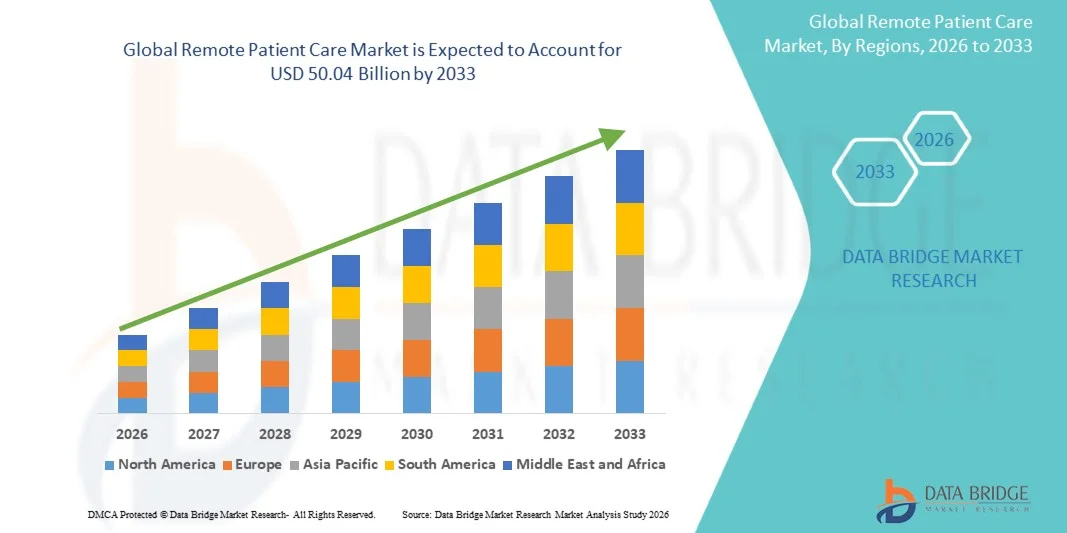
The Remote Patient Care Market was valued at USD 24.39 billion in 2025 and is projected to reach USD 50.04 billion by 2033, growing at a CAGR of 9.40% from 2026 to 2033. The Remote Patient Care Market is experiencing consistent growth driven by rising demand for continuous, accessible, and cost-effective healthcare delivery solutions, rapid advancements in telehealth platforms, wearable medical devices, and AI-enabled remote monitoring technologies, and expanding applications across chronic disease management, post-acute care, and elderly care services. Healthcare providers are increasingly adopting digital health ecosystems that enable real-time patient monitoring, virtual consultations, and remote diagnostics, improving treatment outcomes while reducing hospital dependency and overall healthcare costs.
The increasing prevalence of chronic diseases such as diabetes, cardiovascular disorders, and respiratory conditions, combined with growing geriatric population and post-pandemic acceptance of virtual healthcare, is compelling hospitals, clinics, and homecare providers to adopt advanced remote patient care solutions. Integrated platforms combining IoT-enabled medical devices, cloud-based health records, and AI-driven predictive analytics are replacing traditional in-person follow-ups in many cases, offering continuous monitoring, early risk detection, and personalized treatment management across both developed and emerging healthcare markets.
Key Market Trends & Insights
- North America dominated the Remote Patient Care Market with the largest revenue share of 39.18% in 2025, supported by strong healthcare infrastructure, high adoption of digital health platforms, increasing prevalence of chronic diseases, and widespread deployment of remote monitoring solutions across hospitals and homecare settings.
- The cardiovascular diseases segment dominated the market with a share of 39.05% in 2025 due to the high global prevalence of heart-related disorders, increasing hospitalization rates, and growing need for continuous long-term patient monitoring
- Asia-Pacific is expected to be the fastest-growing region at a CAGR of 7.8% from 2026 to 2033, fueled by expanding healthcare infrastructure, rising smartphone penetration, increasing chronic disease burden, and growing adoption of remote patient monitoring solutions in China, India, and Southeast Asia.
- The Cardiac Monitoring Devices segment is the fastest-growing device type, projected to register a CAGR of 7.6%, supported by rising incidence of cardiovascular diseases and increasing demand for real-time ECG and heart rhythm monitoring outside clinical settings.
- The Cardiovascular Diseases application segment dominates the market with a 41.52% revenue share in 2025, driven by high prevalence of heart-related disorders, increasing elderly population, and strong demand for continuous remote cardiac care management solutions.
- The Home Healthcare Patients segment accounts for 57.83% of the market, supported by rising preference for home-based care, cost reduction in hospital admissions, and increasing availability of AI-enabled remote monitoring devices for chronic disease management.
- The Ambulatory Patients segment is expected to witness the fastest CAGR of 7.1% from 2026 to 2033, driven by growing outpatient care models, expansion of wearable health technologies, and increasing focus on early disease detection and preventive healthcare monitoring.
Market Size & Forecast
- Global Market Value (2025): USD 24.39 Billion
- Expected Market Value (2033): USD 50.04 Billion
- Forecast CAGR (2026–2033): 9.40%
- Leading Region in 2025: North America
- Fastest Growing Region: Asia-Pacific
Report Scope and Remote Patient Care Market Segmentation
|
Attributes |
Remote Patient Care Key Market Insights |
|
Segments Covered |
|
|
Countries Covered |
North America
Europe
Asia-Pacific
Middle East and Africa
South America
|
|
Key Market Players |
|
|
Market Opportunities |
|
|
Value Added Data Infosets |
In addition to the insights on market scenarios such as market value, growth rate, segmentation, geographical coverage, and major players, the market reports curated by the Data Bridge Market Research also include in-depth expert analysis, geographically represented company-wise production and capacity, network layouts of distributors and partners, detailed and updated price trend analysis and deficit analysis of supply chain and demand. |
Remote Patient Care Market Trends
Trend: Expansion of AI-Enabled Remote Patient Monitoring and Hospital-at-Home Models
The Remote Patient Care Market is witnessing strong transformation driven by the rapid adoption of AI-enabled remote monitoring systems and hospital-at-home care models. Healthcare providers are increasingly deploying wearable ECG monitors, continuous glucose tracking devices, and connected blood pressure systems to enable real-time patient tracking outside traditional hospital settings. According to global healthcare estimates, more than 60% of chronic disease management programs in developed markets now include some form of remote monitoring integration, significantly reducing hospital readmission rates and improving long-term patient outcomes. Large hospital networks in the U.S. and Europe are expanding “virtual ward” programs where patients with stable chronic conditions are monitored remotely using IoT-enabled devices and cloud-based dashboards.
Remote Patient Care Market Dynamics
Key Market Driver: Rising Burden of Chronic Diseases and Aging Population
The Remote Patient Care Market is primarily driven by the increasing prevalence of chronic diseases such as cardiovascular disorders, diabetes, chronic respiratory diseases, and cancer-related long-term care needs. According to the World Health Organization (WHO), chronic diseases account for nearly 74% of global deaths annually, creating sustained demand for continuous monitoring and long-term care solutions. The rapidly aging global population—expected to reach over 1.5 billion people aged 65+ by 2050—further accelerates the need for remote care systems that reduce hospital dependency. Healthcare systems are increasingly adopting connected monitoring platforms to track vital signs in real time, reduce emergency admissions, and enable early intervention, particularly in high-risk cardiac and diabetic patients.
Key Restraint/Challenge: Data Privacy Concerns and Limited Digital Infrastructure in Developing Regions
A major challenge in the Remote Patient Care Market is the concern over patient data privacy, cybersecurity risks, and uneven digital healthcare infrastructure. The continuous transmission of sensitive health data through cloud platforms and mobile applications increases vulnerability to cyberattacks and data breaches, raising compliance concerns under regulations such as HIPAA and GDPR. In addition, many low- and middle-income countries still face limited broadband connectivity, lack of interoperable healthcare systems, and insufficient reimbursement frameworks for telehealth services. For example, rural healthcare facilities in parts of Africa and South Asia often lack stable internet access, limiting the effectiveness of real-time remote monitoring solutions.
Key Market Opportunity: Expansion of Wearable Medical Devices and 5G-Enabled Remote Care Ecosystems
The integration of next-generation wearable medical devices and 5G-enabled healthcare networks presents a significant growth opportunity in the Remote Patient Care market. Advanced biosensors capable of continuously tracking heart rate variability, oxygen saturation, and glucose levels are becoming more compact, affordable, and accurate. The rollout of 5G networks is enabling ultra-low latency data transmission, allowing physicians to receive real-time alerts and intervene faster in critical situations. In addition, partnerships between healthcare providers and technology companies are accelerating the development of fully connected digital health ecosystems that combine remote diagnostics, AI-based predictive analytics, and automated emergency response systems, particularly in North America and rapidly digitalizing Asia-Pacific healthcare markets.
Remote Patient Care Market Scope
The Global Remote Patient Monitoring and Care Market is segmented on the basis of device type, application, and end user.
- By Device Type
On the basis of device type, the global Remote Patient Monitoring and Care market is segmented into cardiac monitoring devices, blood pressure monitoring devices, blood glucose monitoring devices, respiratory monitoring devices, neurological monitoring devices, multi-parameter monitoring devices, and others. The cardiac monitoring devices segment dominated the market with a share of 33.12% in 2025 due to the high global burden of cardiovascular diseases, rising incidence of heart failure, and increasing demand for continuous ECG and arrhythmia monitoring solutions. In addition, widespread adoption of wearable cardiac monitors, Holter devices, and remote telemetry systems across hospitals, homecare settings, and ambulatory care centers is strengthening segment growth. growing focus on early diagnosis, post-operative cardiac surveillance, and chronic disease management is further supporting adoption across developed and emerging markets. increasing integration with AI-enabled analytics platforms and cloud-based patient monitoring systems is also improving real-time clinical decision-making and reinforcing segment dominance. rising healthcare digitization and expansion of telehealth infrastructure are further boosting market penetration.
The blood glucose monitoring devices segment is expected to witness the fastest growth at a CAGR of 8.9% from 2026 to 2033, driven by the rapidly increasing global diabetic population, rising lifestyle-related disorders, and strong demand for continuous glucose monitoring (CGM) systems. In addition, growing adoption of wearable glucose sensors, smart insulin delivery systems, and mobile-connected health applications is accelerating segment expansion. increasing integration of AI-based predictive analytics for glucose trend forecasting and personalized treatment planning is further enhancing demand. rising awareness about preventive healthcare and self-monitoring is also supporting adoption. expansion of digital health platforms and remote care models is significantly contributing to segment growth across both developed and emerging economies.
- By Application
On the basis of application, the global Remote Patient Monitoring and Care market is segmented into oncology, diabetes, cardiovascular diseases, and others. The cardiovascular diseases segment dominated the market with a share of 39.05% in 2025 due to the high global prevalence of heart-related disorders, increasing hospitalization rates, and growing need for continuous long-term patient monitoring. In addition, rising adoption of connected cardiac devices, implantable monitors, and wearable ECG systems is improving real-time health tracking and clinical intervention. expansion of telemedicine services and remote care infrastructure is further strengthening demand across hospitals and homecare settings. increasing healthcare expenditure and growing focus on preventive cardiology are reinforcing segment leadership. strong integration of AI-driven diagnostic tools and cloud-based patient data platforms is further improving treatment accuracy and outcomes.
The diabetes segment is expected to witness the fastest CAGR of 8.5% from 2026 to 2033, driven by the rising global prevalence of diabetes, increasing obesity rates, and growing demand for continuous and non-invasive glucose monitoring solutions. In addition, rapid adoption of continuous glucose monitoring (CGM) devices, smart wearable sensors, and connected insulin delivery systems is driving market expansion. increasing integration of mobile health apps, AI-powered analytics, and remote patient tracking platforms is enhancing disease management efficiency. rising awareness of early diagnosis and preventive healthcare is further accelerating adoption. expanding digital healthcare ecosystems and government initiatives for chronic disease management are also supporting strong segment growth globally.
- By End User
On the basis of end user, the global Remote Patient Monitoring and Care market is segmented into hospital-based patients, ambulatory patients, and home healthcare patients. The home healthcare patients segment dominated the market with a share of 42.18% in 2025 due to increasing preference for home-based treatment, rising healthcare costs, and strong demand for convenient, patient-centric care models. In addition, widespread adoption of wearable medical devices, remote monitoring systems, and telehealth platforms is enabling continuous health tracking outside clinical environments. growing aging population and increasing prevalence of chronic diseases are further supporting long-term homecare adoption. healthcare systems are increasingly shifting toward decentralized care delivery models to reduce hospital burden and improve efficiency. integration of AI-based monitoring systems and cloud-connected health platforms is further enhancing patient outcomes and reinforcing segment dominance.
The ambulatory patients segment is expected to witness the fastest growth at a CAGR of 8.4% from 2026 to 2033, driven by increasing shift toward outpatient care, rising demand for cost-effective healthcare delivery, and expanding use of remote diagnostic and monitoring technologies. In addition, growing adoption of mobile health applications, wearable sensors, and real-time data tracking solutions is improving patient management in non-hospital settings. increasing focus on reducing hospital readmissions and improving treatment efficiency is further supporting growth. expansion of telemedicine infrastructure and digital health ecosystems is accelerating adoption across urban and semi-urban regions globally.
Remote Patient Care Market Regional Analysis
North America dominated the Remote Patient Care Market and accounted for the largest revenue share of 39.18% in 2025, supported by strong healthcare infrastructure, high adoption of digital health platforms, increasing prevalence of chronic diseases, and widespread deployment of remote patient monitoring solutions across hospitals and homecare settings. The region benefits from advanced telehealth reimbursement frameworks, strong presence of leading medical device and digital health companies, and rapid integration of AI-enabled monitoring systems into clinical workflows. Growing focus on reducing hospital readmissions and improving patient outcomes continues to strengthen North America’s leadership in the global market.
U.S. Remote Patient Care Market Insight
The U.S. Remote Patient Care market is witnessing strong growth due to increasing burden of chronic diseases such as diabetes, cardiovascular disorders, and respiratory conditions, along with rapid expansion of telehealth and home-based care models. Strong investment by healthcare providers in remote monitoring devices, cloud-based health platforms, and AI-driven diagnostics is further accelerating adoption. In addition, government support for digital health reimbursement and increasing patient preference for at-home care are driving market expansion across the country.
Europe Remote Patient Care Market Insight
Europe Remote Patient Care market remains a major contributor to global revenue, driven by strong public healthcare systems, rising aging population, and increasing focus on preventive healthcare. Widespread adoption of remote monitoring solutions in countries such as Germany, the U.K., France, and the Nordics is supporting market growth. Strict regulatory frameworks ensuring data security and clinical accuracy, along with growing digital health transformation initiatives, continue to enhance adoption of remote patient care technologies across Europe.
U.K. Remote Patient Care Market Insight
The U.K. Remote Patient Care market is experiencing steady growth, supported by NHS-led digital health initiatives, increasing demand for home-based monitoring solutions, and rising prevalence of chronic diseases. The country is rapidly integrating remote patient monitoring platforms into primary care and hospital systems to reduce pressure on healthcare facilities. In addition, growing use of wearable devices and AI-powered health analytics is improving early diagnosis and patient management efficiency.
Germany Remote Patient Care Market Insight
The Germany Remote Patient Care market is expanding steadily due to strong healthcare infrastructure, increasing digitalization of hospitals, and rising adoption of telemedicine services. Growing focus on elderly care, chronic disease management, and hospital efficiency is driving demand for remote monitoring solutions. Integration of advanced medical devices with cloud-based platforms and strong government support for digital health innovation are further supporting market growth in the country.
Asia-Pacific Remote Patient Care Market Insight
The Asia-Pacific Remote Patient Care market is expected to witness rapid growth, driven by expanding healthcare infrastructure, rising smartphone penetration, increasing chronic disease burden, and growing awareness of digital health solutions. Countries such as China, India, Japan, and South Korea are investing heavily in telehealth platforms and remote monitoring systems. The region’s large population base, combined with improving internet connectivity and government digital health initiatives, is significantly accelerating market expansion.
Japan Remote Patient Care Market Insight
The Japan Remote Patient Care market is witnessing steady growth due to aging population, increasing prevalence of lifestyle-related diseases, and strong adoption of advanced healthcare technologies. The country’s healthcare system is increasingly integrating remote monitoring devices and AI-based health analytics to improve elderly care and reduce hospital workload. Growing focus on precision healthcare and digital transformation is further supporting market adoption.
China Remote Patient Care Market Insight
The China Remote Patient Care market is growing rapidly, driven by expanding healthcare infrastructure, rising burden of chronic diseases, and strong government push for digital health transformation. Increasing adoption of AI-enabled wearable devices, mobile health applications, and cloud-based monitoring platforms is significantly boosting demand. In addition, rapid urbanization, growing middle-class population, and expanding telemedicine networks are positioning China as one of the fastest-growing markets globally.
Top Companies in Remote Patient Care Market
The Remote Patient Care industry is primarily led by well-established companies, including:
- Koninklijke Philips N.V. (Netherlands)
- GE HealthCare Technologies Inc. (U.S.)
- Medtronic plc (Ireland)
- Abbott Laboratories (U.S.)
- Boston Scientific Corporation (U.S.)
- iRhythm Technologies Inc. (U.S.)
- ResMed Inc. (U.S.)
- OMRON Corporation (Japan)
- Baxter International Inc. (U.S.)
- Honeywell Life Sciences (U.S.)
- Biotronik SE & Co. KG (Germany)
- Senseonics Holdings Inc. (U.S.)
- AliveCor Inc. (U.S.)
- Teladoc Health Inc. (U.S.)
- American Well Corporation (Amwell) (U.S.)
- Cerner Corporation (U.S.)
- Siemens Healthineers AG (Germany)
- F. Hoffmann-La Roche Ltd (Switzerland)
- Cardiocom (U.S.)
- LivaNova PLC (U.K.)
- Masimo Corporation (U.S.)
- Philips Respironics (Netherlands)
- Doccla Ltd (U.K.)
- BioTelemetry Inc. (U.S.)
- Glooko Inc. (U.S.)
- BP Healthcare Group (Malaysia)
- Tunstall Healthcare Group (U.K.)
- SHL Telemedicine Ltd (Switzerland)
- DocGo Inc. (U.S.)
- CloudPhysician (India)
- HealthNet Global (India)
Latest Developments in Remote Patient Care Market
- In September 2025, Moog Inc. has unveiled its latest motion systems all electric E60 Series and the electro pneumatic P60 Series, setting a new benchmark for simulation across aviation, land, and maritime training with support for up to 14,000 kg loads and high fidelity motion for Level D flight simulators and other professional uses. The upgraded platforms deliver enhanced reliability, compact design and sustained operational uptime, reflecting modernized electronics and sustainable operation. These new systems strengthen Moog’s market leadership in simulation motion technology by boosting performance, energy efficiency, and usability
- In January 2025, Exail Technologies has acquired Leukos, a French photonics specialist known for pulsed micro lasers, supercontinuum laser sources, ultrafast lasers, and simulation-enabled optical systems, strengthening its technological and industrial capabilities in advanced laser and simulation technologies. The deal integrates Leukos’s expertise with Exail’s photonics, optical, and simulation platforms, broadening product offerings for applications in biophotonics, microelectronics, and high-fidelity training simulations. This strategic acquisition accelerates Exail’s innovation in high-tech technologies, creating synergies that expand its reach in scientific, industrial, and simulation applications while reinforcing its position as a leading advanced-technology provider
- In November 2025, IPG Automotive launched CarMaker 15.0, the latest version of its driving simulation software used for virtual vehicle development. The new release improves simulation accuracy by integrating virtual electronic control units (vECUs), allowing engineers to test software and vehicle systems at earlier development stages. It also includes enhanced sensor models and improved endurance testing capabilities for ADAS and autonomous vehicles. This development strengthens IPG Automotive’s position in the driving simulator market, as CarMaker enables automotive manufacturers to perform complex vehicle tests in a virtual driving environment instead of physical road testing.
- In November 2024, IPG Automotive released CarMaker 14.0, introducing new simulation capabilities including advanced sensor models and more realistic virtual environments. The update allows developers to simulate complex traffic scenarios involving pedestrians, vehicles, and different weather conditions. These features help automotive companies test ADAS and autonomous driving systems more efficiently in driving simulators, reducing development time and cost. The upgrade also expanded simulation capabilities for heavy-duty vehicles using the TruckMaker platform.
- In June 2023, IPG Automotive participated in the UNICARagil research project, collaborating with universities and industry partners to develop automated vehicle architectures. The company contributed its CarMaker driving simulation platform to support simulation and validation of automated driving systems in Software-in-the-Loop (SIL) and Hardware-in-the-Loop (HIL) environments. This collaboration demonstrates the application of Remote Patient Care in research and development of autonomous mobility solutions

- Interactive Data Analysis Dashboard
- Company Analysis Dashboard for high growth potential opportunities
- Research Analyst Access for customization & queries
- Competitor Analysis with Interactive dashboard
- Latest News, Updates & Trend analysis
- Harness the Power of Benchmark Analysis for Comprehensive Competitor Tracking
Data collection and base year analysis are done using data collection modules with large sample sizes. The stage includes obtaining market information or related data through various sources and strategies. It includes examining and planning all the data acquired from the past in advance. It likewise envelops the examination of information inconsistencies seen across different information sources. The market data is analysed and estimated using market statistical and coherent models. Also, market share analysis and key trend analysis are the major success factors in the market report. To know more, please request an analyst call or drop down your inquiry.
The key research methodology used by DBMR research team is data triangulation which involves data mining, analysis of the impact of data variables on the market and primary (industry expert) validation. Data models include Vendor Positioning Grid, Market Time Line Analysis, Market Overview and Guide, Company Positioning Grid, Patent Analysis, Pricing Analysis, Company Market Share Analysis, Standards of Measurement, Global versus Regional and Vendor Share Analysis. To know more about the research methodology, drop in an inquiry to speak to our industry experts.
Data Bridge Market Research is a leader in advanced formative research. We take pride in servicing our existing and new customers with data and analysis that match and suits their goal. The report can be customized to include price trend analysis of target brands understanding the market for additional countries (ask for the list of countries), clinical trial results data, literature review, refurbished market and product base analysis. Market analysis of target competitors can be analyzed from technology-based analysis to market portfolio strategies. We can add as many competitors that you require data about in the format and data style you are looking for. Our team of analysts can also provide you data in crude raw excel files pivot tables (Fact book) or can assist you in creating presentations from the data sets available in the report.













