


Respiratory Polygraphs Market Size
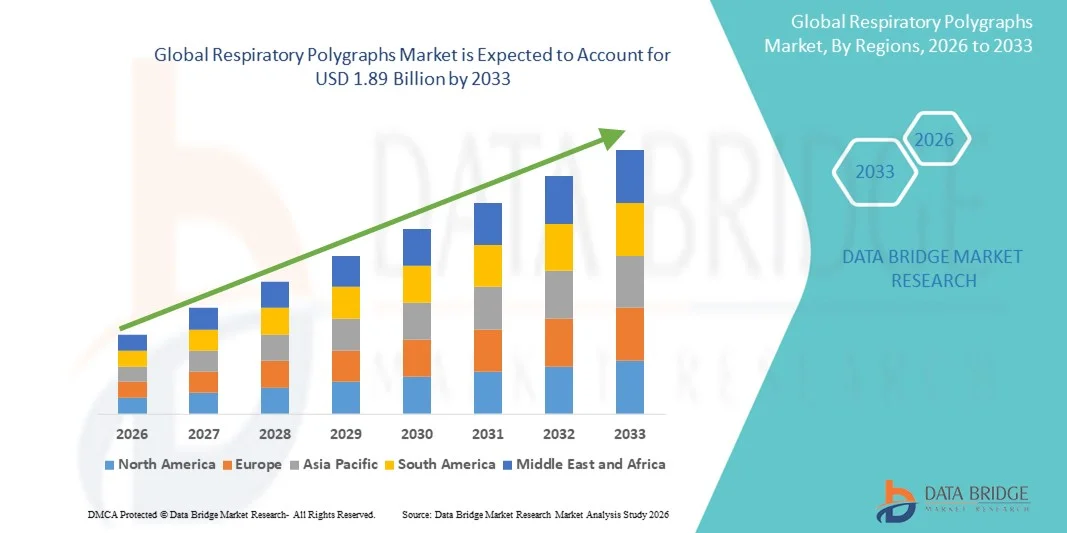
- The global respiratory polygraphs market size was valued at USD 1.20 billion in 2025 and is expected to reach USD 1.89 billion by 2033, at a CAGR of 5.88% during the forecast period
- The market growth is largely fueled by increasing awareness of sleep disorders and respiratory monitoring, along with continuous technological advancements in portable and home-based diagnostic devices, leading to wider adoption of respiratory polygraph solutions in both clinical and homecare settings
- Furthermore, rising demand for accurate, non-invasive, and user-friendly diagnostic tools for sleep apnea and other respiratory conditions is establishing respiratory polygraphs as a preferred solution for early detection and monitoring. These converging factors are accelerating the uptake of respiratory polygraph solutions, thereby significantly boosting the industry’s growth
Respiratory Polygraphs Market Analysis
- Respiratory polygraphs, providing non-invasive monitoring of sleep and respiratory functions, are increasingly vital diagnostic tools in both clinical and homecare settings due to their accuracy, ease of use, and ability to support early detection of sleep apnea and other respiratory disorders
- The escalating demand for respiratory polygraphs is primarily fueled by rising awareness of sleep-related disorders, increasing prevalence of obstructive sleep apnea, growing geriatric population, and the need for convenient, home-based diagnostic solutions
- North America dominated the respiratory polygraphs market with the largest revenue share of approximately 38.7% in 2025, driven by advanced healthcare infrastructure, high disposable incomes, widespread adoption of home healthcare technologies, and strong presence of key market players. The U.S. is witnessing substantial growth in respiratory polygraph installations in both clinical and homecare settings
- Asia-Pacific is expected to be the fastest-growing region in the respiratory polygraphs market during the forecast period, registering a high CAGR due to increasing urbanization, rising disposable incomes, growing awareness of sleep disorders, and expanding healthcare access in countries such as China and India
- The Sleep Apnea segment dominated the largest market revenue share of 62% in 2025, due to the high prevalence of obstructive sleep apnea worldwide
Report Scope and Respiratory Polygraphs Market Segmentation
|
Attributes |
Respiratory Polygraphs Key Market Insights |
|
Segments Covered |
|
|
Countries Covered |
North America
Europe
Asia-Pacific
Middle East and Africa
South America
|
|
Key Market Players |
|
|
Market Opportunities |
|
|
Value Added Data Infosets |
In addition to the insights on market scenarios such as market value, growth rate, segmentation, geographical coverage, and major players, the market reports curated by the Data Bridge Market Research also include in-depth expert analysis, patient epidemiology, pipeline analysis, pricing analysis, and regulatory framework. |
Respiratory Polygraphs Market Trends
Increasing Adoption of Home and Clinical Sleep Monitoring
- A significant and accelerating trend in the global Respiratory Polygraphs market is the growing adoption of home-based and clinical sleep monitoring solutions. Patients and healthcare providers are increasingly preferring portable polygraph devices for early detection of sleep-related disorders such as obstructive sleep apnea, hypoventilation, and nocturnal hypoxemia
- Advancements in compact, user-friendly, and multi-parameter polygraph devices are making home testing more reliable and convenient
- For instance, ResMed’s ApneaLink Air allows patients to conduct home sleep tests with wireless data transmission to clinicians for rapid analysis
- The integration of wearable sensors and wireless data transmission in modern polygraphs allows continuous monitoring of respiratory patterns, oxygen saturation, and heart rate during sleep
- This trend is being reinforced by rising awareness among patients regarding the health risks associated with untreated sleep disorders, such as cardiovascular diseases, diabetes, and daytime fatigue
- Furthermore, the availability of reimbursable home sleep testing through insurance providers in several countries is boosting adoption
- The trend towards remote patient monitoring and telemedicine is supporting increased use of portable polygraphs in both home and clinical settings
- Overall, the market is moving towards more patient-centric, accessible, and efficient respiratory monitoring solutions, reshaping clinical practice and patient expectations
Respiratory Polygraphs Market Dynamics
Driver
Rising Prevalence of Sleep Disorders and Increasing Health Awareness
- The growing prevalence of sleep-related disorders, such as obstructive sleep apnea, narcolepsy, and chronic insomnia, is a key driver for the Respiratory Polygraphs market. Early detection and management of these disorders are critical to preventing severe health complications
- Increasing awareness among patients and healthcare professionals about the benefits of continuous respiratory monitoring is driving adoption
- For instance, the American Sleep Apnea Association has been actively promoting home-based respiratory monitoring to improve early diagnosis rates
- Healthcare providers are increasingly implementing home sleep studies as cost-effective alternatives to in-lab polysomnography, further boosting demand for portable polygraph devices
- Rising disposable incomes and improved access to healthcare facilities are enabling wider adoption of polygraph testing across developed and developing regions
- Technological innovations in sensor accuracy, data analytics, and wireless connectivity are enhancing the reliability and usability of respiratory polygraphs, increasing their clinical acceptance
- Expansion of sleep clinics and diagnostic centers globally is further supporting market growth
- Overall, the convergence of rising sleep disorder prevalence, patient awareness, and improved technology is fueling the demand for respiratory polygraphs
Restraint/Challenge
High Device Costs and Lack of Standardization
- High initial costs of advanced respiratory polygraph devices can be a barrier for widespread adoption, especially in developing regions and smaller clinics
- Inconsistencies in device calibration, signal interpretation, and reporting standards across manufacturers limit broader market penetration
- For insatnce, differences in scoring algorithms between Philips Alice PDx and Nox T3 can lead to variability in diagnosis, limiting clinician confidence
- Limited awareness among patients about home-based testing solutions may lead to underutilization of polygraph devices despite their availability
- Healthcare providers may hesitate to fully adopt portable polygraphs due to concerns regarding data accuracy compared to full polysomnography tests
- Ensuring device maintenance, software updates, and proper training for clinical staff is critical for accurate diagnosis and effective patient management
- Price sensitivity in emerging markets and lack of insurance coverage for home-based testing can further restrict growth
- Overcoming these challenges through standardized testing protocols, affordable device offerings, and enhanced patient education will be vital for sustained market expansion
Respiratory Polygraphs Market Scope
The market is segmented on the basis of type, application, and end user.
- By Type
On the basis of type, the Respiratory Polygraphs market is segmented into Automatic Home Respiratory Polygraphy and Manual Home Respiratory Polygraphy. The Automatic Home Respiratory Polygraphy segment dominated the largest market revenue share of 58% in 2025, driven by its convenience, accuracy, and ability to provide continuous multi-parameter monitoring without clinical supervision. Patients prefer automatic devices for home sleep studies as they reduce complexity and improve adherence, enabling real-time tracking of oxygen saturation, respiratory effort, and heart rate. Hospitals and sleep clinics increasingly adopt automatic devices to streamline diagnostics and reduce clinician workload. Technological advancements such as wireless sensors, cloud-based reporting, and patient-friendly interfaces enhance usability and data reliability. Rising awareness about sleep apnea, COPD, and Obesity Hypoventilation Syndrome (OHS) is further boosting adoption. Early detection of sleep disorders with minimal hospital visits is appealing to both patients and healthcare providers. Insurance coverage and reimbursement for home testing encourage higher market penetration. The presence of well-known brands and validated devices reinforces trust and preference. Multi-parameter automatic monitoring ensures better diagnosis compared to single-parameter manual devices. Overall, automatic polygraphs are recognized as a reliable, efficient, and patient-centric solution for home and clinical use, supporting strong growth globally.
The Manual Home Respiratory Polygraphy segment is expected to witness the fastest CAGR of 21.3% from 2026 to 2033, fueled by growing demand in emerging regions with limited hospital infrastructure. Manual devices offer clinicians greater control over testing parameters and are cost-effective for budget-conscious clinics and home users. Their lower upfront cost compared to automatic devices makes them attractive in developing countries. Manual polygraphs are increasingly used in follow-up assessments, research studies, and complex cases requiring customized monitoring. The rising prevalence of sleep apnea, COPD, and OHS is encouraging clinics to adopt manual devices as supplemental diagnostic tools. Healthcare providers are providing training to staff to improve accuracy and reliability of results. The ability to monitor patients at home without hospitalization reduces costs and improves patient convenience. Manual devices are flexible, allowing clinicians to tailor testing based on patient-specific needs. Integration with software for offline data analysis is improving usability. Awareness campaigns in North America, Europe, and APAC support faster adoption. The segment benefits from collaborations between device manufacturers and clinics to enhance outreach. Overall, the manual type is expected to grow rapidly as home-based testing becomes more accepted in regions with limited healthcare access.
- By Application
On the basis of application, the market is segmented into Sleep Apnea, COPD, and Obesity Hypoventilation Syndrome (OHS). The Sleep Apnea segment dominated the largest market revenue share of 62% in 2025, due to the high prevalence of obstructive sleep apnea worldwide. Increasing obesity rates, sedentary lifestyles, and rising awareness of cardiovascular and metabolic risks associated with untreated sleep apnea are driving adoption. Respiratory polygraphs allow accurate monitoring of oxygen saturation, airflow, and respiratory effort at home, reducing the need for overnight hospital stays. Hospitals, sleep clinics, and home users prefer multi-parameter monitoring to improve diagnosis and treatment planning. Reimbursement coverage for home sleep testing in developed countries enhances market penetration. Technological advances such as wireless sensors and patient-friendly interfaces make devices more convenient. Clinicians can track patient compliance and provide timely interventions. Awareness campaigns by medical associations are educating patients about the importance of early detection. Sleep apnea monitoring reduces long-term healthcare costs and hospital visits. Patients increasingly prefer home testing for privacy and convenience. Automatic polygraphs are preferred for sleep apnea diagnosis due to ease of use. Overall, the segment remains dominant due to high prevalence and clinical necessity.
The COPD segment is expected to witness the fastest CAGR of 19.8% from 2026 to 2033, driven by the rising prevalence of chronic obstructive pulmonary disease and need for continuous monitoring. COPD is common among the aging population, and home-based polygraphs help track disease progression while reducing hospital readmissions. Rising awareness among patients and clinicians about early detection of exacerbations is encouraging device adoption. Hospitals and ambulatory care services are increasingly using portable polygraphs to provide outpatient monitoring. Technological improvements such as wireless connectivity, cloud-based reporting, and remote monitoring enhance usability. Patients prefer home monitoring due to convenience and reduced travel for hospital visits. Polygraphs help clinicians make timely adjustments to therapy. Insurance support in some regions encourages adoption. Expansion of healthcare facilities and specialized clinics is increasing accessibility. Training for clinical staff ensures accurate readings and proper patient guidance. Rising incidence of smoking-related COPD cases is driving demand in North America, Europe, and APAC. Overall, COPD monitoring is expected to grow rapidly as healthcare systems move toward patient-centric and remote care models.
- By End User
On the basis of end user, the market is segmented into Hospitals, Ambulatory Care Services (ACSs), and Other healthcare facilities. The Hospitals segment dominated the largest market revenue share of 54% in 2025, due to large patient volumes, advanced diagnostic infrastructure, and preference for multi-parameter monitoring. Hospitals integrate respiratory polygraphs into routine diagnostics for sleep apnea, COPD, and OHS. Presence of trained clinical staff and IT infrastructure for data management supports reliable monitoring. Hospitals are preferred for initial diagnosis and follow-up, particularly in urban centers. Reimbursement policies in developed countries favor hospital-based testing. High awareness among patients about early detection encourages hospital adoption. Hospitals are key centers for research and validation of new devices. Multi-parameter polygraphs allow comprehensive patient assessment. Hospitals often partner with device manufacturers for training and outreach. Growing prevalence of sleep and respiratory disorders supports steady adoption. Overall, hospitals remain the dominant end-user due to capacity, reliability, and trust.
The Ambulatory Care Services (ACSs) segment is expected to witness the fastest CAGR of 20.5% from 2026 to 2033, driven by increasing demand for home-based and outpatient monitoring. ACSs provide cost-effective, flexible, and patient-friendly testing options. Patients can undergo home testing while clinicians receive accurate reports remotely. This reduces hospital dependency and readmissions. Rising awareness among clinicians and patients about respiratory disorders is boosting adoption. Portable devices and telehealth integration make ACSs highly efficient. ACSs are particularly important in semi-urban or underserved regions where hospital infrastructure is limited. Training and standardized protocols improve data reliability. Expansion of private clinics and outpatient centers supports rapid market growth. Increasing prevalence of sleep apnea, COPD, and OHS in emerging markets encourages adoption. Partnerships with device manufacturers help ACSs enhance service quality. Overall, ACSs are expected to grow rapidly due to convenience, accessibility, and cost-effectiveness.
Respiratory Polygraphs Market Regional Analysis
- North America dominated the respiratory polygraphs market with the largest revenue share of approximately 38.7% in 2025
- Driven by advanced healthcare infrastructure, high disposable incomes, widespread adoption of home healthcare technologies, and strong presence of key market players
- The market is witnessing substantial growth in respiratory polygraph installations in both clinical and homecare settings
U.S. Respiratory Polygraphs Market Insight
The U.S. respiratory polygraphs market held the majority share within North America in 2025, driven by a high diagnosis rate of sleep apnea and respiratory disorders, strong insurance coverage, and widespread awareness of early disease detection. The growing preference for home-based sleep testing and outpatient diagnostics is increasing demand for portable and automatic respiratory polygraph systems. Expansion of sleep laboratories, ambulatory care services, and telemedicine platforms further supports market penetration. Additionally, the presence of trained sleep specialists and pulmonologists strengthens device utilization across healthcare settings.
Europe Respiratory Polygraphs Market Insight
The Europe respiratory polygraphs market is expected to expand at a steady CAGR during the forecast period, driven by rising awareness of sleep disorders, aging populations, and growing emphasis on preventive healthcare. Countries across Western and Northern Europe are increasingly adopting home-based respiratory diagnostic tools to reduce hospital burden and healthcare costs. Strong regulatory standards ensure high device accuracy and safety, supporting clinician confidence in polygraph diagnostics. Increasing investments in digital health infrastructure and expansion of sleep clinics further contribute to market growth.
U.K. Respiratory Polygraphs Market Insight
The U.K. respiratory polygraphs market is witnessing consistent growth due to rising prevalence of sleep apnea and respiratory conditions, coupled with increasing adoption of home sleep testing under public healthcare systems. Demand is further supported by initiatives to reduce waiting times for diagnostic procedures and improve early detection outcomes. Expansion of specialized respiratory clinics and improved patient access to diagnostic tools continues to strengthen the market.
Germany Respiratory Polygraphs Market Insight
Germany respiratory polygraphs market represents a key market in Europe, supported by a robust healthcare system, high diagnostic standards, and increasing awareness of chronic respiratory disorders. The growing elderly population and emphasis on early disease management are driving demand for accurate respiratory monitoring devices. Hospitals and outpatient facilities are increasingly incorporating polygraph-based diagnostics to improve efficiency and patient outcomes.
Asia-Pacific Respiratory Polygraphs Market Insight
The Asia-Pacific respiratory polygraphs market is anticipated to grow at the fastest CAGR during the forecast period, driven by rapid urbanization, increasing disposable incomes, and rising awareness of sleep-related disorders. Expanding access to healthcare services, particularly in emerging economies, is accelerating adoption of cost-effective and portable respiratory diagnostic solutions. The growing burden of obesity, smoking-related respiratory diseases, and aging populations further supports strong market expansion. Increasing investments in healthcare infrastructure and diagnostic capabilities are enhancing accessibility across both urban and semi-urban regions. Asia-Pacific is expected to be the fastest-growing region in the respiratory polygraphs market during the forecast period, registering a high CAGR due to increasing urbanization, rising disposable incomes, growing awareness of sleep disorders, and expanding healthcare access in countries such as China and India
Japan Respiratory Polygraphs Market Insight
The Japan respiratory polygraphs market is expanding steadily due to the country’s aging population and high awareness of sleep-related breathing disorders. Strong adoption of advanced medical diagnostic devices and emphasis on early detection of chronic conditions are key growth drivers. Hospitals and specialty clinics increasingly rely on respiratory polygraphs for accurate and efficient sleep diagnostics.
China Respiratory Polygraphs Market Insight
China respiratory polygraphs market accounts for a significant share of the Asia-Pacific market, driven by a large patient population, rising healthcare expenditure, and increasing prevalence of sleep apnea and respiratory diseases. Government initiatives to improve diagnostic access, combined with growth in private hospitals and sleep clinics, are boosting market penetration. The availability of cost-effective devices and expanding medical tourism also support sustained demand.
Respiratory Polygraphs Market Share
The Respiratory Polygraphs industry is primarily led by well-established companies, including:
• ResMed Inc. (U.S.)
• Nihon Kohden Corporation (Japan)
• Compumedics Limited (Australia)
• Natus Medical Incorporated (U.S.)
• Oxitone Medical Inc. (U.S.)
• Nonin Medical, Inc. (U.S.)
• Koninklijke Philips N.V. (Netherlands)
• CareFusion Corporation (U.S.)
• BMC Medical Co., Ltd. (China)
• Fisher & Paykel Healthcare Limited (New Zealand)
• Nihon Kohden Europe GmbH (Germany)
• Spacelabs Healthcare (U.S.)
• Beijing Choice Electronic Technology Co., Ltd. (China)
• Medtronic plc (Ireland)
Latest Developments in Global Respiratory Polygraphs Market
- In January 2021, Itamar Medical acquired the technology and assets of Spry Health, adding Spry’s FDA-cleared wrist-worn remote-patient-monitoring technology to Itamar’s portfolio to accelerate continuous remote monitoring for sleep-disordered breathing and chronic disease management
- In June 2021, Philips Respironics issued a major global recall of certain CPAP, BiPAP and ventilator devices because of potential health risks related to sound-abatement foam, prompting widespread regulatory action, patient safety programs, and industry supply-chain and clinical-workflow impacts across sleep medicine
- In August 2021, ResMed launched the AirSense 11 PAP series, a next-generation, cloud-connected PAP platform with new digital features aimed at improving therapy setup and adherence — an important commercial milestone that influenced the broader digital sleep-care ecosystem (diagnostics + therapy)
- In October 2021, ResMed acquired Ectosense (NightOwl) and folded its home-testing assets into ResMed’s diagnostics lineup, strengthening ResMed’s position in at-home sleep testing and digital diagnostics. This acquisition also preserved the ApneaLink and NightOwl lines as part of ResMed’s HSAT offerings

- Interactive Data Analysis Dashboard
- Company Analysis Dashboard for high growth potential opportunities
- Research Analyst Access for customization & queries
- Competitor Analysis with Interactive dashboard
- Latest News, Updates & Trend analysis
- Harness the Power of Benchmark Analysis for Comprehensive Competitor Tracking
Data collection and base year analysis are done using data collection modules with large sample sizes. The stage includes obtaining market information or related data through various sources and strategies. It includes examining and planning all the data acquired from the past in advance. It likewise envelops the examination of information inconsistencies seen across different information sources. The market data is analysed and estimated using market statistical and coherent models. Also, market share analysis and key trend analysis are the major success factors in the market report. To know more, please request an analyst call or drop down your inquiry.
The key research methodology used by DBMR research team is data triangulation which involves data mining, analysis of the impact of data variables on the market and primary (industry expert) validation. Data models include Vendor Positioning Grid, Market Time Line Analysis, Market Overview and Guide, Company Positioning Grid, Patent Analysis, Pricing Analysis, Company Market Share Analysis, Standards of Measurement, Global versus Regional and Vendor Share Analysis. To know more about the research methodology, drop in an inquiry to speak to our industry experts.
Data Bridge Market Research is a leader in advanced formative research. We take pride in servicing our existing and new customers with data and analysis that match and suits their goal. The report can be customized to include price trend analysis of target brands understanding the market for additional countries (ask for the list of countries), clinical trial results data, literature review, refurbished market and product base analysis. Market analysis of target competitors can be analyzed from technology-based analysis to market portfolio strategies. We can add as many competitors that you require data about in the format and data style you are looking for. Our team of analysts can also provide you data in crude raw excel files pivot tables (Fact book) or can assist you in creating presentations from the data sets available in the report.













