


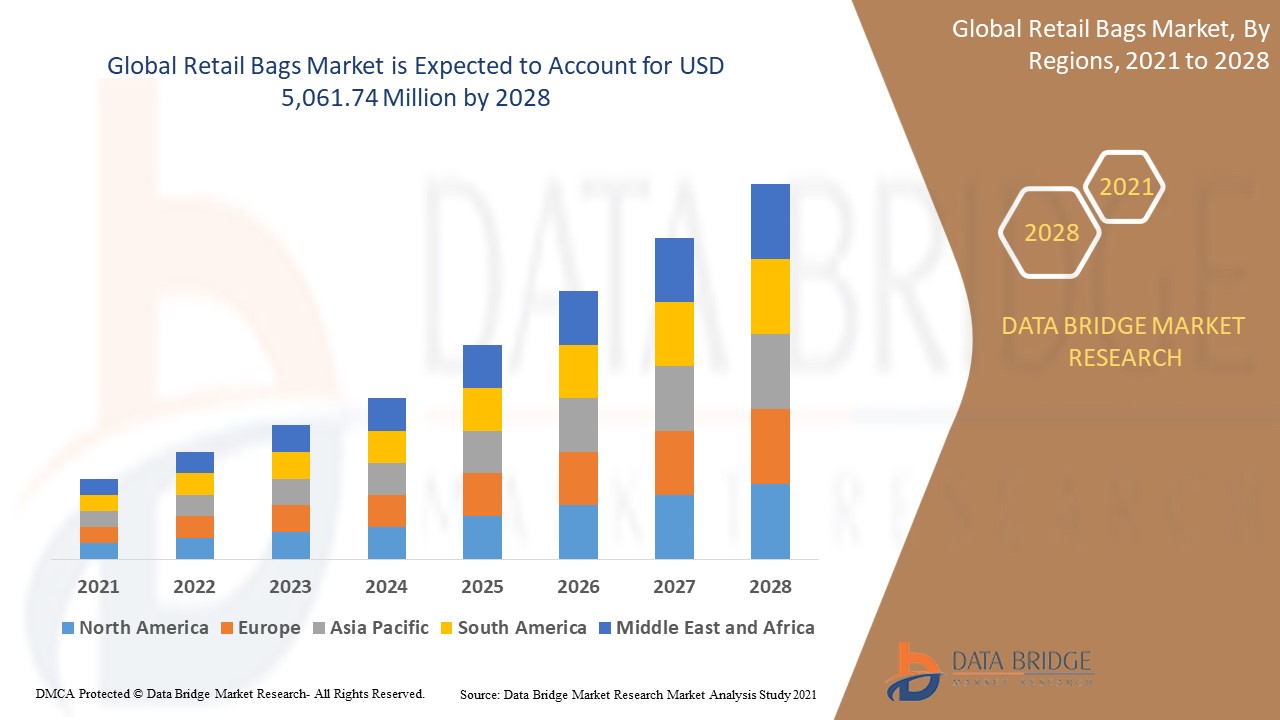
Retail Bags Market Analysis
The retail bags market is experiencing significant growth, driven by the expansion of the global retail sector, increasing consumer demand for convenience, and advancements in sustainable packaging solutions. With the rise of supermarkets, hypermarkets, and e-commerce platforms, retailers are focusing on durable, lightweight, and cost-effective bagging solutions to enhance the shopping experience. Advancements in biodegradable and recyclable materials, such as paper, compostable bioplastics, and reusable fabric bags, are gaining traction due to stringent environmental regulations and shifting consumer preferences toward eco-friendly products. Companies such as Mondi and Coveris are investing in innovative packaging solutions to reduce plastic waste while maintaining durability and aesthetic appeal. In addition, the adoption of smart packaging technologies, such as QR-coded bags for enhanced traceability and customer engagement, is transforming the industry. North America and Europe lead the market due to early regulatory measures against single-use plastics, while Asia-Pacific is witnessing rapid growth due to increasing retail infrastructure and a rising consumer base. The market's future is expected to be shaped by continued innovation in sustainable materials, government policies, and evolving retail trends.
Retail Bags Market Size
The retail bags market size was valued at USD 4.14 billion in 2024 and is projected to reach USD 6.17 billion by 2032, with a CAGR of 5.10% during the forecast period of 2025 to 2032. In addition to the insights on market scenarios such as market value, growth rate, segmentation, geographical coverage, and major players, the market reports curated by the Data Bridge Market Research also include import export analysis, production capacity overview, production consumption analysis, price trend analysis, climate change scenario, supply chain analysis, value chain analysis, raw material/consumables overview, vendor selection criteria, PESTLE Analysis, Porter Analysis, and regulatory framework.
Retail Bags Market Trends
“Growing Adoption of Biodegradable and Compostable Bags”
One of the key trends in the retail bags market is the growing adoption of biodegradable and compostable bags as sustainability concerns drive regulatory and consumer shifts. Governments worldwide are imposing strict bans on single-use plastic bags, pushing retailers to explore eco-friendly alternatives such as paper bags, compostable bioplastics, and reusable fabric bags. For instance, Coveris has expanded its portfolio with fully recyclable and biodegradable carrier bags to meet the increasing demand for sustainable packaging. Similarly, Novolex has introduced compostable shopping bags for grocery stores and food service applications, reducing environmental impact while maintaining durability. This trend is further fueled by consumer preferences for responsibly sourced materials, encouraging brands to invest in innovative and sustainable retail packaging solutions. As major supermarket chains and retailers worldwide prioritize environmentally friendly bagging options, the market is expected to see continued growth in compostable and recyclable materials, reshaping the future of retail packaging.
Report Scope and Retail Bags Segmentation
|
Attributes |
Retail Bags Key Market Insights |
|
Segments Covered |
|
|
Countries Covered |
U.S., Canada and Mexico in North America, Germany, France, U.K., Netherlands, Switzerland, Belgium, Russia, Italy, Spain, Turkey, Rest of Europe in Europe, China, Japan, India, South Korea, Singapore, Malaysia, Australia, Thailand, Indonesia, Philippines, Rest of Asia-Pacific (APAC) in the Asia-Pacific (APAC), Saudi Arabia, U.A.E, South Africa, Egypt, Israel, Rest of Middle East and Africa (MEA) as a part of Middle East and Africa (MEA), Brazil, Argentina and Rest of South America as part of South America |
|
Key Market Players |
Attwoods (U.K.), Mondi (Austria), ProAmpac (U.S.), SPP POLY PACK PVT. LTD. (India), The Carry Bag Company (U.K.), Rainbow Packaging, Inc. (U.S.), Coveris (U.K.), Burberry Limited (U.K.), Atlantic Poly, Inc. (U.S.), Novolex (U.S.), and Rutan Poly Inc. (U.S.) |
|
Market Opportunities |
|
|
Value Added Data Infosets |
In addition to the insights on market scenarios such as market value, growth rate, segmentation, geographical coverage, and major players, the market reports curated by the Data Bridge Market Research also include import export analysis, production capacity overview, production consumption analysis, price trend analysis, climate change scenario, supply chain analysis, value chain analysis, raw material/consumables overview, vendor selection criteria, PESTLE Analysis, Porter Analysis, and regulatory framework. |
Retail Bags Market Definition
Retail bags are packaging solutions designed for carrying purchased goods from retail stores, supermarkets, grocery outlets, and food service establishments. These bags are made from various materials, including plastic, paper, and natural fibers, and come in different patterns, such as textured, printed, and solid designs.
Retail Bags Market Dynamics
Drivers
- Growing Retail and E-Commerce Industry
The rapid expansion of supermarkets, hypermarkets, grocery stores, and e-commerce platforms is a key driver of the retail bags market. Consumers are increasingly opting for convenient and quick shopping experiences, both in physical stores and online, prompting retailers to adopt efficient and sustainable bagging solutions. In the e-commerce sector, companies such as Amazon and Walmart have shifted towards eco-friendly packaging alternatives, including biodegradable and reusable bags, to minimize their environmental footprint while maintaining packaging efficiency. Similarly, global supermarket chains such as Tesco and Carrefour have integrated sustainable paper-based and fabric bags into their operations, ensuring both durability and customer convenience. The increasing frequency of online shopping and home deliveries further accelerates demand, making retail bags a critical component of modern commerce.
- Rising Environmental Awareness and Government Regulations
Stringent government regulations and environmental policies aimed at reducing plastic pollution are significantly influencing the retail bags market. Several countries, including those in the European Union, Canada, and India, have imposed bans or heavy restrictions on single-use plastic bags, prompting retailers to adopt biodegradable, recyclable, and reusable alternatives. For instance, the European Union’s ban on single-use plastic bags has led major brands and retailers to transition to paper-based and compostable bags, accelerating the shift toward sustainable packaging. In the U.S., many states, including California and New York, have enforced plastic bag bans, pushing companies such as Target and Whole Foods to introduce durable paper bags and reusable totes as alternatives. This regulatory shift is reshaping the retail bags market, encouraging businesses to innovate and invest in sustainable packaging solutions.
Opportunities
- Increasing Technological Advancements in Smart Packaging
The retail bags market is witnessing a shift towards smart packaging solutions that enhance customer engagement, product authentication, and supply chain efficiency. The integration of RFID tags, QR codes, and NFC technology in retail bags allows businesses to provide real-time tracking, digital interaction, and brand authentication. Luxury brands such as Burberry have adopted smart shopping bags that allow customers to scan a QR code to access product details, authenticity verification, and exclusive content. This innovation elevates the customer experience and helps combat counterfeit products, ensuring brand integrity. As more retailers adopt smart packaging solutions, companies investing in interactive and traceable retail bags will gain a competitive edge in the growing digital commerce landscape.
- Growing Demand for Sustainable and Eco-Friendly Bags
With rising concerns over plastic pollution and carbon footprint, governments and consumers are increasingly pushing for eco-friendly retail packaging solutions. Regulatory bans on single-use plastics in various countries have forced manufacturers to develop biodegradable, recyclable, and reusable bags. Leading companies such as Mondi and Coveris are responding to this demand by innovating sustainable alternatives. For instance, Mondi's MailerBAG is an eco-friendly, paper-based mailer designed to replace plastic e-commerce packaging, providing durability, recyclability, and environmental sustainability. This shift presents a major market opportunity, as businesses that adopt green packaging solutions will benefit from regulatory compliance, positive brand perception, and consumer preference for sustainable products.
Restraints/Challenges
- High Production Costs
One of the major challenges in the retail bags market is the high production costs, especially for sustainable and eco-friendly alternatives. Traditional plastic bags are relatively cheap to produce, but biodegradable, compostable, or fabric-based bags require costlier raw materials and complex manufacturing processes. For instance, paper bags require more energy and water to produce compared to plastic, leading to higher costs for retailers. Similarly, biodegradable plastic bags made from cornstarch or PLA (polylactic acid) are significantly more expensive than conventional plastic due to limited raw material availability and specialized processing requirements. These increased costs are often passed on to consumers, making them less likely to opt for sustainable alternatives. As a result, many retailers struggle to balance affordability with sustainability, slowing the widespread adoption of eco-friendly retail bags and limiting market growth in price-sensitive regions.
- Competition from Alternative Packaging Solutions
The retail bags market faces intense competition from alternative packaging solutions, which offer greater convenience, sustainability, and cost-effectiveness. Many retailers are shifting towards reusable cloth totes, collapsible shopping baskets, and zero-waste packaging, reducing the need for traditional retail bags. For instance, leading brands such as IKEA and Whole Foods encourage customers to bring their own reusable bags or opt for paper-based wrapping instead of plastic bags. Similarly, the rise of e-commerce and digital receipts has reduced the need for physical shopping bags in online retail. In some cases, retailers are introducing "bag-free" policies, where customers must bring their own bags or pay extra for a sustainable option. These changes pose a significant challenge to the Retail Bags Market, as the shift towards minimalist and reusable packaging solutions reduces the demand for single-use and even some multi-use bags, impacting the overall market growth and profitability.
This market report provides details of new recent developments, trade regulations, import-export analysis, production analysis, value chain optimization, market share, impact of domestic and localized market players, analyses opportunities in terms of emerging revenue pockets, changes in market regulations, strategic market growth analysis, market size, category market growths, application niches and dominance, product approvals, product launches, geographic expansions, technological innovations in the market. To gain more info on the market contact Data Bridge Market Research for an analyst brief, our team will help you take an informed market decision to achieve market growth.
Impact and Current Market Scenario of Raw Material Shortage and Shipping Delays
Data Bridge Market Research offers a high-level analysis of the market and delivers information by keeping in account the impact and current market environment of raw material shortage and shipping delays. This translates into assessing strategic possibilities, creating effective action plans, and assisting businesses in making important decisions.
Apart from the standard report, we also offer in-depth analysis of the procurement level from forecasted shipping delays, distributor mapping by region, commodity analysis, production analysis, price mapping trends, sourcing, category performance analysis, supply chain risk management solutions, advanced benchmarking, and other services for procurement and strategic support.
Expected Impact of Economic Slowdown on the Pricing and Availability of Products
When economic activity slows, industries begin to suffer. The forecasted effects of the economic downturn on the pricing and accessibility of the products are taken into account in the market insight reports and intelligence services provided by DBMR. With this, our clients can typically keep one step ahead of their competitors, project their sales and revenue, and estimate their profit and loss expenditures.
Retail Bags Market Scope
The market is segmented on the basis of material type, pattern, and end use. The growth amongst these segments will help you analyze meagre growth segments in the industries and provide the users with a valuable market overview and market insights to help them make strategic decisions for identifying core market applications.
Material Type
- Plastic
- Paper
- Natural Materials
Pattern
- Textured
- Printed
- Solid
- Others
End Use
- Grocery Store
- Food Service
Retail Bags Market Regional Analysis
The market is analysed and market size insights and trends are provided by country, material type, pattern, and end use as referenced above.
The countries covered in the market report are U.S., Canada, Mexico, Brazil, Argentina, Rest of South America, Germany, France, Italy, U.K., Belgium, Spain, Russia, Turkey, Netherlands, Switzerland, Rest of Europe, Japan, China, India, South Korea, Australia and New Zealand, Singapore, Malaysia, Thailand, Indonesia, Philippines, Rest of Asia-Pacific, United Arab Emirate, Saudi Arabia, Egypt, Israel, South Africa, Rest of Middle East and Africa
North America dominates the retail bags market and is expected to maintain its dominance throughout the forecast period due to the high concentration of shopping malls, supermarkets, and grocery stores in the region. The growing retail sector, coupled with increasing consumer demand for convenient and durable packaging solutions, further fuels market growth. In addition, the presence of major retail chains such as Walmart, Target, and Costco drives the demand for a wide range of retail bags. The rising adoption of sustainable and reusable bags in response to environmental regulations also contributes to the expansion of the market in this region.
Asia-Pacific is expected to record the highest CAGR during the forecast period, driven by the rapid expansion of manufacturing facilities and a growing customer base across the region. The increasing presence of retail chains, supermarkets, and e-commerce platforms is further boosting the demand for retail bags. In addition, rising urbanization and changing consumer shopping habits are contributing to the market's growth. The shift toward sustainable and cost-effective packaging solutions is also playing a key role in the expanding retail bags market within the region.
The country section of the report also provides individual market impacting factors and changes in regulation in the market domestically that impacts the current and future trends of the market. Data points such as down-stream and upstream value chain analysis, technical trends and porter's five forces analysis, case studies are some of the pointers used to forecast the market scenario for individual countries. Also, the presence and availability of global brands and their challenges faced due to large or scarce competition from local and domestic brands, impact of domestic tariffs and trade routes are considered while providing forecast analysis of the country data.
Retail Bags Market Share
The market competitive landscape provides details by competitor. Details included are company overview, company financials, revenue generated, market potential, investment in research and development, new market initiatives, global presence, production sites and facilities, production capacities, company strengths and weaknesses, product launch, product width and breadth, application dominance. The above data points provided are only related to the companies' focus related to market.
Retail Bags Market Leaders Operating in the Market Are:
- Attwoods (U.K.)
- Mondi (Austria)
- ProAmpac (U.S.)
- SPP POLY PACK PVT. LTD. (India)
- The Carry Bag Company (U.K.)
- Rainbow Packaging, Inc. (U.S.)
- Coveris (U.K.)
- Burberry Limited (U.K.)
- Atlantic Poly, Inc. (U.S.)
- Novolex (U.S.)
- Rutan Poly Inc. (U.S.)
Latest Developments in Retail Bags Market
- In December 2024, Targus introduced the Made-in-India 15.6” Element Backpack (model TSB300AP), designed for modern professionals in India. This stylish and functional backpack offers ample storage, durable water-resistant materials, a trolley belt for easy transport, and a hidden security compartment, making it ideal for both work and leisure
- In October 2024, MUJI launched a new series of collapsible bags as part of its MUJI to GO collection, featuring four types of bags: a backpack, a shoulder bag, and two Boston-style bags. Designed for travelers, these bags come with a water-repellent finish and can be folded into a compact storage pouch for easy transport, now available in the MUJI to GO section
- In January 2022, Smurfit Kappa plc invested USD 33 million in its Fortaleza plant in Brazil to meet the rising demand for sustainable and innovative packaging solutions, strengthening its position in the growing packaging market
- In June 2021, Mondi Group Inc. expanded its paper-based MailerBAG range, introducing a recyclable alternative to plastic packaging for e-commerce, using responsibly sourced renewable materials to support sustainability
- In May 2021, Coveris Holdings acquired U.K.-based flexible packaging manufacturer Four 04 Packaging, aiming to enhance its biodegradable bag offerings for fresh food and produce while optimizing manufacturing capacity and expanding its presence in the U.K.

- Interactive Data Analysis Dashboard
- Company Analysis Dashboard for high growth potential opportunities
- Research Analyst Access for customization & queries
- Competitor Analysis with Interactive dashboard
- Latest News, Updates & Trend analysis
- Harness the Power of Benchmark Analysis for Comprehensive Competitor Tracking
Global Retail Bags Market, Supply Chain Analysis and Ecosystem Framework
To support market growth and help clients navigate the impact of geopolitical shifts, DBMR has integrated in-depth supply chain analysis into its Global Retail Bags Market research reports. This addition empowers clients to respond effectively to global changes affecting their industries. The supply chain analysis section includes detailed insights such as Global Retail Bags Market consumption and production by country, price trend analysis, the impact of tariffs and geopolitical developments, and import and export trends by country and HSN code. It also highlights major suppliers with data on production capacity and company profiles, as well as key importers and exporters. In addition to research, DBMR offers specialized supply chain consulting services backed by over a decade of experience, providing solutions like supplier discovery, supplier risk assessment, price trend analysis, impact evaluation of inflation and trade route changes, and comprehensive market trend analysis.
Data collection and base year analysis are done using data collection modules with large sample sizes. The stage includes obtaining market information or related data through various sources and strategies. It includes examining and planning all the data acquired from the past in advance. It likewise envelops the examination of information inconsistencies seen across different information sources. The market data is analysed and estimated using market statistical and coherent models. Also, market share analysis and key trend analysis are the major success factors in the market report. To know more, please request an analyst call or drop down your inquiry.
The key research methodology used by DBMR research team is data triangulation which involves data mining, analysis of the impact of data variables on the market and primary (industry expert) validation. Data models include Vendor Positioning Grid, Market Time Line Analysis, Market Overview and Guide, Company Positioning Grid, Patent Analysis, Pricing Analysis, Company Market Share Analysis, Standards of Measurement, Global versus Regional and Vendor Share Analysis. To know more about the research methodology, drop in an inquiry to speak to our industry experts.
Data Bridge Market Research is a leader in advanced formative research. We take pride in servicing our existing and new customers with data and analysis that match and suits their goal. The report can be customized to include price trend analysis of target brands understanding the market for additional countries (ask for the list of countries), clinical trial results data, literature review, refurbished market and product base analysis. Market analysis of target competitors can be analyzed from technology-based analysis to market portfolio strategies. We can add as many competitors that you require data about in the format and data style you are looking for. Our team of analysts can also provide you data in crude raw excel files pivot tables (Fact book) or can assist you in creating presentations from the data sets available in the report.













