


What is the Risankizumab Market Size and Growth Rate?
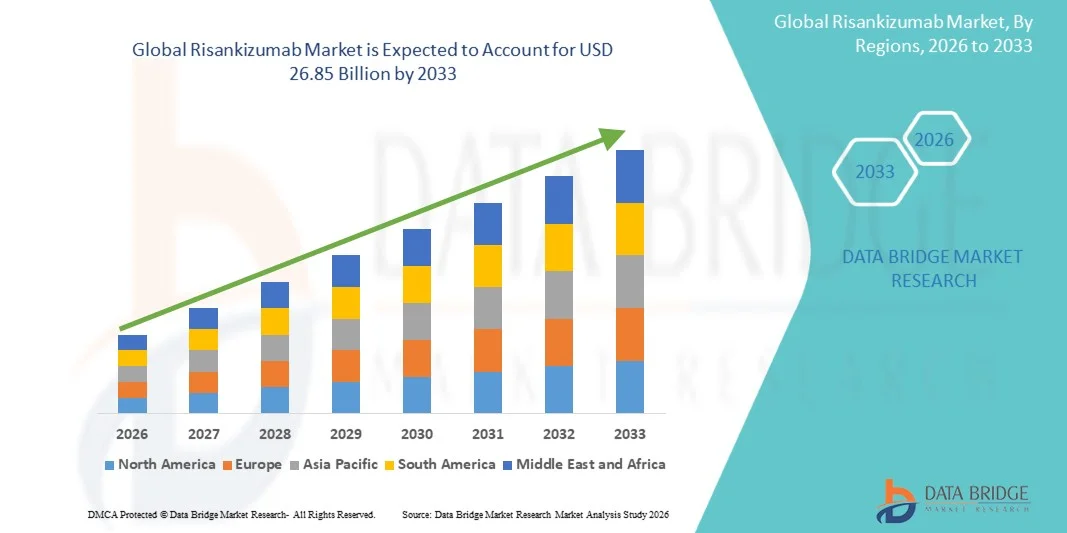
- As per Data Bridge Market Research analysis, the risankizumab market was valued at USD 13.28 billion in 2025 and is projected to reach USD 26.85 billion by 2033, growing at a CAGR of 9.20% from 2026 to 2033.
- The market is experiencing consistent growth driven by the rising prevalence of chronic diseases, increasing diagnosis of autoimmune disorders, rising adoption of biologics in dermatology and gastroenterology, expansion of specialty care access, and increasing investments in next-generation biologics. The growing use of IL-23-targeted therapies and increasing healthcare focus on durable remission are also supporting the expansion of the risankizumab market.
- The expanding use of risankizumab across plaque psoriasis, psoriatic arthritis, Crohn's disease, and ulcerative colitis, together with increasing expansion into new inflammatory indications, is supporting market growth. The market is also benefiting from growing patient preference for convenient dosing regimens, expansion of self-administered injectable formats, and enhanced focus on long-term disease control.
Market Size & Forecast
- Global Market Value (2025): USD 13.28 Billion
- Expected Market Value (2033): USD 26.85 Billion
- Forecast CAGR (2026–2033): 9.20%
What are the Major Takeaways of the Risankizumab Market?
- North America dominated the risankizumab market with the largest revenue share of 40.4% in 2025, supported by high adoption of biologic therapies, strong healthcare infrastructure, and increasing demand for targeted treatments for autoimmune and inflammatory diseases.
- Asia-Pacific is expected to be the fastest-growing region at a CAGR of 13.2% from 2026 to 2033, fueled by rising prevalence of chronic diseases, expanding healthcare infrastructure, and increasing adoption of biologic treatments.
- The psoriatic disease segment led the market with a 69.5% share in 2025, driven by the established use of risankizumab in moderate-to-severe plaque psoriasis and psoriatic disease.
- Crohn's disease are the fastest-growing indication type, projected to register a CAGR of 19.4%, reflecting the surge in adoption of risankizumab for moderate-to-severe inflammatory bowel disease.
- The pre-filled syringes segment dominated the formulation type category with a 59.6% revenue share in 2025, led by the established use of subcutaneous risankizumab administration.
- Subcutaneous injection accounted for 70% of the market share in 2025, preferred by the established use of subcutaneous risankizumab for maintenance treatment.
- The pediatrics segment is the fastest-growing age group category, with a CAGR of 20%, driven by expanding regulatory approvals for pediatric use, increasing clinical development in younger patients, and growing demand for targeted biologic therapies for pediatric psoriatic diseases.
Report Scope and Risankizumab Market Segmentation
|
Attributes |
Risankizumab Key Market Insights |
|
Segments Covered |
|
|
Countries Covered |
North America
Europe
Asia-Pacific
Middle East and Africa
South America
|
|
Key Market Players |
|
|
Market Opportunities |
|
|
Value Added Data Infosets |
In addition to the insights on market scenarios such as market value, growth rate, segmentation, geographical coverage, and major players, the market reports curated by the Data Bridge Market Research also include in-depth expert analysis, patient epidemiology, pipeline analysis, pricing analysis, and regulatory framework. |
What is the Key Trend in the Risankizumab Market?
- The risankizumab market is increasingly shifting toward broader use of targeted IL-23 inhibition across immune-mediated diseases, particularly as clinical evidence supports its use beyond plaque psoriasis and into inflammatory bowel diseases.
- For instance, in March 2024, a study published in Dermatology and Therapy reported that risankizumab was effective and safe in routine clinical practice for patients with moderate-to-severe psoriasis, supporting its increasing use beyond controlled clinical-trial settings.
- Growing clinical evidence for durable remission, endoscopic improvement, and targeted disease control is strengthening the role of risankizumab within biologic treatment strategies.
- The increasing use of risankizumab across dermatology and gastroenterology is expanding its commercial opportunity as healthcare providers seek targeted therapies for patients with moderate-to-severe immune-mediated diseases.
- For instance, in April 2024, a systematic study and network meta-analysis published in Dermatology and Therapy found that risankizumab demonstrated high treatment persistence and among the highest rates of achieving clear or almost clear skin compared with other biologic therapies, reinforcing the shift toward highly effective targeted biologics.
- As clinical evidence continues to support IL-23-targeted treatment and expansion across inflammatory diseases, risankizumab is expected to remain an important biologic therapy, reinforcing targeted immunology as a core component of its market growth.
What are the Key Drivers of the Risankizumab Market?
- The increasing prevalence of psoriasis, Crohn’s disease, and ulcerative colitis is significantly increasing demand for effective biologic therapies capable of providing sustained disease control and remission.
- For instance, in July 2024, a phase 3 INSPIRE study published in JAMA demonstrated that risankizumab achieved significantly higher clinical remission than placebo in patients with moderately to severely active ulcerative colitis, supporting increasing demand for targeted IL-23 therapies in inflammatory bowel disease.
- Healthcare providers are increasingly adopting targeted IL-23 therapies because of their selective mechanism of action and demonstrated efficacy across chronic inflammatory and immune-mediated conditions.
- For instance, in March 2024, a phase 3 study published in the Journal of Crohn’s and Colitis reported that risankizumab maintenance therapy sustained clinical remission, endoscopic response, and endoscopic remission over 52 weeks in patients with moderately to severely active Crohn’s disease, supporting its continued use as a long-term biologic treatment.
- With the growing emphasis on targeted biologic treatment, long-term remission, and improved disease outcomes, risankizumab demand is expected to increase across dermatology and gastroenterology applications.
Which Factors are Challenging the Growth of the Risankizumab Market?
- The high cost of biologic therapies, including risankizumab, can create affordability and reimbursement challenges for patients and healthcare systems, particularly in markets with limited access to advanced treatments.
- For instance, in December 2023, a study published in Cost Effectiveness and Resource Allocation found that the annual treatment cost of risankizumab in Saudi Arabia was USD 16,638.33, compared with USD 9,433.20 for adalimumab, highlighting the higher treatment costs that can constrain biologic adoption
- These cost pressures can restrict the adoption of premium biologic therapies and encourage healthcare providers and payers to evaluate treatment costs alongside clinical outcomes and alternative therapeutic options.
- Competition from other biologic therapies and targeted immunomodulators, together with payer requirements and treatment-selection considerations, can constrain the expansion of risankizumab across immune-mediated disease markets.
- For instance, in April 2025, a study published in JAMA Health Forum reported that the average U.S. net annual treatment price for risankizumab was approximately USD 79,277, while payer coverage restrictions can limit access to psoriasis biologics based on disease severity and formulary preferences, highlighting affordability and reimbursement challenges for risankizumab
- The high treatment costs, reimbursement considerations, and availability of alternative biologic therapies continue to create challenges for wider market penetration, particularly in price-sensitive healthcare systems and emerging markets.
How is the Risankizumab Market Segmented?
The risankizumab market is segmented on the basis of indication, formulation, route of administration, age group, and distribution channel.
- By Indication
On the basis of indication, the risankizumab market is segmented into psoriatic disease, Crohn's disease, and ulcerative colitis. The psoriatic disease segment dominated the market with a 69.5% share in 2025, owing to the established use of risankizumab in moderate-to-severe plaque psoriasis and psoriatic disease. The segment benefits from the increasing prevalence of psoriasis and continued adoption of targeted IL-23 biologic therapies. Risankizumab selectively targets the IL-23 pathway, which plays an important role in chronic inflammatory diseases. The established clinical use of the therapy across psoriatic disease provides a large and well-developed treatment population. Increasing demand for advanced biologic therapies is further supporting the segment's leading position.
The Crohn's disease segment is projected to register the fastest growth at a CAGR of 19.4% from 2026 to 2033, driven by increasing adoption of risankizumab for moderate-to-severe inflammatory bowel disease. The expansion of risankizumab into gastroenterology is increasing its addressable patient population. The therapy provides a targeted approach to IL-23 inhibition for patients requiring advanced biologic treatment. Growing demand for therapies capable of achieving sustained disease control is supporting adoption in Crohn's disease. Increasing clinical experience with risankizumab is also strengthening its position among available biologic treatment options. The continued expansion of approved applications is expected to support rapid growth of this indication segment.
- By Formulation
On the basis of formulation, the risankizumab market is segmented into pre-filled syringes and vials. The pre-filled syringes segment dominated the market with a 59.6% share in 2025, supported by the established use of subcutaneous risankizumab administration. Pre-filled syringes provide a convenient delivery format for maintenance treatment. The formulation is particularly relevant to patients receiving repeated subcutaneous doses following induction therapy. Its established availability supports continued use across the major approved indications. The convenience of subcutaneous administration also supports flexible treatment management outside intravenous infusion settings. These factors have helped pre-filled syringes maintain the largest share of the formulation segment.
The vials segment is projected to register the fastest growth at a CAGR of 18.6% from 2026 to 2033, driven by the increasing use of intravenous risankizumab for induction treatment in inflammatory bowel diseases. Vial-based formulations enable intravenous infusion during the induction phase of Crohn's disease and ulcerative colitis treatment. The expansion of risankizumab into these indications has increased the importance of intravenous delivery within the product portfolio. Following induction, patients can transition to subcutaneous maintenance treatment. Increasing adoption of risankizumab in gastroenterology is therefore supporting demand for vial-based formulations. The growing contribution of inflammatory bowel diseases to overall market expansion is expected to further strengthen this segment.
- By Route of Administration
On the basis of route of administration, the risankizumab market is segmented into intravenous infusion and subcutaneous injection. The subcutaneous injection segment dominated the route of administration category with an estimated share of 70% in 2025, supported by the established use of subcutaneous risankizumab for maintenance treatment. Subcutaneous administration is used across major approved indications, particularly psoriasis and psoriatic arthritis. It provides a convenient route for repeated maintenance dosing after the induction phase. The availability of pre-filled syringe delivery further supports this route. Its established use across a broad patient population strengthens its position within the treatment pathway. Continued demand for convenient biologic administration is expected to maintain the importance of subcutaneous injection.
The intravenous infusion segment is expected to be the fastest-growing route of administration at an estimated CAGR of 18% from 2026 to 2033, supported by the expanding use of risankizumab in Crohn's disease and ulcerative colitis. Intravenous administration is used during the induction phase of treatment for these inflammatory bowel diseases. The treatment pathway subsequently transitions patients to subcutaneous maintenance administration. Expansion of risankizumab use in gastroenterology is therefore increasing demand for intravenous induction therapy. Growing adoption of biologic treatments for moderate-to-severe inflammatory bowel disease is further supporting this route. The increasing contribution of gastrointestinal indications is expected to strengthen intravenous infusion growth over the forecast period.
- By Age Group
On the basis of age group, the risankizumab market is segmented into adults and pediatrics. The adults segment dominated the market with an estimated share of 95% in 2025, supported by the established clinical use of risankizumab across its major approved indications. The majority of clinical evidence and treatment experience has historically been generated in adult populations. Risankizumab is widely used for moderate-to-severe immune-mediated inflammatory diseases affecting adults. The broad adult patient population across dermatology and gastroenterology provides a substantial treatment base. Established regulatory approvals and clinical guidelines further support adult utilization. Consequently, adults continue to represent the largest patient group for risankizumab therapy.
The pediatrics segment is expected to witness the fastest growth at an estimated CAGR of 20% from 2026 to 2033, although from a smaller market base, as regulatory approvals and clinical development expand the use of risankizumab among younger patients. Pediatric applications are creating opportunities to increase the addressable patient population. Growing clinical research is evaluating the safety, pharmacokinetics, and efficacy of risankizumab in pediatric populations. Expansion of age-specific indications can increase access to targeted biologic treatment for children with immune-mediated diseases. Increasing recognition of the need for effective treatment options for pediatric inflammatory conditions is supporting this opportunity. Continued regulatory and clinical development is expected to contribute to faster growth of the pediatric segment
- By Distribution Channel
On the basis of distribution channel, the risankizumab market is segmented into hospital pharmacies, retail pharmacies, and online pharmacies. The hospital pharmacies segment dominated the market with a 49.2% share in 2025, reflecting the specialty nature of risankizumab and the role of healthcare institutions in biologic treatment. Hospital pharmacies are important for specialty medicines requiring clinical oversight and prescription management. They are particularly relevant for intravenous induction therapy in inflammatory bowel disease. Hospital-based dispensing also supports coordination between physicians, pharmacists, and patients. The specialized nature of biologic therapies strengthens the role of institutional pharmacy channels. These factors support hospital pharmacies as the largest distribution channel.
The online pharmacies segment is projected to register the fastest growth at a CAGR of 20.0% from 2026 to 2033, supported by increasing digitalization of pharmaceutical distribution and growing demand for convenient access to medicines. Online pharmacy platforms provide additional channels for prescription fulfillment and delivery. Their expansion is particularly relevant for patients receiving recurring maintenance therapies. Increasing adoption of digital healthcare services is improving access to pharmaceutical products through online channels. Greater consumer familiarity with digital prescription and delivery services is supporting this distribution model. Continued development of online pharmaceutical infrastructure is therefore expected to accelerate the growth of this segment.
Which Region Holds the Largest Share of the Risankizumab Market?
- North America dominated the risankizumab market with the largest revenue share of 40.4% in 2025, supported by high adoption of biologic therapies, strong healthcare infrastructure, and increasing demand for targeted treatments for autoimmune and inflammatory diseases.
- The region also benefits from high demand for targeted IL-23 therapies, strong physician familiarity with risankizumab, broad access to specialty medicines, and continued expansion across psoriasis and inflammatory bowel disease indications. The established presence of Skyrizi across North American markets and continued expansion of its approved therapeutic applications are strengthening the region's leadership in the global risankizumab market.
U.S. Risankizumab Market Insight
The U.S. risankizumab market is witnessing strong growth due to the high prevalence of psoriasis and inflammatory bowel diseases, increasing adoption of targeted biologic therapies, and established specialty-care infrastructure. The country’s advanced healthcare system and broad availability of biologic treatment options are supporting demand across dermatology and gastroenterology. Increasing clinical evidence for risankizumab is also strengthening physician confidence in its use for moderate-to-severe inflammatory diseases. In addition, continued expansion of treatment options for patients with inadequate responses to conventional or biologic therapies is supporting market development. In August 2024, the FDA approved risankizumab for the treatment of adults with moderately to severely active ulcerative colitis, expanding its U.S. therapeutic application beyond psoriasis and Crohn’s disease
Asia-Pacific Risankizumab Market Insight
The Asia-Pacific risankizumab market is expected to witness rapid growth, driven by increasing awareness of biologic therapies, improving access to specialty healthcare, and the expanding treatment landscape for chronic inflammatory diseases. Growing diagnosis of psoriasis and inflammatory bowel diseases is creating opportunities for targeted therapies across the region. Increasing clinical research and real-world evidence are also supporting the adoption of risankizumab among dermatology and gastroenterology specialists. In addition, greater availability of advanced biologic medicines is strengthening the regional treatment landscape. In May 2024, the RAPID real-world study published data from patients treated with risankizumab in Japan, demonstrating the growing availability of clinical evidence from Asian markets.
Japan Risankizumab Market Insight
The Japan risankizumab market is witnessing consistent growth due to increasing use of targeted biologic therapies, established dermatology services, and continued development of advanced treatment options for psoriasis. The country's mature healthcare system provides an established environment for the adoption of innovative biologic medicines. Growing physician experience with IL-23 inhibitors is supporting treatment selection for patients with moderate-to-severe disease. In addition, real-world clinical evidence is contributing to greater understanding of treatment effectiveness in Japanese patients. In May 2024, the international RAPID medical-chart review published real-world data involving Japanese patients with moderate-to-severe psoriasis treated with risankizumab, supporting its effectiveness in routine clinical practice.
China Risankizumab Market Insight
The China risankizumab market is growing rapidly, driven by increasing recognition of psoriasis as a chronic inflammatory disease, expanding access to innovative biologics, and continued development of China's specialty healthcare sector. Growing demand for targeted therapies is encouraging greater adoption of IL-23 inhibitors among eligible patients. Improvements in diagnosis and treatment pathways are also supporting access to advanced psoriasis therapies. In addition, clinical research involving Chinese patients is strengthening the evidence base for risankizumab in the country's treatment environment. In November 2024, a phase 3b study published in Dermatology and Therapy evaluated risankizumab in patients with psoriasis who had shown suboptimal responses to secukinumab or ixekizumab, supporting its role as a treatment option following inadequate response to other biologics
U.K. Risankizumab Market Insight
The U.K. risankizumab market is experiencing steady growth, supported by established NHS biologic-treatment pathways and increasing use of targeted therapies for chronic inflammatory diseases. The country's evidence-based health technology assessment system is supporting the incorporation of risankizumab into treatment pathways for eligible patients. Increasing availability across dermatology and gastroenterology is further broadening its clinical application. In addition, NICE recommendations provide a structured framework for its use following inadequate response or intolerance to other therapies. In August 2024, NICE recommended risankizumab as an option for adults with moderately to severely active ulcerative colitis when conventional or biological treatment is unsuitable or has not worked adequately, supporting its integration into NHS treatment pathways.
Germany Risankizumab Market Insight
The Germany risankizumab market is expanding steadily due to strong specialist healthcare infrastructure, established use of biologic medicines, and increasing clinical experience with targeted IL-23 therapies. Dermatology centers and specialist physicians are increasingly utilizing advanced biologics for patients with moderate-to-severe psoriasis. Germany's participation in multinational real-world research is also strengthening local clinical evidence for risankizumab. In addition, continued evaluation of treatment outcomes is supporting its integration into routine clinical practice. In May 2024, the RAPID real-world study included German patients treated with risankizumab and evaluated long-term clinical outcomes using medical-chart data, providing Germany-specific evidence of treatment effectiveness.
Which are the Top Companies in Risankizumab Market?
The risankizumab industry is primarily led by well-established companies, including:
- AbbVie Inc. (U.S.)
- Johnson & Johnson Services, Inc. (U.S.)
- Amgen Inc. (U.S.)
- Eli Lilly and Company (U.S.)
- Novartis AG (Switzerland)
- UCB S.A. (Belgium)
- Bristol-Myers Squibb Company (U.S.)
- Pfizer Inc. (U.S.)
- Takeda Pharmaceutical Company Limited (Japan)
- Biogen (U.S.)
- AstraZeneca (U.K.)
- Sanofi (France)
- Boehringer Ingelheim International GmbH (Germany)
- Almirall, SA (Spain)
- Sun Pharmaceutical Industries Ltd. (India)
- LEO Pharma A/S (Denmark)
- GALDERMA (Switzerland)
- Teva Pharmaceutical Industries Ltd. (Israel)
- Merck & Co., Inc. (U.S.)
- Viatris Inc. (U.S.)
What are Latest Developments in Risankizumab Market?
- In July 2024, the European Commission approved SKYRIZI (risankizumab) for the treatment of adults with moderately to severely active ulcerative colitis who had an inadequate response, lost response, or were intolerant to conventional or biological therapy. The approval expanded risankizumab’s therapeutic reach into another major inflammatory bowel disease and further strengthened its position as an IL-23-targeted treatment.
- In July 2024, the New England Journal of Medicine published results from the Phase 3b SEQUENCE trial comparing risankizumab with ustekinumab in moderate-to-severe Crohn’s disease. Risankizumab was noninferior to ustekinumab for clinical remission at week 24 and superior for endoscopic remission at week 48, providing peer-reviewed evidence supporting its effectiveness in patients with inadequate response or unacceptable side effects to anti-TNF therapy.
- In May 2024, AbbVie announced that the European Medicines Agency’s Committee for Medicinal Products for Human Use adopted a positive opinion recommending SKYRIZI for adults with moderately to severely active ulcerative colitis. The recommendation was based on the Phase 3 INSPIRE and COMMAND studies, which achieved their primary clinical-remission endpoints and key secondary endpoints including endoscopic improvement.
- In February 2024, AbbVie presented new risankizumab data at the 19th Congress of the European Crohn’s and Colitis Organisation, including long-term results from the FORTIFY study in Crohn’s disease and maintenance results from the Phase 3 COMMAND study in ulcerative colitis. The presentations provided additional evidence on the long-term efficacy and safety of risankizumab across inflammatory bowel disease indications.
- In September 2023, AbbVie announced positive results from the Phase 3 SEQUENCE head-to-head study evaluating SKYRIZI (risankizumab) versus ustekinumab in adults with moderately to severely active Crohn’s disease who had failed one or more anti-TNF therapies. Risankizumab met both primary endpoints, demonstrating non-inferiority for clinical remission at week 24 and superiority for endoscopic remission at week 48. The development strengthened the clinical evidence supporting risankizumab as an advanced treatment option for Crohn’s disease.

- Interactive Data Analysis Dashboard
- Company Analysis Dashboard for high growth potential opportunities
- Research Analyst Access for customization & queries
- Competitor Analysis with Interactive dashboard
- Latest News, Updates & Trend analysis
- Harness the Power of Benchmark Analysis for Comprehensive Competitor Tracking
Data collection and base year analysis are done using data collection modules with large sample sizes. The stage includes obtaining market information or related data through various sources and strategies. It includes examining and planning all the data acquired from the past in advance. It likewise envelops the examination of information inconsistencies seen across different information sources. The market data is analysed and estimated using market statistical and coherent models. Also, market share analysis and key trend analysis are the major success factors in the market report. To know more, please request an analyst call or drop down your inquiry.
The key research methodology used by DBMR research team is data triangulation which involves data mining, analysis of the impact of data variables on the market and primary (industry expert) validation. Data models include Vendor Positioning Grid, Market Time Line Analysis, Market Overview and Guide, Company Positioning Grid, Patent Analysis, Pricing Analysis, Company Market Share Analysis, Standards of Measurement, Global versus Regional and Vendor Share Analysis. To know more about the research methodology, drop in an inquiry to speak to our industry experts.
Data Bridge Market Research is a leader in advanced formative research. We take pride in servicing our existing and new customers with data and analysis that match and suits their goal. The report can be customized to include price trend analysis of target brands understanding the market for additional countries (ask for the list of countries), clinical trial results data, literature review, refurbished market and product base analysis. Market analysis of target competitors can be analyzed from technology-based analysis to market portfolio strategies. We can add as many competitors that you require data about in the format and data style you are looking for. Our team of analysts can also provide you data in crude raw excel files pivot tables (Fact book) or can assist you in creating presentations from the data sets available in the report.












