


RNAi Therapeutics Market Size
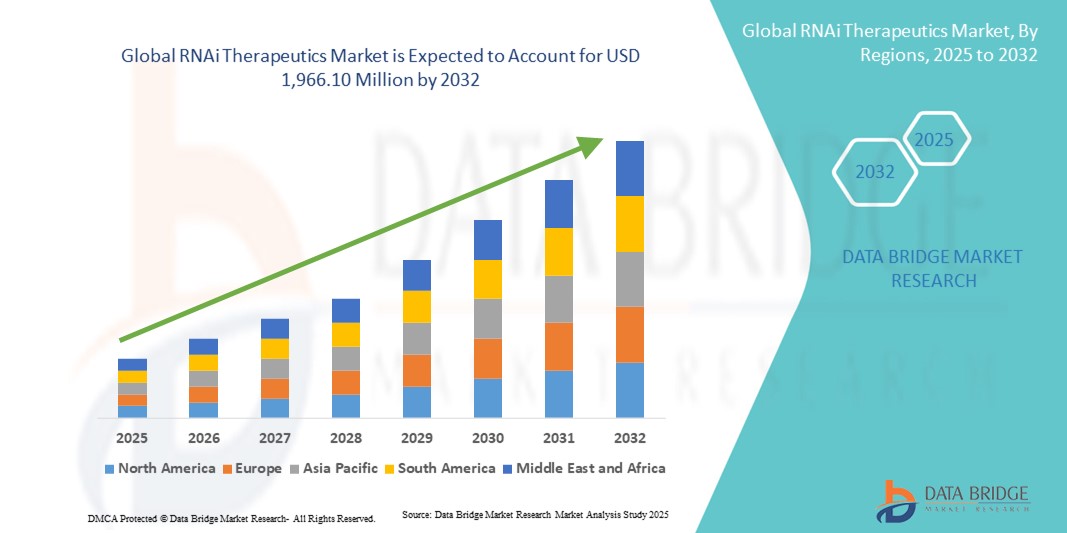
- The global RNAi therapeutics market size was valued at USD 965.26 million in 2024 and is expected to reach USD 1,966.10 million by 2032, at a CAGR of 9.30% during the forecast period
- The market growth is largely driven by increasing research and development in gene-silencing therapies, advancements in RNA delivery technologies, and expanding applications in treating genetic and rare diseases
- Furthermore, rising investments from pharmaceutical companies and growing regulatory approvals for RNAi-based drugs are positioning RNAi therapeutics as a transformative approach in modern medicine. These converging factors are accelerating the adoption of RNAi therapies, thereby significantly boosting the industry's growth
RNAi Therapeutics Market Analysis
- RNAi therapeutics, utilizing RNA interference to selectively silence disease-causing genes, are increasingly vital components of modern medicine due to their precision, reduced off-target effects, and potential to treat genetic, rare, and chronic diseases
- The escalating demand for RNAi therapeutics is primarily fueled by advancements in RNA delivery technologies, growing R&D investments by pharmaceutical companies, and rising demand for targeted therapies with fewer side effects
- North America dominated the RNAi therapeutics market with the largest revenue share of 43% in 2024, characterized by a strong biopharmaceutical ecosystem, high research funding, and early adoption of novel therapies, with the U.S. leading in clinical trials, regulatory approvals, and commercialization of RNAi-based drugs
- Asia-Pacific is expected to be the fastest growing region in the RNAi therapeutics market during the forecast period due to expanding healthcare infrastructure, increasing biotech investments, and rising prevalence of genetic and rare diseases
- Small interfering RNA (siRNA) segment dominated the RNAi therapeutics market with a market share of 45.8% in 2024, driven by its proven clinical efficacy, higher specificity, and broad application across multiple therapeutic areas
Report Scope and RNAi Therapeutics Market Segmentation
|
Attributes |
RNAi Therapeutics Key Market Insights |
|
Segments Covered |
|
|
Countries Covered |
North America
Europe
Asia-Pacific
Middle East and Africa
South America
|
|
Key Market Players |
|
|
Market Opportunities |
|
|
Value Added Data Infosets |
In addition to the insights on market scenarios such as market value, growth rate, segmentation, geographical coverage, and major players, the market reports curated by the Data Bridge Market Research also include in-depth expert analysis, pricing analysis, brand share analysis, consumer survey, demography analysis, supply chain analysis, value chain analysis, raw material/consumables overview, vendor selection criteria, PESTLE Analysis, Porter Analysis, and regulatory framework. |
RNAi Therapeutics Market Trends
Precision Medicine Enabled by Advanced RNAi Platforms
- A significant and accelerating trend in the global RNAi therapeutics market is the growing adoption of advanced RNAi platforms that enable highly targeted gene silencing, improving treatment specificity and reducing off-target effects
- For instance, Onpattro (patisiran) utilizes lipid nanoparticle (LNP) delivery to target transthyretin-mediated amyloidosis, demonstrating clinical efficacy and paving the way for broader RNAi applications
- Next-generation RNAi platforms enable combination therapies, improved delivery to difficult-to-reach tissues, and optimization of dosing regimens, enhancing therapeutic outcomes
- The integration of RNAi therapies with personalized medicine approaches allows clinicians to tailor treatments based on individual genetic profiles, supporting more precise and effective interventions
- This trend towards targeted, patient-specific RNAi therapies is reshaping expectations in disease management, leading companies such as Arrowhead Pharmaceuticals to develop next-gen RNAi treatments with enhanced delivery and safety profiles
- The demand for RNAi therapeutics with improved targeting, efficacy, and safety is growing rapidly across oncology, genetic, and rare disease sectors, driven by the potential to address previously untreatable conditions
RNAi Therapeutics Market Dynamics
Driver
Rising Demand for Targeted and Personalized Therapies
- The increasing prevalence of genetic disorders, rare diseases, and oncology indications, coupled with the rising emphasis on precision medicine, is a significant driver for the adoption of RNAi therapeutics
- For instance, Alnylam Pharmaceuticals announced expansion in RNAi clinical programs for cardiovascular and metabolic disorders in 2024, highlighting the growing pipeline and therapeutic potential
- As patients and healthcare providers seek therapies with higher specificity and fewer side effects, RNAi therapeutics offer distinct advantages over conventional drugs
- Furthermore, increasing investment in R&D, growing regulatory approvals, and collaborations between biotech and pharmaceutical companies are accelerating RNAi drug development and market penetration
- The versatility of RNAi therapeutics in targeting a wide range of genes and pathways makes them attractive for multiple disease applications, further supporting their adoption
- Increased awareness of RNAi therapy benefits, combined with advancements in delivery technologies, is propelling adoption across hospitals, research institutions, and specialized treatment centers
Restraint/Challenge
Delivery and Regulatory Hurdles Limiting Market Penetration
- Challenges related to safe, efficient, and tissue-specific delivery of RNAi molecules remain a major restraint for the market, as ineffective delivery can limit therapeutic outcomes
- For instance, reports of immune reactions or limited biodistribution in early clinical trials have made some stakeholders cautious about RNAi adoption
- Ensuring regulatory compliance across regions with varying approval requirements adds complexity and delays time-to-market for RNAi therapeutics
- High development costs, coupled with specialized manufacturing requirements, increase the financial burden and can limit accessibility, particularly in developing regions
- In addition, potential off-target effects and long-term safety concerns require extensive clinical validation, which can slow adoption and commercialization
- Overcoming these challenges through innovative delivery platforms, streamlined regulatory pathways, and cost optimization will be crucial for sustained growth of the RNAi therapeutics market
RNAi Therapeutics Market Scope
The market is segmented on the basis of molecule type, application, route of administration, and end-user.
- By Molecule Type
On the basis of molecule type, the RNAi therapeutics market is segmented into small interfering RNAs (siRNAs) and microRNAs (miRNAs). The siRNA segment dominated the market with the largest revenue share of 45.8% in 2024, driven by its well-established clinical efficacy, higher specificity, and broader adoption in commercial therapeutics. siRNAs have been successfully applied in treating genetic disorders, oncology, and rare diseases, with multiple FDA-approved drugs, including Onpattro (patisiran), demonstrating real-world effectiveness. The market demand is also supported by the availability of advanced delivery systems, such as lipid nanoparticles, which enhance siRNA stability and target tissue uptake. Researchers and pharmaceutical companies favor siRNAs for their predictable mechanism of action and potential for rapid development pipelines. In addition, siRNAs are often integrated into combination therapies, expanding their utility across multiple therapeutic areas.
The miRNA segment is anticipated to witness the fastest growth during the forecast period, driven by increasing research into its regulatory role in gene expression and potential applications in oncology and cardiovascular diseases. miRNA-based therapeutics are gaining traction due to their ability to modulate multiple genes simultaneously, offering a broader therapeutic effect. Advances in chemical modification and delivery platforms are improving the stability and specificity of miRNAs, which is expected to accelerate their clinical adoption. Academic and research institutions are actively exploring miRNA therapies for personalized medicine, further supporting growth in this segment.
- By Application
On the basis of application, the RNAi therapeutics market is segmented into genetic disorders, oncology, neurodegenerative disorders, cardiovascular disorders, respiratory disorders, infectious diseases, renal disorders, and others. The oncology segment dominated the market in 2024, owing to the high unmet medical need for targeted cancer therapies and the growing number of RNAi-based clinical trials. RNAi therapeutics offer precise silencing of oncogenes and pathways responsible for tumor progression, making them highly valuable in precision oncology. Pharmaceutical companies are increasingly investing in RNAi drugs for solid tumors and hematological malignancies, driving revenue growth. The segment benefits from favorable regulatory approvals, growing collaborations between biotech firms, and the ability to combine RNAi therapies with conventional chemotherapies. Moreover, oncology patients often demonstrate better tolerance to RNAi drugs compared to traditional treatments, enhancing patient adoption.
The genetic disorder segment is expected to witness the fastest growth during forecast period, fueled by increasing prevalence of rare and hereditary conditions, rising awareness, and growing investments in gene-targeted therapies. RNAi therapeutics provide a platform to silence disease-causing genes in conditions such as transthyretin-mediated amyloidosis and familial hypercholesterolemia. Advances in delivery mechanisms, including conjugates and nanoparticles, are enabling systemic targeting for these disorders. Regulatory incentives and orphan drug designations also accelerate development in this application area.
- By Route of Administration
On the basis of route of administration, the RNAi therapeutics market is segmented into intradermal injections, pulmonary delivery, intravenous injections, intraperitoneal injections, and others. The intravenous (IV) injection segment dominated the market in 2024 due to its ability to deliver RNAi molecules systemically with high bioavailability and efficacy, particularly for oncology and genetic disorder therapies. IV administration facilitates access to multiple organs and tissues, enabling broader therapeutic applications. Most approved RNAi drugs, including Onpattro and Givlaari, utilize IV or systemic delivery methods, reinforcing its dominance. Hospitals and clinical centers prefer IV administration due to established protocols and monitoring capabilities. The growing pipeline of systemically delivered RNAi therapeutics further supports market expansion.
The pulmonary delivery segment is expected to witness the fastest growth during forecast period, driven by rising interest in treating respiratory diseases and localized lung disorders. Innovations in inhalable RNAi formulations are enabling targeted delivery to lung tissue, improving efficacy and reducing systemic side effects. Preclinical and clinical trials are increasingly focused on pulmonary delivery for diseases such as cystic fibrosis and viral respiratory infections. The non-invasive nature of pulmonary delivery and patient-friendly administration is expected to accelerate adoption.
- By End-User
On the basis of end-user, the RNAi therapeutics market is segmented into diagnostic laboratories, research and academic laboratories, and hospitals. The hospitals segment dominated the market in 2024, owing to advanced healthcare infrastructure, access to RNAi-based therapies, and increasing adoption of precision medicine in clinical settings. Hospitals play a central role in administering RNAi treatments, monitoring patient response, and facilitating combination therapies, making them critical for revenue generation. The growing integration of RNAi therapeutics into hospital oncology and rare disease programs supports this dominance. Clinical adoption is also reinforced by trained medical staff and specialized facilities required for systemic delivery of RNAi drugs.
The research and academic laboratories segment is expected to witness the fastest growth during forecast period, driven by increasing R&D activities in RNAi technology, exploration of novel targets, and early-stage therapeutic development. Academic institutions and biotech research labs are pivotal in identifying new RNAi applications, validating delivery platforms, and advancing preclinical studies. Collaborative research between universities and pharmaceutical companies is further accelerating innovation and adoption in this segment.
RNAi Therapeutics Market Regional Analysis
- North America dominated the RNAi therapeutics market with the largest revenue share of 43% in 2024, characterized by a strong biopharmaceutical ecosystem, high research funding, and early adoption of novel therapies, with the U.S. leading in clinical trials, regulatory approvals, and commercialization of RNAi-based drugs
- Patients and healthcare providers in the region highly value the precision, targeted efficacy, and reduced side effects offered by RNAi therapeutics, particularly for genetic disorders, oncology, and rare diseases
- This widespread adoption is further supported by a robust regulatory framework, growing number of clinical trials, and collaborations between biotech and pharmaceutical companies, establishing RNAi therapeutics as a preferred treatment option in hospitals and specialized treatment centers
U.S. RNAi Therapeutics Market Insight
The U.S. RNAi therapeutics market captured the largest revenue share of 79% in 2024 within North America, fueled by a strong biotechnology ecosystem, extensive R&D investment, and early adoption of novel gene-silencing therapies. Patients and healthcare providers increasingly prioritize precision medicine approaches, favoring RNAi therapeutics for genetic disorders, oncology, and rare diseases. The growing number of clinical trials, coupled with regulatory approvals for RNAi-based drugs, is further propelling market growth. Moreover, the integration of RNAi therapeutics into hospital treatment protocols and specialty clinics is significantly contributing to adoption.
Europe RNAi Therapeutics Market Insight
The Europe RNAi therapeutics market is projected to expand at a substantial CAGR throughout the forecast period, primarily driven by increasing prevalence of genetic and rare diseases, strong healthcare infrastructure, and supportive regulatory frameworks. Rising investments in RNAi research and collaborations between biotech companies and academic institutions are fostering innovation. European patients value targeted therapies with minimal side effects, and the market is seeing growing applications across oncology, cardiovascular, and neurodegenerative disorders. In addition, the incorporation of RNAi therapeutics in both hospitals and research centers is enhancing market penetration.
U.K. RNAi Therapeutics Market Insight
The U.K. RNAi therapeutics market is anticipated to grow at a noteworthy CAGR during the forecast period, driven by the increasing adoption of precision medicine and rising awareness of RNAi-based treatments among healthcare providers and patients. Concerns regarding unmet medical needs in oncology and rare diseases are encouraging adoption of gene-targeted therapies. The U.K.’s well-established biotech ecosystem, strong clinical trial infrastructure, and supportive government initiatives are expected to continue stimulating market growth.
Germany RNAi Therapeutics Market Insight
The Germany RNAi therapeutics market is expected to expand at a considerable CAGR during the forecast period, fueled by growing awareness of genetic and rare disease therapies, advanced healthcare infrastructure, and focus on innovation. Germany’s emphasis on research and development and precision medicine promotes adoption of RNAi therapeutics in both hospitals and academic research centers. Integration of RNAi therapies into clinical protocols for oncology and cardiovascular diseases is increasing, with patients and clinicians favoring targeted, safe, and effective treatment options.
Asia-Pacific RNAi Therapeutics Market Insight
The Asia-Pacific RNAi therapeutics market is poised to grow at the fastest CAGR of 22% during the forecast period of 2025 to 2032, driven by increasing healthcare infrastructure, rising prevalence of genetic and rare diseases, and growing R&D investments in countries such as China, Japan, and India. The region’s expanding biotechnology ecosystem, combined with government initiatives supporting innovation, is driving RNAi adoption. Moreover, as Asia-Pacific emerges as a hub for RNAi research and clinical trials, accessibility and awareness of RNAi therapeutics are expanding across hospitals and specialty clinics.
Japan RNAi Therapeutics Market Insight
The Japan RNAi therapeutics market is gaining momentum due to the country’s advanced biotech infrastructure, aging population, and increasing demand for personalized medicine. The market places significant emphasis on targeted therapies with high efficacy and safety. Adoption of RNAi therapeutics is driven by the growing number of clinical trials, integration into hospital treatment programs, and patient preference for innovative treatments for genetic and rare diseases. Collaborative efforts between academic institutions and pharmaceutical companies are further fueling growth.
India RNAi Therapeutics Market Insight
The India RNAi therapeutics market accounted for the largest market revenue share in Asia-Pacific in 2024, attributed to expanding healthcare infrastructure, rising awareness of precision medicine, and increasing prevalence of genetic disorders. India’s growing biotechnology sector and adoption of advanced therapies in hospitals and research centers are key factors propelling market growth. In addition, government initiatives supporting innovation and clinical research, alongside partnerships with global biotech firms, are enhancing the development and accessibility of RNAi therapeutics in the country.
RNAi Therapeutics Market Share
The RNAi therapeutics industry is primarily led by well-established companies, including:
- Alnylam Pharmaceuticals, Inc. (U.S.)
- Arrowhead Pharmaceuticals, Inc. (U.S.)
- F. Hoffmann-La Roche Ltd (Switzerland)
- Novartis AG (Switzerland)
- Arbutus Biopharma (Canada)
- Silence Therapeutics (U.K.)
- Benitec Biopharma Limited (Australia)
- Quark Pharmaceuticals, Inc. (U.S.)
- Sirnaomics (U.S.)
- Phio Pharmaceuticals Corp. (U.S.)
- ProQR Therapeutics (Netherlands)
- Arrakis Therapeutics. (U.S.)
- GENEVANT SCIENCES (Canada)
- Mirimus. (U.S.)
- Altogen Labs (U.S.)
- City Therapeutics (U.S.)
- Genome Biologics (U.S.)
- Invaio Sciences (U.S.)
- Entos Pharmaceuticals, Inc. (U.S.)
What are the Recent Developments in Global RNAi Therapeutics Market?
- In August 2025, Alnylam Pharmaceuticals announced that it would present new data from its hypertension and transthyretin amyloidosis (ATTR) programs at the European Society of Cardiology (ESC) Congress 2025 in Madrid, Spain. These presentations aimed to highlight the potential of RNAi therapeutics to transform the treatment of cardiovascular diseases
- In May 2025, AbbVie and ADARx Pharmaceuticals entered into a collaboration and license option agreement to develop next-generation small interfering RNA (siRNA) therapies across multiple therapeutic areas, including neuroscience, immunology, and oncology. This partnership combines AbbVie's expertise in biotherapeutic drug development and commercialization with ADARx's proprietary RNA technology
- In April 2025, Silexion Therapeutics announced a strategic collaboration with Catalent, a global leader in advanced delivery technologies, clinical development, and manufacturing solutions for therapeutics. Under the agreement, Catalent will conduct formulation development and clinical manufacturing activities for Silexion's next-generation small interfering RNA (siRNA) candidate, SIL204, at its state-of-the-art facility in Limoges, France
- In March 2025, Alnylam Pharmaceuticals announced that the U.S. Food and Drug Administration (FDA) approved Qfitlia (fitusiran), the first and only small interfering RNA (siRNA) therapeutic for the treatment of hemophilia A or B, with or without inhibitors. This approval marks a significant milestone as Qfitlia becomes the sixth RNAi therapeutic developed by Alnylam to receive FDA approval
- In March 2025, Alnylam Pharmaceuticals announced that the U.S. Food and Drug Administration (FDA) approved AMVUTTRA (vutrisiran), the first RNA interference (RNAi) therapeutic to reduce cardiovascular death, hospitalizations, and urgent heart failure visits in patients with transthyretin-mediated amyloid cardiomyopathy (ATTR-CM). This approval marks a significant milestone in the treatment of ATTR-CM, a rare and life-threatening disease

- Interactive Data Analysis Dashboard
- Company Analysis Dashboard for high growth potential opportunities
- Research Analyst Access for customization & queries
- Competitor Analysis with Interactive dashboard
- Latest News, Updates & Trend analysis
- Harness the Power of Benchmark Analysis for Comprehensive Competitor Tracking
Data collection and base year analysis are done using data collection modules with large sample sizes. The stage includes obtaining market information or related data through various sources and strategies. It includes examining and planning all the data acquired from the past in advance. It likewise envelops the examination of information inconsistencies seen across different information sources. The market data is analysed and estimated using market statistical and coherent models. Also, market share analysis and key trend analysis are the major success factors in the market report. To know more, please request an analyst call or drop down your inquiry.
The key research methodology used by DBMR research team is data triangulation which involves data mining, analysis of the impact of data variables on the market and primary (industry expert) validation. Data models include Vendor Positioning Grid, Market Time Line Analysis, Market Overview and Guide, Company Positioning Grid, Patent Analysis, Pricing Analysis, Company Market Share Analysis, Standards of Measurement, Global versus Regional and Vendor Share Analysis. To know more about the research methodology, drop in an inquiry to speak to our industry experts.
Data Bridge Market Research is a leader in advanced formative research. We take pride in servicing our existing and new customers with data and analysis that match and suits their goal. The report can be customized to include price trend analysis of target brands understanding the market for additional countries (ask for the list of countries), clinical trial results data, literature review, refurbished market and product base analysis. Market analysis of target competitors can be analyzed from technology-based analysis to market portfolio strategies. We can add as many competitors that you require data about in the format and data style you are looking for. Our team of analysts can also provide you data in crude raw excel files pivot tables (Fact book) or can assist you in creating presentations from the data sets available in the report.













