


What is the Robot Assisted Laparoscopic Devices Market Size and Overview?
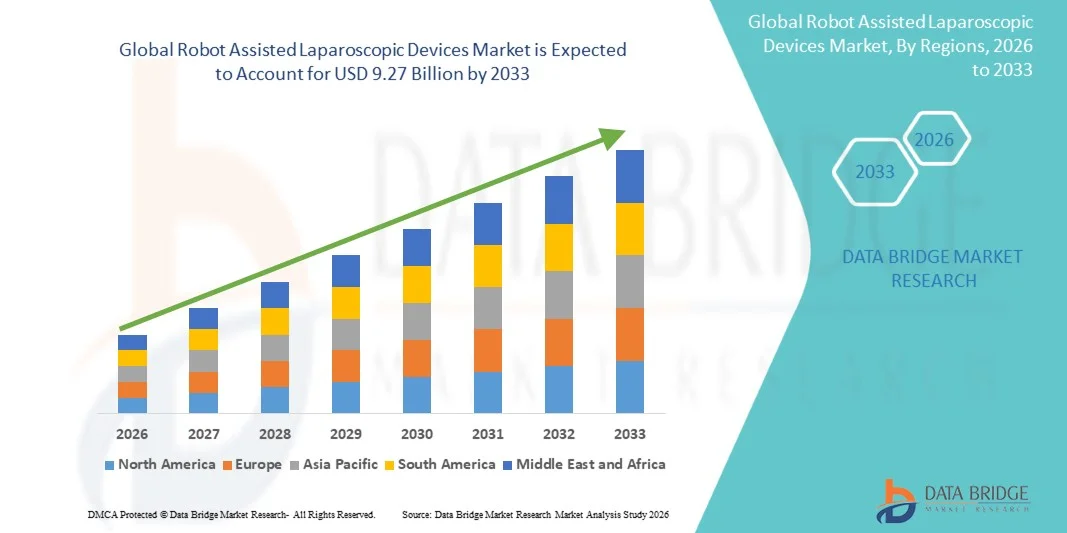
The Robot Assisted Laparoscopic Devices Market was valued at USD 4.93 billion in 2025 and is projected to reach USD 9.27 billion by 2033, growing at a CAGR of 8.20% from 2026 to 2033. Market growth is supported by rising prevalence of chronic lifestyle diseases such as diabetes, pancreatic cancer, and gastrointestinal disorders among the general population, alongside the widespread adoption of minimally invasive surgical techniques.
The excellent success rates connected to laparoscopic procedures, combined with accelerated recovery times and improved patient outcomes compared to traditional open surgeries, are driving increased adoption among both patients and medical professionals. Ongoing technological advancements in robotic surgical systems, including enhanced 3D visualization, improved instrument dexterity, and integrated training simulators, are expanding the clinical applicability of robot assisted laparoscopic devices across urology, gynecology, and general surgery. In addition, growing healthcare infrastructure investments in emerging markets and the expansion of ambulatory surgical centers are creating new opportunities for stakeholders across the forecast period.
Market Size & Forecast
- Global Market Value (2025): USD 4.93 Billion
- Expected Market Value (2033): USD 9.27 Billion
- Forecast CAGR (2026–2033): 8.20%
- Leading Region in 2025: North America
- Fastest Growing Region: Asia-Pacific
Key Market Trends & Insights
- North America dominated the Robot Assisted Laparoscopic Devices Market with the largest revenue share of 41.2% in 2025, supported by high adoption rates of advanced surgical technologies, strong reimbursement frameworks, and the presence of leading market players.
- Asia-Pacific is expected to be the fastest-growing region at a CAGR of 10.85% from 2026 to 2033, driven by expanding healthcare infrastructure, rising demand for minimally invasive procedures, and increasing healthcare expenditure.
- The Robotic-assisted Radical Prostatectomy segment led the market with a 42.5% market share in 2025, reflecting its established position as the golden standard in urologic robotic surgery and strong clinical evidence supporting improved oncological and functional outcomes.
- The Robotic-assisted Partial Nephrectomy segment is anticipated to be the fastest-growing type category, driven by increasing incidence of renal tumors, nephron-sparing surgical approaches, and technological advancements enabling complex tumor resections.
- The Hospitals segment dominated the end-user category with a 68.4% market share in 2025, supported by access to advanced robotic surgical platforms, multidisciplinary surgical teams, and comprehensive perioperative care infrastructure.
- The Ambulatory Surgical Center segment is expected to witness strong growth during the forecast period, driven by cost-effective procedural delivery, shorter patient stays, and expanding outpatient robotic surgery programs.
Report Scope and Robot Assisted Laparoscopic Devices Market Segmentation
|
Attributes |
Robot Assisted Laparoscopic Devices Key Market Insights |
|
Segments Covered |
|
|
Countries Covered |
North America
Europe
Asia-Pacific
Middle East and Africa
South America
|
|
Key Market Players |
|
|
Market Opportunities |
|
|
Value Added Data Infosets |
In addition to the insights on market scenarios such as market value, growth rate, segmentation, geographical coverage, and major players, the market reports curated by the Data Bridge Market Research also include depth expert analysis, patient epidemiology, pipeline analysis, pricing analysis, and regulatory framework. |
What is the Key Trend in the Robot Assisted Laparoscopic Devices Market?
Trend: Technological Advancements Enhancing Surgical Precision and Training
Clinical adoption of robot assisted laparoscopic devices continues to accelerate as technological innovations improve surgical precision, visualization, and ergonomics. Advanced 3D-HD imaging systems, integrated panoramic views, and enhanced instrument articulation enable surgeons to perform complex procedures with greater accuracy and reduced tissue trauma. Training simulators embedded within robotic platforms, such as the Hugo RAS system, allow surgeons to develop proficiency before performing live procedures, reducing the learning curve associated with robotic surgery and improving surgical outcomes.
For instance,
The Versius surgical robot system has gained market traction due to its modular design, lower acquisition costs compared to established platforms, and seamless integration with standard operating room equipment, providing hospitals with an affordable entry point into robotic surgery.
In addition, research demonstrates that robotic surgery reduces intraoperative blood loss and conversion rates to open surgery compared to conventional laparoscopic techniques, supporting broader clinical adoption across general surgery, urology, and gynecology specialties.
Robot Assisted Laparoscopic Devices Market Dynamics
Key Market Driver: Rising Demand for Minimally Invasive Surgical Procedures
The growing preference for minimally invasive surgery among patients and healthcare providers is a primary driver of market growth. Robot assisted laparoscopic devices enable smaller incisions, reduced postoperative pain, shorter hospital stays, and faster recovery times compared to traditional open surgery. The increasing prevalence of conditions requiring surgical intervention, including prostate cancer, renal tumors, and colorectal diseases, is expanding the patient population eligible for robotic procedures.
For instance,
A 2025 meta-analysis comparing robotic-assisted minimally invasive esophagectomy and conventional laparoscopic esophagectomy confirmed that robotic surgery leads to smaller incision sizes and reduced intraoperative blood loss by 71.78 mL (p<0.00001), demonstrating significant clinical advantages. Rising demand for minimally invasive procedures is expected to strengthen adoption of robotic surgical technologies globally.
Key Restraint/Challenge: High Capital Investment and Operational Costs
The substantial upfront capital investment required for robotic surgical systems, along with ongoing maintenance, consumables, and training costs, presents a significant barrier to adoption, particularly for smaller healthcare facilities and institutions in emerging markets. The total cost of ownership, including instrument replacement and service contracts, can limit the financial feasibility of robotic surgery programs.
For instance,
Healthcare systems evaluating robotic surgery adoption must balance the clinical benefits against significant capital expenditure, with da Vinci systems requiring substantial initial investment compared to newer, more cost-competitive platforms such as Versius and Hugo.
Key Market Opportunity: Expansion into Ambulatory Surgical Centers and Emerging Markets
The development of modular, portable, and cost-effective robotic surgical systems is creating opportunities for adoption beyond traditional hospital settings. Ambulatory surgical centers are increasingly incorporating robotic platforms for outpatient urologic, gynecologic, and general surgical procedures. Simultaneously, expanding healthcare infrastructure in Asia-Pacific, Latin America, and the Middle East is driving demand for robotic surgical capabilities in previously underserved markets.
For instance,
The global laparoscopic device market, including MIS robotic systems, is projected to grow from approximately USD 21 billion in 2025 to nearly USD 37 billion by 2031, driven by increasing adoption of minimally invasive and robotic-assisted surgical techniques worldwide. High acquisition and operating costs may constrain adoption, particularly among budget-sensitive healthcare providers.
How is the Robot Assisted Laparoscopic Devices Market Segmented?
The robot assisted laparoscopic devices market is segmented on the basis of type and application.
- By Type
On the basis of type, the Robot Assisted Laparoscopic Devices Market is segmented into robotic-assisted radical prostatectomy (the golden standard), robotic-assisted partial nephrectomy, robotic-assisted nephrectomy, and others. The robotic-assisted radical prostatectomy segment dominated the market with a 42.5% market share in 2025, reflecting its established position as the golden standard in urologic robotic surgery. Strong clinical evidence supporting improved oncological outcomes, nerve preservation, and faster return to continence and potency has driven widespread adoption across North America and Europe. High procedure volumes in academic medical centers and specialized urology practices contribute to segment leadership.
The robotic-assisted partial nephrectomy segment is expected to witness the fastest growth from 2026 to 2033, driven by rising incidence of small renal masses detected through improved imaging modalities, growing emphasis on nephron-sparing surgical approaches, and technological advancements enabling precise tumor excision while preserving renal function. Surgeon proficiency with robotic platforms for complex partial nephrectomies continues to improve, expanding the eligible patient population.
- By Application
On the basis of application, the Robot Assisted Laparoscopic Devices Market is segmented into hospitals, ambulatory surgical center, and others. The hospitals segment dominated the market with a market share of 68.4% in 2025, driven by access to advanced robotic surgical platforms, multidisciplinary surgical teams, and comprehensive perioperative care infrastructure. Hospitals serve as primary centers for complex robotic procedures requiring extended surgical times, inpatient monitoring, and specialized postoperative care. The concentration of urologic, gynecologic, and general surgery robotics programs within hospital systems contributes to high procedure volumes and equipment utilization.
The ambulatory surgical center segment is expected to witness the fastest growth from 2026 to 2033, driven by cost-effective procedural delivery, shorter patient stays, and expanding outpatient robotic surgery programs. The development of modular robotic platforms suitable for ambulatory settings is enabling same-day discharge for appropriate procedures, reducing healthcare costs and improving patient convenience. Growing payer acceptance of outpatient robotic procedures and favorable reimbursement policies are supporting segment expansion.
Robot Assisted Laparoscopic Devices Market Regional Analysis
North America dominated the robot assisted laparoscopic devices market with a revenue share of 41.2% in 2025, supported by high adoption rates of advanced surgical technologies, strong reimbursement frameworks, and the presence of leading market players including Intuitive Surgical and Medtronic. Favorable regulatory pathways, robust clinical training infrastructure, and extensive surgeon experience with robotic platforms contribute to regional market leadership.
U.S. Robot Assisted Laparoscopic Devices Market Insight
The U.S. robot assisted laparoscopic devices market benefits from the highest installed base of robotic surgical systems globally, extensive surgeon training programs, and strong clinical evidence supporting robotic surgery adoption. Academic medical centers, large health systems, and specialty urology practices continue to expand robotic surgery programs across urologic, gynecologic, and general surgical applications. Favorable Medicare and commercial payer reimbursement supports procedural volumes and equipment investment.
Europe Robot Assisted Laparoscopic Devices Market Insight
The Europe robot assisted laparoscopic devices market remains a major contributor, with strong hospital-based robotic surgery programs across Germany, the U.K., France, and Italy. Growing adoption of the Versius and Hugo RAS systems is providing cost-effective alternatives to established platforms, expanding access to robotic surgery in public and private healthcare systems. Cross-disciplinary guidelines and structured training pathways are improving surgical outcomes and standardizing care delivery.
U.K. Robot Assisted Laparoscopic Devices Market Insight
The U.K. robot assisted laparoscopic devices market is characterized by expanding robotic surgery programs within NHS hospitals and private healthcare facilities. Investment in robotic platforms for prostatectomy, nephrectomy, and colorectal surgery is improving access to minimally invasive options and reducing surgical waiting times.
Germany Robot Assisted Laparoscopic Devices Market Insight
Germany's robust hospital infrastructure and advanced surgical capabilities support comprehensive robotic surgery programs across urology, gynecology, and general surgery. Strong clinical training networks and favorable reimbursement frameworks contribute to high procedure volumes and technology adoption.
Asia-Pacific Robot Assisted Laparoscopic Devices Market Insight
The Asia-Pacific robot assisted laparoscopic devices market is poised for rapid growth with a CAGR of 10.85% during the forecast period, driven by expanding healthcare infrastructure, rising demand for minimally invasive procedures, and increasing healthcare expenditure. Private healthcare systems in China, Japan, India, and South Korea are investing in robotic surgical capabilities to meet growing patient demand and improve clinical outcomes.
Japan Robot Assisted Laparoscopic Devices Market Insight
The Japan robot assisted laparoscopic devices market benefits from advanced healthcare infrastructure, strong surgeon expertise, and favorable reimbursement for robotic procedures. Robotic-assisted radical prostatectomy and nephrectomy procedures are well-established, with expanding applications in colorectal and gynecologic surgery.
China Robot Assisted Laparoscopic Devices Market Insight
The China robot assisted laparoscopic devices market is experiencing rapid growth driven by healthcare modernization initiatives, expanding private hospital networks, and increasing patient demand for advanced surgical options. Domestic robotic surgical system development is complementing imported platforms, improving market accessibility.
Which are the Top Companies in Robot Assisted Laparoscopic Devices Market?
The robot assisted laparoscopic devices industry is primarily led by well-established companies, including:
- Intuitive Surgical Inc. (U.S.)
- Medtronic plc (Ireland)
- Stryker Corporation (U.S.)
- Medrobotics Corporation (U.S.)
- Globus Medical Inc. (U.S.)
- NuVasive Inc. (U.S.)
- Smith+Nephew (U.K.)
- Titan Medical Inc. (Canada)
- Asensus Surgical Inc. (U.S.)
- CMR Surgical Ltd. (U.K.)
- Mazor Robotics (Medtronic) (Israel)
- Renishaw plc (U.K.)
What are the Recent Developments in Robot Assisted Laparoscopic Devices Market?
- In April 2026, CMR Surgical announced the submission of a 510(k) application to the U.S. FDA to expand its Versius Plus Surgical Robotic System into gynecology procedures, including hysterectomy and oophorectomy. The submission builds on the company’s growing global clinical experience and supports its strategy to expand robotic-assisted laparoscopic surgery adoption in the U.S. market.
- In March 2026, CMR Surgical reported that more than 45,000 patients worldwide had been treated using its Versius Surgical Robotic System. The milestone reflects accelerating global adoption of robot-assisted laparoscopic surgery across multiple specialties as the company expands its commercial footprint.
- In December 2025, Medtronic received U.S. FDA clearance for its Hugo Robotic-Assisted Surgery (RAS) System for urologic surgical procedures. The approval marked Medtronic’s entry into the U.S. robotic surgery market and increased competition in the robot-assisted laparoscopic devices segment.
- In April 2025, Medtronic announced that its Expand URO U.S. clinical trial met both primary safety and effectiveness endpoints for the Hugo RAS System. The study represented the largest prospective IDE trial conducted for multi-port robotic-assisted urologic surgery in the United States and supported the company’s FDA submission efforts.
- In October 2024, CMR Surgical received U.S. FDA De Novo clearance for the Versius Surgical System for gallbladder removal (cholecystectomy) procedures. The approval represented a major regulatory milestone and enabled the company to enter the U.S. robotic-assisted laparoscopic surgery market.

- Interactive Data Analysis Dashboard
- Company Analysis Dashboard for high growth potential opportunities
- Research Analyst Access for customization & queries
- Competitor Analysis with Interactive dashboard
- Latest News, Updates & Trend analysis
- Harness the Power of Benchmark Analysis for Comprehensive Competitor Tracking
Data collection and base year analysis are done using data collection modules with large sample sizes. The stage includes obtaining market information or related data through various sources and strategies. It includes examining and planning all the data acquired from the past in advance. It likewise envelops the examination of information inconsistencies seen across different information sources. The market data is analysed and estimated using market statistical and coherent models. Also, market share analysis and key trend analysis are the major success factors in the market report. To know more, please request an analyst call or drop down your inquiry.
The key research methodology used by DBMR research team is data triangulation which involves data mining, analysis of the impact of data variables on the market and primary (industry expert) validation. Data models include Vendor Positioning Grid, Market Time Line Analysis, Market Overview and Guide, Company Positioning Grid, Patent Analysis, Pricing Analysis, Company Market Share Analysis, Standards of Measurement, Global versus Regional and Vendor Share Analysis. To know more about the research methodology, drop in an inquiry to speak to our industry experts.
Data Bridge Market Research is a leader in advanced formative research. We take pride in servicing our existing and new customers with data and analysis that match and suits their goal. The report can be customized to include price trend analysis of target brands understanding the market for additional countries (ask for the list of countries), clinical trial results data, literature review, refurbished market and product base analysis. Market analysis of target competitors can be analyzed from technology-based analysis to market portfolio strategies. We can add as many competitors that you require data about in the format and data style you are looking for. Our team of analysts can also provide you data in crude raw excel files pivot tables (Fact book) or can assist you in creating presentations from the data sets available in the report.













