Sandalwood Oil Market Size
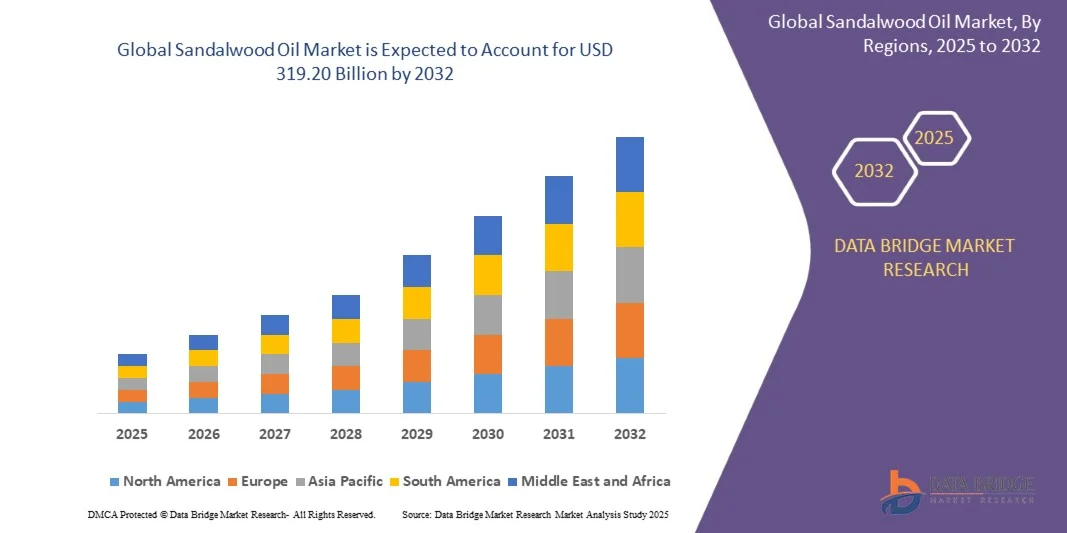
- The Sandalwood Oil Market size was valued at USD 190.00 million in 2024 and is expected to reach USD 319.20 million by 2032, at a CAGR of 6.70% during the forecast period.
- The market growth is largely driven by increasing demand for natural and organic personal care products, along with expanding applications of sandalwood oil in cosmetics, aromatherapy, and pharmaceuticals.
- Furthermore, rising consumer preference for sustainable and ethically sourced ingredients is encouraging manufacturers to invest in high-quality sandalwood oil production and distribution. These factors are collectively accelerating market adoption, thereby significantly boosting the industry’s growth.
Sandalwood Oil Market Analysis
- Sandalwood oil, valued for its aromatic, therapeutic, and cosmetic properties, is increasingly used in personal care, aromatherapy, and pharmaceutical products due to its natural origin, versatility, and growing consumer preference for organic and plant-based ingredients.
- The rising demand for sandalwood oil is primarily driven by increasing awareness of natural wellness solutions, expanding applications in skincare, fragrances, and medicinal products, and growing preference for sustainably sourced and ethically produced essential oils.
- North America dominated the Sandalwood Oil Market with the largest revenue share of 34.3% in 2024, characterized by high consumer spending on premium personal care and wellness products, strong awareness of natural ingredients, and a well-established presence of key industry players, with the U.S. witnessing substantial growth in sandalwood oil consumption across cosmetics, aromatherapy, and therapeutic applications.
- Asia-Pacific is expected to be the fastest-growing region in the Sandalwood Oil Market during the forecast period due to rising disposable incomes, increasing urbanization, and growing adoption of natural and herbal personal care products.
- The Natural Sandalwood Oil segment dominated the market with the largest revenue share of 61.5% in 2024, driven by its authentic aroma, superior therapeutic properties, and high demand across personal care, aromatherapy, and pharmaceutical applications.
Report Scope and Sandalwood Oil Market Segmentation
|
Attributes |
Sandalwood Oil Key Market Insights |
|
Segments Covered |
|
|
Countries Covered |
North America
Europe
Asia-Pacific
Middle East and Africa
South America
|
|
Key Market Players |
|
|
Market Opportunities |
|
|
Value Added Data Infosets |
In addition to the insights on market scenarios such as market value, growth rate, segmentation, geographical coverage, and major players, the market reports curated by the Data Bridge Market Research also include in-depth expert analysis, pricing analysis, brand share analysis, consumer survey, demography analysis, supply chain analysis, value chain analysis, raw material/consumables overview, vendor selection criteria, PESTLE Analysis, Porter Analysis, and regulatory framework. |
Sandalwood Oil Market Trends
“Enhanced Wellness Through Blended and AI-Assisted Formulations”
- A significant and accelerating trend in the Sandalwood Oil Market is the increasing incorporation of blended formulations and AI-assisted production techniques to enhance product efficacy and consistency. This technological adoption is significantly improving the quality and therapeutic benefits of sandalwood oil-based products.
- For instance, leading brands such as doTERRA and Young Living are utilizing advanced extraction and blending methods to create oils optimized for aromatherapy, skincare, and holistic wellness, ensuring consistent fragrance, potency, and purity.
- AI and data-driven formulation techniques enable manufacturers to analyze consumer preferences and usage patterns to develop personalized or optimized sandalwood oil blends. For example, some premium wellness brands employ AI to recommend product combinations that maximize relaxation, skin benefits, or stress relief based on user inputs.
- The integration of advanced technologies with traditional extraction methods facilitates the creation of high-quality, standardized oils that maintain the therapeutic and aromatic properties of sandalwood. Through this approach, companies can offer a reliable and premium user experience across personal care, cosmetic, and medicinal applications.
- This trend towards more intelligent, personalized, and high-quality sandalwood oil formulations is fundamentally reshaping consumer expectations for natural wellness products. Consequently, companies such as Forest Essentials and Biotique are developing advanced blends and AI-informed formulations to cater to the growing demand for effective, premium, and sustainable products.
- The demand for high-quality, AI-assisted, and blended sandalwood oil products is growing rapidly across both residential wellness and commercial aromatherapy sectors, as consumers increasingly prioritize efficacy, personalization, and premium natural ingredients.
Sandalwood Oil Market Dynamics
Driver
“Growing Need Due to Rising Consumer Preference for Natural and Organic Products”
- The increasing consumer awareness of the benefits of natural, organic, and sustainably sourced ingredients, coupled with rising demand for wellness and personal care products, is a significant driver for the heightened demand for sandalwood oil.
- For instance, in 2024, Forest Essentials expanded its premium product line with high-quality sandalwood oil-based formulations for skincare and aromatherapy, emphasizing ethical sourcing and purity. Such strategies by key companies are expected to drive the sandalwood oil market growth in the forecast period.
- As consumers seek safer and holistic alternatives to synthetic fragrances and chemical-based personal care products, sandalwood oil offers natural therapeutic, aromatic, and cosmetic benefits, providing a compelling value proposition over synthetic oils.
- Furthermore, the growing popularity of aromatherapy, holistic wellness routines, and natural skincare is making sandalwood oil an integral ingredient in these sectors, supporting premium formulations and multi-purpose applications.
- The versatility of sandalwood oil in cosmetics, perfumes, aromatherapy, and medicinal applications, combined with rising consumer preference for ethically sourced and high-quality oils, is a key factor propelling market adoption across residential wellness and commercial wellness industries.
Restraint/Challenge
“Sustainability Concerns and High Costs of Pure Sandalwood Oil”
- Concerns regarding the sustainability and overharvesting of sandalwood trees pose a significant challenge to the broader market. The limited availability of high-quality sandalwood and strict regulations on harvesting can restrict supply, raising prices and limiting access.
- For instance, reports on the overexploitation of Indian sandalwood have made some consumers and manufacturers cautious about sourcing practices, increasing the importance of certified sustainable suppliers.
- Addressing these sustainability concerns through ethical sourcing, reforestation initiatives, and certification programs is crucial for building consumer trust. Companies such as Mysore Sandal Soap and doTERRA emphasize their sourcing transparency and sustainable practices to reassure buyers. Additionally, the relatively high cost of pure sandalwood oil compared to synthetic alternatives can be a barrier for price-sensitive consumers, particularly in developing regions or for budget-conscious buyers.
- While blends and synthetic substitutes are becoming more accessible, the perceived premium for authentic, pure sandalwood oil can still hinder widespread adoption.
- Overcoming these challenges through sustainable harvesting, consumer education on the benefits of pure oils, and the development of cost-effective yet high-quality formulations will be vital for sustained market growth.
Sandalwood Oil Market Scope
The market is segmented on the basis of type and application.
• By Type
On the basis of type, the Sandalwood Oil Market is segmented into Natural Sandalwood Oil and Lab-Created Sandalwood Oil. The Natural Sandalwood Oil segment dominated the market with the largest revenue share of 61.5% in 2024, driven by its authentic aroma, superior therapeutic properties, and high demand across personal care, aromatherapy, and pharmaceutical applications. Consumers often prioritize natural oil for its purity, traditional usage, and holistic wellness benefits, while premium brands emphasize ethically sourced, high-quality oil to cater to discerning customers.
The Lab-Created Sandalwood Oil segment is anticipated to witness the fastest growth rate of 19.8% from 2025 to 2032, fueled by increasing cost-effectiveness, wider availability, and adoption in mass-market cosmetic and personal care products. Lab-created oil also provides a sustainable alternative to natural sandalwood, addressing concerns over deforestation and regulatory restrictions on harvesting, thereby driving adoption across emerging markets.
• By Application
On the basis of application, the Sandalwood Oil Market is segmented into Personal Care, Pharmaceuticals, Aromatherapy, and Others. The Personal Care segment accounted for the largest market revenue share of 47.6% in 2024, driven by the extensive use of sandalwood oil in skincare, haircare, soaps, and cosmetic formulations. Consumers increasingly prefer natural ingredients in personal care products, valuing the aromatic, moisturizing, and anti-inflammatory benefits of sandalwood oil.
The Pharmaceuticals segment is expected to witness the fastest CAGR of 18.5% from 2025 to 2032, fueled by growing applications of sandalwood oil in therapeutic formulations, topical treatments, and holistic medicine. Rising interest in natural remedies and herbal-based drugs, coupled with increasing research on the medicinal properties of sandalwood oil, is accelerating adoption in hospitals, wellness centers, and pharmaceutical manufacturing, particularly across Asia-Pacific and North America.
Sandalwood Oil Market Regional Analysis
- North America dominated the Sandalwood Oil Market with the largest revenue share of 34.3% in 2024, driven by high consumer awareness of natural and organic wellness products, as well as growing adoption of premium personal care and aromatherapy solutions.
- Consumers in the region highly value the authenticity, therapeutic benefits, and multi-purpose applications of sandalwood oil, ranging from skincare and cosmetics to aromatherapy and holistic wellness.
- This widespread adoption is further supported by high disposable incomes, a health-conscious population, and strong preference for sustainably sourced and ethically produced products, establishing sandalwood oil as a favored ingredient for both personal care and commercial wellness applications
U.S. Sandalwood Oil Market Insight
The U.S. sandalwood oil market captured the largest revenue share of 38% in 2024 within North America, driven by rising consumer awareness of natural and organic wellness products and a strong preference for premium personal care formulations. Consumers are increasingly seeking authentic, sustainably sourced sandalwood oil for skincare, aromatherapy, and holistic health applications. The growing trend of DIY wellness routines, along with robust demand for aromatherapy diffusers, skincare serums, and essential oil blends, further propels the market. Additionally, the U.S. emphasis on ethical sourcing and high-quality products is significantly contributing to the expansion of the sandalwood oil industry.
Europe Sandalwood Oil Market Insight
The Europe sandalwood oil market is projected to expand at a substantial CAGR throughout the forecast period, primarily driven by stringent regulations on product quality, growing consumer preference for natural ingredients, and rising demand in personal care and aromatherapy applications. Increased urbanization, wellness awareness, and rising disposable incomes are fostering the adoption of sandalwood oil across residential and commercial wellness products. The region is experiencing significant growth in premium skincare, fragrance, and spa applications, with sandalwood oil being incorporated into both new product launches and reformulations.
U.K. Sandalwood Oil Market Insight
The U.K. sandalwood oil market is anticipated to grow at a noteworthy CAGR during the forecast period, driven by the increasing trend of natural and organic personal care, rising interest in aromatherapy, and consumer demand for premium fragrances. Additionally, the growing awareness of sustainable sourcing and ethical production practices is encouraging both consumers and businesses to prefer high-quality, authentic sandalwood oil. The U.K.’s strong retail and e-commerce infrastructure, along with rising wellness trends, is expected to continue stimulating market growth.
Germany Sandalwood Oil Market Insight
The Germany sandalwood oil market is expected to expand at a considerable CAGR during the forecast period, fueled by increasing awareness of natural remedies, preference for eco-friendly and ethically sourced products, and demand in the personal care and aromatherapy sectors. Germany’s well-developed wellness and cosmetics industry, combined with consumer emphasis on quality and sustainability, promotes adoption of sandalwood oil in premium skincare, spa, and fragrance applications. Integration into holistic wellness routines and product innovation are further supporting market growth.
Asia-Pacific Sandalwood Oil Market Insight
The Asia-Pacific sandalwood oil market is poised to grow at the fastest CAGR of 22% from 2025 to 2032, driven by increasing urbanization, rising disposable incomes, and expanding wellness awareness in countries such as China, India, and Japan. The region’s growing interest in natural personal care products, aromatherapy, and holistic health practices is accelerating the adoption of sandalwood oil. Furthermore, Asia-Pacific’s strong production base and domestic availability of both natural and lab-created sandalwood oil are improving accessibility and affordability for a wider consumer base.
Japan Sandalwood Oil Market Insight
The Japan sandalwood oil market is gaining momentum due to the country’s strong focus on natural and organic personal care, rapid urbanization, and rising consumer preference for premium wellness products. Japanese consumers place high importance on therapeutic and aromatic benefits, driving demand in aromatherapy, skincare, and spa applications. Additionally, the integration of sandalwood oil into lifestyle wellness routines, along with increasing interest in natural fragrance and holistic remedies, is fueling market growth.
China Sandalwood Oil Market Insight
The China sandalwood oil market accounted for the largest market revenue share in Asia-Pacific in 2024, attributed to the expanding middle class, growing urban population, and increasing awareness of natural personal care and wellness products. China represents one of the largest emerging markets for aromatherapy, skincare, and premium fragrance products containing sandalwood oil. The rising demand for ethically sourced and affordable products, combined with strong domestic production capabilities, is a key factor propelling the market in China.
Sandalwood Oil Market Share
The Sandalwood Oil industry is primarily led by well-established companies, including:
- Bajaj Herbs Pvt. Ltd. (India)
- Forest Essentials (India)
- Aromaaz International (India)
- Young Living Essential Oils (U.S.)
- Givaudan SA (Switzerland)
- Symrise AG (Germany)
- DoTERRA (U.S.)
- The Body Shop (U.K.)
- Oudh & Co. (UAE)
- Kama Ayurveda (India)
- NHR Organic Oils (India)
- Tisserand Aromatherapy (U.K.)
- Florihana (France)
- Essential Oils of Australia (Australia)
- Young & Co. Naturals (U.S.)
- Lebermuth Co. (U.S.)
- Plant Therapy (U.S.)
- Aveda (U.S.)
- HACO Group (India)
- Mysore Sandal Oil Co. (India)
What are the Recent Developments in Sandalwood Oil Market?
- In April 2023, Bajaj Herbs Pvt. Ltd., a leading Indian natural wellness company, launched a new line of premium sandalwood oil-based skincare products in Southeast Asia, aimed at promoting holistic wellness and natural beauty solutions. This initiative highlights the company’s focus on delivering high-quality, ethically sourced sandalwood oil while expanding its presence in emerging markets. By leveraging its expertise in natural oils and aromatherapy, Bajaj Herbs is catering to growing consumer demand for sustainable and authentic wellness products in the Sandalwood Oil Market.
- In March 2023, Forest Essentials, an Indian luxury ayurvedic brand, introduced a new lab-created sandalwood oil variant specifically formulated for aromatherapy and personal care applications. The product line is designed to offer consistent quality and enhanced fragrance profiles, addressing both domestic and international demand. This launch demonstrates Forest Essentials’ commitment to innovation in natural wellness solutions while reinforcing its position as a key player in the rapidly growing Sandalwood Oil Market.
- In March 2023, Givaudan SA, a global leader in flavors and fragrances, successfully integrated natural sandalwood oil into its new line of premium fragrances for the Asia-Pacific market. This initiative emphasizes the rising significance of high-quality, ethically sourced natural ingredients in perfumery and personal care. By utilizing sustainable sourcing practices, Givaudan is enhancing its reputation as a provider of premium natural fragrance solutions while driving the growth of the global sandalwood oil industry.
- In February 2023, Aromaaz International, a leading essential oil manufacturer in India, announced a strategic partnership with wellness spas and aromatherapy centers across Europe to promote sandalwood oil-based treatments. This collaboration aims to increase product accessibility and awareness of the therapeutic benefits of sandalwood oil, facilitating adoption among wellness-focused consumers. The initiative highlights Aromaaz International’s dedication to innovation, sustainability, and expansion in the Sandalwood Oil Market.
- In January 2023, Young Living Essential Oils, a U.S.-based leader in natural and therapeutic-grade oils, launched a new premium line of sandalwood oil products targeting personal care and aromatherapy markets. Equipped with enhanced purity and sustainable sourcing certifications, the line enables consumers to access high-quality sandalwood oil with confidence. This launch demonstrates Young Living’s commitment to integrating premium natural oils into global wellness routines while supporting the growth of the Sandalwood Oil Market.

- Interactive Data Analysis Dashboard
- Company Analysis Dashboard for high growth potential opportunities
- Research Analyst Access for customization & queries
- Competitor Analysis with Interactive dashboard
- Latest News, Updates & Trend analysis
- Harness the Power of Benchmark Analysis for Comprehensive Competitor Tracking
Data collection and base year analysis are done using data collection modules with large sample sizes. The stage includes obtaining market information or related data through various sources and strategies. It includes examining and planning all the data acquired from the past in advance. It likewise envelops the examination of information inconsistencies seen across different information sources. The market data is analysed and estimated using market statistical and coherent models. Also, market share analysis and key trend analysis are the major success factors in the market report. To know more, please request an analyst call or drop down your inquiry.
The key research methodology used by DBMR research team is data triangulation which involves data mining, analysis of the impact of data variables on the market and primary (industry expert) validation. Data models include Vendor Positioning Grid, Market Time Line Analysis, Market Overview and Guide, Company Positioning Grid, Patent Analysis, Pricing Analysis, Company Market Share Analysis, Standards of Measurement, Global versus Regional and Vendor Share Analysis. To know more about the research methodology, drop in an inquiry to speak to our industry experts.
Data Bridge Market Research is a leader in advanced formative research. We take pride in servicing our existing and new customers with data and analysis that match and suits their goal. The report can be customized to include price trend analysis of target brands understanding the market for additional countries (ask for the list of countries), clinical trial results data, literature review, refurbished market and product base analysis. Market analysis of target competitors can be analyzed from technology-based analysis to market portfolio strategies. We can add as many competitors that you require data about in the format and data style you are looking for. Our team of analysts can also provide you data in crude raw excel files pivot tables (Fact book) or can assist you in creating presentations from the data sets available in the report.