


Scarlet Fever Market Overview
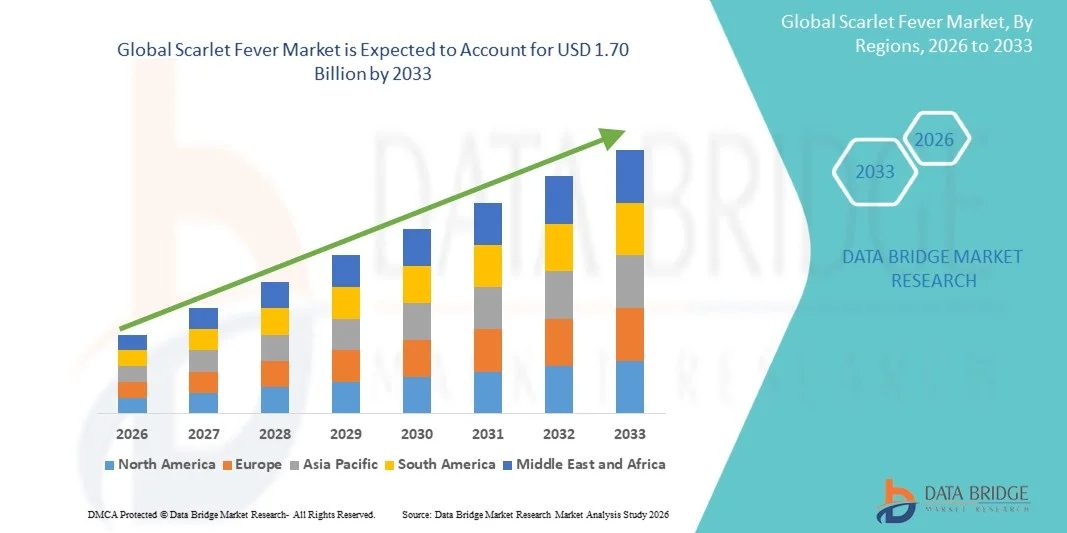
As per Data Bridge Market Research analysis, the scarlet fever market was valued at USD 1.20 billion in 2025 and is projected to reach USD 1.70 billion by 2033, growing at a CAGR of 4.50% from 2026 to 2033. The market is experiencing consistent growth driven by increasing awareness of infectious diseases, advancements in diagnostic technologies, rising demand for effective treatment options, and ongoing research initiatives focused on improving scarlet fever management.
The increasing incidence of scarlet fever cases, combined with improved healthcare infrastructure, enhanced diagnostic capabilities, and growing adoption of advanced testing methods, is encouraging healthcare providers, pharmaceutical companies, and research organizations to invest in better detection and treatment solutions. Traditional diagnostic approaches such as throat culture continue to dominate, while polymerase chain reaction (PCR) testing is gaining traction due to its higher sensitivity and accuracy in identifying bacterial infections. Rising awareness campaigns, telemedicine adoption, and continued research into innovative therapies are further supporting market expansion.
Market Size & Forecast
- Global Market Value (2025): USD 1.20 Billion
- Expected Market Value (2033): USD 1.70 Billion
- Forecast CAGR (2026–2033): 4.50%
- Leading Region in 2025: North America
- Fastest Growing Region: Asia Pacific
Key Market Trends & Insights
- North America dominated the scarlet fever market with the largest revenue share of 32.8% in 2025, supported by advanced healthcare infrastructure, increasing awareness of infectious diseases, improved diagnostic capabilities, and the presence of established healthcare system
- The antibiotics segment led the market with a 58.2% share in 2025, driven by the widespread use of antibiotic therapies as the primary treatment approach for Group A Streptococcus infections, their effectiveness in reducing symptom duration, preventing complications, and limiting bacterial transmission
- Asia-Pacific is expected to be the fastest-growing region in the scarlet fever market at a CAGR of 9.2% during the forecast period, fueled by increasing healthcare investments, rising awareness regarding infectious diseases, improving diagnostic infrastructure, and expanding access to healthcare services
- Over-the-counter pain relievers are the fastest-growing treatment type, projected to register a CAGR of 8.9%, reflecting the surge in demand for supportive symptom management solutions among scarlet fever patients
- The throat culture segment dominated the diagnosis method category with a 46.5% revenue share in 2025, led by its established position as a reliable diagnostic technique for confirming Group A Streptococcus infections
- Hospitals accounted for 59.68% of the market, preferred by the availability of advanced diagnostic facilities, trained healthcare professionals, and comprehensive treatment services
- The polymerase chain reaction testing segment is the fastest-growing diagnosis method category, with a CAGR of 8.1%, driven by increasing demand for rapid and highly sensitive diagnostic solutions
Report Scope and Scarlet Fever Market Segmentation
|
Attributes |
Scarlet Fever Key Market Insights |
|
Segments Covered |
|
|
Countries Covered |
North America
Europe
Asia-Pacific
Middle East and Africa
South America
|
|
Key Market Players |
|
|
Market Opportunities |
|
|
Value Added Data Infosets |
In addition to the insights on market scenarios such as market value, growth rate, segmentation, geographical coverage, and major players, the market reports curated by the Data Bridge Market Research also include in-depth expert analysis, patient epidemiology, pipeline analysis, pricing analysis, and regulatory framework. |
Scarlet Fever Market Trends
Trend: Increasing Adoption of Advanced Diagnostic Technologies
Healthcare providers are increasingly adopting advanced diagnostic technologies for scarlet fever detection to enable faster and more accurate identification of Group A Streptococcus infections. The integration of rapid antigen detection tests and molecular diagnostic methods such as polymerase chain reaction (PCR) is improving diagnostic efficiency compared with traditional throat culture methods. Hospitals and diagnostic laboratories are leveraging these technologies to support early treatment initiation, reduce disease transmission risks, and improve patient outcomes through timely identification of infections. The growing focus on infectious disease surveillance and improved diagnostic accessibility is further strengthening demand for reliable scarlet fever testing solutions across developed and emerging healthcare markets. For instance, in August 2025, the Centers for Disease Control and Prevention (CDC) updated its guidance on testing for strep throat and scarlet fever, highlighting the use of rapid antigen detection tests (RADTs) and throat cultures for identifying Group A Streptococcus infections. The CDC stated that healthcare providers generally use rapid strep tests initially and may perform throat cultures when additional confirmation is required, supporting accurate diagnosis and timely antibiotic treatment.
The rising adoption of advanced diagnostic solutions is expected to remain a key market trend, driven by the need for faster detection, improved infection control, and enhanced treatment outcomes.
Scarlet Fever Market Dynamics
Key Market Driver: Rising Prevalence of Group A Streptococcus Infections
The increasing prevalence of Group A Streptococcus infections is creating significant demand for scarlet fever diagnosis and treatment solutions worldwide. Healthcare systems are strengthening infectious disease management programs as increasing infection rates drive the need for antibiotics, diagnostic testing, and patient monitoring approaches. Pharmaceutical companies and healthcare providers are focusing on effective treatment strategies to reduce complications associated with untreated infections, while improved healthcare awareness is encouraging early medical consultation. The growing emphasis on controlling bacterial infections through timely diagnosis and appropriate therapy is accelerating market growth across hospitals, clinics, and diagnostic centers globally. For instance, in December 2022, the European Centre for Disease Prevention and Control (ECDC) reported an increase in invasive Group A Streptococcus (iGAS) infections among children in several European countries, including France, Ireland, the Netherlands, Sweden, and the United Kingdom. The ECDC highlighted that several countries also observed increased scarlet fever notifications compared with previous seasons, prompting strengthened surveillance activities, early detection efforts, and public health responses
The increasing incidence of Group A Streptococcus infections and rising focus on early diagnosis and treatment are expected to remain primary drivers of scarlet fever market growth.
Key Restraint/Challenge: Antibiotic Resistance and Treatment Limitations
A significant challenge in the scarlet fever market is the growing concern regarding antibiotic resistance, which can impact the effectiveness of commonly used treatment approaches. Although scarlet fever is generally managed with antibiotic therapy, increasing antimicrobial resistance among bacterial pathogens creates challenges for maintaining treatment efficacy and developing effective disease management strategies. Healthcare providers and public health organizations are focusing on antimicrobial stewardship programs to ensure appropriate antibiotic use, while ongoing monitoring of resistance patterns remains essential for controlling Group A Streptococcus infections. For instance, in November 2023, the World Health Organization (WHO) highlighted antimicrobial resistance (AMR) as one of the major global public health threats, emphasizing that the misuse and overuse of antimicrobial medicines accelerate the development of drug-resistant bacteria. WHO stated that antimicrobial resistance can make infections harder to treat and reduce the effectiveness of existing antibiotics, creating challenges for the management of bacterial diseases, including infections caused by Streptococcus pyogenes, the pathogen responsible for scarlet fever.
The increasing threat of antibiotic resistance remains a key challenge for the scarlet fever market, creating the need for effective antimicrobial stewardship, continuous surveillance, and development of improved treatment strategies.
Key Market Opportunity: Expansion of Rapid Diagnostic and Digital Healthcare Solutions
The development of rapid diagnostic technologies and digital healthcare solutions presents a significant opportunity for the scarlet fever market. Advanced molecular testing platforms, remote healthcare services, and digital monitoring tools can improve early detection, treatment guidance, and patient management efficiency. Increasing investments in healthcare infrastructure and infectious disease diagnostics are creating opportunities for companies to introduce faster, more accessible testing solutions. The integration of innovative diagnostic approaches with telemedicine platforms can further expand healthcare access, particularly in emerging markets where timely disease identification remains a challenge. For instance, in March 2024, a systematic review and meta-analysis published in Clinical Microbiology and Infection evaluated rapid nucleic acid amplification tests (NAATs) for the diagnosis of Group A Streptococcus (GAS) pharyngitis. The study reported that molecular-based rapid tests demonstrated high diagnostic accuracy compared with conventional diagnostic approaches, supporting their potential role in faster identification of GAS infections and improved clinical decision-making.
The expansion of rapid diagnostics and digital healthcare adoption is expected to create new growth opportunities by improving accessibility, accuracy, and efficiency in scarlet fever diagnosis and treatment.
Scarlet Fever Market Scope
The scarlet fever market is segmented on the basis of treatment, diagnosis method, end-users, and distribution channel
- By Treatment
On the basis of treatment, the scarlet fever market is segmented into antibiotics, over-the-counter pain relievers, and supportive care. The antibiotics segment dominated the treatment category with 58.2% market share in 2025, owing to antibiotics being the primary treatment option for scarlet fever caused by Group A Streptococcus infection. Antibiotics such as penicillin and amoxicillin are widely preferred due to their effectiveness in eliminating bacterial infections and preventing complications. The widespread availability of generic antibiotic formulations and their relatively low cost are supporting segment dominance across developed and emerging healthcare markets. Healthcare providers continue to recommend antibiotic therapy as the first-line treatment approach to reduce symptom duration and transmission risk. Increasing incidence of streptococcal infections among children is further strengthening demand for antibiotic-based therapies. Continuous focus on improving treatment compliance and reducing complications is expected to maintain the leading position of this segment.
The over-the-counter pain relievers segment is expected to witness the fastest growth at a CAGR of 8.9% during the forecast period, driven by increasing demand for supportive symptom management solutions among scarlet fever patients. These medications help manage common symptoms such as fever, throat pain, and discomfort associated with bacterial infections. Growing patient preference for easily accessible non-prescription treatment options is supporting segment expansion. Increasing awareness regarding symptom relief alongside antibiotic therapy is encouraging adoption of pain management products. Expansion of retail and online pharmacy channels is improving the availability of over-the-counter healthcare products. Rising focus on patient comfort, self-care practices, and convenient treatment options is expected to accelerate growth of this segment.
- By Diagnosis Method
On the basis of diagnosis method, the scarlet fever market is segmented into throat culture, rapid antigen detection tests, and polymerase chain reaction testing. The throat culture segment dominated the diagnosis method category with a market share of 46.5% in 2025, supported by its established position as a conventional and reliable method for confirming Group A Streptococcus infections. Throat culture testing provides high diagnostic accuracy and remains widely used in hospitals and clinical laboratories. Healthcare professionals continue to rely on this method due to its ability to confirm infections when rapid tests provide uncertain results. The availability of microbiology laboratory infrastructure supports continued adoption. Increasing focus on accurate disease confirmation and appropriate antibiotic administration is supporting segment demand. However, longer processing time compared with molecular testing methods may limit future growth potential.
The polymerase chain reaction (PCR) testing segment is expected to witness the fastest growth at a CAGR of 8.1% during the forecast period, driven by increasing preference for rapid, sensitive, and accurate diagnostic solutions. PCR testing enables faster identification of bacterial infections compared with traditional culture-based methods. Growing adoption of molecular diagnostics in hospitals and diagnostic centers is improving disease detection efficiency. Increasing emphasis on early treatment initiation and infection control is encouraging the adoption of advanced testing technologies. Technological advancements are improving the accessibility and performance of molecular testing platforms. Rising healthcare investments in diagnostic infrastructure are expected to further accelerate PCR adoption.
- By End-Users
On the basis of end-users, the scarlet fever market is segmented into hospitals, homecare, specialty clinics, and others. The hospitals segment dominated the end-user category with 46.2% market share in 2025, owing to the availability of advanced diagnostic facilities, trained healthcare professionals, and comprehensive treatment services. Hospitals remain the preferred healthcare setting for diagnosing and managing infectious diseases due to their laboratory capabilities and medical expertise. Increasing patient visits for bacterial infections and improved disease surveillance programs are supporting segment growth. Hospitals provide access to prescription-based antibiotics and advanced diagnostic procedures. The increasing focus on infection control and outbreak management further strengthens hospital adoption. The segment is expected to maintain its dominance due to its critical role in complete patient management.
The specialty clinics segment is projected to be the fastest-growing end-user segment with a CAGR of 7.6%, driven by increasing outpatient care demand and the growing preference for accessible healthcare services. Clinics provide convenient diagnosis and treatment options for patients with mild to moderate scarlet fever symptoms. The adoption of point-of-care diagnostic tools is improving the ability of clinics to provide faster infection detection. Rising healthcare decentralization trends are supporting the expansion of outpatient facilities. Increasing availability of trained healthcare professionals in community settings is further encouraging clinic-based care. Growing preference for cost-effective and convenient healthcare delivery models is expected to accelerate segment growth.
- By Distribution Channel
On the basis of distribution channel, the scarlet fever market is segmented into hospital pharmacy, online pharmacy, and retail pharmacy. The hospital pharmacy segment dominated the distribution channel category with a market share of 40.5% in 2025, supported by the requirement for prescription-based antibiotic therapies and physician-supervised treatment. Hospital pharmacies provide direct access to medications following diagnosis and consultation. Increasing hospital-based treatment activities and outpatient services are strengthening this segment. The controlled distribution of antibiotics through healthcare facilities supports appropriate medication use. Hospitals also ensure availability of supportive care products for infection management. The segment continues to benefit from the importance of clinical supervision in bacterial infection treatment.
The online pharmacy segment is expected to witness the fastest growth at a CAGR of 8.3% during the forecast period, driven by increasing digital healthcare adoption and rising consumer preference for convenient medicine purchasing options. Online pharmacies improve access to medications through home delivery and digital ordering platforms. Growing smartphone penetration and expanding e-commerce healthcare services are supporting adoption. Patients are increasingly using online platforms for purchasing supportive care products and prescribed medications. Digital healthcare expansion in emerging markets is further improving accessibility. Increasing demand for convenient healthcare solutions is expected to accelerate online pharmacy growth.
Scarlet Fever Market Regional Analysis
North America dominated the Scarlet Fever Market with the largest revenue share of 32.8% in 2025, supported by advanced healthcare infrastructure, increasing awareness of infectious diseases, improved diagnostic capabilities, and the presence of established healthcare system. The region benefits from established healthcare systems, widespread adoption of diagnostic testing methods, and effective disease surveillance programs for Group A Streptococcus infections. Growing utilization of rapid antigen detection tests, molecular diagnostic technologies, and antibiotic treatment approaches is accelerating market development. Increasing focus on early diagnosis, infection prevention, and timely treatment management continues to strengthen North America's leadership position in the global market.
U.S. Scarlet Fever Market Insight
The U.S. scarlet fever market is witnessing steady growth due to advanced healthcare infrastructure, increasing awareness of Group A Streptococcus infections, and strong adoption of diagnostic and treatment solutions. The country’s well-established healthcare system, along with widespread availability of rapid antigen detection tests, throat cultures, and antibiotic therapies, is driving demand across hospitals, clinics, and diagnostic laboratories. In addition, increasing focus on infectious disease surveillance and early diagnosis is accelerating market development across the country. The U.S. Centers for Disease Control and Prevention (CDC) recommends rapid antigen detection tests (RADTs) and throat cultures for diagnosing Group A Streptococcus infections, supporting accurate identification and appropriate management of infections such as scarlet fever.
Europe Scarlet Fever Market Insight
The Europe scarlet fever market remains a major contributor to global revenue, driven by increasing disease surveillance, improved diagnostic capabilities, and strong public health initiatives. The widespread implementation of infectious disease monitoring programs, along with rising adoption of advanced testing methods and antibiotic treatment approaches, is supporting market expansion across the region. Increasing investments in healthcare infrastructure and enhanced awareness regarding Group A Streptococcus infections continue to strengthen scarlet fever diagnosis and treatment adoption throughout Europe. For instance, in December 2022, the European Centre for Disease Prevention and Control (ECDC) highlighted a rise in invasive Group A Streptococcus infections among children in European countries, including France, Ireland, the Netherlands, Sweden, and the United Kingdom, with several countries also reporting increased scarlet fever notifications. The ECDC emphasized enhanced surveillance, timely diagnosis, and appropriate clinical management to address the increased disease activity across Europe.
U.K. Scarlet Fever Market Insight
The U.K. scarlet fever market is experiencing continued growth, supported by increasing surveillance of Group A Streptococcus infections, improved diagnostic access, and rising demand for effective treatment solutions. Increasing awareness among healthcare professionals and parents regarding early symptom recognition and timely antibiotic treatment is contributing to market expansion. Furthermore, integration of enhanced disease monitoring systems and public health responses is improving infection management and positioning the U.K. as a key market for scarlet fever diagnosis and treatment. For instance, in December 2022, the UK Health Security Agency (UKHSA) issued an update on increased scarlet fever and invasive Group A Streptococcus (iGAS) activity in England, reporting higher-than-expected scarlet fever notifications compared with previous seasons. The agency emphasized the importance of early identification, appropriate antibiotic treatment, and continued surveillance to manage the increased incidence of Group A Streptococcus infections.
Germany Scarlet Fever Market Insight
The Germany scarlet fever market is expanding steadily due to strong healthcare infrastructure, advanced diagnostic capabilities, and increasing focus on infectious disease monitoring. Hospitals, diagnostic laboratories, and healthcare providers are increasingly utilizing reliable testing methods and evidence-based treatment approaches for Group A Streptococcus infections. Continuous improvements in healthcare surveillance systems, along with strong emphasis on disease prevention and timely intervention, are supporting market growth in Germany. For instance, in January 2023, Germany’s Robert Koch Institute (RKI) highlighted increased notifications of invasive Group A Streptococcus infections and scarlet fever activity in Europe, including Germany, through its infectious disease surveillance activities. The RKI emphasized the importance of continuous epidemiological monitoring, early detection, and public health measures to manage rising Group A Streptococcus-related infections.
Asia-Pacific Scarlet Fever Market Insight
The Asia-Pacific scarlet fever market is expected to witness rapid growth, driven by improving healthcare infrastructure, increasing awareness of infectious diseases, and rising adoption of advanced diagnostic technologies across countries such as China, India, and Japan. Growing investments in healthcare systems, expanding access to diagnostic services, and increasing focus on infectious disease surveillance are supporting regional market expansion. In addition, rising healthcare expenditure and increasing demand for effective bacterial infection management solutions are accelerating scarlet fever diagnosis and treatment adoption across emerging economies. The World Health Organization (WHO) highlights the importance of strengthening primary healthcare systems, disease surveillance, and diagnostic capacity to improve infectious disease management in developing regions.
Japan Scarlet Fever Market Insight
The Japan scarlet fever market is witnessing consistent growth due to advanced healthcare infrastructure, strong infectious disease surveillance systems, and increasing adoption of diagnostic technologies. Healthcare providers and laboratories are focusing on accurate identification and management of bacterial infections through established testing methods and appropriate treatment strategies. Moreover, Japan’s emphasis on public health monitoring and prevention programs is supporting effective management of Group A Streptococcus infections and contributing to market growth. Japan’s National Institute of Infectious Diseases (NIID) conducts surveillance of infectious diseases, including Group A Streptococcus-related infections, through national monitoring programs.
China Scarlet Fever Market Insight
The China scarlet fever market is growing rapidly, driven by increasing healthcare access, expanding disease surveillance programs, and rising awareness regarding bacterial infections. Growing investments in healthcare infrastructure and diagnostic capabilities are improving early detection and treatment of Group A Streptococcus infections. In addition, increasing focus on childhood infectious disease monitoring and strengthening public health systems are supporting market development across the country. In September 2025 a population-based surveillance study published in International Journal of Infectious Diseases analyzed scarlet fever trends in China using data from the National Notifiable Infectious Disease Surveillance System. The study reported that 876,680 scarlet fever cases were recorded in China from 2005–2024, with 2023–2024 post-pandemic annual morbidity reaching 3.25 cases per 100,000 population, indicating continued disease monitoring requirements and the need for effective diagnostic and treatment strategies.
Scarlet Fever Market Share
The scarlet fever industry is primarily led by well-established companies, including:
- Pfizer Inc. (U.S.)
- GSK plc (U.K.)
- Merck & Co., Inc. (U.S.)
- Novartis AG (Switzerland)
- Sanofi (France)
- AstraZeneca (U.K.)
- Johnson & Johnson Services, Inc. (U.S.)
- Abbott (U.S.)
- F. Hoffmann-La Roche Ltd (Switzerland)
- Thermo Fisher Scientific Inc. (U.S.)
- bioMérieux SA (France)
- BD (U.S.)
- QuidelOrtho Corporation (U.S.)
- Hologic, Inc. (U.S.)
- Danaher (U.S.)
- Siemens Healthineers AG (Germany)
- QIAGEN (Netherlands)
- Cepheid (U.S.)
- Takeda Pharmaceutical Company Limited (Japan)
- Tanabe Pharma Corporation (Japan)
Latest Developments in Scarlet Fever Market
- In December 2024, the International Vaccine Institute (IVI) launched SAVAC 2.0, an expanded phase of the Strep A Vaccine Global Consortium (SAVAC), to accelerate the development and availability of vaccines against Group A Streptococcus. The initiative focuses on preparing clinical trial networks, strengthening surveillance systems, and improving collaboration between vaccine developers, researchers, manufacturers, and public health organizations
- In March 2024, the University of Dundee announced an international collaboration with the London School of Hygiene & Tropical Medicine, International Vaccine Institute, and Gyeongbuk Institute for Bio-Industry to develop recombinant glycoconjugate vaccines targeting Group A Streptococcus. The project, supported by the RIGHT Foundation with USD 3.1 million funding, aims to advance vaccine development against Strep A, the bacterial pathogen responsible for scarlet fever and other serious infections.
- In September 2023, the Strep A Vaccine Global Consortium (SAVAC) and international research partners accelerated efforts toward Group A Streptococcus vaccine development through expanded scientific collaboration and candidate evaluation programs. The initiative brought together researchers, vaccine developers, and global health organizations to address the lack of an approved Strep A vaccine and advance preventive approaches against diseases including scarlet fever
- In February 2023, the University of Queensland announced a major funding collaboration to advance the development of an mRNA vaccine against Group A Streptococcus infections. The project, supported by nearly AUD 8 million from the Leducq Foundation, builds on research collaboration between the University of Queensland and Moderna to develop an mRNA-based vaccine approach
- In September 2022, the World Health Organization (WHO) conducted a joint expert review on Group A Streptococcus vaccines through its Product Development for Vaccines Advisory Committee (PDVAC) and Vaccine Research Review Committee (IVIRAC). The meeting brought together global experts to evaluate the current vaccine development pipeline, research priorities, and challenges associated with developing vaccines against Group A Streptococcus

- Interactive Data Analysis Dashboard
- Company Analysis Dashboard for high growth potential opportunities
- Research Analyst Access for customization & queries
- Competitor Analysis with Interactive dashboard
- Latest News, Updates & Trend analysis
- Harness the Power of Benchmark Analysis for Comprehensive Competitor Tracking
Data collection and base year analysis are done using data collection modules with large sample sizes. The stage includes obtaining market information or related data through various sources and strategies. It includes examining and planning all the data acquired from the past in advance. It likewise envelops the examination of information inconsistencies seen across different information sources. The market data is analysed and estimated using market statistical and coherent models. Also, market share analysis and key trend analysis are the major success factors in the market report. To know more, please request an analyst call or drop down your inquiry.
The key research methodology used by DBMR research team is data triangulation which involves data mining, analysis of the impact of data variables on the market and primary (industry expert) validation. Data models include Vendor Positioning Grid, Market Time Line Analysis, Market Overview and Guide, Company Positioning Grid, Patent Analysis, Pricing Analysis, Company Market Share Analysis, Standards of Measurement, Global versus Regional and Vendor Share Analysis. To know more about the research methodology, drop in an inquiry to speak to our industry experts.
Data Bridge Market Research is a leader in advanced formative research. We take pride in servicing our existing and new customers with data and analysis that match and suits their goal. The report can be customized to include price trend analysis of target brands understanding the market for additional countries (ask for the list of countries), clinical trial results data, literature review, refurbished market and product base analysis. Market analysis of target competitors can be analyzed from technology-based analysis to market portfolio strategies. We can add as many competitors that you require data about in the format and data style you are looking for. Our team of analysts can also provide you data in crude raw excel files pivot tables (Fact book) or can assist you in creating presentations from the data sets available in the report.












