


Schaaf-Yang Syndrome Treatment Market Overview
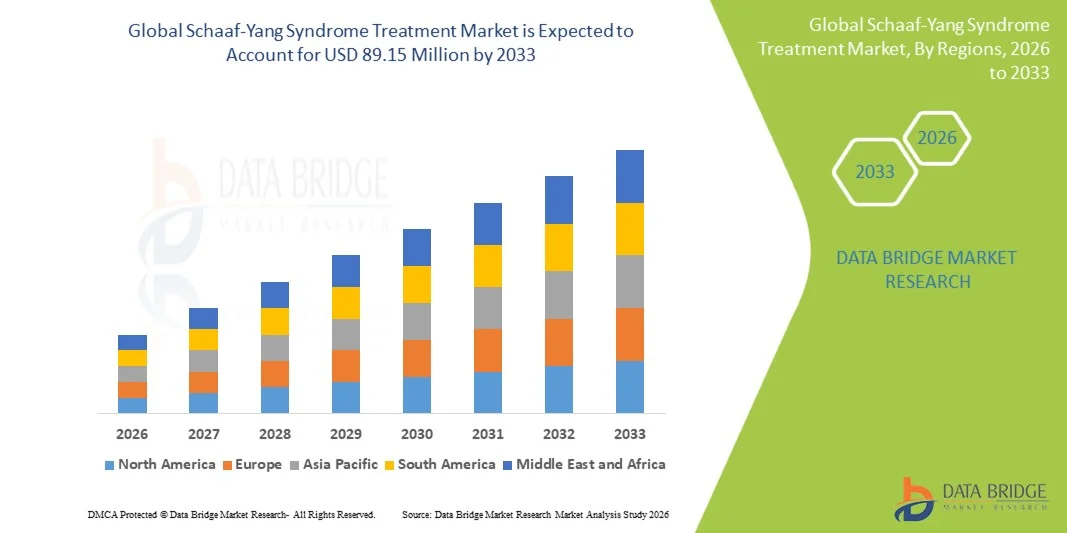
The Schaaf-Yang Syndrome Treatment Market was valued at USD 52.27 million in 2025 and is projected to reach USD 89.15 million by 2033, growing at a. Market growth is supported by rising awareness of rare genetic disorders, CAGR of 6.90% from 2026 to 2033increasing diagnostic capabilities for identifying MAGEL2 gene mutations, and expanding supportive care infrastructure for affected individuals worldwide.
The growing emphasis on early intervention therapies, including physical therapy, occupational therapy, and speech therapy, is driving increased adoption of multidisciplinary treatment approaches among healthcare providers and caregivers. Ongoing research initiatives focused on understanding the natural history of Schaaf-Yang syndrome and developing targeted therapeutic interventions are expanding clinical knowledge and treatment options. In addition, the establishment of patient registries, advocacy networks, and specialized rare disease centers is creating new opportunities for stakeholders across the forecast period. The prevalence of Schaaf-Yang syndrome remains less than 1/1,000,000 worldwide, with over 250 patients described in the literature, underscoring the critical need for dedicated treatment resources and research funding.
Key Market Trends & Insights
- North America dominated the Schaaf-Yang Syndrome Treatment Market with the largest revenue share of 42.8% in 2025, supported by advanced rare disease diagnostic infrastructure, strong research funding, and the presence of leading academic medical centers.
- Asia-Pacific is expected to be the fastest-growing region at a CAGR of 8.95% from 2026 to 2033, driven by expanding healthcare infrastructure, rising awareness of rare genetic disorders, and increasing healthcare expenditure.
- The Physical Therapy segment led the market with a 45.2% market share in 2025, reflecting its established position as a foundational treatment approach for addressing hypotonia, motor delays, and joint contractures in affected individuals.
- The Occupational Therapy segment is anticipated to be the fastest-growing treatment category, driven by increasing recognition of its role in improving daily living skills, sensory processing, and adaptive functioning in patients with developmental disabilities.
- The Hospitals segment dominated the end-user category with a 52.6% market share in 2025, supported by access to multidisciplinary care teams, specialized pediatric neurology services, and comprehensive diagnostic capabilities.
- The Online Pharmacies segment is expected to witness strong growth during the forecast period, driven by improved accessibility to supportive care products, caregiver convenience, and expanding telehealth integration.
Market Size & Forecast
- Global Market Value (2025): USD 52.27 Million
- Expected Market Value (2033): USD 89.15 Million
- Forecast CAGR (2026–2033): 6.90%
- Leading Region in 2025: North America
- Fastest Growing Region: Asia-Pacific
Report Scope and Schaaf-Yang Syndrome Treatment Market Segmentation
|
Attributes |
Schaaf-Yang Syndrome Treatment Key Market Insights |
|
Segments Covered |
|
|
Countries Covered |
North America · U.S. · Canada · Mexico Europe · Germany · France · U.K. · Netherlands · Switzerland · Belgium · Russia · Italy · Spain · Turkey · Rest of Europe Asia-Pacific · China · Japan · India · South Korea · Singapore · Malaysia · Australia · Thailand · Indonesia · Philippines · Rest of Asia-Pacific Middle East and Africa · Saudi Arabia · U.A.E. · South Africa · Egypt · Israel · Rest of Middle East and Africa South America · Brazil · Argentina · Rest of South America |
|
Key Market Players |
· Foundation for Prader-Willi Research (U.S.) · Theralogix LLC (U.S.) · BioMarin Pharmaceutical Inc. (U.S.) · Ultragenyx Pharmaceutical Inc. (U.S.) · Takeda Pharmaceutical Company Limited (Japan) · Lilly USA, LLC. (U.S.) · AbbVie Inc. (U.S.) · Novartis AG (Switzerland) · F. Hoffmann-La Roche Ltd (Switzerland) · Sanofi S.A. (France) · Vertex Pharmaceuticals Incorporated (U.S.) · Regeneron Pharmaceuticals Inc. (U.S.) |
|
Market Opportunities |
· Expansion of specialized rare disease treatment centers and multidisciplinary care programs in emerging markets with growing healthcare infrastructure · Development of targeted gene therapies and novel therapeutic interventions addressing the underlying MAGEL2 gene mutations |
|
Value Added Data Infosets |
In addition to the insights on market scenarios such as market value, growth rate, segmentation, geographical coverage, and major players, the market reports curated by the Data Bridge Market Research also include depth expert analysis, patient epidemiology, pipeline analysis, pricing analysis, and regulatory framework. |
Schaaf-Yang Syndrome Treatment Market Trends
Trend: Advancement of Research Initiatives and Natural History Studies
Clinical understanding of Schaaf-Yang syndrome continues to expand as research initiatives and natural history studies provide deeper insights into the phenotypic spectrum and disease progression. The development of comprehensive research plans, such as the Schaaf-Yang Syndrome Research Plan 2019-2021, has established structured frameworks for prioritizing key research questions, generating cell and animal models, and advancing toward therapeutic interventions. Patient registries and biorepositories are enabling systematic data collection to support clinical trial readiness and improve standards of care.
For instance,
The Foundation for Prader-Willi Research has coordinated efforts to generate antibodies for MAGEL2 protein detection, develop cellular assays to test protein function, and characterize animal models for preclinical therapeutic evaluation, accelerating the translational research pipeline.
In addition, published research demonstrates that the phenotypic spectrum of Schaaf-Yang syndrome ranges from fetal akinesia to neurobehavioral disease and joint contractures, with nucleotides c.1990–1996 identified as a mutational hotspot, informing diagnostic approaches and genetic counseling practices. These research advancements are expected to drive development of targeted therapeutic interventions and improve patient outcomes throughout the forecast period.
Schaaf-Yang Syndrome Treatment Market Dynamics
Key Market Driver: Rising Awareness and Improved Diagnostic Capabilities
The increasing awareness surrounding rare genetic disorders is a significant driver of the Schaaf-Yang Syndrome Treatment Market. As healthcare professionals become more educated about the syndrome and its clinical manifestations, early diagnosis rates are improving significantly. Advanced molecular genetic testing, including sequence analysis of the MAGEL2 gene, enables definitive diagnosis and facilitates appropriate therapeutic intervention planning.
For instance,
Research published in Genetics in Medicine confirmed that truncating mutations in the MAGEL2 gene cause Schaaf-Yang syndrome, with the c.1996dupC variant identified in multiple affected individuals across 14 families, establishing critical diagnostic criteria and expanding the known patient population.
Rising diagnostic capabilities are expected to strengthen identification of affected individuals and drive demand for supportive care services globally.
Key Restraint/Challenge: Limited Treatment Options and High Cost of Specialized Care
The absence of disease-modifying therapies and the reliance on supportive care approaches present significant challenges for the Schaaf-Yang syndrome treatment market. Current treatment strategies focus on symptom management through physical therapy, occupational therapy, and speech therapy, without addressing the underlying genetic cause. The specialized multidisciplinary care required for affected individuals can be costly and may not be accessible in all healthcare settings.
For instance,
Healthcare systems evaluating rare disease treatment programs must balance the clinical needs of affected patients against limited reimbursement frameworks and the high cost of coordinated multidisciplinary care delivery across neurology, genetics, and rehabilitation specialties.
Limited treatment options and high care costs may constrain market growth, particularly in resource-limited healthcare environments.
Key Market Opportunity: Development of Gene Therapies and Novel Therapeutic Approaches
The advancement of gene therapy technologies and novel therapeutic modalities is creating significant opportunities for addressing the underlying genetic cause of Schaaf-Yang syndrome. Research initiatives focused on understanding MAGEL2 protein function and developing targeted interventions are progressing toward clinical translation. The establishment of patient registries, natural history data collection, and outcome measures is supporting clinical trial readiness.
For instance,
The Schaaf-Yang Syndrome Research Plan has identified the generation of cell models, development of functional assays, and characterization of animal models as critical next steps toward evaluating molecular interventions, with gene therapy approaches representing promising long-term therapeutic strategies.
Expansion of research funding and pharmaceutical industry interest in rare genetic disorders is expected to accelerate development of disease-modifying treatments throughout the forecast period.
Schaaf-Yang Syndrome Treatment Market Scope
The Schaaf-Yang syndrome treatment market is segmented on the basis of treatment, end-user, and distribution channel.
- By Treatment
On the basis of treatment, the Schaaf-Yang Syndrome Treatment Market is segmented into physical therapy, occupational therapy, and speech therapy. The physical therapy segment dominated the market with a 45.2% market share in 2025, reflecting its established position as a foundational treatment approach for addressing hypotonia, motor developmental delays, and joint contractures in affected individuals. Physical therapy interventions focus on improving muscle tone, mobility, coordination, and gross motor function, representing essential components of early intervention programs. High utilization rates across pediatric rehabilitation centers and specialized clinics contribute to segment leadership.
The occupational therapy segment is expected to witness the fastest growth from 2026 to 2033, driven by increasing recognition of its role in improving daily living skills, fine motor coordination, sensory processing, and adaptive functioning in patients with developmental disabilities. Growing emphasis on maximizing functional independence and quality of life for affected individuals is expanding demand for occupational therapy services across healthcare settings.
- By End-User
On the basis of end-user, the Schaaf-Yang Syndrome Treatment Market is segmented into hospitals, research institutes, and specialty clinics. The hospitals segment dominated the market with a market share of 52.6% in 2025, driven by access to multidisciplinary care teams, specialized pediatric neurology and genetics services, and comprehensive diagnostic capabilities. Hospitals serve as primary centers for initial diagnosis, complex case management, and coordination of care for affected individuals requiring multiple specialist consultations. The concentration of rare disease expertise and rehabilitation services within hospital systems contributes to high patient volumes and service utilization.
The specialty clinics segment is expected to witness the fastest growth from 2026 to 2033, driven by the establishment of dedicated rare disease centers, developmental pediatrics practices, and neurodevelopmental clinics providing focused expertise for Schaaf-Yang syndrome management. Growing recognition of the need for specialized care pathways and family-centered treatment approaches is supporting expansion of specialty clinic services.
- By Distribution Channel
On the basis of distribution channel, the Schaaf-Yang Syndrome Treatment Market is segmented into hospital pharmacy, retail pharmacy, online pharmacies, and others. The hospital pharmacy segment dominated the market with a market share of 48.4% in 2025, driven by the integration of pharmaceutical services within hospital-based treatment programs and the need for specialized supportive care products and nutritional supplements. Hospital pharmacies provide access to prescription medications addressing comorbidities, endocrine abnormalities, and gastrointestinal complications commonly associated with Schaaf-Yang syndrome.
The online pharmacies segment is expected to witness the fastest growth from 2026 to 2033, driven by improved accessibility to supportive care products, caregiver convenience, and expanding telehealth integration for rare disease management.
Schaaf-Yang Syndrome Treatment Market Regional Analysis
North America dominated the Schaaf-Yang syndrome treatment market with a revenue share of 42.8% in 2025, supported by advanced rare disease diagnostic infrastructure, strong research funding through organizations such as the Foundation for Prader-Willi Research, and the presence of leading academic medical centers with expertise in imprinting disorders. Favorable regulatory frameworks for rare disease research, robust clinical training infrastructure, and extensive multidisciplinary care programs contribute to regional market leadership.
U.S. Schaaf-Yang Syndrome Treatment Market Insight
The U.S. Schaaf-Yang syndrome treatment market benefits from the highest concentration of rare disease research centers globally, extensive genetic testing capabilities, and strong advocacy networks supporting affected families. Academic medical centers, children's hospitals, and specialized developmental pediatrics practices continue to expand comprehensive care programs for neurodevelopmental disorders. The presence of the Foundation for Prader-Willi Research, which has extended its mission to support Schaaf-Yang syndrome research, provides critical funding and coordination for therapeutic development initiatives. The U.S. held a dominant market position with a 78.5% share of the North American regional market in 2025.
Europe Schaaf-Yang Syndrome Treatment Market Insight
The Europe Schaaf-Yang syndrome treatment market remains a major contributor, with strong hospital-based rare disease programs across Germany, France, the U.K., and the Netherlands. The Orphanet rare disease network provides comprehensive disease information and clinical resources supporting diagnosis and treatment coordination. Cross-disciplinary guidelines and structured care pathways are improving patient outcomes and standardizing treatment delivery across public and private healthcare systems.
U.K. Schaaf-Yang Syndrome Treatment Market Insight
The U.K. Schaaf-Yang syndrome treatment market is characterized by expanding rare disease programs within NHS hospitals and specialized children's treatment centers. Investment in genetic diagnostic services and multidisciplinary neurodevelopmental clinics is improving access to comprehensive care and reducing diagnostic delays for affected individuals.
Germany Schaaf-Yang Syndrome Treatment Market Insight
Germany's robust hospital infrastructure and advanced clinical genetics capabilities support comprehensive rare disease programs across pediatric neurology and developmental medicine. Strong clinical research networks and favorable healthcare frameworks contribute to high-quality care delivery and active participation in international research collaborations.
Asia-Pacific Schaaf-Yang Syndrome Treatment Market Insight
The Asia-Pacific Schaaf-Yang syndrome treatment market is poised for rapid growth with a CAGR of 8.95% during the forecast period, driven by expanding healthcare infrastructure, rising awareness of rare genetic disorders, and increasing healthcare expenditure. Private and public healthcare systems in Japan, China, South Korea, and Australia are investing in genetic diagnostic capabilities and specialized pediatric care services to meet growing patient needs.
Japan Schaaf-Yang Syndrome Treatment Market Insight
The Japan Schaaf-Yang syndrome treatment market benefits from advanced healthcare infrastructure, strong clinical genetics expertise, and comprehensive national health insurance coverage for rare disease diagnosis and treatment. Pediatric neurology centers and university hospitals provide specialized care for affected individuals, with active participation in international research collaborations.
China Schaaf-Yang Syndrome Treatment Market Insight
The China Schaaf-Yang syndrome treatment market is experiencing growth driven by healthcare modernization initiatives, expanding genetic testing capabilities, and increasing patient and physician awareness of rare genetic disorders. Investment in specialized children's hospitals and rare disease centers is improving diagnostic accuracy and treatment access.
Schaaf-Yang Syndrome Treatment Market Share
The Schaaf-Yang syndrome treatment industry is primarily led by well-established companies, including::
- Foundation for Prader-Willi Research (U.S.)
- Theralogix LLC (U.S.)
- BioMarin Pharmaceutical Inc. (U.S.)
- Ultragenyx Pharmaceutical Inc. (U.S.)
- Takeda Pharmaceutical Company Limited (Japan)
- Lilly USA, LLC. (U.S.)
- AbbVie Inc. (U.S.)
- Novartis AG (Switzerland)
- F. Hoffmann-La Roche Ltd (Switzerland)
- Sanofi S.A. (France)
- Vertex Pharmaceuticals Incorporated (U.S.)
- Regeneron Pharmaceuticals Inc. (U.S.)
Latest Developments in Schaaf-Yang Syndrome Treatment Market
- In March 2026, the Foundation for Prader-Willi Research announced the expansion of its research grant program to include dedicated funding for Schaaf-Yang syndrome therapeutic development initiatives, supporting preclinical studies evaluating gene therapy approaches targeting MAGEL2 mutations. This expansion reflects the organization's commitment to advancing treatment options for related imprinting disorders.
- In January 2026, Ultragenyx Pharmaceutical Inc. disclosed ongoing research collaborations focused on rare neurodevelopmental disorders, including exploratory programs investigating therapeutic targets within the Prader-Willi syndrome region of chromosome 15. The company's rare disease expertise positions it to contribute to future Schaaf-Yang syndrome treatment development.
- In October 2025, researchers published findings in Orphanet Journal of Rare Diseases characterizing the adult phenotype of Schaaf-Yang syndrome in a cohort of seven individuals aged 18 to 36 years. The study identified high prevalence of obesity, food-seeking behavior, and behavioral problems in adults, providing critical natural history data to inform clinical management and future therapeutic development.
- In September 2024, the Foundation for Prader-Willi Research reported completion of initial MAGEL2 antibody generation and cell model development milestones outlined in the Schaaf-Yang Syndrome Research Plan. These research tools are enabling functional assays to evaluate MAGEL2 protein activity and support therapeutic screening approaches.
- In May 2023, Genetics in Medicine published an expanded phenotypic analysis of Schaaf-Yang syndrome including 18 newly identified affected individuals from 14 families, confirming the c.1996dupC variant as a mutational hotspot and establishing the phenotypic spectrum from fetal akinesia to neurobehavioral disease. This publication significantly expanded clinical understanding and diagnostic criteria for the syndrome.
- In February 2023, BioMarin Pharmaceutical Inc. announced strategic investments in rare genetic disorder research platforms, including technologies applicable to imprinting disorders affecting the Prader-Willi syndrome chromosomal region. The company's gene therapy expertise supports potential future development of targeted interventions for related conditions.
- In November 2022, the International Prader-Willi Syndrome Organisation expanded its rare disease awareness initiatives to include Schaaf-Yang syndrome educational resources, improving physician and caregiver access to clinical information and supportive care guidance.

- Interactive Data Analysis Dashboard
- Company Analysis Dashboard for high growth potential opportunities
- Research Analyst Access for customization & queries
- Competitor Analysis with Interactive dashboard
- Latest News, Updates & Trend analysis
- Harness the Power of Benchmark Analysis for Comprehensive Competitor Tracking
Data collection and base year analysis are done using data collection modules with large sample sizes. The stage includes obtaining market information or related data through various sources and strategies. It includes examining and planning all the data acquired from the past in advance. It likewise envelops the examination of information inconsistencies seen across different information sources. The market data is analysed and estimated using market statistical and coherent models. Also, market share analysis and key trend analysis are the major success factors in the market report. To know more, please request an analyst call or drop down your inquiry.
The key research methodology used by DBMR research team is data triangulation which involves data mining, analysis of the impact of data variables on the market and primary (industry expert) validation. Data models include Vendor Positioning Grid, Market Time Line Analysis, Market Overview and Guide, Company Positioning Grid, Patent Analysis, Pricing Analysis, Company Market Share Analysis, Standards of Measurement, Global versus Regional and Vendor Share Analysis. To know more about the research methodology, drop in an inquiry to speak to our industry experts.
Data Bridge Market Research is a leader in advanced formative research. We take pride in servicing our existing and new customers with data and analysis that match and suits their goal. The report can be customized to include price trend analysis of target brands understanding the market for additional countries (ask for the list of countries), clinical trial results data, literature review, refurbished market and product base analysis. Market analysis of target competitors can be analyzed from technology-based analysis to market portfolio strategies. We can add as many competitors that you require data about in the format and data style you are looking for. Our team of analysts can also provide you data in crude raw excel files pivot tables (Fact book) or can assist you in creating presentations from the data sets available in the report.












