


Schwartz Jampel Syndrome Treatment Market Size
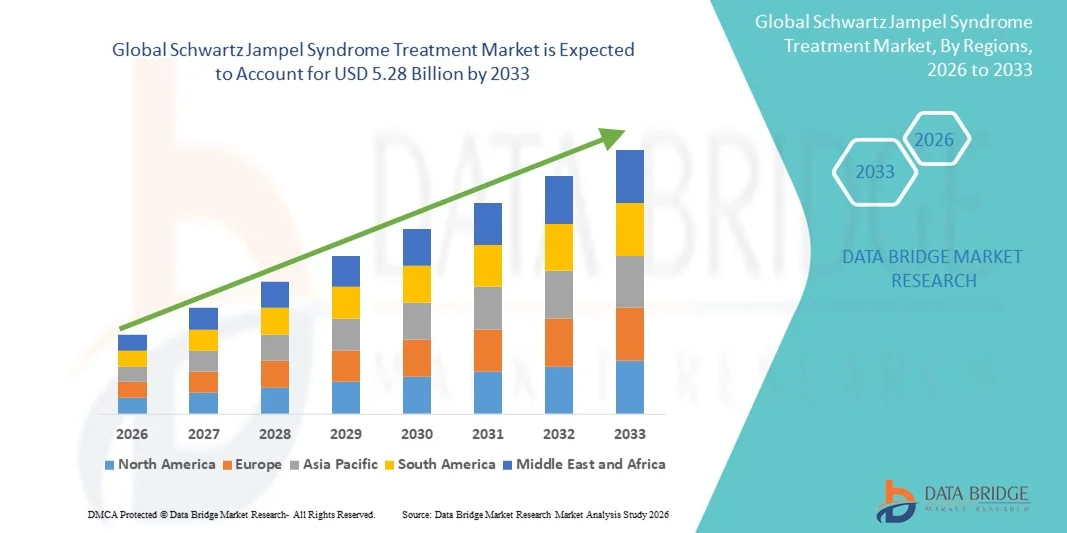
- The global Schwartz Jampel Syndrome Treatment market size was valued at USD 3.80 billion in 2025 and is expected to reach USD 5.28 billion by 2033, at a CAGR of 4.20% during the forecast period
- The market growth is largely fueled by the increasing adoption of advanced diagnostic and therapeutic solutions for Schwartz Jampel Syndrome, driven by rising awareness among healthcare professionals and patients. Improved access to specialized care and the expansion of rare disease treatment centers are contributing significantly to market expansion
- Furthermore, advancements in pharmacological therapies, including novel medications and supportive care approaches, are enabling better management of disease symptoms, thereby increasing treatment uptake. Growing investments in research and development by key pharmaceutical companies support innovation in therapy options
Schwartz Jampel Syndrome Treatment Market Analysis
- Schwartz Jampel Syndrome Treatment, offering advanced therapeutic and diagnostic interventions, is increasingly vital for managing the condition effectively in both pediatric and adult patients due to its ability to reduce symptoms, improve quality of life, and support long-term disease management
- The escalating demand for Schwartz Jampel Syndrome Treatment is primarily fueled by increasing awareness among healthcare professionals and caregivers, growing prevalence of the disorder, and a rising preference for early and effective therapeutic intervention
- North America dominated the Schwartz Jampel Syndrome Treatment market with the largest revenue share of 44.5% in 2025, supported by well-established healthcare infrastructure, early adoption of advanced therapies, high awareness among medical professionals, and a strong presence of rare disease research centers. The U.S. is witnessing substantial growth in the adoption of specialized treatment approaches, particularly in pediatric and neurology-focused hospitals, driven by government support, orphan drug incentives, and ongoing clinical developments
- Asia-Pacific is expected to be the fastest-growing region in the Schwartz Jampel Syndrome Treatment market during the forecast period, registering a projected CAGR from 2026 to 2033, owing to increasing healthcare investments, improving access to advanced diagnostic tools, rising awareness of rare neurological disorders, and expansion of specialized treatment facilities in developing countries such as China and India
- The Type 1 segment dominated the market with a revenue share of 60.2% in 2025, due to its higher prevalence and earlier detection in pediatric populations
Report Scope and Schwartz Jampel Syndrome Treatment Market Segmentation
|
Attributes |
Schwartz Jampel Syndrome Treatment Key Market Insights |
|
Segments Covered |
|
|
Countries Covered |
North America
Europe
Asia-Pacific
Middle East and Africa
South America
|
|
Key Market Players |
|
|
Market Opportunities |
|
|
Value Added Data Infosets |
In addition to the insights on market scenarios such as market value, growth rate, segmentation, geographical coverage, and major players, the market reports curated by the Data Bridge Market Research also include in-depth expert analysis, patient epidemiology, pipeline analysis, pricing analysis, and regulatory framework. |
Schwartz Jampel Syndrome Treatment Market Trends
Rising Focus on Early Diagnosis and Advanced Treatment Options
- A significant trend in the global Schwartz Jampel Syndrome Treatment market is the growing emphasis on early and accurate diagnosis, coupled with the adoption of advanced treatment modalities. This focus is improving patient outcomes and overall quality of life
- For instance, recent developments in diagnostic imaging and laboratory testing allow clinicians to detect Schwartz Jampel Syndrome earlier, enabling timely intervention with personalized treatment plans
- Advancements in pharmacological therapies, including corticosteroids and other targeted medications, are providing more effective symptom management and reducing disease progression in affected patients
- The adoption of minimally invasive surgical procedures, where applicable, is enhancing safety and reducing recovery time, thereby reshaping clinical practices in managing Schwartz Jampel Syndrome
- Healthcare providers are increasingly combining multiple treatment approaches, such as medication and supportive therapy, to achieve better patient outcomes
- The trend towards integrating improved diagnostic techniques with tailored treatment options is expected to strengthen patient care standards and enhance the overall management of Schwartz Jampel Syndrome globally
Schwartz Jampel Syndrome Treatment Market Dynamics
Driver
Increasing Prevalence and Rising Awareness About Rare Neurological Disorders
- The growing recognition of Schwartz Jampel Syndrome among healthcare professionals and caregivers, along with the rising prevalence of the disorder, is a major driver for market growth
- For instance, in March 2025, leading research institutions highlighted the importance of early diagnosis and multidisciplinary care, reinforcing the adoption of comprehensive treatment approaches
- As awareness of rare neurological disorders expands, patients and caregivers are seeking access to specialized therapies and supportive care, contributing to increased demand for effective treatment options
- Furthermore, initiatives by government and non-governmental organizations to improve diagnosis, treatment accessibility, and patient education are accelerating market growth
- The development of patient-centric care models, including clinical management programs and community support networks, is encouraging more consistent adoption of available treatments
- Overall, the combination of rising disease awareness, enhanced diagnosis, and better treatment availability is driving the expansion of the Schwartz Jampel Syndrome Treatment market across global regions
Restraint/Challenge
High Treatment Costs and Limited Access to Specialized Care
- The high cost of advanced treatment options for Schwartz Jampel Syndrome, including specialized medications, surgical procedures, and supportive therapies, presents a significant barrier to market expansion
- For instance, patients in developing regions may face financial constraints that limit access to appropriate care, delaying diagnosis and effective management
- In addition, the scarcity of specialists and dedicated treatment centers in certain areas restricts the availability of comprehensive care, contributing to regional disparities in patient outcomes
- Efforts to reduce treatment costs through insurance coverage, government support programs, and patient assistance initiatives are essential to improving accessibility
- Although research and clinical advancements are ongoing, the combination of limited healthcare infrastructure and the need for continuous treatment monitoring can impede widespread adoption of optimal care practices
- Addressing these challenges through improved affordability, broader access to specialized care, and enhanced healthcare infrastructure will be crucial for sustaining market growth over the forecast period
Schwartz Jampel Syndrome Treatment Market Scope
The market is segmented on the basis of type, treatment, diagnosis, dosage, route of administration, end-users, and distribution channel.
- By Type
On the basis of type, the Schwartz Jampel Syndrome Treatment market is segmented into Type 1 and Type 2. The Type 1 segment dominated the market with a revenue share of 60.2% in 2025, due to its higher prevalence and earlier detection in pediatric populations. Early intervention with antiepileptic drugs, muscle relaxants, and physiotherapy allows better disease management, boosting adoption. Hospitals and pediatric centers widely follow standardized treatment protocols for Type 1, ensuring consistent care. The presence of specialized research institutions and clinical programs further strengthens Type 1’s market dominance. Awareness campaigns and early genetic testing also contribute to its growth. Parents and caregivers prefer established treatment regimens, ensuring higher adoption rates. Government-funded programs and orphan drug incentives provide additional support. Insurance coverage for standard therapies encourages patient access. Type 1’s prevalence in Europe and North America supports high revenue share.
The Type 2 segment is expected to witness the fastest CAGR of 8.3% from 2026 to 2033, driven by rising awareness of rarer and more severe cases. Increasing availability of genetic counseling and advanced diagnostic tools is accelerating Type 2 treatment adoption. Specialty clinics and neurology centers are expanding services to cover complex Type 2 cases. Emerging markets are improving access to care, contributing to rapid growth. Clinical research and development of novel therapies are also supporting expansion. Educational initiatives for healthcare providers promote early diagnosis. Hospitals are integrating multidisciplinary approaches for better outcomes. Patient support groups and advocacy organizations enhance awareness. Telemedicine and remote consultation programs are increasing accessibility. International collaborations in rare disease research further accelerate market growth.
- By Treatment
On the basis of treatment, the market is segmented into antiepileptic drugs, muscle relaxants, surgery, speech therapy, genetic counseling, and others. Antiepileptic drugs dominated with a revenue share of 36.5% in 2025, due to their effectiveness in managing myotonia and seizure symptoms. High prescription rates in hospitals and outpatient centers support dominance. Established physician familiarity and long-term safety profiles encourage adoption. Integration into standard care protocols ensures consistent use. Insurance coverage for antiepileptic therapies further enhances penetration. Clinical guidelines and ongoing research validate treatment efficacy. Hospitals and specialty clinics prioritize these drugs for both Type 1 and Type 2 patients. Pediatric populations benefit from well-established dosing regimens. Patient adherence programs improve long-term outcomes.
Muscle relaxants are expected to witness the fastest CAGR of 8.7% from 2026 to 2033, driven by increasing clinical evidence of improved mobility and patient quality of life. Hospitals, neurology centers, and rehabilitation facilities are adopting these therapies rapidly. Introduction of new formulations and targeted delivery systems supports growth. Physician awareness campaigns and workshops promote usage. Adoption in emerging markets is increasing with expanded access to treatment centers. Combined therapy approaches, including physiotherapy, enhance effectiveness. Patient education initiatives boost acceptance. Telehealth consultations are aiding in wider reach. Regulatory approvals for novel relaxants further contribute to expansion.
- By Diagnosis
On the basis of diagnosis, the market is segmented into blood tests, biopsy, ultrasound, genetic testing, electromyography (EMG), and others. Genetic testing dominated with a revenue share of 44.1% in 2025, owing to its accuracy in detecting HSPG2 and COL6 gene mutations. Early diagnosis enables targeted treatment selection, improving patient outcomes. Specialized hospitals and rare disease centers are increasingly using genetic tests as standard practice. Physician awareness and clinical guidelines reinforce adoption. Insurance and reimbursement programs support high penetration. Early identification allows timely intervention with drugs, surgery, or therapy. Integration with multidisciplinary care ensures better management. Global research initiatives support accessibility.
Electromyography (EMG) is expected to witness the fastest CAGR of 9.5% from 2026 to 2033, driven by its ability to quantify myotonia severity and guide treatment decisions. EMG adoption is increasing in specialized neurology and rehabilitation centers. Device innovation, ease of use, and real-time reporting enhance adoption. Clinics are expanding EMG services to complement genetic testing. Training programs for technicians are improving availability. Integration into patient monitoring systems supports data-driven treatment. Hospitals are adopting EMG for both diagnosis and therapy evaluation. Awareness programs for physicians enhance usage. Developing regions are increasing access to EMG technology, accelerating market growth.
- By Dosage
On the basis of dosage, the market is segmented into tablet, capsule, injection, and others. The tablet segment dominated the market with a revenue share of 46.8% in 2025, due to its high patient convenience and suitability for long-term therapy. Tablets are preferred in outpatient and hospital settings for antiepileptic and muscle relaxant treatments. Hospitals and clinics favor tablets because they allow consistent dosing and reduce errors, while caregivers find them easier to administer to pediatric and adult patients. The established manufacturing infrastructure ensures steady availability, supporting widespread adoption. Patient adherence is higher with oral tablets due to simple dosing schedules. Insurance coverage further encourages usage, especially for chronic treatment plans. Tablets also provide flexibility for combination therapies and are compatible with various treatment regimens. Their stability and storage ease enhance uptake in hospitals, clinics, and retail pharmacies. Global awareness campaigns for rare neurological disorders emphasize oral therapy as the first-line dosage. Regions like North America and Europe account for the highest share due to well-developed healthcare infrastructure and standard treatment protocols.
The injection segment is expected to witness the fastest CAGR of 8.4% from 2026 to 2033, driven by botulinum toxin therapy and other injectable interventions. Hospitals and specialized clinics increasingly adopt injections for severe muscle spasticity, myotonia, or cases requiring immediate therapeutic effects. Targeted delivery systems and improved formulations enhance clinical efficacy. Outpatient centers are expanding injection services, offering patient-friendly protocols and pain management techniques. Clinical evidence demonstrates better outcomes with injectables, boosting physician confidence. Training programs for healthcare providers increase proper administration and safety compliance. Emerging markets are improving access to injectable therapies through hospital expansions. Insurance coverage and reimbursement schemes are further facilitating adoption. Multidisciplinary care programs integrate injections with physiotherapy and supportive therapy. Patient monitoring via digital tools allows optimization of dosage and frequency. Awareness campaigns highlight the benefits of injectables in quality-of-life improvement. International research collaborations are also promoting injectable therapy adoption globally.
- By Route of Administration
On the basis of route of administration, the market is segmented into oral, intramuscular, intravenous, and others. The oral route dominated with a revenue share of 49.7% in 2025, attributed to convenience, ease of self-administration, and suitability for long-term therapy. Hospitals, clinics, and homecare setups prefer oral administration for standard medications such as antiepileptics and muscle relaxants. Oral therapy allows consistent dosing, easy storage, and simplified adherence monitoring. Chronic management of Schwartz Jampel Syndrome relies heavily on tablets and capsules, making oral delivery the most accessible option. Well-established protocols and insurance coverage support widespread use. Pediatric dosing formulations ensure safe and effective administration in children. Hospitals integrate oral medication regimens with physiotherapy and speech therapy programs for holistic care. Awareness among healthcare providers reinforces preference for oral therapy as first-line treatment. Global adoption is highest in North America and Europe due to strong healthcare infrastructure. Research studies confirm patient compliance is highest with oral therapy.
Intramuscular administration is expected to witness the fastest CAGR of 8.9% from 2026 to 2033, driven by botulinum toxin and other targeted therapeutic interventions. Hospitals and clinics are expanding intramuscular treatment adoption to manage severe myotonia and spasticity. Advanced formulations improve efficacy and reduce side effects. Healthcare providers are trained extensively for safe injection techniques. Emerging markets are increasing access through specialized neurology centers. Integration with physiotherapy enhances patient outcomes. Insurance reimbursement and government initiatives promote wider adoption. Outpatient and day-care facilities are increasingly offering intramuscular injections. Clinical evidence supports better and faster symptomatic relief with intramuscular routes. Telemedicine consultations aid follow-ups and dosage optimization. Research programs encourage adoption of innovative injection technologies. Public awareness initiatives educate caregivers and patients on safety and effectiveness.
- By End-Users
On the basis of end-users, the market is segmented into clinics, hospitals, and others. The hospital segment dominated with a revenue share of 62.1% in 2025, driven by advanced diagnostic facilities, multidisciplinary care teams, and comprehensive treatment capabilities. Hospitals handle severe and complex cases of Schwartz Jampel Syndrome, providing integrated care including medication, physiotherapy, speech therapy, and genetic counseling. Access to specialized neurologists and pediatricians ensures effective disease management. Insurance coverage supports higher treatment uptake. Hospitals also conduct clinical trials and implement research programs, further enhancing adoption. Availability of advanced diagnostic tools such as genetic testing and EMG facilitates precise treatment. Hospitals serve as referral centers for smaller clinics, increasing patient flow. Well-equipped infrastructure allows for long-term monitoring of patient progress. Patient education and counseling programs in hospitals enhance adherence to treatment regimens. Hospitals in North America and Europe account for the largest market revenue share due to strong healthcare infrastructure.
Clinics are expected to witness the fastest CAGR of 8.0% from 2026 to 2033, driven by pediatric and neurology outpatient clinics. Personalized care, therapy follow-ups, and specialized management of mild to moderate cases support rapid adoption. Expansion of clinics in emerging markets is increasing patient access. Clinics provide flexible and cost-effective care models. Awareness programs and training for healthcare providers improve adoption. Clinics integrate telemedicine consultations for follow-ups and dose monitoring. Collaboration with hospitals enhances treatment efficacy. Community-based awareness programs educate patients and caregivers about early intervention. Specialized outpatient clinics support multidisciplinary care coordination. Adoption of advanced diagnostic tools in clinics is rising. Expansion of neurology-focused clinics is contributing to faster growth. Clinics are increasingly leveraging technology for better patient outcomes.
- By Distribution Channel
On the basis of distribution channel, the market is segmented into hospital pharmacy, retail pharmacy, and online pharmacy. The hospital pharmacy segment dominated with a revenue share of 53.2% in 2025, owing to direct integration with hospital treatment protocols. Patients receive medications during hospital visits, ensuring convenience, proper dosing, and adherence. Hospital pharmacies stock antiepileptic drugs, muscle relaxants, and injectable formulations. Multidisciplinary teams coordinate dispensing with treatment plans. Insurance coverage and reimbursement facilitate patient access. Hospitals ensure availability of pediatric and adult formulations. Specialized training of pharmacy staff enhances treatment adherence. Direct dispensing reduces errors and improves patient safety. Global adoption is highest in North America and Europe due to established healthcare systems. Continuous supply chain management ensures uninterrupted availability of therapies.
Online pharmacies are expected to witness the fastest CAGR of 9.5% from 2026 to 2033, fueled by growing digital adoption, e-commerce expansion, and patient preference for home delivery. Online platforms offer convenience, wider product availability, and improved access in remote areas. Patients can order both oral and injectable therapies with secure logistics support. Telemedicine integration allows prescription validation and virtual consultations. Insurance reimbursement policies are increasingly applicable to online purchases. Awareness campaigns educate patients on safe usage and adherence. Emerging markets are rapidly adopting online channels due to limited physical pharmacy access. Data analytics and digital tracking ensure timely delivery and monitoring. Partnerships with healthcare providers enhance trust and adoption. Online pharmacies reduce hospital crowding while improving patient compliance. Expansion of secure, regulated platforms supports long-term growth.
Schwartz Jampel Syndrome Treatment Market Regional Analysis
- North America dominated the Schwartz Jampel Syndrome Treatment market with the largest revenue share of 44.5% in 2025
- Supported by well-established healthcare infrastructure, early adoption of advanced therapies, high awareness among medical professionals, and a strong presence of rare disease research centers
- The region benefits from extensive clinical research programs, government incentives for orphan drug development, and growing investments in specialized treatment facilities. Patients have increased access to multidisciplinary care, advanced diagnostic tools, and innovative therapies, driving steady market expansion across both pediatric and adult populations
U.S. Schwartz Jampel Syndrome Treatment Market Insight
The U.S. Schwartz Jampel Syndrome Treatment market captured the largest revenue share in North America in 2025, fueled by the rapid adoption of specialized treatment approaches in pediatric and neurology-focused hospitals. Growth is further supported by government support programs, orphan drug incentives, and ongoing clinical developments. The presence of rare disease registries, academic research centers, and active patient advocacy groups is significantly contributing to the expansion of the U.S. market.
Europe Schwartz Jampel Syndrome Treatment Market Insight
Europe Schwartz Jampel Syndrome Treatment market is projected to expand at a substantial CAGR during the forecast period, driven by well-developed healthcare systems, stringent regulatory frameworks, and increasing adoption of specialized treatment protocols. The presence of advanced hospitals, research institutions, and clinical trial facilities supports the provision of multidisciplinary care for Schwartz Jampel Syndrome patients. Countries such as Germany, the U.K., and France are witnessing steady adoption due to rising awareness campaigns and patient support programs targeting rare neurological disorders.
U.K. Schwartz Jampel Syndrome Treatment Market Insight
The U.K. Schwartz Jampel Syndrome Treatment market is anticipated to grow at a noteworthy CAGR during the forecast period, fueled by increasing awareness of rare disorders and a growing number of specialized clinics. Government initiatives to support rare disease treatment programs, along with enhanced patient education and multidisciplinary care models, are driving market growth.
Germany Schwartz Jampel Syndrome Treatment Market Insight
Germany Schwartz Jampel Syndrome Treatment market is expected to expand at a considerable CAGR during the forecast period, driven by strong healthcare infrastructure, advanced diagnostic facilities, and rising adoption of innovative treatment options. The country’s emphasis on research, innovation, and quality healthcare ensures improved disease management and supports the uptake of specialized therapies.
Asia-Pacific Schwartz Jampel Syndrome Treatment Market Insight
Asia-Pacific Schwartz Jampel Syndrome Treatment market is expected to be the fastest-growing region in the Schwartz Jampel Syndrome Treatment market during the forecast period, registering a projected CAGR from 2026 to 2033. Growth is driven by increasing healthcare investments, rising awareness of rare neurological disorders, improving access to advanced diagnostic tools, and expansion of specialized treatment facilities in countries such as China and India.
Japan Schwartz Jampel Syndrome Treatment Market Insight
Japan Schwartz Jampel Syndrome Treatment market is gaining momentum due to its well-developed healthcare system, aging population, and rising prevalence of rare neurological disorders. The market growth is supported by improved access to advanced therapies, specialized clinics, and adoption of multidisciplinary care models for patients.
China Schwartz Jampel Syndrome Treatment Market Insight
China Schwartz Jampel Syndrome Treatment market accounted for the largest market revenue share in Asia-Pacific in 2025, driven by expanding healthcare infrastructure, increasing disease awareness, and rising adoption of specialized therapies. Government initiatives to improve access to healthcare, growing investments in rare disease management, and expansion of clinical facilities are key factors propelling market growth.
Schwartz Jampel Syndrome Treatment Market Share
The Schwartz Jampel Syndrome Treatment industry is primarily led by well-established companies, including:
• Pfizer (U.S.)
• Novartis (Switzerland)
• Roche (Switzerland)
• Sanofi (France)
• Takeda Pharmaceutical Company (Japan)
• GlaxoSmithKline (U.K.)
• Merck & Co. (U.S.)
• Teva Pharmaceuticals (Israel)
• Bayer (Germany)
• Bristol-Myers Squibb (U.S.)
• Eli Lilly and Company (U.S.)
Latest Developments in Global Schwartz Jampel Syndrome Treatment Market
- In January 2024, researchers published a case report titled “Successful Treatment of Schwartz‑Jampel Syndrome with Botulinum Toxin Type A,” describing a patient with SJS type 1A who received injections of botulinum toxin A. The treatment led to significant clinical improvement — particularly easing muscle stiffness, improving facial mobility (easier eye and mouth opening), and alleviating blepharospasm symptoms
- In March 2023, scientists reported in Biomedicines the establishment of a patient‑derived human-induced pluripotent stem cell (hiPSC) model for Schwartz–Jampel syndrome. This in‑vitro model—derived from cells of an SJS patient—revealed “distinct hyperexcitability in the skeletal muscles,” providing a valuable tool for understanding disease pathomechanism and enabling future screening of potential therapies targeting muscle hyper‑excitability / myotonia

- Interactive Data Analysis Dashboard
- Company Analysis Dashboard for high growth potential opportunities
- Research Analyst Access for customization & queries
- Competitor Analysis with Interactive dashboard
- Latest News, Updates & Trend analysis
- Harness the Power of Benchmark Analysis for Comprehensive Competitor Tracking
Data collection and base year analysis are done using data collection modules with large sample sizes. The stage includes obtaining market information or related data through various sources and strategies. It includes examining and planning all the data acquired from the past in advance. It likewise envelops the examination of information inconsistencies seen across different information sources. The market data is analysed and estimated using market statistical and coherent models. Also, market share analysis and key trend analysis are the major success factors in the market report. To know more, please request an analyst call or drop down your inquiry.
The key research methodology used by DBMR research team is data triangulation which involves data mining, analysis of the impact of data variables on the market and primary (industry expert) validation. Data models include Vendor Positioning Grid, Market Time Line Analysis, Market Overview and Guide, Company Positioning Grid, Patent Analysis, Pricing Analysis, Company Market Share Analysis, Standards of Measurement, Global versus Regional and Vendor Share Analysis. To know more about the research methodology, drop in an inquiry to speak to our industry experts.
Data Bridge Market Research is a leader in advanced formative research. We take pride in servicing our existing and new customers with data and analysis that match and suits their goal. The report can be customized to include price trend analysis of target brands understanding the market for additional countries (ask for the list of countries), clinical trial results data, literature review, refurbished market and product base analysis. Market analysis of target competitors can be analyzed from technology-based analysis to market portfolio strategies. We can add as many competitors that you require data about in the format and data style you are looking for. Our team of analysts can also provide you data in crude raw excel files pivot tables (Fact book) or can assist you in creating presentations from the data sets available in the report.












