


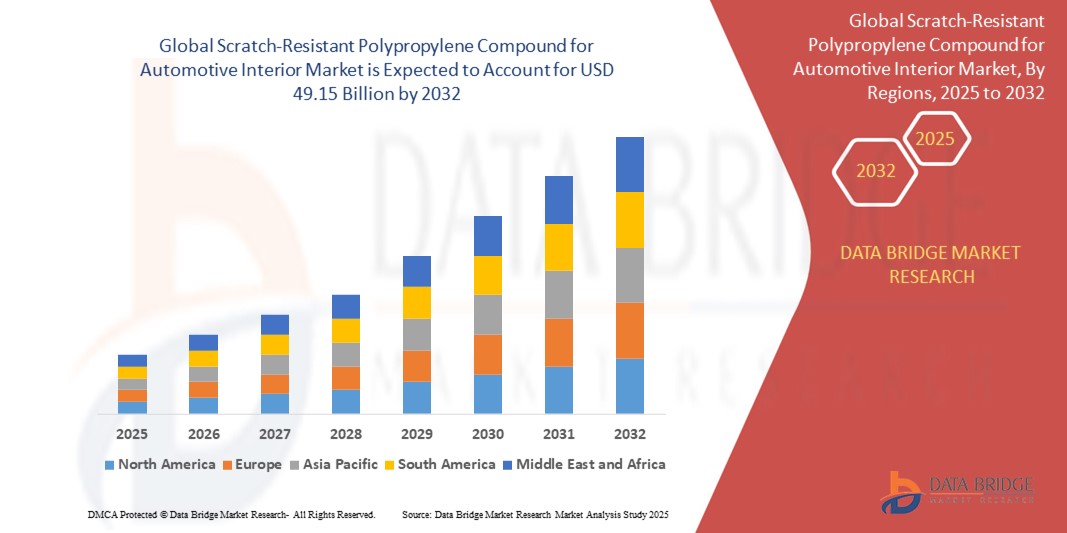
Scratch-Resistant Polypropylene Compound for Automotive Interior Market Size
- The global scratch-resistant polypropylene compound for automotive interior market was valued at USD 31.78 billion in 2024 and is expected to reach USD 49.15 billion by 2032
- During the forecast period of 2025 to 2032 the market is likely to grow at a CAGR of 5.60 % primarily driven by the increased demand for lightweight and durable materials in automotive interiors
- This growth is driven by factors such as the growing focus on improving the aesthetics, functionality, and durability of automotive interior components
Scratch-Resistant Polypropylene Compound for Automotive Interior Market Analysis
- Scratch-resistant polypropylene compound for automotive interiors is a durable, lightweight material designed to resist surface scratches. It is commonly used in parts such as dashboards, door trims, and center consoles to enhance longevity and appearance
- The scratch-resistant polypropylene compound market for automotive interiors is growing due to the demand for durable and aesthetically appealing materials in vehicle interiors, such as in the Lexus RX, which has a reputation for its high-quality, long-lasting interior materials
- Polypropylene compounds are increasingly used in automotive components such as dashboards, door panels, and centre consoles to enhance durability and appearance
- For instance, the Audi A6 uses scratch-resistant polypropylene compounds in its dashboard to maintain a clean, polished look even after years of use
- The rise in consumer preference for long-lasting, low-maintenance interiors is boosting the adoption of scratch-resistant polypropylene compounds
- For instance, the Ford Mustang incorporates this material in its interior trims, providing a sleek, resilient surface that resists scratches and enhances the vehicle's overall durability
- Technological innovations in material properties, such as enhanced scratch resistance and better surface finishes, are driving the demand for these compounds in the automotive industry. Borealis, a leading supplier, has developed advanced polypropylene compounds used in models such as the BMW X5, which prioritize scratch resistance and long-lasting quality
- Leading automotive manufacturers, including General Motors and BMW, are incorporating scratch-resistant polypropylene compounds into their vehicle models to improve interior quality and consumer satisfaction
- For instance, the Chevrolet Traverse utilizes this material in its door panels, ensuring a durable, long-lasting interior while enhancing the overall premium experience for the customer
Report Scope and Scratch-Resistant Polypropylene Compound for Automotive Interior Market Segmentation
|
Attributes |
Scratch-Resistant Polypropylene Compound for Automotive Interior Key Market Insights |
|
Segments Covered |
|
|
Countries Covered |
North America
Europe
Asia-Pacific
Middle East and Africa
South America
|
|
Key Market Players |
|
|
Market Opportunities |
|
|
Value Added Data Infosets |
In addition to the insights on market scenarios such as market value, growth rate, segmentation, geographical coverage, and major players, the market reports curated by the Data Bridge Market Research also include import export analysis, production capacity overview, production consumption analysis, price trend analysis, climate change scenario, supply chain analysis, value chain analysis, raw material/consumables overview, vendor selection criteria, PESTLE Analysis, Porter Analysis, and regulatory framework. |
Scratch-Resistant Polypropylene Compound for Automotive Interior Market Trends
“Increasing Demand for Durable and Aesthetically Appealing Materials in Vehicle Interiors”
- The increasing demand for durable and aesthetically appealing materials in vehicle interiors is pushing automakers to adopt advanced materials such as scratch-resistant polypropylene compounds for components such as dashboards, door panels, and center consoles
- For instance, BMW X5 uses these materials in its dashboard to ensure long-lasting, high-quality interiors
- Consumers are increasingly prioritizing vehicles with long-lasting interiors that maintain a premium look over time
- For instance, Mercedes-Benz S-Class, which uses scratch-resistant polypropylene compounds to enhance both the durability and visual appeal of its interior
- Manufacturers are focusing on improving the overall in-car experience by using these durable materials to resist scratches and maintain a pristine appearance
- For instance, Ford Mustang incorporates these materials in its door panels and center console, providing consumers with a low-maintenance yet stylish interior
- The shift towards premium interiors in vehicles is not limited to high-end models, with mainstream brands such as Toyota also adopting these materials to offer durable, aesthetically pleasing interiors
- For instance, Toyota Corolla integrates polypropylene compounds in its interior design to boost long-term appeal and durability
- Innovations in material technology have resulted in improved surface finishes and durability, which has accelerated the trend of using scratch-resistant polypropylene compounds
Scratch-Resistant Polypropylene Compound for Automotive Interior Market Dynamics
Driver
“Increasing Demand for Low-Maintenance Interiors”
- Consumers are increasingly seeking vehicles with low-maintenance interiors that require minimal cleaning and upkeep, driven by busy lifestyles and the desire for convenience
- For instance, the Toyota Camry features seats and dashboard materials that are designed for easy cleaning and resistance to daily wear and tear
- Scratch-resistant polypropylene compounds are becoming a preferred choice for automotive interiors, as they are resistant to scratches and wear, ensuring the vehicle maintains its aesthetic appeal over time
- For instance, Ford F-150, where polypropylene is used in the center console and door panels to withstand rough use and maintain an attractive interior
- Automotive brands such as BMW are integrating these materials in high-touch areas such as dashboards and door panels, which are subject to constant use
- For instance, the BMW X5 uses scratch-resistant polypropylene compounds in its interior to keep the surfaces looking pristine despite daily interactions
- With consumer demand rising for vehicles that require less frequent repairs or replacements, manufacturers are adopting more durable, low-maintenance materials
- For instance, the Chevrolet Silverado uses polypropylene in its interior design, particularly in high-use areas such as door panels and dashboard surfaces, to ensure longevity and reduce maintenance costs
- The trend of low-maintenance interiors is not only seen in high-end vehicles but also in mass-market cars
Opportunity
“Increasing Focus on Sustainability and Recyclability”
- Increasing consumer demand for durable and visually appealing vehicle interiors is driving the adoption of scratch-resistant polypropylene compounds in automotive manufacturing, as consumers look for cars that maintain a high-quality appearance over time
- For instance, the BMW 3 Series integrates these materials in its interior to provide a long-lasting, high-quality look that retains its aesthetic value throughout the vehicle’s lifecycle
- Scratch-resistant polypropylene compounds are increasingly used in high-wear areas such as dashboards, door panels, and center consoles, ensuring that these components retain their aesthetic appeal and functionality even with frequent use
- For instance, Ford Explorer, which uses polypropylene compounds in its dashboard and console to ensure that these surfaces remain scratch-free and durable over time
- The trend for durable and attractive materials is pushing manufacturers to adopt scratch-resistant polypropylene in order to meet consumer expectations for premium, long-lasting interiors
- For instance, Audi has used these materials in their Audi Q5 model, ensuring that the interior retains its luxurious appeal even after years of use
- Consumers’ preference for both functionality and design are influencing automotive brands to integrate materials that offer both, such as polypropylene compounds, which provide scratch resistance while maintaining a sleek, premium look
- For instance, Chevrolet has incorporated these compounds in the Chevrolet Tahoe, enhancing its durability and overall appearance
- The shift toward using high-quality, durable materials in vehicle interiors is driving the growth of the scratch-resistant polypropylene compound market across a wide range of vehicle models, including mass-market options such as the Toyota Highlander, where these materials are used to ensure lasting interior quality, meeting the needs of budget-conscious yet quality-seeking consumers
Restraint/Challenge
“Volatility in Raw Material Prices”
- A primary challenge in the scratch-resistant polypropylene compound market is the volatility in raw material prices, particularly the reliance on petrochemical feedstocks, which are directly impacted by fluctuations in crude oil prices
- For instance, in 2021, polypropylene prices surged following a sharp rise in crude oil prices, impacting the overall cost structure for many automotive manufacturers
- Price fluctuations in crude oil can result in unpredictable production costs for manufacturers, potentially squeezing profit margins
- For instance, General Motors experienced increased material costs in 2022 due to rising polypropylene prices, which influenced vehicle production budgets and pricing strategies for certain models
- The availability of alternative materials such as polycarbonate and acrylonitrile butadiene styrene (ABS), which offer similar properties, increases competition in the market
- For instance, Ford opted for ABS for certain interior components such as instrument panels, which offered a lower-cost alternative to polypropylene compounds while still providing durability and strength
- As polypropylene faces competition from these alternatives, the market share of scratch-resistant polypropylene compounds can be eroded, especially if these substitutes offer comparable durability at a lower cost
- For instance, Volkswagen incorporated polycarbonate into their Volkswagen Golf interior design, offering similar durability to polypropylene at a potentially reduced cost for mass production
- Manufacturers must explore cost-effective sourcing strategies and differentiate their products through innovation to stay competitive
Scratch-Resistant Polypropylene Compound for Automotive Interior Market Scope
The market is segmented on the basis of component, processing method, and application
|
Segmentation |
Sub-Segmentation |
|
By Component |
|
|
By Processing Method |
|
|
By Application |
|
Scratch-Resistant Polypropylene Compound for Automotive Interior Market Regional Analysis
“North America is the Dominant Region in the Scratch-Resistant Polypropylene Compound for Automotive Interior Market”
- North America is the dominating region in the scratch-resistant polypropylene compound market for automotive interiors
- The U.S. is the largest contributor to the region’s market, driven by major automotive manufacturers such as General Motors, Ford, and Tesla
- These manufacturers are incorporating scratch-resistant polypropylene compounds in their vehicles to meet growing consumer demand for durable, high-quality interiors
- The focus on premium and long-lasting materials in the North American automotive sector further boosts the demand for polypropylene compounds
- The popularity of luxury models and premium segments from brands such as BMW and Mercedes-Benz have increased the adoption of polypropylene compounds in high-end vehicle interiors across North America
“Asia-Pacific is Projected to Register the Highest Growth Rate”
- Asia-Pacific is the fastest growing region in the scratch-resistant polypropylene compound market for automotive interiors
- The growth is driven by the rapid expansion of the automotive industry in countries such as China, India, and Japan
- China, one of the largest automotive markets globally, is seeing local manufacturers such as BYD and Geely adopt scratch-resistant polypropylene compounds to enhance the durability and aesthetic appeal of their interiors
- The rising demand for durable, low-maintenance materials in vehicle interiors is fuelling this market growth
- The increasing consumer preference for vehicles with long-lasting, visually appealing interiors is supporting the use of scratch-resistant polypropylene compounds, contributing to the region’s expanding market share
Scratch-Resistant Polypropylene Compound for Automotive Interior Market Share
The market competitive landscape provides details by competitor. Details included are company overview, company financials, revenue generated, market potential, investment in research and development, new market initiatives, global presence, production sites and facilities, production capacities, company strengths and weaknesses, product launch, product width and breadth, application dominance. The above data points provided are only related to the companies' focus related to market.
The Major Market Leaders Operating in the Market Are:
- Braskem (Brazil)
- dsm-firmenich (Netherlands)
- SABIC (Saudi Arabia)
- ExxonMobil (U.S.)
- DIC Corporation (Japan)
- BASF SE (Germany)
- Polyplastics (Japan)
- Borealis (Austria)
- RTP Company (U.S.)
- Cabot Corporation (U.S.)
- Adeka Corporation (Japan)
- LyondellBasell (U.S.)
- Evonik (Germany)
- INEOS (U.K.)
- Dow (U.S.)
Latest Developments in Global Scratch-Resistant Polypropylene Compound for Automotive Interior Market
- In July 2024, LyondellBasell launched the Schulamid ET100 grade, an advanced polyamide-based engineered plastic for automotive interior applications. This development aims to improve vehicle component performance, offering better surface quality, durability, and design flexibility. The material enhances part aesthetics, reduces manufacturing defects, and provides rigidity, which is essential for noise reduction. It also supports lightweight construction, contributing to sustainability by reducing emissions and eliminating the need for painting. The product is expected to significantly impact the market by offering automakers more sustainable and high-performance materials for interior designs

- Interactive Data Analysis Dashboard
- Company Analysis Dashboard for high growth potential opportunities
- Research Analyst Access for customization & queries
- Competitor Analysis with Interactive dashboard
- Latest News, Updates & Trend analysis
- Harness the Power of Benchmark Analysis for Comprehensive Competitor Tracking
Global Scratch Resistant Polypropylene Compound For Automotive Interior Market, Supply Chain Analysis and Ecosystem Framework
To support market growth and help clients navigate the impact of geopolitical shifts, DBMR has integrated in-depth supply chain analysis into its Global Scratch Resistant Polypropylene Compound For Automotive Interior Market research reports. This addition empowers clients to respond effectively to global changes affecting their industries. The supply chain analysis section includes detailed insights such as Global Scratch Resistant Polypropylene Compound For Automotive Interior Market consumption and production by country, price trend analysis, the impact of tariffs and geopolitical developments, and import and export trends by country and HSN code. It also highlights major suppliers with data on production capacity and company profiles, as well as key importers and exporters. In addition to research, DBMR offers specialized supply chain consulting services backed by over a decade of experience, providing solutions like supplier discovery, supplier risk assessment, price trend analysis, impact evaluation of inflation and trade route changes, and comprehensive market trend analysis.
Data collection and base year analysis are done using data collection modules with large sample sizes. The stage includes obtaining market information or related data through various sources and strategies. It includes examining and planning all the data acquired from the past in advance. It likewise envelops the examination of information inconsistencies seen across different information sources. The market data is analysed and estimated using market statistical and coherent models. Also, market share analysis and key trend analysis are the major success factors in the market report. To know more, please request an analyst call or drop down your inquiry.
The key research methodology used by DBMR research team is data triangulation which involves data mining, analysis of the impact of data variables on the market and primary (industry expert) validation. Data models include Vendor Positioning Grid, Market Time Line Analysis, Market Overview and Guide, Company Positioning Grid, Patent Analysis, Pricing Analysis, Company Market Share Analysis, Standards of Measurement, Global versus Regional and Vendor Share Analysis. To know more about the research methodology, drop in an inquiry to speak to our industry experts.
Data Bridge Market Research is a leader in advanced formative research. We take pride in servicing our existing and new customers with data and analysis that match and suits their goal. The report can be customized to include price trend analysis of target brands understanding the market for additional countries (ask for the list of countries), clinical trial results data, literature review, refurbished market and product base analysis. Market analysis of target competitors can be analyzed from technology-based analysis to market portfolio strategies. We can add as many competitors that you require data about in the format and data style you are looking for. Our team of analysts can also provide you data in crude raw excel files pivot tables (Fact book) or can assist you in creating presentations from the data sets available in the report.













