


What is the Global Seasonings Market Size and Growth Rate?
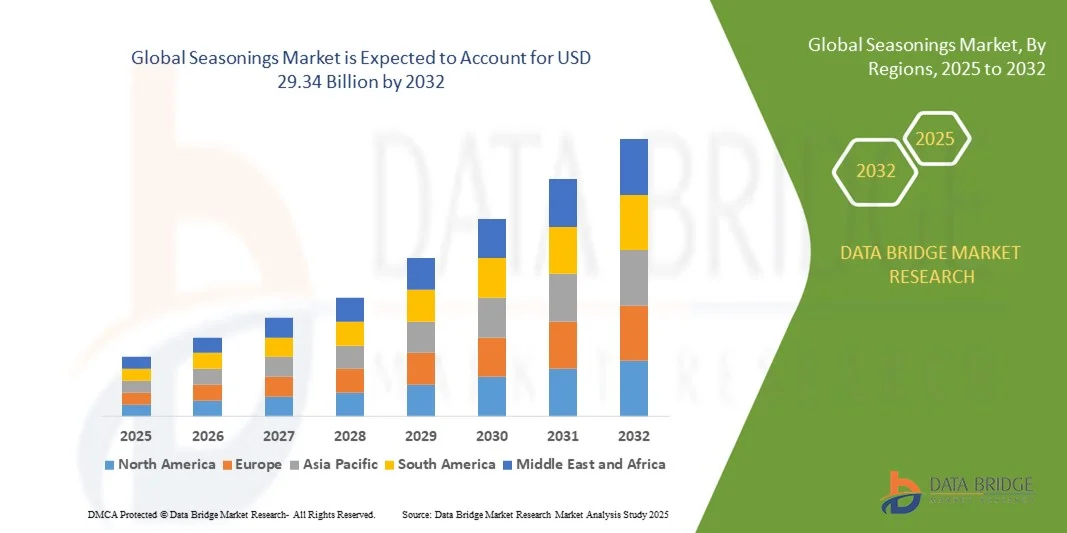
- As per Data Bridge Market Research Analysis the global seasonings market size was valued at USD 19.94 billion in 2024 and is expected to reach USD 29.34 billion by 2032, at a CAGR of 4.95% during the forecast period
- The increase in demand for convenience food due to urbanization population acts as one of the major factors driving the growth of seasonings market. The rise in demand for ethnic products owning to the increasing buyers’ willingness to pay a premium for new flavors and ethnic tastes, and large number of spices possessing antioxidant properties and thus, being helpful in treating several diseases and health problems accelerate the market growth
Market Size & Forecast
- Global Market Value (2024): USD 19.94 billion
- Expected Market Value (2032): USD 29.34 billion
- Forecast CAGR (2024–2032): 4.95%
What are the Major Takeaways of Seasonings Market?
- The increasing number of women in workforces having less time to cook for hours and increased use of spices and seasonings as a natural preservative in meat & poultry products further influence the market
- In addition, an increase in disposable income of people, rise in health consciousness, change in consumer lifestyle, and expansion of food and beverage sector positively affect the seasonings market. Furthermore, increase in demand for ready-to-use spice mixes as convenient options in the food-service industry extends profitable opportunities to the market
- Asia-Pacific dominated the Seasonings market with the largest revenue share of 45.52% in 2024, driven by the increasing demand for traditional, functional, and health-focused spices across households and the foodservice sector
- North America is poised to grow at the fastest CAGR of 11.69% from 2025 to 2032, driven by the rising consumer interest in ethnic cuisines, functional foods, and natural spice products. The market is witnessing increasing demand for organic, non-GMO, and clean-label seasonings across households, foodservice, and retail channels
- In 2024, the Pepper segment dominated the market with a revenue share of 27.8%, driven by its versatility across cuisines and widespread household use
Report Scope and Seasonings Market Segmentation
|
Attributes |
Seasonings Key Market Insights |
|
Segments Covered |
|
|
Countries Covered |
North America
Europe
Asia-Pacific
Middle East and Africa
South America
|
|
Key Market Players |
|
|
Market Opportunities |
|
|
Value Added Data Infosets |
In addition to the insights on market scenarios such as market value, growth rate, segmentation, geographical coverage, and major players, the market reports curated by the Data Bridge Market Research also include in-depth expert analysis, pricing analysis, brand share analysis, consumer survey, demography analysis, supply chain analysis, value chain analysis, raw material/consumables overview, vendor selection criteria, PESTLE Analysis, Porter Analysis, and regulatory framework. |
What is the Key Trend in the Seasonings Market?
Rising Demand for Clean Label and Functional Seasonings
- A prominent and accelerating trend in the global seasonings market is the growing consumer preference for clean-label, natural, and functional seasonings. Consumers increasingly seek products free from artificial additives, preservatives, and synthetic flavors, aligning with the broader health and wellness movement
- For instance, brands such as McCormick & Company and Everest Spices have introduced seasoning blends enriched with natural herbs, probiotics, and plant-based extracts, offering both flavor and health benefits. These innovations are helping companies cater to the rising demand for functional food solutions
- Functional Seasonings now integrate features such as digestive support, immunity enhancement, and antioxidant properties. For instance, turmeric and ginger-based blends are increasingly popular due to their natural health benefits. Consumers appreciate the combination of taste and added wellness functionality, making such products a preferred choice for daily cooking
- The proliferation of natural and functional Seasonings also promotes innovation in packaging and formulation, with single-serve sachets, pre-mixed blends, and organic-certified options gaining traction in retail channels
- This shift towards health-conscious, convenient, and multifunctional Seasonings is reshaping product development strategies, with companies such as MDH Spices and McCormick investing heavily in natural and functional offerings to meet evolving consumer expectations
- The growing adoption of clean-label and functional Seasonings is expected to continue across both household and commercial segments, driven by increasing health awareness and lifestyle-oriented consumption patterns
What are the Key Drivers of Seasonings Market?
- The rising consumer focus on health, nutrition, and wellness is a major driver of demand for natural and functional Seasonings. Customers are increasingly avoiding artificial additives, opting for products that support immunity and general well-being
- For instance, in 2024, McCormick launched a range of plant-based seasoning blends enriched with antioxidants and vitamins, aiming to capture the growing clean-label segment. Such initiatives by leading companies are expected to accelerate market growth
- The convenience of ready-to-use seasoning blends and pre-mixed functional spices drives adoption among busy households and foodservice providers, who prioritize efficiency without compromising on health and taste
- Furthermore, the surge in global culinary exploration and gourmet cooking trends has prompted increased demand for diverse, flavorful, and naturally sourced Seasonings. Consumers are seeking authentic, international flavors that are also healthy
- Increasing awareness through social media, health blogs, and nutrition campaigns further fuels the demand for functional and clean-label Seasonings. This, combined with rising disposable incomes and preference for convenient cooking solutions, is contributing to consistent market expansion
Which Factor is Challenging the Growth of the Seasonings Market?
- The high cost of natural, clean-label, and functional ingredients can pose a challenge for widespread adoption, especially in price-sensitive regions. Premium formulations often come at a higher price than conventional seasonings, limiting accessibility for some consumers
- For instance, turmeric, saffron, and rare herb blends can significantly increase production costs, affecting retail pricing and volume sales
- Supply chain constraints for natural and organic ingredients, such as seasonal variability and limited availability of specific herbs or spices, can also disrupt production and limit product availability. Companies must invest in sustainable sourcing and quality assurance to maintain consistency
- Moreover, consumer skepticism about the efficacy of functional ingredients and clean-label claims can hinder market penetration. Transparent labeling, certification, and educational marketing are critical to build trust
- Addressing these challenges through cost optimization, transparent sourcing, and consumer education will be vital for the Seasonings market to sustain growth and expand adoption across global regions
How is the Seasonings Market Segmented?
The market is segmented on the basis of type and application.
- By Type
On the basis of type, the seasonings market is segmented into Oregano, Pepper, Paprika, Ginger, Cinnamon, Cumin, Turmeric, Garlic, Cardamom, Coriander, Cloves, and Others. In 2024, the Pepper segment dominated the market with a revenue share of 27.8%, driven by its versatility across cuisines and widespread household use. Pepper is a staple in both residential kitchens and commercial foodservice operations due to its strong flavor profile and preservative qualities. The market also benefits from growing demand for premium, organically sourced, and functional pepper variants, which cater to health-conscious consumers.
On the other hand, the Turmeric segment is expected to witness the fastest CAGR of 14.3% from 2025 to 2032, fueled by increasing awareness of its health benefits, including anti-inflammatory and antioxidant properties. Turmeric’s integration into functional food and beverage products, dietary supplements, and spice blends is driving rapid adoption. Overall, the type segment reflects consumer trends favoring both traditional staples and health-focused spices.
- By Application
On the basis of application, the seasonings market is segmented into Bakery & Confectionary, Beverages, Frozen Foods, Savory, Meat and Poultry, and Others. In 2024, the Savory segment dominated the market with a revenue share of 33.5%, owing to its extensive use in everyday cooking, ready-to-eat meals, and processed food products. Consumers increasingly prefer seasoning blends that enhance flavor while offering natural and clean-label options, particularly in sauces, soups, and snack foods. In addition, the savory segment benefits from rising consumption of fast foods, frozen snacks, and international cuisine at home and in restaurants.
Conversely, the Bakery & Confectionary segment is expected to witness the fastest CAGR of 13.7% from 2025 to 2032, driven by the rising popularity of flavored baked goods, spiced desserts, and functional bakery products infused with spices such as cinnamon, cardamom, and ginger. The segment reflects innovation in product development while catering to evolving taste and health preferences.
Which Region Holds the Largest Share of the Seasonings Market?
- Asia-Pacific dominated the Seasonings market with the largest revenue share of 45.52% in 2024, driven by the increasing demand for traditional, functional, and health-focused spices across households and the foodservice sector. The region’s rich culinary diversity and long-standing cultural preference for seasonings such as turmeric, ginger, cumin, and chili significantly contribute to market dominance
- Consumers in the region prioritize authentic flavors, quality, and the health benefits of natural spices, fueling demand for organic and sustainably sourced products. The widespread adoption of processed and ready-to-eat foods, along with growing awareness about the nutritional benefits of spices, further supports the market
- This extensive consumption is complemented by strong production capabilities, export potential, and government initiatives promoting spice cultivation, positioning Asia-Pacific as a key driver of the global Seasonings market
China Seasonings Market Insight
The China Seasonings market captured the largest revenue share within Asia-Pacific in 2024, driven by the country’s expanding middle class, rapid urbanization, and high consumption of processed foods and condiments. Traditional spices such as ginger, garlic, and chili are heavily incorporated into everyday cuisine, while growing demand for packaged spice blends and health-focused seasonings is fueling market growth. The push toward modernization in the food and beverage industry, combined with increasing e-commerce penetration for spice sales, is expanding accessibility. Moreover, government support for spice cultivation, coupled with technological advancements in processing and packaging, strengthens China’s market position. The market benefits from both domestic consumption and export opportunities, sustaining robust growth.
Japan Seasonings Market Insight
The Japan Seasonings market is witnessing steady growth due to its high culinary standards, preference for quality ingredients, and increasing adoption of ready-to-use and functional spice blends. Traditional seasonings such as wasabi, ginger, and pepper are widely used in households and restaurants, while innovative spice mixes for convenience foods are gaining traction. Urbanization, busy lifestyles, and a growing health-conscious population are driving demand for nutritionally beneficial seasonings. The integration of spices into packaged food, snacks, and beverages, alongside rising e-commerce penetration, contributes to market expansion. In addition, Japan’s aging population is encouraging the development of easy-to-use and pre-portioned seasoning products, supporting both domestic consumption and overall regional dominance in the Seasonings market.
Which Region is the Fastest Growing Region in the Seasonings Market?
North America is poised to grow at the fastest CAGR of 11.69% from 2025 to 2032, driven by the rising consumer interest in ethnic cuisines, functional foods, and natural spice products. The market is witnessing increasing demand for organic, non-GMO, and clean-label seasonings across households, foodservice, and retail channels. Technologically advanced processing, flavor innovation, and a growing number of ready-to-use spice blends are further stimulating growth. Consumers’ focus on healthy diets, home cooking, and convenience products enhances adoption. In addition, e-commerce and specialty food retail are improving accessibility and variety, encouraging experimentation with spices such as turmeric, cinnamon, cumin, and paprika. The growing emphasis on globally inspired recipes and premium culinary experiences positions North America as the fastest-growing market in the global Seasonings sector.
U.S. Seasonings Market Insight
The U.S. Seasonings market is witnessing robust growth, fueled by rising consumer demand for ethnic flavors, natural and organic spices, and ready-to-use seasoning blends. Increasing health consciousness is driving preference for spices with functional benefits such as turmeric, garlic, and ginger. E-commerce penetration, coupled with specialty retail and subscription spice kits, is enhancing accessibility and experimentation. The growing popularity of home cooking, meal kits, and globally inspired cuisines is further boosting adoption. In addition, the rise of foodservice channels, including restaurants and quick-service outlets, is contributing to market expansion, making the U.S. a key growth hub in North America.
Canada Seasonings Market Insight
The Canadian Seasonings market is expanding steadily due to the increasing multicultural population and growing interest in ethnic cuisines. Consumers are prioritizing organic, non-GMO, and clean-label seasonings for both home cooking and foodservice applications. Rising health awareness and demand for functional spices such as cinnamon, turmeric, and black pepper are shaping purchasing behavior. Retail innovations, including ready-to-use spice blends, value packs, and online delivery platforms, are improving convenience and accessibility. In addition, the growing popularity of premium, artisanal, and locally sourced spices supports market growth, positioning Canada as a significant contributor to the North American Seasonings market.
Which are the Top Companies in Seasonings Market?
The seasonings industry is primarily led by well-established companies, including:
- MDH Spices (India)
- Kraft Foods H.J. Heinz Company Brands LLC (U.S.)
- McCormick & Company, Inc. (U.S.)
- Unilever (U.K.)
- Olam International (Singapore)
- Oregon Spice Company (U.S.)
- Vanns Spices, LTD (U.K.)
- All Seasonings (U.S.)
- Everest Spices (India)
- DS Group (India)
- Associated British Foods plc (U.K.)
- AJINOMOTO CO.,INC. (Japan)
- KIS CO.,LTD (South Korea)
- Carolina Ingredients (U.S.)
- UK Blending LTD. (U.K.)
- Elite Spice (India)
- Flex Foods Limited (India)
- DairiConcepts L.P (U.S.)
- Advance Inorganics (India)
- Amazon Spices Private Limited (India)
- Cross Road, LTD (U.K.)
What are the Recent Developments in Global Seasonings Market?
- In July 2024, Bart Ingredients Company collaborated with The Space Creative, a Bristol-based agency, to revamp its brand and packaging, aiming to attract modern food enthusiasts while retaining appeal for its traditional customer base. Initially focused on redesigning packaging for Bart’s spice blends inspired by global cuisines, the concept expanded to cover its entire product line of over 100 items, including herbs, spices, chopped ingredients, pastes, salts, peppers, and seasonings. This initiative strengthened the company’s brand presence and enhanced its market competitiveness
- In May 2024, Döhler announced the expansion of its manufacturing facility in Paarl, South Africa, marking a significant advancement in its African operations. The expansion aims to improve product availability, tailor offerings to local preferences, and reinforce Döhler’s position as a leading player in the food, beverage, life science, and nutrition sectors across the region. This move is expected to drive growth and strengthen regional customer relationships
- In April 2024, DS Group announced plans to invest USD 1.25 billion in advertising and marketing for its flagship Catch Spices brand in FY25. The investment is intended to increase brand visibility, expand distribution in India’s tier II and III cities, and leverage quick commerce platforms to stimulate growth. This significant funding highlights DS Group’s commitment to strengthening its market presence and capturing new consumer segments
- In May 2023, The Kraft Heinz Co. launched Just Spices in the U.S. market. The ready-made spice blends were made available across grocery stores, offline retail outlets, and online platforms. This launch expanded Kraft Heinz’s footprint in the U.S. seasoning market and provided consumers with convenient, high-quality spice options
- In April 2023, McCormick partnered with Tabitha Brown to introduce a range of salt-free seasoning products across the U.S. The new lineup included McCormick Such as Sweet Such as Smoky All Purpose Seasoning, McCormick Very Good Garlic All Purpose Seasoning, McCormick Taco Business Seasoning Mix, McCormick Burger Business Seasoning Mix, and McCormick Sauté Business Seasoning Mix. This collaboration enhanced product innovation and reinforced McCormick’s commitment to offering healthier and versatile seasoning options

- Interactive Data Analysis Dashboard
- Company Analysis Dashboard for high growth potential opportunities
- Research Analyst Access for customization & queries
- Competitor Analysis with Interactive dashboard
- Latest News, Updates & Trend analysis
- Harness the Power of Benchmark Analysis for Comprehensive Competitor Tracking
Global Seasonings Market, Supply Chain Analysis and Ecosystem Framework
To support market growth and help clients navigate the impact of geopolitical shifts, DBMR has integrated in-depth supply chain analysis into its Global Seasonings Market research reports. This addition empowers clients to respond effectively to global changes affecting their industries. The supply chain analysis section includes detailed insights such as Global Seasonings Market consumption and production by country, price trend analysis, the impact of tariffs and geopolitical developments, and import and export trends by country and HSN code. It also highlights major suppliers with data on production capacity and company profiles, as well as key importers and exporters. In addition to research, DBMR offers specialized supply chain consulting services backed by over a decade of experience, providing solutions like supplier discovery, supplier risk assessment, price trend analysis, impact evaluation of inflation and trade route changes, and comprehensive market trend analysis.
Data collection and base year analysis are done using data collection modules with large sample sizes. The stage includes obtaining market information or related data through various sources and strategies. It includes examining and planning all the data acquired from the past in advance. It likewise envelops the examination of information inconsistencies seen across different information sources. The market data is analysed and estimated using market statistical and coherent models. Also, market share analysis and key trend analysis are the major success factors in the market report. To know more, please request an analyst call or drop down your inquiry.
The key research methodology used by DBMR research team is data triangulation which involves data mining, analysis of the impact of data variables on the market and primary (industry expert) validation. Data models include Vendor Positioning Grid, Market Time Line Analysis, Market Overview and Guide, Company Positioning Grid, Patent Analysis, Pricing Analysis, Company Market Share Analysis, Standards of Measurement, Global versus Regional and Vendor Share Analysis. To know more about the research methodology, drop in an inquiry to speak to our industry experts.
Data Bridge Market Research is a leader in advanced formative research. We take pride in servicing our existing and new customers with data and analysis that match and suits their goal. The report can be customized to include price trend analysis of target brands understanding the market for additional countries (ask for the list of countries), clinical trial results data, literature review, refurbished market and product base analysis. Market analysis of target competitors can be analyzed from technology-based analysis to market portfolio strategies. We can add as many competitors that you require data about in the format and data style you are looking for. Our team of analysts can also provide you data in crude raw excel files pivot tables (Fact book) or can assist you in creating presentations from the data sets available in the report.













