


Seborrheic Dermatitis Treatment Market Size
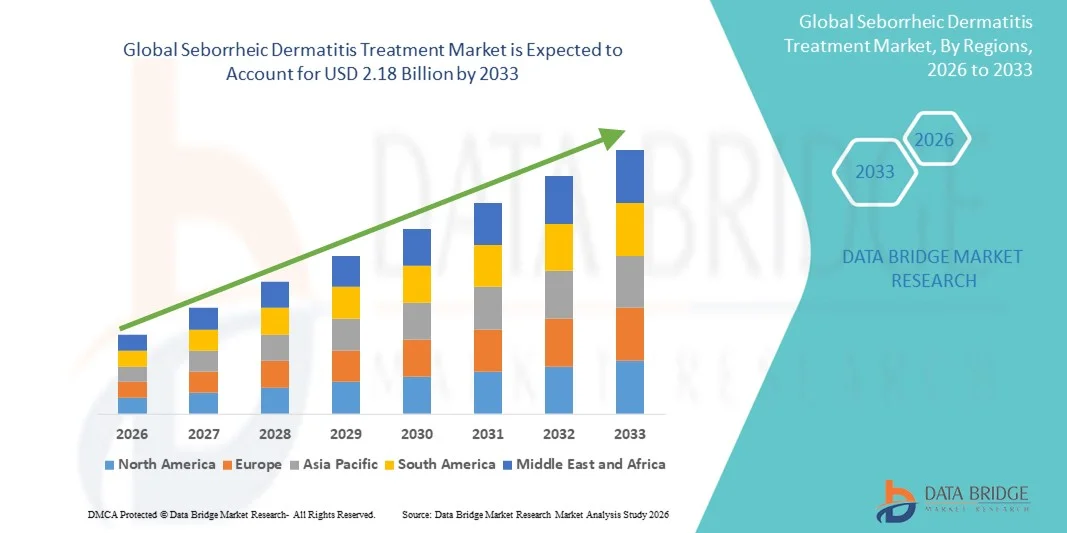
- The global seborrheic dermatitis treatment market size was valued at USD 1.48 billion in 2025 and is expected to reach USD 2.18 billion by 2033, at a CAGR of 5.00 % during the forecast period
- The market growth is largely fueled by increasing awareness around skin health, rising prevalence of seborrheic dermatitis globally, and growing demand for effective and accessible treatment options
- Furthermore, advances in topical antifungal, anti-inflammatory, and corticosteroid formulations, along with rising OTC product adoption, are improving patient compliance and fueling the uptake of seborrheic dermatitis treatments, thereby significantly boosting the industry's growth
Seborrheic Dermatitis Treatment Market Analysis
- Seborrheic dermatitis treatments, including topical antifungals, corticosteroids, and medicated shampoos, are increasingly essential for managing chronic and recurrent skin conditions, addressing inflammation, flaking, and itching, and improving patient quality of life across both hospital/clinic and OTC settings
- The rising demand for seborrheic dermatitis treatments is primarily driven by increasing prevalence of the condition, growing awareness of skin health, and a surge in consumer preference for effective, easy-to-use, and accessible treatment options
- North America dominated the seborrheic dermatitis treatment market with the largest revenue share of 38.7% in 2025, supported by high healthcare expenditure, advanced dermatology infrastructure, and a strong presence of leading pharmaceutical companies, with the U.S. witnessing significant growth in both prescription and OTC product adoption
- Asia-Pacific is expected to be the fastest-growing region in the seborrheic dermatitis treatment market during the forecast period due to rising population, increasing awareness of skin care, expanding healthcare access, and growing adoption of dermatology treatments in emerging economies
- Antifungal Agents segment dominated the seborrheic dermatitis treatment market with a market share of 44.5% in 2025, driven by its proven efficacy, safety profile, and widespread availability across pharmacies and hospitals
Report Scope and Seborrheic Dermatitis Treatment Market Segmentation
|
Attributes |
Seborrheic Dermatitis Treatment Key Market Insights |
|
Segments Covered |
|
|
Countries Covered |
North America
Europe
Asia-Pacific
Middle East and Africa
South America
|
|
Key Market Players |
|
|
Market Opportunities |
|
|
Value Added Data Infosets |
In addition to the insights on market scenarios such as market value, growth rate, segmentation, geographical coverage, and major players, the market reports curated by the Data Bridge Market Research also include in-depth expert analysis, patient epidemiology, pipeline analysis, pricing analysis, and regulatory framework |
Seborrheic Dermatitis Treatment Market Trends
Rising Adoption of Advanced Topical and OTC Formulations
- A significant and accelerating trend in the global seborrheic dermatitis treatment market is the development and adoption of advanced topical formulations, including combination antifungal-anti-inflammatory creams and medicated shampoos, enhancing treatment efficacy and patient compliance
- For instance, ketoconazole-salicylic acid combination shampoos provide dual action by reducing fungal growth while soothing scalp inflammation, improving patient adherence to treatment regimens
- Emerging OTC products with natural or plant-based ingredients are gaining traction, offering safer alternatives for long-term management and appealing to consumers seeking gentle, effective treatment options
- The integration of patient education and digital tools, such as apps that guide proper application and monitor symptoms, is enabling better treatment outcomes and adherence
- Personalized treatment approaches based on age, skin type, and severity of the condition are increasingly being incorporated into product offerings to enhance efficacy and satisfaction
- Tele-dermatology platforms and e-pharmacy distribution are expanding reach to underserved and remote regions, improving accessibility and adoption
- This trend towards more effective, convenient, and patient-friendly treatment solutions is reshaping expectations for seborrheic dermatitis care, prompting pharmaceutical companies to innovate and diversify their product portfolios
- The demand for advanced, easy-to-use, and safe seborrheic dermatitis treatments is growing rapidly across both prescription and OTC segments as consumers increasingly prioritize skin health and preventive care
Seborrheic Dermatitis Treatment Market Dynamics
Driver
Increasing Prevalence and Awareness of Skin Health
- The rising prevalence of seborrheic dermatitis worldwide, coupled with increasing awareness of skin health and hygiene, is a key driver for the expanding market demand for effective treatments
- For instance, dermatology campaigns and educational programs highlighting early detection and proper treatment have contributed to higher treatment adoption rates, particularly in urban populations
- Patients increasingly prefer accessible, user-friendly treatment options that can be self-administered at home, enhancing convenience and adherence to therapy
- Growing availability of both prescription and OTC formulations in retail and e-pharmacy channels is making treatments more widely accessible to a larger patient base
- The trend toward preventive skin care and maintenance therapy is driving recurring and long-term usage, further supporting market growth in both developed and emerging regions
- Increasing R&D investments in novel antifungal and anti-inflammatory compounds are enabling more effective and faster-acting treatment options
- Rising partnerships between pharmaceutical companies and dermatology clinics are improving treatment awareness, diagnosis rates, and patient access, fueling market expansion
Restraint/Challenge
Side Effects and Regulatory Compliance Barriers
- Concerns regarding side effects such as skin irritation, redness, or allergic reactions associated with some corticosteroid or antifungal treatments pose a challenge to widespread adoption
- For instance, prolonged or incorrect use of potent corticosteroid creams can lead to skin thinning or worsening of symptoms, making consumers cautious about self-medication
- Regulatory compliance requirements for approval of new formulations and OTC products in different regions can delay product launches and limit market penetration
- High costs of advanced treatments or combination therapies compared to basic alternatives can restrict access for price-sensitive patients, particularly in developing countries
- Overcoming these challenges through safer formulations, clear usage instructions, consumer education, and streamlined regulatory pathways is critical to sustaining market growth and building trust among end-users
- Limited awareness of proper treatment regimens in emerging markets may result in underuse or misuse of available therapies, constraining market potential
- Competition from alternative natural remedies and home-based treatments may divert consumers from clinically approved products, impacting market growth
Seborrheic Dermatitis Treatment Market Scope
The market is segmented on the basis of treatment, diagnosis, symptoms, dosage, route of administration, end-users, and distribution channel.
- By Treatment
On the basis of treatment, the market is segmented into anti-inflammatory drugs, antifungal agents, corticosteroid lotions, prescription-strength medicated shampoos, sulfur products, and others. The antifungal agents segment dominated the market with the largest revenue share of 44.5% in 2025, driven by their proven efficacy in controlling Malassezia yeast, the primary causative factor of seborrheic dermatitis. Antifungal treatments, including ketoconazole and ciclopirox formulations, are widely recommended by dermatologists for both scalp and skin application. High patient trust in antifungal products and their availability across prescription and OTC channels have strengthened market dominance. Brand recognition, clinical validation, and repeated usage for chronic cases further support its market leadership.
The prescription-strength medicated shampoos segment is expected to witness the fastest growth rate of 7.1% from 2026 to 2033, driven by increasing awareness and adoption of specialized scalp care routines. These shampoos often combine antifungal, anti-inflammatory, and keratolytic agents to provide comprehensive symptom relief. Rising online sales channels and tele-dermatology prescriptions have improved accessibility for patients, boosting uptake. Their targeted efficacy against dandruff, itching, and scaling makes them a preferred option for moderate-to-severe cases. The convenience of at-home treatment and strong marketing campaigns enhance adoption. Patient preference for clinically tested products ensures sustained growth for this segment.
- By Diagnosis
On the basis of diagnosis, the market is segmented into skin biopsy and others. The skin biopsy segment dominated the market in 2025 due to its ability to confirm diagnosis in atypical or severe cases, ensuring precise treatment selection. Biopsies provide detailed histopathological information, aiding dermatologists in differentiating seborrheic dermatitis from psoriasis or eczema. Widespread clinical adoption in hospitals and specialty dermatology clinics supports the segment’s dominance. Accuracy, reliability, and acceptance in clinical guidelines make this segment critical. The segment benefits from higher reimbursement in healthcare systems.
The others segment, including visual examination and dermoscopy, is expected to witness the fastest growth during 2026–2033 due to increasing use of non-invasive diagnostic methods. Tele-dermatology platforms promote remote visual diagnosis, improving patient access and early treatment initiation. These approaches reduce dependency on invasive procedures and enhance patient comfort. Digital imaging and smartphone-based dermoscopy tools further support segment adoption. Growing awareness among patients encourages self-monitoring and early consultation. Cost-effectiveness and convenience are key drivers of segment growth.
- By Symptoms
On the basis of symptoms, the market is segmented into red skin, cradle cap, dandruff, itching, blepharitis, and others. The dandruff segment dominated the market with the highest share in 2025, as it represents the most common and visible manifestation of seborrheic dermatitis, affecting both scalp and body. Frequent occurrences drive recurring product use, supporting revenue generation. Awareness campaigns and OTC product availability have reinforced segment dominance. Patients prefer products that specifically target dandruff symptoms, increasing loyalty. Dermatologists often recommend dandruff-focused formulations as first-line therapy. Continuous innovation in medicated shampoos sustains segment leadership.
The blepharitis segment is expected to witness the fastest growth rate from 2026 to 2033 due to rising recognition of eyelid involvement in seborrheic dermatitis. Specialized eyelid wipes and medicated ointments are gaining adoption among consumers and ophthalmology clinics. Increased focus on eye care and integration with broader dermatology treatment plans boosts segment growth. Growing awareness of ocular health drives repeated use. Convenience and safety of topical eyelid treatments support consumer preference. Telemedicine consultations contribute to faster diagnosis and product adoption.
- By Dosage
On the basis of dosage, the market is segmented into tablet, ointments, injection, shampoos, creams, gels, and others. The shampoos segment dominated the market with the largest revenue share in 2025 because scalp involvement is prevalent, and shampoos provide convenient, frequent application for symptom relief. Combination formulations addressing multiple symptoms further strengthen consumer preference. Shampoos are widely available in both retail and online channels. Consumer familiarity with shampoo-based treatment enhances adherence. Dermatologists frequently recommend shampoos as the first-line therapy. Continuous product innovation ensures segment leadership.
The creams segment is expected to witness the fastest growth rate from 2026 to 2033 due to rising adoption for facial, chest, and other affected areas. Easy topical application, improved formulations with low irritation potential, and increased OTC availability drive the segment’s expansion. Targeted treatment of small areas enhances patient compliance. Rising consumer preference for gentle, natural ingredient-based creams supports growth. Dermatology clinics recommend creams for mild-to-moderate cases. E-pharmacy platforms expand access, fueling rapid adoption.
- By Route of Administration
On the basis of route of administration, the market is segmented into oral, topical, parenteral, and others. The topical segment dominated the market in 2025 as most treatments are applied directly to affected areas, ensuring localized relief with minimal systemic side effects. Topical treatments include medicated shampoos, creams, and gels, supporting widespread use. Patients prefer topical applications due to ease and reduced side effects. Dermatologists often recommend combination topical therapies for chronic management. OTC availability boosts segment adoption. Continuous innovation in formulation enhances effectiveness and safety.
The oral segment is expected to witness the fastest growth rate from 2026 to 2033, driven by systemic antifungals for severe or treatment-resistant cases. Increasing clinical adoption and patient preference for convenient oral regimens contribute to market expansion. Oral therapy is favored for scalp and body involvement in chronic cases. Improved bioavailability and reduced dosing frequency enhance adherence. Hospitals and specialty clinics increasingly prescribe oral antifungals. Tele-prescription platforms facilitate accessibility, driving rapid segment growth.
- By End-Users
On the basis of end-users, the market is segmented into clinics, hospitals, and others. The clinics segment dominated the market with the largest share in 2025 due to high patient footfall for dermatology consultations, diagnosis, and treatment recommendations. Clinics provide both prescription and OTC guidance, strengthening their market position. Accessibility, frequent visits, and personalized care support dominance. Clinics also conduct awareness campaigns promoting regular treatment. Established networks of dermatology clinics encourage repeated purchases. Patient trust in clinic recommendations drives sustained revenue.
The hospitals segment is expected to witness the fastest growth rate during 2026–2033, driven by expanding dermatology departments, specialized care units, and integration with telemedicine for follow-ups. Hospital-based treatments are preferred for severe and complicated cases. Increasing hospital penetration in emerging markets supports adoption. Hospitals provide comprehensive patient monitoring and adherence tracking. Availability of prescription-strength products enhances trust. Partnerships with pharmaceutical companies facilitate awareness and access, fueling rapid growth.
- By Distribution Channel
On the basis of distribution channel, the market is segmented into hospital pharmacy, retail pharmacy, and online pharmacy. The retail pharmacy segment dominated the market in 2025 due to high accessibility, convenience, and wide availability of both OTC and prescription-strength treatments. Frequent product repurchase and brand trust drive revenues. Retailers provide expert guidance for product selection. Multiple outlet presence ensures reach in urban and semi-urban areas. Marketing campaigns reinforce brand loyalty. Repeat purchase behavior sustains revenue growth for this segment.
The online pharmacy segment is expected to witness the fastest growth rate from 2026 to 2033, supported by increasing e-commerce adoption, tele-dermatology prescriptions, and home delivery services. Online platforms also enable access in remote areas, expanding the patient base. Convenience, discreet delivery, and promotional offers attract consumers. Online platforms allow subscription-based replenishment for chronic cases. Integration with telemedicine enhances prescription compliance. Growing digital literacy and smartphone penetration further accelerate segment growth.
Seborrheic Dermatitis Treatment Market Regional Analysis
- North America dominated the seborrheic dermatitis treatment market with the largest revenue share of 38.7% in 2025, supported by high healthcare expenditure, advanced dermatology infrastructure, and a strong presence of leading pharmaceutical companies, with the U.S. witnessing significant growth in both prescription and OTC product adoption
- Consumers in the region increasingly prefer clinically proven antifungal and anti-inflammatory treatments, alongside convenient OTC and prescription options, for effective management of scalp and skin symptoms
- This widespread adoption is further supported by advanced healthcare systems, high disposable incomes, a well-informed population, and easy access to dermatology clinics and pharmacies, establishing North America as a leading market for seborrheic dermatitis treatments in both hospital and retail settings
U.S. Seborrheic Dermatitis Treatment Market Insight
The U.S. seborrheic dermatitis treatment market captured the largest revenue share of 79% in 2025 within North America, fueled by rising prevalence of chronic skin conditions and high awareness of dermatological care. Consumers are increasingly prioritizing clinically proven antifungal, anti-inflammatory, and medicated shampoo treatments for effective symptom management. The growing preference for at-home treatment regimens, combined with robust demand for OTC and prescription products, further propels the market. Moreover, the integration of tele-dermatology and e-pharmacy platforms is significantly contributing to market expansion.
Europe Seborrheic Dermatitis Treatment Market Insight
The Europe seborrheic dermatitis treatment market is projected to expand at a substantial CAGR throughout the forecast period, primarily driven by rising skin health awareness and an increasing prevalence of seborrheic dermatitis. Urbanization and improved healthcare infrastructure are fostering the adoption of advanced topical and prescription treatments. European consumers are also drawn to convenient, safe, and dermatologist-recommended formulations. The region is experiencing significant growth across hospitals, clinics, and retail pharmacy channels, with treatments being incorporated into both preventive and long-term management strategies.
U.K. Seborrheic Dermatitis Treatment Market Insight
The U.K. seborrheic dermatitis treatment market is anticipated to grow at a noteworthy CAGR during the forecast period, driven by the rising trend of home-based care and preventive dermatology. In addition, increasing awareness about skin irritation, dandruff, and scalp conditions is encouraging consumers to adopt clinically validated OTC and prescription solutions. The U.K.’s robust e-commerce and retail pharmacy infrastructure is expected to continue stimulating market growth. Patients increasingly prefer easy-to-use shampoos, creams, and topical agents for mild-to-moderate cases, supporting adoption across residential and clinical settings.
Germany Seborrheic Dermatitis Treatment Market Insight
The Germany seborrheic dermatitis treatment market is expected to expand at a considerable CAGR during the forecast period, fueled by growing awareness of skin health, rising dermatology visits, and the demand for technologically advanced treatment options. Germany’s well-developed healthcare infrastructure, combined with a focus on preventive care, promotes adoption of both topical and systemic therapies. Prescription-strength medicated shampoos and antifungal creams are becoming increasingly prevalent, particularly in hospitals and dermatology clinics. The emphasis on safety, efficacy, and compliance aligns with local consumer expectations, further supporting market growth.
Asia-Pacific Seborrheic Dermatitis Treatment Market Insight
The Asia-Pacific seborrheic dermatitis treatment market is poised to grow at the fastest CAGR of 8.3% during the forecast period of 2026 to 2033, driven by increasing awareness of skin care, rising disposable incomes, and growing healthcare infrastructure in countries such as China, Japan, and India. The region’s increasing inclination towards preventive dermatology, supported by telemedicine and online pharmacies, is driving the adoption of OTC and prescription treatments. Moreover, as APAC emerges as a production hub for dermatology products, the affordability and accessibility of seborrheic dermatitis treatments are expanding to a wider consumer base.
Japan Seborrheic Dermatitis Treatment Market Insight
The Japan market is gaining momentum due to high awareness of skin health, aging population, and growing adoption of dermatologist-recommended treatments. Japanese consumers increasingly prefer easy-to-use, safe, and effective topical therapies and medicated shampoos for both scalp and skin management. The integration of treatments with tele-dermatology platforms is improving patient access and adherence. Rising demand for preventive care and maintenance therapy in both residential and clinical settings is fueling market growth.
India Seborrheic Dermatitis Treatment Market Insight
The India seborrheic dermatitis treatment market accounted for the largest market revenue share in Asia Pacific in 2025, attributed to rising awareness of skin care, rapid urbanization, and increasing healthcare access. India represents a significant market for OTC and prescription treatments across hospitals, clinics, and retail pharmacies. Government initiatives promoting skin health and the availability of affordable treatment options, alongside strong domestic manufacturers, are key factors propelling market growth. The expanding middle class and higher digital penetration also support tele-dermatology and online pharmacy adoption.
Seborrheic Dermatitis Treatment Market Share
The Seborrheic Dermatitis Treatment industry is primarily led by well-established companies, including:
- GALDERMA (Switzerland)
- Pfizer Inc. (U.S.)
- Johnson & Johnson Services, Inc. (U.S.)
- Bayer AG (Germany)
- Novartis AG (Switzerland)
- Sanofi (France)
- GSK plc (U.K.)
- AbbVie Inc. (U.S.)
- Sun Pharmaceutical Industries Ltd. (India)
- Teva Pharmaceutical Industries Ltd. (Israel)
- Cipla (India)
- Dr. Reddy’s Laboratories Ltd. (India)
- L'Oréal. (France)
- LEO Pharma A/S (Denmark)
- Bausch Health. (Canada)
- Perrigo Company plc (Ireland)
- Abbott (U.S.)
- Amgen Inc. (U.S.)
- Eli Lilly and Company (U.S.)
- Monarch Pharmachem (U.K.)
What are the Recent Developments in Global Seborrheic Dermatitis Treatment Market?
- In November 2025, ZORYVE (roflumilast) foam 0.3% a once‑daily, non‑steroidal topical treatment for Seborrheic Dermatitis had long‑term safety and efficacy data published showing it is safe, well tolerated, and maintains clinical benefits up to 52 weeks of continuous use
- In May 2025, long‑term safety and efficacy data of ZORYVE foam (up to 52 weeks) were published in a peer‑reviewed journal, showing the formulation was safe, well tolerated, and maintained clinical benefits over one year of continuous use supporting its potential as a long‑term treatment option
- In April 2025, a clinical study on a 1% Selenium disulfide + 0.9% salicylic acid‑based shampoo demonstrated its efficacy in scalp seborrheic dermatitis, based on dermatologists’ self‑assessments highlighting rising interest in scalp‑targeted, maintenance‑therapy shampoos beyond standard antifungal agents
- In January 2024, ZORYVE foam was commercially launched in the United States for seborrheic dermatitis, offering patients a once‑daily, steroid‑free foam that targets inflammation a simpler and safer alternative to long‑term steroid or antifungal use
- In December 2023, ZORYVE (roflumilast) topical foam 0.3% was approved by the U.S. Food and Drug Administration (FDA) for treatment of seborrheic dermatitis in individuals aged 9 years and older the first drug with a new mechanism of action for this indication in over two decades

- Interactive Data Analysis Dashboard
- Company Analysis Dashboard for high growth potential opportunities
- Research Analyst Access for customization & queries
- Competitor Analysis with Interactive dashboard
- Latest News, Updates & Trend analysis
- Harness the Power of Benchmark Analysis for Comprehensive Competitor Tracking
Data collection and base year analysis are done using data collection modules with large sample sizes. The stage includes obtaining market information or related data through various sources and strategies. It includes examining and planning all the data acquired from the past in advance. It likewise envelops the examination of information inconsistencies seen across different information sources. The market data is analysed and estimated using market statistical and coherent models. Also, market share analysis and key trend analysis are the major success factors in the market report. To know more, please request an analyst call or drop down your inquiry.
The key research methodology used by DBMR research team is data triangulation which involves data mining, analysis of the impact of data variables on the market and primary (industry expert) validation. Data models include Vendor Positioning Grid, Market Time Line Analysis, Market Overview and Guide, Company Positioning Grid, Patent Analysis, Pricing Analysis, Company Market Share Analysis, Standards of Measurement, Global versus Regional and Vendor Share Analysis. To know more about the research methodology, drop in an inquiry to speak to our industry experts.
Data Bridge Market Research is a leader in advanced formative research. We take pride in servicing our existing and new customers with data and analysis that match and suits their goal. The report can be customized to include price trend analysis of target brands understanding the market for additional countries (ask for the list of countries), clinical trial results data, literature review, refurbished market and product base analysis. Market analysis of target competitors can be analyzed from technology-based analysis to market portfolio strategies. We can add as many competitors that you require data about in the format and data style you are looking for. Our team of analysts can also provide you data in crude raw excel files pivot tables (Fact book) or can assist you in creating presentations from the data sets available in the report.












