


What is Severe Viral Lower Respiratory Tract Disease Market Size and Overview ?
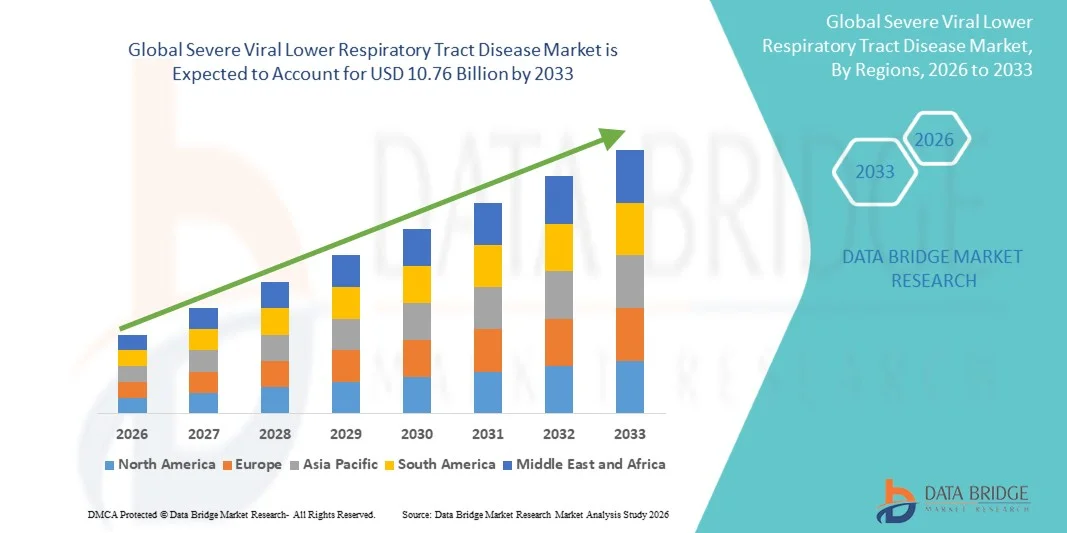
- As per Data Bridge Market Research Analysis the Severe Viral Lower Respiratory Tract Disease Market was valued at USD 5.21 billion in 2025 and is projected to reach USD 10.76 billion by 2033, growing at a CAGR of 9.50% from 2026 to 2033. The Severe Viral Lower Respiratory Tract Disease Market is witnessing steady growth driven by the rising global burden of respiratory viral infections, including respiratory syncytial virus (RSV), influenza, human metapneumovirus (hMPV), and severe coronavirus-associated pneumonia. Increasing prevalence of severe lower respiratory tract infections (LRTIs) among infants, elderly populations, and immunocompromised patients is significantly contributing to market expansion.
- The growing need for early diagnosis, advanced antiviral therapies, and improved hospital-based respiratory care is further strengthening demand. Rising air pollution levels, climate variability, and seasonal viral outbreaks are increasing infection incidence worldwide. In addition, expansion of intensive care infrastructure and oxygen therapy facilities is supporting patient management in severe cases. Governments and healthcare organizations are increasingly focusing on respiratory disease surveillance programs to reduce mortality rates. Continuous advancements in molecular diagnostics such as RT-PCR and multiplex respiratory panels are improving detection accuracy and enabling early intervention. Pharmaceutical innovations in antiviral drugs and monoclonal antibodies targeting RSV and influenza are also enhancing treatment outcomes. Growing hospital admissions for viral pneumonia and acute respiratory failure are further accelerating market growth. Increasing clinical research into respiratory immunology and vaccine development is strengthening long-term disease control strategies. The rising economic burden of severe respiratory infections is pushing healthcare systems to invest in preventive and critical care solutions. Expanding pediatric respiratory care programs and geriatric respiratory monitoring initiatives are further supporting market demand globally.
Market Size & Forecast
- Global Market Value (2025): USD 5.21 Billion
- Expected Market Value (2033): USD 10.76 Billion
- Forecast CAGR (2026–2033): 9.50%
- Leading Region in 2025: North America
- Fastest Growing Region: Asia-Pacific
Key Market Trends & Insights
- North America dominated the Severe Viral Lower Respiratory Tract Disease Market with the largest revenue share of 38.56% in 2025, supported by advanced healthcare infrastructure, high disease awareness, strong diagnostic penetration, and widespread availability of molecular testing technologies such as RT-PCR and multiplex respiratory panels. The region also benefits from robust surveillance programs for influenza, RSV, and emerging respiratory viruses, along with strong government funding for pandemic preparedness and infectious disease control, which continues to reinforce its leading position in the global market.
- The Respiratory Syncytial Virus (RSV) segment dominated the market with the largest revenue share of 34.62% in 2025, owing to its high hospitalization burden among infants, elderly populations, and immunocompromised patients.
- Asia-Pacific is expected to be the fastest-growing region in the Severe Viral Lower Respiratory Tract Disease Market, registering a CAGR of 8.3% from 2026 to 2033, driven by rising population density, increasing burden of respiratory viral infections, and rapid expansion of diagnostic healthcare infrastructure across China, India, Japan, and Southeast Asia. The region is witnessing strong investments in hospital capacity expansion, laboratory automation, and molecular diagnostic adoption, particularly RT-PCR and multiplex respiratory panels. In addition, growing government initiatives for infectious disease surveillance, improving access to healthcare services, and increasing awareness regarding early disease detection are further accelerating market growth across Asia-Pacific.
- The Influenza A & B segment is expected to witness the fastest growth, registering a CAGR of 7.4% from 2026 to 2033, driven by recurring seasonal outbreaks, viral mutation patterns, and increasing global vaccination and antiviral treatment programs. Growing use of rapid molecular diagnostics and multiplex respiratory testing panels is improving early detection rates and supporting faster clinical decision-making, further accelerating segment expansion.
- The Hospitals segment dominated the Severe Viral Lower Respiratory Tract Disease Market with a 57.83% revenue share in 2025, due to high patient inflow for severe respiratory infections requiring emergency care, ICU admission, oxygen therapy, and advanced clinical management. Hospitals remain the primary treatment centers for RSV, influenza-related pneumonia, and COVID-19 complications, supported by well-established diagnostic and critical care infrastructure.
- The Diagnostic Laboratories segment is expected to be the fastest-growing end user segment, registering a CAGR of 8.1% from 2026 to 2033, driven by increasing adoption of high-throughput molecular testing, expansion of laboratory networks, and rising outsourcing of diagnostic services. Integration of automated PCR platforms, multiplex assay systems, and AI-enabled diagnostic tools is significantly improving testing efficiency, turnaround time, and large-scale screening capabilities across regions.
Market Size & Forecast
- Global Market Value (2025): USD 5.21 Billion
- Expected Market Value (2033): USD 10.76 Billion
- Forecast CAGR (2026–2033): 9.50%
- Leading Region in 2025: North America
- Fastest Growing Region: Asia-Pacific
Report Scope and Severe Viral Lower Respiratory Tract Disease Market Segmentation
|
Attributes |
Severe Viral Lower Respiratory Tract Disease Key Market Insights |
|
Segments Covered |
|
|
Countries Covered |
North America
Europe
Asia-Pacific
Middle East and Africa
South America
|
|
Key Market Players |
|
|
Market Opportunities |
|
|
Value Added Data Infosets |
In addition to the insights on market scenarios such as market value, growth rate, segmentation, geographical coverage, and major players, the market reports curated by the Data Bridge Market Research also include in-depth expert analysis, geographically represented company-wise production and capacity, network layouts of distributors and partners, detailed and updated price trend analysis and deficit analysis of supply chain and demand. |
What is the Key Trend in Severe Viral Lower Respiratory Tract Disease Market ?
Trend: Growth in Severe Viral Lower Respiratory Tract Disease (SV-LRTD) Market
The Severe Viral Lower Respiratory Tract Disease Market is witnessing steady expansion driven by rising incidence of respiratory viral infections such as Respiratory Syncytial Virus (RSV), influenza, adenovirus, and emerging coronaviruses. According to the World Health Organization (WHO), RSV alone is responsible for an estimated 3.6 million hospitalizations annually in children under five, highlighting the significant clinical burden of severe lower respiratory infections globally. Seasonal influenza continues to cause 3–5 million severe cases each year, further increasing demand for advanced diagnostic and therapeutic solutions.
The market is also benefiting from growing adoption of high-throughput molecular diagnostics and multiplex respiratory testing panels in hospitals and diagnostic laboratories. For instance, modern PCR-based respiratory panels can detect 10–20 respiratory pathogens simultaneously from a single sample, significantly improving early diagnosis and clinical decision-making. Increasing use of point-of-care (POC) rapid molecular tests, which deliver results within 15–30 minutes, is further strengthening decentralized testing capabilities, particularly in emergency and outpatient settings.
Severe Viral Lower Respiratory Tract Disease Market Dynamics
Key Market Driver: Rising Burden of Respiratory Viral Infections and Expanding Diagnostic Preparedness
A major driver of the Severe Viral Lower Respiratory Tract Disease market is the increasing global burden of respiratory viral infections, particularly among infants, elderly populations, and immunocompromised patients. RSV remains one of the leading causes of hospitalization in children globally, while influenza outbreaks continue to strain healthcare systems during seasonal peaks. The COVID-19 pandemic further demonstrated the need for scalable respiratory viral testing infrastructure, with billions of tests conducted globally and significant investments made in molecular diagnostic capacity.
Governments across North America, Europe, and Asia-Pacific are strengthening infectious disease surveillance programs and expanding laboratory networks. For example, the U.S. Centers for Disease Control and Prevention (CDC) has expanded respiratory virus surveillance programs covering influenza, RSV, and SARS-CoV-2 co-circulation, improving early outbreak detection and response capabilities. Similarly, the European Centre for Disease Prevention and Control (ECDC) has enhanced genomic monitoring systems for respiratory pathogens across member states. These initiatives are significantly increasing demand for advanced viral diagnostics and hospital-based testing solutions.
Key Restraint/Challenge: High Cost and Limited Access to Advanced Diagnostic Infrastructure
Despite strong growth prospects, the market faces a key challenge due to the high cost of advanced molecular diagnostic systems and limited accessibility in low- and middle-income countries. Instruments such as real-time PCR systems and automated multiplex analyzers can cost between USD 25,000 and USD 250,000 per unit, excluding recurring costs for reagents, consumables, and maintenance.
In many developing regions, insufficient laboratory infrastructure and shortage of trained healthcare professionals restrict widespread adoption of advanced viral testing technologies. For example, WHO reports that several countries in Sub-Saharan Africa still lack adequate access to molecular diagnostic laboratories, leading to delayed detection of viral outbreaks and increased disease burden. Supply chain disruptions during global health crises, such as reagent shortages observed during the COVID-19 pandemic, further highlight operational vulnerabilities in scaling diagnostic capacity during peak demand periods.
Key Market Opportunity: Expansion of AI-Driven Diagnostics, Multiplex Testing, and Decentralized Healthcare Models
The integration of artificial intelligence (AI), next-generation sequencing (NGS), and multiplex molecular diagnostics presents a major opportunity for the Severe Viral Lower Respiratory Tract Disease market. AI-enabled diagnostic platforms are increasingly being used to analyze PCR output data, improve pathogen classification accuracy, and support real-time epidemiological surveillance.
Advancements in multiplex respiratory panels now allow simultaneous detection of multiple viral pathogens in a single test, reducing diagnostic turnaround time and improving clinical outcomes. For instance, automated high-throughput systems such as Roche’s cobas platforms can process thousands of respiratory samples per day, supporting large-scale testing during outbreaks. In addition, the expansion of decentralized and point-of-care testing is transforming access to respiratory diagnostics in rural and underserved regions. Portable molecular diagnostic devices are enabling near-patient testing in emergency departments, outpatient clinics, and community healthcare centers. Growing investments in healthcare infrastructure across Asia-Pacific, Latin America, and the Middle East are further accelerating adoption of these technologies, improving global preparedness for future respiratory virus outbreaks.
Severe Viral Lower Respiratory Tract Disease Market Scope
The Severe Viral Lower Respiratory Tract Disease market is segmented on the basis of disease type and end user
- By Disease Type
On the basis of disease type, the Severe Viral Lower Respiratory Tract Disease Market is segmented into Respiratory Syncytial Virus (RSV), Influenza A & B, Adenovirus infections, Human Metapneumovirus (hMPV), Parainfluenza virus infections, and SARS-CoV-2–associated severe respiratory infections. The Respiratory Syncytial Virus (RSV) segment dominated the market with the largest revenue share of 34.62% in 2025, owing to its high hospitalization burden among infants, elderly populations, and immunocompromised patients. RSV remains one of the leading causes of severe lower respiratory tract infections globally, contributing significantly to pediatric ICU admissions and seasonal outbreak surges. Increasing availability of RSV-specific diagnostic assays, growing awareness among clinicians, and rising incorporation of RSV screening in multiplex respiratory panels are further strengthening segment dominance. Influenza A & B also holds a substantial share due to recurring seasonal outbreaks affecting millions annually worldwide. Rising adoption of high-throughput RT-PCR and multiplex respiratory pathogen testing is enhancing early detection across multiple viral infections. The segment benefits from strong integration of molecular diagnostics in hospital laboratories and emergency care settings. Increasing government surveillance programs for influenza and RSV co-circulation are further supporting market expansion.
The SARS-CoV-2–associated severe respiratory infections segment is projected to register the fastest growth with a CAGR of 8.6% from 2026 to 2033, driven by long-term endemic circulation patterns and continued need for severe infection monitoring. Continuous emergence of new variants, coupled with post-COVID complications such as long respiratory illness and severe pneumonia cases, is sustaining diagnostic demand. Expanding use of multiplex respiratory panels capable of detecting SARS-CoV-2 along with RSV and influenza is accelerating adoption. Rising hospital preparedness programs and integration of genomic sequencing for variant tracking are further supporting growth. In addition, increasing use of AI-enabled diagnostic interpretation tools is improving detection accuracy and outbreak prediction. Growing investment in respiratory surveillance infrastructure across Asia-Pacific and North America is reinforcing long-term market expansion.
- By End User
On the basis of end user, the Severe Viral Lower Respiratory Tract Disease Market is segmented into hospitals, diagnostic laboratories, specialty clinics, ambulatory care centers, and homecare settings. The Hospitals segment dominated the market with the largest revenue share of 46.18% in 2025, driven by high patient inflow for severe respiratory infections, ICU admissions, and emergency care requirements. Hospitals remain the primary centers for RT-PCR testing, multiplex respiratory pathogen panels, and rapid molecular diagnostics. Increasing burden of RSV and influenza-related hospitalizations, especially among pediatric and geriatric populations, is significantly strengthening demand. Expansion of hospital laboratory infrastructure and adoption of automated diagnostic platforms are further enhancing testing capacity. Strong integration of hospital information systems (HIS) with diagnostic laboratories is improving turnaround time and workflow efficiency. Rising investments in infection control and outbreak preparedness programs are further reinforcing hospital dominance in the market.
The Diagnostic Laboratories segment is expected to witness the fastest growth with a CAGR of 8.3% from 2026 to 2033, driven by increasing outsourcing of molecular testing and rising adoption of high-throughput diagnostic platforms. Independent laboratories are increasingly deploying automated RT-PCR systems and multiplex respiratory panels capable of processing thousands of samples daily. Growing demand for centralized testing services during seasonal outbreaks and pandemics is significantly boosting lab utilization rates. Expansion of reference laboratory networks across Asia-Pacific and Latin America is further accelerating growth. In addition, integration of AI-powered diagnostic interpretation and cloud-based laboratory information systems is improving operational efficiency. Increasing government funding for laboratory expansion and infectious disease surveillance is further supporting rapid segment growth globally.
Severe Viral Lower Respiratory Tract Disease Market Regional Analysis
North America dominated the Severe Viral Lower Respiratory Tract Disease Market and accounted for the largest revenue share of 38.56% in 2025, supported by advanced healthcare infrastructure, high disease awareness, strong diagnostic penetration, and widespread availability of molecular testing technologies such as RT-PCR and multiplex respiratory panels. The region benefits from robust infectious disease surveillance programs covering RSV, influenza, and emerging respiratory viruses, along with strong government funding for pandemic preparedness and public health response systems. Continuous investments in laboratory automation, hospital diagnostic capabilities, and point-of-care testing solutions are further strengthening early detection and treatment of severe respiratory viral infections. In addition, increasing adoption of high-throughput molecular diagnostics and expanding clinical testing volumes continue to reinforce North America’s leadership position in the global market.
U.S. Severe Viral Lower Respiratory Tract Disease Market Insight
The U.S. Severe Viral Lower Respiratory Tract Disease market is witnessing strong growth due to rising incidence of respiratory viral infections, expanding diagnostic testing capacity, and continuous advancements in molecular diagnostic technologies. Widespread use of RT-PCR and multiplex respiratory panels across hospitals, emergency care centers, and reference laboratories is significantly improving early and accurate detection of severe infections. Strong federal support through agencies such as the CDC for influenza and RSV surveillance programs is further enhancing outbreak monitoring and response capabilities. In addition, increasing adoption of automated diagnostic platforms and rapid molecular testing is driving efficiency in clinical workflows and supporting large-scale screening initiatives.
Europe Severe Viral Lower Respiratory Tract Disease Market Insight
The Europe Severe Viral Lower Respiratory Tract Disease market remains a major contributor to global revenue, supported by well-established public healthcare systems, strong regulatory frameworks, and high adoption of advanced diagnostic technologies. Countries across the region are increasingly deploying molecular testing solutions for respiratory virus detection in hospitals, laboratories, and public health institutions. Government-backed infectious disease monitoring programs and coordinated surveillance networks across EU member states are strengthening early detection capabilities. Furthermore, rising investments in laboratory modernization and expanding use of multiplex respiratory panels are improving diagnostic accuracy and turnaround times, supporting steady market growth.
U.K. Severe Viral Lower Respiratory Tract Disease Market Insight
The U.K. Severe Viral Lower Respiratory Tract Disease market is experiencing steady growth driven by strong national healthcare initiatives focused on early diagnosis and management of respiratory infections. The National Health Service (NHS) continues to expand access to molecular diagnostic testing, particularly RT-PCR-based respiratory panels for influenza, RSV, and COVID-19 co-infections. Increasing investment in laboratory automation, digital pathology, and rapid testing infrastructure is improving diagnostic efficiency. In addition, growing emphasis on seasonal surveillance programs and outbreak preparedness is supporting consistent demand for advanced viral testing solutions.
Germany Severe Viral Lower Respiratory Tract Disease Market Insight
The Germany Severe Viral Lower Respiratory Tract Disease market is expanding steadily due to its strong healthcare infrastructure, high laboratory automation, and focus on precision diagnostics. German hospitals and diagnostic centers are widely adopting RT-PCR and multiplex assay technologies for rapid detection of respiratory viruses. Government-supported research initiatives and collaborations between diagnostic companies and academic institutions are driving innovation in molecular testing. In addition, increasing focus on early disease detection and preventive healthcare is strengthening demand for advanced viral diagnostic solutions across the country.
Asia-Pacific Severe Viral Lower Respiratory Tract Disease Market Insight
The Asia-Pacific Severe Viral Lower Respiratory Tract Disease market is expected to be the fastest-growing region, registering a CAGR of 8.3% from 2026 to 2033, driven by rising population density, increasing burden of respiratory viral infections, and rapid expansion of diagnostic healthcare infrastructure across China, India, Japan, and Southeast Asia. The region is witnessing significant investments in hospital capacity expansion, laboratory automation, and molecular diagnostic adoption, particularly RT-PCR and multiplex respiratory panels. Growing government initiatives for infectious disease surveillance and outbreak preparedness are further strengthening testing capabilities. In addition, improving healthcare access, rising awareness of early diagnosis, and expanding private diagnostic networks are accelerating regional market growth.
Japan Severe Viral Lower Respiratory Tract Disease Market Insight
The Japan Severe Viral Lower Respiratory Tract Disease market is witnessing steady growth due to advanced healthcare infrastructure, strong adoption of molecular diagnostics, and increasing focus on respiratory disease surveillance. Hospitals and diagnostic laboratories are widely using RT-PCR and automated testing platforms for accurate detection of viral infections. The country’s aging population is further increasing vulnerability to severe respiratory diseases, driving demand for early and precise diagnosis. In addition, continuous innovation in laboratory automation and digital health integration is enhancing testing efficiency and clinical outcomes.
China Severe Viral Lower Respiratory Tract Disease Market Insight
The China Severe Viral Lower Respiratory Tract Disease market is growing rapidly, driven by large population size, increasing prevalence of respiratory infections, and strong government investment in healthcare infrastructure. Expansion of hospital networks and diagnostic laboratories is significantly improving access to molecular testing technologies such as RT-PCR and high-throughput respiratory panels. Government-led infectious disease surveillance programs and public health initiatives are further strengthening early detection and outbreak response capabilities. In addition, rising adoption of advanced diagnostic platforms and growing awareness of respiratory disease management are positioning China as one of the fastest-growing markets globally.
Severe Viral Lower Respiratory Tract Disease Market Share
The Severe Viral Lower Respiratory Tract Disease industry is primarily led by well-established companies, including:
- AstraZeneca plc (U.K.)
- GlaxoSmithKline plc (U.K.)
- Pfizer Inc. (U.S.)
- Moderna Inc. (U.S.)
- Sanofi S.A. (France)
- Johnson & Johnson (U.S.)
- Novavax Inc. (U.S.)
- Roche Holding AG (Switzerland)
- Merck & Co., Inc. (U.S.)
- Gilead Sciences Inc. (U.S.)
- AbbVie Inc. (U.S.)
- Bayer AG (Germany)
- CSL Limited (Australia)
- Daiichi Sankyo Company, Limited (Japan)
- Takeda Pharmaceutical Company Limited (Japan)
- Regeneron Pharmaceuticals Inc. (U.S.)
- Vertex Pharmaceuticals Incorporated (U.S.)
- BioNTech SE (Germany)
- Sinovac Biotech Ltd. (China)
- Sinopharm Group (China)
- Bharat Biotech International Ltd. (India)
- Serum Institute of India Pvt. Ltd. (India)
- Cipla Ltd. (India)
- Dr. Reddy’s Laboratories Ltd. (India)
- Lupin Limited (India)
- Aurobindo Pharma Ltd. (India)
- Hikma Pharmaceuticals PLC (U.K.)
- ViiV Healthcare (U.K.)
- Grifols S.A. (Spain)
- Emergent BioSolutions Inc. (U.S.)
- Bavarian Nordic A/S (Denmark)
- ID Biomedical Corporation (Canada)
Latest Developments in Severe Viral Lower Respiratory Tract Disease Market
- In May 2023, the U.S. FDA approved GSK’s AREXVY, the first respiratory syncytial virus (RSV) vaccine for adults aged 60 years and older. The vaccine demonstrated strong clinical efficacy of approximately 82.6% against RSV-related lower respiratory tract disease and over 90% protection against severe disease in pivotal trials. This approval marked a major milestone in preventive management of severe viral lower respiratory tract infections in older adults, significantly expanding the global RSV prevention market
- In August 2023, the U.S. FDA approved Pfizer’s ABRYSVO, the first RSV vaccine for use in pregnant individuals to protect infants from birth through 6 months against severe lower respiratory tract disease. The vaccine also received approval for adults aged 60 years and older, strengthening maternal immunization strategies and expanding preventive coverage for high-risk infant populations globally
- In June 2024, the U.S. FDA granted Emergency Use Authorization for Roche’s cobas® liat multiplex PCR test for SARS-CoV-2, Influenza A/B, and RSV. The rapid molecular assay delivers results in approximately 20 minutes and enables simultaneous detection of multiple respiratory viruses from a single sample, significantly improving hospital and point-of-care diagnostic efficiency for severe viral lower respiratory tract disease management
- In June 2024, the U.S. FDA expanded approval of GSK’s AREXVY RSV vaccine to adults aged 50–59 years at increased risk of severe respiratory disease. This expansion broadened the eligible population beyond the initial elderly cohort, increasing vaccine uptake potential and strengthening preventive care coverage for severe RSV-related lower respiratory tract infections
- In May 2024, the U.S. FDA approved Moderna’s mRESVIA (mRNA-1345), the first mRNA-based RSV vaccine for adults aged 60 years and older. The approval represented a technological breakthrough in viral LRTD prevention, introducing mRNA platform innovation into the RSV vaccine market and increasing competition among major vaccine manufacturers
- In June 2025, the U.S. FDA approved Merck’s long-acting monoclonal antibody clesrovimab (Enflonsia) for prevention of RSV lower respiratory tract disease in infants up to one year of age. This single-dose preventive therapy significantly expanded infant protection options alongside existing monoclonal antibodies, addressing a major unmet need in pediatric severe viral respiratory disease prevention

- Interactive Data Analysis Dashboard
- Company Analysis Dashboard for high growth potential opportunities
- Research Analyst Access for customization & queries
- Competitor Analysis with Interactive dashboard
- Latest News, Updates & Trend analysis
- Harness the Power of Benchmark Analysis for Comprehensive Competitor Tracking
Data collection and base year analysis are done using data collection modules with large sample sizes. The stage includes obtaining market information or related data through various sources and strategies. It includes examining and planning all the data acquired from the past in advance. It likewise envelops the examination of information inconsistencies seen across different information sources. The market data is analysed and estimated using market statistical and coherent models. Also, market share analysis and key trend analysis are the major success factors in the market report. To know more, please request an analyst call or drop down your inquiry.
The key research methodology used by DBMR research team is data triangulation which involves data mining, analysis of the impact of data variables on the market and primary (industry expert) validation. Data models include Vendor Positioning Grid, Market Time Line Analysis, Market Overview and Guide, Company Positioning Grid, Patent Analysis, Pricing Analysis, Company Market Share Analysis, Standards of Measurement, Global versus Regional and Vendor Share Analysis. To know more about the research methodology, drop in an inquiry to speak to our industry experts.
Data Bridge Market Research is a leader in advanced formative research. We take pride in servicing our existing and new customers with data and analysis that match and suits their goal. The report can be customized to include price trend analysis of target brands understanding the market for additional countries (ask for the list of countries), clinical trial results data, literature review, refurbished market and product base analysis. Market analysis of target competitors can be analyzed from technology-based analysis to market portfolio strategies. We can add as many competitors that you require data about in the format and data style you are looking for. Our team of analysts can also provide you data in crude raw excel files pivot tables (Fact book) or can assist you in creating presentations from the data sets available in the report.













