


Sever’s Disease Treatment Market Size
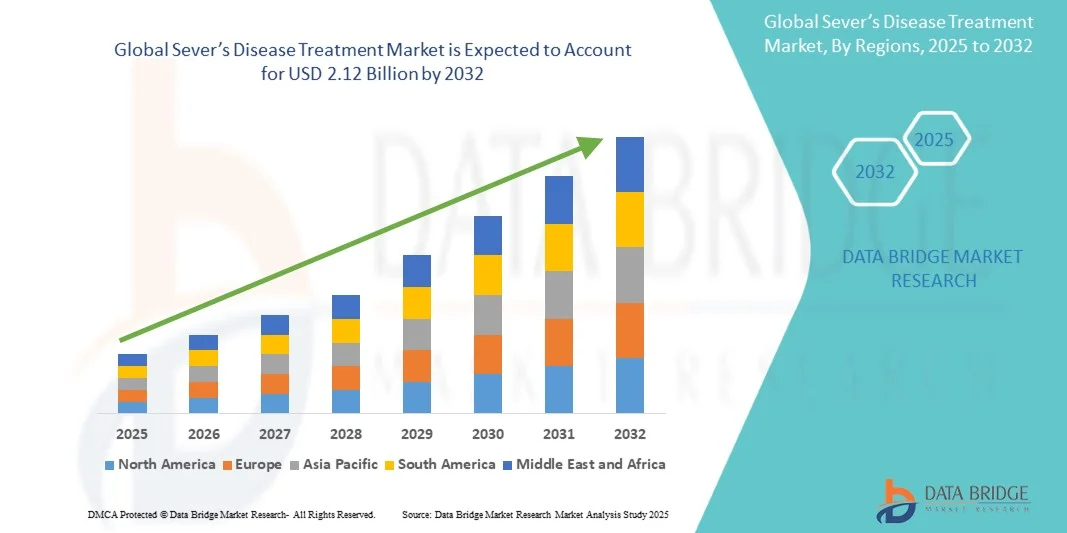
- The global Sever’s disease treatment market size was valued at USD 1.44 billion in 2024 and is expected to reach USD 2.12 billion by 2032, at a CAGR of 5.00% during the forecast period
- The market growth is largely fueled by increasing awareness of Sever’s Disease (Calcaneal Apophysitis) among parents, coaches, and healthcare providers, leading to earlier diagnosis and timely treatment
- Furthermore, rising participation of children and adolescents in sports and physical activities is increasing the incidence of Sever’s Disease, thereby driving demand for effective treatment solutions
Sever’s Disease Treatment Market Analysis
- Sever’s Disease Treatment, addressing inflammation and pain in the heel commonly affecting adolescents, is gaining increasing attention due to rising sports participation, awareness among parents, and the need for early intervention to prevent long-term complications
- The escalating demand for sever’s disease treatment is primarily fueled by increasing prevalence of heel pain in growing children, heightened awareness among healthcare providers and parents, and the rising adoption of non-invasive therapies and physiotherapy-based interventions
- North America dominated the Sever’s disease treatment market with the largest revenue share of 46% in 2024, characterized by advanced pediatric healthcare infrastructure, high awareness of sports-related injuries, and strong presence of key pharmaceutical and medical device players. The U.S. experienced substantial growth in Sever’s Disease diagnosis and treatment adoption, particularly in sports clinics, pediatric hospitals, and rehabilitation centers, driven by innovations in targeted therapies, orthotic devices, and non-invasive management protocols
- Asia-Pacific is expected to be the fastest-growing region in the Sever’s disease treatment market during the forecast period due to increasing urbanization, rising disposable incomes, growing participation in youth sports, and expanding access to pediatric healthcare in countries such as China, India, and Japan. Improved healthcare infrastructure, along with awareness campaigns on early diagnosis and preventive care, is further propelling regional growth
- The oral segment dominated the Sever’s disease treatment market with the largest market revenue share of 46% in 2024, driven by its ease of use, convenience for caregivers, and high patient compliance.
Report Scope and Sever’s Disease Treatment Market Segmentation
|
Attributes |
Sever’s Disease Treatment Key Market Insights |
|
Segments Covered |
|
|
Countries Covered |
North America
Europe
Asia-Pacific
Middle East and Africa
South America
|
|
Key Market Players |
|
|
Market Opportunities |
|
|
Value Added Data Infosets |
In addition to the insights on market scenarios such as market value, growth rate, segmentation, geographical coverage, and major players, the market reports curated by the Data Bridge Market Research also include in-depth expert analysis, pricing analysis, brand share analysis, consumer survey, demography analysis, supply chain analysis, value chain analysis, raw material/consumables overview, vendor selection criteria, PESTLE Analysis, Porter Analysis, and regulatory framework. |
Sever’s Disease Treatment Market Trends
“Rising Awareness About Pediatric Foot Health and Non-Invasive Treatments”
- A notable trend in the Sever’s disease treatment market is the increasing awareness among parents, caregivers, and sports coaches regarding pediatric foot health, particularly among children involved in high-impact sports
- There is a growing preference for non-invasive treatment methods, including orthotics, physical therapy, stretching exercises, and activity modification, over surgical interventions
- For instance, in April 2023, Boston Children’s Hospital launched a pediatric foot health initiative that emphasized early intervention through physiotherapy and customized footwear, highlighting the effectiveness of non-surgical approaches
- Healthcare providers and physiotherapists are actively promoting early diagnosis and preventive care to reduce the risk of long-term complications associated with Sever’s Disease
- Several pediatric clinics and sports medicine centers are now offering structured treatment plans combining rest, proper footwear, and guided exercises, improving recovery rates and overall patient satisfaction
- The adoption of imaging techniques such as X-rays and MRI for accurate diagnosis is also enhancing treatment personalization and effectiveness
- In addition, educational campaigns on proper footwear selection and activity management are encouraging proactive measures among parents and schools
- With the increasing emphasis on sports participation among children, demand for specialized treatment and preventive care for Sever’s Disease is steadily growing globally
Sever’s Disease Treatment Market Dynamics
Driver
“Increasing Incidence of Pediatric Foot Disorders and Sports-Related Injuries”
- The rising prevalence of Sever’s Disease among children, especially between ages 8 and 15, is a primary growth driver for the market. Children participating in high-impact sports such as soccer, basketball, gymnastics, and running are particularly prone due to repetitive stress on the calcaneal growth plate
- Parents and caregivers are becoming increasingly aware of the importance of early diagnosis and timely intervention
- For instance, in March 2023, the American Orthopaedic Foot & Ankle Society (AOFAS) highlighted the importance of early assessment of heel pain in children to prevent prolonged discomfort and complications
- The growing adoption of preventive and supportive measures, including customized orthotic insoles, heel cups, and physiotherapy, is driving market demand. In a study conducted in June 2022, pediatric clinics in the US reported a 20% increase in orthotic prescriptions for Sever’s Disease patients compared to the previous year
- Schools and sports academies are introducing awareness programs for children and parents on proper footwear, stretching exercises, and activity management. For instance, several sports academies in Europe launched educational campaigns in late 2022 focusing on pediatric foot health, boosting demand for treatment solutions
- Increasing healthcare investments, especially in pediatric orthopedic and physiotherapy centers, are improving access to specialized treatment. For example, in September 2023, a leading pediatric hospital chain in India introduced a dedicated Sever’s Disease assessment and rehabilitation program for children involved in competitive sports
- Rising sedentary lifestyles leading to weaker calf muscles and reduced flexibility are also contributing to higher incidences, prompting preventive interventions
- Overall, a combination of increasing disease prevalence, growing parental awareness, and expanding preventive care infrastructure is propelling the growth of the Sever’s Disease Treatment market
Restraint/Challenge
“Limited Access to Specialized Care, High Costs, and Awareness Gaps”
- One major challenge for market growth is the limited availability of specialized pediatric orthopedic care in rural and underdeveloped regions. In many areas, parents have to travel long distances to consult specialists, delaying early diagnosis and treatment
- Inconsistent awareness among parents, schools, and coaches regarding early signs of Sever’s Disease can lead to underreporting or misdiagnosis
- For instance, a 2022 survey conducted in the UK found that nearly 35% of parents were unaware that heel pain in active children could indicate Sever’s Disease
- Some conservative treatment methods, such as rest, stretching exercises, and activity modification, require sustained compliance over weeks or months, which can be difficult to maintain in children. Non-compliance may reduce treatment effectiveness and prolong recovery time
- The high cost of specialized orthotic devices, physiotherapy sessions, and custom footwear can act as a barrier, particularly for families in developing regions. For example, in early 2023, a leading pediatric orthotic manufacturer reported that premium heel cups and insoles were often unaffordable for low-income households
- Lack of standardized treatment protocols across clinics and regions can result in inconsistent care quality. Some clinics rely solely on physical therapy, while others combine orthotics, activity modification, and pain management, leading to varied outcomes
- Cybersecurity of telehealth or app-based monitoring solutions for foot disorders is also a concern in some regions, limiting the adoption of digital guidance tools
- Addressing these challenges through better awareness campaigns, affordable treatment options, and standardized treatment guidelines is essential for expanding market adoption
Sever’s Disease Treatment Market Scope
The market is segmented on the basis of type, treatment, diagnosis, symptoms, dosage, route of administration, end-users, and distribution channel.
• By Type
On the basis of type, the Sever’s disease treatment market is segmented into acute and chronic. The acute segment dominated the largest market revenue share of 44% in 2024, driven by the high prevalence of sudden-onset heel pain in children and adolescents, especially those engaged in sports or physical activities. Acute cases are typically identified quickly due to noticeable symptoms such as swelling, tenderness, and difficulty in walking or running. Early intervention in acute cases significantly reduces the risk of chronic complications and improves recovery time. The dominance of this segment is supported by increased awareness among parents, pediatricians, and school healthcare providers. Treatment often includes NSAIDs, rest, ice therapy, and physical exercises, which are non-invasive and easily administered. Healthcare institutions and sports clinics increasingly recommend structured care plans for acute cases, further reinforcing this segment’s position. Accessibility of treatment options, growing adoption of preventive strategies, and standardized clinical guidelines also contribute to its market leadership.
The chronic segment is expected to witness the fastest CAGR of 18.5% from 2025 to 2032, driven by cases where delayed treatment or persistent strain leads to prolonged heel pain. Chronic Sever’s Disease often requires a more comprehensive management approach including long-term physiotherapy, orthotic devices, and guided exercise programs. Awareness about long-term implications, such as heel deformities or recurring pain, is prompting earlier diagnosis and sustained follow-up care. Specialized pediatric clinics, sports academies, and hospital rehabilitation programs are contributing to the adoption of advanced chronic management strategies. Research and innovation in therapeutic techniques and preventive care are also accelerating segment growth. Increased funding for pediatric orthopedic studies, along with insurance coverage expansion for physiotherapy and orthotic solutions, further drives the chronic segment’s rapid expansion.
• By Treatment
On the basis of treatment, the Sever’s disease treatment market is segmented into NSAIDs (Non-Steroidal Anti-Inflammatory Drugs), immobilization, physical therapy, ice therapy, and others. The NSAIDs segment dominated the largest market revenue share of 40.5% in 2024, owing to its proven efficacy in reducing pain and inflammation. NSAIDs are widely recommended by pediatricians and sports medicine specialists for both acute and mild chronic cases, offering rapid relief while being non-invasive. Their widespread availability across hospital and retail pharmacies ensures easy access, while strong clinical evidence and established treatment guidelines reinforce their continued dominance. Patient compliance is typically high, and their cost-effectiveness makes NSAIDs a preferred choice for parents and caregivers. In addition, NSAIDs play a critical role in enabling children to continue light physical activities under supervision without exacerbating symptoms.
The physical therapy segment is expected to witness the fastest CAGR of 19.2% from 2025 to 2032, fueled by growing recognition of exercise-based management in both acute and chronic Sever’s Disease cases. Physical therapy helps strengthen heel and calf muscles, improve flexibility, and reduce the risk of recurrence. Rising enrollment in pediatric physiotherapy programs, increasing parental awareness of non-pharmacological treatment options, and the adoption of structured rehabilitation protocols in clinics and hospitals are driving growth. Support from schools, sports organizations, and healthcare campaigns emphasizing preventive care also accelerates segment adoption. The segment benefits further from advancements in pediatric exercise science and growing insurance coverage for therapy sessions.
- By Diagnosis
On the basis of diagnosis, the Sever’s disease treatment market is segmented into X-ray, squeeze test, Magnetic Resonance Imaging (MRI), and others. The X-ray segment dominated the largest market revenue share of 41% in 2024, due to its affordability, accessibility, and proven effectiveness in ruling out fractures or other skeletal abnormalities. X-rays are widely available across hospitals, clinics, and diagnostic centers, making them the first choice for pediatricians and orthopedic specialists when assessing active children presenting with heel pain or mobility issues. Early detection through X-ray imaging allows for prompt management using NSAIDs, physiotherapy, ice therapy, or immobilization, which helps prevent the condition from becoming chronic. Routine school screenings, pediatric health programs, and clinical guidelines reinforce the reliance on X-rays as a primary diagnostic tool. In addition, X-rays provide caregivers with a quick, non-invasive assessment method, supporting early intervention and enhancing patient compliance. The segment’s dominance is further strengthened by the combination of speed, cost-effectiveness, and widespread clinical familiarity.
The MRI segment is expected to witness the fastest CAGR of 17.8% from 2025 to 2032, driven by the need for detailed visualization of soft tissue inflammation, bone marrow changes, and subtle skeletal abnormalities in complex or chronic cases. MRI is increasingly adopted in hospitals, specialty pediatric clinics, and advanced diagnostic centers for patients who do not respond to conventional treatments or require in-depth assessment. Technological advancements, such as faster scan times, non-invasive imaging protocols, and improved pediatric-specific machines, are enhancing accessibility and patient comfort. MRI enables precise diagnosis, assists in long-term treatment planning, and helps prevent complications or recurrence. The growing preference for high-accuracy diagnostics, coupled with increasing awareness among healthcare providers and parents, supports the rapid expansion of this segment. Its ability to provide comprehensive insights beyond standard imaging makes MRI an essential tool in modern Sever’s Disease management.
• By Symptoms
On the basis of symptoms, the Sever’s disease treatment market is segmented into pain in the back or bottom of the heel, difficulty running/jumping, walking on toes, pain when the sides of the heel are squeezed, limping, tiredness, and others. The pain in the back or bottom of the heel segment dominated the largest market revenue share of 43% in 2024, as it is the most commonly reported and immediately noticeable symptom. Children experiencing this symptom often face challenges in walking, standing, or participating in daily activities, prompting early consultation with healthcare providers. Timely recognition of this symptom allows for effective management through NSAIDs, rest, ice therapy, or physiotherapy, which reduces the risk of progression to chronic conditions. Awareness initiatives in schools, sports clubs, and pediatric clinics play a significant role in educating parents and caregivers to identify this symptom early. Regular check-ups, early diagnosis, and parent-guided monitoring contribute to the segment’s dominance. This symptom’s clear impact on mobility and quality of life makes it a critical trigger for seeking treatment, reinforcing its prevalence in clinical records.
The difficulty running/jumping segment is expected to witness the fastest CAGR of 18.7% from 2025 to 2032, driven by the increasing participation of children in sports, outdoor activities, and physically demanding school programs. Difficulty in athletic performance affects both social engagement and physical development, encouraging parents and physicians to pursue prompt evaluation. Pediatric orthopedic programs, preventive exercise initiatives, and school-based awareness campaigns accelerate early detection and adoption of effective treatment plans. Rising emphasis on physical wellness, along with improved access to physiotherapy and rehabilitation services, further supports the growth of this segment. As more youth engage in competitive sports, recognition of these performance-related symptoms is increasingly important in clinical practice.
• By Dosage
On the basis of dosage, the Sever’s disease treatment market is segmented into tablet, injection, and others. The tablet segment dominated the largest market revenue share of 45% in 2024, owing to its convenience, ease of administration, and suitability for home or outpatient care. Tablets allow flexible dosing tailored to children’s age and weight, ensuring adherence to prescribed therapy. They are widely available across hospital pharmacies, retail outlets, and online platforms, facilitating timely access for both acute and chronic cases. Tablets are non-invasive, cost-effective, and well-accepted by caregivers, which contributes to high compliance. Their use is often reinforced through guidance from pediatricians, school nurses, and sports medicine specialists. The segment benefits from established clinical protocols recommending oral NSAIDs or analgesics as first-line therapy, further strengthening its market position.
The injection segment is expected to witness the fastest CAGR of 16.5% from 2025 to 2032, particularly in severe, persistent, or refractory cases requiring corticosteroid or localized anti-inflammatory therapy. Injectable treatments provide rapid and targeted relief, making them valuable for patients who do not respond adequately to oral medications. Hospitals, pediatric specialty clinics, and research-based treatment centers support this segment by offering precise dosing, monitoring outcomes, and integrating injections with physiotherapy programs. Growing awareness among caregivers and healthcare providers of advanced therapeutic options is driving adoption. The segment’s expansion is also aided by improvements in delivery techniques and safety protocols, enhancing patient comfort and compliance.
• By Route of Administration
On the basis of route of administration, the Sever’s disease treatment market is segmented into oral, injectable, and others. The oral segment dominated the largest market revenue share of 46% in 2024, driven by its ease of use, convenience for caregivers, and high patient compliance. Oral administration allows children to receive treatment safely at home or in outpatient settings, reducing the frequency of hospital visits. Flexible dosing options and familiar delivery methods make oral therapy ideal for both acute and chronic cases. Hospitals, clinics, and pharmacies widely recommend oral routes due to their non-invasive nature and established effectiveness. The segment benefits from strong clinical acceptance, parent confidence, and extensive availability across healthcare distribution channels.
The injectable segment is expected to witness the fastest CAGR of 16.8% from 2025 to 2032, offering targeted and rapid relief for acute flare-ups, chronic symptoms, or cases unresponsive to oral medication. Adoption in specialized pediatric clinics, hospitals, and research-backed treatment centers ensures precise dosing and integration with multidisciplinary care strategies. The growing prevalence of severe cases, coupled with increasing caregiver awareness of advanced treatment options, contributes to the rapid growth of this segment. Technological improvements in injection techniques and safety standards further support segment expansion.
• By End-Users
On the basis of end-users, the Sever’s disease treatment market is segmented into clinic, hospital, and others. The hospital segment dominated the largest market revenue share of 44% in 2024, driven by its capacity to manage severe and chronic cases effectively. Hospitals provide access to advanced diagnostic tools such as X-rays and MRI, as well as comprehensive physiotherapy and orthotic solutions tailored for pediatric patients. The presence of specialized pediatric departments, well-trained healthcare professionals, and structured treatment protocols enhances the hospital segment’s dominance. In addition, hospitals offer integrated care pathways, combining diagnosis, treatment, and follow-up, which ensures better patient outcomes. The segment benefits from established trust among caregivers and physicians, as well as higher healthcare expenditure on advanced treatments. Growing awareness of early intervention for Sever’s Disease and availability of multidisciplinary care further reinforce hospital dominance in the market.
The clinic segment is expected to witness the fastest CAGR of 19.1% from 2025 to 2032, driven by the rising number of outpatient centers and community healthcare facilities. Clinics provide convenient access for mild to moderate cases, with shorter waiting times and personalized follow-ups. Early detection programs, preventive care initiatives, and patient education campaigns are increasingly implemented at clinics, supporting faster adoption. The growth is further fueled by telemedicine services, which allow remote consultations and monitoring, making care more accessible to children in both urban and rural areas. Collaborations between clinics and pediatric research institutions, coupled with the adoption of standardized treatment protocols, are also contributing to segment growth. The focus on early intervention, cost-effective care, and improved patient engagement positions clinics as a rapidly expanding end-user segment.
• By Distribution Channel
On the basis of distribution channel, the Sever’s disease treatment market is segmented into hospital pharmacy, retail pharmacy, and online pharmacy. The hospital pharmacy segment dominated the largest market revenue share of 42% in 2024, owing to its integration with inpatient and outpatient treatment services. Hospital pharmacies ensure seamless access to prescription medications, monitor therapy adherence, and provide professional guidance on proper dosage and administration. The segment also benefits from the presence of trained pharmacists and coordinated care with healthcare teams, enabling more effective patient management. Hospitals often serve as the primary point of care for severe and chronic cases, further reinforcing the segment’s dominance.
The online pharmacy segment is expected to witness the fastest CAGR of 21.5% from 2025 to 2032, driven by the growing adoption of digital health platforms and the convenience of home delivery. Online pharmacies provide increased accessibility, particularly in remote and underserved areas, allowing caregivers to obtain medications without visiting physical stores. Rising awareness of Sever’s Disease treatments, coupled with the ease of online ordering and competitive pricing, is further fueling growth. Integration with telemedicine platforms and digital prescriptions enhances patient convenience and adherence, supporting the rapid expansion of this distribution channel.
Sever’s Disease Treatment Market Regional Analysis
- North America dominated the Sever’s disease treatment market with the largest revenue share of 46% in 2024, characterized by advanced pediatric healthcare infrastructure, high awareness of sports-related injuries, and a strong presence of key pharmaceutical and medical device players
- Consumers in the region are increasingly prioritizing early diagnosis and effective management of Sever’s Disease through clinics, pediatric hospitals, and rehabilitation centers
- This widespread adoption is further supported by growing parental awareness, availability of targeted therapies, orthotic devices, and non-invasive management protocols, establishing early intervention as a preferred approach for both children and adolescents
U.S. Sever’s Disease Treatment Market Insight
The U.S. Sever’s disease treatment market captured the largest revenue share in 2024 within North America, fueled by the expansion of pediatric sports clinics and specialized rehabilitation centers. Children participating in high-impact sports such as soccer, basketball, and gymnastics are increasingly receiving structured treatment programs, including physiotherapy, orthotic support, and activity modification. The growing emphasis on preventive care, along with awareness campaigns on early diagnosis and heel injury management, further propels the Sever’s Disease Treatment industry. Moreover, the integration of pediatric orthopedic expertise with advanced non-invasive therapies is significantly contributing to market growth.
Europe Sever’s Disease Treatment Market Insight
The Europe Sever’s disease treatment market is projected to expand at a substantial CAGR throughout the forecast period, primarily driven by rising awareness of pediatric sports injuries and early intervention practices. The increase in urbanization, along with school and sports-based preventive programs, is encouraging proactive treatment adoption. European countries are experiencing significant growth across pediatric clinics, rehabilitation centers, and sports academies, with structured physiotherapy and orthotic programs being widely implemented to address Sever’s Disease effectively.
U.K. Sever’s Disease Treatment Market Insight
The U.K. Sever’s disease treatment market is anticipated to grow at a noteworthy CAGR during the forecast period, driven by increasing parental awareness and the rising incidence of pediatric foot disorders among children engaged in sports. Schools and youth sports programs are adopting preventive measures, including stretching exercises, proper footwear guidance, and early screening, while specialized clinics provide non-invasive physiotherapy and orthotic interventions. These factors are expected to continue to stimulate market growth.
Germany Sever’s Disease Treatment Market Insight
The Germany Sever’s disease treatment market is expected to expand at a considerable CAGR during the forecast period, fueled by increasing awareness of pediatric sports injuries and access to specialized orthopedic care. Germany’s well-developed healthcare infrastructure and focus on innovation and sustainability promote structured non-invasive treatment approaches, including physiotherapy, orthotics, and rehabilitation programs. Pediatric clinics and sports medicine centers are playing a key role in early diagnosis and management of Sever’s Disease, aligning with local consumer expectations.
Asia-Pacific Sever’s Disease Treatment Market Insight
The Asia-Pacific Sever’s disease treatment market is poised to grow at the fastest CAGR during the forecast period of 2025 to 2032, driven by increasing urbanization, rising disposable incomes, and growing participation in youth sports in countries such as China, Japan, and India. Improved pediatric healthcare infrastructure, along with awareness campaigns on early diagnosis and preventive care, is driving treatment adoption. Furthermore, as APAC expands its pediatric healthcare services and rehabilitation centers, access to affordable and effective Sever’s Disease treatments is increasing across the region.
Japan Sever’s Disease Treatment Market Insight
The Japan Sever’s disease treatment market is gaining momentum due to rapid urbanization, a high-tech healthcare environment, and growing parental awareness of pediatric foot disorders. Children involved in competitive sports are increasingly benefiting from structured treatment plans that include physiotherapy, orthotic devices, and activity management. In addition, preventive healthcare campaigns in schools and sports programs are contributing to early detection and effective management of Sever’s Disease.
China Sever’s Disease Treatment Market Insight
The China Sever’s disease treatment market accounted for the largest market revenue share in Asia-Pacific in 2024, attributed to the country’s expanding middle class, rising disposable incomes, and increased awareness of pediatric sports injuries. Pediatric clinics, rehabilitation centers, and government-supported child health initiatives are promoting early diagnosis and treatment adoption. The growing availability of structured physiotherapy programs, orthotic devices, and non-invasive management solutions is further propelling the market in China.
Sever’s Disease Treatment Market Share
The Sever’s Disease Treatment industry is primarily led by well-established companies, including:
- AstraZeneca (U.K.)
- Horizon Therapeutics plc (Ireland)
- Sanofi (France)
- Novartis AG (Switzerland)
- Sun Pharmaceutical Industries Ltd. (India)
- Cipla Inc. (India)
- LEO Pharma A/S (Denmark)
- AbbVie Inc. (U.S.)
- Teva Pharmaceutical Industries Ltd. (Israel)
- Aurobindo Pharma (India)
- Lonza (Switzerland)
- Dr. Reddy’s Laboratories Ltd. (India)
- IBSA Institut Biochimique SA (Switzerland)
Latest Developments in Sever’s Disease Treatment Market
- In July 2025, a comprehensive review published in Cureus highlighted the efficacy of conservative treatments for Sever’s Disease, emphasizing the use of custom-made foot orthoses and physical therapy, including heel cord stretching and dorsiflexion strengthening, as first-line interventions. The study also discussed the potential benefits of adjunctive therapies like heel lifts, kinesio taping, and extracorporeal shockwave therapy (ESWT), while recommending a multicenter randomized controlled trial to standardize outcomes and clarify optimal treatment protocols
- In May 2025, a clinical update from ACPodiatry in Australia provided insights into current treatment approaches for Sever’s Disease, including activity modification, stretching programs, and appropriate footwear recommendations tailored to children's specific needs. This approach underscores the importance of individualized care in managing the condition effectively
- In April 2025, Dr. Bell Foot & Ankle in the U.S. reported advancements in diagnostic and treatment technologies for Sever’s Disease, focusing on the latest methods to alleviate heel pain in children and adolescents. These developments reflect ongoing efforts to enhance the management of this common pediatric condition
- In March 2025, research published in MDPI examined the conservative treatment of Sever’s Disease, highlighting the effectiveness of foot orthoses and heel cushions in reducing pain scores. The study also discussed various treatment modalities, including stretching, ice application, and activity limitation, contributing to a comprehensive understanding of non-surgical management strategies
- In February 2025, the South Texas Foot & Ankle Care Center in the U.S. reported that most patients with Sever’s Disease symptoms experienced eventual elimination of heel pain after wearing orthotic insoles that support the affected heel. The center emphasized the importance of rest, ice application, and appropriate footwear in the treatment regimen

- Interactive Data Analysis Dashboard
- Company Analysis Dashboard for high growth potential opportunities
- Research Analyst Access for customization & queries
- Competitor Analysis with Interactive dashboard
- Latest News, Updates & Trend analysis
- Harness the Power of Benchmark Analysis for Comprehensive Competitor Tracking
Data collection and base year analysis are done using data collection modules with large sample sizes. The stage includes obtaining market information or related data through various sources and strategies. It includes examining and planning all the data acquired from the past in advance. It likewise envelops the examination of information inconsistencies seen across different information sources. The market data is analysed and estimated using market statistical and coherent models. Also, market share analysis and key trend analysis are the major success factors in the market report. To know more, please request an analyst call or drop down your inquiry.
The key research methodology used by DBMR research team is data triangulation which involves data mining, analysis of the impact of data variables on the market and primary (industry expert) validation. Data models include Vendor Positioning Grid, Market Time Line Analysis, Market Overview and Guide, Company Positioning Grid, Patent Analysis, Pricing Analysis, Company Market Share Analysis, Standards of Measurement, Global versus Regional and Vendor Share Analysis. To know more about the research methodology, drop in an inquiry to speak to our industry experts.
Data Bridge Market Research is a leader in advanced formative research. We take pride in servicing our existing and new customers with data and analysis that match and suits their goal. The report can be customized to include price trend analysis of target brands understanding the market for additional countries (ask for the list of countries), clinical trial results data, literature review, refurbished market and product base analysis. Market analysis of target competitors can be analyzed from technology-based analysis to market portfolio strategies. We can add as many competitors that you require data about in the format and data style you are looking for. Our team of analysts can also provide you data in crude raw excel files pivot tables (Fact book) or can assist you in creating presentations from the data sets available in the report.












