




Global Shockwave Therapy Market
Market Size in USD Billion
CAGR :
% 
 USD
2.61 Billion
USD
4.09 Billion
2025
2033
USD
2.61 Billion
USD
4.09 Billion
2025
2033
 Forecast Period Forecast Period |
2026 –2033 |
 Market Size (Base Year) Market Size (Base Year) |
USD 2.61 Billion |
 Market Size (Forecast Year) Market Size (Forecast Year) |
USD 4.09 Billion |
 CAGR CAGR |
% |
| Major Markets Players |
|
Shockwave Therapy Market Size
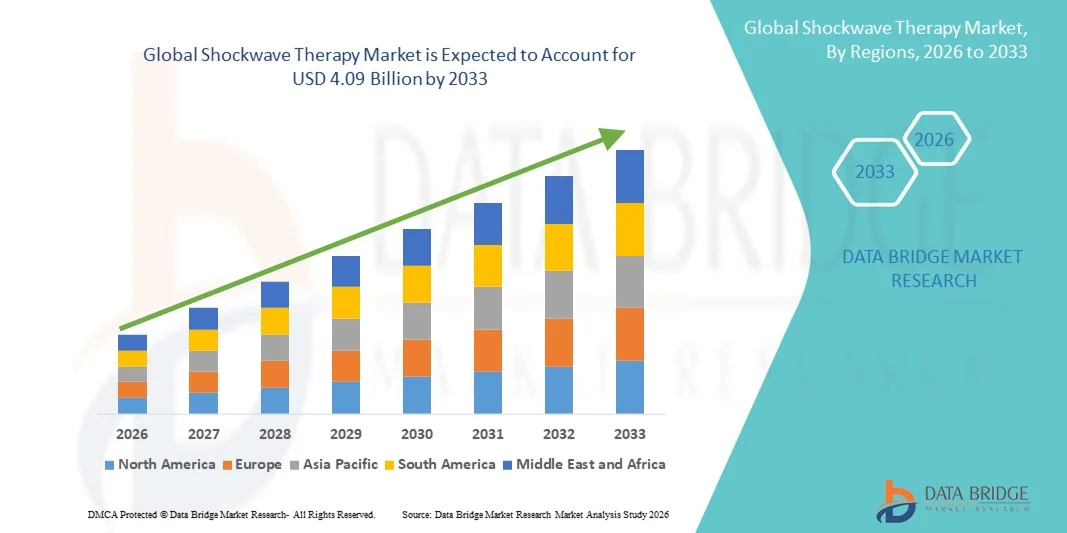
- The global shockwave therapy market size was valued at USD 2.61 billion in 2025 and is expected to reach USD 4.09 billion by 2033, at a CAGR of 5.78% during the forecast period
- The market growth is largely fueled by the rising prevalence of musculoskeletal disorders, increasing demand for non‑invasive pain management solutions, and expanding adoption of shockwave therapy across orthopedics, sports medicine, urology, and rehabilitation settings
- Furthermore, advancements in shockwave therapeutic technologies, aging populations globally, and growing awareness of outpatient and non‑surgical treatment benefits are driving higher acceptance of shockwave therapy devices and procedures. These converging trends are accelerating the uptake of shockwave therapy solutions, thereby significantly boosting the industry’s growth
Shockwave Therapy Market Analysis
- Shockwave therapy, offering non-invasive treatment for musculoskeletal disorders, orthopedic conditions, and chronic pain, is increasingly becoming a preferred solution in both clinical and outpatient settings due to its effectiveness, minimal recovery time, and ability to target specific tissues precisely
- The escalating demand for shockwave therapy is primarily fueled by the growing prevalence of orthopedic and sports-related injuries, rising awareness of non-surgical treatment options, and increasing adoption of outpatient and physiotherapy clinics equipped with advanced therapeutic devices
- North America dominated the shockwave therapy market with the largest revenue share of 38.7% in 2025, characterized by well-established healthcare infrastructure, high patient awareness, and a strong presence of key device manufacturers, with the U.S. experiencing substantial growth in shockwave therapy adoption, particularly in hospitals and physiotherapy clinics, driven by innovations in device efficiency, portability, and focused therapy applications
- Asia-Pacific is expected to be the fastest growing region in the shockwave therapy market during the forecast period due to increasing healthcare investments, rising prevalence of musculoskeletal disorders, and expanding access to outpatient care and physiotherapy services
- Mobile shockwave therapy devices segment dominated the market with a market share of 52.4% in 2025, driven by their portability, ease of use in clinics, and flexibility in reaching multiple treatment areas efficiently
Report Scope and Shockwave Therapy Market Segmentation
|
Attributes |
Shockwave Therapy Key Market Insights |
|
Segments Covered |
|
|
Countries Covered |
North America
Europe
Asia-Pacific
Middle East and Africa
South America
|
|
Key Market Players |
|
|
Market Opportunities |
|
|
Value Added Data Infosets |
In addition to the insights on market scenarios such as market value, growth rate, segmentation, geographical coverage, and major players, the market reports curated by the Data Bridge Market Research also include in-depth expert analysis, patient epidemiology, pipeline analysis, pricing analysis, and regulatory framework |
Shockwave Therapy Market Trends
Advancements in Portable and Focused Shockwave Devices
- A significant and accelerating trend in the global shockwave therapy market is the development of portable and focused devices, allowing clinicians to deliver targeted therapy with greater precision and flexibility
- For instance, the STORZ Medical MasterPuls MP200 offers a lightweight, mobile solution that can be easily used in outpatient clinics or physiotherapy centers, improving patient accessibility
- Focused shockwave technology enables treatment of deep-seated musculoskeletal conditions with reduced discomfort and higher efficacy, enhancing overall patient outcomes
- The integration of real-time imaging with shockwave therapy devices allows clinicians to visualize treatment areas and adjust parameters dynamically, creating a more accurate and controlled therapy session
- Emerging AI-assisted therapy planning is enabling automatic parameter adjustments based on patient condition, optimizing treatment outcomes and reducing clinician workload
- Hybrid devices combining radial and focused shockwave technologies are gaining traction, offering versatility for multiple musculoskeletal indications in a single platform
- This trend toward more precise, mobile, and versatile devices is reshaping expectations for non-invasive pain management and rehabilitation treatments
- The demand for compact, user-friendly, and technologically advanced shockwave therapy systems is increasing across hospitals and physiotherapy clinics as providers seek better treatment efficiency and patient satisfaction
Shockwave Therapy Market Dynamics
Driver
Increasing Prevalence of Musculoskeletal Disorders and Non-Invasive Treatments
- The rising incidence of orthopedic, sports-related, and chronic musculoskeletal disorders is a significant driver for the growing adoption of shockwave therapy
- For instance, in March 2025, Gymna Uniphy launched an advanced mobile shockwave therapy system for outpatient physiotherapy centers, aiming to expand access to non-invasive treatments
- Patients and healthcare providers are increasingly seeking non-surgical solutions for pain management and rehabilitation, making shockwave therapy a preferred alternative
- Growing awareness of outpatient physiotherapy services and their benefits in accelerating recovery is boosting the adoption of shockwave therapy devices in clinics
- The convenience of portable devices, reduced recovery times, and minimal side effects compared to traditional treatments are key factors propelling market growth in hospitals, physiotherapy clinics, and ambulatory care settings
- The combination of increasing patient demand, technological improvements, and clinician preference for non-invasive solutions is driving sustained adoption of shockwave therapy globally
- Rising investments in sports medicine and rehabilitation centers are further fueling the deployment of advanced shockwave therapy systems
- Collaborations between device manufacturers and healthcare providers to conduct clinical trials and awareness programs are enhancing credibility and driving adoption in new regions
Restraint/Challenge
High Device Costs and Limited Awareness in Emerging Markets
- The relatively high cost of shockwave therapy devices compared to conventional physiotherapy equipment poses a challenge for widespread adoption, particularly in developing regions
- For instance, smaller clinics in Asia-Pacific often delay investment due to budget constraints and limited awareness of the clinical benefits of shockwave therapy
- Training requirements for proper device usage and ensuring correct therapy protocols can hinder adoption among inexperienced clinicians
- Lack of reimbursement policies in some countries for outpatient shockwave therapy treatments limits patient access and affects provider investment decisions
- While technology adoption is increasing in developed markets, educating clinicians and patients about safety, efficacy, and long-term benefits is critical for growth
- Addressing device affordability, providing training programs, and increasing awareness in emerging markets will be vital to overcome these challenges and sustain market expansion
- Limited availability of specialized maintenance and after-sales support in certain regions can impact device performance and clinician confidence
- Regulatory variations across countries for medical devices may delay product approvals and slow the adoption rate in global markets
Shockwave Therapy Market Scope
The market is segmented on the basis of product type, technology, and end-user.
- By Product Type
On the basis of product type, the shockwave therapy market is segmented into mobile shockwave therapy devices and fixed shockwave therapy devices. The mobile shockwave therapy devices segment dominated the market with the largest revenue share of 52.4% in 2025, driven by its portability, ease of use, and flexibility in multiple clinical settings. These devices allow physiotherapists and clinicians to deliver targeted therapy efficiently in outpatient clinics or at patients’ bedsides. Hospitals and rehabilitation centers prefer mobile units for their ability to move between treatment rooms and support multiple patients without additional infrastructure. The segment also benefits from increasing demand for home-based physiotherapy and small clinic setups, where fixed devices are less feasible. Moreover, mobile devices are often compatible with both radial and focused shockwave technologies, further broadening their application. The rising preference for convenient, non-invasive, and quick rehabilitation solutions underpins their dominance in the market.
The fixed shockwave therapy devices segment is anticipated to witness the fastest growth rate of 10.8% from 2026 to 2033, fueled by increasing adoption in high-volume hospitals and specialty clinics. Fixed devices offer high-intensity focused shockwave therapy and better energy control, making them suitable for complex musculoskeletal treatments. They are increasingly used in orthopedic departments and sports medicine centers where repeated, high-precision therapy is required. Fixed devices also provide robust integration with imaging systems, enhancing accuracy and treatment planning. As healthcare providers invest in comprehensive rehabilitation facilities, fixed devices are becoming essential for offering advanced therapy protocols. The growth is also supported by increasing awareness among clinicians regarding the clinical efficacy of focused shockwave therapy.
- By Technology
On the basis of technology, the market is segmented into electromagnetic technique, electrohydraulic technique, piezoelectric technique, and radial technique. The radial technique dominated the market with the largest revenue share of 48.3% in 2025, owing to its safety, versatility, and wide adoption in musculoskeletal physiotherapy. Radial shockwave therapy is non-invasive and easy to administer, making it suitable for outpatient clinics and physiotherapy centers. It is widely used for plantar fasciitis, tendinopathies, and superficial musculoskeletal conditions due to its patient-friendly application. Clinics favor radial devices for their lower operational complexity and cost-effectiveness compared to focused systems. The segment’s dominance is also driven by the growing number of rehabilitation centers and sports medicine facilities incorporating radial devices for routine pain management and recovery. Their proven clinical efficacy and patient acceptance reinforce their market leadership.
The electromagnetic technique segment is expected to witness the fastest growth from 2026 to 2033, driven by its ability to deliver precise, high-energy focused shockwaves for deep tissue therapy. Electromagnetic devices are increasingly adopted in hospitals and specialty clinics for orthopedic surgeries, chronic tendon disorders, and calcific shoulder tendinitis. They offer consistent energy output, long lifespan, and reduced maintenance compared to electrohydraulic systems. The segment is also gaining traction due to technological advancements that enable integration with imaging systems for accurate treatment targeting. Rising awareness of focused therapy efficacy and increasing investments in advanced medical equipment are supporting the rapid adoption of electromagnetic shockwave technology.
- By End-User
On the basis of end-user, the market is segmented into hospitals, physiotherapy clinics, ambulatory care, radiology labs, and others. The hospitals segment dominated the market with the largest revenue share of 41.6% in 2025, attributed to high patient inflow, ability to invest in advanced therapy devices, and integration of shockwave therapy into multidisciplinary treatment plans. Hospitals use shockwave therapy across orthopedic, sports medicine, urology, and rehabilitation departments. The segment benefits from increasing adoption of outpatient care services and growing emphasis on non-invasive treatments. Hospitals also prefer devices that can support high-frequency treatments and multiple users, reinforcing the demand for both mobile and fixed systems. Furthermore, hospitals often conduct clinical trials and studies using shockwave therapy, further consolidating their leadership in device utilization.
The physiotherapy clinics segment is anticipated to witness the fastest growth rate of 12.3% from 2026 to 2033, fueled by the rising number of outpatient rehabilitation centers and increasing awareness of non-invasive pain management options. Physiotherapy clinics adopt mobile and radial shockwave devices due to their affordability, portability, and ease of use. Clinics are increasingly integrating shockwave therapy into conventional rehabilitation programs to accelerate recovery from sports injuries and chronic musculoskeletal conditions. The growing patient preference for minimally invasive treatment options and the convenience of localized care in clinics are driving adoption. Technological improvements, including AI-assisted and portable devices, are further supporting the rapid growth of this end-user segment.
Shockwave Therapy Market Regional Analysis
- North America dominated the shockwave therapy market with the largest revenue share of 38.7% in 2025, characterized by well-established healthcare infrastructure, high patient awareness, and a strong presence of key device manufacturers
- Patients and healthcare providers in the region highly value the effectiveness, precision, and minimal recovery time offered by shockwave therapy, as well as its seamless integration into hospital rehabilitation programs and physiotherapy clinics
- This widespread adoption is further supported by high healthcare spending, advanced medical technology availability, strong presence of key device manufacturers, and increasing awareness of outpatient and sports medicine treatments, establishing shockwave therapy as a preferred solution for both clinical and outpatient settings
U.S. Shockwave Therapy Market Insight
The U.S. shockwave therapy market captured the largest revenue share of 82% in 2025 within North America, fueled by the rapid adoption of non-invasive treatments and growing demand for outpatient rehabilitation services. Patients and healthcare providers are increasingly prioritizing effective, precise, and minimally invasive therapies for musculoskeletal disorders. The growing trend of sports medicine and orthopedic rehabilitation centers, combined with strong hospital infrastructure and high awareness of advanced therapies, further propels the market. Moreover, technological advancements in mobile and focused shockwave devices, alongside integration with imaging systems, are significantly contributing to market expansion.
Europe Shockwave Therapy Market Insight
The Europe shockwave therapy market is projected to expand at a substantial CAGR throughout the forecast period, primarily driven by increasing prevalence of chronic musculoskeletal conditions and growing awareness of non-surgical treatments. The region’s stringent healthcare standards, coupled with rising investment in rehabilitation and physiotherapy facilities, are fostering the adoption of shockwave devices. European clinics and hospitals are increasingly incorporating shockwave therapy into both new treatment protocols and ongoing rehabilitation programs. The market is also witnessing growth across orthopedic, sports medicine, and physiotherapy applications, supported by favorable reimbursement policies in several countries.
U.K. Shockwave Therapy Market Insight
The U.K. shockwave therapy market is anticipated to grow at a noteworthy CAGR during the forecast period, driven by the rising demand for non-invasive treatment options and increasing focus on patient-centric rehabilitation. Concerns regarding chronic pain, tendon injuries, and sports-related disorders are encouraging hospitals and physiotherapy centers to adopt shockwave therapy. The U.K.’s advanced healthcare infrastructure, coupled with high patient awareness and accessibility to technologically advanced devices, is expected to continue stimulating market growth.
Germany Shockwave Therapy Market Insight
The Germany shockwave therapy market is expected to expand at a considerable CAGR during the forecast period, fueled by increasing awareness of advanced rehabilitation techniques and rising prevalence of orthopedic and musculoskeletal disorders. Germany’s strong healthcare infrastructure, emphasis on medical innovation, and adoption of cutting-edge therapeutic devices promote the market. Hospitals, sports medicine centers, and physiotherapy clinics are increasingly integrating shockwave therapy into treatment protocols, with a strong preference for precise, non-invasive, and effective solutions.
Asia-Pacific Shockwave Therapy Market Insight
The Asia-Pacific shockwave therapy market is poised to grow at the fastest CAGR of 13% during the forecast period of 2026 to 2033, driven by rising prevalence of musculoskeletal disorders, increasing healthcare investments, and expanding physiotherapy and rehabilitation infrastructure in countries such as China, Japan, and India. Government initiatives promoting advanced healthcare solutions, coupled with growing awareness of non-surgical treatments, are boosting market adoption. Moreover, the region’s increasing focus on sports medicine, outpatient care, and portable shockwave devices is expanding accessibility to a wider patient base.
Japan Shockwave Therapy Market Insight
The Japan shockwave therapy market is gaining momentum due to the country’s advanced medical technology, high patient awareness, and growing adoption of non-invasive rehabilitation solutions. Japan places significant emphasis on musculoskeletal health, and the uptake of shockwave therapy is driven by hospitals and physiotherapy centers integrating these devices into treatment plans. The combination of an aging population and the rising prevalence of sports-related injuries is further driving demand for easy-to-use, high-precision shockwave therapy systems.
India Shockwave Therapy Market Insight
The India shockwave therapy market accounted for the largest market revenue share in Asia-Pacific in 2025, attributed to the country’s rapidly expanding healthcare infrastructure, increasing adoption of advanced physiotherapy solutions, and rising awareness of non-invasive treatment options. India is becoming a key market for rehabilitation and sports medicine clinics, with both mobile and fixed shockwave devices gaining popularity. Government initiatives supporting healthcare modernization, combined with the availability of cost-effective devices and strong domestic distribution networks, are key factors propelling the market in India.
Shockwave Therapy Market Share
The Shockwave Therapy industry is primarily led by well-established companies, including:
- Zimmer MedizinSystems (U.S.)
- STORZ MEDICAL AG (Switzerland)
- EMS Electro Medical Systems S.A. (Switzerland)
- Shockwave® Medical Inc. (U.S.)
- BTL (Czech Republic)
- DJO Global (U.S.)
- MTS Medical UG (Germany)
- Richard Wolf GmbH (Germany)
- Sanuwave Health Inc. (U.S.)
- Chattanooga Group (U.S.)
- Olympus Corporation (Japan)
- Boston Scientific Corporation (U.S.)
- Cook (U.S.)
- Siemens Healthineers AG (Germany)
- Gymna Uniphy NV (Belgium)
- Likamed GmbH (Germany)
- Oceanus America Inc. (U.S.)
- Medispec Ltd. (U.S.)
- Dornier MedTech (Singapore)
What are the Recent Developments in Global Shockwave Therapy Market?
- In March 2025, Shockwave Medical announced the U.S. launch of the Shockwave Javelin Peripheral IVL Catheter, a novel forward intravascular lithotripsy platform designed to help physicians modify calcium and cross extremely narrowed lesions in patients with peripheral artery disease (PAD)
- In September 2024, Shockwave Medical expanded its U.S. peripheral IVL portfolio with the full launch of the Shockwave E8 Peripheral IVL Catheter, cleared by the FDA to optimize treatment of calcified femoro‑popliteal and below‑the‑knee peripheral artery disease, enhancing access to advanced shockwave technology for clinicians treating complex vascular conditions
- In May 2024, Johnson & Johnson completed its acquisition of Shockwave Medical, officially integrating Shockwave Medical into the J&J MedTech cardiovascular portfolio and positioning the company to accelerate innovation and global commercialization of shockwave‑related therapeutic technologies
- In April 2024, Johnson & Johnson and Shockwave Medical announced a definitive agreement for J&J to acquire all outstanding shares of Shockwave Medical in a strategic deal valued at approximately USD13.1 billion, expanding J&J MedTech’s global footprint in intravascular lithotripsy and related shockwave‑based technologies
- In June 2023, EMS launched the DolorClast® Radial shockwave therapy device in the U.S., introducing a powerful radial pressure wave system from the inventors of radial shockwave therapy to expand access for orthopedics, physical therapy, and sports medicine practices across the United States
SKU-
Get online access to the report on the World's First Market Intelligence Cloud

- Interactive Data Analysis Dashboard
- Company Analysis Dashboard for high growth potential opportunities
- Research Analyst Access for customization & queries
- Competitor Analysis with Interactive dashboard
- Latest News, Updates & Trend analysis
- Harness the Power of Benchmark Analysis for Comprehensive Competitor Tracking
Research Methodology
Data collection and base year analysis are done using data collection modules with large sample sizes. The stage includes obtaining market information or related data through various sources and strategies. It includes examining and planning all the data acquired from the past in advance. It likewise envelops the examination of information inconsistencies seen across different information sources. The market data is analysed and estimated using market statistical and coherent models. Also, market share analysis and key trend analysis are the major success factors in the market report. To know more, please request an analyst call or drop down your inquiry.
The key research methodology used by DBMR research team is data triangulation which involves data mining, analysis of the impact of data variables on the market and primary (industry expert) validation. Data models include Vendor Positioning Grid, Market Time Line Analysis, Market Overview and Guide, Company Positioning Grid, Patent Analysis, Pricing Analysis, Company Market Share Analysis, Standards of Measurement, Global versus Regional and Vendor Share Analysis. To know more about the research methodology, drop in an inquiry to speak to our industry experts.
Customization Available
Data Bridge Market Research is a leader in advanced formative research. We take pride in servicing our existing and new customers with data and analysis that match and suits their goal. The report can be customized to include price trend analysis of target brands understanding the market for additional countries (ask for the list of countries), clinical trial results data, literature review, refurbished market and product base analysis. Market analysis of target competitors can be analyzed from technology-based analysis to market portfolio strategies. We can add as many competitors that you require data about in the format and data style you are looking for. Our team of analysts can also provide you data in crude raw excel files pivot tables (Fact book) or can assist you in creating presentations from the data sets available in the report.












