


Sialolithiasis Treatment Market Overview
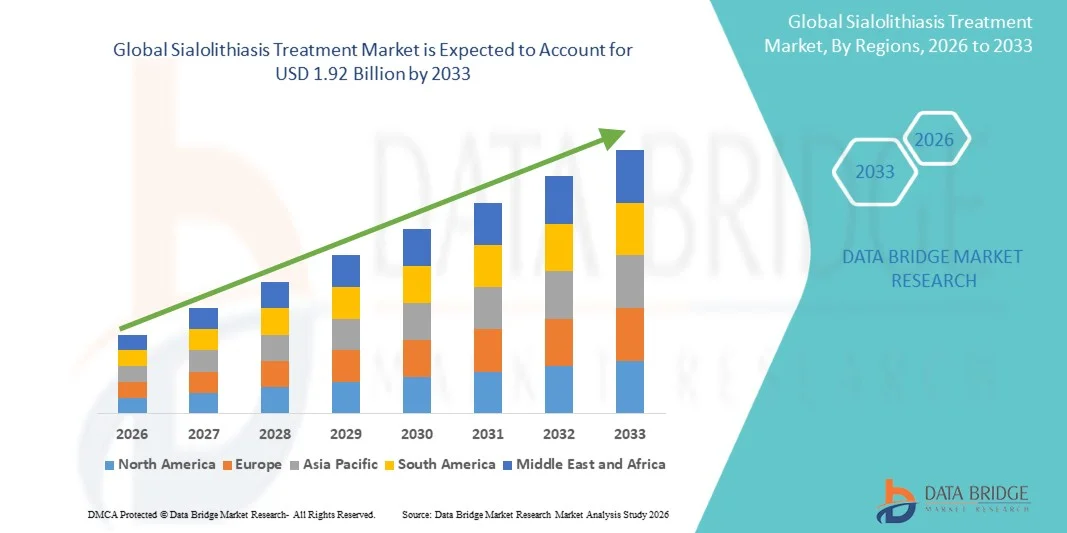
The Sialolithiasis Treatment Market was valued at USD 1.32 billion in 2025 and is projected to reach USD 1.92 billion by 2033, growing at a CAGR of 4.70% from 2026 to 2033. Market growth is supported by rising prevalence of salivary gland disorders, increasing awareness regarding oral health conditions, and advancements in minimally invasive diagnostic and therapeutic techniques.
The growing incidence of sialolithiasis, particularly among middle-aged and elderly populations, combined with improved diagnostic capabilities enabling early detection, is driving increased demand for effective treatment options. Technological advancements in sialendoscopy, extracorporeal shock wave lithotripsy, and laser-assisted stone removal are expanding the clinical applicability of minimally invasive procedures, reducing patient discomfort and recovery times compared to traditional surgical excision. In addition, expanding healthcare infrastructure in emerging markets, rising healthcare expenditure, and the growing emphasis on outpatient treatment modalities are creating new opportunities for stakeholders across the forecast period.
Key Market Trends & Insights
- North America dominated the Sialolithiasis Treatment Market with the largest revenue share of 38.6% in 2025, supported by advanced healthcare infrastructure, high awareness of oral health conditions, and strong reimbursement frameworks for diagnostic and therapeutic procedures.
- Asia-Pacific is expected to be the fastest-growing region at a CAGR of 6.25% from 2026 to 2033, driven by expanding healthcare access, rising prevalence of salivary gland disorders, and increasing healthcare expenditure across developing economies.
- The Surgical Excision segment led the treatment category with a 48.3% market share in 2025, reflecting its established position as the definitive treatment for large or impacted salivary stones requiring complete removal.
- The Medication segment is anticipated to be the fastest-growing treatment category, driven by increasing preference for conservative management in early-stage sialolithiasis and the development of novel sialogogues and anti-inflammatory agents.
- The Hospital segment dominated the end-user category with a 52.7% market share in 2025, supported by access to advanced diagnostic imaging, surgical facilities, and multidisciplinary care teams.
- The Clinic segment is expected to witness strong growth during the forecast period, driven by increasing adoption of outpatient sialendoscopy procedures and cost-effective treatment delivery models.
Market Size & Forecast
- Global Market Value (2025): USD 1.32 Billion
- Expected Market Value (2033): USD 1.92 Billion
- Forecast CAGR (2026–2033): 4.70%
- Leading Region in 2025: North America
- Fastest Growing Region: Asia-Pacific
Report Scope and Sialolithiasis Treatment Market Segmentation
|
Attributes |
Sialolithiasis Treatment Key Market Insights |
|
Segments Covered |
|
|
Countries Covered |
North America · U.S. · Canada · Mexico Europe · Germany · France · U.K. · Netherlands · Switzerland · Belgium · Russia · Italy · Spain · Turkey · Rest of Europe Asia-Pacific · China · Japan · India · South Korea · Singapore · Malaysia · Australia · Thailand · Indonesia · Philippines · Rest of Asia-Pacific Middle East and Africa · Saudi Arabia · U.A.E. · South Africa · Egypt · Israel · Rest of Middle East and Africa South America · Brazil · Argentina · Rest of South America |
|
Key Market Players |
· Stryker (U.S.) · Medtronic plc (Ireland) · Cook Medical LLC (U.S.) · Karl Storz SE & Co. KG (Germany) · Olympus Corporation (Japan) · Richard Wolf GmbH (Germany) · Bien-Air Dental SA (Switzerland) · Nouvag AG (Switzerland) · Siemens Healthineers AG (Germany) · GE HealthCare (U.S.) · Canon Medical Systems Corporation (Japan) · Carestream Health Inc. (U.S.) |
|
Market Opportunities |
· Expansion of minimally invasive sialendoscopy techniques into outpatient clinic settings and ambulatory surgical centers · Development of advanced lithotripsy devices and laser-assisted stone fragmentation technologies for non-surgical management |
|
Value Added Data Infosets |
In addition to the insights on market scenarios such as market value, growth rate, segmentation, geographical coverage, and major players, the market reports curated by the Data Bridge Market Research also include depth expert analysis, patient epidemiology, pipeline analysis, pricing analysis, and regulatory framework. |
Sialolithiasis Treatment Market Trends
Trend: Adoption of Minimally Invasive Sialendoscopy Techniques
Clinical adoption of minimally invasive approaches for sialolithiasis management continues to accelerate as technological innovations improve diagnostic accuracy and therapeutic outcomes. Sialendoscopy, a technique utilizing miniature endoscopes to visualize and remove salivary stones through natural ductal openings, has emerged as a preferred treatment modality for appropriately selected patients. This approach eliminates the need for external incisions, preserves salivary gland function, and significantly reduces recovery times compared to traditional surgical excision.
For instance,
A 2025 systematic review published in the Journal of Oral and Maxillofacial Surgery demonstrated that sialendoscopy achieved successful stone removal in 86% of submandibular and 92% of parotid gland cases, with gland preservation rates exceeding 95% and minimal postoperative complications.
In addition, the integration of laser-assisted lithotripsy with sialendoscopic approaches is enabling fragmentation of larger stones that previously required open surgical intervention. Combined techniques utilizing holmium laser energy and basket retrieval systems are expanding the range of stones amenable to minimally invasive management, driving increased procedure volumes across specialized otolaryngology and oral surgery practices. The growing body of clinical evidence supporting improved patient outcomes and gland preservation is expected to strengthen adoption of sialendoscopy techniques globally.
Sialolithiasis Treatment Market Dynamics
Key Market Driver: Rising Prevalence of Salivary Gland Disorders
The increasing incidence of sialolithiasis across global populations is a primary driver of market growth. Salivary stones represent the most common cause of salivary gland obstruction, affecting approximately 1.2% of the general population, with higher prevalence among individuals aged 30 to 60 years. Risk factors including dehydration, medications causing xerostomia, and dietary habits contribute to stone formation, creating sustained demand for diagnostic and therapeutic interventions.
For instance,
A 2024 epidemiological study published in the International Journal of Oral Science reported that the global prevalence of sialolithiasis increased by 12% over the preceding decade, attributed to aging populations, increased use of anticholinergic medications, and improved diagnostic detection rates using advanced imaging modalities.
The growing awareness among patients and healthcare providers regarding the symptoms and complications of untreated salivary stones, including recurrent sialadenitis and potential gland destruction, is driving earlier presentation and treatment. Rising demand for effective management options is expected to strengthen adoption of both conservative and interventional treatment approaches globally.
Key Restraint/Challenge: Limited Awareness and Diagnostic Delays
Despite advances in imaging technology, delayed diagnosis of sialolithiasis remains a significant challenge, particularly in regions with limited access to specialized otolaryngology and oral surgery services. Many patients experience recurrent symptoms for extended periods before receiving accurate diagnosis, leading to progression of gland damage and reduced treatment options. The nonspecific nature of early symptoms, including intermittent swelling and mild discomfort, often results in misdiagnosis or attribution to other conditions.
For instance,
A 2025 survey of primary care physicians published in the British Dental Journal revealed that only 34% correctly identified sialolithiasis as the underlying cause of unilateral submandibular swelling, highlighting significant gaps in diagnostic awareness that may delay appropriate referral and treatment.
Limited availability of advanced diagnostic equipment, including cone-beam computed tomography and sialendoscopy, in resource-constrained settings further contributes to diagnostic challenges. Addressing these gaps through enhanced medical education and improved access to specialized care remains essential for market development.
Key Market Opportunity: Development of Non-Surgical Lithotripsy Technologies
The advancement of extracorporeal shock wave lithotripsy (ESWL) and intracorporeal laser lithotripsy technologies is creating significant opportunities for non-surgical management of salivary stones. These approaches enable fragmentation of calculi into smaller particles that can be spontaneously expelled or easily retrieved, avoiding the need for gland excision and preserving salivary function.
For instance,
A 2024 clinical trial published in Laryngoscope demonstrated that combined ESWL and sialendoscopy achieved complete stone clearance in 78% of patients with submandibular stones larger than 7mm, with 94% gland preservation at 12-month follow-up, representing a significant advancement over traditional surgical approaches.
The development of portable lithotripsy devices suitable for outpatient settings and the integration of real-time ultrasound guidance for precise targeting are expanding treatment accessibility beyond specialized academic centers. Growing adoption of non-surgical stone management is expected to drive market expansion across diverse healthcare settings globally.
Sialolithiasis Treatment Market Scope
The sialolithiasis treatment market is segmented on the basis of treatment, diagnosis, symptoms, dosage, route of administration, end-users, and distribution channel.
By Treatment
On the basis of treatment, the Sialolithiasis Treatment Market is segmented into surgical excision, medication, and others. The surgical excision segment dominated the market with a 48.3% market share in 2025, reflecting its established position as the definitive treatment for large, impacted, or recurrent salivary stones requiring complete removal. Open surgical approaches, including submandibular gland excision and parotidectomy, remain necessary for cases involving extensive gland damage, multiple large stones, or failed minimally invasive interventions. High procedure volumes in hospital settings and established surgical expertise contribute to segment leadership.
The others segment, representing 20.5% of the market in 2025, includes minimally invasive interventions such as sialendoscopy, extracorporeal shock wave lithotripsy, laser lithotripsy, and interventional radiology approaches. This segment is anticipated to witness the fastest growth from 2026 to 2033, driven by increasing preference for gland-preserving techniques, technological advancements in endoscopic instrumentation, and growing clinical evidence supporting superior functional outcomes compared to gland excision.
By Diagnosis
On the basis of diagnosis, the Sialolithiasis Treatment Market is segmented into X-ray, computed tomography (CT) scan, magnetic resonance imaging (MRI), ultrasound, sialography, and others. The ultrasound segment dominated the market with a 35.8% market share in 2025, reflecting its position as the first-line imaging modality for suspected salivary stones due to its non-invasive nature, lack of radiation exposure, real-time visualization capabilities, and widespread availability across clinical settings. High sensitivity for detecting radiopaque stones and ability to assess gland parenchyma contribute to segment leadership.
The MRI segment is expected to witness the fastest growth from 2026 to 2033, driven by increasing adoption of MR sialography techniques that provide comprehensive ductal and parenchymal assessment without radiation or invasive contrast injection, expanding applications in pediatric populations and patients requiring serial imaging. The MRI offers excellent soft tissue contrast for evaluating gland inflammation and ductal anatomy without radiation exposure
By Symptoms
On the basis of symptoms, the Sialolithiasis Treatment Market is segmented into pain, difficulty opening the mouth, redness, difficulty swallowing, painful lump under the tongue, fever, gritty or strange tasting saliva, fatigue, dry mouth, swelling, and others. The swelling segment dominated the market with a 32.5% market share in 2025, as intermittent unilateral swelling of the affected salivary gland represents the most common presenting symptom, occurring during meals when salivary flow is stimulated against ductal obstruction. This characteristic "meal-time syndrome" pattern drives patient presentation and subsequent diagnostic evaluation.
The Pain segment is expected to witness the fastest growth in the Sialolithiasis Treatment Market from 2026 to 2033, driven by increasing patient awareness regarding the clinical significance of salivary gland pain and related symptoms. Earlier healthcare-seeking behavior during acute pain episodes is contributing to higher diagnosis and treatment rates. In addition, the growing emphasis on effective pain management within clinical treatment protocols and guidelines is supporting demand for analgesic therapies. Improved access to healthcare services and advancements in symptomatic treatment approaches are also expected to fuel segment growth.
By Dosage
On the basis of dosage, the Sialolithiasis Treatment Market is segmented into injection, tablets, and others. The tablets segment dominated the market with a 58.4% market share in 2025, reflecting widespread utilization of oral medications including analgesics, non-steroidal anti-inflammatory drugs, antibiotics, and sialogogues in conservative management protocols. Ease of administration, patient compliance, and cost-effectiveness contribute to segment leadership across both acute and maintenance therapy.
The Injection segment is anticipated to be the fastest-growing dosage category in the Sialolithiasis Treatment Market from 2026 to 2033. Growth is driven by the increasing use of minimally invasive and interventional procedures, which often require injectable anesthetics, analgesics, and perioperative medications to ensure patient comfort and procedural success. The rising adoption of targeted injection-based therapies for managing complex or recurrent cases is also contributing to segment expansion. Furthermore, advancements in procedural techniques and growing preference for effective, rapid-onset treatments are expected to support sustained market growth.
By Route of Administration
On the basis of route of administration, the Sialolithiasis Treatment Market is segmented into oral, parenteral, and others. The oral segment dominated the market with a 62.3% market share in 2025, corresponding to the predominant use of oral medications in conservative management and outpatient treatment protocols. Patient convenience, self-administration capability, and lower healthcare utilization costs contribute to segment leadership.
The Parenteral segment is expected to witness the fastest growth in the Sialolithiasis Treatment Market from 2026 to 2033, driven by the increasing number of interventional procedures performed for the management of salivary gland stones. These procedures frequently require intravenous administration of anesthetics, analgesics, antibiotics, and supportive medications to ensure effective perioperative care. Growing adoption of minimally invasive treatment techniques, rising diagnosis rates, and improved access to specialized healthcare services are further contributing to segment growth. The need for rapid therapeutic action also supports greater use of parenteral therapies.
By End-Users
On the basis of end-users, the Sialolithiasis Treatment Market is segmented into clinic, hospital, and others. The hospital segment dominated the market with a 52.7% market share in 2025, supported by access to advanced diagnostic imaging, surgical facilities, specialized otolaryngology and oral surgery services, and comprehensive perioperative care infrastructure. Hospitals serve as primary centers for complex cases requiring surgical intervention, management of acute sialadenitis complications, and patients with significant comorbidities.
The Clinic segment is expected to witness the fastest growth in the Sialolithiasis Treatment Market from 2026 to 2033, driven by the increasing adoption of minimally invasive procedures such as sialendoscopy in outpatient settings. Clinics offer cost-effective treatment options, shorter procedure times, and reduced healthcare expenditures compared to hospital-based care. Growing patient preference for ambulatory treatment due to convenience, faster recovery, and minimal disruption to daily activities is further supporting segment growth. Additionally, advancements in diagnostic and procedural capabilities within specialty clinics are expected to enhance treatment accessibility and utilization.
By Distribution Channel
On the basis of distribution channel, the Sialolithiasis Treatment Market is segmented into hospital pharmacy, retail pharmacy, and online pharmacy. The hospital pharmacy segment dominated the market with a 48.2% market share in 2025, driven by centralized medication dispensing for inpatients, perioperative drug administration, and specialized compounding services for complex cases. Integration with electronic prescribing systems and formulary management supports segment leadership.
The Online Pharmacy segment is anticipated to be the fastest-growing distribution channel in the Sialolithiasis Treatment Market from 2026 to 2033. Growth is being driven by the increasing adoption of digital health platforms and the growing preference for convenient home delivery of medications. Competitive pricing, easy access to prescription refills, and enhanced online purchasing experiences are further encouraging utilization. Additionally, the expansion of healthcare e-commerce infrastructure, improved internet penetration, and rising consumer confidence in online pharmaceutical services are expected to support sustained growth throughout the forecast period.
Sialolithiasis Treatment Market Regional Analysis
North America dominated the sialolithiasis treatment market with a revenue share of 38.6% in 2025, supported by advanced healthcare infrastructure, high awareness of oral health conditions, strong reimbursement frameworks for diagnostic imaging and therapeutic procedures, and the presence of leading medical device and pharmaceutical companies. Favorable regulatory pathways, robust clinical training infrastructure, and extensive specialist availability contribute to regional market leadership.
U.S. Sialolithiasis Treatment Market Insight
The U.S. sialolithiasis treatment market, representing 82.4% of the North American regional market in 2025, benefits from advanced diagnostic capabilities, established otolaryngology and oral surgery specialty practices, and comprehensive insurance coverage for both diagnostic and therapeutic procedures. Academic medical centers and specialized head and neck surgery practices maintain robust sialendoscopy programs, driving adoption of minimally invasive management approaches. Strong patient awareness and healthcare seeking behavior support early diagnosis and treatment.
Europe Sialolithiasis Treatment Market Insight
The Europe sialolithiasis treatment market remains a major contributor to global demand, with comprehensive hospital-based diagnostic and treatment programs across Germany, France, the U.K., Italy, and Spain. Germany led the European market with 24.8% regional share in 2025, supported by advanced healthcare infrastructure and established ENT specialty services. Growing adoption of sialendoscopy techniques and integrated care pathways is improving patient outcomes and standardizing treatment approaches across public and private healthcare systems.
U.K. Sialolithiasis Treatment Market Insight
The U.K. sialolithiasis treatment market is characterized by structured NHS pathways for salivary gland disorders and growing investment in minimally invasive treatment capabilities. Specialist salivary gland clinics within NHS trusts provide comprehensive diagnostic evaluation and treatment planning, while private healthcare facilities offer expedited access to sialendoscopy and surgical interventions.
Germany Sialolithiasis Treatment Market Insight
Germany's robust hospital infrastructure and advanced ENT specialty capabilities support comprehensive sialolithiasis management programs. Strong clinical training networks, favorable reimbursement frameworks, and high procedure volumes in university hospitals and specialized practices contribute to market development and treatment standardization.
Asia-Pacific Sialolithiasis Treatment Market Insight
The Asia-Pacific sialolithiasis treatment market is poised for rapid growth with a CAGR of 6.25% during the forecast period, driven by expanding healthcare infrastructure, rising awareness of oral health conditions, increasing healthcare expenditure, and growing specialist availability across developing economies. China led the Asia-Pacific market with 28.6% regional share in 2025, supported by healthcare modernization initiatives and expanding specialist services in urban centers.
Japan Sialolithiasis Treatment Market Insight
The Japan sialolithiasis treatment market benefits from advanced healthcare infrastructure, high specialist availability, and favorable universal health insurance coverage for diagnostic and therapeutic procedures. Well-established otolaryngology practices and academic medical centers maintain expertise in both traditional and minimally invasive management approaches.
China Sialolithiasis Treatment Market Insight
The China sialolithiasis treatment market is experiencing rapid growth driven by healthcare system modernization, expanding specialist training programs, and increasing patient access to tertiary care facilities. Growing urban populations with access to advanced diagnostic imaging and rising awareness of treatment options are driving market expansion.
Sialolithiasis Treatment Market Share
The sialolithiasis treatment industry is supported by established companies across medical devices, diagnostic imaging, and pharmaceuticals, including:
- Stryker (U.S.)
- Medtronic plc (Ireland)
- Cook Medical LLC (U.S.)
- Karl Storz SE & Co. KG (Germany)
- Olympus Corporation (Japan)
- Richard Wolf GmbH (Germany)
- Bien-Air Dental SA (Switzerland)
- Nouvag AG (Switzerland)
- Siemens Healthineers AG (Germany)
- GE HealthCare (U.S.)
- Canon Medical Systems Corporation (Japan)
- Carestream Health Inc. (U.S.)
Latest Developments in Sialolithiasis Treatment Market
- In March 2026, Karl Storz SE & Co. KG announced the launch of its next-generation sialendoscopy system featuring enhanced optical resolution and improved instrument channel design. The new platform enables visualization of smaller ductal branches and retrieval of stones in previously inaccessible locations, expanding the range of cases amenable to minimally invasive management.
- In January 2026, Olympus Corporation received FDA 510(k) clearance for its updated flexible sialendoscope with integrated irrigation and suction capabilities. The device is designed to improve stone visualization and removal efficiency while reducing procedure time in ambulatory settings.
- In November 2025, Siemens Healthineers AG introduced an advanced cone-beam CT protocol specifically optimized for salivary gland imaging, providing high-resolution stone localization with reduced radiation exposure compared to conventional CT. The protocol supports improved surgical planning for complex sialolithiasis cases.
- In August 2025, Cook Medical LLC launched a new series of sialendoscopy retrieval baskets featuring nitinol construction and variable diameter options. The instruments are designed to accommodate diverse stone sizes and improve successful extraction rates during minimally invasive procedures.
- In May 2025, Richard Wolf GmbH announced the expansion of its sialendoscopy training program to include virtual reality simulation modules. The enhanced training platform enables surgeons to develop proficiency in stone removal techniques before performing live procedures, reducing the learning curve and improving patient outcomes.
- In February 2025, GE HealthCare Technologies Inc. introduced an AI-assisted ultrasound interpretation feature for salivary gland evaluation, designed to improve detection sensitivity for small and radiolucent stones. The technology aims to reduce diagnostic delays and improve referral accuracy.
- In October 2024, Medtronic plc announced a strategic collaboration with a leading academic medical center to develop advanced intracorporeal lithotripsy technologies for salivary stone fragmentation. The partnership aims to expand non-surgical treatment options for large and impacted calculi.

- Interactive Data Analysis Dashboard
- Company Analysis Dashboard for high growth potential opportunities
- Research Analyst Access for customization & queries
- Competitor Analysis with Interactive dashboard
- Latest News, Updates & Trend analysis
- Harness the Power of Benchmark Analysis for Comprehensive Competitor Tracking
Data collection and base year analysis are done using data collection modules with large sample sizes. The stage includes obtaining market information or related data through various sources and strategies. It includes examining and planning all the data acquired from the past in advance. It likewise envelops the examination of information inconsistencies seen across different information sources. The market data is analysed and estimated using market statistical and coherent models. Also, market share analysis and key trend analysis are the major success factors in the market report. To know more, please request an analyst call or drop down your inquiry.
The key research methodology used by DBMR research team is data triangulation which involves data mining, analysis of the impact of data variables on the market and primary (industry expert) validation. Data models include Vendor Positioning Grid, Market Time Line Analysis, Market Overview and Guide, Company Positioning Grid, Patent Analysis, Pricing Analysis, Company Market Share Analysis, Standards of Measurement, Global versus Regional and Vendor Share Analysis. To know more about the research methodology, drop in an inquiry to speak to our industry experts.
Data Bridge Market Research is a leader in advanced formative research. We take pride in servicing our existing and new customers with data and analysis that match and suits their goal. The report can be customized to include price trend analysis of target brands understanding the market for additional countries (ask for the list of countries), clinical trial results data, literature review, refurbished market and product base analysis. Market analysis of target competitors can be analyzed from technology-based analysis to market portfolio strategies. We can add as many competitors that you require data about in the format and data style you are looking for. Our team of analysts can also provide you data in crude raw excel files pivot tables (Fact book) or can assist you in creating presentations from the data sets available in the report.












