What is the Silicon Fertilizer Market Size and Growth Rate?
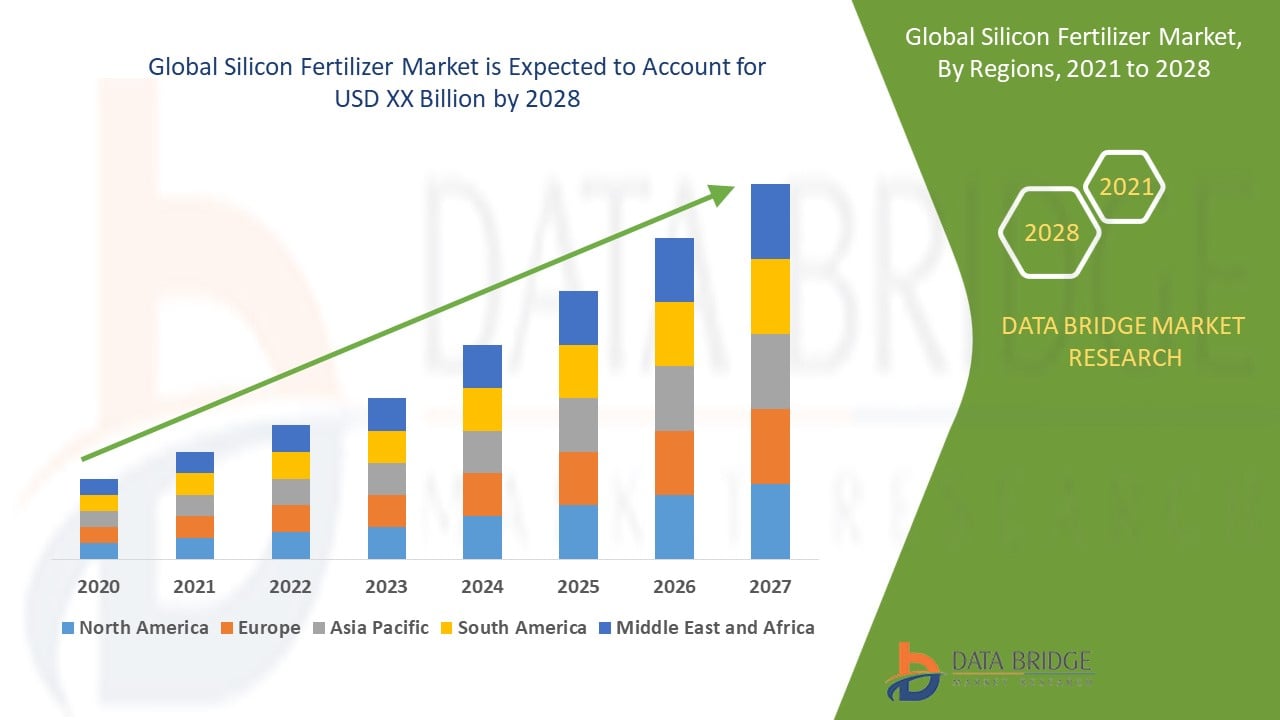
As per Data Bridge Market Research Analysis the global silicon fertilizer market size was valued at USD 125.61 million in 2024 and is projected to reach USD 185.58 million by 2032, with a CAGR of 5.00 % during the forecast period of 2025 to 2032. In addition to the insights on market scenarios such as market value, growth rate, segmentation, geographical coverage, and major players, the market reports curated by the Data Bridge Market Research also include import export analysis, production capacity overview, production consumption analysis, price trend analysis, climate change scenario, supply chain analysis, value chain analysis, raw material/consumables overview, vendor selection criteria, PESTLE Analysis, Porter Analysis, and regulatory framework.
Market Size & Forecast
- Global Market Value (2024): USD 125.61 million
- Expected Market Value (2032): USD 185.58 million
- Forecast CAGR (2025–2032): 5.00 %
Silicon Fertilizer Market Analysis
The silicon fertilizer market is witnessing significant growth due to its increasing adoption in modern agriculture for enhancing crop yield, improving stress resistance, and strengthening plant structure. Silicon, though not classified as an essential nutrient, has proven beneficial in mitigating abiotic stresses such as drought, salinity, and metal toxicity, making it an integral component in sustainable farming practices. The market is expanding due to advancements in silicon-based fertilizers, including soluble silicon fertilizers, which ensure better absorption and efficiency. Innovations such as nano-silicon formulations are gaining traction, offering improved bioavailability and enhancing plant health. The rising demand for organic and bio-based fertilizers is further fueling the growth of natural silicon sources in agriculture. Asia-Pacific dominates the market, driven by high agricultural output, growing population, and increasing soil degradation concerns, particularly in countries such as China and India. In addition, the expansion of precision agriculture and hydroponic farming is boosting the demand for silicon-enriched fertilizers. With ongoing R&D efforts, the integration of silicon fertilizers with smart agricultural technologies is expected to propel the market forward in the coming years.
What is the Key Trend in the Silicon Fertilizer Market?
“Rising Adoption of Nano-Silicon Fertilizers”
One notable trend in the silicon fertilizer market is the rising adoption of nano-silicon fertilizers due to their enhanced bioavailability, efficiency, and absorption rates in plants. These advanced formulations improve nutrient uptake, stress resistance, and crop productivity, making them a game-changer in modern agriculture. For instance, nano-silicon dioxide (SiO₂) fertilizers have shown significant results in increasing rice and wheat yields by strengthening cell walls and improving drought and pest resistance. This trend is particularly gaining momentum in precision farming and hydroponic systems, where controlled nutrient delivery is crucial for optimal growth. Moreover, with the increasing focus on sustainable and eco-friendly fertilizers, nano-silicon fertilizers are being integrated into organic and bio-based farming to reduce dependency on chemical fertilizers. As R&D investments continue to drive innovations, the global silicon fertilizer market is expected to witness rapid expansion, particularly in Asia-Pacific and North America, where agricultural modernization is advancing.
Report Scope and Silicon Fertilizer Market Segmentation
|
Attributes |
Silicon Fertilizer Key Market Insights |
|
Segments Covered |
|
|
Countries Covered |
U.S., Canada and Mexico in North America, Germany, France, U.K., Netherlands, Switzerland, Belgium, Russia, Italy, Spain, Turkey, Rest of Europe in Europe, China, Japan, India, South Korea, Singapore, Malaysia, Australia, Thailand, Indonesia, Philippines, Rest of Asia-Pacific (APAC) in the Asia-Pacific (APAC), Saudi Arabia, U.A.E., South Africa, Egypt, Israel, Rest of Middle East and Africa (MEA) as a part of Middle East and Africa (MEA), Brazil, Argentina and Rest of South America as part of South America |
|
Key Market Players |
Agripower Australia Ltd (Australia), Aries Agro Limited (India), BASF SE (Germany), Compass Minerals (U.S.), Plant Tuff (U.S.), FUJI SILYSIA CHEMICAL LTD (Japan), Denka Company Limited (Japan), MaxSil Pty Ltd (Australia), Jaipur Bio Fertilizers (India), Fertipower Norway (Norway), Mosaic (U.S.), Sigma AgriScience, LLC (U.S.), Vision Mark Biotech (India), Vedant Agrotech (India), Satpura Bio (India), Bionature India (India), Khandelwal Bio Fertilizer Private Limited (India), and Yara (Norway) |
|
Market Opportunities |
|
|
Value Added Data Infosets |
In addition to the insights on market scenarios such as market value, growth rate, segmentation, geographical coverage, and major players, the market reports curated by the Data Bridge Market Research also include import export analysis, production capacity overview, production consumption analysis, price trend analysis, climate change scenario, supply chain analysis, value chain analysis, raw material/consumables overview, vendor selection criteria, PESTLE Analysis, Porter Analysis, and regulatory framework. |
Silicon Fertilizer Market Definition
Silicon fertilizer is a type of agricultural supplement that provides plants with bioavailable silicon, enhancing their growth, strength, and resistance to environmental stresses. While silicon is not classified as an essential nutrient, it plays a crucial role in improving plant cell wall structure, increasing tolerance to drought and salinity, and enhancing resistance to pests and diseases.
Silicon Fertilizer Market Dynamics
Drivers
- Increasing Adoption in Sustainable Agriculture
The rising focus on sustainable farming has led to a surge in demand for silicon fertilizers, as they contribute to soil health, water retention, and nutrient efficiency. Traditional agricultural practices often rely heavily on chemical fertilizers, which can cause soil degradation, nutrient imbalances, and environmental pollution. Silicon fertilizers, particularly calcium silicate and potassium silicate, help replenish silicon levels in the soil, improve soil aeration, and enhance microbial activity, leading to better crop growth and long-term sustainability. For instance, in organic rice farming, silicon fertilizers have been shown to increase plant strength, reduce disease susceptibility, and improve grain yield, making them an essential component in regenerative agriculture. As governments and agricultural bodies promote eco-friendly farming practices, the silicon fertilizer market is expected to expand significantly.
- Enhanced Crop Stress Resistance
Silicon fertilizers play a crucial role in enhancing crop resilience against environmental stressors such as drought, salinity, heavy metal toxicity, and pest attacks. Silicon strengthens plant cell walls, creating a natural barrier against fungal infections, insect infestations, and adverse weather conditions. In drought-prone regions, silicon application has been proven to reduce water loss in crops such as wheat and maize, ensuring better water-use efficiency and sustained growth. In addition, research on silicon-treated rice plants has demonstrated higher resistance to blast disease, a common fungal infection that affects global rice production. This ability to mitigate crop losses and improve yield stability makes silicon fertilizers an essential tool in climate-resilient agriculture, further driving market growth. As climate change intensifies, the adoption of silicon-based fertilizers is expected to rise, particularly in regions with extreme weather conditions.
Opportunities
- Growing Demand for High-Yield Crops
As the global population continues to rise, the demand for high-yield crops has increased significantly, particularly in regions with shrinking arable land and rising food security concerns. Farmers are seeking solutions that enhance crop productivity, quality, and post-harvest longevity, making silicon fertilizers a key input in commercial agriculture. Silicon enhances grain filling in cereals, improves fruit firmness in horticultural crops, and reduces post-harvest losses by strengthening cell walls and increasing resistance to spoilage. For instance, studies on tomato cultivation have shown that silicon application improves fruit firmness, shelf life, and resistance to fungal infections, making it an ideal solution for export-oriented agricultural businesses. In addition, in rice farming, silicon fertilizers have been found to increase grain yield while reducing lodging risks, directly contributing to higher profitability for farmers. With the growing pressure to maximize output per hectare, the silicon fertilizer market is expected to expand as a key component in high-yield farming systems.
- Increasing Advancements in Silicon Fertilizer Formulations
The development of nano-silicon fertilizers and silicon-based biostimulants has revolutionized crop nutrition management, offering enhanced solubility, rapid absorption, and higher efficacy compared to traditional silicon fertilizers. Nano-silicon formulations allow for controlled release of nutrients, ensuring that plants absorb silicon efficiently without excess runoff or wastage. For instance, research in hydroponic lettuce farming has demonstrated that nano-silicon fertilizers improve growth rates and nutrient uptake and enhance resistance to oxidative stress. In addition, silicon-based biostimulants, which combine silicon with beneficial microbes and organic compounds, have gained traction in sustainable agriculture due to their ability to enhance plant immunity, improve drought tolerance, and increase overall yield. As precision agriculture and eco-friendly farming practices gain momentum, the adoption of advanced silicon fertilizers is expected to grow, positioning the market for strong expansion in the coming years.
Restraints/Challenges
- High Production Costs
The manufacturing of silicon fertilizers involves complex extraction and processing techniques, leading to higher production costs compared to conventional fertilizers such as nitrogen, phosphorus, and potassium (NPK). The refining process to obtain soluble and bioavailable silicon requires energy-intensive methods such as acid leaching, precipitation, and nano-formulation, increasing overall production expenses. For instance, silicon extraction from industrial byproducts such as blast furnace slag requires extensive processing to make it plant-available, adding to cost barriers. In addition, the lack of large-scale silicon fertilizer manufacturing plants results in limited supply and higher market prices, making it less attractive for price-sensitive farmers, especially in developing agricultural economies. These cost challenges hinder widespread adoption, preventing silicon fertilizers from competing effectively with cheaper traditional fertilizers in many global markets.
- Regulatory and Standardization Challenges
Unlike traditional fertilizers, silicon fertilizers do not have uniform global regulatory standards, creating market entry barriers for manufacturers and hindering large-scale commercialization. Some countries do not recognize silicon as an essential plant nutrient, leading to inconsistent product classification and registration processes. For instance, in the European Union, fertilizer regulations primarily focus on nitrogen, phosphorus, and potassium, making it difficult for silicon-based fertilizers to receive official approval for agricultural use. Similarly, in the U.S., different states have varying regulations regarding the labeling, marketing, and permissible levels of silicon fertilizers, complicating trade and distribution. Without a unified regulatory framework, the silicon fertilizer market faces delays in approvals, higher compliance costs, and slower adoption rates, restricting its overall growth potential.
This market report provides details of new recent developments, trade regulations, import-export analysis, production analysis, value chain optimization, market share, impact of domestic and localized market players, analyses opportunities in terms of emerging revenue pockets, changes in market regulations, strategic market growth analysis, market size, category market growths, application niches and dominance, product approvals, product launches, geographic expansions, technological innovations in the market. To gain more info on the market contact Data Bridge Market Research for an Analyst Brief, our team will help you take an informed market decision to achieve market growth.
Impact and Current Market Scenario of Raw Material Shortage and Shipping Delays
Data Bridge Market Research offers a high-level analysis of the market and delivers information by keeping in account the impact and current market environment of raw material shortage and shipping delays. This translates into assessing strategic possibilities, creating effective action plans, and assisting businesses in making important decisions. Apart from the standard report, we also offer in-depth analysis of the procurement level from forecasted shipping delays, distributor mapping by region, commodity analysis, production analysis, price mapping trends, sourcing, category performance analysis, supply chain risk management solutions, advanced benchmarking, and other services for procurement and strategic support.
Expected Impact of Economic Slowdown on the Pricing and Availability of Products
When economic activity slows, industries begin to suffer. The forecasted effects of the economic downturn on the pricing and accessibility of the products are taken into account in the market insight reports and intelligence services provided by DBMR. With this, our clients can typically keep one step ahead of their competitors, project their sales and revenue, and estimate their profit and loss expenditures.
Silicon Fertilizer Market Scope
The market is segmented on the basis of type, product type, form, and application. The growth amongst these segments will help you analyse meagre growth segments in the industries and provide the users with a valuable market overview and market insights to help them make strategic decisions for identifying core market applications.
Type
- Calcium Silicate
- Potassium Silicate
- Sodium Silicate
Product Type
- Water-Soluble Type
- Citrate-Soluble Type
Form
- Liquid
- Solid
Application
- Field Crops
- Horticultural Crops
- Hydroponics
- Floriculture
Silicon Fertilizer Market Regional Analysis
The market is analysed and market size insights and trends are provided by country, type, product type, form, and application as referenced above.
The countries covered in the market report are U.S., Canada and Mexico in North America, Germany, France, U.K., Netherlands, Switzerland, Belgium, Russia, Italy, Spain, Turkey, Rest of Europe in Europe, China, Japan, India, South Korea, Singapore, Malaysia, Australia, Thailand, Indonesia, Philippines, Rest of Asia-Pacific (APAC) in the Asia-Pacific (APAC), Saudi Arabia, U.A.E., South Africa, Egypt, Israel, Rest of Middle East and Africa (MEA) as a part of Middle East and Africa (MEA), Brazil, Argentina and Rest of South America as part of South America.
Asia-Pacific is projected to experience fastest growth in the silicon fertilizer market from 2025 to 2032, driven by the rising demand for fertilizers in rapidly developing economies such as India and China. The growing population in the region is increasing the demand for food crops, necessitating the adoption of advanced fertilizers to enhance agricultural productivity. In addition, government initiatives and subsidies supporting the use of high-efficiency fertilizers are further fueling market expansion. The region's focus on sustainable farming practices and soil enhancement solutions is also contributing to the growing adoption of fertilizers.
The country section of the report also provides individual market impacting factors and changes in regulation in the market domestically that impacts the current and future trends of the market. Data points such as down-stream and upstream value chain analysis, technical trends and porter's five forces analysis, case studies are some of the pointers used to forecast the market scenario for individual countries. Also, the presence and availability of global brands and their challenges faced due to large or scarce competition from local and domestic brands, impact of domestic tariffs and trade routes are considered while providing forecast analysis of the country data.
Silicon Fertilizer Market Share
The market competitive landscape provides details by competitor. Details included are company overview, company financials, revenue generated, market potential, investment in research and development, new market initiatives, global presence, production sites and facilities, production capacities, company strengths and weaknesses, product launch, product width and breadth, application dominance. The above data points provided are only related to the companies' focus related to market.
Silicon Fertilizer Market Leaders Operating in the Market Are:
- Agripower Australia Ltd (Australia)
- Aries Agro Limited (India)
- BASF SE (Germany)
- Compass Minerals (U.S.)
- Plant Tuff (U.S.)
- FUJI SILYSIA CHEMICAL LTD (Japan)
- Denka Company Limited (Japan)
- MaxSil Pty Ltd (Australia)
- Jaipur Bio Fertilizers (India)
- Fertipower Norway (Norway)
- Mosaic (U.S.)
- Sigma AgriScience, LLC (U.S.)
- Vision Mark Biotech (India)
- Vedant Agrotech (India)
- Satpura Bio (India)
- Bionature India (India)
- Khandelwal Bio Fertilizer Private Limited (India)
- Yara (Norway)
Latest Developments in Silicon Fertilizer Market
- In February 2025, Grupa Azoty is set to launch its new multi-component fertilizer, POLIFOSKA Multi S, which contains 23% sulfur, at its Police facilities. This addition expands the company's fertilizer portfolio, which includes high-granule ammonium nitrate fertilizer, a nitrate-urea solution with a unique light blue color for easy identification, and an ammonium fertilizer enriched with sulfur and calcium
- In February 2024, Agriloops, a Rennes-based sustainable aquaculture company, announced that it has secured USD 13.95 million in funding, including grants and debt. A crowdfunding campaign on the Sowefund platform played a key role in completing the funding round
- In August 2023, EuroChem-Karatau introduced a new chemical complex for mineral fertilizer production, with a minimum annual production capacity of 1 million tons
- In January 2020, RCF launched its new product, Soluble Silicon Fertilizer, developed by its R&D-BioAgro Division. This fertilizer has demonstrated significant benefits in enhancing crop immunity and strength, leading to improved yield

- Interactive Data Analysis Dashboard
- Company Analysis Dashboard for high growth potential opportunities
- Research Analyst Access for customization & queries
- Competitor Analysis with Interactive dashboard
- Latest News, Updates & Trend analysis
- Harness the Power of Benchmark Analysis for Comprehensive Competitor Tracking
Data collection and base year analysis are done using data collection modules with large sample sizes. The stage includes obtaining market information or related data through various sources and strategies. It includes examining and planning all the data acquired from the past in advance. It likewise envelops the examination of information inconsistencies seen across different information sources. The market data is analysed and estimated using market statistical and coherent models. Also, market share analysis and key trend analysis are the major success factors in the market report. To know more, please request an analyst call or drop down your inquiry.
The key research methodology used by DBMR research team is data triangulation which involves data mining, analysis of the impact of data variables on the market and primary (industry expert) validation. Data models include Vendor Positioning Grid, Market Time Line Analysis, Market Overview and Guide, Company Positioning Grid, Patent Analysis, Pricing Analysis, Company Market Share Analysis, Standards of Measurement, Global versus Regional and Vendor Share Analysis. To know more about the research methodology, drop in an inquiry to speak to our industry experts.
Data Bridge Market Research is a leader in advanced formative research. We take pride in servicing our existing and new customers with data and analysis that match and suits their goal. The report can be customized to include price trend analysis of target brands understanding the market for additional countries (ask for the list of countries), clinical trial results data, literature review, refurbished market and product base analysis. Market analysis of target competitors can be analyzed from technology-based analysis to market portfolio strategies. We can add as many competitors that you require data about in the format and data style you are looking for. Our team of analysts can also provide you data in crude raw excel files pivot tables (Fact book) or can assist you in creating presentations from the data sets available in the report.