Skin Lightening Products Market Size
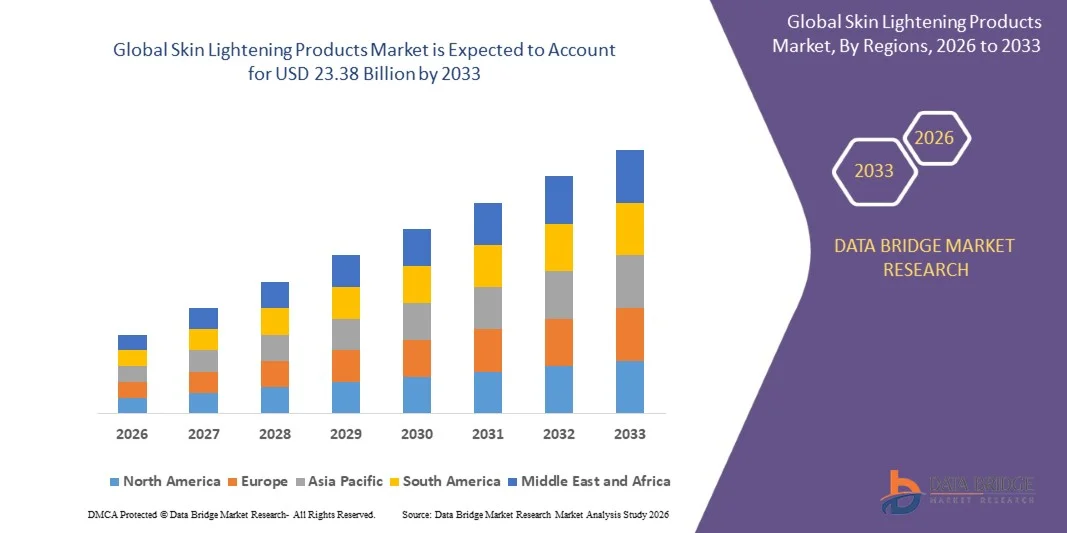
- The global skin lightening products market size was valued at USD 13.25 billion in 2025 and is expected to reach USD 23.38 billion by 2033, at a CAGR of 7.35% during the forecast period
- The market growth is largely fueled by the growing consumer focus on personal grooming, skincare routines, and the increasing demand for brightening and even-toned skin across both urban and semi-urban populations
- Furthermore, rising awareness of ingredient efficacy, innovative formulations, and the availability of multifunctional products for pigmentation, dark spots, and anti-ageing concerns are driving adoption. These converging factors are accelerating the uptake of skin lightening products, thereby significantly boosting the industry's growth
Skin Lightening Products Market Analysis
- Skin lightening products, offering formulations aimed at reducing pigmentation, dark spots, and uneven skin tone, are increasingly vital components of modern skincare routines for both men and women due to their visible results, ease of use, and multifunctional benefits
- The escalating demand for skin lightening products is primarily fueled by rising consumer awareness, increased disposable income, expansion of e-commerce and retail channels, and growing preference for scientifically-backed and herbal formulations that address multiple skin concerns simultaneously
- Asia-Pacific dominated skin lightening products market with a share of 55.3% in 2025, due to increasing beauty and personal care expenditure, rising disposable income, and strong consumer preference for skin brightening solutions
- North America is expected to be the fastest growing region in the skin lightening products market during the forecast period due to rising demand for multifunctional and technologically advanced skincare products
- Lotion and cream segment dominated the market with a market share of 42.5% in 2025, due to their widespread consumer familiarity and ease of application. Consumers often prefer lotions and creams for their dual benefits of moisturization and skin lightening, making them a staple in daily skincare routines. The availability of multifunctional formulations addressing pigmentation, dark spots, and uneven skin tone further enhances their demand. For instance, companies such as L’Oréal have expanded their lotion and cream offerings with advanced active ingredients to target diverse skin concerns
Report Scope and Skin Lightening Products Market Segmentation
|
Attributes |
Skin Lightening Products Key Market Insights |
|
Segments Covered |
|
|
Countries Covered |
North America
Europe
Asia-Pacific
Middle East and Africa
South America
|
|
Key Market Players |
|
|
Market Opportunities |
|
|
Value Added Data Infosets |
In addition to the insights on market scenarios such as market value, growth rate, segmentation, geographical coverage, and major players, the market reports curated by the Data Bridge Market Research also include in-depth expert analysis, pricing analysis, brand share analysis, consumer survey, demography analysis, supply chain analysis, value chain analysis, raw material/consumables overview, vendor selection criteria, PESTLE Analysis, Porter Analysis, and regulatory framework. |
Skin Lightening Products Market Trends
“Rising Demand for Multifunctional and Brightening Skincare Products”
- A significant trend in the skin lightening products market is the increasing demand for multifunctional formulations that provide brightening, anti-aging, and UV protection benefits, driven by heightened consumer focus on overall skin health and appearance. This trend is encouraging manufacturers to innovate products that combine efficacy with convenience for diverse skin types
- For instance, L’Oréal and Shiseido offer brightening creams and serums enriched with vitamins and natural extracts that cater to consumers seeking visible skin tone improvement. Such products enhance daily skincare routines while addressing multiple skin concerns simultaneously
- The popularity of clean-label and natural ingredients is shaping product development as consumers prefer formulations free from harmful chemicals while maintaining effective results. This is reinforcing the growth of naturally derived skin lightening solutions
- Rising influence of social media and beauty influencers is promoting awareness of skin tone enhancement and personal grooming, motivating consumers to adopt new skin lightening regimens. This trend is amplifying product visibility and driving trial across online and offline channels
- Increasing male grooming and unisex skincare adoption is expanding the target audience for skin lightening products, positioning the market for broader demographic appeal. Products designed for sensitive male skin or universal use are gaining traction
- The market is experiencing growth in premium and customized offerings where personalized formulations and targeted solutions provide enhanced skin benefits. This is reinforcing consumer willingness to invest in high-quality skin lightening products
Skin Lightening Products Market Dynamics
Driver
“Increasing Consumer Awareness and Focus on Personal Grooming”
- Rising awareness about skin health and appearance is encouraging consumers to include skin lightening products in their daily regimen, thereby driving market demand. These products are increasingly seen as essential for maintaining a youthful and radiant complexion
- For instance, Procter & Gamble’s Olay line promotes skin tone improvement through targeted serums and creams. Such offerings influence consumer purchase behavior by providing visible results and boosting confidence
- The surge in social media content related to skincare routines is educating consumers on product benefits and correct usage, further increasing adoption rates. This awareness is shaping trends and driving sales across multiple retail channels
- Urbanization and higher disposable income levels are enabling consumers to spend more on premium skin care, supporting market expansion. Consumers are seeking effective solutions that deliver measurable skin tone enhancement
- Growing preference for multifunctional products that combine brightening with anti-aging and sun protection properties is driving innovation and uptake. This demand is pushing companies to develop advanced formulations with enhanced efficacy
Restraint/Challenge
“Health and Safety Concerns Related to Harmful Ingredients”
- The presence of harmful chemicals such as hydroquinone and mercury in some skin lightening products raises safety concerns, restricting market growth and consumer trust. Regulatory scrutiny is increasing, requiring strict compliance and testing
- For instance, Johnson & Johnson faced recalls of certain skin products due to ingredient safety issues. Such incidents highlight the importance of rigorous quality control and can affect brand reputation
- Prolonged use of unsafe formulations may lead to skin irritation, sensitivity, or long-term damage, limiting product adoption. Consumers are increasingly seeking certified and dermatologist-tested alternatives
- Stringent regulations in key markets such as the U.S., E.U., and Japan impose barriers for unverified or non-compliant products. These requirements increase time-to-market and production complexity for manufacturers
- The market continues to navigate the challenge of balancing product efficacy with ingredient safety, prompting innovation in natural and non-toxic formulations. This ongoing focus ensures sustainable growth while maintaining consumer confidence
Skin Lightening Products Market Scope
The market is segmented on the basis of product type, nature, end-user, and distribution channel.
• By Product Type
On the basis of product type, the skin lightening products market is segmented into lotion and cream, foam, gel, serum and toner, and scrub. The lotion and cream segment dominated the market with the largest market revenue share of 42.5% in 2025, driven by their widespread consumer familiarity and ease of application. Consumers often prefer lotions and creams for their dual benefits of moisturization and skin lightening, making them a staple in daily skincare routines. The availability of multifunctional formulations addressing pigmentation, dark spots, and uneven skin tone further enhances their demand. For instance, companies such as L’Oréal have expanded their lotion and cream offerings with advanced active ingredients to target diverse skin concerns. In addition, lotions and creams are easily compatible with different skin types and climates, contributing to their sustained market dominance. The segment’s strong retail presence and broad marketing campaigns continue to reinforce consumer trust and preference.
The serum and toner segment is anticipated to witness the fastest growth rate from 2026 to 2033, fueled by increasing consumer awareness of targeted and high-efficacy skincare solutions. Serums and toners offer concentrated active ingredients and quicker results for hyperpigmentation and dullness, appealing to younger and professional demographics seeking visible improvements. Their lightweight texture and rapid absorption make them ideal for layering under other skincare products, enhancing daily routines. For instance, Estee Lauder’s advanced serums targeting dark spots and brightening effects have driven strong adoption globally. In addition, rising social media influence and beauty trends promoting intensive skincare regimens contribute to the growing popularity of serums and toners in both urban and semi-urban markets.
• By Nature
On the basis of nature, the skin lightening products market is segmented into natural/herbal, synthetic, and organic. The synthetic segment dominated the market with the largest market revenue share in 2025, owing to its high efficacy and widespread availability. Synthetic formulations often provide faster visible results and a broader range of active ingredients targeting melanin reduction, making them preferred for consumers seeking immediate outcomes. For instance, Olay’s synthetic-based skin lightening creams have maintained strong sales due to proven effectiveness and affordability. In addition, synthetic products are widely distributed across mass retail and e-commerce channels, ensuring easy accessibility. The segment benefits from continuous research and innovation, leading to improved formulations that meet modern consumer expectations.
The natural/herbal segment is expected to witness the fastest CAGR from 2026 to 2033, driven by growing consumer preference for chemical-free and gentle formulations. Natural extracts such as licorice, turmeric, and aloe vera are increasingly incorporated to reduce skin irritation while offering brightening benefits. For instance, Himalaya’s herbal skin lightening products have gained traction for their natural efficacy and eco-friendly positioning. In addition, rising awareness about long-term skin health and sustainability encourages consumers to switch to natural/herbal options, boosting adoption across premium and mass-market segments.
• By End-User
On the basis of end-user, the skin lightening products market is segmented into men and women. The women’s segment dominated the market with the largest market revenue share in 2025, driven by higher awareness and usage of skincare products among female consumers. Women often seek solutions for hyperpigmentation, dark spots, and uneven skin tone as part of their daily beauty regimen, making this segment a key revenue contributor. For instance, brands such as Nivea and Pond’s have launched targeted women-focused skin lightening campaigns that reinforce product adoption. In addition, cultural and societal influences emphasizing fair and radiant skin among women continue to sustain demand. Women’s products often include additional benefits such as moisturization, anti-aging, and sun protection, further boosting their appeal.
The men’s segment is anticipated to witness the fastest growth from 2026 to 2033, fueled by increasing awareness among men about grooming and appearance. Male consumers are increasingly adopting multi-functional skin lightening products that are lightweight, fast-absorbing, and easy to use. For instance, Garnier has introduced men-specific brightening creams and gels tailored to different skin types, which has significantly boosted adoption. In addition, changing social perceptions and marketing campaigns highlighting male skincare routines are contributing to faster growth in this segment. The trend toward professional grooming and wellness among men in urban centers further supports the rising demand.
• By Distribution Channel
On the basis of distribution channel, the skin lightening products market is segmented into specialty outlet, supermarket/hypermarket, convenience store, beauty salon, and e-retailer. The e-retailer segment dominated the market with the largest market revenue share in 2025, driven by the convenience of online shopping, wide product variety, and easy access to reviews and ratings. Consumers often prefer online platforms for discreet purchase and doorstep delivery of skin lightening products, enhancing adoption. For instance, Amazon and Nykaa have strengthened their e-commerce presence with exclusive launches and promotional campaigns, driving significant sales. In addition, e-retailers provide personalized recommendations and subscription models, increasing consumer engagement and repeat purchases. The accessibility of products across multiple price points further strengthens e-retail channels as the dominant distribution mode.
The specialty outlet segment is expected to witness the fastest growth rate from 2026 to 2033, fueled by the demand for expert guidance and personalized consultations. Specialty stores offer professional advice, product trials, and customized solutions for individual skin types and concerns, appealing to discerning consumers. For instance, Sephora’s in-store consultation and trial programs for skin brightening products have significantly contributed to increased adoption. In addition, rising consumer preference for direct interaction with beauty experts and sampling before purchase supports the accelerated growth of specialty outlets. The premium shopping experience and in-depth product knowledge provided by these outlets continue to attract both new and loyal customers.
Skin Lightening Products Market Regional Analysis
- Asia-Pacific dominated the skin lightening products market with the largest revenue share of 55.3% in 2025, driven by increasing beauty and personal care expenditure, rising disposable income, and strong consumer preference for skin brightening solutions
- The region’s growing e-commerce penetration, expanding retail networks, and rising urban population are accelerating market expansion
- The availability of skilled marketing professionals, favorable government policies supporting cosmetics manufacturing, and rapid urbanization across developing economies are contributing to increased consumption of skin lightening products
China Skin Lightening Products Market Insight
China held the largest share in the Asia-Pacific skin lightening products market in 2025, owing to its robust cosmetics industry, high consumer awareness of skincare, and rising demand for premium and innovative formulations. The country’s extensive retail and e-commerce networks, combined with targeted marketing campaigns and strong brand presence, are major growth drivers. Demand is further bolstered by increasing urbanization, rising disposable income, and a growing middle-class population seeking beauty and wellness solutions.
India Skin Lightening Products Market Insight
India is witnessing the fastest growth in the Asia-Pacific region, fueled by rising awareness of personal grooming, increasing penetration of online beauty platforms, and growing popularity of herbal and multifunctional skincare products. Initiatives promoting domestic cosmetics manufacturing and the expanding presence of international brands are strengthening market demand. In addition, increasing consumer interest in natural and herbal formulations and rising beauty salon services are contributing to robust market expansion.
Europe Skin Lightening Products Market Insight
The Europe skin lightening products market is expanding steadily, supported by high consumer focus on skin care, demand for premium and organic formulations, and growing investments in research and innovation. The region emphasizes product safety, compliance with regulatory standards, and sustainability in cosmetics manufacturing. Rising demand for multifunctional products and increasing adoption of advanced skincare routines are further enhancing market growth.
Germany Skin Lightening Products Market Insight
Germany’s market is driven by its established cosmetics industry, high consumer preference for quality skincare, and strong R&D capabilities. The country has well-developed distribution networks and strong regulatory compliance frameworks, fostering continuous innovation in skin lightening formulations. Demand is particularly strong for dermatologically tested and premium products targeting pigmentation and uneven skin tone.
U.K. Skin Lightening Products Market Insight
The U.K. market is supported by a mature beauty and personal care industry, rising consumer awareness of professional skincare, and increasing adoption of premium and organic formulations. With a strong focus on R&D, product innovation, and ethical sourcing, the U.K. continues to play a significant role in high-value skincare segments. Consumer demand for effective and safe skin lightening solutions remains a key growth driver.
North America Skin Lightening Products Market Insight
North America is projected to grow at the fastest CAGR from 2026 to 2033, driven by rising demand for multifunctional and technologically advanced skincare products. Increasing awareness about hyperpigmentation, dark spots, and preventive skincare, along with growing e-commerce adoption, are boosting demand. In addition, rising investments by global cosmetic brands and collaborations with dermatologists are supporting market expansion.
U.S. Skin Lightening Products Market Insight
The U.S. accounted for the largest share in the North America market in 2025, underpinned by high consumer spending on beauty and personal care, strong R&D infrastructure, and extensive retail and online distribution channels. The country’s focus on innovation, product safety, and premium formulations is encouraging the adoption of skin lightening products. Presence of key global and domestic players further solidifies the U.S.'s leading position in the region.
Skin Lightening Products Market Share
The skin lightening products industry is primarily led by well-established companies, including:
- Kanebo Cosmetics Inc (Japan)
- Civant LLC (U.S.)
- Rozge Cosmeceutical (U.S.)
- Dabur (India)
- Clarins (France)
- VLCC (India)
- Shiseido Co., Ltd (Japan)
- Emami Ltd (India)
- Himalaya Global Holdings Ltd (India)
- Procter & Gamble (U.S.)
- Beiersdorf (Germany)
- Bio Veda Action Research Co (India)
- Eveline Cosmetics (Poland)
- Kaya Skin Clinic (India)
- Unilever (U.K.)
- THE AVON COMPANY (U.S.)
- Lotus Herbals (India)
- L’Oréal (France)
Latest Developments in Global Skin Lightening Products Market
- In March 2024, eclat superior, an Indian cosmetic brand, launched a new Glutathione face cream formulated with skin brightening ingredients including vitamin C, niacinamide, alpha arbutin, licorice extracts, and lactic acid. This launch strengthens the availability of multifunctional and scientifically-backed skin lightening products in the Indian market, catering to growing consumer demand for effective, ingredient-focused formulations. By listing the product on Amazon.in, eclat superior also leverages the expanding e-commerce penetration, increasing accessibility and driving adoption among urban and tech-savvy consumers
- In December 2023, the World Health Organization (WHO) implemented the project, ‘Eliminating Mercury Skin Lightening Products (SLPs),’ aimed at reducing health risks associated with mercury-based formulations. This initiative supports the market by promoting safer, regulated, and ethically manufactured skin lightening products, thereby encouraging consumer confidence and sustainability in the sector. Regulatory attention and advocacy for non-toxic ingredients are expected to influence product innovation and compliance standards across global markets
- In February 2022, SkinCeuticals, a medical professional skincare brand, introduced the Phyto A+ Brightening Treatment, expanding its Phyto portfolio that includes Phyto Corrective Gel and Phyto Corrective Masque. The launch enhances the availability of professional-grade skin brightening solutions, driving demand in the premium segment of the market. By offering clinically-backed formulations that deliver visible brightening effects, the brand strengthens consumer trust and encourages adoption of high-efficacy skincare products
- In December 2021, the skincare brand Refresh Skin Science, under Visionary Skincare Pvt Ltd, entered the Indian market with a product range including toners, anti-ageing serums, face serums, peeling solutions, and foaming cleansers targeting brightening, anti-ageing, dry and oily, pigmented, and acne-prone skin. This launch contributes to market growth by providing a diverse portfolio catering to multiple skin concerns, expanding consumer choice, and stimulating demand for multifunctional products in the fast-growing Indian skin lightening segment
- In September 2020, Kao USA Inc (Bioré) introduced the Bioré Brightening Collection, featuring a cleanser, exfoliator, mask, and pore strip enriched with grapefruit, yuzu lemon, ginseng, papaya, and dragon fruit. This innovation emphasizes natural ingredient formulations in the skin brightening category, appealing to consumers seeking safe and fruit-based solutions. The launch helped position Bioré competitively in the premium and mass-market segments while driving awareness and adoption of natural and fruit-derived skin lightening products

- Interactive Data Analysis Dashboard
- Company Analysis Dashboard for high growth potential opportunities
- Research Analyst Access for customization & queries
- Competitor Analysis with Interactive dashboard
- Latest News, Updates & Trend analysis
- Harness the Power of Benchmark Analysis for Comprehensive Competitor Tracking
Data collection and base year analysis are done using data collection modules with large sample sizes. The stage includes obtaining market information or related data through various sources and strategies. It includes examining and planning all the data acquired from the past in advance. It likewise envelops the examination of information inconsistencies seen across different information sources. The market data is analysed and estimated using market statistical and coherent models. Also, market share analysis and key trend analysis are the major success factors in the market report. To know more, please request an analyst call or drop down your inquiry.
The key research methodology used by DBMR research team is data triangulation which involves data mining, analysis of the impact of data variables on the market and primary (industry expert) validation. Data models include Vendor Positioning Grid, Market Time Line Analysis, Market Overview and Guide, Company Positioning Grid, Patent Analysis, Pricing Analysis, Company Market Share Analysis, Standards of Measurement, Global versus Regional and Vendor Share Analysis. To know more about the research methodology, drop in an inquiry to speak to our industry experts.
Data Bridge Market Research is a leader in advanced formative research. We take pride in servicing our existing and new customers with data and analysis that match and suits their goal. The report can be customized to include price trend analysis of target brands understanding the market for additional countries (ask for the list of countries), clinical trial results data, literature review, refurbished market and product base analysis. Market analysis of target competitors can be analyzed from technology-based analysis to market portfolio strategies. We can add as many competitors that you require data about in the format and data style you are looking for. Our team of analysts can also provide you data in crude raw excel files pivot tables (Fact book) or can assist you in creating presentations from the data sets available in the report.