


Smart Card IC Market Size
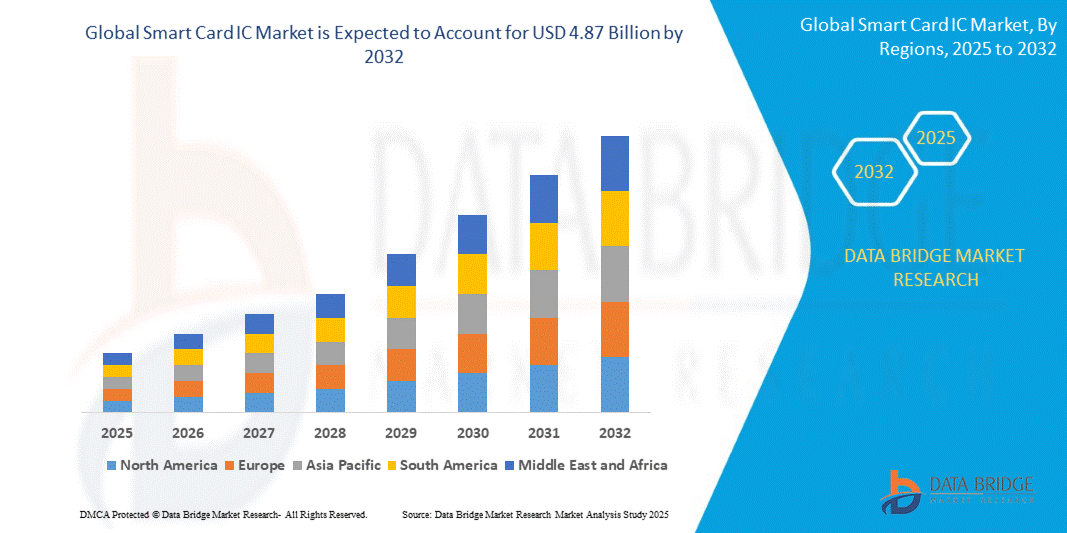
- The global smart card IC market size was valued at USD 3.34 billion in 2024 and is expected to reach USD 4.87 billion by 2032, at a CAGR of 4.83% during the forecast period
- The market growth is largely driven by the increasing adoption of contactless payment solutions, secure identification systems, and digital transaction platforms across both commercial and government sectors, fostering a shift toward integrated smart card technologies
- Furthermore, rising demand for secure, convenient, and multi-functional identification and payment systems is positioning smart card ICs as the preferred choice for banking, transport, healthcare, and access control applications. These converging trends are accelerating smart card IC deployment, thereby significantly enhancing market expansion
Smart Card IC Market Analysis
- Smart card ICs are integrated circuits embedded within cards that store, process, and secure sensitive data for authentication, payment, and identification purposes. They enable contact, contactless, or dual-interface operations while supporting encryption and secure communication protocols
- The growing need for secure digital transactions, enhanced identity management, and compliance with evolving security standards is propelling the adoption of smart card ICs across banking, transportation, government, and enterprise sectors, driving sustained market growth
- North America dominated the smart card IC market with a share of over 35% in 2024, due to increasing adoption of contactless payments, secure identification programs, and digital authentication solutions
- Asia-Pacific is expected to be the fastest growing region in the smart card IC market during the forecast period due to rapid urbanization, rising disposable incomes, and growing adoption of contactless and dual-interface smart cards in countries such as China, Japan, and India
- 16-bit segment dominated the market with a market share of 53.2% in 2024, due to its balanced performance, energy efficiency, and cost-effectiveness. 16-bit smart card ICs provide sufficient processing power for most payment, identification, and access control applications while maintaining compatibility with existing card infrastructure. The widespread adoption of EMV payment standards and secure ID programs has reinforced demand for 16-bit ICs, as they offer robust encryption and processing capabilities suitable for mainstream application
Report Scope and Smart Card IC Market Segmentation
|
Attributes |
Smart Card IC Key Market Insights |
|
Segments Covered |
|
|
Countries Covered |
North America
Europe
Asia-Pacific
Middle East and Africa
South America
|
|
Key Market Players |
|
|
Market Opportunities |
|
|
Value Added Data Infosets |
In addition to the insights on market scenarios such as market value, growth rate, segmentation, geographical coverage, and major players, the market reports curated by the Data Bridge Market Research also include in-depth expert analysis, geographically represented company-wise production and capacity, network layouts of distributors and partners, detailed and updated price trend analysis and deficit analysis of supply chain and demand. |
Smart Card IC Market Trends
Growing Adoption of Contactless and Mobile Payment Solutions
- The smart card IC market is advancing rapidly as contactless transactions gain momentum worldwide. Mobile wallets, NFC-enabled devices, and digital-first banking services are driving an increasing preference for secure, fast, and seamless payment methods across sectors
- For instance, NXP Semiconductors has collaborated with global banks to integrate secure ICs within contactless cards and smartphones, enabling large-scale mobile payment adoption. Similarly, Infineon Technologies continues to expand supply for secure transaction ecosystems globally
- The pandemic accelerated adoption of touch-free technologies, fueling momentum for contactless smart cards in retail, transportation, and hospitality. Safety considerations have permanently shaped consumer preferences, reinforcing the dominance of smart card ICs in digital commerce
- Government initiatives supporting cashless economies further elevate demand. National financial inclusion programs and mandates for secure electronic identification systems are escalating adoption of smart card ICs in emerging economies, creating expansive long-term market opportunities
- Integration of smart card ICs with biometrics is transforming the landscape. Fingerprint authentication and advanced embedded security features are now being deployed in smart cards, highlighting innovative product evolution to address fraud and identity theft risks
- IoT and multi-application ecosystems are boosting expansion as smart card ICs are used across sectors beyond payments, including healthcare, transport, and access management. Multi-functionality reinforces their role as critical components of connected global infrastructure systems
Smart Card IC Market Dynamics
Driver
Rising Demand for Secure and Multi-Functional Identification Systems
- The growing need for enhanced identity verification in government, banking, and enterprise sectors is driving demand for secure smart card ICs. Their embedded cryptography and multi-functional capabilities make them indispensable for trust-driven modern economies
- For instance, Thales Group has rolled out advanced smart card solutions integrating biometric capabilities, enabling secure identification in government identity programs. Similar deployments are being adopted across financial institutions worldwide to safeguard sensitive consumer data
- Rising cybersecurity concerns are pushing institutions to adopt smart card ICs to overcome fraud vulnerabilities. The integration of multi-factor authentication ensures secure transactions and data protection in markets with rising digital payment penetration
- The versatility of smart card ICs provides significant value as they are used across border control, healthcare record management, workplace authentication, and electronic passports. This multi-functionality drives sustained adoption in public sector and enterprise ecosystems
- High-volume digital banking growth further reinforces demand. Banks increasingly integrate smart card ICs for issuing secure credit, debit, and prepaid cards, ensuring compliance while building consumer trust in fast-expanding mobile and in-person cashless payments
Restraint/Challenge
Increasing Risk of Cyberattacks and Data Breaches
- The rising complexity of cyberattacks is a significant challenge for the smart card IC market. Hackers increasingly target sensitive stored data, creating mistrust that may slow down mainstream consumer adoption rates globally
- For instance, multiple reports of SIM card swap frauds in banking have highlighted vulnerabilities linked with IC-enabled devices. Such breaches drive skepticism, creating urgent requirements for technological reinforcement and consumer assurance measures
- Rising regulatory scrutiny around data privacy increases compliance mandates. Firms must continuously innovate with encryption standards, secure architectures, and regular software updates, raising operational costs while addressing evolving global cybersecurity expectations
- Competition from alternative secure technologies such as digital-only, cloud-based authentication platforms poses additional challenges. As mobile-first verification expands, smart card IC solutions must demonstrate clear advantages over competing models to retain mainstream relevance
- Consumer reluctance due to publicized cyber vulnerabilities lingers as a challenge. Instances of breaches affect brand reputation, making education campaigns, assurance initiatives, and enhanced encryption technology critical for building long-term trust and adoption confidence
Smart Card IC Market Scope
The market is segmented on the basis of contact type, interface type, chip technology, memory size, and application.
• By Contact Type
On the basis of contact type, the smart card IC market is segmented into contact, contactless, and dual interface. The contactless segment dominated the largest market revenue share in 2024, driven by the growing preference for fast, hygienic, and convenient transactions in sectors such as banking, transit, and access control. Contactless smart cards reduce wear and tear, eliminate physical contact, and enable seamless integration with NFC-enabled devices and payment terminals. Their adoption is further fueled by rising consumer demand for touch-free and secure authentication solutions, particularly in urban environments with high transaction volumes. Moreover, advancements in security protocols and anti-cloning features are making contactless cards a trusted choice for both financial and non-financial applications.
The dual interface segment is anticipated to witness the fastest growth rate from 2025 to 2032, fueled by its capability to combine the benefits of both contact and contactless functionalities. Dual interface smart cards offer versatility for organizations requiring multi-channel authentication, supporting both traditional contact readers and modern NFC-enabled systems. Rising adoption in government ID programs, banking, and transit systems is driving demand, along with the growing emphasis on interoperability and convenience for end-users.
• By Interface Type
On the basis of interface type, the smart card IC market is segmented into parallel interface and serial interface. The serial interface segment held the largest market revenue share in 2024, driven by its efficient data transfer capabilities, lower power consumption, and simplified integration with existing card readers and systems. Serial interface cards are widely adopted across banking, transit, and identification applications due to their reliability and cost-effectiveness. The compatibility of serial interfaces with modern embedded systems and microcontrollers further enhances their appeal for large-scale deployments.
The parallel interface segment is expected to witness the fastest growth rate from 2025 to 2032, fueled by its high-speed data processing capabilities and suitability for applications requiring rapid read/write cycles. Parallel interface ICs are increasingly used in specialized sectors such as healthcare and secure government programs, where fast and reliable data handling is critical. The growing demand for customized, high-performance smart cards in enterprise environments is further accelerating the uptake of parallel interface solutions.
• By Chip Technology
On the basis of chip technology, the smart card IC market is segmented into 8-bit, 16-bit, and 32-bit. The 16-bit segment dominated the largest market revenue share of 53.2% in 2024, driven by its balanced performance, energy efficiency, and cost-effectiveness. 16-bit smart card ICs provide sufficient processing power for most payment, identification, and access control applications while maintaining compatibility with existing card infrastructure. The widespread adoption of EMV payment standards and secure ID programs has reinforced demand for 16-bit ICs, as they offer robust encryption and processing capabilities suitable for mainstream applications.
The 32-bit segment is anticipated to witness the fastest growth rate from 2025 to 2032, fueled by its advanced computational capacity and support for sophisticated security algorithms. 32-bit ICs are ideal for high-security applications such as government ID, healthcare, and transit systems, where enhanced encryption, multitasking capabilities, and future-ready architecture are critical. Increasing adoption of contactless and dual-interface smart cards with complex authentication features is also contributing to the rapid growth of 32-bit technology.
• By Memory Size
On the basis of memory size, the smart card IC market is segmented into 1KB, 1KB–4KB, 4KB–32KB, and 32KB. The 1KB–4KB segment held the largest market revenue share in 2024, driven by its versatility in handling standard payment, identification, and loyalty applications. This memory range provides adequate storage for secure credentials, transaction history, and basic application data while maintaining a cost-efficient design. The segment’s popularity is further enhanced by compatibility with both contact and contactless smart card formats and its suitability for mass deployment in banking and retail programs.
The 4KB–32KB segment is expected to witness the fastest growth rate from 2025 to 2032, fueled by the rising demand for multi-application and high-security smart cards. Larger memory capacities allow for advanced data storage, multiple applications, and complex encryption, catering to sectors such as transit, government ID, and healthcare. The increasing adoption of loyalty programs, digital wallets, and multi-credential identification systems is further driving the expansion of higher-memory smart card ICs.
• By Application
On the basis of application, the smart card IC market is segmented into payment, identification, healthcare, transit, and loyalty. The payment segment dominated the largest market revenue share in 2024, driven by the global proliferation of EMV-enabled cards, contactless payment adoption, and the rising shift toward cashless transactions. Payment smart cards are widely used by banks and financial institutions for secure, convenient, and fast transaction processing. The integration of advanced encryption, tokenization, and mobile wallet compatibility further reinforces the dominance of this segment across mature and emerging economies.
The healthcare segment is anticipated to witness the fastest growth rate from 2025 to 2032, fueled by the rising adoption of secure patient identification, medical record management, and access control solutions. Smart card ICs in healthcare enable encrypted storage of sensitive patient data, ensure authorized access to medical facilities, and support telemedicine and remote monitoring solutions. Growing awareness of data privacy regulations and the need for robust healthcare infrastructure are driving demand for smart card IC applications in this sector.
Smart Card IC Market Regional Analysis
- North America dominated the smart card IC market with the largest revenue share of over 35% in 2024, driven by increasing adoption of contactless payments, secure identification programs, and digital authentication solutions
- Consumers and enterprises in the region highly value the convenience, reliability, and enhanced security offered by smart card ICs across banking, transit, and government applications
- The widespread adoption is further supported by high technological awareness, robust financial infrastructure, and the increasing implementation of advanced encryption standards, establishing smart card ICs as a preferred solution for secure transactions and identity management
U.S. Smart Card IC Market Insight
The U.S. smart card IC market captured the largest revenue share in North America in 2024, fueled by rapid adoption of contactless and dual-interface cards in banking, healthcare, and government sectors. The demand for secure, high-performance ICs is driven by rising consumer expectations for convenience, multi-application functionality, and mobile integration. Increasing adoption of EMV-compliant cards, smart transit solutions, and secure ID programs further propels the U.S. market. Moreover, ongoing innovations in 16-bit and 32-bit IC technologies, along with support for NFC-enabled mobile applications, are contributing significantly to market expansion.
Europe Smart Card IC Market Insight
The Europe smart card IC market is projected to expand at a substantial CAGR during the forecast period, primarily driven by strict data security regulations, increasing adoption of contactless payment systems, and growing demand for multi-application ID and loyalty cards. Urbanization and the widespread implementation of smart government ID programs are fostering the uptake of advanced IC solutions. European enterprises and consumers are also attracted to the reliability, high security, and long lifecycle of smart card ICs. The market is witnessing strong growth across BFSI, transit, and healthcare sectors, with ICs being incorporated into both new deployments and system upgrades.
U.K. Smart Card IC Market Insight
The U.K. smart card IC market is anticipated to grow at a noteworthy CAGR, driven by increasing adoption of contactless payments, government ID programs, and secure access solutions in commercial and public infrastructure. Rising concerns over data privacy and cybersecurity are encouraging businesses and institutions to adopt advanced IC technologies. The country’s mature banking ecosystem, growing e-commerce sector, and adoption of dual-interface and higher-memory ICs are expected to continue stimulating market growth.
Germany Smart Card IC Market Insight
The Germany smart card IC market is expected to expand at a considerable CAGR, fueled by rising awareness of digital security, adoption of EMV-compliant and multi-application cards, and government initiatives promoting secure identity management. The country’s strong infrastructure, focus on technological innovation, and emphasis on privacy and compliance drive demand for high-performance smart card ICs. Integration of ICs into smart healthcare, transit, and corporate access systems is also accelerating growth, with German consumers favoring secure, reliable, and eco-conscious solutions.
Asia-Pacific Smart Card IC Market Insight
The Asia-Pacific smart card IC market is poised to grow at the fastest CAGR during the forecast period of 2025 to 2032, driven by rapid urbanization, rising disposable incomes, and growing adoption of contactless and dual-interface smart cards in countries such as China, Japan, and India. The region’s increasing focus on smart cities, digital payment infrastructure, and government ID programs is boosting demand for advanced ICs. In addition, APAC serves as a major manufacturing hub for smart card components, making ICs more affordable and widely accessible to consumers and businesses.
Japan Smart Card IC Market Insight
The Japan smart card IC market is gaining momentum due to the country’s advanced technological ecosystem, high adoption of contactless payments, and demand for secure multi-application cards. Growth is supported by the increasing deployment of smart transit systems, digital ID programs, and integration of ICs with IoT-enabled devices. Japan’s aging population also drives demand for easy-to-use and reliable smart card solutions across residential, commercial, and public sectors.
China Smart Card IC Market Insight
The China smart card IC market accounted for the largest revenue share in Asia-Pacific in 2024, fueled by rapid urbanization, rising middle-class income, and widespread adoption of contactless payment and identification systems. China represents one of the largest markets for smart card ICs across banking, transit, and government sectors. The push for smart city initiatives, the presence of strong domestic manufacturers, and affordable IC solutions are key factors propelling market growth in China.
Smart Card IC Market Share
The smart card IC industry is primarily led by well-established companies, including:
- Qualcomm (U.S.)
- Fujitsu Semiconductor (Japan)
- Samsung Electronics (South Korea)
- Infineon Technologies AG (Germany)
- Texas Instruments (U.S.)
- Infineon Technologies (Germany)
- Microchip Technology (U.S.)
- NXP Semiconductors (Netherlands)
- STMicroelectronics (Switzerland)
- Toshiba Electronics (Japan)
- Winbond Electronics (Taiwan)
- Cisco Systems (U.S.)
- Renesas Electronics (Japan)
- ON Semiconductor (U.S.)
- Sony Semiconductor Solutions (Japan)
Latest Developments in Global Smart Card IC Market
- In July 2022, Infineon Technologies AG launched OPTIGA Trust M Express, a high-end security solution that provides a unique anchor of trust for connecting IoT devices to the cloud. This development strengthens Infineon’s position in the IoT security segment by enabling each IoT device to have a unique identity, enhancing trust and security for industrial, building automation, smart home, and connected consumer device applications. The solution is expected to drive demand for Infineon’s secure chip offerings as industries increasingly adopt connected solutions requiring robust authentication and data protection
- In June 2022, STMicroelectronics N.V. introduced the ST4SIM-201 embedded SIM (eSIM) for machine-to-machine (M2M) communication. This launch supports the latest 5G network standards, M2M security, and flexible remote provisioning and management. The introduction of the eSIM positions STMicroelectronics to capture a growing share of the industrial IoT and connected device market, where reliable, scalable, and secure machine communication is critical. The solution is likely to accelerate adoption of M2M-enabled devices and promote advanced 5G connectivity in enterprise and industrial applications
- In December 2021, Infineon Technologies AG partnered with MK Smart, a subsidiary of MK Group, to provide smart card chips for Vietnam's national ID card program. Infineon supplied the SLC37 security controller with advanced 40nm security chip technology and innovative dual-interface packaging. This initiative enhances Infineon’s presence in government ID and secure identification markets by enabling ICAO-compliant e-ID data storage, secure biometrics, and digital signing for citizen services. The partnership is expected to bolster demand for Infineon’s high-security IC solutions in national and government-grade digital identity projects
- In August 2021, Analog Devices, Inc. (ADI) acquired Maxim Integrated Products, Inc., strengthening its position as a leading high-performance analog semiconductor provider. This acquisition expands ADI’s portfolio across power management, sensors, and connectivity solutions, enabling the company to better compete in automotive, industrial, and IoT applications. The move is expected to enhance ADI’s market share and drive growth in sectors requiring integrated, high-performance analog and mixed-signal solutions
- In June 2020, Sony Group Corporation established a research company, Sony Research India Private Limited, in India, with R&D centers in Bengaluru and Mumbai as part of Sony’s global R&D network. This strategic expansion enhances Sony’s capability to innovate across entertainment, electronics, and connected device segments. By leveraging India’s skilled workforce and advanced research infrastructure, Sony aims to accelerate product development and maintain competitiveness in the rapidly growing smart device and semiconductor markets

- Interactive Data Analysis Dashboard
- Company Analysis Dashboard for high growth potential opportunities
- Research Analyst Access for customization & queries
- Competitor Analysis with Interactive dashboard
- Latest News, Updates & Trend analysis
- Harness the Power of Benchmark Analysis for Comprehensive Competitor Tracking
Global Smart Card Ic Market, Supply Chain Analysis and Ecosystem Framework
To support market growth and help clients navigate the impact of geopolitical shifts, DBMR has integrated in-depth supply chain analysis into its Global Smart Card Ic Market research reports. This addition empowers clients to respond effectively to global changes affecting their industries. The supply chain analysis section includes detailed insights such as Global Smart Card Ic Market consumption and production by country, price trend analysis, the impact of tariffs and geopolitical developments, and import and export trends by country and HSN code. It also highlights major suppliers with data on production capacity and company profiles, as well as key importers and exporters. In addition to research, DBMR offers specialized supply chain consulting services backed by over a decade of experience, providing solutions like supplier discovery, supplier risk assessment, price trend analysis, impact evaluation of inflation and trade route changes, and comprehensive market trend analysis.
Data collection and base year analysis are done using data collection modules with large sample sizes. The stage includes obtaining market information or related data through various sources and strategies. It includes examining and planning all the data acquired from the past in advance. It likewise envelops the examination of information inconsistencies seen across different information sources. The market data is analysed and estimated using market statistical and coherent models. Also, market share analysis and key trend analysis are the major success factors in the market report. To know more, please request an analyst call or drop down your inquiry.
The key research methodology used by DBMR research team is data triangulation which involves data mining, analysis of the impact of data variables on the market and primary (industry expert) validation. Data models include Vendor Positioning Grid, Market Time Line Analysis, Market Overview and Guide, Company Positioning Grid, Patent Analysis, Pricing Analysis, Company Market Share Analysis, Standards of Measurement, Global versus Regional and Vendor Share Analysis. To know more about the research methodology, drop in an inquiry to speak to our industry experts.
Data Bridge Market Research is a leader in advanced formative research. We take pride in servicing our existing and new customers with data and analysis that match and suits their goal. The report can be customized to include price trend analysis of target brands understanding the market for additional countries (ask for the list of countries), clinical trial results data, literature review, refurbished market and product base analysis. Market analysis of target competitors can be analyzed from technology-based analysis to market portfolio strategies. We can add as many competitors that you require data about in the format and data style you are looking for. Our team of analysts can also provide you data in crude raw excel files pivot tables (Fact book) or can assist you in creating presentations from the data sets available in the report.













