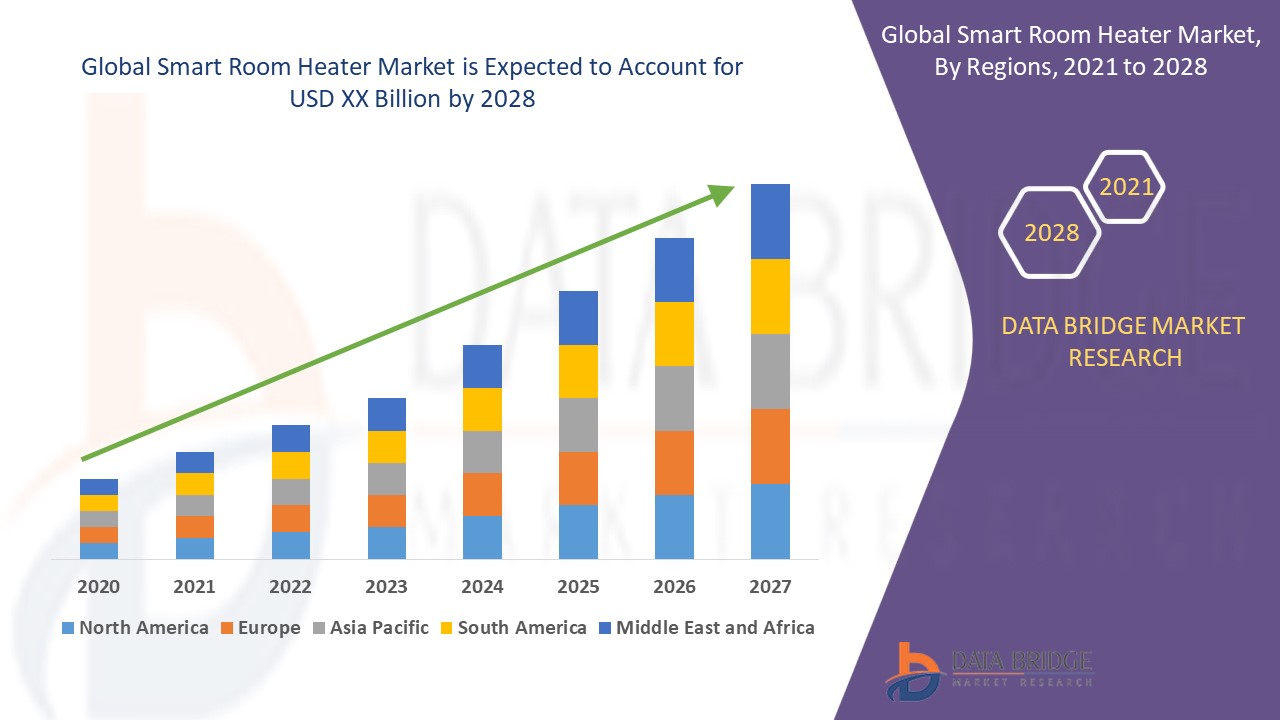
Smart Room Heater Market Analysis
The smart room heater market is experiencing significant growth, driven by the increasing demand for energy-efficient and intelligent home heating solutions. These heaters are equipped with advanced features such as Wi-Fi connectivity, mobile application control, and temperature automation, allowing users to adjust heating remotely, optimizing energy usage and reducing costs. The growing trend of smart homes and IoT integration is propelling the adoption of smart room heaters. In addition, rising consumer awareness about sustainable heating options and the demand for eco-friendly devices are boosting market growth. Recent developments include innovations in smart thermostat, voice-controlled heaters, and the integration of AI for predictive heating patterns. The North American and European regions dominate the market due to high disposable income and technological advancements. Leading manufacturers such as Dyson, Honeywell, and De’Longhi are expanding their product portfolios to cater to the evolving needs of consumers seeking comfort, convenience, and energy efficiency.
Smart Room Heater Market Size
The global smart room heater market size was valued at USD 1.20 billion in 2024 and is projected to reach USD 2.87 billion by 2032, with a CAGR of 11.50% during the forecast period of 2025 to 2032. In addition to the insights on market scenarios such as market value, growth rate, segmentation, geographical coverage, and major players, the market reports curated by the Data Bridge Market Research also include in-depth expert analysis, pricing analysis, brand share analysis, consumer survey, demography analysis, supply chain analysis, value chain analysis, raw material/consumables overview, vendor selection criteria, PESTLE Analysis, Porter Analysis, and regulatory framework.
Smart Room Heater Market Trends
“IoT Integration and Connectivity”
The integration of Wi-Fi and Bluetooth technologies into smart room heaters is a key market driver. These advanced features allow users to control their heaters remotely through mobile apps and voice assistants such as Alexa and Google Assistant, offering a higher level of convenience and flexibility. Consumers can adjust room temperatures, set schedules, or turn the heater on or off from anywhere, ensuring energy efficiency and personalized comfort. This remote control capability aligns with the growing trend of smart homes and IoT integration, making smart room heaters an increasingly popular choice for tech-savvy, convenience-seeking consumers.
Report Scope and Smart Room Heater Market Segmentation
|
Attributes |
Smart Room Heater Key Market Insights |
|
Segments Covered |
|
|
Countries Covered |
U.S., Canada and Mexico in North America, Germany, France, U.K., Netherlands, Switzerland, Belgium, Russia, Italy, Spain, Turkey, Rest of Europe in Europe, China, Japan, India, South Korea, Singapore, Malaysia, Australia, Thailand, Indonesia, Philippines, Rest of Asia-Pacific (APAC) in the Asia-Pacific (APAC), Saudi Arabia, U.A.E, South Africa, Egypt, Israel, Rest of Middle East and Africa (MEA) as a part of Middle East and Africa (MEA), Brazil, Argentina and Rest of South America as part of South America |
|
Key Market Players |
American Comfort Furniture (U.S.), Crane - USA (U.S.), De’ Longhi Appliances S.r.l. (Italy), Desertcart Holdings Limited (U.A.E.), Dyson (U.K.), Honeywell International Inc. (U.S.), Lasko Products, LLC (U.S.), Sunbeam Products, Inc. (U.S.), SUNHEAT® International (U.S.), Zehnder Group AG (Switzerland), V-GUARD INDUSTRIES LTD (India), Haier Group (China), Mitsubishi Electric Corporation (Japan), A. O. Smith India Water Products Pvt. Ltd (India), Siemens (Germany), Danfoss (Denmark), Rheem Manufacturing Company (U.S.), Glen Dimplex Group (Ireland), Bajaj Electronics (India), Cozy Products (U.S.), Glen Appliances Pvt. Ltd. (India), Havells India Ltd (India), inalsaappliances (India), Groupe SEB India (India) |
|
Market Opportunities |
|
|
Value Added Data Infosets |
In addition to the insights on market scenarios such as market value, growth rate, segmentation, geographical coverage, and major players, the market reports curated by the Data Bridge Market Research also include in-depth expert analysis, pricing analysis, brand share analysis, consumer survey, demography analysis, supply chain analysis, value chain analysis, raw material/consumables overview, vendor selection criteria, PESTLE Analysis, Porter Analysis, and regulatory framework. |
Smart Room Heater Market Definition
A smart room heater is an advanced heating device that utilizes IoT (Internet of Things) technology, enabling it to connect to Wi-Fi or Bluetooth networks for remote control and automation. These heaters can be operated through mobile apps, voice assistants such as Alexa or Google Assistant, and smart home systems, allowing users to adjust the temperature, set schedules, and monitor energy consumption from anywhere. They often include features such as energy-saving modes, temperature sensors, and adaptive heating, which optimize performance based on room conditions, offering enhanced convenience, energy efficiency, and user comfort.
Smart Room Heater Market Dynamics
Drivers
- Growing Demand for Energy Efficiency
Increasing awareness about energy conservation is a significant market driver for the smart room heater market. As consumers become more conscious of their energy usage and environmental impact, there is a growing demand for energy-efficient heating solutions. Smart room heaters offer features such as auto-shutoff, temperature scheduling, and energy-saving modes, allowing users to optimize power consumption and reduce electricity costs. These smart features help maintain a comfortable indoor temperature while minimizing energy waste, appealing to eco-conscious consumers. As environmental awareness continues to rise, smart heaters are becoming an essential choice for energy-efficient home heating.
- Rising Adoption of Smart Homes
As the trend toward connected homes grows, there is an increasing demand for smart home devices, including smart room heaters. These heaters integrate seamlessly with voice assistants such as Alexa and Google Assistant, providing enhanced convenience and control. Users can easily adjust the temperature, schedule heating times, and monitor energy consumption with simple voice commands or through mobile apps. This level of automation and ease of use appeals to tech-savvy consumers looking for smart, intuitive solutions for home comfort. The growing adoption of smart home ecosystems is thus driving the demand for smart room heaters, making them an integral part of modern living spaces.
Opportunities
- Consumer Focus on Comfort and Convenience
The ability to remotely control smart room heaters via mobile apps and voice commands offers users unmatched convenience and comfort, presenting a significant market opportunity. Consumers can adjust their home’s temperature from anywhere, whether they’re at work or on vacation, ensuring optimal comfort when they return home. The integration with voice assistants such as Alexa and Google Assistant further enhances ease of use, making it accessible for all users, regardless of technical expertise. This user-friendly control aligns with the growing demand for convenient, automated home appliances, positioning smart room heaters as a key part of the smart home revolution.
- Technological Advancements
Innovations such as artificial intelligence-powered heaters, smart thermostats, and adaptive heating based on occupancy and weather patterns are presenting a significant market opportunity in the smart room heater sector. These advanced technologies allow heaters to automatically adjust based on room usage and external conditions, ensuring energy efficiency and personalized comfort. AI-powered features can learn user preferences and optimize heating schedules, while smart thermostats provide real-time adjustments to reduce energy consumption. As consumers increasingly seek innovative, cost-effective, and environmentally friendly solutions, these technological advancements are attracting a growing number of buyers and expanding the market for smart room heaters.
Restraints/Challenges
- Competition from Traditional Heating Solutions
Despite the increasing adoption of smart technology, traditional heating solutions continue to dominate the market due to their lower cost and simpler functionality. These conventional heaters, such as radiators and space heaters, are often more affordable, easy to use, and require little to no installation, making them an attractive option for budget-conscious consumers. In contrast, smart room heaters, which come with advanced features such as IoT connectivity and voice control, tend to be more expensive and may require more effort for setup. This price difference and the convenience of traditional models pose a significant challenge for manufacturers of smart room heaters, especially in price-sensitive markets.
- High Initial Costs
The integration of advanced technologies such as IoT connectivity and AI features in smart room heaters leads to higher manufacturing costs, which in turn results in higher retail prices for consumers. This price premium can create a barrier to adoption, particularly in price-sensitive markets where consumers prioritize affordability over advanced features. While these smart features offer added convenience and energy efficiency, they may not be seen as essential by consumers who are accustomed to simpler, more affordable heating solutions. As a result, the higher costs associated with smart room heaters may hinder broader market penetration and limit their appeal in certain demographics.
This market report provides details of new recent developments, trade regulations, import-export analysis, production analysis, value chain optimization, market share, impact of domestic and localized market players, analyses opportunities in terms of emerging revenue pockets, changes in market regulations, strategic market growth analysis, market size, category market growths, application niches and dominance, product approvals, product launches, geographic expansions, technological innovations in the market. To gain more info on the market contact Data Bridge Market Research for an Analyst Brief, our team will help you take an informed market decision to achieve market growth.
Smart Room Heater Market Scope
The market is segmented on the basis of type and distribution channel. The growth amongst these segments will help you analyze meagre growth segments in the industries and provide the users with a valuable market overview and market insights to help them make strategic decisions for identifying core market applications.
Type
- Smart Room Heaters without Connectivity
- Smart Room Heaters with Connectivity
Distribution Channel
- Online
- Offline
Smart Room Heater Market Regional Analysis
The market is analyzed and market size insights and trends are provided by country, type, and distribution channel as referenced above.
The countries covered in the market report are U.S., Canada, Mexico in North America, Germany, Sweden, Poland, Denmark, Italy, U.K., France, Spain, Netherland, Belgium, Switzerland, Turkey, Russia, Rest of Europe in Europe, Japan, China, India, South Korea, New Zealand, Vietnam, Australia, Singapore, Malaysia, Thailand, Indonesia, Philippines, Rest of Asia-Pacific (APAC) in Asia-Pacific (APAC), Brazil, Argentina, Rest of South America as a part of South America, U.A.E, Saudi Arabia, Oman, Qatar, Kuwait, South Africa, Rest of Middle East and Africa (MEA) as a part of Middle East and Africa (MEA).
Europe dominates the smart room heater market driven by extensive research into the development of smart, connected heating solutions. The region’s growing focus on innovative technologies and smart home integration is contributing to the market’s expansion. In addition, consumers in Europe are increasingly prioritizing comfort and convenience, fueling demand for advanced, energy-efficient room heaters.
The North America is the fastest growing region in the smart room heater market, driven by rising demand across both the residential and commercial sectors. Increasing consumer interest in energy-efficient and smart heating solutions is fueling this demand. In addition, the growing trend of smart home integration in North American households is further contributing to the market's expansion.
The country section of the report also provides individual market impacting factors and changes in market regulation that impact the current and future trends of the market. Data points such as down-stream and upstream value chain analysis, technical trends and porter's five forces analysis, case studies are some of the pointers used to forecast the market scenario for individual countries. Also, the presence and availability of global brands and their challenges faced due to large or scarce competition from local and domestic brands, impact of domestic tariffs and trade routes are considered while providing forecast analysis of the country data.
Smart Room Heater Market Share
The market competitive landscape provides details by competitor. Details included are company overview, company financials, revenue generated, market potential, investment in research and development, new market initiatives, global presence, production sites and facilities, production capacities, company strengths and weaknesses, product launch, product width and breadth, application dominance. The above data points provided are only related to the companies' focus related to market.
Smart Room Heater Market Leaders Operating in the Market Are:
- American Comfort Furniture (U.S.)
- Crane - USA (U.S.)
- De’ Longhi Appliances S.r.l. (Italy)
- Desertcart Holdings Limited (U.A.E.)
- Dyson (U.K.)
- Honeywell International Inc. (U.S.)
- Lasko Products, LLC (U.S.)
- Sunbeam Products, Inc. (U.S.)
- SUNHEAT® International (U.S.)
- Zehnder Group AG (Switzerland)
- V-GUARD INDUSTRIES LTD (India)
- Haier Group (China)
- Mitsubishi Electric Corporation (Japan)
- A. O. Smith India Water Products Pvt. Ltd (India)
- Siemens (Germany)
- Danfoss (Denmark)
- Rheem Manufacturing Company (U.S.)
- Glen Dimplex Group (Ireland)
- Bajaj Electronics (India)
- Cozy Products (U.S.)
- Glen Appliances Pvt. Ltd. (India)
- Havells India Ltd (India)
- inalsaappliances (India)
- Groupe SEB India (India)
Latest Developments in Smart Room Heater Market
- In January 2024, Laars Heating Systems Company Inc., a U.S.-based manufacturer of water heaters, successfully completed the acquisition of Electro Industries Inc., although the financial details remain undisclosed. This strategic acquisition strengthens Laars Heating Systems' portfolio in residential, commercial, and industrial space heating markets, allowing the company to expand its product range and enhance its manufacturing capabilities. By integrating Electro Industries' expertise, Laars aims to meet the evolving demands of North American customers with a more comprehensive suite of heating solutions, positioning itself for sustained growth in the region
- In September 2023, Xiaomi introduced four new electric heaters in China under its MIJIA brand, catering to the growing demand for energy-efficient home heating solutions. The new models included the MIJIA baseboard electric heater 2, the MIJIA graphene baseboard heater 2, the MIJIA air heater, and the MIJIA graphene air heater. These innovative offerings combine graphene technology for faster heating and advanced features designed to enhance energy efficiency, comfort, and ease of use, further establishing Xiaomi's presence in the competitive smart heating market

- Interactive Data Analysis Dashboard
- Company Analysis Dashboard for high growth potential opportunities
- Research Analyst Access for customization & queries
- Competitor Analysis with Interactive dashboard
- Latest News, Updates & Trend analysis
- Harness the Power of Benchmark Analysis for Comprehensive Competitor Tracking
Data collection and base year analysis are done using data collection modules with large sample sizes. The stage includes obtaining market information or related data through various sources and strategies. It includes examining and planning all the data acquired from the past in advance. It likewise envelops the examination of information inconsistencies seen across different information sources. The market data is analysed and estimated using market statistical and coherent models. Also, market share analysis and key trend analysis are the major success factors in the market report. To know more, please request an analyst call or drop down your inquiry.
The key research methodology used by DBMR research team is data triangulation which involves data mining, analysis of the impact of data variables on the market and primary (industry expert) validation. Data models include Vendor Positioning Grid, Market Time Line Analysis, Market Overview and Guide, Company Positioning Grid, Patent Analysis, Pricing Analysis, Company Market Share Analysis, Standards of Measurement, Global versus Regional and Vendor Share Analysis. To know more about the research methodology, drop in an inquiry to speak to our industry experts.
Data Bridge Market Research is a leader in advanced formative research. We take pride in servicing our existing and new customers with data and analysis that match and suits their goal. The report can be customized to include price trend analysis of target brands understanding the market for additional countries (ask for the list of countries), clinical trial results data, literature review, refurbished market and product base analysis. Market analysis of target competitors can be analyzed from technology-based analysis to market portfolio strategies. We can add as many competitors that you require data about in the format and data style you are looking for. Our team of analysts can also provide you data in crude raw excel files pivot tables (Fact book) or can assist you in creating presentations from the data sets available in the report.