


What is the Smartphone Sanitizer Market Size and Growth Rate?
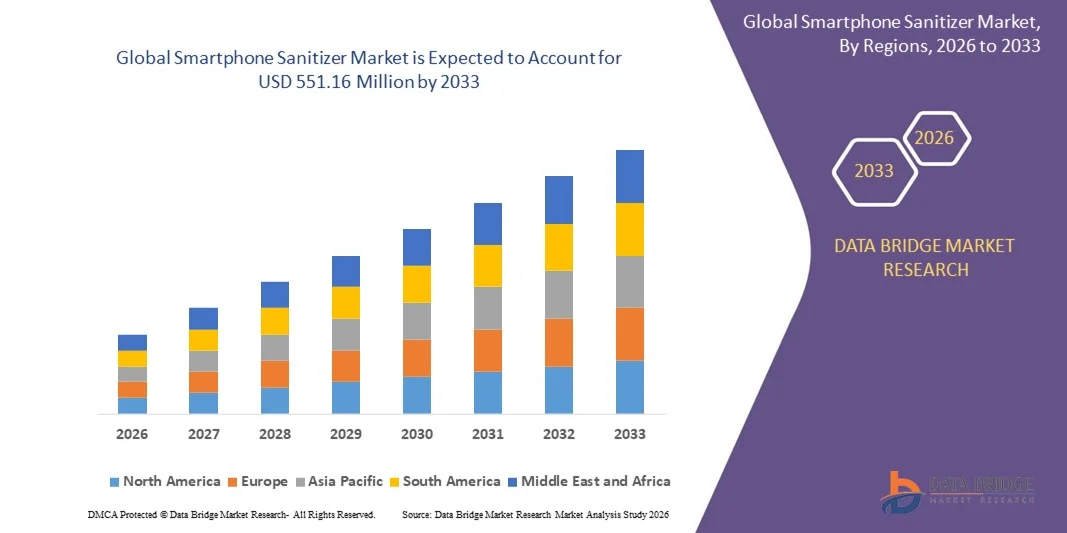
- As per Data Bridge Market Research Analysis the global smartphone sanitizer market size was valued at USD 219.45 million in 2025 and is expected to reach USD 551.16 million by 2033, at a CAGR of 12.2% during the forecast period
- The market growth is largely fueled by increasing awareness of hygiene, health safety, and the need to reduce pathogen transmission through frequently touched devices such as smartphones, tablets, and personal gadgets
- Furthermore, rising consumer demand for convenient, portable, and effective sanitization solutions for both residential and commercial environments is establishing smartphone sanitizers as an essential hygiene tool. These converging factors are accelerating the adoption of UV-C devices, antimicrobial accessories, and sanitizing wipes, thereby significantly boosting the industry’s growth
Market Size & Forecast
- Global Market Value (2025): USD 219.45 million
- Expected Market Value (2033): USD 551.16 million
- Forecast CAGR (2026–2033): 12.2%
What are the Major Takeaways of Smartphone Sanitizer Market?
- Smartphone sanitizers include UV-C disinfection devices, antimicrobial phone cases, wipes, and microfiber stickers that help eliminate germs, bacteria, and viruses from device surfaces. These solutions provide fast, safe, and effective cleaning while integrating into daily routines at home, offices, healthcare facilities, and public spaces
- The escalating demand for smartphone sanitizers is primarily fueled by heightened health consciousness among consumers, growing concerns over infectious diseases, and a rising preference for portable, easy-to-use hygiene solutions that can be employed across multiple environments
- North America dominated smartphone sanitizer market with a share of 43.5% in 2025, due to growing awareness of hygiene, health safety, and the need to reduce pathogen transmission via frequently touched devices
- Asia-Pacific is expected to be the fastest growing region in the smartphone sanitizer market during the forecast period due to rising urbanization, increasing disposable incomes, and growing awareness of personal hygiene in countries such as China, Japan, and India
- Phone sanitizing devices segment dominated the market with a market share of 73.9% in 2025, due to the rising awareness of hygiene and the growing concern over pathogen transmission through frequently touched mobile devices. Consumers prefer phone sanitizing devices due to their ability to deliver deep cleaning through UV-C light or other advanced sanitization technologies, ensuring effective disinfection without damaging the device
Report Scope and Smartphone Sanitizer Market Segmentation
|
Attributes |
Smartphone Sanitizer Key Market Insights |
|
Segments Covered |
|
|
Countries Covered |
North America
Europe
Asia-Pacific
Middle East and Africa
South America
|
|
Key Market Players |
|
|
Market Opportunities |
|
|
Value Added Data Infosets |
In addition to the insights on market scenarios such as market value, growth rate, segmentation, geographical coverage, and major players, the market reports curated by the Data Bridge Market Research also include in-depth expert analysis, pricing analysis, brand share analysis, consumer survey, demography analysis, supply chain analysis, value chain analysis, raw material/consumables overview, vendor selection criteria, PESTLE Analysis, Porter Analysis, and regulatory framework. |
What is the Key Trend in the Smartphone Sanitizer Market?
Rising Adoption of UV-C and Antimicrobial Mobile Sanitization Solutions
- A significant trend in the smartphone sanitizer market is the increasing use of UV-C light and antimicrobial technologies to disinfect mobile devices, driven by heightened consumer focus on hygiene and minimizing pathogen transmission. This trend is positioning smartphone sanitizers as essential accessories for personal and professional use
- For instance, PhoneSoap and HoMedics offer UV-C-based sanitizers that have gained widespread adoption in households and corporate offices, strengthening awareness of device cleanliness and promoting safer usage habits
- The integration of portable and compact sanitization devices is growing rapidly as consumers prefer solutions that fit into daily routines and travel kits. This convenience is driving a surge in demand for small-form sanitizers compatible with smartphones, earbuds, and wearable devices
- Retailers and e-commerce platforms are expanding their offerings of antimicrobial phone cases and UV-C sanitizers, reflecting rising consumer preference for proactive hygiene measures. Such products combine protection and disinfection functionality, enhancing overall device safety
- Healthcare and public sectors are increasingly recommending or deploying smartphone sanitizers in hospitals, clinics, and shared workspaces to mitigate contamination risks. This is reinforcing the perception of these devices as essential health and safety tools
- The market is witnessing strong growth in smart, app-controlled sanitizers that offer automated disinfection cycles, usage monitoring, and integration with IoT ecosystems. This rising adoption is driving innovation and improving user convenience across global consumer segments
Smartphone Sanitizer Market Dynamics
Driver
Growing Consumer Awareness of Device Hygiene and Health Safety
- The increasing recognition of smartphones as high-touch surfaces prone to bacterial and viral contamination is driving the adoption of sanitization devices. Consumers are investing in phone sanitizers to maintain health safety and reduce transmission risks
- For instance, PhoneSoap’s UV-C sanitizers have become popular among health-conscious users and corporate offices aiming to reduce workplace contamination. Such solutions provide visible assurance of hygiene, reinforcing adoption
- Corporate wellness programs and hospitality sectors are encouraging the use of smartphone sanitizers for employees and guests, driving consistent demand for portable and desktop sanitizers. This is strengthening the role of hygiene-focused devices in everyday routines
- Rising social media influence and awareness campaigns on device cleanliness are further educating consumers on the risks associated with unclean smartphones. The resulting behavior shift is increasing sales and acceptance of sanitization solutions
- Healthcare professionals and parents are increasingly using smartphone sanitizers to protect vulnerable populations, reinforcing demand. This sustained focus on hygiene and safety continues to propel market growth
Restraint/Challenge
High Cost and Limited Awareness of Advanced Sanitization Devices
- High pricing of UV-C and smart sanitizers poses a barrier for widespread adoption, particularly in price-sensitive markets. Consumers may opt for basic or traditional cleaning methods, limiting market penetration
- For instance, PhoneSoap devices are priced higher than conventional wipes or sprays, which can deter first-time buyers from investing in advanced sanitizers. This price sensitivity constrains rapid adoption
- Limited awareness of the efficacy and proper usage of smartphone sanitizers reduces consumer confidence in purchasing such products. Education campaigns and product demonstrations are required to overcome this hurdle
- The reliance on electricity or battery-operated sanitizers limits accessibility in regions with inconsistent power supply, impacting sales in certain geographies. This operational dependency is a notable challenge for manufacturers
- Scaling production to meet growing global demand while maintaining quality and device safety standards is complex. These constraints collectively challenge manufacturers to balance affordability, efficacy, and consumer trust
How is the Smartphone Sanitizer Market Segmented?
The market is segmented on the basis of product and distribution channel.
- By Product
On the basis of product, the smartphone sanitizer market is segmented into phone-cleaning wipes, microfiber cleaning stickers, and phone sanitizing devices. The phone sanitizing devices segment dominated the largest market revenue share of 73.9% in 2025, driven by the rising awareness of hygiene and the growing concern over pathogen transmission through frequently touched mobile devices. Consumers prefer phone sanitizing devices due to their ability to deliver deep cleaning through UV-C light or other advanced sanitization technologies, ensuring effective disinfection without damaging the device. The segment also benefits from integration with wireless charging or compact design, enhancing convenience for daily use. Businesses and healthcare facilities increasingly adopt these devices to maintain hygiene standards for employees and visitors. In addition, manufacturers are innovating with portable and multifunctional sanitizers, further boosting demand in both residential and commercial settings.
The phone-cleaning wipes segment is anticipated to witness the fastest growth rate of 19.8% from 2026 to 2033, fueled by their affordability, ease of use, and widespread availability in retail and online stores. Wipes are particularly popular among consumers seeking quick and disposable cleaning solutions for on-the-go sanitization. For instance, Clorox and Wet Ones have expanded their product lines to include phone-specific wipes, increasing accessibility and consumer adoption. The growing emphasis on personal hygiene and frequent device cleaning in public spaces supports the rising demand for these wipes. Their convenience for travel, office, and educational environments makes them a preferred choice for a broad consumer base. The compact packaging and fragrance-free or skin-safe formulations also enhance appeal among health-conscious users, driving consistent growth.
- By Distribution Channel
On the basis of distribution channel, the smartphone sanitizer market is segmented into offline and online channels. The online segment held the largest market revenue share in 2025, driven by the increasing penetration of e-commerce platforms and the convenience of doorstep delivery for hygiene products. Online sales channels allow manufacturers to reach a wider audience, including tech-savvy consumers and health-conscious individuals, with detailed product descriptions and customer reviews supporting informed purchase decisions. For instance, Amazon and Flipkart feature a wide range of phone sanitizing devices and wipes, making it easier for consumers to compare features, pricing, and brand reputation. The online channel also supports direct-to-consumer sales by emerging brands, reducing reliance on physical retail networks. In addition, subscription services for hygiene products are gaining traction, further strengthening online sales growth.
The offline segment is expected to witness the fastest CAGR from 2026 to 2033, driven by increasing sales through supermarkets, pharmacy chains, and electronics stores that allow consumers to physically examine products before purchase. Offline channels also benefit from impulse buying and in-store promotions, enhancing product visibility. For instance, Walmart and Best Buy have expanded their hygiene product sections to include phone sanitizers, catering to growing consumer demand in brick-and-mortar settings. The ability to provide hands-on demonstrations and immediate availability makes offline retail an attractive option for first-time buyers. Increasing partnerships between sanitizer manufacturers and retail chains are expected to further accelerate offline market growth.
Which Region Holds the Largest Share of the Smartphone Sanitizer Market?
- North America dominated the smartphone sanitizer market with the largest revenue share of 43.5% in 2025, driven by growing awareness of hygiene, health safety, and the need to reduce pathogen transmission via frequently touched devices
- Consumers in the region highly value convenient and effective sanitization solutions for smartphones, tablets, and other personal devices, which complement workplace and home hygiene practices
- The widespread adoption is supported by high disposable incomes, technological awareness, and a preference for innovative cleaning solutions, establishing smartphone sanitizers as a favored hygiene tool in both residential and commercial environments
U.S. Smartphone Sanitizer Market Insight
The U.S. smartphone sanitizer market captured the largest revenue share in 2025 within North America, fueled by increased concern over device-borne germs and a growing emphasis on personal and workplace hygiene. Consumers are prioritizing portable and multifunctional sanitizing solutions, such as UV-C devices, that offer rapid and effective cleaning. The rise of e-commerce and online retail has further enabled access to these products, while the integration of sanitization with wireless charging and compact designs drives consumer adoption. Moreover, growing workplace safety regulations and corporate wellness programs are supporting the market’s expansion.
Europe Smartphone Sanitizer Market Insight
The Europe smartphone sanitizer market is projected to expand at a substantial CAGR during the forecast period, primarily driven by rising health awareness and hygiene-focused government campaigns. The increase in urbanization and the demand for connected devices are fostering adoption among professionals and students. European consumers are drawn to the convenience, portability, and technological sophistication offered by phone sanitizing devices. Growth is observed across commercial, educational, and residential sectors, with manufacturers innovating in eco-friendly and energy-efficient sanitizer solutions to meet regional preferences.
U.K. Smartphone Sanitizer Market Insight
The U.K. smartphone sanitizer market is anticipated to grow at a noteworthy CAGR during the forecast period, driven by an increased focus on personal hygiene, health safety, and workplace cleanliness. Consumer concerns regarding infections and germ transmission in public spaces are encouraging the adoption of phone-cleaning wipes, microfiber stickers, and UV sanitizing devices. The country’s robust retail and e-commerce infrastructure, along with rising awareness of technological hygiene products, is expected to continue stimulating market growth.
Germany Smartphone Sanitizer Market Insight
The Germany smartphone sanitizer market is expected to expand at a considerable CAGR during the forecast period, fueled by heightened health consciousness and the preference for innovative, eco-friendly hygiene solutions. Germany’s advanced infrastructure, coupled with a strong focus on sustainability, promotes adoption of sanitizing devices across households, offices, and public institutions. Integration with other tech-enabled hygiene solutions, such as automated cleaning stations and multifunctional UV sanitizers, is becoming increasingly prevalent, aligning with local consumer expectations for safe and efficient solutions.
Asia-Pacific Smartphone Sanitizer Market Insight
The Asia-Pacific smartphone sanitizer market is poised to grow at the fastest CAGR during the forecast period of 2026 to 2033, driven by rising urbanization, increasing disposable incomes, and growing awareness of personal hygiene in countries such as China, Japan, and India. The region’s focus on smart hygiene solutions, supported by government initiatives and corporate wellness programs, is driving adoption. Furthermore, APAC is emerging as a manufacturing hub for affordable phone sanitizing devices, making them accessible to a broader consumer base.
Japan Smartphone Sanitizer Market Insight
The Japan smartphone sanitizer market is gaining momentum due to high consumer awareness of hygiene, rapid urbanization, and a strong culture of technological adoption. The demand for portable, easy-to-use sanitizers is rising in both residential and commercial sectors, with integration into daily routines and office safety protocols driving growth. Moreover, Japan’s aging population is likely to spur demand for convenient, efficient, and safe device-cleaning solutions.
China Smartphone Sanitizer Market Insight
The China smartphone sanitizer market accounted for the largest revenue share in Asia-Pacific in 2025, attributed to the country’s expanding middle class, urbanization, and growing health consciousness. Consumers are increasingly adopting phone-cleaning wipes, UV-C sanitizers, and microfiber stickers for residential, commercial, and public usage. Government campaigns promoting hygiene, the availability of affordable domestic products, and the rise of smart city initiatives are key factors driving market expansion in China.
Which are the Top Companies in Smartphone Sanitizer Market?
The smartphone sanitizer industry is primarily led by well-established companies, including:
- PhoneSoap (U.S.)
- CleanSlateUV (U.S.)
- CASETiFY (Hong Kong)
- Lexon (France)
- HoMedics (U.S.)
- Pristine Screens LLC (U.S.)
- Shenzhen Leadingplus Electronic Co., Ltd. (China)
- Digimore Electronics Co., Ltd. (China)
- Totallee (U.S.)
- The Clorox Company (U.S.)
What are Latest Developments in Smartphone Sanitizer Market?
- In February 2025, iCleanse announced a strategic partnership to deploy its Swift UV disinfection units across more than 453 Chuck E. Cheese locations nationwide, accelerating the adoption of public-access UV-C phone sanitization stations. This initiative expanded sanitization touchpoints in high-footfall entertainment venues, reinforcing consumer expectations for readily available device hygiene solutions and opening new avenues for digital out‑of-home advertising integrations, thereby elevating the smartphone sanitizer market’s commercial and experiential footprint
- In November 2024, ZAGG entered the smartphone sanitizer accessory market by unveiling its first UV sterilization case at the Mobile World Congress, marking one of the first major mainstream mobile accessory brands to integrate sanitization into protective cases. This move broadened consumer access to embedded hygiene technology and underscored a trend toward multi‑function accessories that merge device protection with antimicrobial sanitization, catalyzing competitive innovation across the market
- In September 2024, OtterBox unveiled a comprehensive portfolio of cases and screen protectors for the Apple iPhone 16 lineup that incorporate antimicrobial technology to inhibit bacterial growth on accessory surfaces. This development emphasized the rising consumer demand for hygiene‑enhancing mobile accessories and reinforced the market’s shift toward protective products that simultaneously offer antimicrobial benefits, influencing accessory design and buyer preferences
- In August 2024, ZAGG announced the launch of a new line of screen protection and cases designed exclusively for the Google Pixel 9 series featuring antimicrobial treatments that inhibit odor‑causing bacteria. The launch illustrated how demand for hygiene‑focused smartphone accessories is influencing product portfolios, encouraging manufacturers to adopt antimicrobial materials as a standard value proposition to appeal to health-conscious consumers
- In January 2024, UVCeed showcased its flagship smart mobile UV‑C disinfection device at CES 2024 in Las Vegas, underscoring a significant advancement in personal, portable sanitization technology that leverages smartphone processing power, computer vision, and machine learning to guide users through effective germ elimination. This innovation highlighted the convergence of AI and sanitization, raising market expectations for guided, safe, and efficient disinfection solutions and inspiring competitive tech integration across the industry

- Interactive Data Analysis Dashboard
- Company Analysis Dashboard for high growth potential opportunities
- Research Analyst Access for customization & queries
- Competitor Analysis with Interactive dashboard
- Latest News, Updates & Trend analysis
- Harness the Power of Benchmark Analysis for Comprehensive Competitor Tracking
Data collection and base year analysis are done using data collection modules with large sample sizes. The stage includes obtaining market information or related data through various sources and strategies. It includes examining and planning all the data acquired from the past in advance. It likewise envelops the examination of information inconsistencies seen across different information sources. The market data is analysed and estimated using market statistical and coherent models. Also, market share analysis and key trend analysis are the major success factors in the market report. To know more, please request an analyst call or drop down your inquiry.
The key research methodology used by DBMR research team is data triangulation which involves data mining, analysis of the impact of data variables on the market and primary (industry expert) validation. Data models include Vendor Positioning Grid, Market Time Line Analysis, Market Overview and Guide, Company Positioning Grid, Patent Analysis, Pricing Analysis, Company Market Share Analysis, Standards of Measurement, Global versus Regional and Vendor Share Analysis. To know more about the research methodology, drop in an inquiry to speak to our industry experts.
Data Bridge Market Research is a leader in advanced formative research. We take pride in servicing our existing and new customers with data and analysis that match and suits their goal. The report can be customized to include price trend analysis of target brands understanding the market for additional countries (ask for the list of countries), clinical trial results data, literature review, refurbished market and product base analysis. Market analysis of target competitors can be analyzed from technology-based analysis to market portfolio strategies. We can add as many competitors that you require data about in the format and data style you are looking for. Our team of analysts can also provide you data in crude raw excel files pivot tables (Fact book) or can assist you in creating presentations from the data sets available in the report.













