


What is the Sodium Citrate Market Size and Overview?
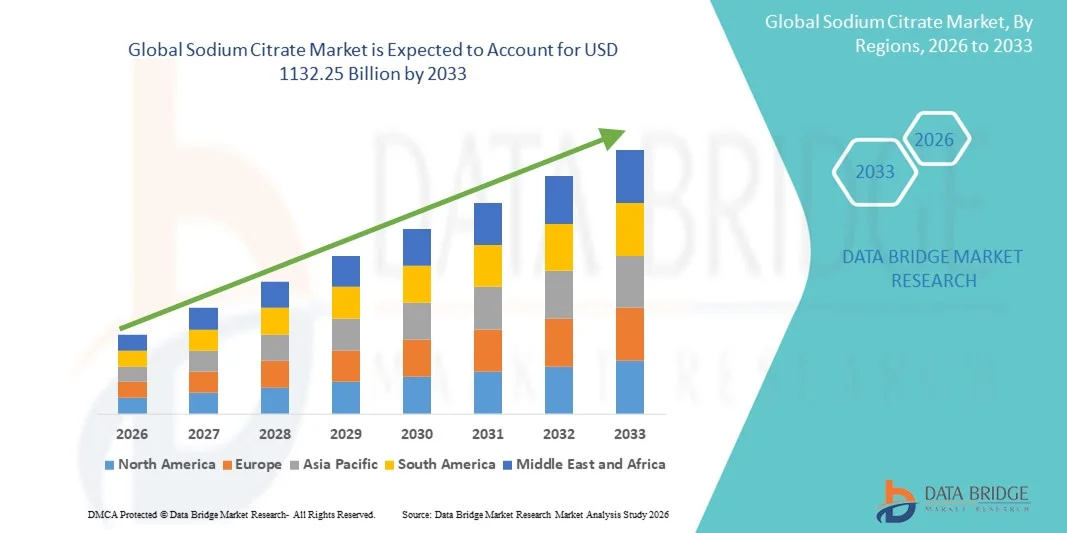
- As per Data Bridge Market Research Analysis the global sodium citrate market size was valued at USD 784.10 billion in 2025 and is expected to reach USD 1132.25 billion by 2033, at a CAGR of 4.70% during the forecast period
- The market growth is largely fueled by the expanding use of sodium citrate across diverse industries such as food and beverages, pharmaceuticals, and diagnostics, driven by rising demand for preservatives, emulsifiers, and buffering agents in both processing and formulation applications
- Furthermore, increasing awareness of product stability, extended shelf life, and the need for effective pH regulation in industrial and clinical settings is establishing sodium citrate as a preferred solution. These converging factors are accelerating the uptake of Sodium Citrate solutions, thereby significantly boosting the market’s overall growth
Market Size & Forecast
Global Market Value (2025): USD 784.10 billion
Expected Market Value (2033): USD 1132.25 billion
Forecast CAGR (2026–2033): 4.70%
Sodium Citrate Market Analysis
- Sodium citrate, widely used as a buffering agent, preservative, and emulsifier, is an increasingly vital compound in the food & beverages, pharmaceuticals, and diagnostics industries due to its ability to regulate acidity, enhance product stability, and improve shelf life across a wide range of applications
- The escalating demand for sodium citrate is primarily fueled by rising consumption of processed and packaged foods, increasing applications in pharmaceutical formulations (such as anticoagulants and oral rehydration solutions), and growing usage in clinical and laboratory settings
- North America dominated the sodium citrate market with the largest revenue share of 38.4% in 2025, characterized by a strong food processing industry, high demand for pharmaceutical excipients, and the presence of major manufacturers, with the U.S. witnessing substantial growth in sodium citrate utilization across processed food, healthcare, and diagnostic applications
- Asia-Pacific is expected to be the fastest growing region in the sodium citrate market during the forecast period due to expanding food and beverage manufacturing, rapid pharmaceutical industry growth, and increasing industrialization in countries such as China and India
- The Adult segment accounted for the largest market revenue share of 63.6% in 2025, driven by the widespread use of Sodium Citrate in adult medical treatments, dialysis, and electrolyte replacement therapies
Report Scope and Sodium Citrate Market Segmentation
|
Attributes |
Sodium Citrate Key Market Insights |
|
Segments Covered |
|
|
Countries Covered |
North America
Europe
Asia-Pacific
Middle East and Africa
South America
|
|
Key Market Players |
|
|
Market Opportunities |
|
|
Value Added Data Infosets |
In addition to the insights on market scenarios such as market value, growth rate, segmentation, geographical coverage, and major players, the market reports curated by the Data Bridge Market Research also include in-depth expert analysis, patient epidemiology, pipeline analysis, pricing analysis, and regulatory framework. |
What is the Key Trend in the Sodium Citrate Market?
Growing Application Scope Across Food, Pharmaceutical, and Industrial Formulations
- A significant and accelerating trend in the global sodium citrate market is its expanding use across a wide range of end-use industries, particularly in food & beverages, pharmaceuticals, healthcare, cosmetics, and industrial processing. This multifunctional compound is increasingly preferred for its buffering, emulsifying, anticoagulant, and preservative properties
- For instance, in the food and beverage sector, Sodium Citrate is widely used to regulate acidity in carbonated drinks, jams, dairy products, and processed foods, enabling manufacturers to improve taste stability and extend shelf life while maintaining product quality and safety standards
- In the pharmaceutical and healthcare sectors, Sodium Citrate is gaining significant traction as an anticoagulant in blood transfusion procedures and dialysis treatments, and as a buffering agent in oral rehydration solutions and injectable formulations, thereby enhancing its demand within clinical and hospital settings
- The cosmetic and personal care industry is another rapidly expanding application area, where Sodium Citrate is used to stabilize pH in skincare, haircare, and hygiene products, improving product efficacy and skin compatibility
- Furthermore, Sodium Citrate is witnessing increased adoption in industrial applications such as water treatment, detergents, and cleaning agents, where it acts as a chelating agent, helping to bind metal ions and enhance cleaning efficiency
- This rising diversification of application areas is reshaping market dynamics, with manufacturers increasingly developing high-purity and customized grades of Sodium Citrate to meet the specific needs of food, pharmaceutical, and industrial customers, ultimately supporting sustained market expansion
Sodium Citrate Market Dynamics
Driver
Rising Demand from Food & Beverage and Pharmaceutical Industries
- The increasing consumption of processed and packaged food and beverages worldwide, combined with rising awareness regarding food safety and shelf life, is a significant driver for the global Sodium Citrate market growth
- For instance, in April 2025, several pharmaceutical and nutraceutical manufacturers expanded their production capacities for electrolyte solutions and oral rehydration salts, directly increasing the demand for Sodium Citrate as a key buffering and stabilizing ingredient in medical and nutritional formulations
- As consumer preferences continue shifting towards ready-to-eat meals, carbonated beverages, and convenience food products, the demand for effective acidity regulators such as Sodium Citrate has grown substantially
- Moreover, the expansion of the global pharmaceutical industry, particularly in emerging economies, has reinforced the use of Sodium Citrate in anticoagulants, injectables, and dialysis solutions, thereby strengthening its market growth
- The compound’s safety profile, cost-effectiveness, and regulatory approval for use in multiple applications make it an ideal ingredient across sectors, especially in clean-label and low-toxicity formulations
- These factors, coupled with expanding food processing and healthcare infrastructure in developing regions, are strongly propelling the Sodium Citrate market during the forecast period
Restraint/Challenge
Fluctuating Raw Material Prices and Regulatory Compliance Requirements
- One of the major challenges facing the sodium citrate market is the volatility in the prices of raw materials, primarily citric acid and sodium hydroxide, which directly impacts production costs and profit margins for manufacturers
- For instance, fluctuations in agricultural yields of citrus fruits and disruptions in global supply chains have occasionally led to instability in the availability and pricing of citric acid, thereby affecting the overall production economics of Sodium Citrate
- In addition, stringent regulatory standards imposed by food safety authorities and pharmaceutical regulatory bodies regarding purity levels, contamination control, and production practices can increase compliance costs for manufacturers
- Small and medium-sized producers often face difficulties in meeting international quality certifications, limiting their participation in export markets and reducing overall competitiveness
- Furthermore, the growing consumer demand for natural and organic additives may pose a challenge to synthetic Sodium Citrate in certain product categories, prompting manufacturers to invest more in research and alternative formulations
- Overcoming these challenges through improved supply chain management, technological advancements in production, and adherence to strict quality standards will be crucial for sustaining long-term growth in the Sodium Citrate market
Sodium Citrate Market Scope
The market is segmented on the basis of type, application, demographic, dosage, route of administration, end-users, and distribution channel.
- By Type
On the basis of type, the Sodium Citrate market is segmented into Monosodium Citrate, Disodium Citrate, and Trisodium Citrate. The Trisodium Citrate segment dominated the largest market revenue share of 46.8% in 2025, driven by its extensive use as an anticoagulant, buffering agent, and preservative in both food and pharmaceutical industries. Its strong ability to regulate pH and prevent blood coagulation in medical procedures makes it a preferred choice in hospitals and diagnostic laboratories. Trisodium Citrate is widely utilized in blood storage bags and transfusion processes, which significantly contributes to its high demand. In the food and beverage industry, it is used as an emulsifier and acidity regulator in processed cheese, carbonated drinks, and dairy products. Its high solubility and chemical stability enhance its use in industrial applications, including detergents and water treatment. Rising demand for ready-to-consume products and packaged foods further strengthens its dominance. Moreover, its wide regulatory acceptance across global markets reinforces manufacturer preference. The compound’s versatility across multiple sectors ensures steady consumption. Increased healthcare spending and advancements in pharmaceutical formulations are also supporting its leadership position. These strong usage patterns across diverse industries contributed to its revenue dominance in 2025.
The Disodium Citrate segment is anticipated to witness the fastest CAGR of 7.9% from 2026 to 2033, owing to its growing adoption in pharmaceutical, nutraceutical, and cosmetic formulations. Its mild alkalizing and stabilizing properties make it suitable for use in oral medications, electrolyte solutions, and personal care products. With the increasing prevalence of chronic illnesses, the demand for effective buffering agents in intravenous and oral drugs is rising rapidly. Disodium Citrate is also gaining traction in the cosmetic industry as a pH adjuster in creams, lotions, and shampoos. In addition, its use in food preservation and flavor enhancement is expanding due to increased consumption of processed and convenience foods. The booming global wellness trend and expansion of the supplement market are further driving growth. Developing regions are witnessing increased pharmaceutical manufacturing, which is boosting demand. Continuous product innovations and improved distribution networks are helping expand its market presence. Growing government focus on healthcare development contributes to rising usage. These factors collectively contribute to its strong growth trajectory.
- By Application
On the basis of application, the Sodium Citrate market is segmented into Diuretic, Acidulant, Buffering and Sequestering Agent, and Others. The Buffering and Sequestering Agent segment dominated the market with a 44.5% share in 2025, due to its vital role in maintaining chemical stability in pharmaceutical, food, and industrial formulations. Sodium Citrate effectively controls acidity and prevents oxidation, making it widely essential in drug manufacturing. In the food and beverage sector, it helps maintain product freshness, enhance flavor stability, and improve shelf life. It is extensively used in carbonated beverages, processed cheeses, and canned foods. In addition, its sequestrant properties prevent metal ion contamination during industrial processing, improving product quality. The segment is also crucial in blood banking and laboratory testing where stable pH levels are required. Increased global industrialization and rising demand for processed food products are key driving factors. Its widespread usage in water softeners and cleaning agents strengthens its dominance. Higher consumption in both developed and emerging economies supports strong demand. Continuous manufacturing expansion further enhances its leadership. These consistent applications across multiple sectors secured its largest share in 2025.
The Acidulant segment is expected to grow at the fastest CAGR of 8.2% from 2026 to 2033, owing to increasing demand from the food and beverage industry. Sodium Citrate is increasingly used to impart a mildly sour taste in beverages, jams, candies, and dairy-based products. The rapid expansion of the global processed food and soft drink market is boosting this segment. Rising urbanization and changing consumer lifestyles are increasing the demand for ready-to-drink and convenience food items. The acidulant application is also expanding in pharmaceutical syrups and oral liquids to improve taste and stability. Growing demand for clean-label and safe additives also promotes its use. Emerging countries are witnessing higher consumption of packaged food, further accelerating growth. Technological advancements in food processing are increasing its application scope. New product innovations in beverages and flavored waters are enhancing demand. Manufacturers are strategically increasing production to meet this rising demand. These factors are expected to support robust growth of the acidulant segment.
- By Demographic
On the basis of demographic, the Sodium Citrate market is segmented into Adult and Pediatric. The Adult segment accounted for the largest market revenue share of 63.6% in 2025, driven by the widespread use of Sodium Citrate in adult medical treatments, dialysis, and electrolyte replacement therapies. Adults represent the major consumer group for medications requiring Sodium Citrate as a buffering and anticoagulant agent. The growing prevalence of kidney diseases and metabolic disorders in adults significantly contributes to increased utilization. It is commonly administered in adults during blood transfusions and intravenous therapies. Moreover, the higher consumption of processed foods and beverages among adults adds to the demand. The aging population is another key factor, as elderly individuals require frequent medical treatments and nutritional supplementation. Increased hospital visits and chronic disease management among adults also strengthen the demand. Higher healthcare expenditure and increased pharmaceutical access support market growth. The adult population’s strong reliance on pharmaceutical and nutraceutical products reinforces its market leadership. The expanding working-class population further increases product consumption. These combined factors drove the adult segment to dominate in 2025.
The Pediatric segment is projected to witness the fastest CAGR of 7.4% from 2026 to 2033, due to growing applications in pediatric electrolyte solutions and therapeutic treatments. Sodium Citrate is increasingly used to manage dehydration and acid-base imbalances in children. Rising awareness of child healthcare and improved access to pediatric medications are supporting demand. The growing pediatric population in developing regions contributes to expansion. Hospitals and clinics are increasingly using Sodium Citrate in pediatric IV formulations. Rising incidences of gastrointestinal conditions and kidney-related disorders in children are also boosting usage. Expanding vaccination programs and pediatric research further encourage product adoption. Pediatric nutrition and dietary supplement markets are also using Sodium Citrate as a stabilizing ingredient. Increased government investment in child health care strengthens market growth. Technological improvements in pediatric medicine production are improving availability. These developments collectively drive the rapid growth of the pediatric segment.
- By Dosage
On the basis of dosage, the Sodium Citrate market is segmented into Tablet, Injection, Powder, and Others. The Injection segment dominated the market with a 48.9% share in 2025, driven by its critical role in medical procedures such as dialysis, blood transfusion, and intensive care treatments. Sodium Citrate injection is widely used as an anticoagulant in extracorporeal circulation systems. Its fast-acting nature and high bioavailability make it a preferred option in emergency and hospital settings. The increasing number of surgeries and dialysis treatments worldwide has significantly boosted demand. Hospitals and diagnostic laboratories rely heavily on injectable forms for accurate and immediate therapeutic results. Rising prevalence of chronic kidney diseases further contributes to increased injectable usage. Growth in critical care units globally is also a significant contributor. Injectable Sodium Citrate offers precise dosing, ensuring effective patient outcomes. The expanding geriatric population also increases injectable drug use. Increased healthcare expenditure for advanced treatments supports its dominance. These medical necessities positioned the injection segment as the leading dosage form in 2025.
The Powder segment is anticipated to register the fastest CAGR of 8.5% from 2026 to 2033, due to its extensive use in oral rehydration solutions and food additives. It is widely used in beverage mixes, sports drinks, and nutritional supplements. The convenience of transportation and long shelf life make powdered Sodium Citrate highly preferable. Rising awareness of hydration and electrolyte balance among consumers drives growth. The booming functional beverage and fitness industry is also boosting demand. Powder form is increasingly used in home-care and emergency kits in developing regions. Expansion of e-commerce platforms supports easy accessibility. Manufacturers prefer this form for bulk supply due to lower storage costs. The rise in on-the-go nutritional products further fuels consumption. Technological advancements in packaging prevent contamination and improve quality. These factors position the powder segment for strong future growth.
- By Route of Administration
On the basis of route of administration, the Sodium Citrate market is segmented into Oral, Intravenous, Extracorporeal, and Others. The Intravenous segment dominated the market with a 42.3% share in 2025, driven by its extensive medical applications requiring rapid response. Sodium Citrate IV solutions are used in hospitals for anticoagulation during blood transfusion and dialysis. This route ensures immediate absorption and accurate dosage control. The rising number of patients requiring critical care treatment is increasing the demand. Intravenous administration is widely preferred in emergency cases and chronic disease management. Increasing use in surgical and post-operative care further contributes to its high usage. Growing investment in healthcare infrastructure enhances the availability of IV products. The presence of specialized IV formulations also boosts market acceptance. Its efficiency in maintaining electrolyte balance supports its widespread adoption. Rapid hospital expansions in developing regions strengthen dominance. These clinical advantages have firmly positioned IV as the leading route.
The Oral segment is expected to witness the fastest CAGR of 7.8% from 2026 to 2033, owing to increasing adoption in home-based healthcare and dietary supplements. Oral Sodium Citrate is widely used in tablets, powders, and syrups. The growing preference for non-invasive treatment options among patients supports this segment. Rising demand for OTC medications and supplements is also boosting oral usage. High consumption of electrolyte drinks and wellness products contributes significantly to growth. Convenience in self-administration makes oral dosing highly popular. Expansion of online pharmacies promotes accessibility. Growing awareness of digestive and kidney health further drives market expansion. Product innovations in flavored and easy-to-consume formulations enhance adoption. Increased healthcare awareness in rural areas adds to demand. These developments contribute to sustained growth of the oral segment.
- By End-Users
On the basis of end-users, the Sodium Citrate market is segmented into Clinic, Hospital, and Others.
The Hospital segment dominated the largest market revenue share of 57.4% in 2025, as hospitals are major consumers of Sodium Citrate for various medical and diagnostic applications. Sodium Citrate is widely used in blood transfusion processes, dialysis procedures, and electrolyte management in hospitals. High patient inflow in hospitals leads to greater demand. The presence of advanced healthcare equipment requires continuous supply. Government investments in hospital infrastructure boost consumption. Rising number of surgeries and critical care treatments increases demand. Increased prevalence of chronic diseases contributes to consistent usage. Hospitals also utilize Sodium Citrate in laboratory testing and research. The presence of skilled medical professionals enhances systematic use. Bulk procurement by hospitals strengthens market dominance. These combined factors secure hospitals as the leading end-user segment.
The Clinic segment is projected to grow at the fastest CAGR of 8.1% from 2026 to 2033, due to expanding outpatient services and small-scale treatment centers. Increasing establishment of specialized clinics worldwide is a key driver. Growing preference for decentralized healthcare is boosting clinic-based treatments. Many minor procedures involving Sodium Citrate are conducted in clinics. The rise in private healthcare investments also supports growth. Clinics are increasingly performing blood tests and dialysis-related treatments. Affordable treatment options offered by clinics increase patient inflow. The expansion of rural and semi-urban clinics supports increased access. Growing awareness of preventive healthcare further fuels demand. Technological advancements in compact medical equipment aid usage. These drivers collectively support the rapid growth of the clinic segment.
- By Distribution Channel
On the basis of distribution channel, the Sodium Citrate market is segmented into Hospital Pharmacy, Retail Pharmacy, and Online Pharmacy. The Hospital Pharmacy segment dominated the market with a 52.6% revenue share in 2025, due to the high volume demand generated by hospitals. These pharmacies ensure consistent availability of Sodium Citrate for multiple departments including emergency, ICU, dialysis, and laboratories. Bulk procurement and centralized supply systems contribute to high sale volumes. Regulatory compliance and quality control are maintained more effectively in hospital pharmacies. Rising hospital admissions increase the distribution requirement. The concentration of advanced healthcare services enhances internal drug consumption. Strong supplier partnerships ensure uninterrupted supply. Hospital pharmacies also stock specialized injectable formulations. Growing investments in hospital infrastructure strengthen their market position. These factors ensured the dominance of hospital pharmacies in 2025.
The Online Pharmacy segment is expected to witness the fastest CAGR of 9.2% from 2026 to 2033, driven by the rapid expansion of digital healthcare platforms. Rising internet penetration and smartphone usage enable easier access to pharmaceutical products. Consumers prefer home delivery and discreet purchasing options. The growing popularity of telemedicine is also increasing online medicine sales. Discounts, product variety, and convenience drive customer preference for online channels. Increased awareness of self-care supports online purchases. The rise in chronic patients requiring frequent medication supports repeat online orders. Improved logistics and cold-chain management enhance reliability. Expanding e-commerce in developing regions boosts growth. These digital advancements will strongly support the expansion of online pharmacies.
Sodium Citrate Market Regional Analysis
- North America dominated the sodium citrate market with the largest revenue share of 38.4% in 2025, characterized by a strong food processing industry, high demand for pharmaceutical excipients, and the presence of major manufacturers. Sodium citrate is widely used in processed foods, beverages, and as an anticoagulant in medical and diagnostic applications. The region’s advanced healthcare infrastructure and strict food quality regulations further support steady demand
- Consumers and industries in the region highly value sodium citrate for its multifunctional properties, including pH regulation, preservation, flavor enhancement, and stabilizing capabilities. Its extensive use in dairy products, bakery items, carbonated beverages, and ready-to-eat foods continues to reinforce its market position
- This widespread adoption is further driven by high production capacity, strong R&D investments, and increasing application in biomedical and pharmaceutical formulations, making sodium citrate an essential ingredient across multiple sectors
U.S. Sodium Citrate Market Insight
The U.S. sodium citrate market captured the largest revenue share within North America in 2025, fueled by its dominant processed food and beverage industry and expanding pharmaceutical sector. The country also shows strong demand in healthcare and diagnostics, where sodium citrate is used as an anticoagulant in blood collection and transfusion procedures. Growing consumer reliance on packaged foods and functional beverages is further accelerating market expansion.
Europe Sodium Citrate Market Insight
The Europe sodium citrate market is projected to expand at a steady CAGR throughout the forecast period, driven by increasing demand for clean-label ingredients in food processing and rising application in pharmaceutical formulations. The well-established food & beverage industry, coupled with strict safety and quality standards, is supporting the region’s consistent use of sodium citrate in a wide range of applications.
U.K. Sodium Citrate Market Insight
The U.K. sodium citrate market is anticipated to grow at a noteworthy CAGR during the forecast period, supported by heightened demand from the bakery, confectionery, and beverage sectors. In addition, the expanding nutraceutical and pharmaceutical industries are increasing the utilization of sodium citrate as a buffering and stabilizing agent.
Germany Sodium Citrate Market Insight
The Germany sodium citrate market is expected to expand considerably, driven by the strong presence of food, pharmaceutical, and chemical manufacturing industries. The country’s focus on innovation, high-quality ingredients, and sustainable production further promotes increased usage of sodium citrate in both industrial and consumer applications.
Asia-Pacific Sodium Citrate Market Insight
The Asia-Pacific sodium citrate market is poised to grow at the fastest CAGR during the forecast period, driven by expanding food and beverage manufacturing, rapid pharmaceutical industry growth, and increasing industrialization in countries such as China and India. Rising urban populations, changing dietary habits, and growing healthcare investments are significantly boosting demand for sodium citrate in this region.
Japan Sodium Citrate Market Insight
The Japan sodium citrate market is gaining momentum due to the country’s advanced food processing technologies and strong pharmaceutical manufacturing base. Increased demand for packaged and functional food products, along with high-quality medical and diagnostic applications, continues to support the rising use of sodium citrate.
China Sodium Citrate Market Insight
The China sodium citrate market accounted for the largest revenue share in the Asia-Pacific region in 2025, attributed to rapid industrialization, population growth, and increasing demand for processed food and pharmaceutical products. The country’s robust manufacturing capabilities and rising exports of food additives and pharmaceutical ingredients are key factors propelling market growth.
Sodium Citrate Market Share
The Sodium Citrate industry is primarily led by well-established companies, including:
• Citrique Belge NV (Belgium)
• Gadot Biochemical Industries Ltd. (Israel)
• Tate & Lyle PLC (U.K.)
• Weifang Ensign Industry Co., Ltd. (China)
• FBC Industries, Inc. (U.S.)
• Merck KGaA (Germany)
• Thermo Fisher Scientific Inc. (U.S.)
• Sigma-Aldrich (U.S.)
• Foodchem International Corporation (China)
• RZBC Group (China)
• Hawkins, Inc. (U.S.)
• Prayon S.A. (Belgium)
• Citrate Chemicals India Pvt. Ltd. (India)
• Gee Gee Biotech (India)
• Anhui BBCA Pharmaceuticals Co., Ltd. (China)
• Sinar Mas Chemicals (Indonesia)
Latest Developments in Global Sodium Citrate Market
- In April 2021, Jungbunzlauer Suisse AG announced plans to expand its existing Citrics factory in Port Colborne, Canada — a move aimed at scaling production capacity to meet growing global demand for citrates and related ingredients
- In September 2024, Jungbunzlauer committed USD 200 million to build Canada’s first xanthan-gum manufacturing facility (in Port Colborne), reinforcing its broader North American operations. While the investment explicitly targets xanthan gum, the improved infrastructure and chemical-processing capabilities signal strengthened supply-chain capacity for citrates and related compounds
- In March 2024, Jungbunzlauer acquired Alliance Gums & Industries (AGI), a French texturants-blending company. This acquisition broadens their product portfolio and indicates consolidation and integration in ingredients supply — which can lead to more stable and diversified manufacture of functional additives, including citrate-based products

- Interactive Data Analysis Dashboard
- Company Analysis Dashboard for high growth potential opportunities
- Research Analyst Access for customization & queries
- Competitor Analysis with Interactive dashboard
- Latest News, Updates & Trend analysis
- Harness the Power of Benchmark Analysis for Comprehensive Competitor Tracking
Data collection and base year analysis are done using data collection modules with large sample sizes. The stage includes obtaining market information or related data through various sources and strategies. It includes examining and planning all the data acquired from the past in advance. It likewise envelops the examination of information inconsistencies seen across different information sources. The market data is analysed and estimated using market statistical and coherent models. Also, market share analysis and key trend analysis are the major success factors in the market report. To know more, please request an analyst call or drop down your inquiry.
The key research methodology used by DBMR research team is data triangulation which involves data mining, analysis of the impact of data variables on the market and primary (industry expert) validation. Data models include Vendor Positioning Grid, Market Time Line Analysis, Market Overview and Guide, Company Positioning Grid, Patent Analysis, Pricing Analysis, Company Market Share Analysis, Standards of Measurement, Global versus Regional and Vendor Share Analysis. To know more about the research methodology, drop in an inquiry to speak to our industry experts.
Data Bridge Market Research is a leader in advanced formative research. We take pride in servicing our existing and new customers with data and analysis that match and suits their goal. The report can be customized to include price trend analysis of target brands understanding the market for additional countries (ask for the list of countries), clinical trial results data, literature review, refurbished market and product base analysis. Market analysis of target competitors can be analyzed from technology-based analysis to market portfolio strategies. We can add as many competitors that you require data about in the format and data style you are looking for. Our team of analysts can also provide you data in crude raw excel files pivot tables (Fact book) or can assist you in creating presentations from the data sets available in the report.












