What is the Software-Defined Anything Market Size and Growth Rate?
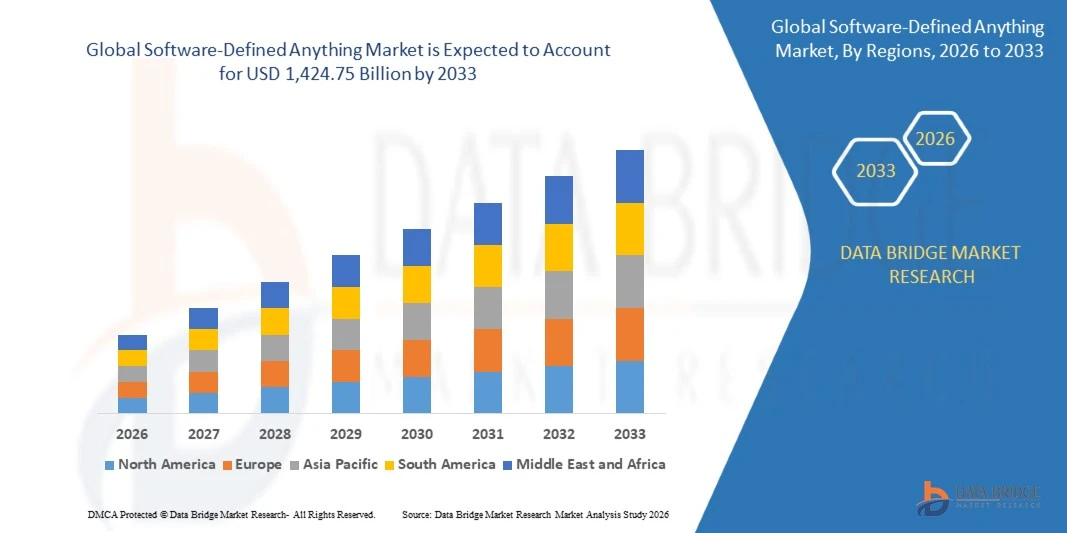
- As per Data Bridge Market Research analysis, the software-defined anything market was valued at USD 185.10 billion in 2025 and is projected to reach USD 1,424.75 billion by 2033, growing at a CAGR of 29.06% from 2026 to 2033.
- The market is experiencing significant growth driven by rising demand for flexible and scalable IT infrastructure, rapid advancements in cloud computing and virtualization technologies, and expanding applications across data centers, telecommunications, enterprise networking, and cybersecurity.
- The increasing adoption of cloud-based services globally, combined with the growing need for automation, operational efficiency, and reduced infrastructure costs, is compelling enterprises to adopt software-defined networking, storage, and data center solutions. Software-defined technologies are replacing traditional hardware-dependent infrastructure in many industries, offering greater scalability, centralized management, improved resource utilization, and enhanced flexibility for digital transformation initiatives.
Market Size & Forecast
- Global Market Value (2025): USD 185.10 Billion
- Expected Market Value (2033): USD 1,424.75 Billion
- Forecast CAGR (2026–2033): 29.06%
- Leading Region in 2025: North America
- Fastest Growing Region: Asia Pacific
What are the Major Takeaways of the Software-Defined Anything Market?
- North America dominated the software-defined anything market with the largest revenue share of 38.5% in 2025, supported by advanced IT infrastructure, strong cloud adoption, and substantial investments in software-defined networking and data center technologies.
- Asia-Pacific is expected to be the fastest-growing region at a CAGR of 31.2% from 2026 to 2033, fueled by rapid digital transformation, expanding cloud computing infrastructure, increasing 5G deployment, and growing adoption of software-defined solutions across China, India, and Japan.
- The software-defined networking segment led the market with a 32.4% share in 2025, driven by the growing need for network automation, centralized control, and flexible connectivity across enterprise IT environments
- Software-defined storage are the fastest-growing technology type, projected to register a CAGR of 28.5%, reflecting the surge in data generation, cloud adoption, and demand for flexible storage infrastructure.
- The integration and deployment services segment dominated the service category with a 38.2 revenue share in 2025, led by the complexity of implementing software-defined technologies across existing IT environments
- On-Premise accounted for 54.6% of the market share in 2025, preferred by demand from organizations requiring direct control over infrastructure, sensitive data, and security policies
- The cloud segment is the fastest-growing deployment category, with a CAGR of 31.4%, driven by increasing adoption of public cloud, hybrid cloud, and cloud-native applications.
Report Scope and Software-Defined Anything Market Segmentation
|
Attributes |
Software-Defined Anything Key Market Insights |
|
Segments Covered |
|
|
Countries Covered |
North America
Europe
Asia-Pacific
Middle East and Africa
South America
|
|
Key Market Players |
|
|
Market Opportunities |
|
|
Value Added Data Infosets |
In addition to the market insights such as market value, growth rate, market segments, geographical coverage, market players, and market scenario, the market report curated by the Data Bridge Market Research team includes in-depth expert analysis, import/export analysis, pricing analysis, production consumption analysis, and pestle analysis. |
What is the Key Trend in the Software-Defined Anything Market?
- Enterprises are increasingly adopting software-defined infrastructure to improve IT agility, automate resource allocation, and manage computing, storage, and networking through centralized software platforms.
- For instance, in June 2025, Broadcom announced the general availability of VMware Cloud Foundation 9.0, a unified private cloud platform designed to simplify infrastructure management, automate resource provisioning, and support traditional, cloud-native, and AI applications across data centers and hybrid cloud environments.
- Integration of artificial intelligence and automation enables organizations to optimize workloads, improve infrastructure visibility, and respond more efficiently to changing computing demands.
- Enterprises are also adopting software-defined platforms to support hybrid cloud environments, streamline application deployment, and improve consistency across distributed IT systems.
- For instance, in May 2024, Red Hat announced enhancements to Red Hat OpenShift AI, enabling enterprises to develop and deploy predictive and generative AI applications across hybrid cloud environments, with improved workload flexibility, model serving, and resource management capabilities.
- As organizations prioritize flexible infrastructure, centralized control, and automated operations, software-defined technologies are becoming a core component of enterprise digital transformation strategies.
What are the Key Drivers of the Software-Defined Anything Market?
- The rapid expansion of cloud computing, artificial intelligence, and enterprise digital transformation has significantly increased demand for software-defined infrastructure capable of improving scalability, automating IT operations, and optimizing computing, storage, and networking resources.
- For instance, in June 2025, NTT DATA launched AI-powered Software-Defined Infrastructure (SDI) services for Cisco products, combining intelligent automation and infrastructure optimization to help organizations modernize IT operations, reduce costs, and accelerate digital transformation
- Enterprises are integrating software-defined technologies into their IT environments to reduce infrastructure complexity, accelerate application deployment, improve resource utilization, and support flexible hybrid cloud operations.
- For instance, in May 2025, Dell Technologies announced software-driven data center innovations designed to automate the management and deployment of private cloud and edge solutions, supporting more efficient infrastructure operations, improved scalability, and stronger cyber resilience.
- With organizations increasingly prioritizing infrastructure automation, operational flexibility, and scalable digital services, software-defined solutions are becoming essential for modernizing enterprise IT environments and supporting evolving business requirements.
What Factors are Challenging the Growth of the Software-Defined Anything Market?
- Software-defined infrastructure requires significant upfront investment due to software licensing, infrastructure modernization, integration, and specialized IT management requirements.
- For instance, in November 2024, the U.S. Government Accountability Office (GAO) reported that restrictive software licensing practices could increase cloud costs and limit organizations’ choice of cloud providers. The report highlighted additional licensing fees, migration charges, and vendor lock-in as challenges that can complicate the adoption of software-defined and cloud-based infrastructure.
- These costs and technical complexities can limit adoption among small and medium-sized enterprises, particularly those operating legacy systems or lacking skilled IT personnel.
- Integrating software-defined networking, storage, and computing platforms with existing infrastructure can introduce interoperability challenges, migration risks, cybersecurity concerns, and dependence on specific technology vendors.
- For instance, in March 2025, Flexera reported that 84% of organizations identified managing cloud spending as a major challenge, highlighting the financial burden of operating and optimizing cloud infrastructure. These cost pressures can constrain investments in software-defined platforms, particularly for organizations with limited IT budgets.
- The high implementation costs and ongoing expenses associated with software-defined solutions continue to challenge adoption, particularly among budget-constrained organizations and enterprises with complex legacy environments. These barriers can slow deployment and limit broader market penetration despite growing demand for flexible, automated IT infrastructure.
How is the Software-Defined Anything Market Segmented?
The software-defined anything market is segmented on the basis of technology, service, deployment, and vertical.
- By Technology
On the basis of technology, the software-defined anything market is segmented into software-defined networking (SDN), software-defined storage (SDS), and software-defined data center (SDDC). The software-defined networking segment dominated the market with an estimated 32.4% share in 2025, driven by the growing need for network automation, centralized control, and flexible connectivity across enterprise IT environments. SDN enables organizations to manage network traffic through programmable software rather than relying exclusively on traditional hardware configurations. It improves network visibility, simplifies policy enforcement, and supports dynamic allocation of bandwidth and network resources. Increasing adoption of cloud computing, 5G networks, and virtualized infrastructure is further supporting demand. Enterprises also use SDN to enhance network security through centralized access controls and network segmentation.
The software-defined storage segment is projected to register the fastest growth at an estimated CAGR of 28.5% from 2026 to 2033, driven by increasing data generation, cloud adoption, and demand for flexible storage infrastructure. SDS separates storage management software from underlying hardware, enabling organizations to pool and allocate storage resources more efficiently. It supports scalability as data volumes increase across enterprise applications, analytics platforms, and artificial intelligence workloads. Organizations can reduce dependence on proprietary storage appliances by deploying software across compatible hardware. Integration with hybrid cloud environments also enables flexible data placement and improved storage utilization. Increasing demand for cost-effective data management, backup, and disaster recovery solutions is further supporting adoption.
- By Service
On the basis of service, the software-defined anything market is segmented into integration and deployment services, managed services, and consulting services. The integration and deployment services segment dominated the market with an estimated 38.2% share in 2025, owing to the complexity of implementing software-defined technologies across existing IT environments. These services help organizations integrate virtualized networking, storage, and computing resources with legacy infrastructure and enterprise applications. Service providers assist with system configuration, migration planning, interoperability testing, and infrastructure optimization. Their expertise helps minimize operational disruptions during deployment and supports smoother technology transitions. Increasing adoption of hybrid cloud platforms and software-defined data centers is further strengthening demand for integration services.
The managed services segment is projected to register the fastest growth at an estimated CAGR of 30.1% from 2026 to 2033, driven by rising demand for continuous infrastructure monitoring, automated maintenance, and specialized IT management expertise. Managed service providers help enterprises operate software-defined environments without maintaining extensive in-house infrastructure teams. These services include performance monitoring, configuration management, security updates, troubleshooting, and capacity optimization. Growing infrastructure complexity is encouraging organizations to outsource routine operational responsibilities to specialized providers. Managed services also help businesses maintain service availability and respond more efficiently to changing workloads. Increasing adoption of cloud-based networking and virtualized data centers is creating additional demand for ongoing operational support.
- By Deployment
On the basis of deployment, the software-defined anything market is segmented into on-premise and cloud. The on-premise segment dominated the market with an estimated 54.6% share in 2025, supported by demand from organizations requiring direct control over infrastructure, sensitive data, and security policies. On-premise software-defined solutions allow enterprises to manage networking, storage, and computing resources within their own data centers. They are particularly relevant for organizations operating under strict regulatory, confidentiality, and performance requirements. These deployments can provide greater control over infrastructure configuration and integration with existing enterprise systems. Financial institutions, government organizations, and large industrial enterprises may prefer on-premise infrastructure for selected mission-critical workloads.
The cloud segment is projected to register the fastest growth at an estimated CAGR of 31.4% from 2026 to 2033, driven by increasing adoption of public cloud, hybrid cloud, and cloud-native applications. Cloud-based software-defined solutions enable organizations to scale infrastructure resources according to changing workloads without extensive investments in physical hardware. They also support remote administration, faster deployment, and centralized management across geographically distributed operations. Enterprises increasingly use cloud infrastructure to support analytics, artificial intelligence, digital services, and application modernization. Flexible consumption models can reduce the need for large upfront infrastructure expenditures. Integration with automation and orchestration tools further improves operational efficiency.
- By Vertical
On the basis of vertical, the software-defined anything market is segmented into BFSI, healthcare, manufacturing, IT and telecommunication, retail, and others. The IT and telecommunication segment dominated the market with an estimated 34.7% share in 2025, supported by extensive requirements for network virtualization, cloud infrastructure, and automated resource management. Telecommunications operators use software-defined networking to improve network flexibility and support technologies such as 5G and network function virtualization. IT service providers also rely on software-defined storage and data center solutions to manage growing volumes of enterprise data and computing workloads. These technologies enable faster provisioning, centralized administration, and more efficient infrastructure utilization. The expansion of cloud services, edge computing, and high-bandwidth applications is further supporting adoption.
The healthcare segment is projected to register the fastest growth at an estimated CAGR of 30.8% from 2026 to 2033, driven by increasing digitalization of healthcare delivery, expansion of electronic health records, and growing demand for secure data infrastructure. Hospitals and healthcare networks require scalable computing and storage environments to manage medical imaging, patient information, telehealth platforms, and clinical applications. Software-defined technologies can help healthcare organizations allocate infrastructure resources more efficiently while supporting data availability and disaster recovery. Growing adoption of artificial intelligence in diagnostics and medical research is also increasing demand for flexible computing infrastructure. Healthcare providers are investing in modern IT systems to improve interoperability and support connected care services.
Which Region Holds the Largest Share of the Software-Defined Anything Market?
- North America dominated the software-defined anything market with the largest revenue share of 38.5% in 2025, supported by advanced IT infrastructure, strong cloud adoption, and substantial investments in software-defined networking and data center technologies.
- The region also benefits from widespread adoption of software-defined networking, increasing demand for hybrid cloud infrastructure, and growing investments in artificial intelligence and enterprise automation. Increasing focus on network virtualization, infrastructure modernization, and scalable digital services continues to strengthen North America's leadership position in the global market.
U.S. Software-Defined Anything Market Insight
The U.S. software-defined anything market is witnessing strong growth due to rising investments in cloud computing, data center modernization, and enterprise digital transformation. The country’s mature technology ecosystem, along with increasing adoption of software-defined networking, storage, and infrastructure automation, is driving demand across IT, telecommunications, healthcare, and financial services. In addition, growing emphasis on operational efficiency, cybersecurity, and scalable IT infrastructure is accelerating the adoption of software-defined solutions across enterprises.
Asia-Pacific Software-Defined Anything Market Insight
The Asia-Pacific software-defined anything market is expected to witness rapid growth, driven by expanding digital infrastructure, increasing cloud adoption, and rising investments in telecommunications networks across countries such as China, India, and Japan. Growing demand for data center capacity, network virtualization, and cost-effective IT management solutions is supporting regional market expansion. In addition, the increasing deployment of 5G networks, artificial intelligence applications, and hybrid cloud platforms is accelerating software-defined technology adoption across enterprises and public-sector organizations.
Japan Software-Defined Anything Market Insight
The Japan software-defined anything market is witnessing consistent growth due to rising investments in digital transformation, enterprise automation, and advanced IT infrastructure. Businesses across manufacturing, telecommunications, financial services, and healthcare are increasingly adopting software-defined networking and storage solutions to improve operational flexibility and resource utilization. Moreover, increasing integration of artificial intelligence, cloud computing, and virtualization technologies, alongside the country’s focus on industrial digitalization, is further contributing to market growth.
China Software-Defined Anything Market Insight
The China software-defined anything market is growing rapidly, driven by expanding cloud computing infrastructure, increasing digitalization, and rising investments in data centers and telecommunications networks. Growing adoption of software-defined networking, storage virtualization, and automated infrastructure management across manufacturing, financial services, and technology sectors is significantly boosting market demand. In addition, increasing deployment of 5G networks, artificial intelligence applications, and domestic cloud platforms is strengthening China’s position as a major growth market for software-defined technologies.
U.K. Software-Defined Anything Market Insight
The U.K. software-defined anything market is experiencing steady growth, supported by rising adoption of cloud-based infrastructure, enterprise networking modernization, and digital transformation initiatives. Increasing investments in software-defined data centers and virtualized storage solutions are contributing to market growth across financial services, healthcare, telecommunications, and public-sector organizations. Furthermore, integration of automation, cybersecurity tools, and hybrid cloud technologies is improving infrastructure flexibility and operational efficiency, positioning the U.K. as an important market for software-defined solutions.
Germany Software-Defined Anything Market Insight
The Germany software-defined anything market is expanding steadily due to the country’s strong industrial base, advanced engineering capabilities, and increasing adoption of Industry 4.0 technologies. Manufacturing companies, telecommunications providers, and enterprise IT departments are increasingly utilizing software-defined networking, storage, and data center solutions to improve resource allocation and operational performance. Continuous advancements in industrial automation, cloud computing, and connected manufacturing, along with growing demand for secure and scalable digital infrastructure, are further driving market growth in Germany.
Which are the Top Companies in Software-Defined Anything Market?
The software-defined anything industry is primarily led by well-established companies, including:
- Cisco Systems, Inc. (U.S.)
- Broadcom Inc. (U.S.)
- Dell Technologies Inc. (U.S.)
- Hewlett Packard Enterprise Company (U.S.)
- International Business Machines Corporation (U.S.)
- Nutanix, Inc. (U.S.)
- NetApp, Inc. (U.S.)
- Pure Storage, Inc. (U.S.)
- Arista Networks, Inc. (U.S.)
- Ciena Corporation (U.S.)
- Extreme Networks, Inc. (U.S.)
- Juniper Networks, Inc. (U.S.)
- Microsoft Corporation (U.S.)
- Amazon.com, Inc. (U.S.)
- Alphabet Inc. (U.S.)
- Red Hat, Inc. (U.S.)
- Huawei Technologies Co., Ltd. (China)
- Nokia Corporation (Finland)
- NEC Corporation (Japan)
- Fujitsu Limited (Japan)
What are Latest Developments in Software-Defined Anything Market?
- In June 2025, Broadcom announced the general availability of VMware Cloud Foundation 9.0, its next-generation private cloud platform designed to unify infrastructure management across data centers, edge environments, and managed cloud infrastructure. The platform supports traditional applications, cloud-native workloads, and artificial intelligence applications while improving operational consistency, security, and cloud cost management. This launch highlights the growing importance of software-defined infrastructure in modern enterprise IT environments.
- In June 2025, NTT DATA launched AI-powered Software-Defined Infrastructure services for Cisco products, expanding its collaboration with Cisco to help organizations modernize IT infrastructure. The services use intelligent automation and infrastructure optimization to improve hardware and software alignment, reduce operational costs, and accelerate digital transformation. This launch demonstrates the growing integration of AI capabilities into software-defined infrastructure management.
- In May 2025, Hitachi Vantara launched Virtual Storage Platform 360 (VSP 360), a unified data management software solution supporting block, file, object, and software-defined storage. The platform is designed to simplify infrastructure management, consolidate storage administration tools, and provide predictive insights through AI-powered operations. This development reflects the increasing demand for integrated software-defined storage and streamlined hybrid cloud management.
- In November 2023, DDN launched Infinia, a next-generation software-defined storage platform designed for enterprise AI and cloud workloads. The platform combines multi-tenancy, containerization, security, and data management capabilities to support demanding applications, including generative AI and large language models. The launch highlights the expanding role of software-defined storage in managing complex data-intensive workloads across cloud, edge, and data center environments.
- In February 2021, Microsoft India announced the general availability of Azure Stack HCI, a hyperconverged infrastructure solution designed to combine on-premises infrastructure with Azure hybrid cloud capabilities. The solution supports Windows and Linux virtual machines and enables organizations to operate workloads across data centers, remote offices, cloud environments, and edge locations. This development demonstrated the growing adoption of software-defined infrastructure to simplify hybrid cloud deployment and enterprise IT management
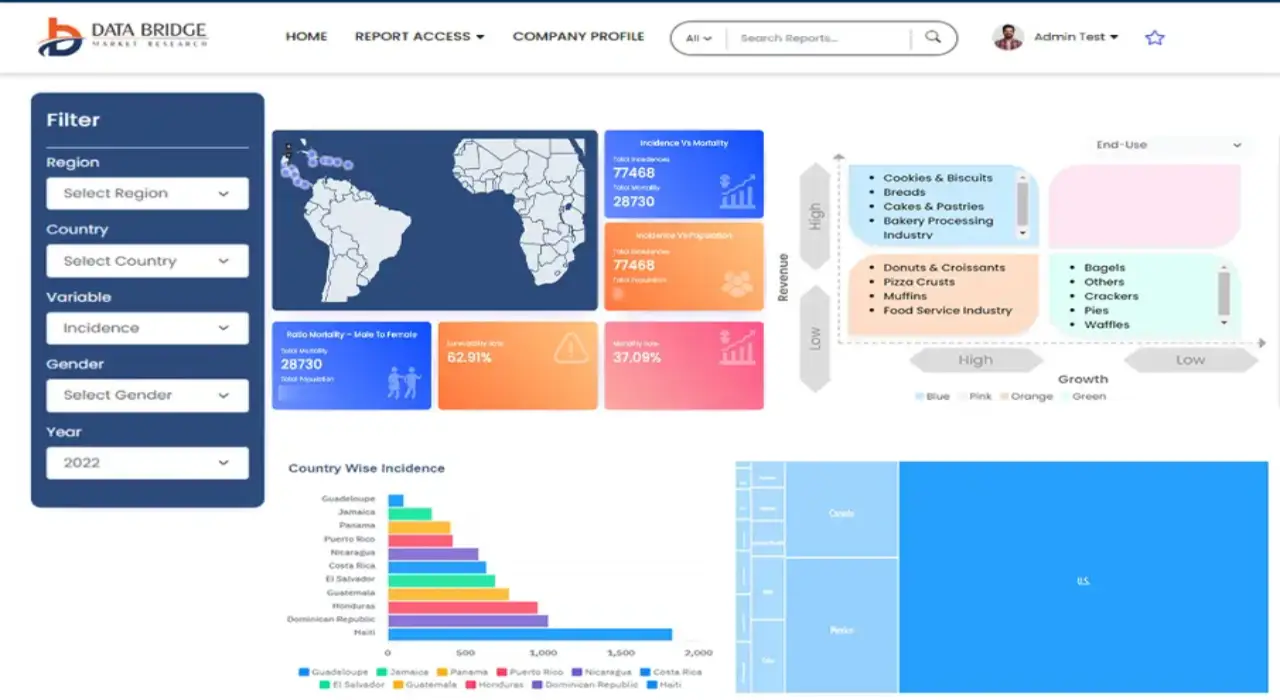
- Interactive Data Analysis Dashboard
- Company Analysis Dashboard for high growth potential opportunities
- Research Analyst Access for customization & queries
- Competitor Analysis with Interactive dashboard
- Latest News, Updates & Trend analysis
- Harness the Power of Benchmark Analysis for Comprehensive Competitor Tracking
Data collection and base year analysis are done using data collection modules with large sample sizes. The stage includes obtaining market information or related data through various sources and strategies. It includes examining and planning all the data acquired from the past in advance. It likewise envelops the examination of information inconsistencies seen across different information sources. The market data is analysed and estimated using market statistical and coherent models. Also, market share analysis and key trend analysis are the major success factors in the market report. To know more, please request an analyst call or drop down your inquiry.
The key research methodology used by DBMR research team is data triangulation which involves data mining, analysis of the impact of data variables on the market and primary (industry expert) validation. Data models include Vendor Positioning Grid, Market Time Line Analysis, Market Overview and Guide, Company Positioning Grid, Patent Analysis, Pricing Analysis, Company Market Share Analysis, Standards of Measurement, Global versus Regional and Vendor Share Analysis. To know more about the research methodology, drop in an inquiry to speak to our industry experts.
Data Bridge Market Research is a leader in advanced formative research. We take pride in servicing our existing and new customers with data and analysis that match and suits their goal. The report can be customized to include price trend analysis of target brands understanding the market for additional countries (ask for the list of countries), clinical trial results data, literature review, refurbished market and product base analysis. Market analysis of target competitors can be analyzed from technology-based analysis to market portfolio strategies. We can add as many competitors that you require data about in the format and data style you are looking for. Our team of analysts can also provide you data in crude raw excel files pivot tables (Fact book) or can assist you in creating presentations from the data sets available in the report.