


What is the Soy Cheese Market Size and Growth Rate?
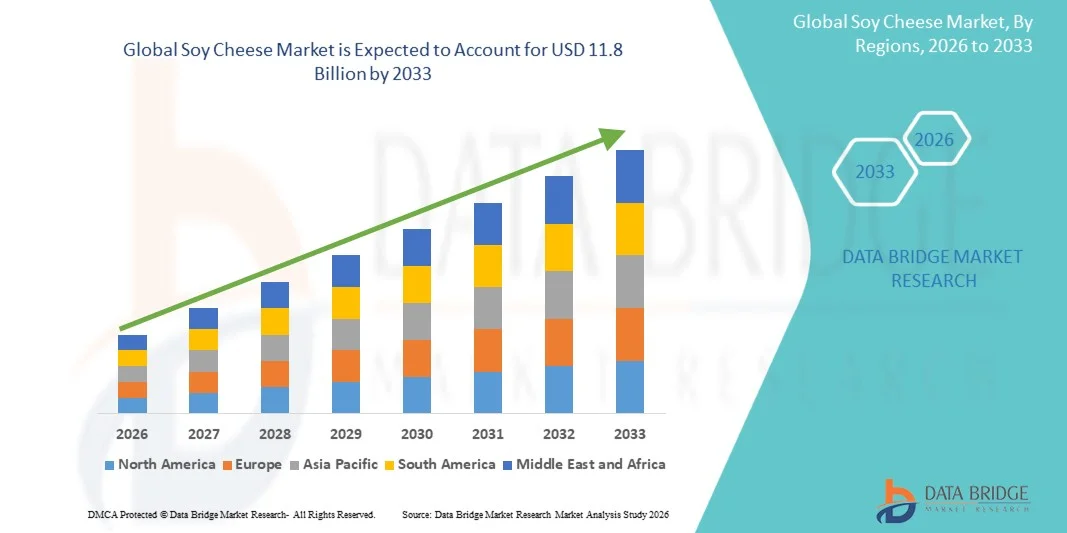
- As per market analysis, the Global Soy Cheese Market was valued at USD 98.0 Billion in 2025 and is projected to reach USD 11.8 Billion by 2033, growing at a CAGR of 5.00% from 2026 to 2033.
- The market is witnessing steady growth driven by the expansion of data centers, increasing deployment of high-speed optical communication networks, growing adoption of 3D sensing technologies, and rising demand for energy-efficient and high-performance laser solutions across consumer electronics, automotive, telecommunications, and industrial applications.
- Increasing deployment of AI and hyperscale data centers, adoption of 400G and 800G optical interconnects, growing use of LiDAR and advanced driver assistance systems, and advancements in optical sensing technologies are encouraging manufacturers to invest in high-performance single-mode VCSEL solutions, advanced semiconductor designs, improved optical efficiency, and broader application development.
Market Size & Forecast
- Market Value (2025): USD 98.0 Billion
- Expected Market Value (2033): USD 154.4 Billion
- Forecast CAGR (2026–2033): 5.00%
- Leading Region in 2025: North America
- Fastest Growing Region: Asia-Pacific
What are the Major Takeaways of the Soy Cheese Market?
- North America is dominating the segment, accounting for 34.72% of revenue share in 2025, supported by established soy supply chains, high protein content, broad formulation versatility, and growing consumer preference for plant-based alternatives among vegan, vegetarian, and flexitarian consumers.
- Asia-Pacific Soy Cheese Market is expected to witness strong growth, supported by increasing adoption of plant-based diets, established soy consumption across countries such as China and Japan, rising awareness of dairy alternatives, expanding foodservice applications, and growing availability of plant-based cheese products. The soy segment within the Asia-Pacific vegan cheese market is projected to grow at a CAGR of 12.2% from 2026 to 2033.
- Blocks and slices represent major product formats in the non-dairy cheese market, supported by established consumer familiarity, convenience, versatility across sandwiches, burgers, pizzas, and ready-to-eat meals, and increasing availability of plant-based cheese alternatives. The blocks and slices segment accounted for 40.12% of the non-dairy cheese market share in 2025, while shreds and grated products are projected to register the fastest growth at a CAGR of 18.26% through 2031.
- Soy-based cheese is gaining traction as a versatile plant-based alternative, driven by its protein content, established processing infrastructure, affordability, and suitability for multiple cheese formats. Increasing consumer interest in dairy-free, vegan, and flexitarian diets is encouraging manufacturers to improve the taste, texture, melting characteristics, and nutritional profile of soy-based cheese products.
- Supermarkets and hypermarkets represent a major distribution channel for non-dairy cheese products, supported by broad product availability, established retail networks, greater shelf space for plant-based categories, promotional activities, and consumer preference for evaluating packaged food products in physical stores. The supermarkets/hypermarkets channel accounted for 55.48% of non-dairy cheese revenue in 2025.
- Online retail is expected to witness rapid growth, driven by increasing e-commerce penetration, wider product selection, direct-to-consumer brands, convenient home delivery, subscription models, and growing consumer access to specialty and plant-based cheese products. Online retail in the non-dairy cheese market is projected to expand at a CAGR of 17.02% through 2033.
Report Scope and Soy Cheese Market Segmentation
|
Attributes |
Soy Cheese Key Market Insights |
|
Segments Covered |
|
|
Countries Covered |
North America
Europe
Asia-Pacific
Middle East and Africa
South America
|
|
Key Market Players |
|
|
Market Opportunities |
|
|
Value Added Data Infosets |
|
What is the Key Trend in the Soy Cheese Market?
- Soy Cheese manufacturers are increasingly focusing on improving taste, texture, meltability, and stretchability to deliver products that more closely replicate conventional dairy cheese and support broader adoption across household and foodservice applications.
- Clean-label, fortified, and functional soy cheese formulations are gaining traction as consumers increasingly seek plant-based products with transparent ingredients, higher protein content, vitamins, minerals, and other nutritional benefits.
- For instance, in 2026, Good Planet Foods is focusing on plant-based cheese formulations that deliver improved melting, stretching, texture, and flavor characteristics, supporting the use of dairy-free cheese alternatives across applications such as pizza, sandwiches, burgers, sauces, and baked foods.
- Manufacturers are also expanding product varieties and formats, including mozzarella, cheddar, parmesan, slices, blocks, shredded products, and flavored formulations, to address diverse consumer preferences and increase applications across retail and foodservice channels.
- As consumer demand for plant-based proteins, lactose-free foods, clean-label products, convenient formats, and affordable dairy alternatives continues to increase, innovative soy cheese formulations, improved sensory performance, fortified products, and expanded retail and foodservice availability are expected to become increasingly important across the global Soy Cheese Market.
What are the Key Drivers of the Soy Cheese Market?
- Soy Cheese manufacturers are increasingly focusing on improving taste, texture, meltability, and stretchability to deliver products that more closely replicate conventional dairy cheese and support broader adoption across household and foodservice applications.
- Clean-label, fortified, and functional soy cheese formulations are gaining traction as consumers increasingly seek plant-based products with transparent ingredients, higher protein content, vitamins, probiotics, and other nutritional benefits.
- For instance, in January 2025, JULIENNE BRUNO launched Mozzafiore Pearls at Whole Foods Market UK, a mozzarella pearl-style cheese alternative made using soy instead of dairy. The product uses fermentation and traditional cheese-making techniques to achieve a soft and springy texture with a creamy and subtly salty flavor, highlighting the growing focus on improving the sensory characteristics, texture, and versatility of soy-based cheese alternatives.
- Manufacturers are also expanding product varieties and formats, including mozzarella, cheddar, parmesan, slices, blocks, shredded products, and flavored formulations, to address diverse consumer preferences and increase applications across retail and foodservice channels.
- As consumer demand for plant-based proteins, lactose-free foods, clean-label products, convenient formats, and affordable dairy alternatives continues to increase, innovative soy cheese formulations, improved sensory performance, fortified products, and expanded retail and foodservice availability are expected to become increasingly important across the global Soy Cheese Market.
Which Factors are Challenging the Growth of the Soy Cheese Market?
- Soy Cheese manufacturers face challenges in achieving taste and flavor profiles comparable with conventional dairy cheese, as characteristic beany, grassy, or bitter notes associated with soy can reduce consumer acceptance and limit adoption among mainstream consumers. Manufacturers are therefore focusing on fermentation, flavor masking, and improved ingredient combinations to develop more neutral and dairy-like flavor profiles.
- Manufacturers are also challenged by texture, meltability, stretchability, and mouthfeel limitations, as soy proteins do not naturally replicate the casein-based structure of dairy cheese. These limitations can result in products with grainy, rubbery, or less elastic textures, particularly in applications requiring strong melting and stretching performance.
- For instance, in January 2025, JULIENNE BRUNO launched Mozzafiore Pearls at Whole Foods Market UK, a soy-based mozzarella-style cheese alternative produced using traditional cheesemaking techniques and fermentation. The product was developed to deliver a soft, springy texture and creamy flavor, demonstrating the increasing focus on fermentation and processing techniques to overcome sensory and functional limitations associated with plant-based cheese alternatives.
- Soy Cheese manufacturers are increasingly required to invest in advanced formulation, fermentation, enzyme treatment, and processing technologies to reduce off-flavors, improve protein functionality, enhance creaminess, and achieve better melting and stretching characteristics. In August 2025, Schuman Cheese and GOOD PLANeT Foods formed a joint venture, GPV Foods, combining Schuman's Vevan plant-based cheese brand with GOOD PLANeT's retail business to strengthen manufacturing capabilities, expand the plant-based cheese portfolio, and support product innovation and category expansion.
- Overall, challenges related to soy-associated off-flavors, limited dairy-like texture and functionality, formulation complexity, and the investment required for advanced processing technologies continue to influence the development of the Soy Cheese Market. Recent product launches and industry collaborations indicate that manufacturers are increasingly addressing these limitations through fermentation, improved cheesemaking processes, expanded product formats, and strategic partnerships.
How is the Soy Cheese Market Segmented?
The market is segmented on the basis of Flavour, Distribution Channel, Application, and End User.
- By Flavour
On the basis of flavour, the Soy Cheese Market is segmented into Cheddar Flavour, Mozzarella Flavour, Swiss Flavour, Monterey Jack Flavour, Pepper Jack/Jalapeno Flavour, Mexican Flavour, Garlic/Herb Flavour, American Flavour, Parmesan Flavour, Provolone Flavour, and Cream Cheese Alternative. The Cheddar Flavour segment held the largest market revenue share of 23.32% in 2025, supported by its familiar taste, broad consumer acceptance, and extensive use in sandwiches, pizzas, snacks, and prepared foods.
The Mozzarella Flavour segment is expected to register the fastest growth of 6.92% CAGR, supported by increasing demand for plant-based pizza toppings, baked foods, and foodservice applications requiring improved melting and stretching characteristics.
- By Distribution Channel
On the basis of distribution channel, the Soy Cheese Market is segmented into Store-Based and Non-Store-Based. The Store-Based segment held the largest market revenue share of 55.48% in 2025, supported by the extensive availability of plant-based cheese products across supermarkets, hypermarkets, convenience stores, and specialty retailers.
The Non-Store-Based segment is projected to register the fastest growth at a CAGR of 17.02%, supported by expanding online grocery platforms, home-delivery services, digital promotions, and increasing consumer preference for convenient purchasing of plant-based food products.
- By Application
On the basis of application, the Soy Cheese Market is segmented into Sandwich Spreads, Pizza Toppings, Culinary Sauces, and Others. The Pizza Toppings segment held the largest market revenue share of 41.26% in 2025, supported by increasing demand for plant-based pizzas and the growing availability of soy-based cheese alternatives with improved melting and stretching properties.
The Sandwich Spreads segment is projected to register the fastest growth at a CAGR of 13.8%, supported by increasing consumption of convenient plant-based meals, ready-to-use formulations, and dairy-free sandwich products.
- By End User
On the basis of end user, the Soy Cheese Market is segmented into Household, Foodservice, and Institutional Kitchens. The Household segment held the largest market revenue share of 52.64% in 2025, supported by increasing adoption of vegan and lactose-free diets, growing awareness of plant-based alternatives, and expanding availability through retail and online channels.
The Foodservice segment is projected to register the fastest growth at a CAGR of 14.6%, supported by increasing incorporation of plant-based cheese alternatives into restaurant menus, pizza outlets, cafés, and quick-service restaurants. Current market research identifies retail consumers as the primary end-user segment and foodservice as an important growth area.
Which Region Holds the Largest Share of the Soy Cheese Market?
- North America dominated the Soy Cheese Market with the largest revenue share of 40.42% in 2025, supported by rising adoption of vegan and flexitarian diets, increasing awareness of lactose intolerance, strong demand for dairy-free food products, expanding plant-based food offerings, and the presence of established plant-based cheese manufacturers and retail networks across the United States and Canada. The region's strong retail penetration and growing availability of plant-based cheese products across supermarkets, specialty stores, and online channels further support market expansion.
- Asia-Pacific is expected to witness significant growth during the forecast period, supported by increasing consumer awareness of plant-based nutrition, rising demand for dairy alternatives, growing urbanization, expanding organized retail and e-commerce channels, and established consumer familiarity with soy-based foods. China, Japan, India, South Korea, and other countries in the region remain important markets due to established soybean processing industries, large consumer populations, and increasing adoption of vegan, vegetarian, and lactose-free food products.
U.S. Soy Cheese Market Insight
The U.S. Soy Cheese Market is supported by increasing consumer interest in plant-based and dairy-free alternatives, growing adoption of vegan and flexitarian diets, and rising demand for products suitable for consumers with lactose intolerance or dairy allergies. The market is also benefiting from expanding retail and foodservice availability, product innovation, and improvements in taste, texture, and melting characteristics. Increasing consumer awareness of plant-based nutrition and the growing availability of soy-based cheese across supermarkets, specialty stores, online retailers, and restaurants are expected to create further opportunities for market expansion.
Europe Soy Cheese Market Insight
The Europe Soy Cheese Market is supported by rising adoption of plant-based and flexitarian diets, increasing awareness of lactose intolerance, growing demand for dairy-free alternatives, and expanding availability through supermarkets, specialty retailers, and online channels. Soy-based cheese remains a prominent source within the European plant-based cheese market, supported by its protein content, established supply chains, affordability, and versatility across cheddar, mozzarella, and cream cheese formulations. Product innovation focused on improving taste, texture, meltability, and nutritional value is further supporting market development across Germany, the U.K., France, Italy, and Spain.
U.K. Soy Cheese Market Insight
The U.K. Soy Cheese Market is supported by growing consumer interest in plant-based and dairy-free alternatives, increasing adoption of vegan and flexitarian diets, and expanding availability of plant-based cheese through supermarkets and online channels. Consumer demand is also encouraging manufacturers to improve taste, texture, meltability, and nutritional profiles. The U.K. plant-based cheese category continues to expand, with branded sales volume rising strongly over recent years, while mozzarella and sliced cheese formats remain popular among consumers. However, taste, functionality, and relatively higher prices compared with conventional cheese remain important considerations for broader adoption.
Germany Soy Cheese Market Insight
The Germany Soy Cheese Market is supported by strong consumer interest in plant-based and dairy-free alternatives, increasing adoption of vegan and flexitarian diets, and growing awareness of health, sustainability, and animal-welfare considerations. Germany remains one of Europe’s leading markets for plant-based foods, while expanding supermarket, discount, specialty retail, and online distribution is improving product accessibility. Demand for soy-based cheese is further supported by consumer interest in familiar cheese formats such as mozzarella, cheddar, sliced cheese, and spreads. Product innovation focused on improving taste, texture, nutritional value, and affordability is expected to strengthen market opportunities.
Asia-Pacific Soy Cheese Market Insight
The Asia-Pacific Soy Cheese Market is witnessing increasing demand, supported by growing health consciousness, rising adoption of vegan and flexitarian diets, increasing awareness of lactose intolerance, and strong consumer familiarity with soy-based foods. China, Japan, India, South Korea, and Australia are key markets, supported by expanding retail networks, e-commerce platforms, and foodservice channels. Growing demand for plant-based bakery and confectionery products is also creating opportunities for soy cheese manufacturers. Product innovation focused on improved taste, texture, meltability, nutritional value, and clean-label formulations is expected to further support regional market development.
Japan Soy Cheese Market Insight
The Japan Soy Cheese Market is supported by the country’s long-standing familiarity with soy-based foods, rising health consciousness, increasing adoption of vegan and flexitarian diets, and growing demand for lactose-free and dairy alternatives. Consumers are also showing greater interest in clean-label, sustainable, and nutritionally enhanced food products. Manufacturers are focusing on improving the taste, texture, meltability, and umami characteristics of soy cheese to align with Japanese culinary preferences. Expanding vegan offerings across supermarkets, specialty stores, restaurants, cafés, and online channels is further creating opportunities for soy cheese adoption.
China Soy Cheese Market Insight
The China Soy Cheese Market is supported by growing consumer interest in plant-based and dairy-free foods, rising health awareness, expanding vegan and flexitarian consumption, and strong familiarity with soy-based products. Increasing urbanization, the expansion of e-commerce and modern retail channels, and greater exposure to international food formats are creating opportunities for soy cheese manufacturers. Product innovation focused on improving taste, texture, meltability, and affordability is expected to further support adoption across household and foodservice applications, particularly as Chinese consumers increasingly explore healthier and more sustainable alternatives to conventional dairy cheese.
Which are the Top Companies in Soy Cheese Market?
The Soy Cheese industry is primarily led by well-established companies, including:
- Daiya Foods Inc. (Canada)
- Kite Hill (U.S.)
- Lisanatti Foods, Inc. (U.S.)
- Tofutti Brands, Inc. (U.S.)
- Bute Island Foods Ltd. (U.K.)
- Dairy-Free Down Under (Australia)
- Angel Food (New Zealand)
- First Grade International (U.S.)
- Field Roast (U.S.)
- Galaxy Nutritional Foods, Inc. (U.S.)
- Follow Your Heart (U.S.)
- Nobell Foods (U.S.)
- Miyoko’s Creamery (U.S.)
- Violife Foods (Greece)
- GOOD PLANeT Foods (U.S.)
What are Latest Developments in Soy Cheese Market?
- In May 2025, Daiya Foods launched dairy-free cream cheese packets for foodservice operators, introducing single-serve 1-ounce portions designed for grab-and-go meals, breakfast bars, cafés, and other foodservice applications. The launch strengthened Daiya’s focus on convenient plant-based cheese formats and foodservice expansion.
- In March 2025, Daiya Foods introduced reformulated Dairy-Free Cream Cheese and Dairy-Free Deluxe Mac & Cheese products, incorporating its Daiya Oat Cream blend to improve taste, texture, smoothness, and spreadability. The company also introduced a new Cinnamon Twist cream cheese flavour as part of its product innovation strategy.
- In November 2025, Harvey & Brockless, a subsidiary of The Compleat Food Group, acquired the assets of plant-based cheese brand Julienne Bruno. The acquisition included the Julienne Bruno brand and production assets, enabling the business to continue developing and supplying its plant-based cheese portfolio under new ownership.
- In May 2026, Julienne Bruno relaunched its Collection 01 range across retail and foodservice following the acquisition by Harvey & Brockless. The relaunched portfolio includes Superstraccia, Burrella, and Crematta, with Crematta specifically formulated using soya and positioned as a plant-based spread suitable for bagels, pasta sauces, and desserts.
- In April 2026, Panago Pizza expanded its partnership with Daiya by introducing Daiya’s reformulated dairy-free shredded cheese across all its Canadian locations. The new cheese was developed with Daiya Oat Cream blend to provide a creamier texture and richer taste, and was made available as a dairy-free option across Panago’s pizza menu.

- Interactive Data Analysis Dashboard
- Company Analysis Dashboard for high growth potential opportunities
- Research Analyst Access for customization & queries
- Competitor Analysis with Interactive dashboard
- Latest News, Updates & Trend analysis
- Harness the Power of Benchmark Analysis for Comprehensive Competitor Tracking
Global Soy Cheese Market, Supply Chain Analysis and Ecosystem Framework
To support market growth and help clients navigate the impact of geopolitical shifts, DBMR has integrated in-depth supply chain analysis into its Global Soy Cheese Market research reports. This addition empowers clients to respond effectively to global changes affecting their industries. The supply chain analysis section includes detailed insights such as Global Soy Cheese Market consumption and production by country, price trend analysis, the impact of tariffs and geopolitical developments, and import and export trends by country and HSN code. It also highlights major suppliers with data on production capacity and company profiles, as well as key importers and exporters. In addition to research, DBMR offers specialized supply chain consulting services backed by over a decade of experience, providing solutions like supplier discovery, supplier risk assessment, price trend analysis, impact evaluation of inflation and trade route changes, and comprehensive market trend analysis.
Data collection and base year analysis are done using data collection modules with large sample sizes. The stage includes obtaining market information or related data through various sources and strategies. It includes examining and planning all the data acquired from the past in advance. It likewise envelops the examination of information inconsistencies seen across different information sources. The market data is analysed and estimated using market statistical and coherent models. Also, market share analysis and key trend analysis are the major success factors in the market report. To know more, please request an analyst call or drop down your inquiry.
The key research methodology used by DBMR research team is data triangulation which involves data mining, analysis of the impact of data variables on the market and primary (industry expert) validation. Data models include Vendor Positioning Grid, Market Time Line Analysis, Market Overview and Guide, Company Positioning Grid, Patent Analysis, Pricing Analysis, Company Market Share Analysis, Standards of Measurement, Global versus Regional and Vendor Share Analysis. To know more about the research methodology, drop in an inquiry to speak to our industry experts.
Data Bridge Market Research is a leader in advanced formative research. We take pride in servicing our existing and new customers with data and analysis that match and suits their goal. The report can be customized to include price trend analysis of target brands understanding the market for additional countries (ask for the list of countries), clinical trial results data, literature review, refurbished market and product base analysis. Market analysis of target competitors can be analyzed from technology-based analysis to market portfolio strategies. We can add as many competitors that you require data about in the format and data style you are looking for. Our team of analysts can also provide you data in crude raw excel files pivot tables (Fact book) or can assist you in creating presentations from the data sets available in the report.













