What is the Sparkling Tea Market Size and Growth Rate?
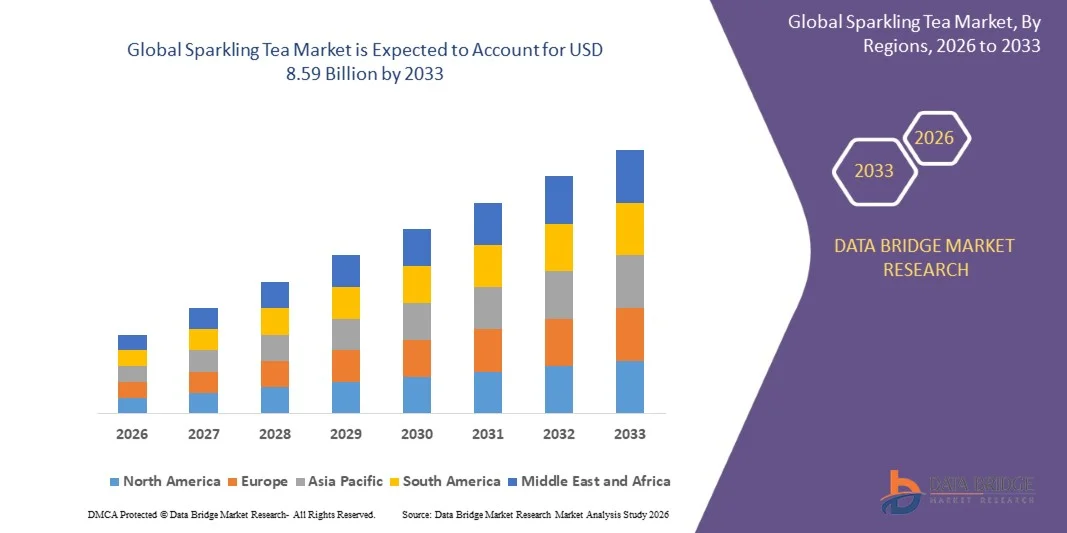
- As per Data Bridge Market Research analysis the sparkling tea market was valued at USD 5.00 billion in 2025 and is projected to reach USD 8.59 billion by 2033, growing at a CAGR of 7.00% from 2026 to 2033.
- The market is experiencing consistent growth driven by rising consumer demand for premium and innovative tea beverages, increasing preference for healthier alternatives to traditional carbonated drinks, and growing interest in low-sugar and functional beverages.
- The expanding availability of sparkling tea across supermarkets, convenience stores, online retail platforms, specialty tea shops, cafes, and restaurants is further supporting market growth, while product innovation across flavors, tea varieties, packaging formats, and alcohol-free options is attracting a broader consumer base.
Market Size & Forecast
- Market Value (2025): USD 5.00 Billion
- Expected Market Value (2033): USD 8.59 Billion
- Forecast CAGR (2026–2033): 7.00%
- Leading Region in 2025: North America
- Fastest Growing Region: Asia-Pacific
What are the Major Takeaways of the Sparkling Tea Market?
- North America dominated the sparkling tea market with the largest revenue share of over 35.5% in 2025, supported by increasing consumer preference for health-conscious beverages and growing awareness of wellness-oriented products.
- Asia Pacific sparkling tea market is expected to grow at a CAGR of approximately 7.4% from 2025 to 2033, supported by the region's established tea culture and increasing popularity of innovative tea-based beverages.
- The green tea segment held the largest market revenue share of approximately 44.13% in 2025, driven by its high antioxidant content, perceived health benefits, and growing consumer preference for wellness-oriented beverages. Green sparkling tea is increasingly preferred due to its refreshing taste, functional positioning, and alignment with clean-label and healthier beverage trends.
- The black tea segment is projected to register a CAGR of 6.5% from 2026 to 2033, supported by rising demand for antioxidant-rich beverages and the increasing availability of innovative sparkling black tea blends. Black tea is gaining popularity among health-conscious consumers due to its antioxidant properties and potential cardiovascular benefits.
- The no-alcohol segment held the largest market revenue share of approximately 89.26% in 2025, driven by increasing consumer demand for low-calorie and no-calorie beverages and growing preference for sophisticated alternatives to alcoholic drinks. The no-alcohol category is particularly popular among health-conscious consumers and younger generations seeking wellness-oriented beverage options.
- The alcohol-based segment is projected to register a CAGR of 8.1% from 2026 to 2033, driven by rising experimentation with sparkling tea-based cocktails, mixers, and ready-to-drink alcoholic tea products. Bartenders and home mixologists are increasingly using carbonated tea as a versatile cocktail ingredient. Manufacturers are introducing innovative alcoholic sparkling tea formulations to address changing consumer preferences.
Report Scope and Sparkling Tea Market Segmentation
|
Attributes |
Sparkling Tea Key Market Insights |
|
Segments Covered |
|
|
Countries Covered |
North America
Europe
Asia-Pacific
Middle East and Africa
South America
|
|
Key Market Players |
|
|
Market Opportunities |
|
|
Value Added Data Infosets |
In addition to the insights on market scenarios such as market value, growth rate, segmentation, geographical coverage, and major players, the market reports curated by the Data Bridge Market Research also include in-depth expert analysis, pricing analysis, brand share analysis, consumer survey, demography analysis, supply chain analysis, value chain analysis, raw material/consumables overview, vendor selection criteria, PESTLE Analysis, Porter Analysis, and regulatory framework. |
What is the Key Trend in the Sparkling Tea Market?
- Premium and alcohol-free sparkling tea is gaining popularity as an elegant alternative to sparkling wine, particularly among health-conscious and sober-curious consumers seeking sophisticated beverages without alcohol.
- For instance, in March 2026, The Republic of Tea launched its first-ever White Jasmine Sparkling Tea, an alcohol-free beverage made with 100% organic white tea from China’s Fujian province and positioned as an alternative to sparkling wine for celebrations and everyday occasions.
- Product innovation is increasingly focused on combining premium tea varieties, botanical ingredients, natural flavors, and carbonation to create complex beverages that appeal to consumers seeking differentiated drinking experiences.
- For instance, in 2025, Kirin Beverage reintroduced its Kirin Gogo-no-Kocha Sparkling Lychee Squash nationwide in Japan as a limited-time product, highlighting continued innovation around sparkling tea flavors and seasonal consumption.
- As beverage companies continue expanding premium alcohol-free offerings and experimenting with new tea varieties and flavor combinations, sparkling tea is expected to gain wider acceptance as a sophisticated alternative to conventional soft drinks and alcoholic beverages.
What are the Key Drivers of the Sparkling Tea Market?
- Rising consumer interest in low- and no-alcohol beverages is significantly driving demand for sparkling tea, as consumers increasingly seek sophisticated alternatives to wine, champagne, and cocktails without compromising on taste or social drinking experiences.
- For instance, Copenhagen Sparkling Tea Company states that its products are available in both 0% no-alcohol and 5% low-alcohol variants, demonstrating how producers are addressing demand across different alcohol preferences while positioning sparkling tea as a premium beverage category.
- The expansion of premium beverage distribution through online retail, restaurants, hotels, and specialty channels is further increasing consumer access and supporting category awareness across international markets.
- For instance, in May 2025, Copenhagen Sparkling Tea Company entered India’s premium retail segment through a direct-to-consumer platform launched with Bebida Hospitality, initially targeting Mumbai and Delhi-NCR and enabling nationwide delivery of its non-alcoholic sparkling teas.
- With premiumization, expanding no-alcohol consumption, and broader availability across hospitality and digital retail channels, sparkling tea is expected to benefit from increasing consumer adoption as an alternative to traditional alcoholic and carbonated beverages.
Which Factors are Challenging the Growth of the Sparkling Tea Market?
- The relatively premium positioning and higher retail prices of sparkling tea can restrict adoption among price-sensitive consumers, particularly when the category competes with conventional soft drinks, ready-to-drink teas, and established alcoholic beverages.
- The category also faces limited consumer awareness because sparkling tea remains a relatively new beverage segment compared with traditional tea, sparkling water, wine, and carbonated soft drinks.
- For instance, Copenhagen Sparkling Tea Company describes sparkling tea as a new beverage category and notes that its products combine Nordic innovation with Asian tea traditions, highlighting the category’s ongoing need for consumer education and awareness-building.
- Limited availability in mainstream retail channels and the need to communicate the product’s tea-based flavor profile, premium positioning, and alcohol content can further slow mass-market penetration.
- The premium pricing, relatively low category awareness, and fragmented distribution landscape continue to challenge widespread adoption, particularly in emerging markets where consumers remain more familiar with conventional tea and carbonated beverages.
How is the Sparkling Tea Market Segmented?
The market is segmented on the basis of product type, category, packaging, and distribution channel.
- By Product Type
On the basis of product type, the sparkling tea market is segmented into green tea, white tea, yellow tea, black tea, and others. The green tea segment held the largest market revenue share of approximately 44.13% in 2025, driven by its high antioxidant content, perceived health benefits, and growing consumer preference for wellness-oriented beverages. Green sparkling tea is increasingly preferred due to its refreshing taste, functional positioning, and alignment with clean-label and healthier beverage trends.
The black tea segment is projected to register a CAGR of 6.5% from 2026 to 2033, supported by rising demand for antioxidant-rich beverages and the increasing availability of innovative sparkling black tea blends. Black tea is gaining popularity among health-conscious consumers due to its antioxidant properties and potential cardiovascular benefits.
- By Category
On the basis of category, the sparkling tea market is segmented into no alcohol and alcohol-based. The no-alcohol segment held the largest market revenue share of approximately 89.26% in 2025, driven by increasing consumer demand for low-calorie and no-calorie beverages and growing preference for sophisticated alternatives to alcoholic drinks. The no-alcohol category is particularly popular among health-conscious consumers and younger generations seeking wellness-oriented beverage options.
The alcohol-based segment is projected to register a CAGR of 8.1% from 2026 to 2033, driven by rising experimentation with sparkling tea-based cocktails, mixers, and ready-to-drink alcoholic tea products. Bartenders and home mixologists are increasingly using carbonated tea as a versatile cocktail ingredient. Manufacturers are introducing innovative alcoholic sparkling tea formulations to address changing consumer preferences.
- By Packaging
On the basis of packaging, the sparkling tea market is segmented into glass bottles, plastic bottles, aluminum cans, and Tetra Pak. The glass bottles segment held the largest market revenue share of approximately 48.26% in 2025, driven by strong barrier properties, premium presentation, and consumer preference for sustainable packaging. Glass bottles are widely preferred for preserving the quality and carbonation of sparkling tea while supporting premium positioning.
The aluminum cans segment is projected to register a CAGR of 8.1% from 2026 to 2033, supported by recyclability, lightweight construction, portability, and its ability to preserve beverage freshness and carbonation. Aluminum cans provide a convenient format for on-the-go consumption and outdoor activities. Their resistance to breakage compared with glass packaging further improves consumer convenience.
- By Distribution Channel
On the basis of distribution channel, the sparkling tea market is segmented into supermarkets and hypermarkets, convenience stores, online retail, specialty tea shops, and cafes and restaurants. The supermarkets and hypermarkets segment held the largest market revenue share of approximately 44.22% in 2025, driven by extensive product availability, broad consumer reach, promotional activities, and convenient access to diverse sparkling tea products. These retail outlets are increasingly creating dedicated beverage sections to improve product visibility and attract consumers seeking alternatives to sugary carbonated drinks.
The online retail segment is projected to register a CAGR of 7.5% from 2026 to 2033, supported by increasing smartphone and internet penetration, expanding e-commerce platforms, and growing consumer access to diverse sparkling tea brands and flavors. Online platforms provide convenient access to a broader range of sparkling tea products than traditional retail outlets. Detailed product information, ingredient sourcing, nutritional benefits, and flavor descriptions help consumers make informed purchasing decisions.
Which Region Holds the Largest Share of the Sparkling Tea Market?
- North America dominated the sparkling tea market with the largest revenue share of over 35.5% in 2025, supported by increasing consumer preference for health-conscious beverages and growing awareness of wellness-oriented products.
- Consumers in the region are increasingly shifting away from sugary sodas and traditional carbonated drinks toward beverages that combine refreshment with perceived health benefits. The growing popularity of natural ingredients, functional beverages, and clean-label products is further supporting sparkling tea consumption. Moreover, manufacturers are introducing diverse sparkling tea products infused with botanicals, superfoods, fruits, and natural flavors, catering to evolving consumer preferences.
U.S. Sparkling Tea Market Insight
U.S. sparkling tea market is expected to grow at a CAGR of 7.1% from 2026 to 2033, fueled by increasing demand for healthier and functional beverage alternatives. Consumers are increasingly seeking products that provide refreshment while offering perceived wellness benefits, supporting the adoption of sparkling tea. Premium and artisanal sparkling teas are gaining traction across metropolitan markets, including New York, Los Angeles, and Chicago. The willingness of health-conscious consumers to pay premium prices for unique flavors, organic ingredients, and innovative brewing methods is further supporting market expansion.
Europe Sparkling Tea Market Insight
Europe sparkling tea market is expected to grow at a CAGR of 6.2% from 2026 to 2033, primarily driven by increasing demand for low-calorie and naturally flavored beverages. European consumers are increasingly shifting toward healthier alternatives to traditional sugary sodas and alcoholic beverages. The growing preference for beverages combining refreshment with wellness benefits is encouraging manufacturers to introduce innovative sparkling tea formulations. Moreover, the increasing availability of botanical, fruit, and herbal-infused sparkling teas is expanding consumer choice and supporting market growth across the region.
U.K. Sparkling Tea Market Insight
U.K. sparkling tea market is expected to witness steady growth from 2026 to 2033, driven by rising consumer interest in healthier and innovative beverage alternatives. Consumers are increasingly exploring naturally flavored and low-calorie beverages as alternatives to conventional soft drinks and alcoholic products. The country's established tea-drinking culture provides a favorable environment for the introduction of innovative sparkling tea formats. Moreover, the availability of premium and artisanal products through specialty retailers and online channels is expected to support market expansion.
Germany Sparkling Tea Market Insight
Germany sparkling tea market is expected to witness steady growth from 2026 to 2033, fueled by increasing consumer awareness of natural ingredients, wellness, and sustainable beverage choices. Consumers are increasingly interested in low-calorie and naturally flavored products that provide an alternative to traditional carbonated beverages. The growing availability of premium sparkling tea formulations containing botanicals, fruits, and herbal ingredients is expanding product appeal. Moreover, Germany's strong retail infrastructure and consumer interest in innovative beverage formats are expected to contribute to continued market development.
Asia-Pacific Sparkling Tea Market Insight
Asia Pacific sparkling tea market is expected to grow at a CAGR of approximately 7.4% from 2025 to 2033, supported by the region's established tea culture and increasing popularity of innovative tea-based beverages. Countries such as Japan, Taiwan, and China have long-standing traditions of tea consumption, creating a strong foundation for sparkling tea adoption. Millennials and Generation Z are increasingly attracted to novel beverage experiences featuring distinctive flavors and perceived health benefits. Furthermore, rapid urbanization and fast-paced lifestyles are increasing demand for convenient ready-to-drink beverage formats across the region.
Japan Sparkling Tea Market Insight
Japan sparkling tea market is expected to witness steady growth from 2026 to 2033, supported by the country's strong tea-drinking culture and growing interest in innovative beverage formats. Japanese consumers are increasingly familiar with premium and specialty tea products, providing opportunities for sparkling tea manufacturers to introduce differentiated formulations. The combination of traditional tea flavors with carbonation offers a novel beverage experience that appeals to younger consumers. Moreover, demand for convenient ready-to-drink products and unique flavor combinations is expected to support sparkling tea adoption in Japan.
China Sparkling Tea Market Insight
China sparkling tea market is expected to witness significant growth from 2026 to 2033, driven by the country's long-standing tea culture, rapid urbanization, and increasing consumer interest in innovative beverages. Consumers are increasingly exploring modern tea-based products that combine traditional flavors with contemporary formats. The growing popularity of convenient ready-to-drink beverages is creating additional opportunities for sparkling tea manufacturers. Moreover, rising interest among younger consumers in novel flavor combinations, wellness-oriented beverages, and premium tea products is expected to support market expansion in China.
Which are the Top Companies in Sparkling Tea Market?
The sparkling tea industry is primarily led by well-established companies, including:
- New Berlin Beverage Co. (U.S.)
- Copenhagen Sparkling Tea Company (Denmark)
- Fortnum & Mason (U.K.)
- Nongfu Spring Co., Ltd. (China)
- DAVIDsTEA Inc. (Canada)
- Glamtì (U.S.)
- Saicho Drinks Ltd. (U.K.)
- The Real Drinks Co. (U.K.)
- Rita Food & Drink Co., Ltd. (China)
- WANA Beverage (U.S.)
- Minna (U.S.)
- Rishi Tea & Botanicals (U.S.)
- Sound Sparkling Tea (U.S.)
- Motto Beverage Company (U.S.)
- Belle & Co. (U.K.)
What are Latest Developments in Sparkling Tea Market?
- In July 2024, DAVIDsTEA launched its first ready-to-drink sparkling cold-brew iced tea line, introducing Organic Cream of Earl Grey, Organic Queen of Tarts, and Magic Potion flavors. The launch expanded the company’s portfolio beyond traditional tea formats and strengthened its presence in the RTD beverage category. The products were made available through DAVIDsTEA retail stores in Canada and its online platform. The initiative is expected to broaden consumer access to sparkling tea and support the market’s shift toward convenient, innovative tea-based beverages.
- In June 2023, The Real Drinks Co launched canned ready-to-drink versions of its naturally fermented sparkling teas, Royal Flush and Dry Dragon, as a new packaging and product format. The launch expanded the company’s portfolio with convenient, naturally non-alcoholic and low-sugar sparkling tea options. The canned products were introduced in the UK ahead of English Wine Week, targeting consumers seeking sophisticated alternatives to alcoholic beverages. The initiative is expected to strengthen the company’s UK market presence while supporting demand for premium alcohol-free and ready-to-drink sparkling tea products.

- Interactive Data Analysis Dashboard
- Company Analysis Dashboard for high growth potential opportunities
- Research Analyst Access for customization & queries
- Competitor Analysis with Interactive dashboard
- Latest News, Updates & Trend analysis
- Harness the Power of Benchmark Analysis for Comprehensive Competitor Tracking
Data collection and base year analysis are done using data collection modules with large sample sizes. The stage includes obtaining market information or related data through various sources and strategies. It includes examining and planning all the data acquired from the past in advance. It likewise envelops the examination of information inconsistencies seen across different information sources. The market data is analysed and estimated using market statistical and coherent models. Also, market share analysis and key trend analysis are the major success factors in the market report. To know more, please request an analyst call or drop down your inquiry.
The key research methodology used by DBMR research team is data triangulation which involves data mining, analysis of the impact of data variables on the market and primary (industry expert) validation. Data models include Vendor Positioning Grid, Market Time Line Analysis, Market Overview and Guide, Company Positioning Grid, Patent Analysis, Pricing Analysis, Company Market Share Analysis, Standards of Measurement, Global versus Regional and Vendor Share Analysis. To know more about the research methodology, drop in an inquiry to speak to our industry experts.
Data Bridge Market Research is a leader in advanced formative research. We take pride in servicing our existing and new customers with data and analysis that match and suits their goal. The report can be customized to include price trend analysis of target brands understanding the market for additional countries (ask for the list of countries), clinical trial results data, literature review, refurbished market and product base analysis. Market analysis of target competitors can be analyzed from technology-based analysis to market portfolio strategies. We can add as many competitors that you require data about in the format and data style you are looking for. Our team of analysts can also provide you data in crude raw excel files pivot tables (Fact book) or can assist you in creating presentations from the data sets available in the report.