


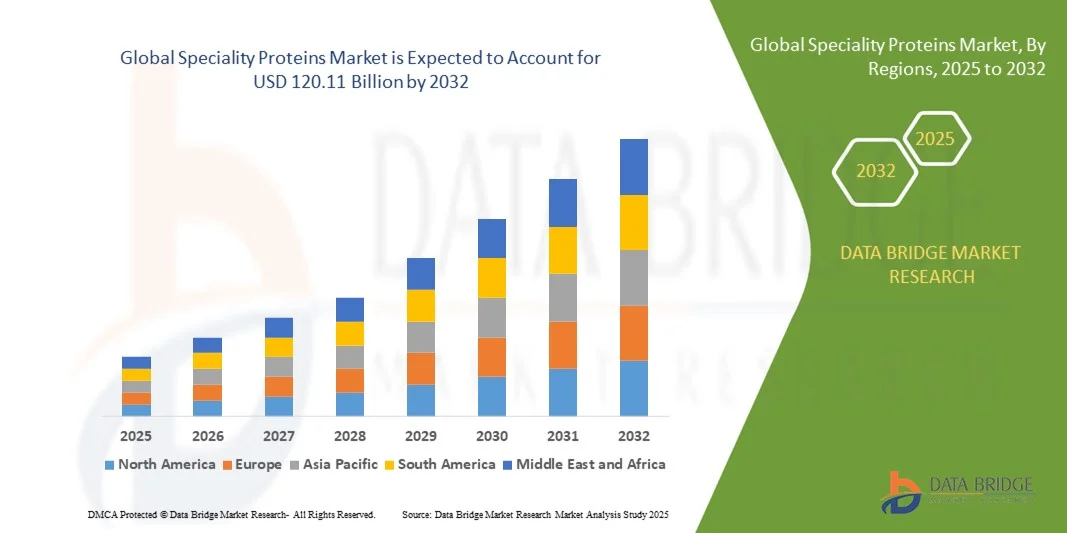
Global Speciality Proteins Market Size
- The global specialty proteins market size was valued at USD 65.47 billion in 2024 and is expected to reach USD 120.11 billion by 2032, growing at a CAGR of 7.8% during the forecast period
- The market growth is primarily driven by increasing demand for functional and nutritional food products, alongside growing awareness of protein-enriched diets across diverse age groups and lifestyles
- Additionally, advancements in protein extraction and formulation technologies, coupled with the rising popularity of plant-based and alternative proteins, are propelling market expansion, solidifying specialty proteins as a vital component of modern nutrition trends
Global Speciality Proteins Market Analysis
- Specialty proteins, derived from both animal and plant sources, are increasingly critical components in functional foods, dietary supplements, and clinical nutrition, due to their high bioavailability, targeted health benefits, and application versatility across food, pharmaceutical, and cosmetic industries
- The surging demand for specialty proteins is largely driven by rising health consciousness, increased prevalence of lifestyle-related diseases, and growing consumer preference for clean-label, high-protein products
- Asia-Pacific dominated the global specialty proteins market with the largest revenue share of 35.1% in 2024, supported by a mature functional food industry, strong R&D capabilities, and growing investments in nutraceuticals
- North America is projected to be the fastest-growing region in the global specialty proteins market during the forecast period, fueled by urbanization, growing middle-class population, and increasing focus on preventive healthcare and wellness
- The plant-based segment dominated the market with the largest market revenue share of 47.6% in 2024, driven by the rising demand for sustainable and allergen-free protein alternatives among vegan, vegetarian, and flexitarian consumers
Report Scope and Global Speciality Proteins Market Segmentation
|
Attributes |
Smart Lock Key Market Insights |
|
Segments Covered |
|
|
Countries Covered |
North America
Europe
Asia-Pacific
Middle East and Africa
South America
|
|
Key Market Players |
|
|
Market Opportunities |
|
|
Value Added Data Infosets |
In addition to the insights on market scenarios such as market value, growth rate, segmentation, geographical coverage, and major players, the market reports curated by the Data Bridge Market Research also include in-depth expert analysis, pricing analysis, brand share analysis, consumer survey, demography analysis, supply chain analysis, value chain analysis, raw material/consumables overview, vendor selection criteria, PESTLE Analysis, Porter Analysis, and regulatory framework. |
Global Speciality Proteins Market Trends
Enhanced Functionality Through Biotechnology and Personalized Nutrition
- A significant and accelerating trend in the Global Specialty Proteins Market is the increasing integration of biotechnology and personalized nutrition strategies. This evolution is transforming how proteins are developed, customized, and consumed, offering targeted health benefits and meeting diverse dietary needs more effectively.
- For instance, companies like DSM and DuPont are leveraging advanced fermentation and enzymatic processes to create specialty proteins tailored for specific health outcomes, such as muscle recovery, digestive health, or immune support. Similarly, precision fermentation is being used to produce animal-free proteins with identical nutritional profiles to dairy or egg proteins.
- Biotechnology enables the development of next-generation protein ingredients that offer superior digestibility, enhanced bioavailability, and allergen-free properties. For example, Burcon NutraScience and Axiom Foods are creating protein isolates and concentrates from peas, rice, and canola with minimal off-flavors and improved functional characteristics for food and beverage formulations.
- Personalized nutrition platforms are increasingly utilizing AI and genomics data to recommend protein-rich diets tailored to individual health conditions, lifestyles, and fitness goals. This approach is fueling demand for specialized protein blends and functional products that align with specific nutritional profiles.
- The convergence of specialty proteins with nutrigenomics and digital health technologies allows for more precise and data-driven approaches to nutrition planning. Consumers can now access personalized supplements or meal plans featuring optimal protein sources based on their metabolic and genetic makeup.
- This trend toward functional, personalized, and bioengineered protein solutions is reshaping consumer expectations and driving innovation across food, beverage, and healthcare industries. As a result, leading companies are increasingly investing in R&D to develop customized, science-backed protein offerings that support preventive health and performance nutrition.
Global Speciality Proteins Market Dynamics
Driver
Growing Need Due to Health Awareness and Demand for Functional Nutrition
- The increasing global focus on health, wellness, and disease prevention, along with a rising demand for functional and high-performance nutrition, is a key driver for the growing adoption of specialty proteins across various industries.
- For Instance, in February 2024, Kerry Group plc launched a new range of plant-based protein ingredients tailored for active lifestyle and clinical nutrition applications, reflecting the surge in consumer preference for products that support specific health outcomes like muscle recovery, gut health, and immunity.
- As consumers become more proactive in managing their health through diet, specialty proteins are gaining traction due to their high bioavailability, targeted benefits, and compatibility with clean-label trends. These proteins are increasingly being incorporated into sports nutrition, medical foods, and fortified functional beverages.
- Additionally, the popularity of plant-based and sustainable diets is accelerating the demand for non-animal protein sources, such as pea, soy, rice, and canola proteins, particularly among vegan, vegetarian, and flexitarian consumers.
- The convenience of protein-enriched ready-to-drink products, bars, and powders is also contributing to the market’s expansion, especially among urban populations and fitness-conscious individuals. Moreover, ongoing innovations in protein extraction and formulation are enabling the development of tastier, more digestible, and functionally superior protein ingredients.
Restraint/Challenge
Allergenicity, Regulatory Complexity, and High Processing Costs
- Despite strong growth, the specialty proteins market faces key challenges, notably allergenic concerns, especially with widely used sources like soy, whey, and gluten-containing grains. These allergens limit market access for some consumer segments and necessitate clear labeling and allergen-free alternatives.
- For instance, food safety regulations in regions such as the European Union and North America mandate strict allergen disclosure and compliance with health claims, which can pose barriers to market entry and product innovation, particularly for newer or less conventional protein sources.
- Another major challenge is the high cost of extraction, processing, and refinement associated with specialty proteins, especially those requiring advanced technologies such as enzymatic hydrolysis or fermentation. These costs can make premium protein products less accessible in price-sensitive or developing markets.
- Additionally, the taste and texture limitations of certain plant-based proteins—such as bitterness or grittiness—can affect consumer acceptance and require expensive formulation adjustments or masking agents.
- Overcoming these restraints will require continued investment in R&D for improved processing efficiency, expansion of low-allergen or hypoallergenic protein options, and regulatory harmonization to streamline global product approvals, enabling more companies to deliver high-quality, accessible, and safe specialty protein products to a wider consumer base.
Global Speciality Proteins Market Scope
The market is segmented on the basis of source, application, form, distribution channel.
- By Source
On the basis of source, the global specialty proteins market is segmented into animal-based, plant-based, and microbial-based. The plant-based segment dominated the market with the largest market revenue share of 47.6% in 2024, driven by the rising demand for sustainable and allergen-free protein alternatives among vegan, vegetarian, and flexitarian consumers. Plant proteins such as pea, soy, and rice are gaining traction for their wide application in functional foods, beverages, and sports nutrition due to clean-label appeal and health benefits.
The microbial-based protein segment is expected to witness the fastest growth rate of 22.1% from 2025 to 2032, supported by advancements in fermentation and precision biotechnology. These proteins offer high scalability, environmental benefits, and complete amino acid profiles, making them increasingly appealing in next-generation food products. The animal-based segment continues to hold a significant share, especially in clinical and infant nutrition due to its high bioavailability and complete protein structure.
- By Application
On the basis of application, the global specialty proteins market is segmented into food & beverages, pharmaceuticals, nutraceuticals, cosmetics, animal feed, and others. The food & beverages segment led the market with the largest revenue share of 39.4% in 2024, driven by increasing consumer preference for protein-enriched snacks, dairy alternatives, and functional beverages. Rising awareness around health, muscle recovery, and immunity-boosting diets is fueling demand for specialty proteins in mainstream food applications.
The nutraceuticals segment is expected to grow at the fastest CAGR of 21.8% from 2025 to 2032. This growth is propelled by the demand for personalized nutrition, preventive healthcare, and performance supplements. Specialty proteins are increasingly used in capsules, powders, and functional drinks targeting specific health outcomes such as joint health, weight management, and aging support. Pharmaceuticals and cosmetics also show steady growth, particularly where bioactive peptides and collagen are used in skin care and therapeutic formulations.
- By Form
On the basis of form, the global specialty proteins market is segmented into isolates, concentrates, and hydrolysates. The isolates segment held the dominant market share of 46.3% in 2024, due to its high purity, superior digestibility, and neutral flavor profile. Isolates are widely used in clinical nutrition, sports supplements, and infant formulas where maximum protein concentration and minimal carbohydrates or fats are required.
The hydrolysates segment is expected to grow at the fastest CAGR of 22.5% from 2025 to 2032. Hydrolysates are partially broken down proteins, allowing for faster absorption and reduced allergenicity. They are gaining popularity in infant nutrition, medical foods, and post-workout supplements. Concentrates, while lower in protein content than isolates, continue to be preferred in cost-sensitive applications, such as meal replacements and food processing, due to their affordability and intact functional properties like emulsification and water-binding.
- By Distribution Channel
On the basis of distribution channel, the global specialty proteins market is segmented into online stores, supermarkets/hypermarkets, specialty stores, and others. The supermarkets/hypermarkets segment dominated the market with a revenue share of 38.9% in 2024, driven by the wide availability of protein products, in-store promotions, and consumer preference for physically evaluating product packaging, nutritional labels, and brands before purchase.
The online stores segment is projected to witness the fastest CAGR of 24.3% from 2025 to 2032. The convenience of doorstep delivery, rising digital literacy, and expanding e-commerce platforms have made online channels increasingly popular, particularly for sports nutrition, dietary supplements, and specialty health products. Subscription models and customizable protein bundles are also gaining traction. Specialty stores continue to serve niche and premium consumers seeking tailored advice and exclusive, high-performance protein products, especially in urban and health-conscious markets.
Global Speciality Proteins Market Regional Analysis
- Asia-Pacific dominated the global specialty proteins market with the largest revenue share of 35.1% in 2024, driven by rising health awareness, strong demand for high-protein functional foods, and a well-established nutraceutical and dietary supplement industry
- Consumers in the region are increasingly focused on personalized nutrition and preventive healthcare, fueling the adoption of specialty proteins in food, beverages, and clinical nutrition. Plant-based and clean-label protein products are particularly popular among health-conscious and environmentally aware consumers
- This widespread demand is further supported by high disposable incomes, advanced food processing infrastructure, and a growing fitness and wellness culture. Additionally, ongoing product innovations by major industry players and strong retail penetration of protein-enriched products solidify North America’s position as a key market for both animal-based and plant-based specialty proteins
U.S. Specialty Proteins Market Insight
The U.S. specialty proteins market captured the largest revenue share of 42% in 2024 within North America, driven by heightened consumer interest in health, wellness, and personalized nutrition. Growing demand for plant-based proteins, clean-label products, and protein-enriched functional foods fuels market expansion. The presence of major ingredient manufacturers and robust R&D activities further stimulate innovation in specialty protein formulations. Additionally, the increasing use of specialty proteins in nutraceuticals, sports nutrition, and clinical nutrition segments supports market growth. Consumer preference for sustainable and ethically sourced proteins also boosts the adoption of novel protein sources.
Europe Specialty Proteins Market Insight
The Europe specialty proteins market is projected to grow steadily over the forecast period, driven by stringent regulations on food safety and labeling, as well as rising consumer demand for organic and plant-based protein products. Increasing urbanization, rising health awareness, and a strong trend toward preventive healthcare foster the adoption of specialty proteins in functional foods and beverages. European markets show significant growth potential in dairy alternatives, meat substitutes, and infant nutrition applications. The emphasis on sustainability and clean-label ingredients aligns well with specialty protein innovations, enhancing regional market prospects.
U.K. Specialty Proteins Market Insight
The U.K. specialty proteins market is expected to witness significant CAGR growth, supported by growing consumer demand for personalized nutrition and plant-based dietary options. Increasing investments in health and wellness products, combined with rising awareness of protein’s role in fitness and weight management, encourage product innovation and consumption. Additionally, the U.K.’s advanced food industry infrastructure and strong e-commerce penetration facilitate wider accessibility of specialty protein products. Regulatory frameworks supporting food innovation also help sustain market momentum.
Germany Specialty Proteins Market Insight
Germany’s specialty proteins market is poised for considerable growth during the forecast period, propelled by high consumer awareness of nutrition and sustainability. Germany’s well-established food manufacturing sector, coupled with increasing demand for vegan and allergen-free protein alternatives, drives market expansion. There is a growing focus on bioactive proteins and protein hydrolysates used in clinical nutrition and sports supplements. The market also benefits from governmental initiatives promoting sustainable agriculture and clean-label products, aligning with consumer preferences for transparency and quality.
Asia-Pacific Specialty Proteins Market Insight
The Asia-Pacific specialty proteins market is expected to grow at the fastest CAGR of 23% from 2025 to 2032, fueled by rapid urbanization, rising disposable incomes, and expanding health consciousness in countries such as China, India, Japan, and Australia. Increasing demand for protein-enriched foods, combined with a growing vegetarian and vegan population, supports market expansion. Government initiatives promoting nutrition and food safety, along with advancements in food technology and manufacturing capabilities, enhance regional growth. The rise of e-commerce platforms and modern retail chains also improves product accessibility across urban and semi-urban areas.
Japan Specialty Proteins Market Insight
The Japan specialty proteins market is gaining traction due to the country’s aging population, high focus on preventive healthcare, and demand for functional foods that support longevity and wellness. Specialty proteins designed for easy digestibility and allergen-free profiles are especially popular. Integration of specialty proteins in traditional and modern food products, as well as nutraceutical formulations, drives growth. Japan’s advanced food technology infrastructure and consumer preference for scientifically backed nutrition solutions create a favorable environment for specialty protein innovations.
China Specialty Proteins Market Insight
The China specialty proteins market accounted for the largest revenue share in Asia-Pacific in 2024, supported by rapid urbanization, expanding middle-class population, and increased health awareness. China is a major hub for protein ingredient manufacturing and innovation, particularly in plant-based and microbial protein sectors. Government support for food safety, nutrition improvement programs, and smart agriculture boost product development and market penetration. Additionally, growing demand for protein-enriched beverages, snacks, and infant formula products accelerates market growth in both urban and rural areas.
Global Speciality Proteins Market Share
The Speciality Proteins industry is primarily led by well-established companies, including:
- Archer Daniels Midland Company (ADM) (U.S.)
- Cargill, Incorporated (U.S.)
- DuPont de Nemours, Inc. (U.S.)
- Kerry Group plc (Ireland)
- Roquette Frères (France)
- Tate & Lyle PLC (U.K.)
- Ingredion Incorporated (U.S.)
- Glanbia plc (Ireland)
- Royal DSM N.V. (Netherlands)
- Fonterra Co-operative Group Limited (New Zealand)
- Arla Foods Ingredients Group P/S (Denmark)
- CHS Inc. (U.S.)
- Burcon NutraScience Corporation (Canada)
- Axiom Foods, Inc. (U.S.)
- AMCO Proteins (U.S.)
- Hilmar Ingredients (U.S.)
- Bunge Limited (U.S.)
- Sotexpro (France)
- BENEO GmbH (Germany)
- Emsland Group (Germany)
What are the Recent Developments in Global Speciality Proteins Market?
- In April 2023, ADM launched a new line of plant-based protein isolates aimed at the growing vegan and flexitarian consumer segments in South Africa. This strategic initiative highlights ADM’s commitment to addressing regional dietary preferences and sustainability goals by offering innovative, high-quality protein solutions tailored to local market needs. Leveraging its global expertise and advanced processing technologies, ADM is reinforcing its leadership in the rapidly expanding global specialty proteins market
- In March 2023, Ingredion Incorporated, a leading global ingredient solutions provider, introduced a novel protein concentrate designed specifically for use in sports nutrition and functional beverage applications. This product enhances protein solubility and digestibility, addressing the rising consumer demand for clean-label, high-performance proteins in commercial and athletic markets. Ingredion’s innovation underscores its dedication to advancing specialty protein technologies that support health and wellness trends worldwide
- In March 2023, DuPont de Nemours, Inc. successfully expanded its microbial-based protein production capacity in Asia-Pacific through a joint venture aimed at supporting the region’s fast-growing demand for sustainable protein ingredients. This move aligns with DuPont’s strategic focus on delivering sustainable, high-quality protein solutions and highlights the increasing importance of alternative proteins in global nutrition and food security initiatives
- In February 2023, Roquette Frères announced a strategic partnership with key players in the nutraceutical industry to develop specialty protein hydrolysates tailored for infant nutrition. This collaboration is designed to improve protein digestibility and allergen reduction, enhancing the nutritional profile and safety of infant formulas. Roquette’s initiative reflects its commitment to innovation and consumer health within the specialty proteins market
- In January 2023, Kerry Group plc unveiled a new range of plant-based protein ingredients at a major global food industry event. These ingredients are engineered to provide enhanced texture, flavor, and nutritional benefits for use in meat analogues and dairy alternatives. Kerry’s launch emphasizes the company’s ongoing investment in specialty proteins, focusing on meeting evolving consumer preferences for sustainable, high-quality food solutions

- Interactive Data Analysis Dashboard
- Company Analysis Dashboard for high growth potential opportunities
- Research Analyst Access for customization & queries
- Competitor Analysis with Interactive dashboard
- Latest News, Updates & Trend analysis
- Harness the Power of Benchmark Analysis for Comprehensive Competitor Tracking
Global Speciality Proteins Market, Supply Chain Analysis and Ecosystem Framework
To support market growth and help clients navigate the impact of geopolitical shifts, DBMR has integrated in-depth supply chain analysis into its Global Speciality Proteins Market research reports. This addition empowers clients to respond effectively to global changes affecting their industries. The supply chain analysis section includes detailed insights such as Global Speciality Proteins Market consumption and production by country, price trend analysis, the impact of tariffs and geopolitical developments, and import and export trends by country and HSN code. It also highlights major suppliers with data on production capacity and company profiles, as well as key importers and exporters. In addition to research, DBMR offers specialized supply chain consulting services backed by over a decade of experience, providing solutions like supplier discovery, supplier risk assessment, price trend analysis, impact evaluation of inflation and trade route changes, and comprehensive market trend analysis.
Data collection and base year analysis are done using data collection modules with large sample sizes. The stage includes obtaining market information or related data through various sources and strategies. It includes examining and planning all the data acquired from the past in advance. It likewise envelops the examination of information inconsistencies seen across different information sources. The market data is analysed and estimated using market statistical and coherent models. Also, market share analysis and key trend analysis are the major success factors in the market report. To know more, please request an analyst call or drop down your inquiry.
The key research methodology used by DBMR research team is data triangulation which involves data mining, analysis of the impact of data variables on the market and primary (industry expert) validation. Data models include Vendor Positioning Grid, Market Time Line Analysis, Market Overview and Guide, Company Positioning Grid, Patent Analysis, Pricing Analysis, Company Market Share Analysis, Standards of Measurement, Global versus Regional and Vendor Share Analysis. To know more about the research methodology, drop in an inquiry to speak to our industry experts.
Data Bridge Market Research is a leader in advanced formative research. We take pride in servicing our existing and new customers with data and analysis that match and suits their goal. The report can be customized to include price trend analysis of target brands understanding the market for additional countries (ask for the list of countries), clinical trial results data, literature review, refurbished market and product base analysis. Market analysis of target competitors can be analyzed from technology-based analysis to market portfolio strategies. We can add as many competitors that you require data about in the format and data style you are looking for. Our team of analysts can also provide you data in crude raw excel files pivot tables (Fact book) or can assist you in creating presentations from the data sets available in the report.













