


Specialty Food Stores Market Size
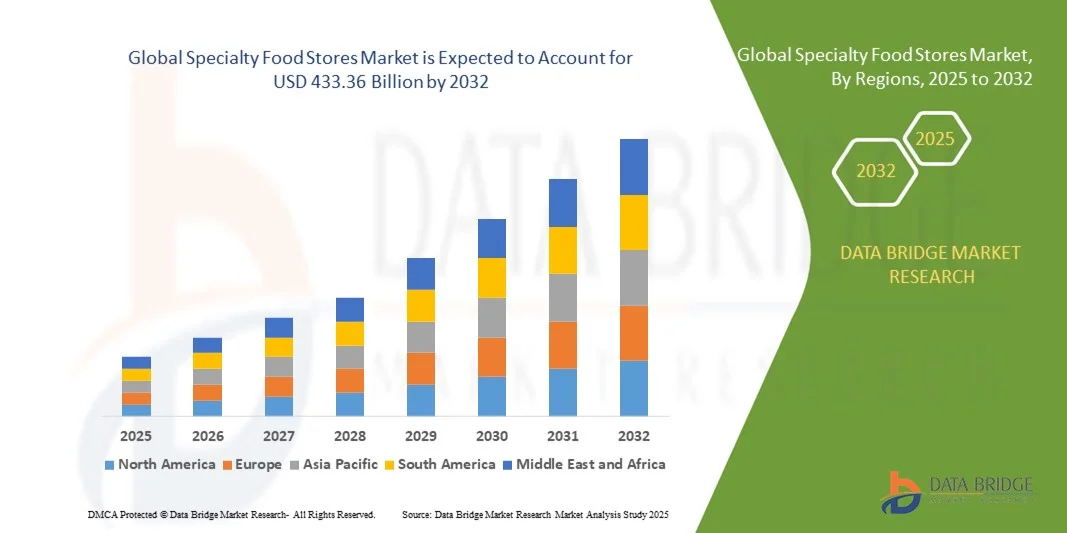
- The global specialty food stores market size was valued at USD 236.4 billion in 2024 and is expected to reach USD 433.36 billion by 2032, at a CAGR of 7.87% during the forecast period
- The market growth is largely fueled by rising consumer preference for premium, organic, and artisanal products, driving the expansion of specialty food retail formats across both physical and digital channels. Increasing health consciousness, along with growing awareness of sustainable and locally sourced food options, has strengthened demand for curated and high-quality food selections, positioning specialty food stores as a preferred choice for discerning consumers
- Furthermore, the expanding urban population and higher disposable incomes are encouraging consumers to explore gourmet, international, and niche food categories, thereby enhancing market penetration. These converging factors are accelerating store expansions, premium product launches, and the integration of advanced retail technologies, significantly boosting the specialty food stores industry’s growth
Specialty Food Stores Market Analysis
- Specialty food stores, offering curated selections of gourmet, organic, and health-focused products, are becoming integral to modern retail ecosystems due to their emphasis on quality, freshness, and customer experience. The shift toward healthier lifestyles and personalized shopping experiences is fostering steady growth across both established and emerging markets
- The escalating demand for specialty food products is primarily fueled by increasing interest in nutrition, sustainability, and premiumization trends. This evolving consumer behavior, coupled with the rise of e-commerce and membership-driven retail models, is propelling continuous innovation and strengthening the overall specialty food stores market
- North America dominated the specialty food stores market in 2024, due to rising consumer preference for organic, gourmet, and artisanal products, as well as increasing awareness of healthy and sustainable eating habits
- Asia-Pacific is expected to be the fastest growing region in the specialty food stores market during the forecast period due to increasing urbanization, rising disposable incomes, and evolving consumer preferences for premium and international foods
- Bakery products segment dominated the market with a market share of 36.3% in 2024, due to increasing consumer demand for freshly baked, artisanal, and specialty breads and pastries. Bakery products attract consumers due to their perceived freshness, quality ingredients, and wide variety of flavors and dietary options, including gluten-free and organic selections. Specialty bakeries often provide customized offerings and seasonal promotions, which enhance the overall customer experience and encourage repeat purchases. The segment also benefits from the rising popularity of gifting and premium baked goods for celebrations, further boosting its market revenue. The integration of e-commerce platforms and home delivery services has expanded accessibility, allowing consumers to enjoy premium bakery items conveniently
Report Scope and Specialty Food Stores Market Segmentation
|
Attributes |
Specialty Food Stores Key Market Insights |
|
Segments Covered |
|
|
Countries Covered |
North America
Europe
Asia-Pacific
Middle East and Africa
South America
|
|
Key Market Players |
|
|
Market Opportunities |
|
|
Value Added Data Infosets |
In addition to the insights on market scenarios such as market value, growth rate, segmentation, geographical coverage, and major players, the market reports curated by the Data Bridge Market Research also include in-depth expert analysis, pricing analysis, brand share analysis, consumer survey, demography analysis, supply chain analysis, value chain analysis, raw material/consumables overview, vendor selection criteria, PESTLE Analysis, Porter Analysis, and regulatory framework. |
Specialty Food Stores Market Trends
Growing Demand for Organic and Artisanal Food Products
- The specialty food stores market is expanding rapidly due to increasing consumer interest in organic, artisanal, and natural food products that emphasize quality, provenance, and health benefits. Consumers are placing greater value on transparency, ingredient authenticity, and food production methods that align with wellness and sustainability goals
- For instance, Whole Foods Market and Sprouts Farmers Market have expanded their organic and artisanal food selections, catering to growing customer demand for clean-label, locally sourced, and small-batch food items. Their curated assortments contribute to enhanced in-store experiences and consumer trust in premium product offerings
- Rising awareness about environmental impact and responsible sourcing is strengthening the appeal for specialty stores offering sustainably packaged and ethically produced foods. Food education and transparency initiatives are enabling shoppers to make informed choices, further driving demand for specialty food selections
- In addition, consumer willingness to pay a premium for artisanal cheeses, organic produce, specialty snacks, and plant-based alternatives is fueling product innovation across specialty food retail formats. These trends align with the broader movement toward health-conscious and experiential food consumption
- Increasing urbanization and the proliferation of gourmet food culture contribute to expanding specialty food store networks in key metropolitan regions. The combination of lifestyle shifts and demographics drives consistent demand for unique, high-quality, and convenient specialty food products
- Overall, the specialty food store sector is evolving to prioritize organic and artisanal categories as core drivers of differentiation and growth. The convergence of health, sustainability, and premiumization trends is expected to sustain market momentum and consumer loyalty in the near term
Specialty Food Stores Market Dynamics
Driver
Rising Incomes Boosting Premium Food Purchases
- The ongoing rise in disposable incomes globally is empowering consumers to spend more on premium and specialty food products, accelerating the growth of specialty food stores. Higher income levels shift consumer priorities toward quality, diversity, and unique culinary experiences
- For instance, affluent urban consumers in markets such as North America and Asia-Pacific are increasingly shopping at specialty food stores such as Dean & DeLuca and Eataly that offer curated selections of gourmet and imported items. These purchases reflect a willingness to invest in health, taste, and provenance attributes
- Higher incomes also allow consumers to experiment with novel cuisines, organic ingredients, and artisanal brands at greater frequency. This has stimulated demand for value-added foods, natural snacks, ethnic delicacies, and functional food products that define many specialty store assortments
- In addition, the premium food consumption trend is supported by growing aspirational lifestyles, travel experiences, and social media influence that popularize gourmet food culture. The economic ability to shop at specialty outlets enhances customer acquisition and repeat purchasing behavior
- As income growth continues in emerging economies, coupled with effective brand positioning and loyalty initiatives, specialty food stores are expected to benefit from a wider consumer base seeking premium and differentiated food products. This dynamic underpins sector expansion and innovation
Restraint/Challenge
High Supply Chain and Operating Costs
- The specialty food stores market faces significant challenges related to elevated supply chain complexities and operating costs. Specialty and artisanal products often require stringent cold chain logistics, smaller batch sourcing, and careful handling, all of which increase expenditure
- For instance, retailers such as Eataly and Earth Origins must manage higher transportation and storage costs due to frequent deliveries from geographically dispersed artisanal producers. This logistical complexity influences pricing strategies and profit margins for specialty food outlets
- Fluctuating availability of high-quality raw materials and seasonality of organic produce contribute to inconsistent inventory levels, affecting customer satisfaction and sales consistency. This unpredictability requires agile sourcing and robust supplier relationships to mitigate risk
- In addition, premium store locations in urban retail centers incur high rental and labor costs, intensifying operational burdens compared to mass-market grocery stores. Investment in staff training, customer service, and experiential retail environments further adds to overheads
- To manage these challenges, specialty food stores must optimize supply chain efficiencies, embrace technology-driven inventory systems, and develop strategic partnerships with local and regional producers. Balancing cost controls with quality assurance and unique product offerings is crucial for sustainable growth in this competitive sector
Specialty Food Stores Market Scope
The market is segmented on the basis of type and industry products and services.
- By Type
On the basis of type, the specialty food stores market is segmented into grocery stores, specialty food stores, convenience stores, and beer, wine, and liquor stores. The specialty food stores segment dominated the market with the largest market revenue share in 2024, driven by the growing consumer preference for high-quality, organic, and artisanal products that are not typically available in conventional grocery outlets. Shoppers increasingly prioritize specialty stores for their curated selection of gourmet items, locally sourced produce, and unique international foods, which provide a differentiated shopping experience. The demand is further bolstered by the rising awareness of healthy eating habits and sustainable sourcing practices. Specialty food stores also attract loyal customers due to personalized service, in-store tastings, and exclusive product offerings. Their ability to adapt quickly to emerging food trends, seasonal items, and niche dietary needs enhances their appeal to a wide range of consumers, including health-conscious and premium-seeking buyers.
The convenience stores segment is anticipated to witness the fastest growth rate from 2025 to 2032, fueled by their increasing integration of ready-to-eat and specialty snack items to cater to urban, on-the-go consumers. Convenience stores offer quick access and extended operating hours, which make them suitable for busy lifestyles, while their growing partnerships with local specialty brands expand their product variety. The convenience format also benefits from technological innovations such as mobile payments and self-checkout systems, providing a seamless shopping experience. Their compact footprint allows them to reach high-traffic urban locations, enhancing accessibility and driving frequent visits. The rising consumer trend toward immediate consumption and snacking further supports the accelerated adoption of specialty-focused offerings in convenience stores.
- By Industry Products and Services
On the basis of industry products and services, the specialty food stores market is segmented into bakery products, candy, chocolate and snacks, dairy products, meat, eggs and seafood, and others. The bakery products segment dominated the market with the largest market revenue share of 36.3% in 2024, driven by increasing consumer demand for freshly baked, artisanal, and specialty breads and pastries. Bakery products attract consumers due to their perceived freshness, quality ingredients, and wide variety of flavors and dietary options, including gluten-free and organic selections. Specialty bakeries often provide customized offerings and seasonal promotions, which enhance the overall customer experience and encourage repeat purchases. The segment also benefits from the rising popularity of gifting and premium baked goods for celebrations, further boosting its market revenue. The integration of e-commerce platforms and home delivery services has expanded accessibility, allowing consumers to enjoy premium bakery items conveniently.
The candy, chocolate, and snacks segment is expected to witness the fastest growth rate from 2025 to 2032, driven by the rising demand for indulgent, artisanal, and health-conscious treats among all age groups. For instance, premium chocolate brands and specialty snack companies are increasingly collaborating with specialty food stores to offer exclusive product lines and limited-edition items. Consumers are drawn to unique flavors, organic ingredients, and ethically sourced products, which differentiate specialty offerings from mass-market alternatives. The trend of gifting and sharing premium confectionery further supports growth, while increasing awareness of better-for-you snacking options fuels product diversification. Specialty stores’ ability to showcase these products in engaging displays and provide tasting opportunities enhances consumer engagement and accelerates sales. The segment’s adaptability to seasonal trends, promotional campaigns, and emerging flavor innovations makes it a key driver of future market expansion.
Specialty Food Stores Market Regional Analysis
- North America dominated the specialty food stores market with the largest revenue share in 2024, driven by rising consumer preference for organic, gourmet, and artisanal products, as well as increasing awareness of healthy and sustainable eating habits
- Consumers in the region highly value curated product selections, high-quality ingredients, and personalized shopping experiences offered by specialty food stores
- This widespread adoption is further supported by high disposable incomes, urban lifestyles, and the growing trend of premiumization, establishing specialty food stores as a preferred retail choice for both routine and occasion-based purchases
U.S. Specialty Food Stores Market Insight
The U.S. specialty food stores market captured the largest revenue share in 2024 within North America, fueled by the growing demand for organic, locally sourced, and health-conscious products. Consumers are increasingly prioritizing quality, freshness, and exclusive food experiences, boosting the uptake of specialty stores. The expanding trend of online grocery and delivery platforms integrated with specialty offerings further accelerates market growth. In addition, brand collaborations, seasonal promotions, and tasting events enhance consumer engagement and loyalty, propelling market expansion.
Europe Specialty Food Stores Market Insight
The Europe specialty food stores market is projected to expand at a substantial CAGR throughout the forecast period, driven by rising health awareness, demand for premium and artisanal products, and increasing urbanization. European consumers are drawn to the unique and high-quality offerings in specialty food stores, which also align with sustainable and ethically sourced practices. The region witnesses notable growth across bakery, dairy, and confectionery segments, supported by both retail expansions and e-commerce adoption. Regulatory support for food safety and organic certifications further reinforces market growth.
U.K. Specialty Food Stores Market Insight
The U.K. specialty food stores market is anticipated to grow at a noteworthy CAGR during the forecast period, driven by consumer demand for gourmet, organic, and sustainable food products. Increasing interest in convenience combined with high-quality offerings encourages frequent shopping at specialty stores. In addition, the U.K.’s developed retail infrastructure, strong e-commerce adoption, and growing preference for premium foods support the expansion of the specialty food segment. Seasonal product launches, tasting events, and promotional campaigns further enhance consumer engagement and sales.
Germany Specialty Food Stores Market Insight
The Germany specialty food stores market is expected to expand at a considerable CAGR during the forecast period, fueled by increasing consumer inclination toward health-conscious, premium, and eco-friendly products. Germany’s emphasis on sustainability and innovation promotes the adoption of specialty food retail formats. Specialty stores in Germany are incorporating fresh, locally sourced, and artisanal items, aligning with consumer preferences for quality and traceability. The integration of online ordering, delivery, and subscription services further boosts market penetration.
Asia-Pacific Specialty Food Stores Market Insight
The Asia-Pacific specialty food stores market is poised to grow at the fastest CAGR during the forecast period of 2025 to 2032, driven by increasing urbanization, rising disposable incomes, and evolving consumer preferences for premium and international foods. Countries such as China, Japan, and India are witnessing rapid expansion of modern retail formats and e-commerce platforms catering to specialty foods. The growing awareness of health, nutrition, and organic products supports the adoption of specialty food stores. In addition, APAC’s emerging middle class and rising demand for convenient, high-quality food experiences are key factors driving the market.
Japan Specialty Food Stores Market Insight
The Japan specialty food stores market is gaining momentum due to the country’s focus on health, quality, and convenience. Consumers prioritize fresh, artisanal, and specialty products, particularly in bakery, dairy, and confectionery categories. The integration of specialty stores with online platforms and delivery services enhances accessibility and convenience. Seasonal offerings, limited-edition products, and curated gourmet selections further boost consumer engagement. Aging demographics and a growing interest in premium and healthy foods are expected to sustain market growth across both urban and suburban areas.
China Specialty Food Stores Market Insight
The China specialty food stores market accounted for the largest market revenue share in Asia-Pacific in 2024, attributed to rapid urbanization, a growing middle class, and increasing interest in international and premium food products. Specialty food stores are becoming increasingly popular in metropolitan areas, offering curated selections of organic, artisanal, and gourmet foods. The rising trend of e-commerce integration, coupled with the availability of high-quality products at competitive prices, drives adoption. In addition, government initiatives promoting food safety and consumer awareness of healthy eating support market expansion.
Specialty Food Stores Market Share
The specialty food stores industry is primarily led by well-established companies, including:
- RETAIL READY OPERATIONS AUSTRALIA PTY. LTD. (Australia)
- GAZPROMNEFT-REGIONALNYE PRODAZHI, OOO (Russia)
- LULU CENTRE LLC (U.A.E.)
- ALMACENES ÉXITO S.A. (Colombia)
- JBS GLOBAL MEAT HOLDINGS PTY LTD (Australia)
- Nanyang Hezhi Commerce and Trade Co., Ltd. (China)
- TK MEGAPOLIS, AO (Russia)
- Xiangyang Wolong Dongyuansheng Grain & Oil Technology Co., Ltd. (China)
- KAHULA PTY LTD (Australia)
- MUSGRAVE GROUP PUBLIC LIMITED COMPANY (Ireland)
Latest Developments in Global Specialty Food Stores Market
- In August 2025, Premier Foods plc acquired Merchant Gourmet for £48 million, strengthening the specialty food stores market by demonstrating how established food companies are strategically investing in premium, healthy, and gourmet-ready-to-eat brands. This acquisition enhances the variety of high-quality products available in specialty stores, encourages innovation in product offerings, and raises consumer expectations for nutrition, taste, and convenience, thereby driving overall market growth
- In July 2025, The Fresh Market, Inc. topped Newsweek’s “America’s Best Retailers 2025” list in the Specialty/Natural/Ethnic Grocers category, highlighting the importance of curated product selections, superior customer service, and high-quality offerings in differentiating specialty food stores. This recognition reinforces the competitive value of operational excellence, motivates other players to enhance store experiences, and strengthens consumer trust and loyalty, contributing to sustained growth in the segment
- In March 2025, The SPAR Group Ltd of South Africa announced plans to launch 30‑40 high-end grocery stores under the “SPAR Gourmet” brand, marking a strategic shift toward premium retail formats. This expansion is expected to broaden the specialty food stores market in urban and affluent regions, offering curated gourmet products, bakery, coffee, and indulgent foods, while encouraging other regional players to adopt similar premium strategies to meet rising consumer demand for luxury and artisanal food experiences
- In January 2025, Nature’s Basket launched “Elysium”, India’s first gourmet-food membership program, offering exclusive access to curated tastings, premium products, and loyalty perks. This initiative signifies a transformation of specialty food stores toward membership-driven and experiential retail, increasing customer engagement, promoting recurring purchases, and setting a new benchmark for premium food retailing in India
- In January 2025, Fountainhead Hospitality opened “Piccadilly Market” in Chicago, a new specialty grocery and café concept that combines curated gourmet items with an in-store café experience. This integrated model expands the specialty food stores market by merging retail and food service, enhancing consumer convenience, encouraging longer visits, and increasing average spending per customer, ultimately redefining expectations for specialty food retail formats

- Interactive Data Analysis Dashboard
- Company Analysis Dashboard for high growth potential opportunities
- Research Analyst Access for customization & queries
- Competitor Analysis with Interactive dashboard
- Latest News, Updates & Trend analysis
- Harness the Power of Benchmark Analysis for Comprehensive Competitor Tracking
Global Specialty Food Stores Market, Supply Chain Analysis and Ecosystem Framework
To support market growth and help clients navigate the impact of geopolitical shifts, DBMR has integrated in-depth supply chain analysis into its Global Specialty Food Stores Market research reports. This addition empowers clients to respond effectively to global changes affecting their industries. The supply chain analysis section includes detailed insights such as Global Specialty Food Stores Market consumption and production by country, price trend analysis, the impact of tariffs and geopolitical developments, and import and export trends by country and HSN code. It also highlights major suppliers with data on production capacity and company profiles, as well as key importers and exporters. In addition to research, DBMR offers specialized supply chain consulting services backed by over a decade of experience, providing solutions like supplier discovery, supplier risk assessment, price trend analysis, impact evaluation of inflation and trade route changes, and comprehensive market trend analysis.
Data collection and base year analysis are done using data collection modules with large sample sizes. The stage includes obtaining market information or related data through various sources and strategies. It includes examining and planning all the data acquired from the past in advance. It likewise envelops the examination of information inconsistencies seen across different information sources. The market data is analysed and estimated using market statistical and coherent models. Also, market share analysis and key trend analysis are the major success factors in the market report. To know more, please request an analyst call or drop down your inquiry.
The key research methodology used by DBMR research team is data triangulation which involves data mining, analysis of the impact of data variables on the market and primary (industry expert) validation. Data models include Vendor Positioning Grid, Market Time Line Analysis, Market Overview and Guide, Company Positioning Grid, Patent Analysis, Pricing Analysis, Company Market Share Analysis, Standards of Measurement, Global versus Regional and Vendor Share Analysis. To know more about the research methodology, drop in an inquiry to speak to our industry experts.
Data Bridge Market Research is a leader in advanced formative research. We take pride in servicing our existing and new customers with data and analysis that match and suits their goal. The report can be customized to include price trend analysis of target brands understanding the market for additional countries (ask for the list of countries), clinical trial results data, literature review, refurbished market and product base analysis. Market analysis of target competitors can be analyzed from technology-based analysis to market portfolio strategies. We can add as many competitors that you require data about in the format and data style you are looking for. Our team of analysts can also provide you data in crude raw excel files pivot tables (Fact book) or can assist you in creating presentations from the data sets available in the report.













